

In This Article
A golf driver for intermediate golfers isn’t the same club a tour pro grabs off the rack. It’s built with a wider forgiveness margin, a friendlier center of gravity, and enough adjustability to grow with a swing that’s still finding its rhythm. In plain terms: it’s the club that turns a slightly-off strike into a playable fairway shot instead of a scramble from the trees. If you’re past the beginner stage — you can find the middle of the face more often than not, but your misses still cost you real yardage — this is the equipment category built specifically for you.

Here’s the thing nobody tells you at the pro shop counter: most intermediate golfers are playing drivers that were either handed down from their better-playing buddy or picked because the shaft flex “felt fine.” Neither of those is a strategy. A driver dialed in for your actual swing speed range, launch angle tendencies, and miss pattern can add fairways — not just yards — to your round, and that’s the difference that actually lowers scores.
This guide breaks down seven real, currently available drivers spanning budget to premium, explains what launch angle and swing speed range mean for your buying decision, and shows you how adjustable driver weights let you fine-tune ball flight without a full refit. According to golf equipment traditionally used wooden clubheads before manufacturers shifted to titanium and carbon-fiber construction to allow larger, more forgiving designs, and that shift is exactly what makes today’s game-improvement drivers so much easier to hit than what your dad played.
Quick Comparison Table
| Driver | Price Range | Best For |
|---|---|---|
| TaylorMade Qi10 Max | $550–$600 range | Max forgiveness, all-around swing speeds |
| Titleist GT2 | $500–$650 range | Premium feel with deep adjustability |
| Ping G440 Max | Around $600 | Easiest off-the-rack fit for most golfers |
| Callaway Paradym Ai Smoke MAX | $400–$600 range | Correcting inconsistent mis-hits |
| Wilson DYNAPWR Max+ | Around $500 | Newest ultra-high-MOI stability |
| Cobra Darkspeed X | $300–$550 range | Sound, feel, and value together |
| Tour Edge Exotics Max | Under $400 | Budget-conscious intermediate golfers |
Looking at the spread above, every driver here clears the 10,000 g-cm² MOI mark that once sat at the bleeding edge of forgiveness technology, which tells you how far game-improvement design has come in just a couple of seasons. The Tour Edge Exotics Max proves you don’t need a four-figure bag to get that stability, while the Titleist GT2 and Ping G440 Max sit at the top for golfers who want tour-level construction without tour-level compromise. Your swing speed and typical miss (slice, hook, or low-flight) should weigh more heavily in this decision than brand name alone.
💬 Found this comparison useful? Share it with a golf buddy who’s still gaming a hand-me-down driver! 😊
Top 7 Golf Drivers for Intermediate Golfers: Expert Analysis
1. TaylorMade Qi10 Max — deepest forgiveness on a 460cc frame
The standout here is the driver’s 10,000 g-cm² MOI rating, which as of this generation represents close to the practical ceiling for stability on off-center hits. The 60X Carbon Twist Face is markedly lighter than a comparable titanium face, and that saved weight gets pushed low and to the perimeter, which is exactly where forgiveness comes from. The Infinity Carbon Crown covers nearly the entire top of the head, freeing up mass that would otherwise sit uselessly on top.
Based on the spec comparison, this driver is built for golfers who lose distance badly on toe and heel strikes rather than those chasing outright ball speed — the low CG and high MOI trade a hair of top-end speed for a much tighter dispersion pattern. Reviewers consistently note that the sound is more muted and “solid” than the piercing crack of older TaylorMade models, which some players find reassuring at impact and others find less exciting; it’s a preference thing, not a performance flaw. The four-degree adjustable loft sleeve lets you nudge launch conditions without buying a second head.
Pros:
- ✅ Class-leading 10K MOI keeps mis-hits playable
- ✅ Adjustable loft sleeve fine-tunes launch and spin
- ✅ Lightweight carbon crown lowers center of gravity
Cons:
- ❌ Premium price compared to last year’s models
- ❌ Some players find the sound less “explosive”
Typically priced in the $550–$600 range at the time of research, the TaylorMade Qi10 Max earns its price tag if forgiveness is your number-one priority and you’re willing to pay for the newest carbon-face engineering.

2. Titleist GT2 — premium build with deep hosel adjustability
The standout feature is the SureFit Hosel, which independently adjusts both loft and lie — a level of fitting flexibility most competitors don’t match at this price. Titleist’s Split-Mass Frame construction shifts weight simultaneously toward the back (for MOI and stability) and toward the front (for ball speed and launch), which on paper means you’re not forced to choose between forgiveness and speed the way older driver architectures demanded.
What most buyers overlook about the GT2 is that its Speed Ring VFT face is specifically engineered to limit ball-speed loss on strikes away from center, not just center-face bombs — that matters more for an intermediate golfer than headline distance numbers do. Reviewers consistently praise Titleist’s “signature sound and feel,” and on the course that translates to a driver that doesn’t punish you harshly for a slightly thin or heel-y strike. This is the pick for golfers who’ve outgrown a pure game-improvement driver but aren’t ready for a low-spin better-player head.
Pros:
- ✅ SureFit Hosel allows independent loft and lie tuning
- ✅ Split-mass design balances speed with forgiveness
- ✅ Refined sound and feel at impact
Cons:
- ❌ Among the pricier options in this lineup
- ❌ Adjustable dual-weight system has a learning curve
Street pricing generally lands in the $500–$650 range, with retailers occasionally discounting into the $400s as newer models roll out — check current pricing, since Titleist pricing tends to move as the GT3 and future releases arrive.
3. Ping G440 Max — the easiest off-the-rack fit for most golfers
The standout advantage is PING’s deepest center of gravity in a driver to date, achieved through a redesigned Free-Hosel Technology that reallocates hosel weight down into the head. That single change is why fitters consistently point intermediate and mid-handicap golfers toward this model first — it’s engineered from the ground up for forgiveness rather than adapted from a tour-first design.
Here’s what the spec sheet won’t spell out plainly: the thinner, hotter face isn’t just about ball speed on center strikes — PING specifically extended that flex into the high-heel region, which is exactly where a lot of intermediate golfers catch the ball on a mis-timed swing. The 29-gram adjustable back weight shifts between draw, neutral, and fade positions, giving you real shot-shape correction without a full refitting session. Reviewers describe the G440 Max as “confidence-inspiring” at address thanks to its classic, slightly larger head shape — a small psychological edge that matters more than people admit.
Pros:
- ✅ Deepest CG in PING driver history aids forgiveness
- ✅ Three-position back weight corrects draw or fade bias
- ✅ Longer, lighter shaft system boosts swing speed
Cons:
- ❌ Loft adjustment range is narrower than some rivals
- ❌ Adjustment tool sold separately in some packages
Priced around $600 at most major retailers, the Ping G440 Max is consistently recommended as the safest first stop for intermediate golfers who haven’t been custom fit before.
4. Callaway Paradym Ai Smoke MAX — built to correct inconsistent mis-hits
The standout technology is the Ai Smart Face, trained on swing data pulled from thousands of real golfers rather than purely robot-tested strikes. Callaway’s pitch is that this produces a face engineered around how actual human swings deliver the club — including the inconsistency intermediate golfers bring to the table — rather than an idealized, repeatable robot swing.
On paper this means more usable ball speed on the strikes that matter: the ones slightly off-center. The forgiving 460cc shape pairs with adjustable perimeter weighting rated for up to nineteen yards of shot-shape correction (per manufacturer robot testing, including hosel adjustability), which is a genuinely useful number if your miss is a consistent slice rather than a random scatter. Reviewers note the Paradym Shift’s 360-degree Carbon Chassis feels noticeably lighter in hand than Callaway’s earlier Paradym generation, and that saved mass gets redistributed exactly where forgiveness lives — low and to the edges.
Pros:
- ✅ Ai Smart Face targets real-world mis-hit patterns
- ✅ Adjustable weighting corrects a consistent slice or hook
- ✅ Lighter carbon chassis improves overall forgiveness
Cons:
- ❌ “Up to 19 yards” correction claim is a best-case robot figure
- ❌ Slightly less premium sound than Titleist or TaylorMade
The Callaway Paradym Ai Smoke MAX typically runs in the $400–$600 range, with frequent promotional pricing pushing it toward the lower end — a strong buy if slice correction is your main headache off the tee.
5. Wilson DYNAPWR Max+ — the newest ultra-high-MOI option for 2026
The standout is straightforward: Wilson pushed this driver’s MOI past the 10,000 g-cm² mark — the brand’s highest ever — without adding clubhead mass, which is the harder engineering problem to solve. Most manufacturers hit 10K by simply making the head heavier, which quietly costs you clubhead speed. Wilson’s approach pulled weight off the face itself and pushed it rearward instead, preserving speed while still gaining stability.
What most buyers overlook about the Max+ is the six-way adjustable hosel paired with a flippable rear weight — that’s more built-in tuning range than several rivals offer at this price. Reviewers who tested the driver ahead of its 2026 launch called it a legitimate surprise, noting it didn’t just chase forgiveness numbers but kept ball speed competitive with the field. This is a newer release with a smaller review pool than the legacy brands above, so if you value a longer track record of aggregated feedback, weigh that against the technical upside.
Pros:
- ✅ Crosses 10K MOI without added head weight
- ✅ Six-way hosel plus adjustable rear weight for tuning
- ✅ Reengineered face construction preserves ball speed
Cons:
- ❌ Newer to market, so the review pool is still building
- ❌ Fewer stock shaft options than the legacy majors
Wilson has priced the Wilson DYNAPWR Max+ at around $500, undercutting several rivals with comparable forgiveness specs — worth a serious look if you want 2026’s newest tech without top-tier pricing.

6. Cobra Darkspeed X — sound, feel, and value working together
The standout here is genuinely the feel: Cobra worked with aerospace engineers on the aerodynamic shaping, and testers consistently single out the sound and feedback off the face as punching well above the driver’s price point. A 10% larger, more flexible PWRSHELL L-cup face pairs with an AI-designed H.O.T. Face topography that optimizes speed and spin across the hitting surface, not just dead center.
Here’s what the spec sheet won’t tell you but reviewers consistently flag: the Darkspeed X ships with its sole weights in a low-spin configuration out of the box, which is tuned for faster, more consistent swingers — not most intermediate golfers. Reviewers consistently recommend moving the rear weight to the back position immediately for better launch and forgiveness unless you already generate elite clubhead speed. Once adjusted correctly, aggregated reviewer sentiment describes this as one of the easiest drivers in its class to hit consistently well, with the two-weight system (rear plus forward) offering real spin-tuning range.
Pros:
- ✅ Aerospace-inspired shaping delivers standout sound and feel
- ✅ Dual sole weights allow spin and launch tuning
- ✅ Frequently discounted well below rival price points
Cons:
- ❌ Ships in a low-spin setting most intermediates should change
- ❌ All-black crown can cause alignment issues for some golfers
Pricing swings widely, from the $300s on sale up to roughly $550 at full retail — check current price, as the Cobra Darkspeed X is one of the more heavily discounted premium-tier drivers on this list.
7. Tour Edge Exotics Max — the strongest value pick for a limited budget
The standout advantage is straightforward: a 460cc head that surpasses the 10,000 g-cm² MOI threshold, matching the forgiveness specs of drivers costing hundreds more. Tour Edge built its 2026 Exotics relaunch specifically to compete with the major brands on technology while keeping pricing well below them, and the Max model is the clearest proof of that strategy.
Based on the spec comparison, the adjustable heel-to-toe weighting is a genuinely useful inclusion at this price tier — most sub-$400 drivers skip adjustability entirely. Reviewers consistently describe it as “easy to launch” and forgiving enough for mid-to-high-handicap intermediate golfers, though aggregated feedback is honest that sound and feel lag slightly behind the premium four brands above, and that outright ball speed trails the category leaders by a small margin. For a golfer prioritizing fairways hit over maximum carry, that trade-off is a reasonable one.
Pros:
- ✅ 10K+ MOI forgiveness at a fraction of premium pricing
- ✅ Adjustable draw/fade weighting rare at this price point
- ✅ Clean, glare-free carbon crown look at address
Cons:
- ❌ Sound and feel noticeably behind premium rivals
- ❌ Slightly shorter overall distance in independent testing
MSRP sits near $499.99, but the Tour Edge Exotics Max is commonly found discounted under $400 — an easy recommendation if budget is the deciding factor and you don’t want to sacrifice real forgiveness technology to get there.
Getting Fit and Dialing In Your New Driver
Buying the right head is only half the job — the setup determines whether you actually see the forgiveness gains on the course. Start by checking the stock loft against your typical ball flight: if your drives fly low and knuckle down early, add a degree or two using the adjustable hosel rather than assuming you need a whole new club. Most of the drivers above offer at least two to four degrees of adjustment, which is plenty of room to correct a flight that’s too low or too high without a refit.
Next, move any adjustable weight to a neutral or draw-biased position for your first few rounds, regardless of what the driver ships with — as the Cobra Darkspeed X example above shows, factory settings often favor faster, better players by default. Track your first 30 days of misses honestly: are you consistently blocking it right, or occasionally snap-hooking? That pattern tells you which direction to bias the weight. Finally, get the swing weight checked if you switch grip size or shaft length — a driver that feels “wrong” in hand often just has mismatched swing weight, not a design flaw.

Real-World Scenarios: Which Driver Fits Your Game?
Picture three golfers, each carrying a 12–20 handicap, each needing something different off the tee. The first is a weekend player who slices under pressure on tight courses — for them, the Callaway Paradym Ai Smoke MAX or Ping G440 Max, both offering real draw-bias weighting, address that miss directly rather than just adding raw distance they can’t control.
The second is a budget-conscious golfer playing twice a month who just wants to stop losing balls off the tee without spending a paycheck — the Tour Edge Exotics Max delivers 10K-class forgiveness at a price that doesn’t compete with green fees for the month. The third is an intermediate golfer who’s improving fast, already breaking 90 occasionally, and wants a driver that can grow with a tightening swing — the Titleist GT2 or TaylorMade Qi10 Max, both offering deeper adjustability, give that golfer room to fine-tune as their game evolves rather than needing a replacement in a year.
How to Choose a Golf Driver for Intermediate Golfers
Picking the right driver comes down to a handful of concrete decision points, not marketing copy:
- Know your swing speed range first. Everything else — loft, shaft flex, weight bias — follows from this number. Guessing here undoes the benefit of every other decision.
- Prioritize MOI over marketed distance. A driver that keeps mis-hits playable will lower your scores faster than one that promises five extra yards on a perfect strike you rarely make.
- Match adjustability to your miss pattern. If you slice, look for real draw-bias weighting, not just a cosmetic adjustable hosel.
- Test loft honestly. Most intermediate golfers are under-lofted, chasing a “pro” low ball flight that actually costs them carry distance.
- Weigh sound and feel — it affects confidence. A driver you’re afraid to swing freely at won’t perform to its specs, no matter how good those specs are on paper.
- Set a real budget and stick to it. As the comparison table shows, sub-$400 drivers now carry genuine forgiveness technology; premium pricing buys refinement, not a forgiveness monopoly.
- Consider a fitting, even an informal one. A launch monitor session at a retailer, even without a full custom fitting, will confirm or correct your assumptions before you buy.
Golf Driver Swing Speed Range: Finding Your Number
What is a good driver swing speed for an intermediate golfer? Most intermediate golfers fall between roughly 85 and 100 mph of clubhead speed with the driver, with the broader recreational average sitting close to 93 mph.
That number matters because it should steer your shaft flex and even your loft choice more than your ego does. According to Trackman data, the average male amateur — typically a 14 to 15 handicap — swings the driver at roughly 93.4 mph, while a six-handicap golfer averages only about 97 mph, which is a smaller gap than most golfers assume. If you’re swinging in the mid-80s to low-90s, a regular or senior-regular flex paired with a higher-loft, higher-MOI head — like the Wilson DYNAPWR Max+ or Tour Edge Exotics Max — will generally out-perform a stiff, low-spin head marketed toward faster swingers. Chasing a stiffer shaft than your speed supports is one of the most common and costly equipment mistakes intermediate golfers make.
Launch Angle Explained: What to Expect
What launch angle should an intermediate golfer aim for with a driver? Most recreational golfers benefit from a launch angle in the 12 to 16 degree range off the driver, which is noticeably higher than the flatter trajectories tour players use.
Here’s what the spec sheet won’t tell you plainly: a higher launch angle combined with lower spin is the combination that maximizes carry distance for moderate swing speeds — it’s not simply “hit it higher, go farther.” Drivers built with a deep, low center of gravity, like the TaylorMade Qi10 Max and Ping G440 Max, are specifically engineered to help intermediate golfers reach that optimal window without needing textbook swing mechanics. If your drives currently fly low and run out of carry early, that’s frequently a launch-angle problem solvable with a loft adjustment or a driver switch — not necessarily a swing flaw that needs months of lessons to fix.
Adjustable Driver Weights: How They Shape Your Ball Flight
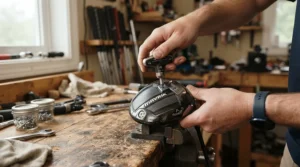
Adjustable weights are the single most underused feature on modern drivers — most intermediate golfers never touch the factory setting, even though every driver in this guide ships with genuine tuning range. Rear or perimeter weights shift the center of gravity, which changes launch and spin more than most golfers expect; moving weight back generally raises launch and adds forgiveness, while moving it forward lowers spin and can add rollout distance for faster swingers.
Heel-to-toe or draw/fade weight systems, found on the Ping G440 Max, Callaway Paradym Ai Smoke MAX, and Tour Edge Exotics Max, work differently: shifting weight toward the heel promotes a draw bias by helping the face close slightly faster through impact, which is exactly the fix a chronic slicer needs before reaching for a lesson. What most buyers overlook is that these adjustments are reversible and free — there’s no reason to live with a slice-inducing factory setting for an entire season when a five-minute wrench adjustment might solve it.

Golf Driver vs Fairway Wood for Intermediate Golfers
A fairway wood for intermediate golfers solves a different problem than a driver, and confusing the two costs strokes. A driver is built to be swung fast off a tee with the ball elevated, prioritizing distance above all else; a fairway wood — typically a 3-wood or 5-wood — has a shallower face and more loft, designed to be struck cleanly off the turf or a low tee, prioritizing consistency and workability over maximum distance.
A traditional set includes a driver alongside one or two fairway woods, usually numbered 3 and 5, and for intermediate golfers specifically, the fairway wood often becomes the more reliable tee-shot club on tight par-4s and par-5s where accuracy matters more than raw length. Here’s what most buyers overlook: if you’re consistently spraying the driver but hitting your fairway wood solidly, that’s not a reason to buy a fancier driver — it’s a signal to simply hit fairway wood off more tees until your driver consistency catches up. Most manufacturers on this list, including TaylorMade, Titleist, Ping, and Callaway, sell a matching fairway wood built with the same forgiveness technology as their driver, which is worth pairing for a cohesive bag rather than mixing unrelated brands and feel profiles.
Common Mistakes When Buying a Driver
Even motivated intermediate golfers repeat the same handful of buying mistakes. Reviewers and fitters consistently flag these as the errors that quietly cost strokes:
- Buying based on a friend’s recommendation instead of your own swing speed range — what works for a 100-mph swinger can actively hurt a 90-mph one.
- Ignoring adjustability entirely — leaving a driver on factory settings when a five-minute weight adjustment could fix a persistent miss.
- Chasing a low-spin, low-launch driver because it “looks like what the pros use” — most intermediate golfers need more launch and more forgiveness, not less.
- Overlooking shaft flex and weight — a driver head is only half the equation; the wrong shaft undoes a well-fit head.
- Skipping a launch monitor session — even a free in-store demo can correct assumptions that cost real money down the line.
Long-Term Cost & Maintenance
A driver is a multi-year purchase for most intermediate golfers, so total cost of ownership matters more than sticker price alone. Premium options like the Titleist GT2 or TaylorMade Qi10 Max carry a higher upfront cost but tend to hold resale value better and offer more adjustability to extend their useful life as your swing improves — meaning you’re less likely to need a full replacement in two years. Budget picks like the Tour Edge Exotics Max cost less initially but generally depreciate faster on the used market, which is a fair trade if keeping upfront cash outlay low matters more to you than resale.
Maintenance itself is minimal but not zero: clean the face regularly to preserve grip texture and spin consistency, store the driver with its headcover to protect the crown finish from bag-to-bag scuffing, and have the grip replaced every one to two seasons depending on how often you play — a worn grip quietly costs consistency long before most golfers notice it.
Golf Driver Rules and Regulations Intermediate Golfers Should Know
Every driver on this list is built to conform with current USGA and R&A equipment rules, which cap clubhead volume at 460cc and limit moment of inertia — the forgiveness measurement referenced throughout this guide — to prevent drivers from becoming so stable that skill stops mattering. Roughly two decades ago, the USGA grew concerned that driver MOI had tripled over the preceding fifteen years and introduced a formal limit, reasoning that further increases could reduce the skill required to hit the ball straight. That limit is effectively why every 10K-MOI driver in this guide sits at roughly the same forgiveness ceiling — you’re not missing out on a more forgiving option by choosing the budget pick over the premium one; they’re all built against the same rule.
For casual, non-tournament play this rarely matters day to day, but if you play in club events, member-guest tournaments, or USGA-handicapped competitions, sticking to conforming equipment — which every driver reviewed here is — keeps your scores legitimate for handicap purposes.
Frequently Asked Questions
❓ What is the best golf driver for intermediate golfers in 2026?
❓ How much should an intermediate golfer spend on a driver?
❓ What swing speed is considered intermediate for a golf driver?
❓ Should an intermediate golfer use a driver or a fairway wood off the tee?
❓ How often should an intermediate golfer replace their driver?
Conclusion
Choosing a golf driver for intermediate golfers isn’t about finding the single “best” club on the market — it’s about matching real specs to your actual swing speed range, launch tendencies, and miss pattern, then using the adjustable driver weights most modern drivers include to fine-tune from there. Whether that lands you on the forgiveness-first Ping G440 Max, the deeply adjustable Titleist GT2, or the value-driven Tour Edge Exotics Max, every option in this guide represents genuine, currently available 2026 technology rather than outdated hand-me-down equipment. As independent testing groups have noted heading into this season, forgiveness technology has genuinely narrowed the performance gap between budget and premium drivers, which means your buying decision can safely prioritize fit over brand prestige.
Pair whichever driver you choose with an honest look at your fairway wood setup, get a launch monitor session if one’s available nearby, and give any adjustable weights an honest trial period before writing off a driver as “not for me.” The right equipment, set up correctly, is one of the fastest legitimate ways to trim strokes off your intermediate game.
Recommended for You
- Beginner Golf Clubs For Kids: 7 Best Sets In 2026 (Ranked)
- Beginner Golf Clubs For Women: 7 Top Picks To Start Strong In 2026
- Golf Club Set For Beginners: 7 Best Picks for 2026
Disclaimer: This article contains affiliate links. As an Amazon Associate, I earn from qualifying purchases. If you purchase products through these links, we may earn a small commission at no additional cost to you.
✨ Found this helpful? Share it with your friends! 💬🤗
