
In This Article
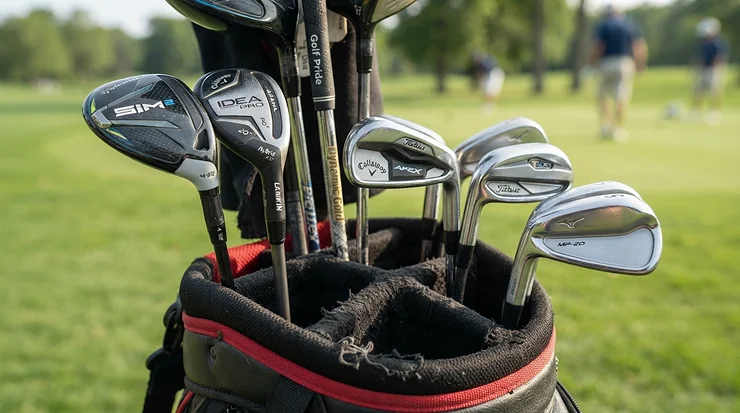
Somewhere between “I can finally break 90” and “I still can’t hit a 3-iron to save my life” lives every intermediate golfer’s dirty little secret: the long game is where scores go to die. You’ve got the short irons dialed in. Your putting is respectable on a good day. But that 190-yard approach from a mediocre lie? That’s where the wheels come off. This is exactly the gap hybrid clubs for intermediate golfers were built to close, and 2026’s crop of models does it with more forgiveness, more adjustability, and more genuinely usable technology than anything the category has seen before.
This guide walks through seven real, currently available hybrids spanning budget to premium, breaks down what actually matters when you’re shopping (loft gapping, forgiveness vs distance, turf interaction — not just marketing copy), and gives you a straightforward path to picking the right one. According to golf hybrids borrow their design from both irons and woods while differing from both, blending the swing mechanics of an iron with the forgiveness and distance of a wood, which is exactly why they’ve become the default answer to the long-iron problem. Let’s get into it.
Quick Comparison Table
| Hybrid | Best For | Price Range |
|---|---|---|
| Wilson Dynapwr Hybrid | Tightest budget | $220–$260 |
| Mizuno ST-Max 230 Hybrid | Straight-line forgiveness | $260–$320 |
| Ping G440 Hybrid | Turf interaction & consistency | $280–$320 |
| Cobra King Tec Hybrid | Adjustability & shot-shaping | $260–$300 |
| TaylorMade Qi35 Rescue | Distance off the tee | $250–$300 |
| Callaway Elyte Hybrid | Max forgiveness + high launch | $280–$330 |
| Titleist GT1 Hybrid | Highest launch, best overall | $320–$450 |
At a glance, the pattern here is pretty simple: the cheaper end of this table trades a little bit of shot-shaping control for reliability, while the premium end lets you fine-tune launch, spin, and face angle to a degree that would’ve been reserved for tour trailers a decade ago. Neither end is “wrong” — it depends on whether you’d rather spend your practice time swinging or fiddling with a wrench. If you’re still building consistency in your ball-striking, the extra $150 for adjustability usually buys you less than you’d think.
💬 Found a model here that fits your bag? Click through to check current pricing before it changes!
Top 7 Hybrid Clubs for Intermediate Golfers: Expert Analysis
1. Wilson Dynapwr Hybrid — best value for a tightening budget
The standout here isn’t a flashy face technology — it’s that Wilson simply refused to cut corners on the parts that matter for a mid-handicap swing. Specs-wise, you’re getting a hollow-body construction with a low, deep center of gravity, paired with a graphite shaft that keeps overall swing weight forgiving for moderate swing speeds. In practice that translates to a launch window that’s genuinely easy to find, even when your strike drifts toward the heel.
Who is this for? Honestly, almost any intermediate golfer who wants a hybrid that just works without a fitting appointment. Based on the spec comparison against pricier rivals, the Dynapwr gives up a bit of adjustability but not much raw performance — reviewers consistently note strong ball speed and forgiveness for the price point, calling it a serious contender for golfers who want reliability without premium spend.
Pros:
- ✅ Excellent ball speed for a budget-tier hybrid
- ✅ Confidence-inspiring shape at address
- ✅ Genuinely strong value-for-money reputation
Cons:
- ❌ No adjustable hosel or weighting
- ❌ Fewer loft options than premium rivals
Expect to find the Wilson Dynapwr Hybrid in the $220–$260 range, and at that price, it’s hard to argue with the value — this is the pick if your budget is doing more talking than your handicap.
2. Mizuno ST-Max 230 Hybrid — best for dead-straight forgiveness
Mizuno built the ST-Max around a wide, low-profile head with a MAS1C steel face and an internal chamber shifted toward the face to keep ball speed high even on off-center strikes. What that spec sheet won’t tell you, but reviewers note, is how genuinely straight this thing flies — the low-and-deep weighting isn’t marketing fluff, it’s the reason mis-hits still find fairways instead of the trees.
This is the hybrid for the golfer who’s tired of guessing which direction today’s miss will go. Based on the spec comparison, the ST-Max sacrifices a touch of workability (it’s not going to help you shape a deliberate draw or fade) in exchange for straight-line predictability, which for most intermediates is exactly the right trade.
Pros:
- ✅ Exceptionally consistent, straight ball flight
- ✅ Strong ball speed even on toe and heel strikes
- ✅ Confidence-inspiring, slightly larger footprint
Cons:
- ❌ Limited shot-shaping versatility
- ❌ Lacks adjustability found on premium competitors
Priced in the $260–$320 range depending on shaft configuration, the Mizuno ST-Max 230 Hybrid earns its keep as a genuine workhorse rather than a showpiece.
3. Ping G440 Hybrid — best turf interaction and sole design
Ping redesigned the rear weighting on the G440 specifically to help the hybrid sit more flush on the turf, keeping the face angle more consistent at impact, while a redesigned hosel saves weight that’s redirected to lower the center of gravity for easier launch off the deck. For anyone who’s ever caught a hybrid heavy out of the rough or chunked one off a tight fairway lie, that’s not a small thing — it’s the difference between a club that fights the ground and one that glides through it.
The takeaway for buyers: this is the hybrid for golfers who hit as many (or more) hybrid shots from the fairway as they do off the tee. What most buyers overlook is that turf interaction, not raw distance, is usually what separates a hybrid that “feels great on the range” from one that actually performs on the course.
Pros:
- ✅ Excellent sole design that resists digging
- ✅ Carbon fly-wrap crown aids both look and feel
- ✅ Adjustable hosel allows 1.5° of loft fine-tuning
Cons:
- ❌ Slightly less explosive off the tee than distance-focused rivals
- ❌ Premium pricing relative to the forgiveness gained
Look for the Ping G440 Hybrid in the $280–$320 range — a fair ask for a club engineered around the one variable most buyers ignore entirely.
4. Cobra King Tec Hybrid — best for shot-shaping control
Cobra’s KING TEC brings a refined shape alongside its FutureFit33 adjustable loft-and-lie system, plus adjustable weighting and what the brand calls H.O.T. Face Technology for added ball speed. In real terms, this is the most tunable hybrid on this list short of the true premium tier — you can bend loft, lie, and face angle to match your existing iron set almost exactly.
Here’s what most intermediate golfers overlook about this model: adjustability only pays off once you already have a repeatable swing to build around. If your strike location and swing path are still inconsistent week to week, the King Tec’s tuning options are more useful for a fitter than for you — but if you know your miss, this club lets you actually correct for it.
Pros:
- ✅ Genuine loft and lie adjustability via FutureFit33
- ✅ Strong ball speed from H.O.T. Face Technology
- ✅ Refined, iron-like shape appeals to better ball-strikers
Cons:
- ❌ Tuning benefits are wasted without a consistent swing
- ❌ Less outright forgiveness than max-game-improvement rivals
At around $260–$300, the Cobra King Tec Hybrid sits in the sweet spot for intermediates who are ready to start dialing in specifics rather than just surviving long shots.
5. TaylorMade Qi35 Rescue — best for tee-shot distance
TaylorMade’s Qi35 Rescue leans on a multi-material construction — chromium carbon, steel, and aluminum — paired with a new TSS weighting system that lowers the center of gravity for added ball speed and forgiveness. On paper this means faster ball speed at a lower spin rate than most hybrids in this price tier, and on the course it shows up as extra rollout after landing.
Reviewers consistently report standout carry distance from this model, with one independent test averaging a carry distance of 225 yards and total rollout up to 242 yards — roughly 15 yards longer than any other hybrid tested at the same loft. That’s not a small edge if you’re using a hybrid off the tee on tight par 4s.
Pros:
- ✅ Genuinely longer carry and rollout than category peers
- ✅ Low spin profile ideal for tee shots
- ✅ 3° adjustable loft sleeve fine-tunes trajectory
Cons:
- ❌ Lower spin can hurt stopping power on approach shots
- ❌ Mid-face height demands a slightly more consistent strike
Priced around $250–$300 (frequently discounted from its $299.99 launch price), the TaylorMade Qi35 Rescue is the pick if your hybrid’s main job is replacing your driver on tight tee boxes.

6. Callaway Elyte Hybrid — best for adjustability and forgiveness together
The Elyte’s headline feature is its heel-toe weighting system — interchangeable 13-gram tungsten and 3-gram aluminum weights that let you shift between a neutral and draw-biased ball flight, combined with the OptiFit 4 hosel for loft and lie adjustment. Layer in Callaway’s Ai10x face, engineered for tighter dispersion and optimized launch, and you’ve got a hybrid that’s trying to be forgiving and adjustable at the same time — a combination that’s historically been hard to pull off.
Based on the spec comparison, the Elyte mostly succeeds: one independent review scored it 4.6 out of 5 overall, praising its impressive carry numbers, smart looks, and confident feel from both tee and fairway, while flagging the price as its main drawback. For intermediates who mis-hit occasionally but still want some ability to shape shots, this is a strong middle ground.
Pros:
- ✅ Adjustable weighting genuinely changes shot shape
- ✅ Ai10x face tightens dispersion on mis-hits
- ✅ Seven loft-and-lie combinations for precise gapping
Cons:
- ❌ One of the pricier options in this roundup
- ❌ Adjustability adds a learning curve for new users
The Callaway Elyte Hybrid typically runs $280–$330, positioning it as a genuine step up for golfers ready to invest in their long game.
7. Titleist GT1 Hybrid — best overall, highest launch
Titleist built the GT1 as its highest-launching hybrid, aimed squarely at moderate swing speed players who need help getting the ball airborne. It carries a 5% MOI increase over its TSR1 predecessor, a longer face from heel to toe for added forgiveness, and new fore-aft weight adjustability that lets you shift a heavier weight forward or back to fine-tune launch, spin, and stability.
Independent testing backs up the hype here: one data-driven test found the Titleist GT1 hybrid achieved 1st and 3rd place for ball speed across its forward and back weight positions, with excellent left-to-right dispersion and consistent launch characteristics in either configuration. What the spec sheet won’t tell you is how forgiving that translates to feel — mis-hits genuinely don’t punish you the way they would on a smaller-headed premium hybrid.
Pros:
- ✅ Class-leading ball speed and dispersion in testing
- ✅ Fore-aft weight adjustability for launch and spin control
- ✅ Highest, most forgiving launch in the Titleist hybrid lineup
Cons:
- ❌ Priced at the top of this roundup
- ❌ High launch may spin out for faster swing speeds
Expect to pay $320–$450 depending on shaft and region for the Titleist GT1 Hybrid — a premium price, but one backed by genuinely strong independent test data.
Practical Usage Guide: Setting Up and Optimizing Your Hybrid
Buying the right hybrid is half the equation; setting it up correctly is the other half, and it’s the part most golfers skip. Start by checking your current loft gapping against your existing irons and fairway woods — a hybrid that duplicates a distance you already own is dead weight in your bag, not a solution. If you’re using an adjustable model like the Cobra King Tec Hybrid or Callaway Elyte Hybrid, resist the urge to max out the loft sleeve on day one; make one small adjustment, play a few rounds, and let the data (not your first bad round) guide the next tweak.
In your first 30 days, the most common mistake is trying to swing a hybrid like a driver — sweeping it too shallow off the turf. A hybrid performs best with a slightly descending strike, similar to an iron, which is exactly why models with strong turf interaction (like the Ping G440 Hybrid) tend to forgive this learning curve better than others. Wipe the face down every few holes; debris in the grooves quietly kills spin and control long before you’d notice from mis-hit results alone. Finally, keep the head cover on between rounds — composite and multi-material crowns scratch more easily than solid steel irons, and a scuffed crown can subtly affect your alignment cues at address.

Real-World Scenarios: Which Golfer Are You?
The Weekend Warrior on a Budget: You play twice a month, your handicap sits around 16, and you’d rather spend on green fees than gear. The Wilson Dynapwr Hybrid gets you 90% of the performance of premium models for a fraction of the cost, and its forgiving profile forgives the inconsistent strikes that come with limited practice time.
The Improving Grinder: You’re at the range weekly, your handicap has dropped from 22 to 15 in a year, and you’re starting to notice your misses have a pattern. This is exactly the profile for the Cobra King Tec Hybrid or Callaway Elyte Hybrid — you have enough consistency now to benefit from adjustability, and you’re motivated enough to actually use it.
The Distance-Chaser: Your irons are solid, but you keep laying up off tight tee boxes because your 3-wood is unreliable. The TaylorMade Qi35 Rescue solves this directly, giving you a confident, low-spin tee option that plays longer than a typical hybrid without demanding driver-level swing speed.
Problem → Solution: Common Hybrid Struggles, Solved
Problem: You keep hitting it thin off tight lies. This is almost always a turf interaction issue, not a swing issue — a hybrid with a wider, rounded sole like the Ping G440 Hybrid glides through contact instead of digging, which forgives a slightly steep angle of attack.
Problem: Your hybrid goes the same distance as your 5-iron. That’s a loft gapping problem. Check your hybrid’s loft against your irons; if there’s less than a 3–4 degree spread, you’re carrying a redundant club, not a useful one.
Problem: You can’t shape shots when you need to. Straight-flying, max-forgiveness heads like the Mizuno ST-Max 230 Hybrid intentionally sacrifice workability for consistency. If shot-shaping matters to your game, an adjustable-weight model like the Callaway Elyte Hybrid is the better fit.
Problem: Your hybrid balloons in the wind. High-launch, high-spin setups struggle in breeze. Consider a lower-spin option such as the TaylorMade Qi35 Rescue, or adjust weighting forward on models that allow it.
How to Choose Hybrid Clubs for Intermediate Golfers
Choosing the right club doesn’t have to be complicated. Here’s the short version:
- Check your existing gapping first. Know the lofts of your longest iron and shortest fairway wood before shopping — your hybrid needs to fill the space between them.
- Prioritize turf interaction over marketing claims. A wide, rounded sole matters more day-to-day than a headline ball-speed number.
- Decide if you need adjustability. If your swing is still inconsistent, spend the savings elsewhere; adjustability rewards repeatable mechanics.
- Match spin to your typical miss. Higher handicappers usually benefit from higher-launch, higher-spin heads; better ball-strikers can handle — and benefit from — lower spin.
- Get fit for shaft flex, not just head model. The right head with the wrong shaft flex undoes most of the forgiveness gains you paid for.
- Set a realistic budget band. The jump from budget to mid-range buys real performance; the jump from mid-range to premium mostly buys adjustability and marginal gains.
- Test before you commit if at all possible. Simulator numbers rarely lie, even if your ego wants them to.
Hybrid Loft Gapping: Building a Set That Actually Works
Loft gapping is the single most overlooked factor in building a functional bag, and it’s exactly why so many intermediate golfers own three clubs that all fly the same distance. The goal is simple: even, predictable distance steps between every club, with no redundant overlaps and no yardage gaps you can’t cover with a confident swing.
| Club Type | Typical Loft | Role in the Bag |
|---|---|---|
| 3-Hybrid | 19°–20° | Long-iron replacement, tee or fairway |
| 4-Hybrid | 22°–23° | Mid-range approach, versatile fairway club |
| 5-Hybrid | 25°–26° | Short-iron-adjacent, high-launch approach |
Most intermediate golfers only need one or two hybrids, positioned to replace whichever long irons they hit the least confidently — commonly anything longer than a 6-iron. A quick way to check your gapping: hit each candidate hybrid loft on a launch monitor or simulator and compare the resulting carry distance against your existing set. If two clubs land within five yards of each other, one of them isn’t earning its spot in the bag.
Fine-tuning matters here, too. Adjustable-hosel models like the Ping G440 Hybrid and Callaway Elyte Hybrid let you nudge loft up or down by a degree or two without buying a whole new head, which is a cheap way to close a stubborn gap once you’ve identified it.
Forgiveness vs Distance: What Intermediate Golfers Should Prioritize
This is the trade-off every intermediate golfer eventually has to reckon with, and the honest answer is: forgiveness first, distance second. Here’s the reasoning — a hybrid that goes 10 extra yards but only finds the sweet spot on one strike in three is, in practical scoring terms, worse than a shorter club you can rely on. Forgiveness vs distance isn’t really a coin flip; it’s a question of which one actually shows up in your scorecard.
That said, the two aren’t purely opposed. Modern face technology, like Callaway’s Ai10x face on the Callaway Elyte Hybrid or TaylorMade’s TSS weighting on the Qi35 Rescue, is specifically designed to preserve ball speed on off-center hits, narrowing the gap between “forgiving” and “long.” The practical takeaway: if you’re choosing between two hybrids and one clearly outperforms the other in forgiveness testing, take the forgiving one — the distance difference on your actual mis-hits will matter more than the distance difference on your best-ever strike.
Turf Interaction: Why Sole Design Matters More Than You Think
Turf interaction is the unsexy spec nobody talks about, and it’s arguably more important than loft, face technology, or adjustability combined — because it determines whether your swing actually reaches the ball cleanly in the first place. A hybrid with a narrow, digging sole punishes any inconsistency in your angle of attack; a wide, rounded, cambered sole forgives it.
According to one industry expert, the hybrid’s curved sole allows it to slide easily across the turf without snagging, which is precisely the mechanical advantage that separates hybrids from long irons in difficult lies. This is why models engineered specifically around sole geometry — like the Ping G440 Hybrid, with its redesigned rear weighting for flush turf contact — tend to outperform their spec sheets in real rough, fairway bunkers, and tight lies. If you play a course with heavy rough or variable turf conditions, weight turf interaction more heavily than you would on a links-style course with tight, consistent fairways.

Golf Wedges for Intermediate Players: Closing the Gap Your Hybrids Can’t Fill
Hybrids solve your long game, but golf wedges for intermediate players solve the other end of the yardage book — and most intermediates under-wedge just as badly as they mis-gap their hybrids. The standard three-wedge setup runs a pitching wedge (44°–46°), a gap wedge (50°–52°), and a sand wedge (54°–56°), and the goal is the same as with hybrids: even, predictable carry gaps with no redundant overlaps.
One PGA-certified fitter frames the sweet spot clearly: intermediate golfers need a wedge with a sole that gets through turf reliably, a face that generates real spin even on imperfect contact, and enough feedback to build touch over time. Forgiveness-focused models like the Ping S259 Chrome are frequently recommended for golfers still building strike consistency, since progressive sole widths across the loft range help the club get through turf more consistently, especially in rough and soft conditions. If your iron set’s pitching wedge loft has crept up (many modern sets now sit at 43°–44°), check for a gap wedge that splits the difference to your sand wedge — that 25–35 yard void is exactly where casual rounds fall apart.
Common Mistakes When Buying Hybrid Clubs
The most common mistake, by a wide margin, is buying based on a friend’s recommendation rather than your own miss pattern — a hybrid that suits a steep, digging swing will frustrate a sweeping one, and vice versa. Second is ignoring shaft flex in favor of head model hype; a stiff shaft on a moderate swing speed kills the exact launch and forgiveness the head was designed to provide. Third, golfers frequently buy a hybrid loft that duplicates an existing club instead of filling an actual gap, which we covered above but bears repeating because it’s genuinely the single most avoidable waste of money in this category. Finally, many intermediates skip a fitting or simulator session entirely, assuming “average” specs will suit them — when in reality, even a 15-minute session can reveal a two-club difference in optimal loft.
Hybrids vs Long Irons vs Fairway Woods
| Attribute | Hybrid | Long Iron | Fairway Wood |
|---|---|---|---|
| Forgiveness | High | Low | Medium |
| Launch Ease | High | Low | Medium-High |
| Turf Versatility | Excellent | Poor in rough | Good on fairway, poor in rough |
| Best For | Most intermediate golfers | Low handicappers, better ball-strikers | Tee shots, long par-5 approaches |
The practical read on this table: long irons reward a very specific, repeatable strike that most intermediates simply haven’t grooved yet, which is exactly why hybrid usage jumped from roughly 7% of golfers in 2004 to about 30% by 2007 and has only grown since. Fairway woods still have a place in the bag for tee shots and long par-5 second shots, but they lose much of their advantage once the ball sits down in rough. Hybrids split the difference by design — the versatility to handle rough, tight lies, and full-swing approach shots from one club is why most intermediate bags now carry at least one.
Long-Term Cost & Maintenance
A hybrid is a long-term purchase if you treat it like one. Multi-material heads with carbon or composite crowns (like the Callaway Elyte Hybrid and TaylorMade Qi35 Rescue) are lighter and often more forgiving, but they scratch and wear differently than solid steel — a head cover isn’t optional, it’s basic maintenance. Total cost of ownership also depends heavily on whether you buy an adjustable model: the upfront premium on something like the Cobra King Tec Hybrid can pay for itself over years by letting you re-tune loft and lie as your swing evolves, instead of buying a new head every time your game changes. Budget models like the Wilson Dynapwr Hybrid have a lower upfront cost but less flexibility to adapt — factor in your own rate of improvement when weighing that trade-off, since a rapidly improving golfer may outgrow a fixed-spec hybrid faster than expected.
Features That Actually Matter (And Those That Don’t)
Adjustable weighting and hosels matter — but only once your swing is consistent enough to benefit from fine-tuning. Turf interaction and sole design matter enormously and are criminally underrated by casual buyers. Face technology aimed at ball speed on mis-hits (like Ai10x or TSS weighting) matters, because most intermediate golfers’ actual strikes aren’t centered. What doesn’t matter nearly as much as marketing suggests: headcover aesthetics, minor crown color variations, and marginal MOI differences between two otherwise similar heads — those numbers move test-lab needles more than they move your scorecard.

FAQ
❓ What loft hybrid should an intermediate golfer use?
❓ Can a hybrid replace a fairway wood?
❓ How many hybrids should intermediate golfers carry?
❓ Do intermediate golfers need adjustable hybrids?
❓ What's the difference between hybrid and rescue clubs?
Conclusion
Picking the right hybrid clubs for intermediate golfers really comes down to being honest about your own game rather than chasing the model with the flashiest launch monitor numbers. If your budget is tight, the Wilson Dynapwr Hybrid gets you real performance without real cost. If turf interaction and rough-play consistency top your priority list, the Ping G440 Hybrid is purpose-built for exactly that. And if you’re ready to invest in a club that rewards a maturing, more consistent swing, the Titleist GT1 Hybrid and Callaway Elyte Hybrid both back up their price tags with genuinely strong independent test data. Whichever direction you go, get your loft gapping right, respect turf interaction as much as raw distance, and don’t let adjustability distract you from fundamentals you haven’t built yet.
Recommended for You
- Golf Driver For Intermediate Golfers: 7 Top 2026 Picks
- Beginner Golf Clubs For Kids: 7 Best Sets In 2026 (Ranked)
- Beginner Golf Clubs For Women: 7 Top Picks To Start Strong In 2026
Disclaimer: This article contains affiliate links. As an Amazon Associate, I earn from qualifying purchases. If you purchase products through these links, we may earn a small commission at no additional cost to you.
✨ Found this helpful? Share it with your friends! 💬🤗
