In This Article
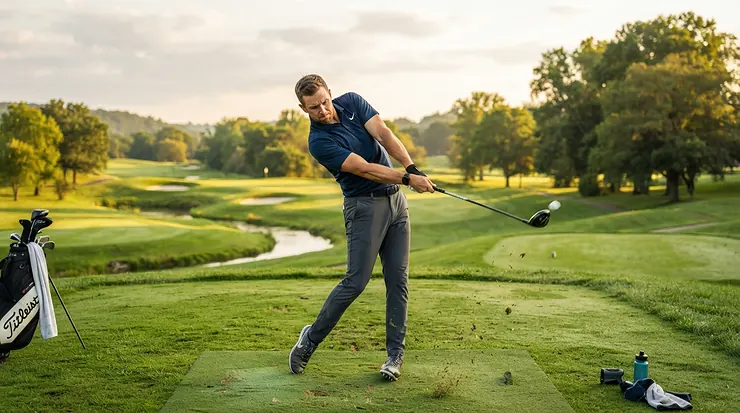
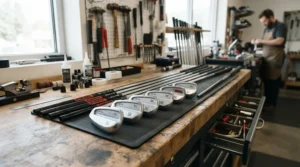
Tour-issue golf irons are compact, usually one-piece forged irons built to the standards of touring professionals: thin toplines, minimal offset, traditional lofts, and a solid back that prizes feedback over forgiveness. They are designed for golfers who strike the center of the face consistently and want to shape shots on demand.
Ever watched a pro’s 7-iron die next to the flag? That’s the design doing its job. ⛳
Blades have lost some ground on tour as many top players lean toward added forgiveness. Yet the category refuses to die. Mizuno introduced the Pro S-1 in September 2025, Wilson refreshed its Staff Model Blade in January 2026, and Cobra went and 3D-printed a muscle-back. The muscle-back design is the oldest idea in the iron family, and it keeps getting reinvented because nothing else delivers the same feedback.
This guide breaks down seven real sets, explains what forged blades for professional golfers actually do differently, and unpacks blade iron construction in plain English. You’ll also get a practical tour van fitting game plan and a straight answer about shot-shaping feel. One note on method: everything here comes from published specs and aggregated reviewer feedback, not from my own hands-on testing. 🏌️♂️
Quick Comparison: 7 Tour-Issue Golf Irons at a Glance
| Iron | Construction | 7-Iron Loft | Price Range (Set) | Best For |
|---|---|---|---|---|
| Titleist 620 MB | One-piece forged 1025 carbon steel | 35° | Around $1,400-$1,500 | Purists who want tour-proven shaping |
| Mizuno Pro S-1 | Grain Flow Forged HD, 1025E steel | 34° | Around $1,400-$1,500 | Feel-first ball strikers |
| TaylorMade P7MB | Compact grain forged 1025 steel | 34° | Around $1,300-$1,500 | Low-spin flighting and control |
| Srixon Z-Forged II | Forged 1020 carbon steel | 33° | Around $1,200 | Value-minded forged traditionalists |
| Ping Blueprint T | Forged 8620 steel plus tungsten weights | About 33° | Around $1,550-$1,800 | Tour looks with a touch of stability |
| Wilson Staff Model Blade | Forged 8620 carbon steel | 34° | Around $1,200-$1,400 | Modern shaping at a calmer price |
| Cobra 3DP MB | 3D-printed 316 stainless lattice | 34° | Roughly $1,900-$2,000 (six clubs) | Blade lovers who want forgiveness |
Look at the loft column first. Every set here carries a 33° to 35° 7-iron, which means a lower, shorter flight than a modern distance iron. The Srixon Z-Forged II and Wilson Staff Model Blade anchor the value end, while the Cobra 3DP MB and Ping Blueprint T sit higher for very different reasons: 3D-printed stability on one side, tungsten-assisted forging on the other. Prices shift constantly, so check current pricing before you commit.
💬 Just one click — help others make better buying decisions too!😊
Top 7 Tour-Issue Golf Irons: Expert Analysis
Seven sets, three price tiers, one shared obsession: feel. Each entry below pairs the spec sheet with what it means in practice, plus the themes reviewers keep returning to. Forged blades for professional golfers all look similar from across the range, but the differences show up in soles, steel grades, and how brutally they punish a toe strike.
1. Titleist 620 MB — razor-thin topline, tour-proven shaping
The Titleist 620 MB is the iron you picture when someone says “tour blade”: a clean chrome slab with a thin topline and nothing at address but a script logo.
Titleist forges each head from one piece of 1025 carbon steel with no inserts, so impact feel is just steel. The 7-iron sits at a traditional 35°, and lofts run from 21° in the 3-iron to 47° in the pitching wedge. Offset is minimal, and blade length grows progressively through the set, giving the long irons a slightly wider footprint where you need it most.
On paper, this is a set for someone who already knows their yardages and wants them to stay boringly consistent. Equipment tracker WITB Hub counts roughly twenty touring pros using it, which suggests the design still earns its keep. Reviewers consistently praise the looks and the soft-but-solid strike. Common complaints are price and the lack of mercy: one tester felt flush strikes arrived less often than hoped.
Pros:
- ✅ Compact head with a razor-thin topline
- ✅ One-piece forging delivers pure feedback
- ✅ Even four-degree gapping through the set
Cons:
- ❌ Zero perimeter help on mishits
- ❌ Weak lofts cost carry distance
Expect to pay around $1,400-$1,500 for a set. That’s fair for tour pedigree if you’ll genuinely play them often.
2. Mizuno Pro S-1 — buttery forged feel with a smarter sole
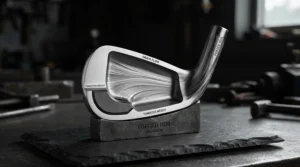
The Mizuno Pro S-1 is the brand’s replacement for the demanding Pro 241, and it leans harder into feel.
Each head is forged from a single billet of 1025E mild carbon steel in Hiroshima, with a copper underlay under the chrome. A new channel back moves mass higher for vertical stability. MyGolfSpy’s breakdown says that redesign also trimmed 43 grams of flash around each hosel. The sole is flatter with a sharper leading edge and one extra degree of bounce versus the 241, which should help golfers with shallower attack angles avoid digging. Lofts are traditional: a 34° 7-iron and 46° wedge.
Based on the specs, this suits a feel-obsessed ball striker who wants a little more turf-friendliness than old-school Mizunos offered. Reviewers consistently describe it as elite-only, and one outlet’s headline calls it “not for the faint hearted.” A common complaint is a distance drop-off on off-center hits.
Pros:
- ✅ Famously soft forged impact
- ✅ Sole suits shallow attack angles
- ✅ Compact square-toe shape
Cons:
- ❌ Unforgiving when contact drifts
- ❌ Premium price per club
Expect around $1,400-$1,500 for a 4-PW set. It’s a strong buy if feel is your top priority.
3. TaylorMade P7MB — flighted control from a 2,000-ton press
The TaylorMade P7MB is the definition of a no-gimmick blade: no foam, no inserts, just pressed steel.
TaylorMade forges 1025 carbon steel five times under a 2,000-ton press, aiming for a tighter grain structure. The face is milled with aggressive score lines, and offset shrinks from 1.9mm in the 3-iron to 1.4mm in the wedge. Lofts run 20° in the 3-iron to 47° in the PW, with a 34° 7-iron. All of that means a lower, penetrating flight and strong front-to-back dispersion control, though you give up some carry.
My read: this is for the player who works the ball both ways and wants trajectory to be a choice. Reviewers praise the buttery center strikes and workability. Critics point out it isn’t forgiving at all and, to some, feels pricey for such little tech.
Pros:
- ✅ Excellent flight and shape control
- ✅ Soft, solid center-strike feel
- ✅ Clean minimalist look at address
Cons:
- ❌ Mishits feel and travel poorly
- ❌ Little technology for the money
Expect around $1,300-$1,500. Good value if flight control is your main goal.
4. Srixon Z-Forged II — traditional blade at a friendlier price
The Srixon Z-Forged II proves you don’t need a luxury sticker to get a proper muscle-back.
Srixon forges it from 1020 carbon steel and uses a mid-height toe and heel design called PureFrame to place mass behind the strike zone. Progressive grooves are wider in the 3-7 irons and tighter and deeper in the 8-PW to bite in the scoring clubs. Lofts are 33° in the 7-iron and 46° in the wedge, and the Tour V.T. sole varies width and bounce through the set. Hideki Matsuyama has reportedly played a custom set.
The analysis is simple: this is the value pick for a better player who wants forged feel without paying a premium-brand tax. Today’s Golfer ranked it among the top muscle-backs. One flag: Srixon’s own site shows a more middling customer rating, so treat the praise with a pinch of salt.
Pros:
- ✅ Forged feel at a lower price
- ✅ Progressive grooves help scoring clubs
- ✅ Near-traditional lofts for control
Cons:
- ❌ Mixed retailer-style customer ratings
- ❌ Not the longest option available
Expect around $1,200 for a set. It’s arguably the best value here.
5. Ping Blueprint T — tungsten-assisted blade with real tour looks
The Ping Blueprint T is the one blade here carrying a visible gadget: a tungsten toe screw.
It’s a single-piece forging in 8620 carbon steel with more than 50 manufacturing steps, a narrow sole, and tungsten weights in both the toe and shaft tip to lift stability. Standard lofts run 19° in the 3-iron to 45° in the wedge, with Retro and Power loft options available. Today’s Golfer notes the 3-9 irons are a quarter inch shorter than the Blueprint S, nudging ball flight lower.
For golfers who want a true muscle-back look but secretly appreciate a stability backstop, that tungsten is quietly useful. Reviewers praise the looks and say it’s more forgiving than the original Blueprint. A recurring complaint is that some dislike the toe screw and notched hosel.
Pros:
- ✅ Compact tour look with tungsten stability
- ✅ Multiple loft specs allow tuning
- ✅ Blendable with other Blueprint heads
Cons:
- ❌ Toe screw divides purists
- ❌ Higher price than most rivals
Expect roughly $220-$235 per club, or around $1,550-$1,800 for a set. It’s worth it if you want modern engineering inside a classic shape.
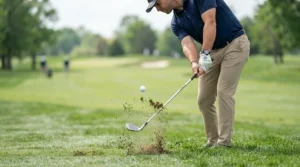
6. Wilson Staff Model Blade — modern shaping, matte finish, calmer price
The Wilson Staff Model Blade got a 2026 refresh that shortened the blade and modernized its shape.
It’s forged from 8620 carbon steel, which Wilson calls one of the softest options available, and finished in matte satin. The 7-iron is 34°. A Fluid Feel Hosel and refined toe weighting aim to add a hint of forgiveness without hurting workability. Distance-wise, one outlet found the traditional lofts still produced normal yardages for a good ball striker.
My take: this is the “modern blade at a human price” option. Golf Monthly’s reviewer gave it 4.65 and said it competes with anything out there. Today’s Golfer was more measured, noting the topline isn’t as razor-thin as some blade devotees prefer.
Pros:
- ✅ Attractive matte modern shaping
- ✅ Competitive price for a forged blade
- ✅ Spin and stopping power praised
Cons:
- ❌ Topline thicker than some prefer
- ❌ Limited availability through custom orders
Expect around $1,200-$1,400 for a set. It’s a smart buy for value-conscious shotmakers.
7. Cobra 3DP MB — the 3D-printed blade that bends the rules
The Cobra 3DP MB is the wildcard: it isn’t forged at all.
Each head is printed from 316 stainless steel in 2,600 layers around an internal lattice, freeing up weight for as much as 55 grams of tungsten in the heel, toe, and hosel. That raises stability while keeping a compact muscle-back shape. The 7-iron is 34°. Golf Digest’s Hot List testers found it unexpectedly forgiving for a players iron but warned it can feel feast-or-famine: center strikes fly low and piercing, while mishits lose distance.
Golf Monthly’s reviewer called the feel buttery and the forgiveness a game-changer, but flagged the price as nearly prohibitive. Purists may balk that it isn’t forged.
Pros:
- ✅ Surprising forgiveness for a blade
- ✅ Soft impact rivals forged heads
- ✅ Excellent turf interaction
Cons:
- ❌ Roughly $1,900-$2,000 for six clubs
- ❌ Not forged, which purists may resent
Expect around $330 per club. Pricey, but nothing else here pairs a blade’s shape with this much stability.
Head-to-Head: Tour-Issue Golf Irons Spec Breakdown
| Iron | Build | PW Loft | Reviewer Sentiment | Best For |
|---|---|---|---|---|
| Titleist 620 MB | One-piece 1025 forging | 47° | Gorgeous but unforgiving | Pure tour traditionalists |
| Mizuno Pro S-1 | Forged 1025E, channel back | 46° | Elite feel, demanding | Feel-first strikers |
| TaylorMade P7MB | Compact grain forged | 47° | Workable, pricey for tech | Flight-control players |
| Srixon Z-Forged II | Forged 1020 steel | 46° | Strong feel, mixed ratings | Value seekers |
| Ping Blueprint T | Forged 8620 plus tungsten | 45° | Good-looking, stable | Players wanting subtle help |
| Wilson Staff Model Blade | Forged 8620, refreshed | 46° | Praised looks and spin | Modern-shape fans |
| Cobra 3DP MB | 3D-printed lattice | 46° | Forgiving but costly | Forgiveness-hungry blade fans |
The wedge-loft column hints at set makeup: the Ping Blueprint T has the strongest wedge at 45°, while the Titleist 620 MB and TaylorMade P7MB sit at 47°, so check gapping to your wedges. Reviewer sentiment splits cleanly into two camps: “pure but demanding” and “pure but surprisingly playable.” The Cobra 3DP MB and Wilson Staff Model Blade lean toward the second camp.
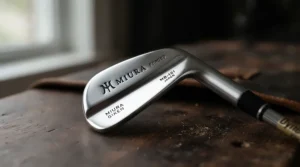
Your Tour Van Fitting Game Plan for Forged Blades
A tour van fitting puts a manufacturer’s builders and a truck full of heads and shafts in front of you. It’s not a standard retail fit. Forum reports suggest brand vans often run shorter sessions, around 30 to 45 minutes, and carry limited shaft inventory. Because they’re brand-run, expect to be fit into that brand’s irons. Mizuno, for example, runs a tour truck program where master club builders hand-build irons at events.
Before: Bring your current irons, your real carry numbers, and a short list of two or three sets. Warm up thoroughly.
During: Prioritize dispersion and descent angle, not just ball speed. Ask about lie angle, since a blade’s thin sole leaves little forgiveness for a bad lie. Forged carbon steel can be bent more easily than many cast heads, so lie and loft tweaks are practical.
After: Verify the build matches the spec sheet. Ask about re-checking lie and loft after a few months of play. If the van can’t deliver your preferred head or shaft, order a custom build rather than settling.
Real-World Scenarios: Which Tour-Issue Golf Irons Match Which Player?
The college player on a budget. You’re a scratch golfer, play four days a week on soft courses, and have about $1,200 to spend. The Srixon Z-Forged II or Wilson Staff Model Blade keeps spend low while delivering true forged blades for professional golfers’ specs.
The feel-first club player. A 3-handicap on firm, fast parkland, you play twice a week and hit it flush most days. The Mizuno Pro S-1 or Titleist 620 MB fits: sole shapes handle firm turf, and the feedback pays off.
The aging ball striker who still wants the look. You’re a 5-handicap whose contact isn’t what it was at 25 but you refuse to give up muscle-back looks. The Ping Blueprint T or Cobra 3DP MB offers stability inside a blade shape. Pair either with a blended set if the long irons feel punishing.
✨ Ready to Shop Smarter?
🔍 Take your tour-issue golf irons search to the next level with these carefully selected sets. Click any highlighted item to check current pricing and availability. These clubs will help you build the controlled, authentic ball flight you’ve been chasing!
How to Choose Tour-Issue Golf Irons: 6 Steps
- Audit your contact pattern. Use impact tape or a launch monitor. If you miss the center often, consider a blended set.
- Pick a loft philosophy. A 33°-35° 7-iron means control but shorter carry; check gapping against your wedges.
- Match the sole to your attack angle. The Mizuno Pro S-1‘s flatter sole suits shallow swings; steep diggers may prefer more bounce.
- Choose shaft weight deliberately. Tour-weight steel in the 110-130g range is standard on forged blades.
- Judge the topline at address. The Titleist 620 MB is razor-thin; the Wilson Staff Model Blade is slightly thicker.
- Book a proper fitting. Lie angle matters most on forged blades because the sole is narrow.
Blade Iron Construction: Forging, Steel Grades and 3D Printing
Blade iron construction comes down to three choices: how the head is shaped, which steel it’s made from, and where the mass sits. Titleist’s own blade iron explainer describes a blade as a head typically forged from a single piece of soft carbon steel, with mass concentrated in the lower half.
Steel grades vary: 1025 on the Titleist 620 MB, TaylorMade P7MB, and Mizuno Pro S-1, 1020 on the Srixon Z-Forged II, and 8620 on the Ping Blueprint T and Wilson Staff Model Blade. Brands disagree on which feels softest, so treat the number as a clue, not a verdict.
The Cobra 3DP MB breaks the mold entirely. Its lattice interior saves weight that Cobra redistributes into tungsten, effectively building perimeter weighting inside a blade shape.
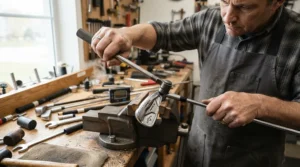
What to Expect: Shot-Shaping Feel in the Real World
Shot-shaping feel is the sense that the clubface is a paintbrush, not a hammer. Compact heads, minimal offset, and narrow soles let you open or close the face with less fighting.
The trade-off is distance. In one reviewer’s example, a 13-handicap carried a Mizuno Pro S-1 7-iron around 160-165 yards on clean contact, versus 175-plus from strong-lofted game-improvement irons. Mishits get honest feedback, too: a thin shot stings, a toe strike twists.
Expect lower, more penetrating flight with spin that responds to your face angle. Dispersion is front-to-back tight when you strike it well, but the margin for error is narrow.
Forged Blades for Professional Golfers vs. Cavity Backs
| Feature | Tour-Issue Blades | Cavity-Back Players Irons | Game-Improvement Irons |
|---|---|---|---|
| Feedback | Maximum | High | Moderate |
| Forgiveness | Low | Medium | High |
| Workability | Highest | High | Lower |
| Typical 7-Iron Loft | 33°-35° | 30°-34° | 27°-31° |
| Best For | Consistent ball strikers | Better players wanting help | Mid and high handicappers |
Blades such as the Titleist 620 MB and TaylorMade P7MB concentrate mass behind the sweet spot. Cavity-back players irons like the Titleist T150 and TaylorMade P7CB move weight to the perimeter, widening the sweet spot while keeping a compact look. For most golfers, the cavity-back is the smarter weapon; for a precise few, the blade rewards discipline with pure feedback.
Features That Actually Matter in Professional Golf Clubs for Maximum Feel and Control
Professional golf clubs for maximum feel and control share a short list of real differentiators. Sole geometry matters, because it decides how the club meets turf. Lie angle matters even more with a narrow sole. Shaft weight and profile affect feel as much as the head does. Loft gapping determines whether your 8-iron and 9-iron actually give you different yardages.
What doesn’t matter as much: marketing names for forging processes, stamped branding, or how many tour pros are reportedly using a set. Those are nice-to-knows, not buying criteria. Finish matters slightly for glare at address, but it won’t fix a bad lie angle or mismatched shaft.
Long-Term Cost and Maintenance
| Tier | Sets | Typical Set Range | Value Verdict |
|---|---|---|---|
| Value | Srixon Z-Forged II, Wilson Staff Model Blade | Around $1,200-$1,400 | Best forged-per-dollar |
| Core | Titleist 620 MB, Mizuno Pro S-1, TaylorMade P7MB | Around $1,300-$1,500 | Premium brand feel |
| Premium | Ping Blueprint T, Cobra 3DP MB | Around $1,550-$2,000 | Paying for tech and stability |
The Srixon Z-Forged II and Wilson Staff Model Blade deliver the lowest cost per forged feel, while the Cobra 3DP MB only makes sense if you’ll actually use its forgiveness. Plated finishes can scuff, so wipe grooves clean after rounds and have lie and loft rechecked regularly.
Staying conforming: New iron models have had to meet USGA groove specifications since 2010. If you buy used or restored clubs, check the USGA conforming club database first.
FAQ
❓ Can a 10-handicap play tour-issue golf irons?
❓ How much do tour-issue golf irons cost?
❓ How long does a tour van fitting take?
❓ Are forged blades legal in tournaments?
❓ Which shafts pair best with forged blades for professional golfers?
Conclusion
Tour-issue golf irons reward precision and punish sloppiness, and that’s exactly the point. The Titleist 620 MB remains the purist’s benchmark, the Mizuno Pro S-1 chases the softest feel, and the TaylorMade P7MB nails flight control. Value hunters should look hard at the Srixon Z-Forged II and Wilson Staff Model Blade, while the Ping Blueprint T and Cobra 3DP MB offer stability for players who want blade looks with a safety net.
The honest takeaway: blade iron construction and shot-shaping feel only matter if you can strike the center consistently. If you can, these forged blades for professional golfers will tell you everything about every swing. If you can’t, a cavity-back players iron will probably lower your scores faster. Either way, book a proper tour van fitting before spending four figures, and let your own numbers choose.
Recommended for You
- Golf Driver For Advanced Players wWith Low Spin: 7 Best Picks 2026
- Tour-Level Golf Wedges: 7 Proven Spin Machines For 2026
- Forged Irons For Advanced Golfers: 7 Best Picks In 2026
Disclaimer: This article contains affiliate links. As an Amazon Associate, I earn from qualifying purchases. If you purchase products through these links, we may earn a small commission at no additional cost to you.
✨ Found this helpful? Share it with your friends! 💬🤗
