
In This Article
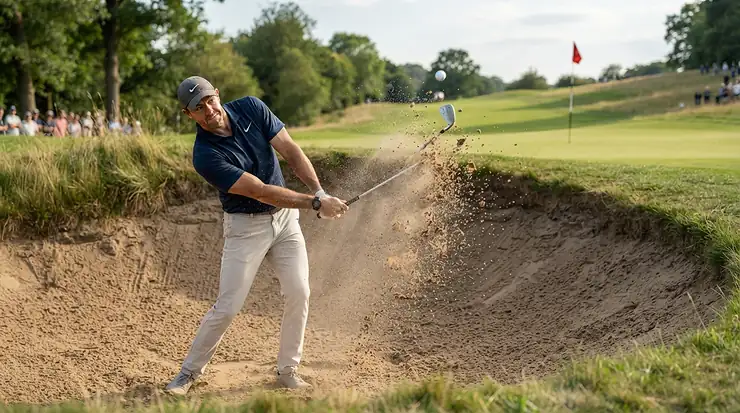
Tour-level golf wedges are scoring clubs built to the standards touring pros expect. They have compact heads, groove geometry pushed close to the legal limit, tightly controlled manufacturing and a menu of sole grinds. The trade is simple: you give up some forgiveness and get precise control over spin, trajectory and turf interaction.
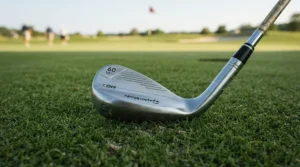
⛳ Here’s the uncomfortable truth about scoring. Your driver gets the glory, but your wedges decide whether a missed green costs you a stroke or saves par. A sand wedge is a club designed around one idea, the sole sliding through turf or sand instead of digging, and every modern tour-level design is a more refined version of that idea.
The 2026 crop is unusually strong. TaylorMade went fully forged. Callaway hid a hollow “spin pocket” in the head. Cleveland brought Roger Cleveland back into the grind room. Ping widened its fitting menu, and Titleist standardized center of gravity across every Vokey grind. Meanwhile Wilson proves you don’t need to pay premium money to get serious bite.
This guide compares seven genuinely tour-caliber options using real specs and aggregated review sentiment. It explains spin milling grooves and wedge bounce in plain English, and shows you how to build a short game system, not just buy a shiny club. It’s analysis, not a catalog. You’ll know what each spec means on the course, who each wedge suits and where each one disappoints. Prices appear as ranges only because they shift constantly, so check current pricing before you buy.
Quick Comparison: Tour-Level Golf Wedges at a Glance
| Wedge | Standout Technology | Grind Options | Price Range | Best For |
|---|---|---|---|---|
| Titleist Vokey SM11 | Loft-specific Spin Milled grooves, standardized CG | 6 grinds, 27 combinations | Around $200 | Fitted players who want predictability |
| TaylorMade MG5 | Fully forged, saw-milled grooves, raw face | 6 grinds | Around $200 | Feel-first players who want aggressive bite |
| Callaway Opus SP | Spin Pocket, 17° groove angle | 5 grinds | Around $200 | Low-launch, high-spin scorers |
| PING s259 | Hydropearl 2.0 finish, elastomer insert | 6 grinds, 25 combinations | Around $200 | All-round versatility |
| Cleveland RTZ 2 | UltiZip grooves, ZipCore iQ, Z-Alloy | 5 grinds | Roughly $190–$220 | Bunker players and spin hunters |
| Mizuno Pro T-1 | Grain Flow Forged HD, Quad Cut+ grooves | 6 grinds | Roughly $190–$230 | Purists chasing the softest feel |
| Wilson Staff Model ZM | Deeper ZM grooves, garnet face blast | 3 bounce options in lofted wedges | Around $150 | Value-minded better players |
Notice that the price spread is narrow. Six of the seven land in the same premium bracket, so the decision comes down to grind availability, feel and head shape rather than cost. The Staff Model ZM is the clear value outlier. If forged softness matters most, the MG5 and Pro T-1 are the likeliest fits. If you want the deepest fitting system, the Vokey SM11 and s259 lead on combinations.
💬 Just one click — help others make better buying decisions too!😊
Top 7 Tour-Level Golf Wedges: Expert Analysis
1. Titleist Vokey SM11 — widest grind menu in golf
The Vokey SM11 offers 27 loft, bounce and grind combinations from 44° to 60° across six grinds (F, S, M, D, K and T). That’s the deepest fitting library in this group.
Titleist’s Vokey Spin System pairs a directional face texture with three groove profiles tuned to loft ranges, and the Spin Milled grooves carry about 5% more volume than the SM10’s. In practice, your 50° and your 60° aren’t running the same groove shape, so full shots and delicate pitches each get tuned friction. Titleist also standardized center of gravity across grinds within a loft, so swapping a low-bounce 58° for a higher-bounce one won’t change launch.
This wedge suits players who value predictability over fireworks and will invest in a fitting. Be realistic about upgrades, though. One Golf Monthly reviewer cautioned that SM10 owners shouldn’t expect a dramatic spin jump.
Reviewers consistently praise flight predictability and spin. MyGolfSpy ranked it best for spin in its 2026 wedge test, and a six-month owner review reported spin holding up despite cosmetic wear. Retail owner scores also show forgiveness as the weakest attribute, which is honest for a blade.
Pros:
- ✅ Six grinds, 27 loft/bounce combinations
- ✅ Identical CG across grinds within a loft
- ✅ Spin retention reported over months of play
Cons:
- ❌ Limited forgiveness on off-center strikes
- ❌ Modest improvement over SM10 for current owners
Priced around $200 per wedge, it’s a strong value only if you get the grind right, and the fitting menu exists to make that easy.

2. TaylorMade MG5 — first fully forged Milled Grind
The MG5 is the first fully forged wedge in TaylorMade’s Milled Grind line, cut from a billet of soft carbon steel and then milled for grind, grooves and hosel. That’s a big deal for a brand once known for firmer-feeling milled wedges.
The saw-milled grooves have steeper walls and sharper edges, which push geometry closer to the legal limit and grab hardest on partial shots. TaylorMade claims 13% more spin retention than the MG4 from wet turf, a manufacturer figure worth treating as directional. The six grinds (SB, SC, SX, HB, LB and TW) cover shallow and steep deliveries, and the TW grind follows Tiger Woods’ current preferences.
On paper, this wedge rewards players who already own a repeatable short game. Golfalot noted that bladed wedges like this suit golfers confident in their technique, which fits the compact shape and demanding sweet spot.
Reviewers consistently describe the feel as noticeably softer than previous Milled Grind models and the wet-weather control as improved. A common caveat is price, since the TW grind sits above the standard model. The unplated raw face also rusts over time by design, which TaylorMade says preserves consistent spin.
Pros:
- ✅ Forged feel with milled precision
- ✅ Six grinds, including a high-bounce HB option
- ✅ Better wet-turf spin retention than MG4
Cons:
- ❌ Raw face rusts, which some golfers dislike
- ❌ TW grind costs more than other grinds
Expect around $200 per wedge, a fair premium for a first-generation forged milled design.
3. Callaway Opus SP — spin pocket for lower, spinnier flight
The Opus SP hides a hollow “spin pocket” in its higher-lofted heads (54° and up) to raise center of gravity, which promotes a lower launch with more spin. The 48°–52° models are solid bodies.
A 17° groove angle with tighter spacing increases groove-edge contact, and a cross-hatch laser texture (Spin Gen 2.0) adds friction across the face. The practical takeaway is a controlled, penetrating flight that checks up rather than ballooning. Five grinds (T, C, X, S and W) run from 6° bounce on the T to as much as 14° on the W.
It suits skilled players who want to flight the ball down in wind. Higher lofts also carry a thicker top line and longer hosel, which Callaway designed for visual confidence on open-face shots.
Reviewers consistently highlight the spin and lower trajectory. Golfalot noted the wedge could have been somewhat more forgiving, and Golf Monthly flagged that some players may prefer a cleaner-looking head. Golf Digest’s panel awarded it a gold medal on its 2026 Hot List.
Pros:
- ✅ High, consistent spin from varied lies
- ✅ Low, controlled launch for windy days
- ✅ Five grinds from 6° to 14° bounce
Cons:
- ❌ Less forgiving than some rivals
- ❌ Busier look behind the ball for some eyes
At around $200 per wedge, it’s well priced for players who want a lower-flighted scoring club.
4. PING s259 — most complete all-rounder
The s259 earned Editor’s Choice from Breaking Eighty because it’s near the top in every category without being the best in any single one. That’s the most useful trait a wedge can have.
Ping stayed with cast 8620 carbon steel and added a larger elastomer insert for a softer, tour-preferred feel. Six grinds (S, W, B, H, T and E) cover lofts from 46° to 62° in 25 loft/grind combinations. The T grind has the lowest effective bounce, at 6°. A Hydropearl 2.0 finish and friction-adding face blast support wet-weather spin.
Here’s where the numbers matter. Golf Monthly’s tester produced about 7,289 rpm on a 50-yard pitch, marginally more than a Vokey SM11 in the same session. That’s a single tester’s data, but it shows the s259 competes with the spin leaders.
Reviewers consistently praise stopping power, soft feel and the new W grind in 50° and 52° for steeper deliveries. A common complaint is that the compact profile won’t suit everyone, and some Golf Digest testers found it slightly heavy.
Pros:
- ✅ Strong spin plus soft feel
- ✅ 25 loft/grind combinations
- ✅ Works from tight lies and bunkers
Cons:
- ❌ Compact head shape isn’t for everyone
- ❌ Slightly heavier feel than some wedges
Plan on around $200 per wedge, an easy value call for most better players.
5. Cleveland RTZ 2 — Roger Cleveland’s grinds return
The RTZ 2 brings Roger Cleveland back into the sole-design process and revives the 588 grind, a design with 8° bounce and higher toe bounce that still has fans.
Five grinds (Mid, Full, Low, 588 and Adapt) cover most swing types. Mid carries 10° bounce, Full 12° for deep divots and soft turf, and Adapt adds full-face grooves with a high-toe shape for open-face creativity. UltiZip grooves clear grass and debris, and HydraZip blasting plus laser-milled lines add friction. Second-generation Z-Alloy and loft-specific ZipCore iQ weighting fine-tune feel and stability.
Be realistic about upgrades. Golfalot found little performance difference from the original RTZ outside the new grinds, so owners of the first model have less reason to switch.
Reviewers consistently praise bunker performance, wet-turf grip and big spin numbers, and one review site reported noticeably higher spin than the Vokey SM11 on comparable shots. Cleveland’s own product page shows a more moderate customer rating, around 4 out of 5, a reminder that editorial testing and owner experience don’t always match.
Pros:
- ✅ Five grinds, including the revived 588
- ✅ Strong wet-turf and bunker performance
- ✅ Z-Alloy gives soft, muted feel
Cons:
- ❌ Adapt grind comes only with full-face grooves
- ❌ Small upgrade over the original RTZ
Expect roughly $190–$220 per wedge, with value strongest for new buyers rather than upgraders.

6. Mizuno Pro T-1 — softest feel in the group
The Pro T-1 is Mizuno’s flagship tour wedge, forged from 1025 Pure Select mild carbon steel with a copper underlay. The feel is the point.
Grain Flow Forged HD processing delivers the buttery impact Mizuno irons are known for, and Quad Cut+ grooves with Hydroflow micro-grooves manage moisture. Six grinds (S, M, P, C, V and X) cover the range, with the new M mid-bounce sole replacing the older D grind. The X grind drops to about 6° bounce for firm turf and open faces.
Think of it as a wedge for players who judge distance by feel. The compact player-oriented shape leaves less margin on full swings, and Golf Monthly’s tester noted a noticeable distance drop on mishits.
Reviewers consistently rave about softness and looks. Spin gets more mixed treatment, as Plugged In Golf rated it average while Golf Monthly found strong spin in the dry. Golf Digest’s panel gave it a gold medal in the 2025 Hot List, and it holds a silver in 2026. Some retail owners call it a little pricey.
Pros:
- ✅ Exceptionally soft, feedback-rich feel
- ✅ Six grinds, including a 6° X option
- ✅ Handsome, compact tour shape
Cons:
- ❌ Mishits lose noticeable distance
- ❌ Spin ratings vary by tester
Expect roughly $190–$230 per wedge, with prices varying by retailer and shaft. It’s worth it only if feel is your top priority.
7. Wilson Staff Model ZM — tour-caliber spin at a friendlier price
The Staff Model ZM proves you don’t need premium pricing to get tour-style bite. It’s forged from 8620 carbon steel with deeper ZM grooves and garnet face blasting.
Wilson built it with staff-player input. The straighter leading edge and raised CG suit controlled, lower flight in higher lofts, and an HT version adds a high toe with full-face grooves in 56°–60° for more flexibility. Golf Digest explained that the groove’s steeper wall angle reduces spin loss from rough and wet lies and helps limit flyers.
This is a solid choice for a low-to-mid handicapper who wants forged performance without paying the top tier. The tradeoff is fitting depth. National Club Golfer noted only three bounce options in the lofted wedges, fewer than competitors offer.
Reviewers consistently describe the spin as strong and the look as classic. Golf Monthly found the feel slightly firmer than some premium forged wedges, while Golf Digest’s testers called it a steady, sensible performer.
Pros:
- ✅ Forged feel at a lower price
- ✅ Deep ZM grooves with strong spin
- ✅ Optional HT full-face groove model
Cons:
- ❌ Only three bounce choices in lofted wedges
- ❌ Feel is firmer than some premium rivals
Priced around $150 per wedge, it’s the best value here, especially if you’re buying several.
How the Seven Compare Head-to-Head
| Wedge | Grinds | Spin Technology | Feel Profile | Price Range | Best For |
|---|---|---|---|---|---|
| Vokey SM11 | 6 | Spin Milled, loft-specific grooves | Soft, head-balanced | Around $200 | Fitting-driven players |
| MG5 | 6 | Saw-milled grooves, Spin Tread | Forged soft | Around $200 | Feel-first shotmakers |
| Opus SP | 5 | 17° grooves, Spin Pocket | Solid, lower launch | Around $200 | Windy, firm-turf players |
| s259 | 6 | Hydropearl 2.0, face blast | Soft with insert | Around $200 | All-round versatility |
| RTZ 2 | 5 | UltiZip, HydraZip | Muted Z-Alloy | Roughly $190–$220 | Bunker-focused players |
| Pro T-1 | 6 | Quad Cut+, Hydroflow | Buttery forged | Roughly $190–$230 | Purists |
| Staff Model ZM | 3 bounce options | ZM grooves, garnet blast | Slightly firmer | Around $150 | Value shoppers |
Look at what the table says about grinds. The Vokey SM11 and s259 give you the most combinations, which matters most if you play awkward turf or an unusual attack angle. The Pro T-1 and MG5 reward players who trust feel over numbers, while the Staff Model ZM is the budget-friendly pick if you can live with fewer bounce choices. For firm, fast turf, the Opus SP‘s lower launch and 6° T grind deserve a look.
Spin Milling Grooves: What the Machining Really Does
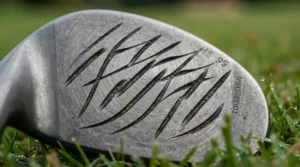
Every wedge above relies on milled or machined grooves, and the quality of the machining matters as much as the marketing. Spin milling grooves are cut by precision tooling instead of stamped or cast, which holds tighter tolerances. Tighter tolerances let designers push groove edges closer to the rules limit without risking a non-conforming club.
That’s not theoretical. The USGA’s groove conformance rules set limits on groove width (0.035 in.), depth (0.020 in.) and spacing, with a small tolerance on single measured grooves. TaylorMade’s saw-milled grooves and Titleist’s Spin Milled process both exist to land near those limits consistently. Golf Today’s tester of the Vokey SM11 noted Titleist can now get closer to the legal limit without accidentally producing a non-conforming wedge.
Here’s what spin milling grooves do for you, and what they don’t. They clean the ball’s cover from rough and wet lies by channeling debris away, which is why spin retention in damp conditions improved across this class. They don’t create spin from nothing. Strike quality, loft, ball choice and turf still decide the number.
A practical tip: groove edges wear. Sharp edges matter most on partial shots, so scoring-zone wedges often lose their bite before the rest of the bag does. Titleist claims heat-treated grooves double durability on the SM11, though that’s a manufacturer claim.
Wedge Bounce Explained: Matching Sole to Swing
Wedge bounce is the angle between the leading edge and the trailing edge of the sole. A higher number means the club resists digging, while a lower number lets the leading edge sit closer to the turf. The 52-8 notation common in wedge naming means 52° loft with 8° bounce.
Here’s the catch most buyers overlook: bounce isn’t just a number, it’s a relationship. Effective bounce changes when you open the face or play the ball forward, which is why grind (the shaping of heel, toe and trailing edge) matters as much as the printed bounce. A 10° wedge with heavy relief behaves very differently from a 10° wedge with a full sole.
Use this rough guide:
- Steep swing, soft turf or fluffy sand: choose higher bounce and fuller soles, such as the RTZ 2 Full grind (12°), or the MG5 HB grind.
- Shallow swing, firm turf or tight lies: choose lower bounce with relief, such as the Opus SP T grind, the s259 T grind or the Pro T-1 X grind.
- In between or unsure: a mid-bounce grind such as the s259 S or the RTZ 2 Mid is the safe starting point.
One more rule of thumb: bounce is usually lower on your gap wedge and higher on your sand wedge. Get your divot size and course conditions right first, then pick the grind.
How to Choose Tour-Level Golf Wedges
Here’s the short answer: match your gapping, your attack angle and your turf. Follow these steps.
- Map your gaps first. Check the loft of your pitching wedge and build 4°–6° steps from there. Buying a wedge before you know your gaps is how golfers end up with two clubs doing the same job.
- Identify your attack angle. Steep divots call for more bounce, while shallow sweeping strikes want less. Your divot is the most honest data you have.
- Match bounce to turf. Soft, lush courses want high bounce, while firm, sandy or links-style courses reward low bounce with relief.
- Choose a grind for your shots. If you open the face often, look for heel and toe relief. If you play mostly square-faced, a fuller sole adds stability.
- Test groove and face tech in your conditions. Wet courses make Hydropearl, HydraZip and Spin Tread-style features more useful than they sound on a dry range.
- Check feel against forgiveness. Forged, compact wedges feel great and punish mishits. Be honest about your strike quality.
- Get fitted if you can. Golf Digest’s Hot List coverage of the Vokey SM11 shows how many options exist in just one model family, which is why a fitting is worth the time.
Short Game Precision: Building a Wedge System, Not a Collection
Short game precision comes from knowing exactly how far each wedge flies on three swing lengths, not from owning the most expensive club. Treat your wedges as a system.
Start with a distance ladder. Take each wedge to a range or short game area and record carry distances at a half swing, three-quarter swing and full swing. Do it with the same ball you play. Within a few sessions you’ll have a table you can use on the course.
Next, think about trajectory control. Tour-level wedges with higher centers of gravity, such as the Opus SP and Staff Model ZM, tend to produce lower, more controlled flight. That helps when you need to hold your line in wind, but it demands solid contact.
Finally, practice with purpose. Three habits drive short game precision: consistent ball position, a repeatable low point and an honest read of the lie. No grind or groove replaces them. Buy the tools, then train the skill.
Building an Advanced Golf Club Set for Competitive Play
An advanced golf club set for competitive play looks different from a casual set. Players in club championships and amateur events tend to carry three or four wedges, and they choose them as a family, not as individual impulse buys.
Think about the bag in layers. Your pitching wedge usually comes from your iron set, so the next wedge should step down in loft by a consistent gap. Many competitive players then add a gap wedge, a sand wedge and a lob wedge, with bounce staggered from lower to higher as loft increases. Matching grind families across the bag (for example, Vokey SM11 grinds from one fitting session, or an s259 set with S and T grinds) keeps feel consistent.
Fourteen clubs is the limit, so every wedge must earn its slot. If you rarely hit a 64° lob, that slot may be better used by a utility club or extra fairway wood. Conforming clubs matter too. The USGA and R&A equipment rules require conforming grooves for competition, and all seven wedges reviewed here are sold as conforming models.
The key idea for an advanced golf club set for competitive play is coherence. Each wedge should have a job, and a gap that justifies it.

Tour-Level Golf Wedges vs Game-Improvement Wedges
Tour-level golf wedges aren’t automatically better. They’re better for a specific type of player.
| Feature | Tour-Level Wedge | Game-Improvement Wedge | Best For |
|---|---|---|---|
| Head shape | Compact, blade-style | Larger, cavity-back | Tour-level for better ball-strikers |
| Forgiveness | Lower | Higher | Game-improvement for inconsistent contact |
| Grind options | Many | Few | Tour-level for fitting depth |
| Workability | High | Moderate | Tour-level for shotmakers |
| Price | Around $150–$230 | Often lower, such as under $150 for the Cleveland CBX Zipcore | Game-improvement for tight budgets |
This table tells you something simple. If your strikes drift toward the heel or toe, a cavity-back wedge like the Cleveland CBX Zipcore gives you cavity-back forgiveness and real wedge feel for under $150, per one buying guide. If you want to flight shots, open the face and tune bounce, tour-level golf wedges give you the control. Many players split the difference, using game-improvement shapes for full shots and tour-level wedges for greenside work.
Real-World Scenarios: Which Wedge for Which Player
Case studies beat generic advice. Here are three profiles.
The 3-handicap club champion on firm, fast turf. Plays four rounds a month, shallow attack angle, budget near $800 for four wedges. Match: the Vokey SM11 with a low-bounce lob wedge and a mid-bounce sand wedge, or an s259 T grind lob. The Vokey’s loft-specific grooves reward a player who spends hours on partial shots.
The 10-handicap on a soft parkland course. Steep divots, regular bunker trouble, wants forgiveness without giving up spin. Match: the RTZ 2 Full grind (12° bounce) in the sand wedge, or the MG5 HB grind. Higher bounce helps keep the club moving through turf, and wet-turf grooves help when mornings are damp.
The college student on a tight budget. Plays twice a week, needs two wedges, budget about $300. Match: two Staff Model ZM wedges at around $150 each. The forged feel and deep grooves deliver tour-style performance without overspending.
For a deeper gold-medal comparison, Golf Digest’s Hot List panel has awarded medals across several wedges in this guide, which is a useful reference when narrowing choices.
Practical Usage Guide: Setup, Break-In and Long-Term Cost
Buying is the easy part. Here’s how to get value from your wedges.
Setup. Verify lofts before you play them. Even new wedges can vary by a degree, and a quick check prevents gap surprises.
First 30 days. Hit each wedge at three swing lengths, log your carry distances and note which grind feels best from tight lies and bunkers. Avoid changing multiple things at once, such as ball, grip and wedge together.
Maintenance. Brush grooves after each round and keep the face dry. For raw-face wedges like the MG5, light rust is normal and cosmetic. Don’t scrub it off, since TaylorMade says the raw finish is intended to preserve spin consistency.
Long-term cost. Suppose you buy four wedges at around $200, or about $800 total, and replace them every two seasons. If you play 40 rounds a season, that’s about 80 rounds per set, or roughly $10 per round. That’s illustrative math, not a guarantee, but it shows why groove durability matters. A lob wedge is also usually the first club to lose its edge, since you use it for the most demanding shots.
Common first-month mistakes: buying all four lofts at once without testing grinds, ignoring gapping and judging a wedge on one range session.

FAQ
❓ Which tour-level golf wedges hold spin best in wet conditions?
❓ Are tour-level golf wedges worth the money for a mid-handicapper?
❓ How many wedges belong in an advanced golf club set for competitive play?
❓ What wedge bounce should I buy for firm, fast turf?
❓ How often should I replace tour-level golf wedges?
Conclusion
Tour-level golf wedges reward the player who treats them as a system. The Vokey SM11 is the safest all-round pick if you’ll get fitted, and the s259 is the strongest all-rounder for versatility. The MG5 and Pro T-1 are best for feel purists, the Opus SP suits low-launch scorers and the RTZ 2 shines in bunkers and wet turf. If you want tour-style performance without top-tier pricing, the Staff Model ZM at around $150 makes a smart start.
The big lesson is that no single spec decides everything. Spin milling grooves help, but wedge bounce and grind matter just as much, and short game precision still depends on your technique and practice. Build your gaps first, pick grinds that match your swing and test in your own conditions.
Recommended for You
- Forged Irons For Advanced Golfers: 7 Best Picks In 2026
- Players Irons For Advanced Golfers: 7 Best Picks (2026)
- Golf Club Set For 15 Handicap Golfers: 7 Picks To Break 90 (2026)
Disclaimer: This article contains affiliate links. As an Amazon Associate, I earn from qualifying purchases. If you purchase products through these links, we may earn a small commission at no additional cost to you.
✨ Found this helpful? Share it with your friends! 💬🤗
