
In This Article
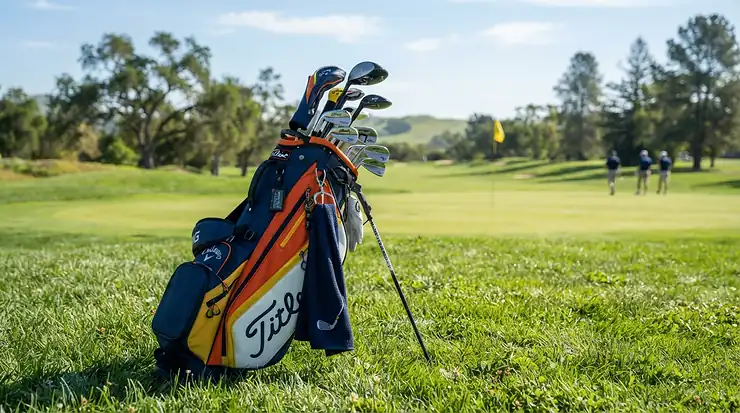
Standing on the range for the first time with a rented 7-iron in your hands, wondering why the ball is skittering along the ground instead of soaring into the sky, is a rite of passage for pretty much every golfer alive. Beginner golf clubs for women exist specifically to shorten that awkward phase — they’re clubs engineered with lighter shafts, higher lofts, and more forgiving clubheads so that new players can make solid contact and see the ball fly, even before their swing mechanics are dialed in. In short: they’re built to make golf fun before it’s perfect.
Here’s the good news — you’re joining the game at an incredible moment. According to recent National Golf Foundation analysis, the U.S. golf industry has seen a 45 percent rise in the number of on-course female golfers between 2020 and 2025, and women and girls now account for a record share of the golfer population, up from just 20 percent in 2012. You are not an outlier here. You’re part of the fastest-growing segment in the sport, and the equipment industry has responded with genuinely good options at every price point.
This guide dives into the seven best beginner golf clubs for women on the market right now, breaks down exactly how they differ, and answers the questions that actually matter before you buy — things like ladies flex shafts, petite versus standard length, and how forgiving irons for beginner golfers really work under the hood. We’ll also touch on beginner golf clubs for men, since plenty of readers are shopping for a partner or spouse alongside their own set. No fluff, no invented reviews — just honest, research-backed analysis to help you spend your money wisely.
Quick Comparison Table
| Category | Best Pick | Price Range | Best For |
|---|---|---|---|
| Best Overall | Cobra Women’s Fly XL Complete Set | $600–$850 | All-around beginners wanting a premium bag |
| Best Value | Callaway Strata Ultimate Women’s 16-Piece | $400–$550 | Budget-conscious first-timers |
| Best Premium | Callaway Reva 11-Piece Set | $900–$1,200 | Golfers who want to skip the “starter” phase |
| Best Budget | Wilson Profile SGI Women’s Complete Set | Under $300 | Trying golf without a big financial leap |
| Best Petite Fit | Wilson Profile SGI Petite Complete Set | Under $350 | Golfers 5’3″ and under |
A quick glance tells the real story here: price and forgiveness don’t move in lockstep the way you might expect. The Wilson Profile SGI Women’s Complete Set delivers genuinely usable forgiveness for a fraction of what the Callaway Reva 11-Piece Set costs, which matters if you’re not yet sure golf is a lifelong hobby. On the other hand, buyers who already know they’re committed may find the Cobra Women’s Fly XL Complete Set worth the extra spend since bag quality and component consistency tend to hold up longer under regular use.
💬 Just one click — help other new golfers make a smarter first purchase too!😊
Top 7 Beginner Golf Clubs for Women: Expert Analysis
1. Cobra Women’s Fly XL Complete Set — best all-around bag and component quality
The standout here isn’t a single club — it’s how the whole 10-club package works together, right down to a stand or cart bag that punches above its price class. The 460cc driver head is paired with a lightweight graphite shaft tuned for slower swing speeds, meaning the clubface stays square through impact more often than it would with a heavier, stiffer alternative. That translates directly into straighter tee shots for someone who hasn’t grooved a repeatable swing yet.
Based on the spec sheet, the fairway wood and hybrids carry generous loft angles designed to get the ball airborne quickly, which matters enormously for new golfers who tend to hit down and behind the ball. The irons use a wide sole and perimeter weighting, so even a slightly thin or fat strike still produces a playable shot instead of a dribbler. Reviewers consistently note that the included stand bag — complete with a fleece-lined valuables pocket and a rain hood — feels sturdier than most bags bundled with beginner sets, and several buyers specifically mention going from complete beginner to comfortable intermediate player within their first season using this set.
Pros:
- ✅ Genuinely sturdy bag that outlasts most bundled alternatives
- ✅ Wide-sole irons forgive mishits without sacrificing distance
- ✅ Lightweight shaft helps generate clubhead speed naturally
Cons:
- ❌ Pricier than most “starter” sets in this category
- ❌ Cart bag version is heavier to carry for walkers
At a typical price in the $600–$850 range, the Cobra Women’s Fly XL Complete Set isn’t the cheapest way into golf, but the value proposition holds up well if you plan to play regularly rather than test the waters once or twice.

2. Callaway Strata Ultimate Women’s 16-Piece — most complete package for the price
What most buyers overlook about this set is that it swaps out the traditional long irons — the hardest clubs in any bag for a beginner to hit — for a pair of hybrids instead. That’s a bigger deal than it sounds: hybrids launch higher and forgive off-center strikes far better than a 4- or 5-iron ever will, so you’re set up to succeed on your very first tee shot with these clubs rather than fighting the equipment.
The 16-piece count means you get a 460cc driver, 3-wood, 4- and 5-hybrids, a full 6-iron through sand wedge run, a cart bag, and headcovers, all engineered with the same lightweight, high-launch philosophy throughout. Aggregated buyer sentiment on this line is broadly positive regarding the woods and hybrids, though a recurring theme in user reviews is that the irons and wedges feel a touch heavier than the rest of the set — worth knowing if hand fatigue is a concern during your first few rounds.
Pros:
- ✅ Hybrids replace hard-to-hit long irons entirely
- ✅ Complete 16-piece package covers every situation on course
- ✅ Strong reputation and easy resale value down the line
Cons:
- ❌ Irons and wedges run slightly heavier than competitors
- ❌ Cart bag only — no stand bag option in this configuration
Typically priced in the $400–$550 range, the Callaway Strata Ultimate Women’s 16-Piece set delivers outstanding value-per-club, especially for someone who wants one purchase to cover the entire bag.
3. Callaway Reva 11-Piece Set — best premium pick for skipping the entry-level phase
Here’s what the spec sheet won’t tell you outright: the Reva line isn’t just a repainted men’s club with a shorter shaft — it’s genuinely engineered from the ground up for female swing dynamics, including its own shaft profile and grip diameter rather than a scaled-down men’s design. The Big Bertha Reva driver’s oversized, high-strength face is specifically built to maximize forgiveness on off-center hits, which is exactly where new golfers need the most help.
The included Stroke Lab putter is the real scene-stealer in this set — it uses a multi-material shaft to shift weight toward the head and grip, which measurably improves tempo consistency on the greens, something most beginner putters never even attempt to address. Based on the spec comparison against other package sets, the Reva’s fairway woods and hybrids use a shallow face and increased offset to combat the slice pattern that plagues most new golfers. Reviewers frequently highlight the modern, non-stereotypical color schemes as a refreshing departure from older women’s club aesthetics, and individual components like the driver and matching golf balls are sold separately, so the set can grow with you.
Pros:
- ✅ Stroke Lab putter technology rarely found in beginner sets
- ✅ Purpose-built female shaft profile, not just a shortened men’s shaft
- ✅ Individual pieces available separately as your bag evolves
Cons:
- ❌ Premium price puts it out of reach for casual try-it-out buyers
- ❌ Only offered as an 11-piece set, so wedges are more limited
Expect to pay somewhere in the $900–$1,200 range for the complete Callaway Reva 11-Piece Set, though prices vary by retailer and bundle — always check current pricing before buying. For a woman who already knows she’s staying in the game, this is genuinely the fastest way to skip the “outgrowing my starter clubs” conversation entirely.
4. Wilson Profile SGI Women’s Complete Set — best budget option for testing the waters
If you’re not 100 percent sure golf is going to stick, this is the set that lets you find out without a painful financial commitment. The “SGI” designation stands for Super Game Improvement, Wilson’s internal shorthand for maximum forgiveness — oversized clubheads, low centers of gravity, and generous offset designed specifically for players who haven’t developed consistent swing mechanics yet.
What most beginner guides won’t tell you plainly is that budget game-improvement sets like this one often out-forgive mid-tier “performance” sets, simply because their entire design brief is built around mishits rather than shot-shaping. Reviewers consistently describe the Profile SGI as a legitimate way to learn the fundamentals before investing more heavily, and it’s frequently cited as a runner-up pick specifically because it undercuts premium sets on price while still covering every club a new golfer needs.
Pros:
- ✅ Extremely accessible price point for first-time buyers
- ✅ Oversized, low-CG heads maximize forgiveness on mishits
- ✅ Full complete-set coverage, nothing missing from the bag
Cons:
- ❌ Component materials feel noticeably lower-end than pricier sets
- ❌ Less resale value if you upgrade within a year or two
Priced under $300 in most cases, the Wilson Profile SGI Women’s Complete Set is the lowest-risk way to answer the question “will I actually like golf?” before spending real money.
5. TaylorMade Kalea Premier — best for golfers ready to outgrow a starter set
The Kalea Premier occupies a different lane entirely — rather than a boxed beginner package, this is a premium individual driver-and-iron combination aimed at golfers who’ve played a season or two and want performance without abandoning the forgiveness they still need. What stands out on the spec sheet is how the range splits the difference between game-improvement bulk and a slimmer, more refined players’ profile, something very few “easy to hit” club lines manage successfully.
Based on the spec comparison, the Kalea driver and irons deliver a notably smoother feel and quieter sound at impact than typical oversized game-improvement clubs, without giving up much in the way of launch or forgiveness. TaylorMade’s custom fitting network is also a genuine advantage here, since a properly fit shaft length and flex compounds every other benefit the clubhead technology offers. Reviewers who’ve moved up from starter sets often note the Kalea line feels like the first “real” set they’ve owned, while still being noticeably more forgiving than true players’ clubs.
Pros:
- ✅ Blends forgiveness with a premium, refined aesthetic
- ✅ Custom fitting available through TaylorMade’s network
- ✅ Smoother sound and feel than bulkier game-improvement clubs
Cons:
- ❌ Sold as individual clubs, not a complete boxed set
- ❌ Irons alone can run $700–$1,000, plus the driver separately
Because it’s sold piece by piece rather than boxed, total investment varies widely — irons typically land in the $700–$1,000 range with the driver priced separately, often $300–$400 on its own. This is best framed as the step-up purchase for someone who has already outgrown their very first set.
6. MacGregor CG4000 Women’s Set — best lesser-known alternative for easy launch
MacGregor doesn’t get the marketing budget of the bigger brands, but based on the spec comparison, the CG4000 quietly matches or beats several pricier competitors on the one metric that matters most to beginners: how easily the ball gets airborne. The set includes a 460cc, 13-degree driver, an 18-degree fairway wood, a 24-degree hybrid, a 6-iron through sand wedge run, and a putter — a configuration deliberately weighted toward higher-launching clubs rather than lower-lofted options a new golfer would struggle to elevate.
What most buyers overlook about this brand is the flexibility it offers at checkout — MacGregor is one of the few manufacturers still giving buyers a genuine choice between a stand bag or a cart bag at the same price point, rather than locking you into one carry style. Reviewers who tested the CG4000 alongside bigger-name competitors have specifically praised how easy the clubs were to launch during testing, calling it a pleasant surprise from a brand many golfers had written off.
Pros:
- ✅ High-launch club configuration ideal for slower swing speeds
- ✅ Rare stand-bag-or-cart-bag choice at no extra cost
- ✅ Strong value relative to bigger, pricier brand names
Cons:
- ❌ Lower brand recognition can affect resale value
- ❌ Fewer aftermarket parts and accessories available
Typically found in the $350–$450 range, the MacGregor CG4000 Women’s Set is worth a serious look for shoppers who care more about how the clubs perform than what logo is on the bag.
7. Wilson Profile SGI Petite Complete Set — best for golfers 5’3″ and under
Here’s the analytical point most “best beginner clubs” lists completely skip: club length matters just as much as forgiveness, and a golfer who’s a few inches shorter than average will fight her own equipment no matter how forgiving the clubhead technology is. The Profile SGI Petite set — a driver, 5-wood, 5-hybrid, a 6-iron through sand wedge run, and a putter — solves that by shortening shafts specifically for shorter-statured players rather than simply relabeling the standard women’s set.
Based on the spec comparison with the standard Profile SGI line, the petite version keeps the same oversized, forgiving clubhead technology while adjusting shaft length to match a shorter wrist-to-floor measurement, which keeps posture and swing plane correct at address. What most beginners don’t realize until they’ve struggled through a full season is that standing too far from correctly-fit clubs causes exactly the kind of inconsistent, thin-and-fat contact pattern that gets blamed on “bad swings” when it’s really a fit problem. Reviewers who switched from standard-length sets to this petite version report noticeably more consistent contact almost immediately.
Pros:
- ✅ Purpose-shortened shafts, not just a relabeled standard set
- ✅ Same forgiving SGI clubhead technology as the full-size version
- ✅ Genuinely affordable given the specialized fit it provides
Cons:
- ❌ Limited to one brand’s approach to petite sizing
- ❌ Same lower-end component feel as the standard Profile SGI
At under $350 in most cases, the Wilson Profile SGI Petite Complete Set solves a fit problem that no amount of clubhead forgiveness can fix on its own — which makes it one of the smarter buys on this list for the right buyer.
Practical Usage Guide: Your First 30 Days With New Clubs
Getting the clubs is only step one — how you use them in the first month shapes whether you stick with golf or quietly abandon it in the garage. Start by getting the lie angle and grip size checked at a local pro shop or big-box retailer with a swing bay; most beginner sets ship in a standard configuration that works for maybe two-thirds of buyers, and a five-minute check can save you months of fighting bad contact that isn’t actually your fault.
Spend your first few range sessions hitting only the highest-lofted club in your bag — your pitching wedge or 9-iron — before working down toward the driver. This builds a repeatable strike pattern on the easiest club to hit, then transfers that same motion progressively to longer, less forgiving clubs. A common early mistake is grabbing the driver first because it’s the “fun” club; this almost always reinforces bad habits before you’ve built a foundation.
Wipe grooves clean after every few holes, since packed dirt in the clubface grooves genuinely reduces the spin and control your forgiving irons for beginner golfers are designed to provide. And don’t skip the putter — new golfers routinely spend 90 percent of practice time on full swings while three-putting their way to a frustrating scorecard. A simple 10-minute lag-putting drill before each round pays off far faster than another bucket of range balls.

Real-World Scenarios: Which Set Actually Fits You
Consider Sarah, a 34-year-old marketing manager who’s joining her company’s weekend golf league mostly for the networking and has no idea yet if she’ll enjoy the sport itself. For her, the Wilson Profile SGI Women’s Complete Set makes the most sense — low financial risk, genuinely playable technology, and a complete package that removes the guesswork from her first purchase.
Then there’s Maria, 61, recently retired and finally has the time to play three rounds a week with her sister. She’s committed for the long haul and standing 5’2″ with a slower, smoother tempo. The Wilson Profile SGI Petite Complete Set solves her fit issue directly, while her sister — a similar swing speed but 5’6″ — is better served by the standard Callaway Strata Ultimate Women’s 16-Piece, since the hybrids will help both of their moderate swing speeds without either of them fighting an ill-fitting shaft.
Finally, take Jenna, a former college athlete in her twenties who picked up golf after finishing another sport and already generates real clubhead speed. She doesn’t need training wheels so much as a set that can grow with rapidly improving mechanics — the Callaway Reva 11-Piece Set or the individually-purchased TaylorMade Kalea Premier components both make more sense for her than a true beginner box set, since she’ll likely outgrow entry-level forgiveness within a season.
How to Choose Beginner Golf Clubs for Women
Choosing the right set comes down to seven concrete decision points, each backed by a specific reason rather than marketing language:
- Determine your swing speed first. This single number drives shaft flex, loft requirements, and even clubhead design more than any other factor.
- Get your height and wrist-to-floor measurement. These two numbers together determine whether you need standard or petite-length clubs.
- Prioritize forgiveness over workability. Larger sweet spots and perimeter weighting matter far more than shot-shaping ability at this stage.
- Check whether hybrids replace long irons. Sets that swap 3- and 4-irons for hybrids are almost always easier for new players to hit consistently.
- Decide on stand versus cart bag. Walkers need a stand bag with comfortable straps; cart-only players can prioritize storage and durability instead.
- Set a realistic budget based on commitment level. Someone unsure if golf will stick should never spend premium-set money on a first purchase.
- Leave room to get fit later. A boxed set is a starting point, not a permanent solution — plan to reassess after your first season.
Beginner Golf Clubs for Women vs Beginner Golf Clubs for Men
The differences between beginner golf clubs for women and beginner golf clubs for men run deeper than paint color, though the marketing has historically suggested otherwise. Women’s clubs typically ship with lighter, more flexible shafts because average female swing speeds tend to run slower, and a shaft that’s too stiff for a given swing speed actually reduces distance and accuracy rather than helping it. Men’s beginner sets, by contrast, usually default to regular flex shafts and standard lengths built around a taller average frame.
Loft is the other major divergence — women’s drivers and irons typically carry a few extra degrees of loft compared to equivalent men’s clubs, which helps compensate for lower average clubhead speed by getting the ball airborne more easily. Grip diameter tends to run slightly smaller on women’s clubs as well, improving control for smaller hands, though this varies more by individual golfer than by gender.
Here’s what actually matters in practice: these categories describe averages, not rules. A woman with an above-average swing speed may perform better in a men’s regular-flex set, and a man with a slower, smoother tempo may genuinely benefit from a senior or even ladies flex shaft. Shopping by gender label is a reasonable starting point, but shopping by actual swing speed and body measurements will always produce a better-fitting set.
Ladies Flex Shafts Explained: What the “L” Really Means
The letter “L” stamped on a shaft doesn’t refer to a woman’s biology — it refers to a swing speed range, and understanding that distinction changes how you should shop. Shaft flex categories exist because slower swing speeds generally perform better with more flexible shafts, while faster swings need less flex to avoid the clubface twisting open or shut at impact. As a rough guide, driver swing speeds under roughly 75 miles per hour typically call for a ladies or senior flex, while speeds climbing toward 95 mph and beyond move into regular, stiff, and extra-stiff territory.
What most buyers overlook here is that ladies flex shafts aren’t one standardized product — two shafts stamped “L” from different manufacturers can bend meaningfully differently under load. According to golf equipment analysis, shaft weight, kick point, and torque all influence feel and ball flight independently of the flex letter itself, which is exactly why a fitting session, even an informal one at a retailer’s launch monitor, reveals more useful information than the letter on the shaft alone. If your drives are ballooning too high and drifting left, your shaft is likely too soft for your current swing; if shots fly low and leak right, it may already be too stiff — both are signs worth addressing rather than assuming the “L” label is automatically correct for you. Golf.com’s shaft guide breaks down these variables in more technical detail if you want to go deeper before your next purchase.
Petite vs Standard Length: Finding Your Correct Fit
Here’s a fact that surprises a lot of new golfers: standard women’s clubs are engineered around a golfer roughly 5’4″ to 5’5″ tall, meaning a huge portion of female golfers are technically playing clubs that don’t match their body. If you’re in the 4’11” to 5’3″ range, a petite or “minus-one-inch” set is specifically built for you, with shafts shortened enough to keep your posture and swing plane correct at address instead of forcing you to hunch or reach.
The math behind this is straightforward — every inch of extra shaft length changes your swing arc, and standing too far from a too-long club is one of the most common, least-diagnosed reasons beginners struggle with consistent contact. Height alone doesn’t tell the whole story either; your wrist-to-floor measurement, generally somewhere between 27.5 and 30.5 inches for someone in the petite height range, fine-tunes exactly how much shorter your clubs should be beyond what a height chart alone suggests. Golf Monthly’s petite club buying guide offers useful comparisons if you’re deciding between an off-the-shelf petite set and a fully custom-fit option.
The practical upshot: if you’ve been fighting inconsistent contact despite plenty of practice, and you’re on the shorter side, the issue may not be your swing at all — it may simply be that your clubs are built for someone several inches taller than you.

Forgiving Irons for Beginner Golfers: What Actually Matters
Not every “forgiving” iron delivers the same real-world benefit, and understanding the underlying design choices helps you spot genuine forgiveness versus marketing language. The features that matter most are a wide sole, which prevents the club from digging into turf on a slightly steep swing, and perimeter weighting, which pushes mass toward the edges of the clubhead so mishits toward the toe or heel still produce a reasonably solid shot instead of a weak dribble.
A larger clubface with a low, deep center of gravity is the other genuine differentiator — it’s what allows a slightly thin strike to still launch the ball into the air rather than skittering along the ground. What most buyers overlook is that “game improvement” and “super game improvement” aren’t just marketing tiers; they represent real engineering differences in sole width, offset, and center of gravity placement, with super game improvement irons generally offering the most forgiveness at some cost to a sleeker look at address.
Features that matter far less at the beginner stage include adjustable weighting systems and tour-level spin control — both are aimed at low-handicap players optimizing shot shape, not new golfers who still need help simply making solid, repeatable contact. Save that budget for a properly fit shaft length instead; it will do more for your consistency than any adjustable sole weight ever could.
Common Mistakes When Buying Beginner Golf Clubs
The single most common mistake is buying based on brand recognition alone rather than actual fit — a famous logo on an ill-fitting shaft still produces inconsistent contact. Close behind is skipping the swing speed conversation entirely and defaulting to whatever flex the store happens to have in stock, which can genuinely hold back a beginner’s progress for an entire season.
Another frequent misstep is buying a complete 16- or 18-piece set when you’ll realistically only carry 10 or 11 clubs regularly — extra long irons and specialty wedges often sit unused in the bag while adding unnecessary weight. On the flip side, some buyers go too minimal, skipping a hybrid or higher-lofted wood entirely and struggling to reach greens on longer holes as a result.
Finally, plenty of new golfers assume the clubs they’re handed as a beginner set are meant to last forever, then feel discouraged when their game outpaces the equipment within a year or two. That’s not a failure — it’s the normal, expected arc of the sport. Buy the right starter set for where you are today, and plan to reassess once your swing has actually developed.
Long-Term Cost & Maintenance: What You’ll Really Spend
The sticker price on a beginner set is only the beginning of the real cost of getting into golf, and understanding the full picture helps you budget realistically. Beyond the clubs themselves, expect ongoing costs for balls (lost at a startling rate early on), tees, gloves, and eventually greens fees or a course membership, which dwarf the one-time cost of the clubs within your first year of regular play.
On the maintenance side, grips wear out roughly every one to two years with regular play and cost relatively little to replace, while shafts and clubheads on a reasonably built set can last five-plus years if stored properly and kept out of extreme heat or damp garages. Thinking in terms of cost-per-round rather than upfront price reframes the decision usefully: a $250 budget set played 40 times in a season works out to a fraction of what a single round of golf itself typically costs, which is exactly why starting with an appropriately-priced beginner set — rather than either the cheapest or the most expensive option available — tends to deliver the best long-term value.
Safety, Rules & Compliance: What Every New Golfer Should Know
Golf’s equipment rules matter more than most beginners realize, even for casual weekend play. Under the official Rules of Golf, every player is responsible for ensuring their clubs conform to the Equipment Rules, and a player is limited to carrying no more than 14 clubs during a round. Beginner package sets almost always fall within that 14-club limit by design, but it’s worth counting your bag once you start adding individual pieces like a specialty wedge or backup putter. You can review the full details directly through the USGA’s official equipment rules if you ever plan to play in a sanctioned event or club competition.
Beyond the rulebook, basic safety habits matter just as much for new golfers: always check your surroundings before taking a practice swing, wait until the group ahead is safely out of range before hitting, and never dual-wield a club and a phone while walking the fairway. None of this is complicated, but it’s the kind of etiquette that keeps a beginner welcome on the course rather than a source of frustration for everyone playing behind her.

Frequently Asked Questions
❓ What is the difference between beginner golf clubs for women and regular women's clubs?
❓ How do I know if I need ladies flex shafts?
❓ Are petite golf clubs really necessary for shorter women?
❓ Can beginner golf clubs for men and women be used interchangeably?
❓ How many clubs do I actually need as a beginner?
Conclusion
Choosing between beginner golf clubs for women ultimately comes down to being honest about two things: your current commitment level and your body’s actual measurements. The Wilson Profile SGI Women’s Complete Set and Wilson Profile SGI Petite Complete Set remove financial risk for golfers still deciding if the sport is for them, while the Cobra Women’s Fly XL Complete Set and Callaway Strata Ultimate Women’s 16-Piece strike a strong balance of price and performance for golfers ready to commit to a season. Buyers who already know they’re staying in the game long-term will get more mileage out of the Callaway Reva 11-Piece Set or the step-up TaylorMade Kalea Premier components, while the MacGregor CG4000 Women’s Set remains a genuinely underrated option worth comparing against bigger brand names.
Whichever set you choose, remember that forgiving irons for beginner golfers, a properly matched ladies flex shaft, and correct petite-versus-standard length sizing will do more for your early scores than any single brand name. Get those fundamentals right, and the rest of your golf journey gets a whole lot more enjoyable from your very first round.
Recommended for You
- Golf Club Set For Beginners: 7 Best Picks for 2026
- Scotty Cameron Custom Shop: 7 Putters Worth Building in 2026
- Center Shaft Putter Modern Design: 7 Sleek 2026 Picks
Disclaimer: This article contains affiliate links. As an Amazon Associate, I earn from qualifying purchases. If you purchase products through these links, we may earn a small commission at no additional cost to you.
✨ Found this helpful? Share it with your friends! 💬🤗
