
In This Article
Here’s the thing nobody tells you before your first order: the scotty cameron custom shop isn’t really a shop. It’s more like a tailor’s back room, except instead of chalk and pins, there are paint guns, hand stamps, and a guy who’s been milling putter faces since before some of us owned a driver’s license. In plain terms, the scotty cameron custom shop is Titleist’s in-house service for personalizing, restoring, and authenticating Scotty Cameron putters — stamping initials, swapping finishes, adjusting sole weights, and building a club that looks like nothing sitting in a pro shop rack. That’s the 45-word definition. Everything else in this guide is the “why it matters” part.
If you’ve ever stared at a rack of identical mallets and felt nothing, this is the corner of golf that fixes that. Below, we’ll walk through seven real Scotty Cameron putters worth sending in — from clearance-priced entry points to the kind of Tour-only build that makes grown adults check their bank balance twice — plus the personalization options, bespoke putter creation process, and custom finish choices that turn a stock head into something that’s unmistakably yours.
Quick Comparison: 7 Scotty Cameron Custom Shop Candidates
| Putter | Style | Price Range | Best For |
|---|---|---|---|
| Phantom X 7.5 | High-MOI mallet | $300-$450 | Budget-friendly custom canvas |
| Studio Style Fastback 2 | Milled blade | $450-$550 | Purists who want a classic look |
| Super Select Newport Plus | Milled blade | $400-$500 | Traditional toe-hang stroke |
| Phantom 5.2 | Wingback mallet | $450-$550 | Face-balanced, forgiving stroke |
| Phantom 9.2R | High-MOI mallet | $450-$550 | Mishit protection, modern shape |
| Studio Style Santa Fe | Squared mid-mallet | $450-$550 | Distinct silhouette, alignment focus |
| Circle T | Tour-only build | $1,500-$5,000+ | Collectors and serious enthusiasts |
Looking at the spread here, the price gap tells its own story: five of these seven sit inside a tight $300-$550 band, which means the real decision usually comes down to head shape and stroke type, not budget. The Circle T is the outlier on purpose — it’s not a “buy this instead” option so much as a benchmark for what the scotty cameron custom shop’s own tour department is capable of when cost is no object. If you’re weighing a first custom build, start with the five clustered models and treat the Circle T as aspirational research.
Found a shape you like already? Compare current listings before you commit — availability shifts fast on the popular models.
Top 7 Scotty Cameron Custom Shop Putters: Expert Analysis
1. Phantom X 7.5 — best clearance-priced custom canvas
The Phantom X 7.5 is last-generation news, and that’s precisely the appeal. Its multi-material build pairs a stainless steel frame with a lighter aluminum sole plate, shifting mass to the perimeter for a wide, forgiving mallet that resists twisting on off-center hits. The milled face gives a firmer, more feedback-rich strike than the softer insert-based Phantoms that replaced it, which some golfers genuinely prefer for distance control on faster greens.
Based on the spec comparison against the current-generation Phantom lineup, the Phantom X 7.5 loses nothing in forgiveness — it simply predates the newer face-insert technology, which is exactly why retailers are clearing it out. Reviewers consistently note excellent alignment thanks to the wide flowback top-line, with the most common complaint being a slightly clackier sound at impact compared to insert models.
That combination — proven MOI shape, rock-bottom price — makes it one of the smartest putters to buy specifically to send into the scotty cameron custom shop, since you’re not risking much capital on the base club before adding a few hundred dollars in personalization.
Pros:
- ✅ Wide, forgiving high-MOI mallet shape
- ✅ Clearance pricing frees up budget for customization
- ✅ Milled face favored by feel-focused putters
Cons:
- ❌ Firmer, louder sound than newer insert Phantoms
- ❌ Fewer neck/toe-hang configurations than the 2026 lineup
Expect to pay in the $300-$450 range depending on condition, which makes this the single best value entry point into a bespoke putter creation project.
2. Studio Style Fastback 2 — most classic blade silhouette
The Studio Style Fastback 2 revives the flowback blade shape that’s shown up in more Tour bags over the past decade than almost any other Cameron silhouette. It’s milled with Scotty’s SCS face insert and a chain-link milling pattern, which produces a noticeably softer, quieter strike than the solid-milled faces on older Select-era blades.
What most buyers overlook about this model is that the softness isn’t just about feel — it changes distance control on lag putts, since a softer face compresses the ball more consistently at a range of speeds. Here’s what to weigh: this is a slight toe-hang blade built for players with an arcing stroke, not a face-balanced pendulum motion, so it rewards a specific stroke type rather than suiting everyone.
Aggregated review sentiment across retailer sites describes the Fastback 2 as “buttery” off the face, with the recurring critique being that a full blade offers less forgiveness than a mallet on mishits toward the heel or toe.
Pros:
- ✅ Chain-link SCS insert for a soft, quiet strike
- ✅ Classic flowback shape favored on Tour
- ✅ Wide range of Custom Shop stamp and finish pairings
Cons:
- ❌ Best suited to arc strokes, not straight-back-straight-through
- ❌ Less forgiving than mallet options on mishits
Priced around $450-$550 new, it’s a strong mid-range Studio Style Fastback 2 pick for anyone who wants the personalization options of the Custom Shop applied to a genuinely classic shape.
3. Super Select Newport Plus — most traditional toe-hang blade
The Super Select Newport Plus is the carryover blade that keeps showing up in bags precisely because it never really left. It’s milled from 303 stainless steel in the original Newport shape, ships standard with the wider Pistolero Plus grip, and leans on old-school face milling rather than an insert for feedback.
On paper this means a firmer feel than the SCS-insert models, but reviewers consistently note that firmer doesn’t mean harsher — it means more direct feedback on where exactly the ball made contact, which better putters tend to prize. The Newport shape has one of the longest track records in professional golf of any blade silhouette, and the Plus variant’s slightly deeper flange nudges more weight low and back for a bit of extra stability without changing the classic look.
What the spec sheet won’t tell you, but reviewers note, is that the added stability is subtle rather than dramatic — this is still fundamentally a blade for players comfortable with less forgiveness in exchange for control.
Pros:
- ✅ Proven Newport blade shape with decades of Tour use
- ✅ Milled 303 stainless face for direct feedback
- ✅ Wider Pistolero Plus grip aids stability
Cons:
- ❌ Firmer feel may not suit softer-insert preference
- ❌ Limited forgiveness compared to mallet designs
Expect a $400-$500 range for the Super Select Newport Plus, positioning it as the value-minded traditionalist’s pick for a Custom Shop build.
4. Phantom 5.2 — best face-balanced mallet for straight strokes
The Phantom 5.2 is one of the newest wingback mallets in the lineup, built around an I-beam-style plumbing neck that Scotty added specifically to shift toe-flow properties for players who putt with a straighter stroke path. Paired with the redesigned full-face Studio Carbon Steel insert and its chain-link milling, the result is a softer sound and sharper distance control than the outgoing Phantom generation — a genuine engineering step forward, not just a cosmetic refresh.
Based on the spec comparison with the older Phantom 5, the wingback shape hasn’t changed dramatically, but the neck options have multiplied, meaning fitters can now dial in toe hang far more precisely than before. This matters more than it sounds: a mismatched toe-flow setup is one of the most common invisible causes of pulled and pushed putts, so the extra neck options genuinely translate into better on-course results for the right player.
Early aggregated feedback from retail buyers highlights the improved sound as the standout change, with a smaller number of reviewers noting the higher price relative to the previous-generation Phantom 5.
Pros:
- ✅ New plumbing neck improves toe-flow fitting options
- ✅ Chain-link SCS insert delivers softer sound and better roll
- ✅ Face-balanced design suits straight-back-straight-through strokes
Cons:
- ❌ Premium pricing versus outgoing Phantom 5
- ❌ Face-balanced bias won’t suit strong arc strokes
At $450-$550, the Phantom 5.2 is a strong 2026-generation choice for golfers building a bespoke putter creation around a modern mallet.
5. Phantom 9.2R — most mishit-resistant modern mallet
The Phantom 9.2R sits at the high-MOI end of the current lineup, using the “R” neck configuration to bias the shape toward face-balanced players who need serious stability rather than shot-shaping feel. Reviewers consistently note that its perimeter weighting makes off-center strikes noticeably less punishing than on a blade, which shows up as tighter dispersion on speed control from outside 15 feet — exactly where amateur putting rounds are usually won or lost.
Here’s what to weigh: high-MOI mallets like this one trade a bit of feel and shot-shaping subtlety for consistency, so better players who like to manipulate face angle mid-stroke sometimes find it less intuitive than a blade. The chain-link milled insert carries over from the rest of the 2026 Phantom family, giving a consistent sound signature across the lineup, which is a small but real convenience if you’re demoing multiple Phantom shapes side by side.
At its $450-$550 price point, it lands squarely in the same bracket as the Phantom 5.2, so the real decision between the two comes down to face-balance preference rather than budget.
Pros:
- ✅ High-MOI shape forgives off-center strikes
- ✅ Consistent chain-link insert sound across the Phantom family
- ✅ Strong option for players prioritizing consistency over feel
Cons:
- ❌ Less shot-shaping feedback than a blade
- ❌ Overlaps closely with the Phantom 5.2 on price and audience
Budget $450-$550 for the Phantom 9.2R, and expect it to be one of the more requested custom builds this year given its blend of forgiveness and current styling.
6. Studio Style Santa Fe — most distinct silhouette for alignment-focused putters
The Studio Style Santa Fe stands apart from the rest of this lineup with a squared, near face-balanced flowback shape built specifically for straight-back-straight-through strokes. What most buyers overlook about squared mid-mallets like this one is that the extra visual mass isn’t just aesthetic — the wider top-line and squared references give the eye more to work with at address, which measurably helps some players square the face more consistently than a traditional rounded blade.
Based on the spec comparison with the Fastback 2 covered earlier, the Santa Fe trades some of that blade’s classic look for meaningfully more forgiveness, since more mass sits away from the center of the face.
Reviewers describe the alignment aids as a genuine difference-maker for golfers who’ve struggled with consistent aim, while the honest tradeoff is that the shape reads as more modern and less traditional than a Newport-style blade — a matter of taste more than performance.
Pros:
- ✅ Squared shape aids visual alignment at address
- ✅ Near face-balanced design suits straight strokes
- ✅ SCS chain-link insert for consistent feel
Cons:
- ❌ Less traditional look than classic blade shapes
- ❌ Newer model with a smaller used-market resale history
At $450-$550, the Studio Style Santa Fe is worth a serious look for anyone who wants custom finish choices applied to a shape that photographs as different as it feels.
7. Circle T — the ultimate scotty cameron custom shop benchmark
The Circle T isn’t sold at retail at all — it’s built inside the same Custom Shop’s Tour department for professional players, stamped with the circled “T” that marks it as tour-only, and it exists mostly to show what’s possible when a putter is built without a retail price ceiling. These heads often use GSS (a softer, denser steel than standard 303 stainless) or SSS material, hand-applied Tour stamps that aren’t available through the standard consumer Custom Shop order form, and one-off weighting or finish combinations built for a specific player’s preference.
Based on aggregated resale data, used Circle T putters trade at a median around $3,000-$3,500, with most sales landing between roughly $1,500 and $5,000, and documented rare pieces tied to major champions occasionally clearing $10,000 or more. That’s not a typo, and it’s not a price you should expect to pay for a putter that goes in your bag next weekend — it’s a collector’s market driven by scarcity and provenance, not a mainstream buying option.
What most buyers overlook is that a Circle T purchase is really an authentication exercise as much as an equipment purchase; verifying the Certificate of Authenticity and cross-checking the Custom Shop’s official Authentication Registry matters more here than with any other putter on this list.
Pros:
- ✅ Genuine Tour-department construction and materials
- ✅ Strong collector demand supports long-term value
- ✅ Represents the true ceiling of Custom Shop craftsmanship
Cons:
- ❌ Prices reach far beyond typical consumer budgets
- ❌ Authentication risk requires serious diligence before buying
Price ranges vary enormously here — anywhere from roughly $1,500 to well over $5,000 depending on the model, materials, and provenance — so treat the Circle T as the aspirational top shelf of what the scotty cameron custom shop network can produce rather than a practical first purchase.
How to Order From the Custom Shop: A Step-by-Step Walkthrough
Sending a putter in for the first time feels more intimidating than it actually is. Start by identifying your exact model — the online Custom Shop Customizer lets you preview more than 100 current and past models in real time, so you can see roughly how your paintfill and stamp choices will look before committing. Next, decide whether you’re doing a full restoration (new finish, shaft, grip, and headcover, priced around $325 for standard finishes or $450 if your model uses a face insert) or lighter “Custom Work” like stamping, sight-line milling, or a weight swap, which is priced per service rather than as a bundle. If you want name or initial stamping plus special Custom Shop stamps, decide on paint colors now — there are 26 to choose from, and you can apply up to four different colors across your stamps and engravings, though a separate paint fee (roughly $72) applies if you’re only painting new customization rather than a full refinish. Package your putter carefully, declare an accurate insured value on the FedEx label (self-insurance tops out at $3,000, so arrange separate coverage for anything more valuable), and build in a real wait — turnaround stretches during peak spring ordering season, so submitting in the off-season gets your build back faster. One frequently missed detail: the shop won’t touch a putter with non-original aftermarket parts or unauthorized alterations unless you pay to have that work redone first, so check your putter’s history before shipping.

Real-World Custom Shop Builds: Three Golfer Profiles
If you’re a college golfer on a tight budget who just wants a putter that feels personal without breaking the bank, a used Phantom X 7.5 picked up in the $300-$450 range, sent in for basic name stamping and a single accent paint color, gets you 90% of the “custom” experience for a fraction of a full restoration’s cost. If you’re a mid-handicap weekend player upgrading your gamer for the first time, pairing a new Studio Style Fastback 2 or Phantom 5.2 with a full restoration-tier order — custom paintfill, a matching shaft band, and a premium headcover — turns a $500 putter into a genuinely one-of-one piece for well under what a Tour-only build would cost. And if you’re a serious collector building a display case rather than a weekend bag, researching a documented Circle T through a reputable dealer, verifying its Authentication Registry number, and budgeting well into four figures is the only path that makes sense — trying to shortcut authentication here is how collectors get burned.
Should You Send a New Putter or an Old One to the Custom Shop?
The honest answer depends on what you’re solving for. If sentimental value matters — a putter that’s made cuts with you for years — restoring that exact head almost always beats replacing it, since the Custom Shop can refinish, re-stamp, and even re-shaft the same club you already trust. If performance is the priority and your current putter is several generations old, buying a current-shape model like the Phantom 9.2R or Studio Style Santa Fe and personalizing it fresh makes more sense, since you get both the updated face technology and the custom touches in one build. If budget is the deciding factor, clearance-priced older models like the Phantom X 7.5 stretch your dollars furthest, leaving more room in the budget for the personalization options that actually make a putter feel like yours. As a simple priority checklist: sentiment first, then performance generation, then budget — in that order, most golfers land on the right answer for their own bag without much second-guessing.
How to Choose a Scotty Cameron Custom Shop Putter
- Identify your stroke type first. A straight-back-straight-through stroke generally pairs better with face-balanced mallets like the Phantom 9.2R, while an arcing stroke tends to suit toe-hang blades like the Super Select Newport Plus.
- Decide your budget ceiling before browsing shapes. The $300-$550 tier covers nearly the entire current and recent lineup; only step into Circle T territory if you’re collecting, not gaming.
- Weigh insert feel against milled-face feedback. SCS chain-link inserts feel softer and quieter; solid-milled 303 stainless faces feel firmer and more direct.
- Consider resale and authenticity from day one. Scotty Cameron putters hold value unusually well, so keeping documentation from any Custom Shop order protects that value later.
- Plan the personalization budget separately from the putter budget. A $400 restoration order can easily add 60-100% to the cost of a $450 putter, so budget for both pieces together.
- Check turnaround time against your calendar. If you need the putter for a specific trip or tournament, order well ahead of peak season.
- Match the finish to how the putter will actually be used. A gamer that lives in your bag daily wears differently than a display piece, so choose durable finishes for daily players.
Personalization Options: What You Can Actually Change
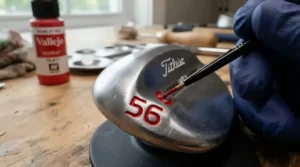
The personalization options inside the Custom Shop go well beyond a name stamped on the sole. You can add initials or full name stamping in multiple font styles and locations, apply special Custom Shop-exclusive stamp designs, mill additional sight lines on the topline or flange, or add sight dots if you prefer a simpler alignment aid. On applicable models, sole weights can be swapped for different gram denominations or engraved with custom characters, which is a functional change as much as a cosmetic one, since it shifts swing weight and feel. Reviewers consistently note that the sight-line and weight-swap options are the most underrated personalization options available, since they change how the putter performs rather than just how it looks — a distinction that’s easy to miss if you’re focused purely on paint colors. One honest limitation worth flagging: genuine Tour stamps like the Scotty Dog, Peace Sign, or Skull & Crossbones are reserved exclusively for actual Tour-issue putters and are not available through the standard consumer personalization options, regardless of how much you’re willing to pay.
Custom Finish Choices: Paint, Plating, and Stamps Explained
Custom finish choices start with the base finish itself — most restoration orders default to a choice between Silver and Black, both included in the standard restoration price, before any paintfill is added on top. From there, the 26-color paint palette lets you accent stamps and engravings in up to four colors per putter, and translucent colors like Emerald Green, Blue, Orange, and Purple read differently over different base finishes, which is worth previewing in the online Customizer before committing. What most buyers overlook about custom finish choices is that translucent paintfills interact with the metal underneath — the same purple will look noticeably different over a black finish than over raw milled steel, so photos of someone else’s build aren’t a reliable preview of your own. If your putter already has a different Custom Shop-applied translucent color and you’re adding new stamps, the shop will typically strip the existing paint, apply your new stamps, and repaint in your original color unless you specify a change, which is a helpful default but worth confirming in your order notes. Durability is the other honest consideration: bold custom finish choices on a putter that lives in a golf bag daily will show wear faster than a display piece kept in a case, so match your ambition to how hard the club will actually be used.
| Approach | What You Get | Ideal Buyer |
|---|---|---|
| Off-the-Rack | Stock finish, no stamps or weight changes | First-time buyers, casual players |
| Light Custom Work | Stamps, sight lines, single accent color | Budget-conscious personalization |
| Full Restoration | New finish, shaft, grip, headcover, multi-color paint | Long-term gamers, sentimental clubs |
| Tour-Level Build | GSS/SSS materials, Tour stamps, hand finishing | Collectors, serious enthusiasts |
Reading across that table, the jump from “Light Custom Work” to “Full Restoration” is where most of the real transformation happens, since that’s the tier where the shaft, grip, and headcover all get replaced alongside the finish. The gap between “Full Restoration” and “Tour-Level Build,” by contrast, is mostly about materials and access rather than visible craftsmanship — which is exactly why a well-executed full restoration on a Phantom 5.2 or Studio Style Fastback 2 satisfies most golfers without ever needing Tour-only access.
Ready to see your own build take shape? Preview your finish combination before you commit to an order.
Bespoke Putter Creation vs Buying Off the Rack
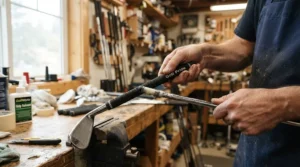
Bespoke putter creation and buying off the rack solve genuinely different problems, and pretending one is strictly better than the other misses the point. An off-the-rack Studio Style Santa Fe or Super Select Newport Plus gets you Scotty Cameron’s engineering, milling tolerances, and material quality on day one, at the lowest possible price, with zero wait time beyond shipping. Bespoke putter creation through the Custom Shop adds weeks of turnaround and meaningfully more cost, but in exchange you get a club that’s functionally and visually yours — sight lines matched to your exact setup, weight swapped to your preferred swing feel, and a finish nobody else in your foursome is carrying. The honest analytical take here is that bespoke putter creation earns its premium mainly for players who already know their preferences; a total beginner is usually better served buying stock, learning their stroke tendencies for a season, and then using that experience to make smarter personalization choices later. For anyone past the beginner stage, though, the value case for bespoke putter creation is strong: you’re not paying extra for marketing, you’re paying for a club tuned to specifics that a mass-produced rack model simply can’t account for.
Common Mistakes When Using the Scotty Cameron Custom Shop
Golfers new to the scotty cameron custom shop tend to repeat the same handful of errors. The most common is ordering a full restoration on a putter that already has non-original aftermarket work — the shop typically won’t proceed until that work is redone at your expense first, which can double your total cost if you didn’t plan for it. A close second is underestimating turnaround time and shipping a sentimental gamer right before a big event, leaving no buffer if the order takes longer than expected during a busy season. Reviewers and Custom Shop veterans also flag under-insuring shipments as a costly mistake — the shop’s FedEx coverage self-insures only up to $3,000, so a valuable Circle T or rare limited edition needs separate coverage arranged in advance. Finally, plenty of buyers pick paint colors purely from photos of someone else’s putter, then get surprised when translucent finishes look different over their specific base color — always preview your exact combination in the online Customizer rather than assuming a color will translate the same way twice.
Long-Term Cost & Maintenance of a Custom Shop Putter
Total cost of ownership on a Custom Shop build breaks into three buckets: the putter itself, the personalization order, and long-term upkeep. A Phantom 9.2R at $450-$550 paired with a $325 base restoration lands most golfers around $775-$875 for a genuinely personalized club — not cheap, but competitive with premium mallets from other manufacturers once you factor in the milling quality and resale strength Scotty Cameron putters are known for. Maintenance costs stay low after that initial investment: occasional face cleaning, periodic grip replacement (a $15-$25 part most golfers can install themselves), and rare touch-up work if a stamp or paintfill chips. The real long-term value driver is resale — Scotty Cameron putters, and documented Custom Shop work in particular, tend to hold value better than most putters on the used market, which softens the effective cost of ownership over a multi-year hold compared to brands that depreciate faster. Reviewers consistently note that keeping your Custom Shop order paperwork and any authentication documentation pays off directly at resale time, since buyers pay a premium for verifiable, documented work over an unverified aftermarket job.
Safety, Authenticity, and Rules Compliance
One question that comes up constantly: does customizing a putter risk making it non-conforming under the Rules of Golf? For the vast majority of Custom Shop work — stamps, paint, sight lines, weight swaps within existing sole-weight ports — the answer is no, since these changes don’t alter the fundamental geometry the USGA’s Equipment Rules evaluate for conformance. Where golfers should be more careful is with structural alterations — changing neck geometry, adding features that protrude beyond the head’s outline, or altering face milling in ways that affect the surface — since those categories are exactly what the rules scrutinize most closely for putters specifically. If you play competitively, it’s worth noting that putters aren’t included in the USGA’s official conforming equipment database the way drivers and irons are, which puts more responsibility on the player to confirm any customized club still meets the Equipment Rules before a sanctioned round. For collectors specifically, authenticity carries its own kind of compliance risk: verifying a Certificate of Authenticity and registry number before buying a Circle T or other Tour-only piece isn’t optional diligence, it’s the only real protection against an expensive mistake in a market with plenty of secondhand risk.
Frequently Asked Questions
❓ How much does it cost to send a putter to the scotty cameron custom shop?
❓ Can I add my initials to any Scotty Cameron putter?
❓ How long does a Custom Shop order take?
❓ Are Circle T putters legal to buy and use?
❓ What's the difference between personalization options and a full restoration?
Conclusion
The scotty cameron custom shop rewards exactly the kind of golfer who reads a guide this long: someone who wants a putter that performs well and looks like a decision, not a default. Whether you start with a clearance Phantom X 7.5 and a single stamp, or work your way up to a full restoration on a Phantom 5.2 or Studio Style Santa Fe, the personalization options, bespoke putter creation process, and custom finish choices covered here give you a real framework for making that decision instead of guessing. Collectors chasing a Circle T are playing a different game entirely, and that’s fine too — just bring the extra diligence that market demands. Wherever you land on that spectrum, the throughline is the same: real specs, honest tradeoffs, and a build that’s actually yours.
✨ Ready to start your own build? Browse current listings, compare finishes in the online Customizer, and turn a stock Scotty Cameron into a putter with your name on it — literally. 🏌️♂️
Recommended for You
- Center Shaft Putter Modern Design: 7 Sleek 2026 Picks
- Center Shaft Putter Alignment: 7 Best Picks to Fix Your Aim (2026)
- Counterbalanced Putter Armlock: 7 Best Picks to End 3-Putts (2026)
Disclaimer: This article contains affiliate links. As an Amazon Associate, I earn from qualifying purchases. If you purchase products through these links, we may earn a small commission at no additional cost to you.
✨ Found this helpful? Share it with your friends! 💬🤗
