
In This Article
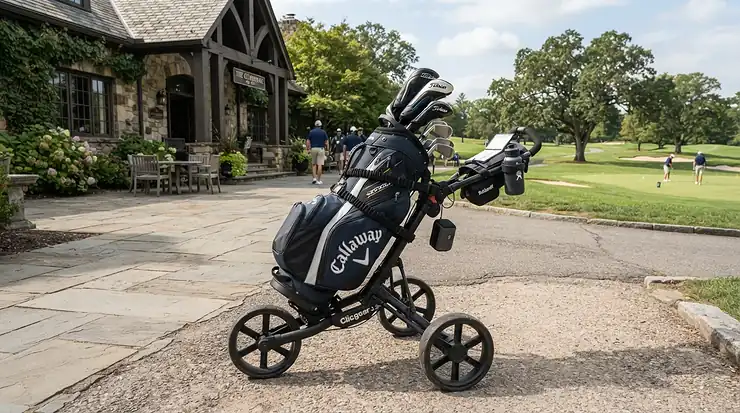
Here’s a confession every golfer eventually makes: the first bag of clubs you buy is never the one you die with. It’s a starting point, not a marriage. So if you’re standing in a big-box aisle right now, paralyzed by fourteen different boxes that all promise “forgiveness” and “distance,” take a breath. A golf club set for beginners exists specifically to solve this problem — it bundles a driver, fairway wood, hybrid, irons, wedges, and a putter into one coherent package so you’re not guessing your way through a pro shop with a blank stare.

What is a golf club set for beginners? It’s a matched package — typically 9 to 16 pieces, counting the bag and headcovers — engineered with larger clubheads, lighter shafts, and forgiving cavity-back irons so new players can get the ball airborne and moving forward, even on imperfect contact. That single design philosophy, more than any logo on the bag, is what separates a genuinely beginner-friendly set from a hand-me-down collection of mismatched blades.
This guide walks through seven real, currently available sets spanning every price tier, backed by actual specs and aggregated review sentiment rather than guesswork. We’ll also cover the mechanics beginners actually need to understand — cavity-back irons, graphite shafts, and even golf handicap basics — so you leave this page able to make a confident, informed call. According to the USGA’s Rules of Handicapping, even your very first scorecards matter more than you’d think — which is exactly why starting with the right equipment counts for something.
Prices below are shown as ranges only, since retail pricing shifts constantly — always check current pricing at the retailer before buying.
Quick Comparison Table
| Category | Set | Price Range | Best For |
|---|---|---|---|
| Best Overall Value | Callaway Edge 10-Piece Complete Set | $450-$580 | Golfers who want a real putter and real irons in one box |
| Best Budget Pick | Wilson Profile SGI Complete Set | $350-$450 | Short, tall, or otherwise “non-standard” beginners |
| Best Mid-Range | Cobra Fly XL 2 Complete Set | $700-$1,000 | Buyers who want Tour-brand engineering without Tour pricing |
| Best Premium | PXG Wildcat Full Bag | $1,400-$1,600 | Golfers who’d rather overspend once than upgrade twice |
| Best Hidden Gem | Tour Edge Hot Launch Box Set | $500-$700 | Slower swing speeds needing maximum launch help |
Looking at this snapshot, the pattern is clear: you don’t need to spend four figures to get a genuinely playable golf club set for beginners, but the premium options do buy you fewer compromises down the road. The Callaway Edge 10-Piece Complete Set earns its “best overall” tag mostly because it smuggles a genuine Odyssey putter into a sub-$600 package — that’s not typical at this price. Meanwhile, budget-conscious buyers shouldn’t assume cheaper always means worse; the Wilson Profile SGI Complete Set‘s sizing system solves a fit problem that no amount of extra spending fixes elsewhere.
Loved this comparison? A quick share helps other new golfers find it too! 💬
Top 7 Golf Club Sets for Beginners: Expert Analysis
Every set below was chosen to represent a distinct price tier, brand philosophy, or fit need — not just “seven popular options.” We looked at official spec sheets, retailer listings, and aggregated buyer feedback across marketplaces like Costco, eBay, and manufacturer sites to build this picture.
1. Wilson Profile SGI Complete Set — best custom-fit-in-a-box for odd-sized beginners
The Wilson Profile SGI Complete Set solves a problem most beginner sets ignore entirely: not every new golfer is 5’9″ with average-length arms. Wilson built this set around thirteen separate sizing configurations — length, lie angle, flex, and even grip size — so a 6’4″ player and a 5’2″ player aren’t both forced into the same stock shaft. The 460cc titanium-composite driver is genuinely oversized, and the stainless steel irons (6 through SW) use a low center of gravity to help get shots airborne without much swing speed.
Here’s what most buyers overlook about “custom fit in a box” claims: it isn’t marketing fluff in this case — it’s the actual differentiator, since Wilson’s own product literature confirms the height and wrist-to-floor measurement bands used to assign configurations. That matters enormously for a beginner, because ill-fitting shaft length is one of the fastest ways to bake a bad swing habit into your game before you’ve even developed a good one.
Reviewers, including a PGA-credentialed tester at Golf Insider, consistently describe this set as “a sound set of golf clubs” for the price, while noting the driver and fairway wood trail the forgiveness of pricier alternatives like the Cobra Fly XL 2 Complete Set. That’s a fair trade-off if budget and correct sizing matter more to you than driver-face technology in year one.
Pros:
- ✅ Thirteen sizing configurations fit non-standard heights and builds
- ✅ Large 460cc driver head is genuinely forgiving off the tee
- ✅ Strong value for a complete carry-bag package under $450
Cons:
- ❌ Driver and fairway wood forgiveness trail pricier competitors
- ❌ Feel is noticeably more basic than mid-range alternatives
Price sits in the $350-$450 range depending on retailer and bag style, and for a correctly-sized beginner set, that’s excellent value.

2. Callaway Edge 10-Piece Complete Set — best value with a genuine Odyssey putter
Callaway’s Edge line became something of a legend after landing in Costco stores, and it’s easy to see why once you look at what’s actually in the box: an oversized titanium driver, 3-wood, 5-hybrid, cavity-back irons (6 through 9), a pitching wedge, sand wedge, and — this is the detail that surprises people — a genuine Odyssey White Hot Pro putter with a SuperStroke grip.
What most buyers overlook about the Callaway Edge 10-Piece Complete Set is that the putter alone typically retails for well over $100 on its own, meaning a meaningful chunk of your money is going toward a component most beginner sets fill with a forgettable mallet. The cavity-back irons use what Callaway calls a “second-generation stabilizing arch,” essentially reinforcing the perimeter of the clubhead so mis-hits don’t punish you as harshly.
Buyer sentiment on Costco and Slickdeals threads is largely positive — multiple long-time recreational golfers describe upgrading into this set from decades-old clubs and immediately noticing more consistent contact, though a few flag that certain retail configurations skip the stand bag entirely. Always confirm bag inclusion before buying, since Costco’s version and other retailers’ versions aren’t identical.
Pros:
- ✅ Includes an authentic Odyssey White Hot Pro putter
- ✅ Cavity-back irons with a stabilizing arch for real forgiveness
- ✅ Backed by Callaway’s well-regarded customer support network
Cons:
- ❌ Some retail configurations exclude the stand bag
- ❌ Driver and fairway wood are solid but not tour-level performers
Expect this set in the $450-$580 range, with graphite-shaft versions typically running toward the top of that band.
3. Callaway Strata Plus 14-Piece Complete Set — most complete big-brand starter bag
If the Edge is Callaway’s “essentials” tier, the Callaway Strata Plus 14-Piece Complete Set is the step up — adding a sand wedge to the base Strata lineup and rounding out the short game in a way true beginners genuinely need. The 460cc forged titanium driver carries a large sweet spot, and the oversized 3-wood and 5-hybrid are built for easy, high launch even on shots struck slightly off-center.
Here’s what the spec sheet won’t tell you outright: Callaway counts the bag and headcovers as “pieces,” so a “14-piece” set is really nine or ten actual clubs plus accessories. That’s not a red flag, just a labeling quirk worth knowing before you compare piece counts across brands, since a rival’s “12-piece” set might contain more actual clubs.
Aggregated reviews are broadly favorable on forgiveness and beginner-friendliness, though a recurring theme across buyer feedback flags occasional driver durability concerns under faster swing speeds — worth a mental note if you already generate above-average clubhead speed for a first-timer.
Pros:
- ✅ Sand wedge included for genuine short-game coverage
- ✅ Large 460cc titanium driver with a confidence-inspiring sweet spot
- ✅ Established Callaway warranty and customer-service network
Cons:
- ❌ Some buyers report driver durability concerns at faster swing speeds
- ❌ “Piece count” includes bag and headcovers, inflating the number
Retail pricing typically lands in the $500-$650 range for the 14-piece configuration.
4. Tour Edge Hot Launch Box Set — best hidden-gem for slow swing speeds
Tour Edge doesn’t have Callaway’s name recognition, and that’s exactly why it belongs on this list — the brand pours its budget into engineering rather than tour sponsorships. The Hot Launch line (E523/E524 generation) is built around what Tour Edge calls Houdini Sole Technology, concentrating mass on the sole to deepen the center of gravity, alongside a claimed Moment of Inertia exceeding 5,000 g·cm² for serious mis-hit stability.
Based on the spec comparison, this is one of the more technically dense beginner packages on the market: the hollow-body “iron-woods” are specifically engineered for moderate-to-slow swing speeds, paired with ultralight UST Mamiya HL-SST graphite shafts that range from roughly 45 to 60 grams depending on flex — noticeably lighter than many stock shafts in this price bracket, which translates directly into easier, faster swings for players still building clubhead speed.
Reviewer sentiment across retailer listings consistently ranks the Hot Launch irons among “the highest launching, most forgiving and easiest-to-hit irons” in their category — strong praise for a brand that flies under most beginners’ radar entirely.
Pros:
- ✅ Houdini Sole and high-MOI design built specifically for slow swing speeds
- ✅ Ultralight UST Mamiya shafts reduce the effort needed to generate speed
- ✅ Stronger spec-per-dollar than comparable big-name alternatives
Cons:
- ❌ Lower brand recognition means weaker resale value later
- ❌ Full box sets (versus combo iron sets) are harder to find in stock
Complete box sets typically run $500-$700, making this one of the smartest value plays on this list if slower swing speed is your honest starting point.
5. Cobra Fly XL 2 Complete Set — best PGA Tour DNA on a budget
Cobra has real PGA Tour pedigree — Rickie Fowler’s driver technology traces directly back to this brand — and the Cobra Fly XL 2 Complete Set is where that engineering trickles down to first-time buyers. The package includes a 10.5-degree titanium driver, a 19-degree 5-wood, a 23-degree hybrid, six perimeter-weighted irons (6 through SW), and — genuinely unusual at this price — a premium milled-face blade putter rather than a generic mallet.
What most buyers overlook is the shaft split: graphite in the woods and hybrids for lighter, faster swings, and steel in the irons for more consistent distance control as you develop feel. That combination is common in premium sets but rarer in the sub-$1,000 tier, and it’s a meaningful reason this set consistently lands on “best beginner set” shortlists from independent reviewers.
A PGA professional testing panel at Golf Insider named a Fly XL configuration their top overall beginner pick specifically because it’s “designed to grow with you as you progress to an intermediate level” rather than something you’ll outgrow within a season.
Pros:
- ✅ PGA Tour-derived high-MOI engineering across driver and irons
- ✅ Genuine milled-face blade putter — unusual at this price point
- ✅ Graphite woods paired with steel irons for balanced performance
Cons:
- ❌ Noticeably pricier than the Edge or Wilson SGI for similar forgiveness
- ❌ Some regional configurations are right-handed only
Expect a price range of roughly $700-$1,000 depending on whether you choose the cart-bag or stand-bag configuration.
6. TaylorMade RBZ SpeedLite Complete Set — best resale value and speed pocket tech
TaylorMade’s RBZ (Rocketballz) name still carries weight more than a decade after it first launched, and the TaylorMade RBZ SpeedLite Complete Set brings that recognizable Speed Pocket technology — a flex zone near the clubface sole designed to boost ball speed on off-center strikes — into an aerodynamic, lightweight 460cc titanium driver and matching fairway woods.
Based on the spec comparison, the standout piece here might actually be the putter: a modern mallet with TaylorMade’s Pure Roll insert, using grooves angled at 45 degrees specifically to encourage forward roll rather than skidding. That’s a surprisingly sophisticated inclusion for a “starter” set, and it signals TaylorMade positioning this package closer to a genuine long-term bag than a disposable first purchase.
Reviewer sentiment across retail listings consistently frames this as a set “designed to provide the beginner golfer with the right combination of control and distance” — and because the TaylorMade name holds resale value better than lesser-known brands, it’s a sensible pick if you suspect you’ll want to sell up in a year or two.
Pros:
- ✅ Speed Pocket technology borrowed from TaylorMade’s mainline drivers
- ✅ Pure Roll putter insert genuinely improves putting consistency
- ✅ Strong resale value thanks to brand recognition
Cons:
- ❌ Pricing blurs into intermediate-set territory, not pure entry-level
- ❌ Cart bag configuration adds noticeable carrying weight
This set typically retails in the $1,000-$1,300 range, positioning it as a bridge between mid-range and premium.
7. PXG Wildcat Full Bag — best premium simplified 9-club setup
PXG built its reputation on ultra-premium, ultra-expensive tour equipment, so the PXG Wildcat Full Bag is a genuinely interesting pivot: a deliberately simplified nine-club set (driver, 5-wood, 6-hybrid, irons 7 through sand wedge, and a putter) built around the philosophy of “great equipment, fewer decisions.” The Rules of Golf allow up to fourteen clubs, but PXG’s bet is that beginners benefit more from clarity than options.
Here’s what the spec sheet won’t tell you outright: nine clubs isn’t a compromise here, it’s the entire design thesis. The 16-degree driver loft is unusually high specifically to make launch nearly automatic, and the titanium Ti-811 clubhead with a maraging-steel face insert uses materials typically reserved for PXG’s four-figure individual clubs.
Independent reviewers at outlets like MyGolfSpy and Golf Digest have praised the set for feeling “intuitive, fun” while delivering “quality PXG gear without breaking the bank” — a relative statement, given the price tag, but a fair one within the premium tier.
Pros:
- ✅ Nine-club simplicity reduces on-course decision fatigue for new players
- ✅ Premium materials rarely seen at any beginner price point
- ✅ Bundle includes bag, hat, and a dozen balls in one purchase
Cons:
- ❌ Substantial premium over every other set on this list
- ❌ Nine clubs may feel limiting once you progress past your first season
Full bag pricing runs $1,400-$1,600 — firmly premium territory, and worth it only if budget genuinely isn’t the deciding factor.
Top 7 Golf Club Sets for Beginners: Full Spec Comparison
| Set | Price Range | Shafts | Standout Feature | Best For |
|---|---|---|---|---|
| Wilson Profile SGI Complete Set | $350-$450 | Graphite (woods), Steel (irons) | 13 custom-fit sizing options | Non-standard heights/builds |
| Callaway Edge 10-Piece Complete Set | $450-$580 | Graphite | Genuine Odyssey putter included | Best all-around value |
| Callaway Strata Plus 14-Piece Complete Set | $500-$650 | Graphite/Steel options | Sand wedge included | Full short-game coverage |
| Tour Edge Hot Launch Box Set | $500-$700 | Ultralight UST Mamiya graphite | Houdini Sole, high-MOI design | Slow swing speeds |
| Cobra Fly XL 2 Complete Set | $700-$1,000 | Graphite (woods), Steel (irons) | Milled-face blade putter | Growing past year one |
| TaylorMade RBZ SpeedLite Complete Set | $1,000-$1,300 | Graphite | Speed Pocket technology | Resale value seekers |
| PXG Wildcat Full Bag | $1,400-$1,600 | Project X graphite | 9-club simplified setup | Premium buyers wanting fewer choices |
Scanning across this table, the price-to-forgiveness curve isn’t linear — the jump from Wilson Profile SGI Complete Set to Callaway Edge 10-Piece Complete Set buys you a legitimate putter upgrade for roughly $100 more, while the leap from Cobra Fly XL 2 Complete Set to PXG Wildcat Full Bag mostly buys materials and brand cachet rather than dramatically better forgiveness. If your budget caps around $600, the Callaway Edge 10-Piece Complete Set or Tour Edge Hot Launch Box Set both punch well above their price class.

Top Budget Golf Club Sets for New Golfers
If you’re specifically hunting for the best budget golf club sets for new golfers, three names from our list above deserve a second look together: the Wilson Profile SGI Complete Set, the Callaway Edge 10-Piece Complete Set, and the Tour Edge Hot Launch Box Set. All three land under $700 and none of them ask you to sacrifice the core beginner-friendly ingredients — oversized clubheads, forgiving cavity-back irons, and lightweight shafts.
What separates them isn’t quality so much as priority. The Wilson set wins if correct sizing is your biggest concern; the Callaway set wins if you want a genuine name-brand putter thrown in; and the Tour Edge set wins if you already know your swing speed runs on the slower side and want equipment engineered specifically around that.
A common mistake among budget shoppers is assuming “cheapest” and “best value” are the same thing. They’re not. A $300 set with a mismatched, too-long shaft can actively slow your progress compared to a properly-fitted $450 set — the extra $150 often pays for itself in fewer bad habits picked up during your first season.
Graphite Shafts vs Steel: What Beginners Should Know
Every set on this list uses graphite shafts in the woods, and most split the irons between graphite and steel depending on configuration — so understanding the difference matters more than most first-time buyers realize. Graphite shafts weigh less, which translates directly into faster clubhead speed for the same physical effort. That’s why nearly every beginner driver and fairway wood, across every price tier above, ships with a graphite shaft as standard.
Steel shafts, by contrast, are heavier and stiffer, which typically means more consistent distance control once your swing has repeatable tempo — but that consistency is harder to access before you’ve built that repeatability. This is exactly why sets like the Cobra Fly XL 2 Complete Set split the difference: graphite in the driver and woods for easy speed, steel in the irons once shot-shaping starts to matter more than raw distance.
Reviewers consistently note that beginners with slower, smoother swings benefit most from all-graphite configurations, like those found in the Tour Edge Hot Launch Box Set, while stronger or faster-swinging newcomers sometimes prefer steel irons from day one for the added feel and control. If you’re unsure which camp you fall into, a graphite/steel hybrid configuration — the approach most sets on this list default to — is the safest starting point.
Why Cavity-Back Irons Matter for Beginners
Nearly every set featured above uses cavity-back irons rather than traditional blades, and this single design choice matters more to your early scores than almost any other spec on the page. As Titleist’s own equipment education resource explains, a cavity-back design moves mass from directly behind the clubface out to the perimeter of the head, increasing the club’s Moment of Inertia — essentially its resistance to twisting on off-center hits.
In practice, that means a mis-hit with a cavity-back iron still produces a usable, roughly-on-target shot, while the same mis-hit with a traditional blade iron can produce a shockingly short, wildly offline result. Blade irons offer better feel and workability in skilled hands, which is exactly why low-handicap and tour players still use them — but that trade-off only pays off once your strike pattern is already tight and repeatable.
What most buyers overlook about cavity-back irons is that “forgiving” doesn’t mean “limiting.” You can absolutely play cavity-back irons well into a single-digit handicap; they simply stop being the ideal choice once your misses become rare enough that the tighter feedback of a blade starts helping more than it hurts.
Golf Handicap Basics for Brand-New Players
You don’t need an official handicap to enjoy your first rounds, but understanding golf handicap basics early will save you a lot of confusion once you start playing with others. In simple terms, a handicap is a number representing your potential scoring ability relative to a golf course’s difficulty — it lets a beginner and a scratch golfer compete fairly by adjusting each player’s expected score.
According to the official USGA calculation method, a Handicap Index is built from your best eight scoring differentials out of your most recent twenty rounds, and you can actually calculate a preliminary index with as few as three 18-hole scores. You don’t need to obsess over this in your first season — just start keeping honest scorecards, since that habit is what eventually produces a meaningful handicap once you’re ready to join a club or app-based handicap service.
A realistic expectation: most brand-new golfers post handicaps somewhere between 25 and 36 in their first year, and that’s completely normal. The equipment on this list — particularly the cavity-back irons and forgiving drivers — exists specifically to help that number trend downward faster than it would with mismatched or overly demanding clubs.
How to Choose a Golf Club Set for Beginners
Choosing the right golf club set for beginners comes down to seven practical checkpoints, in roughly this order of importance:
- Confirm your fit first. Height and wrist-to-floor measurement determine correct shaft length — get this wrong and every other spec becomes irrelevant.
- Prioritize forgiveness over distance. Cavity-back irons and oversized driver heads matter far more in year one than raw yardage numbers.
- Check what’s actually included. “Piece count” often includes the bag and headcovers, not just clubs — always read the actual club breakdown.
- Match shaft material to your swing. Slower, smoother swings generally benefit from all-graphite setups; faster swings can handle steel irons sooner.
- Set a realistic budget band. The $450-$700 range covers genuinely competitive options across every brand on this list.
- Consider resale value if you’re unsure about commitment. Recognized brands like TaylorMade and Callaway hold value better if you decide golf isn’t for you.
- Don’t skip the putter. You’ll use it more than any other club in your bag — a mediocre putter undermines an otherwise great set.
Ready to compare specific options? Scroll back up and check today’s pricing on any set above! ⛳
Your First 30 Days: Setup, Care & Common Rookie Mistakes
The first month with a new golf club set for beginners is where most bad habits either get built or avoided entirely, so a little structure here pays off disproportionately. Start by getting properly fitted at the point of sale if that option exists — many retailers offer basic static fitting (height and wrist-to-floor measurements) even on package sets, and it takes ten minutes.
For maintenance, wipe grooves clean after every range session or round; packed dirt in the grooves quietly kills spin and distance without you noticing why your shots feel duller than they did on day one. Check grip tackiness every few weeks too — beginners grip harder than they need to out of nerves, which wears grips down faster than an experienced player’s lighter hold.
The single most common first-30-days mistake is obsessing over the driver. New golfers typically spend 80% of their practice time on the club they’ll use least often per round. Spend more early practice on your pitching wedge, sand wedge, and putter instead — these are the clubs that quietly separate a 95 from a 115, long before your driver swing gets sorted out.
Real-World Scenarios: Which Set Fits Your Game?
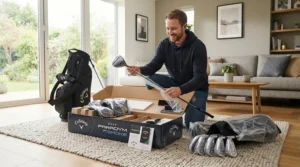
The college student on a tight budget, playing twice a month with friends: the Wilson Profile SGI Complete Set or Callaway Edge 10-Piece Complete Set both make sense here — low upfront cost, genuinely playable equipment, and no meaningful downside if the interest fades after a semester.
The mid-career professional taking up golf for client entertaining, playing weekly: the Cobra Fly XL 2 Complete Set or TaylorMade RBZ SpeedLite Complete Set fit better. You’re committing real time to this hobby, the equipment needs to look and feel credible in a foursome, and the added cost is easily justified against weekly green fees. It’s also worth noting, per Harvard Health’s coverage of golf’s cardiovascular benefits, that a walked round may genuinely rival a brisk walking workout — a nice bonus if fitness is part of your motivation too.
The recently retired golfer with a slower swing speed and more available time: the Tour Edge Hot Launch Box Set is purpose-built for exactly this profile, thanks to its lightweight shafts and high-launch design engineered around moderate-to-slow swing speeds.
The parent buying a “just in case I love it” first set: the PXG Wildcat Full Bag is overkill here — start with something in the $450-$700 range and upgrade once genuine commitment is confirmed.
Common Mistakes When Buying a Golf Club Set for Beginners
The single most expensive mistake beginners make is buying based on brand name alone, ignoring fit entirely — a $1,400 set built for a 6’2″ player does a 5’4″ player no favors whatsoever. A close second: assuming a full 14-club set is mandatory. The Rules of Golf permit up to fourteen clubs, but nothing requires you to carry that many, and sets like the PXG Wildcat Full Bag prove nine clubs can be a genuine feature rather than a limitation.
Another frequent misstep is skipping the putter’s importance because it “isn’t exciting” compared to a driver. Since putting typically accounts for roughly 40% of your total strokes in a round, a poorly-weighted or mis-fit putter quietly does more damage to your scorecard than a mediocre driver ever could.
Finally, beginners often buy used clubs without checking grip condition or shaft integrity, chasing a lower price tag while inheriting someone else’s worn-out equipment. If budget is the constraint, a new entry-level set like the Wilson Profile SGI Complete Set is almost always the smarter buy over a used premium set in questionable condition.
Golf Club Set for Beginners vs Buying Clubs Individually
| Factor | Complete Set | Buying Piece-by-Piece | Best For |
|---|---|---|---|
| Upfront Cost | Lower, bundled pricing | Higher, per-club markup | Complete set |
| Fitting Precision | Basic/static fitting only | Full custom fitting available | Piece-by-piece |
| Time to Get Playing | Immediate, one purchase | Weeks, multiple purchases | Complete set |
| Long-Term Flexibility | Limited, matched components | Full control over every club | Piece-by-piece |
The analysis here isn’t close for true beginners: a complete set gets you on the course this weekend with genuinely coherent, matched equipment, while building piece-by-piece can take months and often costs considerably more once you factor in a bag, headcovers, and individual club markups. Buying individually only starts making sense once you have enough rounds under your belt to know your specific misses, swing tendencies, and preferred feel — information no beginner actually has yet. That’s exactly why every set featured in this guide, from the Wilson Profile SGI Complete Set to the PXG Wildcat Full Bag, exists as a complete, matched package rather than a build-your-own kit.
What to Expect: Real-World Performance on the Course
Specs on a page don’t tell you what your first round actually feels like, so here’s the translation. With a properly forgiving set like the Callaway Edge 10-Piece Complete Set, expect your driver misses to still find the fairway roughly half the time, versus a near-total loss of distance and direction with an unforgiving blade-style setup. Your irons will feel noticeably more stable through impact — less of the stinging vibration that comes with thin or fat contact on a blade.
Your hybrid will quickly become a favorite club; it’s specifically designed to replace the notoriously difficult long irons, and most beginners find it dramatically easier to launch than a 3 or 4-iron. Expect early rounds in the 100-130 stroke range depending on course difficulty — this is completely normal and says nothing about your long-term potential.
The biggest surprise for most new golfers is how much time gets spent around the green rather than off the tee. Chipping, pitching, and putting typically make up more than half your total shots in a round, which circles back to why a genuinely good putter — like the one bundled with the Cobra Fly XL 2 Complete Set — matters more than most beginners initially assume.
Long-Term Cost & Maintenance of Your Beginner Set
| Ownership Stage | Estimated Cost | What It Covers |
|---|---|---|
| Initial Purchase | $350-$1,600 | Complete set, bag, headcovers |
| First-Year Maintenance | $50-$100 | Regripping, occasional headcover/glove replacement |
| Balls, Tees, Gloves (Annual) | $150-$300 | Consumables for regular play |
| Potential Upgrade (Year 2-3) | $200-$800 | Individual driver or iron upgrade as skills develop |
Looking at the full ownership picture, your initial purchase is genuinely the smallest recurring line item over a multi-year span — annual consumables and eventual selective upgrades often exceed the original set’s price within three to four years of regular play. This is exactly why overspending on a premium set like the TaylorMade RBZ SpeedLite Complete Set in year one doesn’t necessarily deliver better long-term value than a well-chosen budget set like the Wilson Profile SGI Complete Set, since most beginners end up individually upgrading specific clubs anyway once their game and preferences become clearer.
Buyer’s Decision Framework: Which Beginner Set Should You Buy?
If budget is your primary constraint, choose the Wilson Profile SGI Complete Set or Callaway Edge 10-Piece Complete Set, because both deliver genuine forgiveness under $600 without meaningful compromise.
If your swing speed is on the slower side, choose the Tour Edge Hot Launch Box Set, because its Houdini Sole and ultralight shafts are specifically engineered around that exact profile.
If you want room to grow without immediately outgrowing your equipment, choose the Cobra Fly XL 2 Complete Set, because its steel-iron/graphite-wood split scales naturally as your consistency improves.
If budget genuinely isn’t a factor and you want the simplest possible learning curve, choose the PXG Wildcat Full Bag, because its nine-club philosophy removes decision fatigue entirely.
If you’re unsure whether golf will stick but want something you could resell easily, choose the TaylorMade RBZ SpeedLite Complete Set, because brand recognition protects your resale value better than lesser-known alternatives.

Frequently Asked Questions
❓ How much should I spend on a golf club set for beginners?
❓ Do beginners need a full 14-club set?
❓ Are graphite shafts better than steel for new golfers?
❓ What golf handicap should a beginner expect to start with?
❓ Can I return a golf club set for beginners if it doesn't fit?
Conclusion
There’s no single “best” golf club set for beginners — only the best one for your specific swing speed, budget, and body dimensions. What matters is that you’re no longer choosing blind: you now know why cavity-back irons forgive mis-hits, why graphite shafts help slower swings, and roughly where your handicap will likely start.
If you want the safest all-around starting point, the Callaway Edge 10-Piece Complete Set remains hard to beat for the combination of a genuine putter, forgiving irons, and sub-$600 pricing. If your budget is tighter or your build is non-standard, the Wilson Profile SGI Complete Set solves the fit problem better than anything else on this list. And if you already know you’re committing hard to this game, the Cobra Fly XL 2 Complete Set or PXG Wildcat Full Bag both offer genuine room to grow.
Whichever set you choose, the equipment is only ever half the equation — the other half is simply getting out there and playing. Book that first tee time, and let the clubs do their job.
Recommended for You
- Scotty Cameron Custom Shop: 7 Putters Worth Building in 2026
- Center Shaft Putter Modern Design: 7 Sleek 2026 Picks
- Center Shaft Putter Alignment: 7 Best Picks to Fix Your Aim (2026)
Disclaimer: This article contains affiliate links. As an Amazon Associate, I earn from qualifying purchases. If you purchase products through these links, we may earn a small commission at no additional cost to you.
✨ Found this helpful? Share it with your friends! 💬🤗
