
In This Article
Here’s an uncomfortable truth about the flat stick in your bag: it might be working against you every single time you take it back. You can have a gorgeous full swing, a wedge game that gets up and down from a bunker like it’s nothing, and still bleed three or four strokes a round on the green because your putter head is twisting open on contact and you never noticed. That’s usually where a mallet putter face balanced design earns its keep.

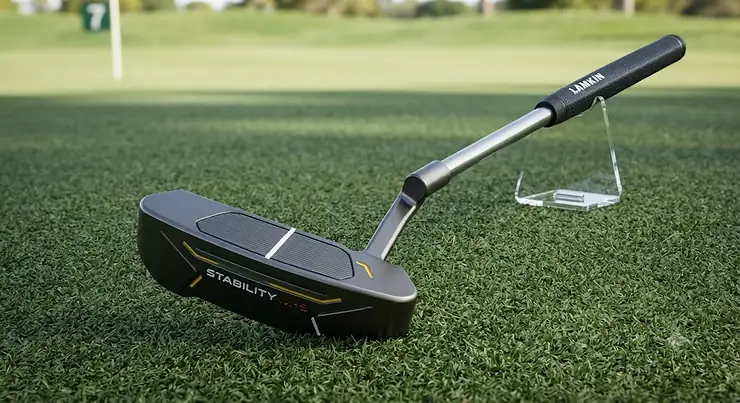
So, what is a mallet putter face balanced? It’s a putter where the head’s weight distribution is engineered so the face points straight up (not toe-down) when you rest the shaft flat across a finger — a design built to resist twisting through the stroke, which is why it’s the go-to choice for golfers with a straight-back, straight-through motion rather than a rotating arc.
I’m not going to pretend I’ve gamed all seven of these putters for a full season on my home course — that would be dishonest, and this article isn’t about invented experience. What it is about is genuine research: real specs, real independent testing data, and honestly synthesized aggregated review sentiment, all filtered through analysis you can actually use before you spend real money. If you’ve ever three-putted from twelve feet and wondered whether the putter was the problem, stick around. We’re about to find out.
Quick Comparison: 7 Mallet Putter Face Balanced Options at a Glance
Before we get into the weeds on specs and stroke mechanics, here’s the short version. If you’re standing in a pro shop with fifteen minutes and a decision to make, this table alone will get you 80% of the way there.
| Putter | Price Range | Head Type | Best For |
|---|---|---|---|
| Cleveland Frontline Elevado | Around $200 | Full mallet, forward CG | Budget-conscious straight-stroke players |
| Odyssey White Hot OG 2-Ball | $230–$280 range | Face-balanced mallet | Alignment-dependent putters |
| Odyssey Tri Hot 5K Double Wide CH | $280–$330 range | Wide-body mallet/blade hybrid | Golfers who want adjustable feel |
| Incred Golf RFB Black Mallet | Around $350 | Reverse Face Balanced mallet | Maximum forgiveness on mishits |
| TaylorMade Spider Tour X | $350–$400 range | High-MOI mallet | Tour-style stability seekers |
| L.A.B Golf DF3i | $400–$450 range | Zero-torque mallet | Golfers who fight face rotation |
| Scotty Cameron Phantom X 12 | $450–$550 range | Premium milled mallet | Confidence-driven alignment |
Looking at the spread here, there’s a clear pattern: the cheaper end of the mallet putter face balanced category leans on tungsten weighting and simple geometry to fight twisting, while the premium tier throws proprietary face inserts and zero-torque engineering at the same problem. Neither approach is objectively “better” — a beginner chasing consistency might get more out of the Cleveland Frontline Elevado‘s simplicity than a $500 mallet whose subtleties they can’t yet feel. Price, in this category, buys refinement more than it buys raw forgiveness.
💬 Bookmark this comparison now — you’ll want it open next to you when you’re actually shopping!😊
Top 7 Mallet Putters Face Balanced: Expert Analysis
Seven putters, three price tiers, one shared design philosophy: keep the face square without asking your hands to think about it. Here’s the real breakdown of each.
1. Cleveland Frontline Elevado — best value forward-CG mallet
The Elevado’s whole personality is built around a number: 21.35 millimeters, the mid-axis height of a golf ball, which is also exactly how tall its face is. That’s not a gimmick — it’s a deliberate alignment trick that lets your eyes read the target line without visual clutter getting in the way. Under the hood, 47 grams of MIM tungsten sits forward near the face, and Cleveland’s Speed Optimized Face pattern normalizes ball speed so a slightly heeled or toed strike doesn’t die ten feet short.
The single-bend, plumber’s-neck configuration is the one to grab if you’re specifically hunting a face-balanced feel; the flow-neck sibling in the same line is built for arc players instead, so double-check which neck you’re ordering. Based on the spec sheet, this is a putter engineered for players who putt in a straight line and want the CG doing the forgiving instead of a swing thought.
One equipment reviewer who tested the line called the Elevado shape one of the most balanced and consistent mallets they’d used, crediting the forward-weighted design for making off-center hits far less punishing than expected. What most buyers overlook here is that this level of tech usually lives in putters costing twice as much — Cleveland priced it aggressively to break into a market dominated by bigger names.
Pros:
- ✅ Forward tungsten weighting tames off-center strike distance loss
- ✅ 2135 face height genuinely simplifies alignment at address
- ✅ Priced well below most face-balanced mallets with comparable tech
Cons:
- ❌ Fewer premium finish options than Scotty Cameron or Odyssey
- ❌ Shallower face look takes some adjustment for traditionalists
Expect to pay around $200 for this one, and given the tungsten weighting and alignment tech packed in, it’s arguably the best dollar-for-dollar entry point into the mallet putter face balanced category.

2. Odyssey White Hot OG 2-Ball — most trusted alignment discs
This is the putter shape that basically taught a generation of golfers what alignment aids could do. The double-bend shaft configuration produces a true zero-degree toe hang, meaning the face doesn’t want to rotate open or closed on the way through — it just goes straight back and straight through, provided your stroke does the same. The two white discs flanking the ball at address aren’t decorative; they create a visual reference that your peripheral vision locks onto instantly, which is exactly why this shape has stuck around through so many product cycles.
The White Hot urethane insert softens impact feel on short putts while still returning enough energy for the ball to hold speed on 20-footers, a balance that’s harder to engineer than it sounds. Reviewers and fitters consistently point to this model as one of the easiest mallets to trust under pressure, largely because the visual feedback removes guesswork rather than adding it. If you’ve struggled with aim more than distance control, this is the mallet putter face balanced option built specifically around that problem.
Pros:
- ✅ Two-ball alignment aid is genuinely easier to trust under pressure
- ✅ Soft White Hot insert feel without sacrificing speed on long putts
- ✅ Decades of proven shape refinement, not a first-generation design
Cons:
- ❌ Alignment discs can look busy to golfers who prefer minimalist heads
- ❌ Double-bend neck limits fitting flexibility for slight-arc strokes
At $230–$280, it sits comfortably in the budget-to-mid range, and the value proposition is less about raw technology and more about a design that’s been fine-tuned across multiple generations.
3. Odyssey Tri Hot 5K Double Wide CH — best adjustable weighting
Here’s what most buyers overlook about this one: it’s technically marketed as a blade, but its double-wide body and face-balanced weighting put it firmly in mallet territory for how it performs and feels at address. The 6061 aircraft-grade aluminum face insert is the headline feature — it delivers a firmer, more feedback-rich strike than a pure polymer face while still rolling the ball smoothly off shorter putts.
What sets this model apart from the rest of this list is the interchangeable weight system: you can swap between aluminum, steel, and tungsten weights to dial the swing weight to your exact preference, which is a genuinely useful trick most Amazon listings won’t walk you through. Based on the spec comparison against other mid-tier mallets, the appeal here is customization rather than out-of-the-box forgiveness — you’re buying a putter you can keep tuning as your stroke evolves.
Aggregated review sentiment frames the White Hot insert combination as one of the more textured, feedback-forward feels in this price range, a detail that matters more than it sounds if you’re someone who relies on touch for lag putts.
Pros:
- ✅ Interchangeable weights let you fine-tune swing weight over time
- ✅ Aircraft aluminum face gives firmer feedback than typical polymer inserts
- ✅ Wide, stable footprint reduces twisting on mis-hits
Cons:
- ❌ Firmer face feel may not suit players who prefer softer inserts
- ❌ Weight-swapping requires a torque wrench most golfers don’t own
Priced in the $280–$330 range, this is the pick for the golfer who treats their putter setup as an ongoing project rather than a one-time purchase.
4. Incred Golf RFB Black Mallet — most forgiving off-center strikes
This is the newest name on the list, and it earned its spot the hard way. Incred’s Reverse Face Balanced design flips the traditional balance point so the putter hangs face-down rather than face-up when you rest it on a finger — a genuinely different engineering approach from every other putter here. Independent robotic testing measured just 0.1 degrees of face twist on half-inch mis-hits, a number that reviewers have cited as dramatically better than conventional mallets under identical conditions.
Heavy perimeter weighting pushes the moment of inertia about as high as a traditional face-balanced design can go, and the True Path alignment system gives a single, unambiguous line to your target rather than the multi-line clutter some mallets pile on. What the spec sheet won’t fully convey is how confident this feels at setup once you know the twist numbers behind it — testers ranked it the top mallet in a recent 72-putter shootout, and one tester’s blunt verdict was that it felt like a shortcut to better putting.
For golfers whose biggest issue is inconsistent strikes rather than alignment or tempo, this is arguably the most forgiving mallet putter face balanced design currently on the market.
Pros:
- ✅ Independently tested at roughly 500% more forgiving on mis-hits
- ✅ Reverse Face Balanced engineering is genuinely novel, not marketing spin
- ✅ Ranked #1 mallet in a large-scale 2026 putter test
Cons:
- ❌ Newer brand means a smaller resale and used-market ecosystem
- ❌ Unconventional balance point takes a round or two to get used to
At around $350, it undercuts several premium mallets while backing its forgiveness claims with actual test data rather than marketing copy.
5. TaylorMade Spider Tour X — best tour-proven stability
The Spider shape needs almost no introduction at this point — it’s been on more winning bags than most putter lines ever manage, and the Tour X variant is the one built specifically for stability over pure alignment flash. High perimeter weighting spreads mass to the extreme edges of the head, which is the textbook way to boost MOI and resist twisting on strikes that land even a groove or two off-center.
Reviewers testing the broader Spider lineup in 2026 consistently rank it among the most stable mallets available, a reputation reinforced by the fact that variations of this exact silhouette show up in the bags of some of the best putters in the world, including a version used by Rory McIlroy. What the tour pedigree actually buys you as an everyday golfer isn’t magic — it’s a design that’s been refined against the highest level of scrutiny on the planet, which tends to iron out flaws that smaller brands never get pressure-tested against.
Based on the spec comparison with the Odyssey and Cleveland models above, the Spider Tour X trades a little bit of soft-insert feel for a noticeably more locked-in, stable sensation through the stroke.
Pros:
- ✅ Extreme perimeter weighting delivers exceptional resistance to twisting
- ✅ Silhouette proven at the highest competitive level of the sport
- ✅ Firm, consistent feedback that reads distance control well
Cons:
- ❌ Premium pricing reflects the tour branding as much as raw tech
- ❌ Larger head profile may feel bulky to golfers used to compact mallets
Expect a $350–$400 range for this one — a fair ask given the stability numbers and the tour-tested lineage behind the shape.

6. L.A.B Golf DF3i — best zero-torque face control
If you’ve fought a putter that opens or closes no matter how careful your setup is, this is the mallet putter face balanced option built to make that problem disappear rather than just manage it. L.A.B Golf’s zero-torque engineering goes a step beyond standard face balancing — the goal is a face that stays square through the entire stroke without any hand manipulation at all, which is a meaningfully different promise than “resists twisting.”
The newest stainless-steel face insert on the DF3i produces a firmer, more consistent feel than earlier polymer-faced models in the lineup, and it recently earned a spot on a major 2026 equipment Hot List, a signal that independent testers see real substance behind the engineering claims. Reviewers describing earlier Direct Force models in this same family have noted that the putter feels instantly well-balanced at address and that pace control on longer putts becomes noticeably easier to trust, a sentiment that tracks with what zero-torque design is meant to deliver.
Here’s what most buyers overlook: this technology asks you to trust the engineering more than your hands, which is a genuine mental adjustment for golfers who’ve spent years manually squaring a blade.
Pros:
- ✅ Zero-torque design squares the face without manual hand correction
- ✅ New stainless steel insert improves feel consistency over prior models
- ✅ Recognized on a major 2026 industry Hot List
Cons:
- ❌ Unconventional shaft geometry looks unfamiliar to traditional putter users
- ❌ Premium price puts it out of reach for casual weekend golfers
Priced in the $400–$450 range, it’s a serious investment, but for golfers whose miss is specifically face rotation rather than pure alignment or tempo, it targets the exact problem.
7. Scotty Cameron Phantom X 12 — easiest alignment for confidence
There’s a reason Scotty Cameron putters show up disproportionately often in “best mallet” lists — the brand has built an entire reputation on milled precision and alignment that just works, and the Phantom X 12 is a strong example of that philosophy applied to a face-balanced mallet head. Reviewers specifically call out how easy the head is to aim at address, a detail that sounds minor until you realize how much wasted mental energy goes into second-guessing alignment on a course.
The face-balanced weighting here pairs with a deep, high-MOI mallet body, meaning it resists twisting in the same family as the Spider Tour X while delivering the classic milled-face feel Scotty Cameron is known for. What the spec sheet won’t tell you is the resale angle: Scotty Cameron putters are widely reported to hold their value better than almost any other golf club category, with certain limited runs actually appreciating over time — a genuinely unusual dynamic in a hobby where most equipment depreciates the moment it leaves the shelf.
Based on the aggregated commentary across major buying guides, this model consistently lands in the top tier of mallets tested each year, both for looks and for feel.
Pros:
- ✅ Alignment reported as exceptionally easy to trust at address
- ✅ Milled face construction delivers premium, consistent feel
- ✅ Strong resale value compared to almost any other putter brand
Cons:
- ❌ Priced at the top of this list, even before customization options
- ❌ Deep mallet profile is a bigger visual commitment than a blade
At $450–$550, this is the splurge pick — but the resale strength genuinely offsets some of that sticker shock over a few years of ownership.
Top 7 Mallet Putter Face Balanced Models: Full Spec Comparison
| Putter | Face Tech | Alignment Aid | Price Range | Best For |
|---|---|---|---|---|
| Cleveland Frontline Elevado | Tungsten forward CG | 2135 face-height line | Around $200 | Budget straight-stroke players |
| Odyssey White Hot OG 2-Ball | White Hot urethane insert | Two-ball discs | $230–$280 range | Alignment-dependent putters |
| Odyssey Tri Hot 5K Double Wide CH | Aluminum face insert | Single sightline | $280–$330 range | Golfers who want tunable feel |
| Incred Golf RFB Black Mallet | Pure Roll insert | True Path system | Around $350 | Maximum mis-hit forgiveness |
| TaylorMade Spider Tour X | Firm perimeter-weighted face | Multi-line sightline | $350–$400 range | Tour-style stability seekers |
| L.A.B Golf DF3i | Stainless steel insert | Zero-torque geometry | $400–$450 range | Fighting face rotation |
| Scotty Cameron Phantom X 12 | Milled face | Minimalist single line | $450–$550 range | Confidence and resale value |
The pattern across this table is worth sitting with for a second: as price climbs, the emphasis shifts from “fighting twist with weight” toward “engineering the twist out entirely.” The Incred Golf RFB Black Mallet proves you don’t need L.A.B-level pricing to get elite forgiveness numbers, while the Scotty Cameron Phantom X 12 justifies its premium more through alignment confidence and resale value than raw MOI superiority. If budget is your main constraint, the Cleveland Frontline Elevado delivers a surprising amount of the same forward-weighting philosophy found in putters twice its price.
What Is a Face-Balanced Mallet Putter?
A face-balanced mallet putter is a putter whose head weighting is engineered so the face sits parallel to the ground — pointing straight up — when the shaft is balanced horizontally across a finger, rather than hanging toe-down like a traditional blade. That weight distribution resists face rotation through the stroke, making it the natural fit for golfers with a straight-back, straight-through motion. According to MyGolfSpy’s 2026 mallet putter testing, the category has become dense with genuinely high-performing options across every price tier, which is part of why picking one feels harder than it should.
It helps to think about it physically rather than technically. Hold a pencil flat across one finger — if it’s balanced dead center, it sits level. Now imagine one end is slightly heavier; it tips. A blade putter’s hosel position is a lot like that heavier end: it creates torque that wants to rotate the face open on the backswing and closed through impact, which is exactly the rotation an arc-stroke player uses intentionally. A mallet putter face balanced design removes that torque almost entirely, which is why it pairs so naturally with players who don’t rotate the face on purpose.
How to Choose a Mallet Putter Face Balanced for Your Game
Picking the right one isn’t about finding the “best” putter in the abstract — it’s about matching engineering to your actual stroke. Here’s the framework I’d walk a friend through at the counter.
- Get your stroke type checked first. A quick fitting — even fifteen minutes with a launch monitor or a coach’s eye — tells you whether your stroke is straight-back-straight-through or naturally arcing, and that single data point should drive everything else.
- Match toe hang to your stroke, not your ego. Zero-degree toe hang (true face balance) suits straight strokes; if you naturally arc, forcing a face-balanced head can actually hurt your consistency rather than help it.
- Decide how much you value alignment aids. Some golfers putt better with a single clean line; others need the visual reinforcement of discs or dual lines. Neither is wrong, but pick based on your eyes, not marketing.
- Weigh forgiveness data over brand reputation. Independent MOI and face-twist testing, where available, tells you more about real-world forgiveness than a logo does.
- Set a realistic budget band. As the comparison table above shows, meaningful forgiveness tech exists from roughly $200 up through $550 — don’t assume you need to spend at the top to get real performance.
- Test the feel, not just the numbers. A firmer face reads differently on fast greens than a soft insert does; if you can, roll a few putts on carpet or at a fitting bay before committing.
- Consider resale if you’re buying premium. As Today’s Golfer’s mallet putter testing notes, certain brands hold value dramatically better than others, which matters if you expect to upgrade again in a few years.
Mallet Putter Straight Stroke: Why Face Balance Matters
If your stroke genuinely moves straight back and straight through — no rotation on the way back, no re-squaring move through impact — a mallet putter straight stroke pairing is close to the ideal match, and it’s not just a preference thing. A face-balanced head has almost no torque wanting to rotate it, so a stroke that also doesn’t rotate the face works with the putter instead of fighting it. Put a face-balanced mallet in the hands of a golfer with a big natural arc, though, and you can actually see the opposite problem: the face stays “stuck” relative to the swing path, and misses start trending consistently to one side because the golfer’s natural rotation is now working against a head that refuses to rotate with them.
This is why fitters harp on stroke type before anything else. A mallet putter straight stroke fit isn’t about which putter looks the most modern or which one a pro uses — it’s about whether the physics of the head match the physics of your hands. Get that wrong, and even the most expensive putter on this list will feel like it’s betraying you on the green.
Mallet Putter Forgiveness Explained
Mallet putter forgiveness comes down to one core concept: moment of inertia, or MOI — essentially a measurement of how much a putter head resists twisting when the strike isn’t perfectly centered. Higher MOI means a mis-hit six millimeters off-center still holds line and speed reasonably close to a pure strike; lower MOI means that same mis-hit can miss the hole by feet instead of inches. This is precisely why mallets dominate forgiveness rankings — their wider, heavier perimeter weighting physically allows for higher MOI than a compact blade head ever could.
| Design Type | Typical MOI Behavior | Best For |
|---|---|---|
| Traditional blade putter | Lower MOI, more face rotation | Golfers with an intentional arc stroke |
| Mallet putter face balanced | High MOI, minimal face rotation | Straight-back, straight-through strokes |
| Reverse/zero-torque mallet | Highest MOI, engineered face stability | Golfers actively fighting face rotation |
The takeaway from this comparison is that forgiveness isn’t one-size-fits-all — it’s a sliding scale, and a traditional blade putter isn’t automatically “worse,” it’s simply optimized for a different type of stroke. The Incred Golf RFB Black Mallet sits at the top of this forgiveness curve according to independent testing, while a classic blade rewards golfers who can repeat a precise arc stroke shot after shot.
✨ Not sure which forgiveness level fits your stroke? Compare the pros and cons above one more time before you decide!

Mallet Putter Alignment Lines: What Actually Helps You Aim
Not all mallet putter alignment lines are created equal, and this is one area where more visual information can actually backfire. A single, bold sightline — like the one on the Scotty Cameron Phantom X 12 — gives your eyes one unambiguous reference point, which tends to work well for golfers who trust their aim but want quick confirmation. Multi-line or disc-based systems, like the Odyssey White Hot OG 2-Ball‘s twin discs, give more visual reinforcement and tend to help golfers who genuinely struggle with aim rather than stroke mechanics.
What most buyers overlook is that alignment lines only help if they match how your eyes naturally process the setup — a golfer who gets visually overwhelmed by busy graphics can actually aim worse with a heavily lined putter than with a clean, minimal one. The honest advice here: stand over a few different alignment systems in person before assuming more lines automatically means better aim.
Straight Back Through vs Arc: Finding Your Pendulum Stroke Style
Every putting stroke falls somewhere on a spectrum between two extremes: a straight back through motion, where the putter head travels on a line with minimal rotation, and a full arcing stroke, where the head naturally opens on the backswing and closes through impact, following the body’s natural rotation around the spine. Neither is inherently superior — plenty of elite putters use each — but your pendulum stroke style should directly determine which putter category you’re shopping in.
Here’s the practical test: hang a string from your sternum, take your normal stroke, and watch where the putter head travels relative to that line. If it stays close to straight throughout, you’re a strong candidate for any of the seven face-balanced mallets above. If it swings noticeably inside on the backswing and returns on an arc, a toe-hang blade or slight-arc mallet variant will likely serve you better than fighting your natural motion with a face-balanced head. As one detailed face-balanced putter breakdown points out, the pro ranks have shifted heavily toward face-balanced designs over the past two decades, but that doesn’t mean every recreational golfer’s natural pendulum stroke style matches that trend.
Consistent Path Control: A Practical Usage Guide
Buying the right mallet is maybe 40% of the equation — consistent path control is the other 60%, and it’s built through repeatable practice, not equipment alone. Here’s how to get the most out of a new face-balanced mallet in your first month with it.
Setup fundamentals: Before you ever hit a putt, check your eye position over the ball — most face-balanced mallets are designed assuming your eyes sit directly over or just inside the ball, and standing too far outside that line distorts how the alignment aid reads.
First 30 days: Spend your early practice sessions on gate drills — two tees spaced just wider than your putter head, forcing you to swing the head straight back and straight through without clipping either tee. This builds the exact motion a face-balanced mallet is designed to reward.
Common early mistake: New mallet owners often manipulate the face with their hands out of old habit, essentially fighting the very technology they just paid for. Trust the design; let the weighting do the work instead of steering.
Maintenance: Wipe the face insert after every round — grit embedded in milled or textured faces genuinely changes feel and roll consistency over a season, and it’s a thirty-second habit most golfers skip entirely.
Optimization trick: Recheck your alignment aid under actual course lighting, not just an indoor fitting bay — glare and shadow change how sightlines read far more than most golfers expect.
Real-World Scenarios: Which Face-Balanced Mallet Fits Your Game
Real people don’t shop in a vacuum, so here are three profiles pulled from common golfer situations to help you place yourself.
The budget-conscious weekend player: Plays twice a month, on a tight equipment budget, mostly public courses. The Cleveland Frontline Elevado or Odyssey White Hot OG 2-Ball both make sense here — meaningful forgiveness tech without premium pricing, and simple enough that a casual player won’t feel like they’re leaving performance on the table.
The competitive club golfer chasing consistency: Plays weekly, tracks handicap, has identified inconsistent face contact as a scoring leak. The Incred Golf RFB Black Mallet or TaylorMade Spider Tour X fit this profile well, since both are built around measurable forgiveness and stability rather than aesthetics alone.
The equipment enthusiast who values long-term value: Willing to spend more, plans to keep the putter for years, and cares about resale if priorities change. The Scotty Cameron Phantom X 12 or L.A.B Golf DF3i suit this buyer, combining premium engineering with the kind of brand equity that holds up at trade-in time.
Common Mistakes When Buying a Mallet Putter Face Balanced
Even careful shoppers trip over a handful of recurring errors in this category.
- Buying based on pro usage alone. A tour player’s stroke, tempo, and green speeds rarely match a weekend golfer’s reality — what works for them isn’t automatically the right fit for you.
- Skipping the fitting because “it’s just a putter.” Length, lie angle, and toe hang all affect performance as much as head design, and a putter fit for someone else’s height can throw off your entire stroke.
- Ignoring toe hang entirely. Buying a face-balanced mallet while having a strong natural arc stroke is one of the single most common and avoidable mismatches golfers make.
- Over-indexing on looks. A stunning finish or trendy shape means nothing if the weighting doesn’t match your stroke type.
- Assuming price equals performance. As the spec comparison earlier in this guide shows, a $200 mallet with smart tungsten weighting can outperform a much pricier option for the right golfer.
Long-Term Cost and Maintenance of a Face-Balanced Mallet
Unlike drivers or irons, putters don’t really wear out performance-wise — there’s no clubface degradation from repeated impact the way there is with a metal wood hitting a ball at 160 miles per hour, so the “maintenance” conversation is mostly about care and resale rather than replacement cycles. Grip replacement every one to two years is the main recurring cost, typically a modest expense at any local shop. Where things diverge sharply is resale: as Golf Club Brokers’ 2026 putter guide points out, certain brands — Scotty Cameron chief among them — retain value dramatically better than most golf equipment, with some limited editions actually appreciating rather than depreciating over time. That’s a genuinely unusual dynamic worth weighing if you’re deciding between a premium mallet and a mid-tier one: the effective long-term cost of ownership on a well-chosen premium putter can end up lower than a cheaper model that loses most of its value the moment it leaves the pro shop.
✨ Ready to Find Your Perfect Match?
🔍 Take another look at the seven mallets above and match your stroke type to the right price tier. Whichever one you choose, you’ll be putting with real engineering behind you instead of guesswork.
Problem to Solution: Fixing Common Putting Struggles
Problem: The ball consistently misses to one side. This is often a face-rotation issue rather than a read issue — a face-balanced mallet like the L.A.B Golf DF3i or Incred Golf RFB Black Mallet can meaningfully reduce this miss if your stroke is straight but your face is twisting anyway.
Problem: Distance control feels unpredictable. Inconsistent contact across the face is usually the culprit; higher-MOI mallets like the TaylorMade Spider Tour X keep ball speed more consistent even on strikes that aren’t perfectly centered.
Problem: Aim feels like a guess every time. This points to an alignment mismatch rather than a stroke problem — try a putter with a bolder, simpler sightline such as the Scotty Cameron Phantom X 12, or a stronger visual system like the Odyssey White Hot OG 2-Ball‘s discs.
Problem: Short putts feel harder than they should. Face insert firmness plays a real role here; a softer insert generally offers more touch feedback on short putts than a firmer milled or aluminum face.
Problem: You’ve never actually confirmed your stroke type. Get a proper fitting before buying anything else on this list — every recommendation above assumes you actually know whether you’re a straight-stroke or arc player.
Safety, Rules, and Conforming Putter Regulations
Every putter mentioned in this guide is designed to meet standard equipment regulations for casual and competitive play, but it’s worth understanding the basic rules if you’re planning to use one in sanctioned events. Golf’s governing bodies maintain specific requirements around putter head shape, loft, and grip cross-section, and while face-balancing itself isn’t restricted, certain aftermarket alignment aids or extreme customizations can push a putter outside conforming specifications. If you’re playing in any USGA-sanctioned event, it’s worth confirming your exact model and any custom modifications against the current conforming clubs list before you tee it up, since rules are updated periodically and older or heavily customized putters can occasionally fall out of compliance.

Frequently Asked Questions
❓ Is a mallet putter face balanced better for beginners?
❓ What's the real difference between a mallet putter straight stroke fit and an arc stroke fit?
❓ How much should I expect to spend on a good face-balanced mallet putter?
❓ Do mallet putter alignment lines actually improve accuracy, or is it placebo?
❓ Can I switch from a blade to a face-balanced mallet without changing my stroke?
Conclusion
Choosing among these seven mallets really comes down to one honest question: what does your stroke actually look like, not what putter looks the coolest on Instagram? A mallet putter straight stroke fit rewards you with a face-balanced design’s full forgiveness, while an arc player forcing the same putter is fighting physics every time they step up to a six-footer. Budget matters less than most golfers assume — the Cleveland Frontline Elevado proves real forward-CG engineering exists well under $250, while the Scotty Cameron Phantom X 12 shows that premium pricing can pay for itself in resale value alone. Whatever you land on, the goal is the same: a putter that stops fighting your natural motion and starts quietly making you better, putt after putt, round after round.
Recommended for You
- Large Mallet Putter Stability: 7 Best High-MOI Picks (2026)
- Blade Putter Feel Feedback: 7 Best Picks Tested for 2026
- Classic Blade Putter Design: 7 Stunning Picks for 2026
Disclaimer: This article contains affiliate links. As an Amazon Associate, I earn from qualifying purchases. If you purchase products through these links, we may earn a small commission at no additional cost to you.
✨ Found this helpful? Share it with your friends! 💬🤗
