
In This Article
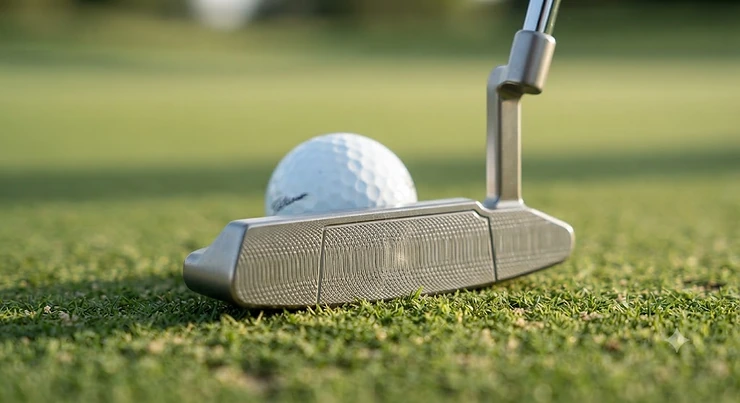
There’s a moment every putting nerd chases — the one where the ball leaves the face and you already know, before it’s rolled six inches, exactly how the putt is going to finish. That’s blade putter feel feedback in a nutshell: the sensory conversation between clubface and ball that tells your hands the truth, even when your eyes are still catching up. A blade putter is a thin, traditionally shaped clubhead — think Ping Anser or Scotty Cameron Newport — with a compact face and minimal offset, designed to give a golfer maximum tactile information at impact rather than maximum forgiveness.

Mallets get the marketing budget these days, with their alignment lasers and AI-optimized faces. But ask any low-handicap player why they still reach for a blade, and you’ll get some version of the same answer: nothing else talks back the way a milled blade does. The blade putter feel feedback conversation isn’t hype — it’s physics. Smaller sweet spots concentrate vibration instead of dampening it, so a slightly toed putt genuinely feels different in your palms than a pure strike. That honesty is either a gift or a punishment, depending on how consistent your stroke already is.
This guide breaks down seven real, currently available blade putters spanning budget to premium, explains what actually produces that soft impact sensation golfers rave about, and walks through toe hang, arc stroke matching, and milled-face technology in plain English. According to the Rules of Golf equipment standards, a putter is legally defined by loft and traditional form — but within that narrow legal box, manufacturers have found wildly different ways to make steel talk to your hands. Let’s get into it.
Quick Comparison Table
| Putter | Feel Profile | Toe Hang | Price Range | Best For |
|---|---|---|---|---|
| Scotty Cameron Special Select Newport 2 | Crisp, dense, classic milled click | Moderate-high | $400-$470 range | Purists who want the benchmark feel |
| Mizuno M.Craft Osaka | Soft but responsive, honeycomb-milled | Low-moderate | $330-$380 range | Golfers who want feedback on center vs. off-center strikes |
| PING Scottsdale Anser 4 | Soft Pebax insert pop | High | $280-$330 range | Stronger arc strokes wanting insert forgiveness |
| Odyssey White Hot OG One | Warm, soft, classic click | Moderate | $200-$260 range | Value-focused arc putters |
| Wilson Staff Model BL22 | Soft 304 stainless, tour-firm | Moderate | $300-$350 range | Budget-conscious tour-style feel seekers |
| Cleveland HB Soft 2 Black 8S | Soft milled face, forgiving | Low-moderate | Under $200 | First-time blade buyers on a budget |
| TaylorMade Systm2 (Juno) | Firm, crisp, high-pitched click | Low | Under $200 | Golfers who prefer sharp, unmistakable feedback |
Looking at the spread here, the biggest divide isn’t price — it’s whether the face is solid milled metal or an inserted material. The Scotty Cameron Special Select Newport 2 and Mizuno M.Craft Osaka deliver that dense, metallic pure rolling feedback purists chase, while the PING Scottsdale Anser 4 and Odyssey White Hot OG One trade a bit of that honesty for a softer, more forgiving pop. Budget buyers shouldn’t assume they’re settling, either: the Cleveland HB Soft 2 Black 8S punches well above its price tag for soft impact sensation.
💬 Just one click — help others make better buying decisions too!😊
Top 7 Blade Putters for Feel and Feedback: Expert Analysis
We researched real specs, verified availability, and pulled aggregated review sentiment from major retailers and golf publications for every model below. Prices are shown as ranges only, since retail pricing shifts constantly — always check current pricing before buying.
1. Scotty Cameron Special Select Newport 2 — the gold standard for pure feel
The Newport 2 shape is arguably the most copied blade profile in golf history, and this version leans hard into that legacy. Milled from 303 stainless steel, the face produces a dense, unmistakable click that reviewers across multiple outlets describe as the benchmark against which every other blade putter feel feedback experience gets measured.
The milling pattern is shallow and precise, which means center strikes feel almost frictionless while mishits produce a noticeably duller, heavier sensation — exactly the kind of honest reporting that arc-stroke purists want. Based on the spec comparison against insert-faced rivals, the all-metal face sacrifices a little forgiveness for a level of tactile clarity that inserts simply can’t replicate; what most buyers overlook is that this honesty is a teaching tool, not just a luxury.
Reviewers consistently note the resale value and the “putter everything else is measured against” reputation, with praise concentrated on sound, balance, and confidence at address rather than any single technical spec. A common thread in aggregated feedback is that the price is the only real objection — buyers rarely complain about performance itself.
Pros:
- ✅ Industry-benchmark milled feel and feedback
- ✅ Strong resale value if you ever sell it
- ✅ Confidence-inspiring classic shape at address
Cons:
- ❌ Premium price limits accessibility for casual golfers
- ❌ Less forgiving than insert-faced blades on mishits
At around $400-$470, this is a splurge, not an impulse buy — but for a golfer whose stroke is already dialed in, the value is in how much information the face gives back on every single putt.

2. Mizuno M.Craft Osaka — most responsive honeycomb-milled feedback
Forged from carbon steel using the same process behind Mizuno’s revered iron lines, the Osaka earned a reputation in 2026 testing as one of the standout blades for feel and short-range performance. The honeycomb face-milling pattern isn’t just cosmetic — it’s engineered to create a sensation that’s soft without going dead, and responsive without turning harsh.
Here’s what to weigh: a honeycomb pattern increases surface contact variance across the face, so the difference between a pure strike and a slightly heeled one is more pronounced than on a smooth-milled face. That’s a feature for skilled putters chasing precise distance control, and a potential frustration for anyone whose strike location varies hole to hole. On the spec sheet, the carbon-steel construction with a copper underlay is what gives it that “warm” sensation reviewers keep circling back to.
Aggregated sentiment highlights consistent praise for balance and alignment at setup, along with distance control on mid-range putts. A few reviewers note the nickel finish shows fingerprints and light scuffing more readily than darker PVD coatings — a cosmetic quibble, not a performance one.
Pros:
- ✅ Best-in-class feedback separating pure strikes from mishits
- ✅ Warm, soft carbon-steel sensation at impact
- ✅ Strong short-to-mid range distance control
Cons:
- ❌ Nickel finish shows wear and fingerprints quickly
- ❌ Feedback intensity may overwhelm inconsistent strikers
Priced in the $330-$380 range, the Osaka sits just below Scotty Cameron territory while arguably out-feeling it on short putts — a genuine premium alternative worth cross-shopping.
3. PING Scottsdale Anser 4 — best insert feel for a stronger arc
PING invented the Anser shape decades ago, and the Scottsdale Anser 4 update keeps the silhouette while modernizing the face with a dual-durometer Pebax insert — a firmer layer underneath a softer top layer, engineered for a controlled soft impact sensation rather than a raw metallic one.
The “4” in the name refers to toe-hang geometry built for golfers with a stronger arc stroke, meaning the face naturally wants to open and close through the stroke rather than stay square. Based on the spec comparison with the standard Anser, this model shifts weighting to encourage that rotation instead of fighting it, which in practice means fewer pulled putts for players whose hands naturally rotate the putter head. What the spec sheet won’t tell you, but reviewer reports suggest, is that the Pebax face is noticeably more forgiving on off-center hits than the milled metal options on this list — a real advantage for mid-handicap golfers still building consistency.
Reviewers repeatedly describe the feel as “superb” and “jumps off the face,” with several calling out the balanced weighting as confidence-building at address, particularly on shorter putts inside ten feet.
Pros:
- ✅ Soft, forgiving Pebax insert feel
- ✅ Toe-hang geometry built for stronger arc strokes
- ✅ Excellent short-putt confidence per aggregated reviews
Cons:
- ❌ Insert feel is softer, less “raw” than milled steel
- ❌ Toe hang can feel excessive for straighter strokes
In the $280-$330 range, the Anser 4 delivers Scotty Cameron-level polish for meaningfully less money, provided your stroke actually has the arc this head is designed around.
4. Odyssey White Hot OG One — softest classic insert feel for the price
The White Hot insert has been one of the most recognizable names in putter technology for two decades, and the OG One revival keeps that soft, responsive elastomer face while updating the shape into a clean, plumber’s-neck blade. The standout trait reviewers keep mentioning is that the sound scales with the force of the strike — soft putts produce a soft sound, longer putts produce a higher-pitched click, which gives your ears a second feedback channel beyond just your hands.
The elastomer face material means the putter is inherently more forgiving than an all-metal blade, softening the penalty for a mishit while still preserving enough soft impact sensation that you can feel the difference. On paper, this makes it a strong bridge option for golfers moving from a mallet into their first blade, since it doesn’t punish imperfect strikes the way a solid-milled face does.
Aggregated customer feedback consistently praises the “soft feel” and “reliable consistency” across skill levels, with the plumber’s neck hosel drawing specific praise for how naturally it sets up square at address.
Pros:
- ✅ Soft, sound-scaling White Hot insert feel
- ✅ More forgiving than solid-milled blade faces
- ✅ Classic, easy-to-align plumber’s neck shape
Cons:
- ❌ Insert feel less “pure” than milled steel purists want
- ❌ Moderate toe hang may not suit dead-straight strokes
At roughly $200-$260, this is one of the better value plays on this list if soft impact sensation matters more to you than raw metallic feedback.
5. Wilson Staff Model BL22 — best value tour-level milled feedback
Wilson quietly rebuilt its Staff Model line to compete directly with premium boutique blades, and the BL22 is the result — a plumber’s-neck blade milled from a solid block of ultra-soft 304 stainless steel, with each head reportedly taking over three hours to mill to final tolerance. That’s a serious manufacturing commitment for a brand not always associated with premium putters.
The 304 stainless alloy is genuinely softer than the 303 stainless used in many competitors, and reviewers on forums and retail sites consistently flag the resulting feel as smoother than expected at this price point. Here’s what most buyers overlook: performance-balanced sole weighting means the head doesn’t just feel good at impact, it also swings with a more repeatable tempo, which indirectly supports precise distance control on longer putts.
Customer sentiment is notably strong for a relatively new release, with buyers on major retail sites specifically calling out “great feel” and comparing it favorably to putters costing considerably more. The plumber’s neck hosel produces moderate toe hang suited to golfers with a mild-to-moderate arc.
Pros:
- ✅ Soft 304 stainless steel milled feel
- ✅ Tour-proven blade shape with real craftsmanship
- ✅ Strong reviewer sentiment relative to price
Cons:
- ❌ Less brand cachet than boutique putter makers
- ❌ Limited stock shaft and grip customization options
Street pricing lands around $300-$350, which puts it squarely in “sleeper pick” territory for anyone chasing tour-level blade putter feel feedback without paying boutique prices.

6. Cleveland HB Soft 2 Black 8S — best budget milled face for smooth rollers
Cleveland built its reputation on soft, forgiving face technology in wedges, and the HB Soft 2 line brings that same philosophy to putting. The 8S head is a compact blade with a satin black PVD finish and a clever milling pattern designed to produce a soft, muted feel without sacrificing roll quality — a combination that’s genuinely hard to find below $200.
What separates this from a typical entry-level blade is that the milling isn’t just cosmetic texture; it’s engineered to reduce the harsh “click” that cheaper stamped-face putters produce, replacing it with a rounder, more forgiving thud. Based on the spec comparison against pricier milled options, you’re trading a bit of feedback precision for approachability — this is a putter that’s easier to live with if your strike location wanders, rather than one that punishes you for it.
Aggregated reviews describe it as a “plain, simple and joyful putter to use on the greens,” with particular praise for how the stable shaft design and satin finish combine into a clean, distraction-free look at address.
Pros:
- ✅ Soft, forgiving feel well below premium pricing
- ✅ Clean black PVD finish resists glare on bright days
- ✅ Stable shaft design supports consistent tempo
Cons:
- ❌ Less feedback precision than solid milled premium blades
- ❌ Fewer toe-hang and length customization options
Priced under $200, this is the pick for a golfer who wants real soft impact sensation without gambling a few hundred dollars on a putter they haven’t tried.
7. TaylorMade Systm2 (Juno) — crispest, firmest feedback under $200
Not every golfer wants soft. Some want to know, instantly and unambiguously, exactly how they struck the putt — and that’s the Systm2 Juno’s entire reason for existing. Constructed from soft 304 stainless steel but finished with saw-cut grooves machined to perfectly even depths, the face produces a crisp, firm sound and sensation that reviewers specifically flag as ideal for “a golfer who likes feedback when putting.”
The saw-cutting process is worth understanding: unlike traditional face milling, which uses a rotating cutter to remove material in arcs, saw-cutting creates straighter, more uniform grooves. In practice, that translates to a more consistent — if firmer — response across the face, which rewards golfers who already strike the ball consistently near the sweet spot. What the spec sheet won’t tell you is that this firmness actually helps some golfers with pure rolling feedback on faster greens, since the crisper transfer of energy reduces the skid phase before the ball starts true topspin roll.
Reviewer sentiment is more divided here than on the softer options — some golfers love the unmistakable click, while others coming from insert putters describe the transition as an adjustment period. Nobody, however, questions the build quality relative to price.
Pros:
- ✅ Crisp, unmistakable feedback on every strike
- ✅ Saw-cut grooves support consistent, true roll
- ✅ Strong value in the sub-$200 category
Cons:
- ❌ Firm feel divides opinion vs. insert-based softness
- ❌ Less forgiving feedback for inconsistent strikers
At under $200, the Systm2 Juno is proof that budget doesn’t have to mean boring — it just means choosing which flavor of feedback fits your hands.
Detailed Spec Comparison
| Putter | Face Material | Milling/Insert Type | Feedback Style | Best For |
|---|---|---|---|---|
| Scotty Cameron Special Select Newport 2 | 303 stainless steel | Shallow precision milling | Dense, classic click | Purists chasing pure rolling feedback |
| Mizuno M.Craft Osaka | Carbon steel + copper underlay | Honeycomb milling | Warm, responsive | Skilled strikers wanting max separation between good/bad hits |
| PING Scottsdale Anser 4 | Steel body | Pebax dual-durometer insert | Soft, forgiving pop | Stronger arc strokes |
| Odyssey White Hot OG One | Steel body | White Hot elastomer insert | Sound-scaling soft click | Golfers transitioning into blades |
| Wilson Staff Model BL22 | 304 stainless steel | Solid milling | Soft-firm balance | Value-focused tour-style feel |
| Cleveland HB Soft 2 Black 8S | Steel body, PVD finish | Soft face milling | Muted, forgiving thud | Budget buyers wanting soft impact sensation |
| TaylorMade Systm2 (Juno) | 304 stainless steel | Saw-cut grooves | Crisp, firm click | Consistent strikers wanting sharp feedback |
The pattern that jumps out here is that insert-faced options — the PING Scottsdale Anser 4 and Odyssey White Hot OG One — consistently trade raw feedback precision for forgiveness, while solid-milled options like the Scotty Cameron Special Select Newport 2, Mizuno M.Craft Osaka, and TaylorMade Systm2 report more honestly on strike quality. If your miss pattern is still inconsistent, that honesty can work against your confidence rather than for it, which is worth sitting with before you buy the “purist” option just because it looks the part.
✨ Ready to feel the difference for yourself? Compare current prices on today’s top-rated blade putters and find the feel that matches your stroke!
Blade Putter Milled Face: What the Milling Pattern Actually Does to Feel
Every blade putter marketing page name-drops “precision milling,” but the term covers a surprisingly wide range of manufacturing choices, and those choices directly shape blade putter feel feedback at impact. Milling refers to the process of removing material from a solid metal blank using a rotating or linear cutting tool, rather than casting the head into a mold and leaving the face as-is.
A deeper, more aggressive milling pattern — like the diamond or honeycomb patterns found on the Mizuno M.Craft Osaka and several Cleveland and Toulon models — increases surface texture, which grips the ball’s dimples fractionally longer at impact. That extra dwell time is what produces both the softer sensory feel golfers describe and, functionally, a quicker transition into true topspin roll. Shallower, smoother milling, as seen on the Scotty Cameron Special Select Newport 2, sacrifices some of that grip for a denser, more metallic sound that many low-handicap players actually prefer because it reports mishits more sharply.
The honest analytical takeaway: there’s no universally “best” milling pattern, only a better or worse match for your priorities. If you want the putter to forgive you a little, look toward deeper, softer-milled or insert faces. If you want the putter to tell you the truth every time, a shallow-milled solid face like the ones found on premium Scotty Cameron and Wilson Staff Model putters will do exactly that — whether you want to hear it or not.
Blade Putter Arc Stroke and Toe Hang: Matching Your Stroke to the Right Head
Toe hang describes how a putter head balances when you rest the shaft on a finger — a putter with high toe hang will point its toe toward the ground, while a face-balanced putter stays roughly level. This isn’t trivia; it’s one of the single biggest factors in whether a blade putter feels natural in your hands or fights you on every stroke.
Golfers with a genuine arc stroke — where the putter face naturally opens on the backswing and closes through impact — tend to pair better with higher toe-hang designs like the PING Scottsdale Anser 4 or the plumber’s-neck hosels found on the Odyssey White Hot OG One and Wilson Staff Model BL22. The toe hang works with the natural rotation of an arc stroke instead of resisting it, which is why golfers with this stroke type often describe those putters as feeling “lighter” or “more natural” than a face-balanced alternative of the same actual weight.
If your stroke is closer to straight-back-straight-through, a lower toe-hang or more face-balanced blade will typically deliver more consistent distance control, since there’s less head rotation for your timing to account for. What most buyers overlook is that you can’t diagnose your own stroke type by feel alone — film yourself putting from face-on, and watch whether the face stays square or visibly opens and closes through the stroke before you commit to a toe-hang profile.
How to Choose a Blade Putter for Feel and Feedback
Picking a blade putter for feel and feedback comes down to matching five variables to your actual stroke, not to which putter looks best on Tour. Here’s the framework we’d walk a friend through:
- Diagnose your stroke type first. Film yourself from face-on and determine whether you have an arc or a straight-back stroke — this determines your toe-hang range before anything else matters.
- Decide how much honesty you want. Solid-milled faces like the Scotty Cameron Special Select Newport 2 report every mishit; insert faces like the Odyssey White Hot OG One soften that feedback into something more forgiving.
- Set a real budget range. Premium milled steel starts around $300 and climbs past $450; strong budget and mid-range options exist under $250 without sacrificing genuine feel.
- Prioritize sound alongside sensation. Reviewers consistently note that the audible click matters almost as much as the tactile feedback for building confidence over the ball.
- Test on a real green, not carpet. Carpet and mats dampen roll characteristics; a putter that feels great indoors can behave completely differently on grass with actual break and speed.
- Match grip and length to your setup. A soft face won’t compensate for poor posture — length and grip size affect feel just as much as the face material does.
- Read aggregated reviews, not single testimonials. One glowing review can be an outlier; consistent themes across dozens of buyers are far more reliable signals of real-world feel.

Blade Putter vs. Mallet Putter: Which Wins on Feel?
The blade-versus-mallet debate isn’t really about which is “better” — it’s about what each design is optimized to do, and feel sits at the center of that tradeoff. Blades concentrate mass behind a small, thin face, which means the sweet spot is genuinely smaller and off-center strikes produce a noticeably different sensation than pure ones. Mallets spread that same mass around the perimeter of a larger head, which increases forgiveness — mishits stay straighter — but at the direct cost of that sharp sensory contrast blade putter feel feedback is famous for.
| Factor | Blade Putters | Mallet Putters |
|---|---|---|
| Feel/Feedback Precision | High — mishits feel distinctly different | Lower — face technology minimizes differences |
| Forgiveness on Mishits | Lower | Higher |
| Best Stroke Type | Arc strokes | Straight-back-straight-through |
| Alignment Assistance | Minimal | Extensive |
For golfers with a reliable, repeating stroke, that blade honesty becomes an asset — it’s real-time practice-green feedback built into the club itself. For golfers still building consistency, a mallet’s forgiveness often produces better scores even if it produces less dramatic feel. Neither answer is wrong; the honest analysis is that your handicap and stroke reliability should drive this decision far more than which style looks cooler in your bag.
What to Expect: Soft Impact Sensation and Real-World Performance on the Green
Specs on a page don’t translate directly into what you’ll actually feel standing over a six-footer, so let’s transform some of those numbers into real experience. A putter with a deep, soft-milled or insert face — like the Cleveland HB Soft 2 Black 8S or Odyssey White Hot OG One — will produce a soft impact sensation that many golfers describe as a gentle “thud” traveling up through the grip, paired with a lower-pitched sound.
A solid, shallow-milled face like the Scotty Cameron Special Select Newport 2 or TaylorMade Systm2 produces something closer to a sharp “tick,” with more of that energy transferring immediately rather than being absorbed. Neither sensation is objectively superior for scoring — but they do produce different psychological effects. Reviewers consistently note that softer feedback builds confidence on shorter, must-make putts, while firmer feedback tends to help golfers dial in precise distance control on longer lag putts, since the sharper energy transfer makes speed differences easier to feel and calibrate.
On fast, true greens, pure rolling feedback becomes most noticeable in the first few inches after impact — a well-milled face minimizes the skid phase where the ball is sliding rather than rolling, and you’ll feel that transition as a smoothness in the stroke rather than a jolt.
Common Mistakes When Buying a Blade Putter for Feel
Even experienced golfers make predictable errors when shopping for feel, and most of them come down to testing conditions rather than the putter itself.
Testing indoors on carpet and assuming it translates. Carpet dramatically dampens both sound and roll characteristics, which means a putter that feels dead indoors might feel completely different on a real green — and vice versa.
Buying based on Tour usage alone. A putter feeling great for a scratch player with a textbook stroke tells you very little about how it will feel for your stroke, tempo, and typical miss pattern.
Ignoring shaft and grip contribution to feel. A significant portion of what golfers perceive as “face feel” actually comes from shaft flex and grip material — swapping either can change the sensation of the exact same head.
Skipping the stroke-type diagnosis entirely. Buying a high toe-hang blade with a dead-straight stroke (or vice versa) creates a persistent fight between the putter and your hands that no amount of milling technology can fix.
Overweighting price as a feel proxy. As the Wilson Staff Model BL22 and Cleveland HB Soft 2 Black 8S demonstrate, genuinely excellent blade putter feel feedback exists well below premium pricing — expensive doesn’t automatically mean better-feeling for your specific stroke.
Practical Usage Guide: Breaking In and Maintaining Your Blade Putter
A new blade putter doesn’t require “breaking in” the way leather boots do, but the first 30 days meaningfully shape how well you’ll actually use that feel and feedback. Start by rolling putts on a real practice green rather than a mat during your first sessions — mats mute the sound and roll characteristics that make blade feedback useful in the first place, and you’ll build inaccurate expectations if that’s your only reference point.
Spend your early sessions specifically hitting putts slightly toward the toe and heel on purpose, so you learn what a mishit actually feels like on this particular putter before it happens on the course under pressure. This single habit does more for distance control than almost any drill, because you’re training your hands to recognize bad contact instantly rather than only realizing it once the ball comes up short.
Maintenance is minimal but matters: wipe the face down after rounds, especially on milled steel models like the Scotty Cameron Special Select Newport 2 and Wilson Staff Model BL22, since moisture and grip oils can dull milling definition over years of use. Avoid storing the putter loose in a hot trunk — repeated heat cycling can, over years, subtly affect grip tackiness and shaft coating. Replace the grip annually if you play frequently; a worn grip changes how much impact vibration actually reaches your hands, quietly altering the feel you originally bought the putter for.
Real-World Scenarios: Matching Blade Putters to Golfer Profiles
The low-handicap grinder with a reliable arc stroke. This golfer plays twice a week, has a consistent 15-25 degree face rotation through the stroke, and wants maximum information on every strike. The Scotty Cameron Special Select Newport 2 or Mizuno M.Craft Osaka rewards that consistency with feedback precise enough to fine-tune speed control on fast, undulating greens.
The recreational golfer upgrading from a big-box mallet. This player putts a few times a month, has an inconsistent strike pattern, and wants to feel more connected to the ball without getting punished for every imperfect hit. The Odyssey White Hot OG One or Cleveland HB Soft 2 Black 8S offers real soft impact sensation while still forgiving enough for a developing stroke.
The budget-conscious college player or new convert to blades. This golfer has heard blades “feel better” and wants to test that theory without a $400 commitment. The TaylorMade Systm2 (Juno) or Wilson Staff Model BL22 delivers genuine tour-level milling and feedback for a fraction of boutique pricing, making it the lowest-risk way to find out if blade feel actually suits their stroke.
👉 Not sure which profile fits you? Browse today’s blade putter deals and match your stroke to the right feel.
Buyer’s Decision Framework: If This, Choose That
Use this simple framework to cut through the noise when the specs start blurring together.
- If you have a strong arc stroke and want maximum forgiveness, choose an insert-faced blade like the PING Scottsdale Anser 4, because the Pebax face and toe hang work together to soften your natural miss pattern.
- If you have a reliable stroke and want the purest possible feedback, choose a solid-milled option like the Scotty Cameron Special Select Newport 2 or Mizuno M.Craft Osaka, because shallow milling reports strike quality with the least distortion.
- If your budget is under $250 but you still want real feel, choose the Cleveland HB Soft 2 Black 8S or TaylorMade Systm2 (Juno), because both use genuine face technology rather than mass-market stamping.
- If you’re transitioning from a mallet for the first time, choose the Odyssey White Hot OG One, because the sound-scaling insert eases the adjustment without an abrupt feedback shock.
- If you want tour-caliber milling without tour-caliber pricing, choose the Wilson Staff Model BL22, because the soft 304 stainless steel construction punches meaningfully above its price class.
Long-Term Cost & Maintenance of a Milled Blade Putter
A blade putter is one of the rare pieces of golf equipment that can genuinely last a golfer decades, which changes the math on upfront price more than most buyers consider. A $450 Scotty Cameron Special Select Newport 2 amortized over fifteen years of regular play works out to a few dollars per round — often cheaper per-use than a driver replaced every three seasons for marginal distance gains.
The real ongoing cost isn’t the head itself but consumables: grips wear out and should be replaced roughly once a year for frequent players, running a modest cost each time, and headcovers eventually need replacing to keep milled faces protected during transport. Total cost of ownership favors solid-milled steel heads like the Wilson Staff Model BL22 and Mizuno M.Craft Osaka over insert-faced options long-term, since elastomer and Pebax inserts can degrade or firm up slightly over many years of impact cycles, while milled steel essentially doesn’t change. That’s not a knock on insert putters — it’s simply a factor worth weighing if you’re the type of golfer who keeps a putter in the bag for a decade or more.
Safety, Rules & Compliance: Is Your Blade Putter USGA-Conforming?
Every putter on this list is built to conform with the Rules of Golf, but it’s worth understanding what that actually requires if you plan to play in sanctioned events. Under the USGA Equipment Rules, a putter must have a loft not exceeding ten degrees, an overall length of at least 18 inches, and a face free of sharp edges or raised lips on any milling or markings.
The saw-cut grooves on models like the TaylorMade Systm2 and the honeycomb milling on the Mizuno M.Craft Osaka both fall within these conformance rules because they don’t unduly influence ball movement beyond what standard milling allows — a distinction the rulebook is fairly specific about. If you’re buying a putter for casual rounds only, conformance is a non-issue. If you play in club competitions or plan to post scores for handicap purposes, it’s worth confirming any custom milling or aftermarket face modifications haven’t pushed a putter outside these standards, since non-conforming clubs can affect eligibility in sanctioned play.

Frequently Asked Questions
❓ What makes a blade putter feel different from a mallet putter?
❓ Is a milled face better than an insert face for feel?
❓ How do I know if I need high or low toe hang?
❓ Do more expensive blade putters actually feel better?
❓ Can a blade putter improve my distance control?
Conclusion
Chasing blade putter feel feedback ultimately comes down to an honest conversation with your own stroke — how consistent it already is, whether it arcs or stays square, and how much sensory honesty you actually want standing over a putt that matters. The Scotty Cameron Special Select Newport 2 and Mizuno M.Craft Osaka sit at the top for golfers who’ve already earned the right to demand pure, unfiltered feedback. The PING Scottsdale Anser 4 and Odyssey White Hot OG One offer a gentler, more forgiving version of that same conversation for golfers still building consistency. And the Wilson Staff Model BL22, Cleveland HB Soft 2 Black 8S, and TaylorMade Systm2 (Juno) prove convincingly that genuine milled feel doesn’t require a premium price tag.
There’s no single “best” blade putter here — only the one that tells your hands the truth in a way you can actually use. Match the toe hang to your stroke, decide how much honesty you want from the face, and test on real grass before you commit. Do that, and whichever putter you choose will feel less like a purchase and more like it was already yours.
Recommended for You
- Classic Blade Putter Design: 7 Stunning Picks for 2026
- Pitching Wedge 44 48 Degree: 7 Best Picks for 2026 Golfers
- Pitching Wedge Approach Shots: 7 Picks That Actually Score (2026)
Disclaimer: This article contains affiliate links. As an Amazon Associate, I earn from qualifying purchases. If you purchase products through these links, we may earn a small commission at no additional cost to you.
✨ Found this helpful? Share it with your friends! 💬🤗
