
In This Article
Here’s the cruel joke of aging and golf: the swing you love gets slower just as the club gets harder to hold. Knuckles ache. Fingers refuse to curl the way they did in 1998. And that bone-rattling shot off a mishit? It doesn’t fade into the background anymore. It travels up the shaft, through the grip, and straight into your wrists. If that sounds familiar, senior golf irons for arthritis-friendly grip setups are not a luxury. They’re the difference between finishing eighteen and quitting at the turn.

The good news is that equipment has caught up. Lightweight graphite shafts, perimeter-weighted heads, and oversized grips can take real pressure off sore joints. The Arthritis Foundation’s golf guidance points to the same basics: graphite shafts for shock absorption, built-up grips to reduce finger strain, and forgiving clubheads. That’s the philosophy behind every pick below.
Here’s what I did. I compared seven real products, from premium titanium-faced irons to budget-friendly complete sets, against published specs and the aggregated sentiment of independent reviewers. I haven’t swung any of these clubs myself, and I won’t pretend otherwise. What you’ll get instead is honest analysis: what each spec means for a hand that hurts, who each set suits, and where each one falls short. We’ll also cover joint-friendly grips, oversized grip options, reduced-vibration shafts, and the senior women’s golf club set question, each in its own section.
Prices below are ranges only and change often, so check current listings before buying.
Quick Comparison: Senior Golf Irons for Arthritis-Friendly Grip at a Glance
Short on time? This table gives you the lay of the land. Details, caveats, and real-world meaning follow in the product breakdowns.
| Product | Shaft Type | Format | Best For |
|---|---|---|---|
| XXIO 14 Irons | Ultra-light graphite (about 48-50g) | Iron set | Slow swing speeds, premium budgets |
| Ping G425 Irons | Graphite or steel, many options | Iron set | Fitted, forgiving all-rounders |
| Cleveland Halo XL Full-Face Irons | Graphite (senior flex available) | Iron set | Maximum forgiveness, hybrid feel |
| Majek K5s Hybrid Set | Graphite | Hybrid-style set | Value seekers, grip-strength issues |
| Callaway Strata 16-Piece Women’s Set | Graphite (putter excepted) | Complete set | Senior women, first full set |
| TaylorMade Kalea Premier Package | Lightweight women’s graphite | Complete set | Senior women wanting a step up |
| Wilson Magnolia Women’s Complete Set | Lightweight graphite | Complete set | Budget-conscious senior women |
Look at the pattern: every entry leans on graphite and forgiving head designs, which is exactly what joint-friendly play demands. If your budget is flexible and your swing is slow, XXIO 14 Irons sit at the top for sheer lightness. If you want a complete bag without thinking too hard, the Callaway Strata 16-Piece Women’s Set and Wilson Magnolia Women’s Complete Set remove most of the guesswork. And if you want something you can tune with a fitter, Ping G425 Irons are the most customizable of the group.
💬 Just one click — help others make better buying decisions too!😊
Top 7 Senior Golf Irons for Arthritis-Friendly Grip: Expert Analysis
1. XXIO 14 Irons — the lightest swing in the bag
Weight is the whole story here. These irons are built from the ground up for moderate-to-slow swing speeds, not adapted from a tour design and relabeled “senior” by the marketing department.
The stock shaft is the XXIO MP-1400, listed at roughly 48 grams in regular flex and 50 in stiff. A shaft that light means your hands do less work to get the head moving, which matters when grip pressure is the thing that hurts. Tungsten weighting sits low in the head to lift launch, and a counterweighted “Weight Plus” grip design is meant to make the transition at the top feel smoother.
Based on the spec sheet, this is the set for golfers whose swing speed has dropped well below what standard irons assume. National Club Golfer’s testing found about three to four mph more ball speed than a steel-shafted Callaway set, and Plugged In Golf’s reviewer praised the feel and balance. One caution: reviewers note the ultra-light build rewards a smooth tempo and punishes a hard lunge.
Pros:
- ✅ Ultra-light graphite shaft eases hand and wrist load
- ✅ Larger head and perimeter weighting boost confidence
- ✅ Standout feel and sound among lightweight irons
Cons:
- ❌ Premium pricing puts it out of reach for many
- ❌ Needs a smooth tempo; aggressive swings can misfire
Price range: roughly $1,200-$1,700 depending on configuration. A genuine investment, justified if comfort and slow-swing performance are your top priorities.
2. Ping G425 Irons — the fitter’s favorite for custom grip sizing
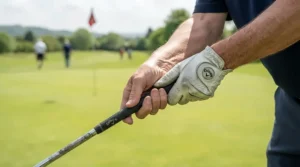
Not every arthritic hand is the same, and Ping G425 Irons are the one set here built around that reality. They can be ordered with different lengths, lie angles, shaft options, and grip sizes.
The G425 uses a compact, perimeter-weighted head with tungsten toe weights, which Ping says raises MOI about 3% over the G410. Inside the cavity, a multi-material badge acts as a vibration dampener, which is a quiet but real benefit for sore joints. Graphite options include the Alta CB Slate in amateur, regular, and stiff flexes, plus an Alta Distanza listing marked “senior” on a retail site.
In plain terms: you get forgiveness without a clown-shoe head. Reviewers at Today’s Golfer and Golf Insider describe the G425 as strongly forgiving and consistent, and a Golfer Geeks roundup cites a 97% recommend rate across 218 buyer reviews. It was designed with mid-to-high handicappers in mind, so it’s a better fit for golfers who still have some swing speed.
Pros:
- ✅ Custom grip size, length, and lie available at order
- ✅ Vibration-dampening badge inside the cavity
- ✅ Wide graphite shaft choices for slower swings
Cons:
- ❌ Older model, so new stock and pricing vary
- ❌ Not specifically engineered for the slowest swings
Price range: launch pricing sat around the mid-$800s for a steel six-iron set, with graphite costing more; used sets are common. Check current price. Excellent value if you work with a fitter.
3. Cleveland Halo XL Full-Face Irons — forgiveness turned up to eleven
If your mishits are more common than your pure strikes, this is the set built to forgive them. The XL head looks more like a hybrid than a traditional iron, and that’s the point.
Cleveland claims a striking area up to 20% larger than the prior generation, plus full-face grooves for consistent spin across the face. The long irons get a GlideRail sole to glide through turf, and the stock shaft is the UST Mamiya Helium Nanocore 60 graphite, available in senior flex. A counterweight at the top of the grip aims to smooth the swing.
What does that mean for arthritic hands? Less jarring contact on thin and fat shots, which are exactly the strikes that send a shock up the arms. GolfMagic’s testers called these incredibly easy to hit but noted the bulky, hybrid-like look. Heads up: Golf Insider reports Cleveland irons are being discontinued, so confirm availability before you commit.
Pros:
- ✅ Huge sweet spot softens the cost of mishits
- ✅ Senior-flex graphite shaft option
- ✅ Turf-friendly soles for long irons
Cons:
- ❌ Bulky head isn’t for everyone’s eye
- ❌ Possible discontinuation limits future availability
Price range: roughly $700-$1,300 depending on set and retailer. Strong value if you find stock at a discount.
4. Majek K5s Hybrid Set — the budget hybrid-style option with a grip upgrade
Long irons are the club most golfers dread, and this set sidesteps the problem by making the whole bag hybrid-style. One swing thought, one motion, fewer ways to get hurt.
According to OVRCLOCK’s review, the midsize Majek K5s High Traction grip is a meaningful upgrade for golfers with arthritis or grip-strength trouble. Midsize grips fill more of the hand, so you squeeze less to feel secure. The set also bundles matching headcovers and a hat, which is a small bonus at this price tier.
My read: this suits golfers who want comfort and simplicity over feel and shot-shaping. Hybrid-style heads usually trade away the crisp, workable strike of a traditional iron, so better players may feel something missing. For a recreational senior who mostly wants to enjoy the walk, that trade is often a bargain.
Pros:
- ✅ Midsize high-traction grip reduces squeeze pressure
- ✅ Hybrid-style heads make long shots easier
- ✅ Bonus headcovers and hat included
Cons:
- ❌ Less feel and shot-shaping than traditional irons
- ❌ Smaller brand, so fewer fitting resources
Price range: budget tier, typically well below the premium sets here. Check current price. Great value for casual play.
5. Callaway Strata 16-Piece Women’s Set — a full bag without the guesswork
This is the senior women’s golf club set for someone who wants to open a box and play. Everything from driver to putter arrives matched, which removes the stress of piecing together a bag.
Graphite shafts run through the set except the putter, and Sixty and Me’s roundup of senior women’s gear highlights soft, women’s-sized grips on Callaway’s Strata line. Lighter shafts and softer grips are the two things that matter most for sore hands. One review notes the club weighting is carefully matched, and the graphite absorbs some of the vibration and helps a slower swing generate speed.
Who is it for? Newer or returning senior women, and anyone who values convenience over fine-tuning. It won’t be custom-fit, so if your hands are very small or very large, plan to adjust the grips later.
Pros:
- ✅ Complete matched set from driver to putter
- ✅ Graphite shafts help with shock absorption
- ✅ Women’s-sized soft grips suit smaller hands
Cons:
- ❌ Not custom fit out of the box
- ❌ Entry-level materials limit long-term upgrade appeal
Price range: typically in the mid-hundreds. Check current price. Solid value as a first complete set.
6. TaylorMade Kalea Premier Package — a women’s set that doesn’t feel like a compromise
Historically, women’s clubs got less engineering attention than men’s. TaylorMade formed a women’s advisory board, and the Kalea Premier is the first range to come out of it.
The 12-piece package pairs a lightweight driver with easy-launch fairways, rescues, and irons built with SGI forgiveness in a sleeker shape. The irons use a Cap Back Design plus a Speed Pocket to help the face flex and preserve ball speed. The stock shaft is a lightweight “Kalea Premier 40.” National Club Golfer’s reviewer jumped from regular men’s shafts to the lighter women’s ones and felt the set bridged the gap.
Based on that, it’s a good fit for a senior woman who wants performance and style, and who might still want a fitting to dial in the shaft. Looria’s aggregated review summary praised the forgiveness and lightweight design, and noted gaps: no 3-wood in the set, and limited sizing flexibility in the package.
Pros:
- ✅ Lightweight, forgiving design for slower swings
- ✅ Developed with a women’s advisory board
- ✅ Can be custom fit when ordered separately
Cons:
- ❌ Package omits a 3-wood
- ❌ Higher price than basic women’s sets
Price range: upper-mid tier for women’s sets. Check current price. Worth it if you want a polished set.
7. Wilson Magnolia Women’s Complete Set — the budget-friendly entry point
Not everyone wants to spend four figures on clubs they might use twice a week. This is the one that makes the hobby accessible.
Next Round Golf names it a best budget-friendly set for senior women, citing affordability, completeness, and senior-friendly shafts and lofts. In practical terms, lofted clubs launch the ball higher with less effort, which helps slower swings, and lightweight shafts keep the whole bag easy to handle.
I’d treat this as a smart starter or backup set. You won’t get premium feel, and the exact grip and shaft configuration can vary by listing, so read the details before buying. If your hands need extra cushioning, plan to swap in oversized grips, which is a modest add-on cost.
Pros:
- ✅ Affordable complete set for senior women
- ✅ Lightweight graphite construction
- ✅ Senior-friendly lofts aid launch
Cons:
- ❌ Entry-level feel compared with premium sets
- ❌ Stock grips may need upgrading for arthritis
Price range: budget tier, often under about $500. Check current price. The best value on this list.
Top 7 at a Glance: Price, Sentiment, and Best Use
| Product | Price Range | Aggregated Review Sentiment | Best For |
|---|---|---|---|
| XXIO 14 Irons | About $1,200-$1,700 | Praised for feel and lightness; pricey | Slow swings, premium |
| Ping G425 Irons | Mid-$800s and up (launch) | Forgiving, consistent | Fitted, forgiving play |
| Cleveland Halo XL Full-Face Irons | About $700-$1,300 | Very forgiving; bulky look | Mishit-prone golfers |
| Majek K5s Hybrid Set | Budget tier | Midsize grip valued by arthritic golfers | Value shoppers |
| Callaway Strata 16-Piece Women’s Set | Mid-hundreds | Practical complete set | First full set |
| TaylorMade Kalea Premier Package | Upper-mid tier | Forgiving, lightweight; no 3-wood | Women wanting performance |
| Wilson Magnolia Women’s Complete Set | Often under $500 | Affordable, senior-friendly | Budget buyers |
Read the table as a trade-off map. The XXIO 14 Irons are where comfort and performance peak, but the price tag follows. The Wilson Magnolia Women’s Complete Set and Majek K5s Hybrid Set give you the easiest on-ramp, and Ping G425 Irons deliver the most customization per dollar if you’re willing to visit a fitter.
What Are Senior Golf Irons for Arthritis-Friendly Grip?
Senior golf irons for arthritis-friendly grip are irons built with lightweight graphite shafts, forgiving perimeter-weighted heads, and oversized or shock-absorbing grips. Together, they reduce hand pressure, soften impact vibration, and make a slower swing launch the ball higher with less joint strain.
That definition has three moving parts, and each one does a job. The shaft controls weight and vibration. The head controls forgiveness. The grip controls how hard you have to squeeze. A set that nails all three is rare, which is why fitting or grip swaps matter so much. If you want the broader history of how golf clubs are constructed, the Wikipedia overview of golf clubs is a handy primer on heads, shafts, and grips.
Marketing loves the word “senior,” but it’s worth being skeptical. One reviewer at Golf Insider pointed out that many “senior” irons are simply regular designs repositioned for older buyers. Look at the actual shaft weight, head size, and grip diameter, not the label.

How to Choose Senior Golf Irons for Arthritis-Friendly Grip
Choosing well is mostly about ranking what hurts. Use these steps in order:
- Start with your swing speed. Slower swings need lighter shafts and higher-launching heads. If you’re unsure, a launch monitor session at a golf store takes minutes and removes the guessing.
- Pick graphite over steel. The Arthritis Foundation recommends lightweight graphite shafts because they absorb shock better.
- Choose a perimeter-weighted, forgiving head. Mishits are what jolt your joints, so bigger sweet spots mean fewer painful strikes.
- Size your grip before you buy. Oversized or midsize grips cut finger pressure. You can always add tape or swap grips later.
- Check the set makeup. Hybrids replace the hardest long irons, which reduces both frustration and strain.
- Consider a fitting. Length, lie, and shaft flex matter more as flexibility declines.
- Match the budget to the use. Weekly players justify premium; occasional players rarely do.
Walk through that list and your shortlist usually shrinks to two or three sets quickly.
Joint-Friendly Grips: What Actually Reduces Pain
Joint-friendly grips do one thing well: they let you hold the club securely with less squeeze. That sounds trivial until you’ve tried holding a club with swollen knuckles.
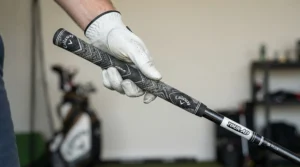
Two features separate the helpful from the hype. First, diameter. A larger grip fills the palm so your fingers don’t have to curl as tightly. Second, material. Softer, tackier rubber and shock-absorbing cores reduce the sting of impact. JumboMax, for example, advertises a StabilityCore designed to absorb shock and resist twisting, and recommends its larger sizes for golfers with arthritis. Its UltraLite line is about the same weight or lighter than a standard grip.
Karma’s Arthritic Jumbo is another option that reviewers describe as purpose-built, with a raised, textured surface and an oversized profile. Golf Pride’s CP2 Pro in jumbo is popular among older players for its slightly tacky feel.
The Arthritis Society’s tips for golfers add useful context: padded golf gloves can lower the force on hand and wrist joints, and teeing up every shot reduces jarring ground contact. Combine all of that and joint-friendly grips become part of a system rather than a single fix.
Oversized Grip Options: How to Size Without Overdoing It
Oversized grip options fall into four broad buckets: standard, midsize, jumbo, and super-jumbo. Bigger isn’t automatically better. Too big and you lose wrist hinge and feel; too small and your fingers dig in.
A simple starting point is to measure from the crease of your wrist to the tip of your middle finger, or to use glove size as a rough guide. One sizing guide suggests men’s medium or women’s large gloves usually fit standard grips, while men’s large often suits midsize. Arthritis tends to push you up one size from there.
| Grip Size | Typical Hand Fit | Arthritis Benefit |
|---|---|---|
| Standard | Average hands | Baseline |
| Midsize | Larger hands, mild stiffness | Moderate pressure relief |
| Jumbo | Very large or painful hands | Strong pressure relief |
| Super-Jumbo | Severe grip limitation | Maximum, with feel trade-offs |
My advice: try midsize first, and move to jumbo only if your fingers still ache after a full round. Not everyone loves jumbo. One grip guide notes a minority of golfers found it no major upgrade over standard. Tape built up under a standard grip is a cheap test before you commit.
Reduced-Vibration Shafts: Graphite, Steel, and What Reviewers Say
Reduced-vibration shafts are the quietest hero of arthritis-friendly golf. Every iron strike sends a wave of vibration up the shaft. Steel transmits more of it; graphite absorbs more.
That’s why the Arthritis Foundation and Arthritis Society both suggest lightweight graphite shafts. Lighter weight also means a slower swing can still generate clubhead speed. Several retail and review sources also note that graphite shafts absorb vibration across the entire set, which is exactly what tender joints want.
Head design plays a role too. Ping G425 Irons add a multi-material vibration-dampening badge in the cavity, and perimeter-weighted heads like the Cleveland Halo XL Full-Face Irons keep mishits from sending harsh feedback. The XXIO 14 Irons go further with an ultra-light shaft around 48 grams.
One trade-off deserves honesty: graphite costs more, and very light shafts can feel unstable for golfers with faster tempos. If your swing is quick, a slightly heavier graphite, like Ping’s regular-flex option, may serve you better than the lightest available.
Senior Women’s Golf Club Set: Is a Complete Set Worth It?
For many senior women, a complete set is the smartest buy. A senior women’s golf club set takes care of loft gaps, matching shafts, and consistent grips in one purchase, and it usually costs less than buying clubs individually.
Women’s shafts are generally just “ladies” flex rather than the regular, stiff, and senior flex ladder men get, so the weight of the shaft matters more than the label. Sixty and Me suggests keeping shaft weight at or below about 60 grams, with 50-55 grams being a comfortable target. That guidance lines up well with the TaylorMade Kalea Premier Package and lightweight sets like the Callaway Strata 16-Piece Women’s Set.
The catch is customization. Complete sets rarely offer custom grip sizing, so budget for a grip swap if your hands are arthritic. Also check set makeup, since the TaylorMade Kalea Premier Package omits a 3-wood, according to buyer feedback summarized by Looria. For most players, though, a matched set removes a lot of friction from getting back on the course.
Senior Irons vs Standard Irons: What Changes and Why
Standard irons are designed for faster swings and stronger hands. Senior and arthritis-friendly irons flip several design choices. Here’s the difference side by side.
| Feature | Senior / Arthritis-Friendly | Standard Irons | What It Means for You |
|---|---|---|---|
| Shaft | Lightweight graphite | Heavier steel | Less vibration and effort |
| Head | Oversized, perimeter-weighted | Compact or blade | Mishits hurt less |
| Grip | Midsize or jumbo | Standard | Lower squeeze pressure |
| Launch | High | Mid to low | Easier carry at slow speeds |
| Long irons | Often hybrids | Traditional long irons | Fewer difficult shots |
Looking at the table above, the biggest gap is the combination of shaft and grip: two points of contact that determine how much force your hands absorb. Blade-style irons and stiff steel shafts, which forum users on Reddit and GolfWRX reportedly warn against for slower swings, are the opposite of what sore hands need. The trade-off is feel and workability, which better players may miss, but most seniors with arthritis gladly trade that for comfort.

Features That Actually Matter (And Those That Don’t)
Golf marketing throws a lot of jargon at you. Here’s how to filter it.
Features that matter: shaft weight and material, head forgiveness (MOI), grip diameter and tackiness, and set makeup with hybrids. These directly affect pain and consistency.
Features that mostly don’t: adjustable weights you’ll never touch, tour-inspired cosmetic finishes, and extreme distance claims. The XXIO 14 Irons, for example, are reviewed as not chasing raw distance at all; they’re built for ease and ball speed at moderate swing speeds.
A subtle one that does matter is the grip’s weight. Heavy grips add to total club weight, which can slow a swing and tire the hand. A lighter grip, like JumboMax’s UltraLite line, can offset the bulk of an oversized diameter.
What to deprioritize: full-face grooves and spin technology matter far less than forgiveness for most arthritic golfers, even though the Cleveland Halo XL Full-Face Irons market them heavily. Treat them as a bonus, not the reason to buy.
Practical Usage Guide: Setting Up Your New Irons in the First 30 Days
Buying is half the battle. Setup is where comfort is won or lost. Use this plan.
Week 1: Get fitted or measure. Check your grip size against your hand measurement. If you ordered Ping G425 Irons, confirm the grip and length you specified. If you bought a boxed set like the Callaway Strata 16-Piece Women’s Set, test one club for hand comfort before committing to the whole bag.
Week 2: Tape test. Add a layer or two of grip tape under one club’s grip to simulate a larger size. The Arthritis Foundation explicitly suggests building up grips with tape or a custom grip. If it feels better, order oversized replacements for the whole set.
Week 3: Warm up properly. Gentle arm circles and wrist stretches before play reduce stiffness. The HealthDay summary of Arthritis Foundation tips also recommends a lower-compression ball and a perimeter-weighted head.
Week 4: Adjust your routine. Tee up every shot, even short ones. Play nine instead of eighteen when your hands are sore. Pull or ride rather than carry.
Common first-month mistakes: gripping too tightly (an oversized grip fixes this), skipping the warm-up, and swinging harder to “make up” for lighter clubs. Let the equipment work.
Real-World Scenarios: Three Golfers, Three Picks
Scenario 1: Margaret, 72, plays twice a week. She has osteoarthritis in both hands and a swing speed in the 70s. Her budget is flexible, and comfort is the priority. The XXIO 14 Irons with an oversized grip swap suit her: ultra-light graphite, high launch, and a gentle feel. Budget about $1,200-$1,700, plus roughly the cost of a grip kit.
Scenario 2: Bob, 68, plays weekends. Moderate swing speed, mild joint pain, and a love of tinkering. Ping G425 Irons, ordered with a midsize grip and a graphite shaft through a fitter, offer the best balance of forgiveness, customization, and long-term value. Expect launch-era pricing in the mid-$800s and up, less if bought used.
Scenario 3: Linda, 65, returning to golf after years away. She wants a complete bag with minimal fuss and a modest budget. The Wilson Magnolia Women’s Complete Set or the Callaway Strata 16-Piece Women’s Set make sense, followed by a grip upgrade if her hands complain. Budget in the mid-hundreds or less.
If your situation is closer to a tight budget with sore hands, the Majek K5s Hybrid Set deserves a look because of its midsize high-traction grip.
✨ Don’t Miss These Exclusive Deals!
🔍 Take your game to the next level with these carefully selected senior golf irons for arthritis-friendly grip setups. Click on any highlighted item to check current pricing and availability. These clubs will help you enjoy comfortable, confident rounds with the people you love to play with!
Long-Term Cost & Maintenance
The sticker price isn’t the full story. Total cost of ownership includes grips, fitting, and replacement over time.
| Tier | Typical Range | Examples | Value Verdict |
|---|---|---|---|
| Budget | Often under about $500 | Wilson Magnolia Women’s Complete Set, Majek K5s Hybrid Set | Best entry value |
| Mid | Mid-hundreds to about $1,000 | Callaway Strata 16-Piece Women’s Set, Ping G425 Irons (used) | Balanced |
| Premium | About $1,200 and up | XXIO 14 Irons, TaylorMade Kalea Premier Package | Best comfort and performance |
Looking at the numbers, the premium tier pays off for frequent players who value feel, while budget sets are hard to beat for casual rounds. Grips are the recurring cost: many fitters suggest regripping roughly once a year or every 30-40 rounds, because worn grips force you to squeeze harder. A full grip kit is usually a modest expense compared with the clubs.
Maintenance is simple: clean grips with warm soapy water, check for hardening or shine, and replace when they feel slick. Store clubs away from heat. The Cleveland Halo XL Full-Face Irons may become harder to replace if they’re discontinued, so buy the full set you’ll need up front.
Common Mistakes When Buying Senior Golf Irons for Arthritis-Friendly Grip
A few pitfalls trip up well-meaning buyers.
Trusting the “senior” label. As noted earlier, some irons are simply repositioned. Verify shaft weight, flex, and grip size on the actual listing.
Buying too stiff. Stiff shafts and heavy steel can punish slow swings. Choose flex based on swing speed, not ego.
Ignoring the grip. A great iron with a thin, slick grip will still hurt. Budget for an oversized grip option if the stock one is small.
Skipping the fitting. Even a short session can confirm length, lie, and shaft. Ping G425 Irons and the TaylorMade Kalea Premier Package both reward fitting.
Overbuying features. Chasing distance specs while hands ache is backwards. Comfort first, yards second.
Forgetting availability. Check whether a model is being discontinued, as with Cleveland’s line, so you can complete or replace your set.
Avoid these six and you’ll dodge most of the regret.
Frequently Asked Questions
❓ Are graphite shafts really better for arthritic hands?
❓ Can I just add tape instead of buying new grips?
❓ Do senior women need different clubs than men's senior flex?
❓ How often should I replace arthritis-friendly grips?
❓ Is a low-compression golf ball worth trying with arthritis?
Conclusion
Finding the right senior golf irons for arthritis-friendly grip is less about chasing the newest model and more about matching three things to your body: shaft, head, and grip. Lightweight graphite and reduced-vibration shafts calm the shock. Forgiving heads make mishits less painful. And joint-friendly grips with the right oversized grip options let you hold on without clenching.
If money is no object, XXIO 14 Irons lead for lightness and feel. For customization, Ping G425 Irons are hard to beat with a good fitter. The Cleveland Halo XL Full-Face Irons offer maximum forgiveness while stock lasts, and the Majek K5s Hybrid Set gives budget players a thoughtful grip upgrade. For a senior women’s golf club set, the Callaway Strata 16-Piece Women’s Set, TaylorMade Kalea Premier Package, and Wilson Magnolia Women’s Complete Set cover everything from budget to polished.
Remember that comfort compounds. A club that doesn’t hurt gets played more, and a club played more gets enjoyed more. Start with the tape test, measure your hands, and don’t be afraid to ask a fitter for help.
✨ Ready to swing without the wince?
🔍 Click any highlighted product above to check current pricing and availability, and pick the set that makes every round feel good again. Your hands will thank you on the 18th green! ⛳
Recommended for You
- Senior Golf Driver For More Distance: 7 Proven Picks For 2026
- Senior Golf Hybrid Clubs: 7 Best Picks For Effortless Launch (2026)
- Senior Golf Club Set: 7 Best Picks For 2026
Disclaimer: This article contains affiliate links. As an Amazon Associate, I earn from qualifying purchases. If you purchase products through these links, we may earn a small commission at no additional cost to you.
✨ Found this helpful? Share it with your friends! 💬🤗
