
In This Article
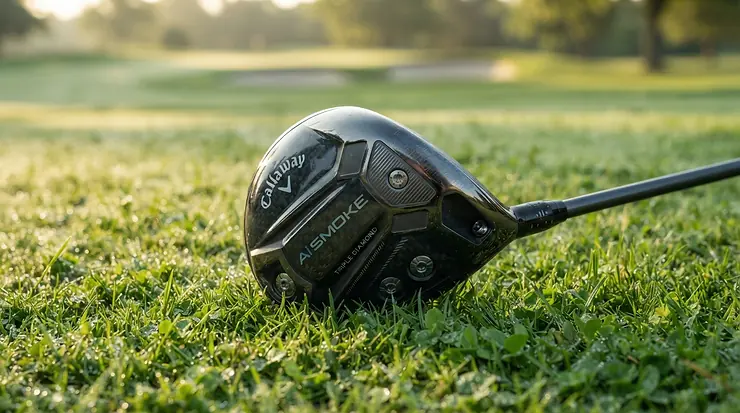
A professional golf driver for high swing speed is a driver built for clubhead speeds above roughly 105 mph, typically pairing a low-spin or mid-spin head with a stiff, stable shaft. It trades hand-holding for efficiency: less spin, tighter dispersion, and a face that stays fast when impact gets aggressive.

Here’s the catch nobody puts on the box. Speed is a liability as much as a gift. In MyGolfSpy’s 2026 penalty-rate testing, the average across 42 drivers jumped to 7.81 percent at high swing speeds, and not one driver escaped penalty shots entirely. Fast swings punish small mistakes, so the driver has to forgive the right things and stay out of the way on the rest.
That’s why this guide leans on published testing rather than marketing copy. Golf Digest’s 2026 low-spin driver test used low-handicap players, most of whom swing above 100 mph, to find heads that spin low consistently across the face, which is a different (and harder) trick than spinning low on a perfect strike.
Everything below rests on spec sheets, independent test data and reviewer reports, not claims of personal ownership. Where verified buyer-review data was thin, we say so instead of dressing it up.
You’ll find seven drivers across budget, mid-range and premium tiers, plus the supporting cast that decides whether a driver actually performs: swing speed thresholds, low-spin driver heads, shaft choices, and launch monitor fitting. We’ll even detour to the short game, because distance without spin control around the green is just a faster way to get to a tough chip.
Quick Comparison: Our Top 7 at a Glance
| Pick | Standout Trait | Spin Profile | Price Range | Best For |
|---|---|---|---|---|
| Titleist GT3 | Distance leader in testing | Low-mid | Mid-$400s | Speed-chasers wanting value |
| Callaway Quantum Max | Best all-round forgiveness | Mid | Around $650 | Fast swingers who miss the center |
| Ping G440 LST | Low spin without the edge | Low | $600-$650 range | Forgiveness-minded low-spin fans |
| TaylorMade Qi4D LS | Ultra-low spin, carbon face | Very low | Around $650 | Center-face strikers |
| Callaway Quantum Triple Diamond | Tour shape, hook protection | Very low | $650-$700 range | Better players fighting a left miss |
| Cobra OPTM Max-K | Accuracy-first stability | Mid | Around $600 | Players tired of penalty strokes |
| Srixon ZXi LS | Low spin at a lower ticket | Low | Mid-$500s | Skilled ball strikers on a budget |
Look at the pattern in that table. The two most forgiving heads (Callaway Quantum Max and Cobra OPTM Max-K) aren’t the lowest spinners, while the lowest spinners (TaylorMade Qi4D LS, Callaway Quantum Triple Diamond) ask for cleaner contact. The Titleist GT3 is the wild card, offering top-tier distance at a price that undercuts most newer releases. Match the head to your miss pattern first and your preference for looks second.
💬 Just one click — help others make better buying decisions too!😊
Top 7 Professional Golf Driver for High Swing Speed Picks: Expert Analysis
Quick transparency note: verified buyer-review aggregates were thin for several 2026 models, so each entry leans on published tests, tour usage and reviewer consensus, labeled as such. Prices are ranges, so check current pricing before you buy.
1. Titleist GT3 — distance leader at a surprise discount
Few things in golf are as rare as a flagship that got cheaper while it was still good. After Titleist’s early-2026 price cut, the Titleist GT3 sat in the mid-$400s at the time of research, which undercut most brand-new competitors.
The performance justifies the attention. In MyGolfSpy’s high swing speed analysis, the GT3 ranked first for distance and third overall. Today’s Golfer’s testers also named it best for ball speed. On paper, that means a head engineered to convert big clubhead speed into big ball speed, with adjustability to dial in launch afterward. Retail listings show shaft options such as the Tensei 1K Black 65 and HZRDUS Black 60, which are heavier, stiffer-profile builds suited to fast swingers.
Here’s the analytical take: this is the pick for a player who has measured their numbers, wants raw distance, and doesn’t need the newest badge on the crown. Testers consistently flag one hesitation, which is the feeling of buying a model that isn’t brand new. A launch monitor makes that worry evaporate quickly.
Pros:
- ✅ Top-ranked distance in high swing speed testing
- ✅ Standout ball speed for fast swingers
- ✅ Adjustable setup to fine-tune launch
Cons:
- ❌ Not the newest Titleist on the shelf
- ❌ Light stock shaft options can mismatch fast tempos
Price range: mid-$400s, and for raw distance per dollar this is the value verdict leader of the group.

2. Callaway Quantum Max — the best all-rounder when contact gets sloppy
Callaway built the Callaway Quantum Max around a Tri-Force Face that layers titanium, poly mesh and carbon fiber, then tuned the face map with AI so speed holds up away from the sweet spot. It’s a 460cc head with a neutral center of gravity, offered in 9° and 10.5° lofts.
What does that mean in practice? MyGolfSpy’s high swing speed rankings put it first overall, with forgiveness ranked best overall, distance second and accuracy fifth. Few drivers pair that combination of numbers, because forgiveness and speed usually trade against each other.
Based on the spec comparison, the Quantum Max suits the 105-115 mph player whose best drives are elite but whose misses cost two shots. Reviewers describe it as the most forgiving Callaway of the generation, offering plenty of help with distance and mishits. It’s less pointed than a Triple Diamond, which is precisely the idea for a lot of fast swingers.
Pros:
- ✅ Best overall forgiveness in high swing speed ranking
- ✅ Multi-material face holds speed on mishits
- ✅ Neutral, confidence-inspiring look at address
Cons:
- ❌ Spins a touch more than true LS heads
- ❌ Premium launch-year pricing
Price range: around $650. The value verdict is strong if you miss the center more than you admit.
3. Ping G440 LST — low spin that doesn’t bite back
The Ping G440 LST has a quiet superpower, which is that it spins low without feeling like a low-spin driver. Ping’s pitch is the deepest center of gravity in a Ping driver to date, a thinner face and a 29-gram adjustable back weight in a 450cc head.
Those details translate directly. A deeper CG helps ball speed and launch, while the movable weight lets a fitter nudge shape and stability. Today’s Golfer named it best for distance with forgiveness, noting it’s so forgiving it hardly feels like a low-spin driver. Stock options at no upcharge include Alta CB Blue, Tour 2.0 Black and Chrome, Tensei 1K Black and Project X Denali Red, so shaft fitting happens at the counter.
The analytical read: this is the safest low-spin choice for players graduating from a standard head, because the stability cushion exists. Retail fitters describe it as best for faster swingers who want lower spin and a penetrating flight.
Pros:
- ✅ Stability uncommon in a low-spin head
- ✅ Wide no-upcharge stock shaft selection
- ✅ Adjustable 29-gram back weight
Cons:
- ❌ Only 9° and 10.5° lofts available
- ❌ Less workable than compact tour shapes
Price range: $600-$650. The value verdict is fair for a head this versatile.
4. TaylorMade Qi4D LS — the fastest, lowest-spinning option here
If speed is the religion, the TaylorMade Qi4D LS is the cathedral. It’s the lowest-spinning head in TaylorMade’s lineup, a 460cc, 45.75-inch driver with a 60X Carbon Twist Face, a 4° sleeve and two interchangeable weights (15g and 4g) that shift flight bias and spin.
In Golfalot’s GCQuad comparison, the LS produced the fastest ball speeds of three Qi4D heads at just under 150 mph. One reviewer called it the longest driver tested all season. Golf Monthly noted improved sound and feel over the Qi35 LS, plus less left-to-right volatility, which matters because low-spin heads typically punish off-center strikes.
Translate the spec sheet: this driver rewards a repeatable impact location. Reviewers repeatedly stress it isn’t built to mask swing flaws. A major retailer listed it near 4.8 out of 5 from roughly 45 buyers at the time of research, though that’s a small sample.
Pros:
- ✅ Fastest ball speeds among Qi4D heads tested
- ✅ Improved feel and dispersion versus predecessor
- ✅ Two-weight system for flight tuning
Cons:
- ❌ Demands a consistent strike location
- ❌ Firmer feel than the core Qi4D
Price range: around $650. The value verdict: worth it for center-face strikers, wasteful for everyone else.
5. Callaway Quantum Triple Diamond — tour shape and built-in hook protection
The Callaway Quantum Triple Diamond is Callaway’s tour model, a compact 450cc head and the lowest-spinning driver in the Quantum range. It leans fade-biased, which GOLFTEC’s fitters highlight as a hook-fighting feature for players tired of the left miss.
What stands out is how Golf Digest’s low-handicap testers described its spin as consistently good. Consistency is the entire point. Low spin from a perfect hit is easy; low spin across the face is what keeps carry numbers predictable. Interestingly, tour players Hojgaard and McKibbin chose the Triple Diamond Max variant in Dubai for extra forgiveness, which tells you something about how pros weigh pure low spin against stability.
Our take: choose this one if a fitter confirms your launch sits too high with standard heads, and your dominant miss is left. If your miss is a slice, move along.
Pros:
- ✅ Lowest spin in the Callaway Quantum range
- ✅ Fade bias helps stop hooks
- ✅ Compact, workable tour profile
Cons:
- ❌ Less forgiving than Max-style heads
- ❌ Premium price tier
Price range: $650-$700. The value verdict depends entirely on whether you’re the golfer this was designed for.
6. Cobra OPTM Max-K — accuracy first, glory second
The Cobra OPTM Max-K is the underdog of this list, and underdogs make good stories. MyGolfSpy named it the top accuracy driver in its high swing speed analysis, calling it a surprise standout.
Cobra’s design aims at reducing twisting at impact, claiming up to 23 percent tighter dispersion, with a fixed 11-gram back weight and a FutureFit33 hosel offering 33 loft and lie combinations. Reviewers describe it as a very high-MOI head built for keeping the ball in play.
The tradeoff is honest. Golfalot’s test measured a ball speed just under 151 mph, about a mile per hour slower than the OPTM X, costing roughly six yards of carry. NCG’s reviewer noted it launches high and spins a little more than the rest of the OPTM range. If your scorecard bleeds penalty strokes, six yards is a bargain price for straighter drives.
Pros:
- ✅ Top accuracy ranking at high swing speeds
- ✅ Very high stability for off-center hits
- ✅ 33 loft and lie combinations
Cons:
- ❌ Gives up a few yards of carry
- ❌ More spin than low-spin heads
Price range: around $600. The value verdict is excellent for score-first players.
7. Srixon ZXi LS — low spin at a more reasonable ticket
The Srixon ZXi LS is the pick for skilled strikers who want low-spin performance without paying the flagship premium. It’s a 460cc head with front and back weight ports and a 1.5-degree adjustable hosel sleeve, a medium-depth face and a traditional round shape.
Plugged In Golf’s review flagged excellent ball speed on center strikes and noted the ZXi LS is less forgiving than the standard ZXi, dropping ball speed more willingly on mishits. That’s the honest trade in this class: lower spin and workability in exchange for a smaller margin.
The stock shaft is a version of Project X HZRDUS Black, a low-launch, low-spin profile suited to aggressive tempos. Retail list prices sit in the mid-$500s, and discounts have been visible, which sharpens the value case for players who’ve been fitted into this category.
Pros:
- ✅ Genuinely low spin for piercing flight
- ✅ Front and back weight ports for tuning
- ✅ Lower ticket than most tour-style heads
Cons:
- ❌ Mishits lose ball speed quickly
- ❌ Smaller aftermarket and fitting presence
Price range: mid-$500s. The value verdict: strong if your strike is reliable.
Head-to-Head: Specs, Spin and Who Each Driver Suits
| Driver | Head Size | Key Tech | Price Range | Best For |
|---|---|---|---|---|
| Titleist GT3 | Adjustable head | Speed-focused design | Mid-$400s | Value-minded distance hunters |
| Callaway Quantum Max | 460cc | Tri-Force Face | Around $650 | Forgiveness plus speed |
| Ping G440 LST | 450cc | Deepest CG, 29g weight | $600-$650 range | Stable low spin |
| TaylorMade Qi4D LS | 460cc | 60X Carbon Twist Face | Around $650 | Center-face bombers |
| Callaway Quantum Triple Diamond | 450cc | Fade bias, low spin | $650-$700 range | Better players with a hook |
| Cobra OPTM Max-K | Large head | 11g fixed back weight | Around $600 | Accuracy-first golfers |
| Srixon ZXi LS | 460cc | Front and back weights | Mid-$500s | Skilled strikers on budget |
Looking at the comparison above, the Titleist GT3 delivers the best distance-per-dollar, but if forgiveness is your priority, the Callaway Quantum Max justifies the extra $200. Budget buyers should note that the Srixon ZXi LS sacrifices forgiveness to hit its price point. Meanwhile the Cobra OPTM Max-K is the one to pick when penalty strokes matter more than the longest possible carry.

How to Choose a Professional Golf Driver for High Swing Speed
Choosing well takes five minutes of honest thinking before any shopping starts. Work through these steps in order:
- Measure your real clubhead speed. Not the number you hit once, but your average across ten swings on a launch monitor. Everything else keys off it.
- Identify your miss. Left, right, thin, low-face? A fade-biased head fixes a hook; a high-MOI head fixes inconsistency.
- Decide how much spin you actually need. Fast swingers often benefit from lower spin, but only if impact is consistent. Chasing the lowest number with a wandering strike backfires.
- Pick head type before brand. Low-spin, core or high-MOI. Brand loyalty is expensive when it overrides data.
- Fit the shaft separately. Weight, flex and kick point alter launch as much as loft.
- Test ball speed and dispersion, not just distance. One bomb proves nothing.
- Compare total cost. Include shaft upgrades, adjustments and any price cuts on older models.
Swing Speed Thresholds: What Your Numbers Really Mean
Understanding swing speed thresholds saves money, because each band calls for a different shaft and head combination. True Spec Golf data shared by Golf.com places most high-level players in the extra-stiff range, and offers the breakdown below as a starting guideline.
| Driver Swing Speed | Typical Flex | What It Usually Means |
|---|---|---|
| Above 105 mph | X-Stiff | Tour-level speed; low-spin heads become viable |
| 97-104 mph | Stiff | Fast but not elite; fit before going very low spin |
| 84-96 mph | Regular | Mid-range; forgiveness often beats raw spin reduction |
| 72-83 mph | Senior | Slower; higher launch usually helps |
These swing speed thresholds are general ranges, not laws. Tempo matters too: a smooth 108 mph swinger may play better in a stiff than an aggressive 102 mph player does.
The table’s real value is as a filter. If you land at 100 mph, buying a compact tour head because it looks cool is optimism, not strategy. Golf Digest’s low-handicap panel included players averaging around 116 mph, so don’t benchmark yourself against them without measuring first. Treat the table as the opening question, then let a fitter ask the follow-ups.
Low-Spin Driver Heads vs Standard Heads: What You Gain and Lose
Low-spin driver heads move the center of gravity forward and shallower, which cuts spin and flattens flight. The cost, according to Golf Digest’s testing, is that these designs can feel more rigid and less forgiving for average to moderate swing speed players.
| Head Type | Spin | Forgiveness | Best For |
|---|---|---|---|
| Low-spin (LS) | Lowest | Lowest | Consistent center strikers, 105+ mph |
| Core / standard | Mid-low | Balanced | Most fast swingers |
| High-MOI (Max) | Mid | Highest | Penalty-prone, accuracy-first |
The industry may be drifting away from pure LS heads. Golf Monthly’s 2026 equipment predictions suggest dedicated low-spin driver heads could become nearly obsolete on tour, because core models now spin low enough while offering far higher MOI. The Tour Championship driver list supports that, with plenty of core Qi4D and Titleist models in play alongside LS options.
In plain English: low-spin driver heads still win for a narrow band of strikers, but a modern core head is the smarter default for many fast swingers. Test both, and let the dispersion numbers decide.
Professional Golf Shafts for Low Handicap Players: Where Fast Swings Find Their Match
Choosing professional golf shafts for low handicap players is where good fittings get great. The shaft controls launch, spin and timing, and a 2026 snapshot of what wins is useful: Golf.com reported that Fujikura Ventus Black led PGA Tour driver shaft wins with 11 victories across nine players, followed by Project X HZRDUS Smoke Black with four.
Here’s a practical map of professional golf shafts for low handicap players:
- Low launch, low spin: HZRDUS Black Gen 5 or Smoke Black RDX, favored by Project X for fast swingers.
- Stability-focused feel: Fujikura Ventus Black and Ventus TR Black.
- Slightly softer feel: Mitsubishi Tensei lines, which some players prefer over Ventus.
- Flight-by-color: Mitsubishi Diamana’s Red (high), Blue (mid) and White (low) classification.
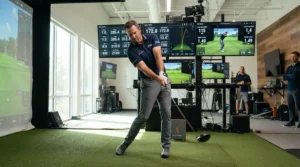
Weight matters too. Golf Monthly’s shaft guide suggests 70g shafts suit players swinging around 105 to 115 mph. Be careful, though: one GolfWRX thread shows a low-single-digit handicapper at 112-115 mph finding a Ventus TR Blue flew too low. Even excellent professional golf shafts for low handicap players can mismatch if launch is already low. Fit the shaft to the head, not the other way around.
Launch Monitor Fitting: A Step-by-Step Transformation Guide
A proper launch monitor fitting converts guesswork into evidence. Here’s how to use one well:
Step 1 — Warm up and record baseline. Bring your current driver and the balls you play. Ball choice affects spin.
Step 2 — Know the key numbers. Clubhead speed, ball speed, launch angle, spin rate, angle of attack and smash factor. Golf Channel notes a maximum smash factor of 1.5, meaning 100 mph clubhead speed yields 150 mph ball speed. It also cites an optimum descent angle between 35 and 40 degrees for players swinging 85 to 110 mph.
Step 3 — Chase ball speed first. MyGolfSpy Labs’ driver fitting study argues for prioritizing ball speed over smash factor, and finds that for high-ball-speed players minimizing spin can lead to greater distance, while slower players may carry farther with slightly higher spin.
Step 4 — Test one variable at a time. Change head, then loft, then shaft.
Step 5 — Log dispersion. Ten swings, not one.
Step 6 — Retest on the course. Numbers in a bay don’t have wind.
Commonly cited targets for 105-plus mph players sit around the 2,300-2,700 rpm window, though your fitter’s data should override any generic number. Treat launch monitor fitting as a conversation with evidence.
Golf Wedges for Professional Level Spin Control
Distance off the tee is useless without golf wedges for professional level spin control around the green. The 2026 evidence points in a clear direction. Per Golf.com, Titleist Vokey led the winning-wedge count with 21 victories and made up 52 percent of all gap, sand and lob wedges on the PGA Tour, with the new SM11 recording 11 wins. Golf.com’s winningest wedges report also notes Cleveland’s RTZ wedges won a major, and that TaylorMade’s MG5 had a strong debut.
Golf wedges for professional level spin control share traits:
- Spin-milled or machine-cut grooves for consistent friction.
- Moisture management, such as Cleveland’s HydraZip and TaylorMade’s Spin Tread.
- Grind variety so bounce matches your turf.
GolfMagic’s testing of the Vokey SM10 recorded about 10,000 rpm on 100-yard shots with minimal wet drop-off. In GolfWRX’s member vote, Vokey SM11 earned 35 percent, Cleveland RTZ 21 percent, TaylorMade MG5 8 percent and Ping S259 7 percent.
Grooves wear, so even the best golf wedges for professional level spin control gradually lose bite after a few thousand shots. Test your 56° and 60° on a monitor each season. Your driver may be the headline, but a worn wedge quietly costs strokes.
Real-World Scenarios: Three Players, Three Setups
Specs only matter when matched to a human. Three profiles, based on common fitting situations:
The weekend scratch player (110 mph, 2 handicap, left miss). Budget around $650 and loft is flexible. The Callaway Quantum Triple Diamond offers fade bias and low spin. Pair with a low-launch shaft such as HZRDUS Smoke Black, then fit the wedges for spin consistency.
The competitive club champion (106 mph, 5 handicap, wide dispersion). Penalty strokes are the enemy. The Cobra OPTM Max-K or Callaway Quantum Max gives forgiveness, and a mid-launch shaft keeps carry honest. Expect to give up a few yards, and gain several shots a round.
The value-driven fast swinger (104 mph, 8 handicap, tight budget). The Titleist GT3 at its reduced price, or the Srixon ZXi LS if strike quality is reliable. Spend the savings on a launch monitor fitting rather than a shaft you haven’t tested.
Notice what repeats: each player picks the head for the miss, then the shaft for the tempo, then verifies with numbers.
Problem → Solution Guide for Fast Swingers
Problem: The ball balloons into the wind. Too much spin or launch. Solution: move to a lower-spin head, such as the TaylorMade Qi4D LS or Srixon ZXi LS, or a stiffer, lower-launch shaft.
Problem: Ball flight is too low and runs out of carry. Over-correcting. Solution: add loft or move to a mid-launch shaft. The GolfWRX thread mentioned earlier is exactly this scenario.
Problem: Persistent left miss. Solution: fade-biased head such as the Callaway Quantum Triple Diamond, plus a check on shaft tip stiffness and weight settings.
Problem: Great drives, awful misses. Solution: Cobra OPTM Max-K or Callaway Quantum Max for stability.
Problem: Spin disappears on greenside shots. Solution: replace worn wedges and verify grooves before blaming technique.
✨ Don’t Miss These Exclusive Deals!
🔍 Take your tee shots to the next level with these carefully selected drivers. Click on any highlighted item to check current pricing and availability. These clubs will help you turn raw speed into fairways and distance you can actually repeat!
Common Mistakes When Buying a Professional Golf Driver for High Swing Speed
Most regrets come from a handful of predictable errors:
- Buying the lowest spin you can find. Low spin helps only with consistent contact; otherwise carry collapses.
- Ignoring shaft fit. A great head with the wrong shaft is a rental car with the wrong tires.
- Copying tour players. Golf Digest’s panel averaged well above 110 mph in some cases, so their setups aren’t automatically yours.
- Assuming newest is best. The Titleist GT3 proves a discounted flagship can outperform pricier arrivals.
- Skipping the fitting. A proper launch monitor fitting beats a month of internet reading.
- Forgetting the wedges. Spin control is half of scoring.
Reviewers across the board repeat one message: dispersion beats peak distance for scoring. A driver that wins 5 yards but adds a penalty stroke every other round is a downgrade wearing a fast jersey.
Long-Term Cost & Maintenance for High-Speed Drivers
Think in total cost of ownership, not sticker price. A head in the $600-$700 range plus a premium shaft upgrade can approach $900, while a discounted Titleist GT3 can come in far lower. Spread across three seasons, the cost per round shrinks, but only if the club stays properly fit.
Maintenance is simple:
- Check sleeve and weight screws before major rounds.
- Wipe the face to keep sharp edges and prevent dirt from changing spin.
- Inspect the shaft tip and ferrule for hairline cracks, especially on fast, aggressive swings.
- Recheck loft settings seasonally, as an adjustable hosel can drift.
- Re-fit when your swing speed changes by 3-4 mph.
Value verdict: Cobra OPTM Max-K and Srixon ZXi LS lower upfront cost, while the Titleist GT3 is the best price-to-distance ratio. Spending on fitting often returns more than spending on a pricier head.
Frequently Asked Questions
❓ How much does a professional golf driver for high swing speed cost?
❓ Is the Titleist GT3 still worth buying after newer releases?
❓ Does a launch monitor fitting cost money?
❓ How often should I replace golf wedges for professional level spin control?
❓ What shaft weight suits swings over 105 mph?
Conclusion
Finding the right professional golf driver for high swing speed isn’t about the biggest number on a spec sheet. It’s about turning speed into repeatable fairways.
If distance per dollar is your religion, the Titleist GT3 is hard to ignore. If you miss the center and need forgiveness, the Callaway Quantum Max and Cobra OPTM Max-K protect your card. Center-face bombers should audition the TaylorMade Qi4D LS, while the Ping G440 LST offers low spin with a safety net, the Callaway Quantum Triple Diamond fights a left miss, and the Srixon ZXi LS brings low-spin performance at a friendlier ticket.
Remember the supporting cast too: swing speed thresholds to filter your options, low-spin driver heads only when contact is consistent, professional golf shafts for low handicap players fitted to your tempo, a real launch monitor fitting, and golf wedges for professional level spin control to finish the job. Check current pricing before you buy, and book the fitting first.
✨ Ready to put your speed to work?
🔍 Click any highlighted pick above to check current pricing and availability, then pair it with a proper fitting. Your next fairway is waiting! ⛳
Recommended for You
- Premium Golf Iron Set: 7 Best Picks Worth The Money In 2026
- Putter Used By Professional Golfers: 7 Proven Picks (2026)
- Tour-Issue Golf Irons: 7 Proven Blades Worth Buying In 2026
Disclaimer: This article contains affiliate links. As an Amazon Associate, I earn from qualifying purchases. If you purchase products through these links, we may earn a small commission at no additional cost to you.
✨ Found this helpful? Share it with your friends! 💬🤗
