
In This Article
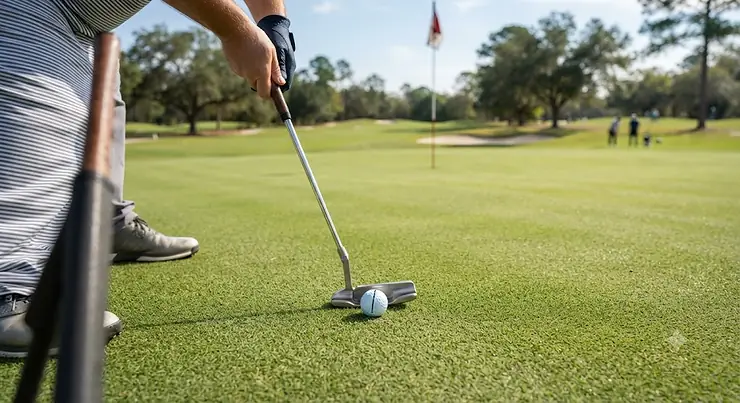
Walk onto any putting green in America this weekend and you’ll see the same split. Half the bags hold something that looks like a spacecraft landing module — winged, weighted, painted with enough alignment lines to guide a jet onto a carrier deck. The other half hold a slim piece of shaped steel that would have looked completely at home in 1967. That second group is the one we’re here for, because classic blade putter design has outlived every trend that was supposed to bury it.

Here’s the thing that makes this fun: the blade isn’t surviving on nostalgia alone. It’s surviving because the geometry works. A heel-toe weighted blade puts mass at the extremes of the head, which is the same forgiveness principle a cavity-back iron uses, and it does so in a footprint small enough that your eye reads the face angle instantly. That combination — visual honesty plus real physics — is why a shape first sketched on the dust jacket of a 78 rpm record in 1966 is still winning tournaments six decades later.
What is classic blade putter design? It’s a compact, heel-to-toe weighted putter head with a flat back or shallow cavity, minimal alignment aids, and a hosel — typically a plumber’s neck or slant neck — that produces toe hang for arcing strokes. The emphasis is on feedback, aim clarity, and shape, not maximum forgiveness.
In this guide, you’ll get seven real 2026-market blades broken down by material, toe hang, feel profile, and who each one actually suits. You’ll also get the honest version of the trade-off: blades punish sloppy strikes, and pretending otherwise helps nobody. By the end you’ll know whether the classic blade putter design belongs in your bag — and if so, which one.
Quick Comparison: 7 Classic Blades at a Glance
Before we go deep on each model, here’s the map. I’ve grouped these by what actually separates them — construction method, feel profile, and stroke type — rather than by marketing tier, because those are the three variables that decide whether a putter feels like an extension of your hands or a foreign object.
| Putter | Construction | Stroke / Toe Hang | Price Range | Best For |
|---|---|---|---|---|
| Scotty Cameron Studio Style Newport 2 | 303 stainless, SCS carbon steel insert | Moderate arc, plumbing neck | Around $500 | Scotty Cameron Studio Style Newport 2 suits players chasing the benchmark shape and softest premium sound |
| PING Scottsdale Anser 2D | Cast body, PEBAX face insert | Slight arc, deeper profile | Mid-$200s | PING Scottsdale Anser 2D fits golfers who want blade looks with mid-mallet stability |
| Mizuno M.Craft Osaka | Forged 1025E carbon steel, copper underlay | Plumber’s (26°) or slant (43°) | Around $300 | Mizuno M.Craft Osaka is for feel purists on a mid-range budget |
| Odyssey White Hot OG One | Cast head, urethane White Hot insert | Moderate arc, 41° toe hang | $200–$250 range | Odyssey White Hot OG One rewards players who want the softest impact for the money |
| Bettinardi BB1 | One-piece milled 303 stainless | Moderate arc, half-shaft toe hang | Around $500 | Bettinardi BB1 appeals to buyers who want craftsmanship and a finish nobody else has |
| Evnroll Origin ER2 | Milled 303 stainless, tungsten weighting | Slight-to-moderate arc, wide body | Roughly the $400 neighborhood | Evnroll Origin ER2 protects golfers whose misses spread across the face |
| Wilson Staff Infinite Grant Park | Cast, milled face pattern | Moderate arc, traditional blade | Around $100–$130 | Wilson Staff Infinite Grant Park serves budget buyers who still want the real silhouette |
Read that table sideways and a pattern jumps out: the price gap between the Wilson Staff Infinite Grant Park and the Bettinardi BB1 is roughly four hundred dollars, but the shape difference is measured in millimeters. What you’re paying for as you climb is manufacturing method — cast heads with inserts at the bottom, one-piece milled billets at the top — and that mostly buys you consistency of feel, not consistency of line. The PING Scottsdale Anser 2D is the interesting outlier here, because its deeper back end delivers measurably more stability than the classic profile while still reading as a blade at address. If your miss pattern is wide, that trade is worth more than any milling pattern on this list.
💬 Found a shape that speaks to you? Tap through to check current pricing and availability — and share this comparison with the friend who three-putts every Saturday! 😊
Top 7 Classic Blade Putters of 2026: Expert Analysis
Seven putters, three price tiers, one shared DNA. Every model below is currently available, and every claim here comes from published specs and aggregated reviewer sentiment — not from me pretending I’ve rolled a thousand putts with each one.
1. Scotty Cameron Studio Style Newport 2 — the shape every other blade gets measured against
The Newport 2 is the benchmark, and the 2025–2026 Studio Style version earns that status with a genuinely new face construction rather than a fresh paint job. The head is precision milled in the USA from 303 stainless steel, with a Studio Carbon Steel insert treated with electroless nickel plating and finished with a chain-link milling pattern. Translation: carbon steel gives you that muted, dense “thud” at impact that stainless can’t quite replicate, and the nickel plating solves the corrosion problem that made earlier carbon-faced putters a maintenance chore. Tungsten sole weights let a fitter tune head weight to your shaft length instead of leaving you with a 34-inch putter that swings like a 35.
Who should care? Golfers with a moderate arc who prize sound and feedback above raw forgiveness. The Scotty Cameron Studio Style Newport 2 has a slightly thicker topline than older Select models — a nod to the 2012 line — which subtly frames the ball and calms the eye at address. Reviewers consistently rate the Studio Style Newport family at or near the top for looks and sound in independent 2026 blade testing, and forum sentiment across enthusiast communities remains close to unanimous that this is the reference point for feel. The most common complaint in user reviews is equally consistent: the price.
Pros:
- ✅ Carbon steel insert delivers exceptionally soft, dense impact sound
- ✅ Tungsten sole weights allow precise head-weight fitting
- ✅ Benchmark resale value among premium blade putters
Cons:
- ❌ Premium pricing well above comparable milled competitors
- ❌ Compact footprint offers limited mishit protection
Expect to pay right around the $500 mark at the time of research; check current price before buying. Value verdict: you’re paying a real premium for feel and shape, and if either is what keeps you confident over a five-footer, that premium is defensible.

2. PING Scottsdale Anser 2D — mid-mallet stability hiding in a blade silhouette
The “2D” suffix does a lot of quiet work here — the D means deeper, and that extra front-to-back depth is the whole story. PING describes this as a perimeter-weighted blade with weight, size, and forgiveness comparable to a mid-mallet, which is an unusually honest bit of marketing. The face is a one-piece lightweight PEBAX insert, and the reason that matters isn’t softness for its own sake: a lighter face frees up discretionary mass that engineers can push to the heel and toe, raising MOI. A black nickel finish with a single white sight line and subtle color blocking keeps the aiming picture clean.
This is the pick for the golfer who loves the traditional look but keeps leaking putts short from the heel. In independent 2026 testing the PING Scottsdale Anser 2D finished third overall among blades and was singled out for long-putt performance — testers left themselves closer on lag putts and rated it top of the category for feel and purchase intent. That’s a rare combination, since “most forgiving” and “best feeling” usually go to different putters. Retail user reviews frequently express surprise that a sub-$300 putter competes with $400-plus milled models on feel; several reviewers explicitly compare it favorably to premium mallets they already own.
Pros:
- ✅ Mid-mallet forgiveness without abandoning the traditional shape
- ✅ Standout distance control on long lag putts
- ✅ Strong performance-per-dollar against milled rivals
Cons:
- ❌ Insert feel divides milled-face traditionalists
- ❌ Deeper head reads bulkier than a true classic blade
Typically found in the mid-$200s; prices may vary by retailer and finish. Value verdict: the best forgiveness-to-price ratio in this entire lineup.
3. Mizuno M.Craft Osaka — forged-in-Japan feel without the boutique tax
Mizuno built its reputation on forged carbon steel irons, and the Osaka applies the identical logic to the putting green. The head is forged in Japan from 1025E mild carbon steel with a thin copper underlay beneath a nickel-chrome finish, plus a deep CNC face-milling pattern. Here’s what that stack actually does: forged carbon steel is softer and denser than cast stainless, the copper layer damps high-frequency vibration, and deep milling reduces contact area at impact. The net effect reviewers describe is firm but muted — feedback-rich without the harsh click cheap putters produce.
The Osaka is a square-back, wide-bodied blade with a short heel-to-toe length, which buys you more MOI than a traditional profile while keeping the blade putter traditional look intact at address. Two neck options matter more than most buyers realize: the plumber’s neck version runs 26° of toe hang for minimal-to-moderate arcs, the slant neck 43° for stronger arcs. Dual sole weights let you dial head weight and center of gravity. In 2026 independent blade testing, the M.Craft family ranked at the very top for measured performance, particularly on short putts. Reviewer sentiment does split on the firm impact — the copper underlay refines it, but this is not a soft-insert putter and shouldn’t be bought as one.
Pros:
- ✅ Forged 1025E carbon steel delivers premium feedback for the price
- ✅ Two neck options cover a wide range of stroke arcs
- ✅ Adjustable dual sole weights for personalized head weight
Cons:
- ❌ Firm impact feel isn’t for everyone
- ❌ Limited left-handed availability across finishes
Around $300 at the time of research. Value verdict: the enthusiast’s value pick — roughly $150–$200 under the premium tier for craftsmanship that stands up to it.
4. Odyssey White Hot OG One — the softest impact for the money
The White Hot insert has been in play since 2000, and Odyssey brought back the original formulation for the OG line rather than “improving” it. That’s the right call. The insert is a urethane-covered elastomer, and the reason it has outlasted a generation of face technologies is simple: it’s lighter than the steel it replaces, which pushes mass to the perimeter, and it converts the sharp crack of impact into a low, soft note that helps golfers feel distance rather than calculate it. The One is a traditional heel-to-toe weighted blade with 41° of toe hang.
That toe hang number is your buying signal. Forty-one degrees is genuinely arcing — if your stroke goes straight back and straight through, this putter will fight you. But if the face naturally opens and closes, the Odyssey White Hot OG One releases on its own schedule and you stop steering. Aggregated review sentiment across retail and enthusiast sources leans hard on two themes: the insert feel is the softest in this price bracket, and distance control on long putts is where players notice the difference first. The recurring criticism is that the insert’s softness costs you some strike feedback — you don’t always know exactly where you hit it.
Pros:
- ✅ Original White Hot urethane insert remains the softness benchmark
- ✅ Excellent distance control on long approach putts
- ✅ Widely available in multiple hosel and length configurations
Cons:
- ❌ Soft insert mutes precise strike-location feedback
- ❌ Strong toe hang unsuitable for straight-back strokes
Generally sits in the $200–$250 range depending on configuration; check current price. Value verdict: the smartest first “real” putter for a golfer graduating from a starter set.
5. Bettinardi BB1 — one-piece milling with a finish nobody else has
Bettinardi’s 2026 BB Series is the biggest structural change the brand has made in years, folding the Studio Stock and INOVAI families into one line, and the BB1 is the flagship blade. Every head is milled in-house in Tinley Park, Illinois from a single block of 303 stainless steel — no insert, no bonded components, no assembly seams. The 2026 face brings VDF, or Variable Depth Flymill, milling: nine distinct zones cut at varying depths and densities so that heel and toe strikes transfer energy closer to the center-strike norm. The head weighs 355 grams with 3° loft, 70° lie, and half-shaft toe hang.
One-piece milling is the reason people pay for Bettinardi. When a putter head is a single continuous piece of steel, impact vibration travels through uniform material, and that produces the crisp, unmistakable feedback the brand is known for. The Bettinardi BB1 is a classic Anser executed at a very high level — reviewers note the cavity reads a touch wider than the ball and the proportions of topline, shoulders, and bumpers sit in visual harmony. The Savannah Blue PVD finish is the sleeper feature; published reviews describe it as subtle enough that you have to look twice to notice it isn’t just dark gray. Matt Fitzpatrick plays the line, which is the kind of validation that actually means something.
Pros:
- ✅ True one-piece milled 303 stainless construction, no inserts
- ✅ Nine-zone VDF face milling improves off-center distance control
- ✅ Distinctive Savannah Blue PVD finish with excellent durability
Cons:
- ❌ Premium price point sits alongside the category’s most expensive
- ❌ Crisp milled feedback feels firm to insert-putter converts
Priced right around $500 at the time of research. Value verdict: buy this if craftsmanship and finish matter to you as much as measured performance — it delivers both, but the finish is what you’ll notice daily.

6. Evnroll Origin ER2 — the closest thing to mishit insurance
Guerin Rife built Evnroll around one idea: grooves of progressively varying width across the face, wider in the center and narrowing toward heel and toe, so that off-center strikes produce roughly the same ball speed as pure ones. The Origin line introduces SweetFace 2.0, a revised parabolic groove pattern with reduced depth. The ER2 is milled from a single block of 303 stainless with steel and tungsten sole weights, in a wide-body blade profile with a thinned topline and squared rear bumpers.
Here’s what that means on a Tuesday evening nine-hole. Most three-putts aren’t caused by a bad line — they’re caused by a heel strike that comes up four feet short. Face-correcting groove technology attacks that specific failure, and it’s the reason the ER2 has been Evnroll’s most awarded shape. Rocker sole geometry also helps you square the face regardless of where your hands sit at address, which quietly removes a variable most golfers never diagnose. The Evnroll Origin ER2 suits the mid-handicapper who loves the blade putter traditional look but whose strike pattern hasn’t caught up to their taste. Reviewer consensus praises the consistency of speed on mishits; the recurring pushback is that the multiple sightlines are busier than a purist wants.
Pros:
- ✅ SweetFace 2.0 grooves normalize ball speed across the face
- ✅ Rocker sole promotes square setup from any hand position
- ✅ Milled 303 stainless with tungsten heel-toe weighting
Cons:
- ❌ Multiple sightlines clutter the minimalist look
- ❌ Wide-body profile departs from true traditional proportions
Generally lands in the $400 neighborhood at the time of research; verify current pricing. Value verdict: the most rational purchase here if your misses are scattered rather than centered.
7. Wilson Staff Infinite Grant Park — the real silhouette on a beer-league budget
Wilson has been making putters since before most of the brands on this list existed, and the Infinite line exists to prove that the classic shape doesn’t require a four-figure credit card statement. The Grant Park is a traditional heel-toe weighted blade with a milled face pattern and Wilson’s signature contrasting alignment aid, built in standard lengths that cover the great majority of golfers without custom fitting.
I want to be straight about the evidence here: independent lab testing data on the Wilson Staff Infinite Grant Park is thinner than it is for the premium models above, because testing outlets generally allocate their budgets to the flagship releases. What is verifiable is that budget-putter roundups consistently list this model as the blade pick under $150, citing the classic looks and the quality of the face milling relative to price. What you should not expect is premium-tier feel or a fitting session’s worth of adjustability. What you can reasonably expect is a properly shaped, properly weighted blade that rolls the ball true — and here’s the part that matters: a correctly fitted $120 putter will beat a poorly fitted $500 one every single round. Length and lie outrank brand at this tier, full stop.
Pros:
- ✅ Authentic classic blade shape at an entry-level price
- ✅ Milled face pattern uncommon in the budget category
- ✅ Low-risk entry point for testing blade putters
Cons:
- ❌ Limited independent performance testing data available
- ❌ Minimal adjustability compared with premium models
Typically around $100–$130; prices may vary. Value verdict: the honest starting point — spend the savings on a proper fitting for length and lie.
What the Face Tells You: Feel and Feedback Compared
Face construction is the single most misunderstood variable in putter shopping. People ask “is it soft?” when the better question is “what does it tell me?” Here’s how the seven break down.
| Face Type | Models | Feel Character | Feedback Level | Best For |
|---|---|---|---|---|
| Urethane insert | Odyssey White Hot OG One | Soft, low-pitched | Muted | Odyssey White Hot OG One helps golfers who tighten up over fast greens |
| PEBAX insert | PING Scottsdale Anser 2D | Soft with a firmer edge | Moderate | PING Scottsdale Anser 2D balances comfort and information |
| Carbon steel insert | Scotty Cameron Studio Style Newport 2 | Dense, muted, “thuddy” | High | Scotty Cameron Studio Style Newport 2 rewards players who read strike by sound |
| Forged carbon steel | Mizuno M.Craft Osaka | Firm, refined | Very high | Mizuno M.Craft Osaka suits practicers who want every mishit reported |
| One-piece milled stainless | Bettinardi BB1, Evnroll Origin ER2 | Crisp, precise | Very high | Bettinardi BB1 and Evnroll Origin ER2 fit low-handicap feel players |
The pattern is inverse and it’s worth internalizing: softness and feedback trade against each other. The Odyssey White Hot OG One feels wonderful and tells you very little; the Mizuno M.Craft Osaka tells you everything and asks you to accept a firmer strike. Neither is objectively better. If you practice regularly and want your putter to coach you, buy toward the milled end. If you tense up over four-footers and need the club to feel forgiving even when it isn’t, buy toward the insert end — confidence converts more putts than feedback does for most amateurs.
Blade Putter Traditional Look: Why the Eye Beats the Spec Sheet
There’s a reason tour players who could game literally anything keep reaching for the same compact profile, and it isn’t stubbornness. The blade putter traditional look does something measurable: it gives you an unobstructed read on face angle. A small head with a thin topline and minimal graphics means your eye compares the leading edge directly against the target line, with nothing competing for attention. Research on aim consistency repeatedly finds that most golfers misaim their putter, and that the alignment aids meant to fix it sometimes make things worse by creating false reference points.
Three visual elements do the heavy lifting. First, topline thickness — a thicker topline frames the ball and calms a busy eye, which is exactly why the 2026 Scotty Cameron Newport 2 deliberately went thicker. Second, offset, which positions your hands slightly ahead of the face and encourages the forward shaft lean that produces topspin. Third, the sight line: a single line, a dot, or nothing at all. Purists argue no line is best because it forces you to aim the face itself rather than a painted stripe.
Here’s the practical test, and it costs nothing. Set a ball on a straight six-foot putt, aim your putter, close your eyes, then have a friend lay an alignment stick along the face. Do it with three different putters. The one you aim most accurately without looking twice is the one your eye trusts — and that is a far better buying criterion than any published MOI figure. The blade putter traditional look isn’t aesthetic conservatism. It’s a legibility argument.
Blade Putter Anser Style: The Shape That Ate the Golf World
Every putter on this list except the wide-body outliers traces back to one design. The blade putter anser style — heel-toe weighted, cavity back, offset plumber’s neck hosel — was patented in March 1967, and when that patent expired in 1984, the floodgates opened. Nearly every manufacturer in golf now sells a version of it. That’s not plagiarism so much as convergence: the design solved the problem so completely that departing from it usually means getting worse.
What makes the geometry work is mass distribution. Pulling weight to the heel and toe raises resistance to twisting on off-center strikes, and the cavity back lowers the center of gravity so the ball starts rolling sooner instead of hopping. The offset hosel does the third job — it sets your hands ahead of the ball, which de-lofts the face slightly at impact and produces truer roll.
Where models diverge is in depth and hosel. The Bettinardi BB1 and Scotty Cameron Studio Style Newport 2 stay close to the original proportions. The PING Scottsdale Anser 2D extends the body rearward for stability. The Evnroll Origin ER2 widens it. If you’re comparing blade putter anser style options, ignore brand for a moment and sort by two numbers: toe hang and head depth. Toe hang matches your stroke arc; depth trades a slice of the traditional look for forgiveness. Independent 2026 blade testing from outlets like MyGolfSpy’s annual putter rankings consistently shows the deeper Anser variants outperforming the shallowest ones on long putts — a real advantage that costs you a little visual purity.

Timeless Putter Aesthetics vs. Modern Technology: Do You Have to Choose?
Short answer: no, and 2026 is the first year that’s unambiguously true. Timeless putter aesthetics used to mean accepting a technological handicap — you got the shape you loved and gave up the forgiveness the mallet crowd enjoyed. That trade has narrowed to the point of near-irrelevance for most golfers.
Look at what’s now hiding inside traditional silhouettes. The PING Scottsdale Anser 2D uses a lightweight polymer face specifically to free mass for perimeter weighting. The Evnroll Origin ER2 applies variable-width grooves to normalize ball speed on mishits. The Bettinardi BB1 cuts nine milling zones at different depths for the same reason. All three look, from ten feet away, like putters from the 1970s. None of them is one.
Where timeless putter aesthetics still costs you something real is at the extremes. A high-MOI mallet or a zero-torque design genuinely outperforms a blade for a golfer with an inconsistent strike pattern and a handicap north of 15 — the physics don’t care about your taste. But the gap in the middle of the bell curve, where most committed golfers live, has closed enough that choosing on looks is now a legitimate strategy rather than a sacrifice.
There’s also a confidence argument that no lab captures. If a putter looks right to you at address, your stroke stays loose, your tempo holds, and your speed control improves. That’s not mysticism; it’s the same reason golfers play the ball they like the sound of. Timeless putter aesthetics buy you calm, and calm is worth strokes.
✨ Ready to Put a Real Blade in Your Bag?
🔍 The seven models above cover every budget from a hundred bucks to five hundred. Click any highlighted putter to check current pricing and availability — then take it to a practice green and roll fifty six-footers before you commit. The right blade doesn’t just look better in your bag; it makes you want to practice, and that’s where the strokes actually come from. ⛳
Tour Inspired Design: What the Best Players Actually Choose
“Tour inspired design” is one of the most abused phrases in golf marketing, so let’s separate the substance from the sticker. When it’s meaningful, it refers to a head shape and weighting spec developed with or validated by professional players — proportions refined through feedback from people who putt for a living, not focus groups.
The genuine markers are boring and specific. Head weight in a tuned range, usually 340–360 grams for a blade, matched to shaft length. Loft around 3° and lie around 70°, because those numbers produce consistent launch on tournament green speeds. Toe hang specified in degrees rather than vague descriptors. Milled or premium-insert faces for consistent ball speed. The Mizuno M.Craft Osaka publishing 26° and 43° toe hang figures for its two necks is a real tour inspired design signal. So is the Bettinardi BB1 listing 355 grams, 3° loft, 70° lie, and half-shaft toe hang.
What tour inspired design does not mean is that the putter will suit you. Professionals putt on greens running 12 or 13 on the Stimpmeter; your Saturday muni might run 8. Faster greens reward lighter heads and softer faces because you need less energy; slower greens reward heavier heads. If you play soft, slow public greens, a genuinely tour-spec putter may feel underpowered.
The useful move is to borrow the specification discipline, not the specification itself. Get your length, lie, and head weight fitted to your stroke and your home course. The Golf Digest Hot List evaluation process is a good illustration of how professional testers weigh these variables — shape, weighting, and hosel options get scrutinized alongside face technology, because a putter that doesn’t fit you can’t perform for you.
Vintage Putter Style: Buying Old, Buying New, and Buying Smart
Vintage putter style pulls in two directions, and it’s worth knowing which one you’re shopping. The first is authentically old — original Ansers, Bullseyes, and 8802s from the 1960s through the 1980s, bought on the secondhand market. The second is new production that borrows the visual language: milled steel, minimal graphics, classic proportions.
If you’re chasing genuinely old equipment, go in clear-eyed. Vintage heads were manufactured to looser tolerances than today’s CNC-milled products, lofts and lies drift over decades of use, and shaft technology has improved meaningfully. Authenticity matters too — the Anser has been copied more than any club in golf history, and a “vintage” listing may be a knockoff from 1988. Buy from reputable dealers, ask for photos of the sole stamping and hosel, and assume the club will need a new grip and a loft-lie check.
The modern route is safer and, for most players, better. A new milled blade gives you vintage putter style with current tolerances, a headcover that fits, and a warranty. The Wilson Staff Infinite Grant Park delivers the look at entry pricing; the Bettinardi BB1 and Scotty Cameron Studio Style Newport 2 deliver it with heirloom-grade construction.
One genuinely underrated option sits between them: last year’s premium models on the pre-owned market. A two-year-old milled blade from a major brand typically trades at a substantial discount to new while performing identically, because putter technology moves slowly and steel doesn’t age. If you want vintage putter style with zero risk, that’s the arbitrage.
How to Choose a Classic Blade Putter: 6 Steps That Actually Matter
Most putter buying goes wrong at step one, because people start with brand instead of stroke. Reverse the order.
- Identify your stroke arc first. Have someone film you from behind at ground level. If the putter head travels noticeably inside on the backswing, you have an arcing stroke and need toe hang. If it tracks nearly straight, you need minimal toe hang or a face-balanced design. Getting this wrong makes every other decision irrelevant.
- Match toe hang to that arc. Roughly: 15–25° for minimal arc, 25–40° for moderate, 40°+ for strong. The Odyssey White Hot OG One at 41° and the Mizuno M.Craft Osaka slant neck at 43° are strong-arc putters; the Osaka plumber’s neck at 26° is not.
- Fit length before anything else. Standard 34–35 inches suits a fairly narrow height range. Too long forces your hands inside and your eyes outside the ball; too short hunches you over. A putter fitted at the correct length outperforms a better putter at the wrong one.
- Choose your feel-versus-feedback position. Decide consciously whether you want the club to comfort you or inform you. Insert faces comfort; milled faces inform.
- Assess your actual miss pattern. Mark your putter face with dry-erase marker and hit twenty putts. Tight cluster? Buy the shape you love. Scattered? Buy depth and face technology — the PING Scottsdale Anser 2D or Evnroll Origin ER2.
- Test on greens like yours. Not the store carpet. Green speed changes optimal head weight more than most golfers realize.
Common Mistakes When Buying a Classic Blade Putter
The most expensive error in this category is buying a blade because a professional plays one. Tour players have grooved, repeatable strokes and practice for hours daily; a blade rewards that and punishes its absence. If you’re carrying a 20 handicap and averaging two-plus three-putts a round, the honest advice is that a mallet will lower your scores faster, and there’s no shame in it.
The second mistake is buying on face feel while ignoring toe hang. Feel is what you notice in the shop, so it dominates the decision — but toe hang determines whether the face returns square without manipulation. A soft insert on a putter that fights your arc is a comfortable way to miss.
Third: skipping the length and lie fitting to save eighty dollars on a five-hundred-dollar club. This is the single most common self-inflicted wound in putter buying. An incorrect lie angle points the face offline at address no matter how well you stroke it.
Fourth: over-weighting alignment aids. Golfers with aim problems often reach for more lines, when the real issue is setup posture and eye position. Cleaner is frequently better, which is a core argument for classic blade putter design in the first place.
Fifth: replacing the putter when the stroke is the problem. If your speed control is erratic, no purchase fixes that. Six weeks of ladder drills will. Buy the putter you like the look of, then go do the work.
Blade vs. Mallet vs. Zero-Torque: An Honest Comparison
| Type | Forgiveness (MOI) | Feedback | Best Stroke | Best For |
|---|---|---|---|---|
| Classic blade | Lower | Highest | Moderate to strong arc | Bettinardi BB1 and Mizuno M.Craft Osaka buyers who value feel and aim clarity |
| Deep blade / mid-mallet | Moderate–high | Moderate | Slight arc | PING Scottsdale Anser 2D buyers wanting both worlds |
| Full mallet | Highest | Lowest | Straight back, straight through | Higher-handicap golfers needing maximum stability |
| Zero-torque | High | Moderate | Any, minimal face rotation | Golfers who fight face-angle inconsistency |
The table makes the trade explicit, but the nuance matters more than the rows. A blade’s lower MOI only costs you strokes if you miss the center regularly — for a golfer striking within a small area, the forgiveness gap between a blade and a mallet is largely theoretical. Meanwhile, the feedback advantage is real every single round, because a putter that reports its mishits teaches you to stop making them. That’s the genuine case for classic blade putter design over a mallet: it’s a coaching tool as much as a scoring one. The counterargument is equally real, and if you’re three-putting from inside 30 feet more than twice a round, the mallet is the correct answer regardless of taste.
Real-World Scenarios: Three Golfers, Three Right Answers
The weekend 14-handicap on public greens. You play twenty-five rounds a year, practice occasionally, and your greens run around 9 or 10. Your misses spread toward the heel. The PING Scottsdale Anser 2D is your putter — the deeper profile forgives the strike pattern, the PEBAX face keeps distance control tight on slow greens where mishits get punished, and the mid-$200s price leaves budget for a fitting. Skip the $500 milled blades entirely; you’d be paying for feedback you don’t currently have time to act on.
The low-handicap grinder who practices twice a week. You have a repeatable arcing stroke and you want the club to tell you the truth. Buy the Mizuno M.Craft Osaka in the neck that matches your arc, or stretch to the Bettinardi BB1 if the finish and one-piece milling appeal. Both report every strike, which is exactly what a practicing golfer should want. The Scotty Cameron Studio Style Newport 2 belongs in this conversation too if the softer carbon sound suits your ear.
The newer golfer, two seasons in, on a real budget. Start with the Wilson Staff Infinite Grant Park and put the savings toward a length-and-lie fitting and a dozen lessons. If putting becomes the part of the game you love, upgrade to the Odyssey White Hot OG One in year three — the soft insert makes distance control forgiving while you’re still building a stroke, and it’s the classic shape done properly at an accessible price.
Long-Term Cost, Care, and What Ownership Actually Looks Like
A putter is the cheapest club in your bag on a per-use basis, and almost nobody does that math. You’ll use it roughly 30 to 36 times per round — more than every other club combined. A $500 milled blade over ten years and fifty rounds a year works out to something like a third of a cent per stroke. Framed that way, the premium tier stops looking indulgent and starts looking like the most rational purchase in golf.
Maintenance is genuinely minimal but not zero. Wipe the face dry after every round, especially on carbon steel models — the copper underlay and nickel plating on the Mizuno M.Craft Osaka and the electroless nickel treatment on the Scotty Cameron Studio Style Newport 2 exist precisely because untreated carbon steel rusts. Never store a damp putter in a headcover. Regrip roughly annually if you play regularly; a slick grip destroys pressure consistency faster than any face wear. Have loft and lie checked every couple of seasons, because putters get dropped, leaned on, and jammed into car trunks.
One rule worth applying: milled stainless and forged carbon heads hold value far better than insert models, because their performance doesn’t degrade. Inserts do wear over years of use. If you rotate equipment, the milled options here are effectively cheaper over a decade despite higher entry prices.
Rules, Conformity, and Not Getting Penalized
Putters are the least regulated club in the bag, but “least” isn’t “not at all.” The rule most likely to catch a casual golfer is the anchoring prohibition, in force since 2016 and now covered under Rule 10.1b. You may not hold the club, or a gripping hand, directly against your body during the stroke, and you may not brace a forearm against your body to create a stable pivot point.
The nuance trips people up. Long putters themselves are perfectly legal — it’s the anchoring that isn’t. Resting the grip along your lead forearm, as in armlock putting, is permitted, which is why armlock models like the Bettinardi BB-28 armlock variant exist and remain conforming. Holding a forearm against your body is also allowed provided it doesn’t establish an anchor point. And in a detail almost nobody knows, clothing counts as part of your body — pressing a putter into a rain jacket is still anchoring. The official USGA interpretations of Rule 10 spell this out with examples worth reading before you experiment with a new grip style.
Penalties are steep: loss of hole in match play, two strokes plus the stroke made in stroke play. Beyond anchoring, putters get exemptions other clubs don’t — they’re allowed to have two striking faces and grips with flat sides. Any putter from a major manufacturer on this list conforms as sold. Where you can accidentally go non-conforming is in aftermarket modification, so if you’re adding lead tape or swapping shafts, keep the changes conventional.

Frequently Asked Questions
❓ Is a blade putter harder to use than a mallet?
❓ What toe hang do I need for a classic blade putter design?
❓ Are milled putters worth the extra money over insert putters?
❓ What length blade putter should I buy?
❓ Can I use a long putter under current rules?
Conclusion: Buy the Shape You’ll Trust at Address
Six decades after that record sleeve got covered in sketches, classic blade putter design is doing better than surviving. It’s competing. The PING Scottsdale Anser 2D posts genuine forgiveness numbers inside a traditional silhouette. The Mizuno M.Craft Osaka and Bettinardi BB1 prove that milled and forged construction still beats everything for feedback. The Evnroll Origin ER2 attacks mishits with real engineering. And at the ends of the spectrum, the Scotty Cameron Studio Style Newport 2 remains the sound and shape everyone else measures against, while the Wilson Staff Infinite Grant Park and Odyssey White Hot OG One make the category accessible to golfers who aren’t ready to spend a car payment on a flatstick.
The decision framework is simpler than the marketing suggests. Sort by stroke arc first, get fitted for length and lie second, choose your feel-versus-feedback position third, and only then pick a brand. If your strike pattern is scattered, buy depth and face technology. If it’s tight, buy the shape that makes you calm.
Because that last part is the real argument for classic blade putter design in 2026: it isn’t nostalgia, and it isn’t a compromise. It’s a clean, honest look at the ball that lets you aim, trust, and roll it — which, on a Saturday morning with a five-footer to halve the match, is worth more than any spec sheet ever printed.
Recommended for You
- Pitching Wedge 44 48 Degree: 7 Best Picks for 2026 Golfers
- Pitching Wedge Approach Shots: 7 Picks That Actually Score (2026)
- 7 Best Gap Wedges for Full Shots in 2026: Ranked & Compared
Disclaimer: This article contains affiliate links. As an Amazon Associate, I earn from qualifying purchases. If you purchase products through these links, we may earn a small commission at no additional cost to you.
✨ Found this helpful? Share it with your friends! 💬🤗
