
In This Article
Somewhere between “I can find the fairway most of the time” and “please stop asking me my handicap,” there’s a golfer stuck holding the wrong set of irons. Maybe it’s a beginner box-set with all the personality of a folding chair. Maybe it’s a hand-me-down blade from a buddy who plays to a 4 and swings nothing like you do. Either way, golf irons for intermediate players occupy a strange, crowded middle ground — not forgiving enough to bail out a chunky 7-iron, not precise enough to reward real skill, and often not fitted to your swing at all.
What is a golf iron for intermediate players? It’s a club built for the 8–20 handicap range — golfers past the beginner stage who strike the ball fairly consistently but still miss the center of the face often enough to need real forgiveness, launch help, and stability. Think of it as the bridge between forgiveness-first game-improvement irons and precision-first players’ irons.
Getting this choice right matters more than most golfers realize — as the differences between major iron brands in this category are smaller than most people assume, with fit mattering more than the logo stamped on the back. Below, we’ve researched seven real, currently available sets across every price tier, broken down what actually separates them, and built out the buying framework — shaft flex, set makeup, cavity-back vs. blade — that most listicles skip entirely.
Quick Comparison Table
| Iron Set | Category | Price Range | Best For |
|---|---|---|---|
| TaylorMade P790 (2025) | Players-Distance | $1,400-$1,600/set | All-around ball strikers wanting tour looks |
| Titleist T250 | Players-Distance | $1,300-$1,500/set | Mid-handicaps wanting distance without bulk |
| Mizuno JPX 925 Hot Metal | Game Improvement | $900-$1,100/set | Feel-first golfers who still need help |
| Callaway Paradym Ai Smoke Max | Game Improvement | $1,000-$1,200/set | High-launch, max-forgiveness seekers |
| Wilson Dynapwr Max | Game Improvement | $600-$850/set | Best value complete set |
| Wilson Staff Model XB | Hollow-Body Players | $1,200-$1,400/set | Compact look with hidden forgiveness |
| Srixon ZXi5 | Players-Distance | $1,000-$1,200/set | Workable flight with easy launch |
Looking across this table, the split isn’t really budget versus premium — it’s how much “help” each set is willing to hide behind a clean face. The Wilson Dynapwr Max proves you don’t need four figures to get real forgiveness, while the TaylorMade P790 and Titleist T250 show that today’s players-distance category no longer forces a trade-off between looks and mercy on mis-hits.
📌 Bookmark this comparison — you’ll want to reference it again once you see the full breakdown below.
Top 7 Golf Irons for Intermediate Players: Expert Analysis
1. TaylorMade P790 (2025) — best all-around ball-striking feel
The fifth-generation P790 didn’t just get a refresh — it got a genuinely new face. Its 4340M forged steel face is noticeably stronger than the previous generation’s alloy, which lets TaylorMade thin the face further without losing durability. In practice, that means faster ball speed on strikes that miss low or toward the toe — exactly the misses an intermediate swing produces most.
The SpeedFoam Air injected into the hollow head also softens impact sound without deadening feedback, so you still know when you’ve flushed one. Based on the spec comparison, this iron rewards golfers who already strike the ball reasonably well but want a safety net on their worst three or four shots per round — not golfers who miss the center on every swing.
Reviewers consistently report that the P790 feels remarkably soft off the face for a hollow-body construction, a detail that used to only show up in solid forged blades. What most buyers overlook is that the compact topline makes it look like a smaller iron than it plays, which is a confidence trick worth paying for.
Pros:
- ✅ Forged face delivers soft feel with hollow-body forgiveness
- ✅ Compact, tour-inspired look builds address confidence
- ✅ Strong ball speed retention on off-center strikes
Cons:
- ❌ Premium price compared to other game-improvement sets
- ❌ Less workability than a true blade for shot-shaping
Expect to pay in the $1,400-$1,600 range for a full 7-iron set at the time of research — always check current pricing, since retailer promotions shift often. For an intermediate player who wants one set to grow into for years, the P790 remains the gold-standard value proposition in its category.

2. Titleist T250 — best distance without added bulk
Titleist built the T250 specifically to compete in the players-distance space P790 helped create, and the forged L-Face construction shows it. The line represents an evolution focused on precision and forgiveness, built on Titleist’s “3Ds” philosophy of distance control, descent angle, and dispersion. Here’s what to weigh: the all-steel look and lower center of gravity give mid-handicappers real distance without the thick, chunky topline that used to signal “beginner club” on the course. The muscle channel behind the face flexes on impact, adding ball speed especially on shots struck slightly thin — a common miss pattern for developing ball-strikers. What the spec sheet won’t tell you, but testers note, is that the T250’s dispersion pattern tightens up noticeably compared to older Titleist game-improvement models, meaning fewer wild misses left or right. That consistency is exactly what intermediate golfers need most — not just more distance, but more predictable distance.
Pros:
- ✅ Tight shot dispersion versus older Titleist GI models
- ✅ Clean, blade-like looks despite generous forgiveness
- ✅ Strong iron-to-iron distance gapping
Cons:
- ❌ Among the pricier options in this category
- ❌ Stronger lofts mean longer clubs into greens
Full sets typically land $1,300-$1,500, with single irons and components priced separately if you’re building through a fitter. If distance control matters more to you than raw yardage, the T250 earns its spot here.
3. Mizuno JPX 925 Hot Metal — best feel-to-forgiveness ratio
Mizuno’s reputation for feel isn’t marketing fluff — it’s chassis engineering. The JPX 925 Hot Metal pairs a thin, hot forged face with strategic tungsten weighting low in the head, which lowers the center of gravity for easier launch without ballooning the topline. Based on the spec comparison, this matters most on shots struck slightly low on the face — a signature intermediate miss — where the tungsten keeps the clubhead from twisting open. What most buyers overlook about this model is that it delivers game-improvement forgiveness in a shape that doesn’t scream “game improvement” at address, something rival brands still struggle to disguise. Reviewers consistently praise the buttery feel at impact, a trait that’s kept Mizuno irons in tour bags for decades even as forgiveness technology has caught up to feel-focused shaping.
Pros:
- ✅ Class-leading feel for a forgiving game-improvement iron
- ✅ Tungsten weighting stabilizes low-face contact
- ✅ Compact profile hides genuine forgiveness technology
Cons:
- ❌ Slightly less peak ball speed than hollow-body rivals
- ❌ Fewer stock shaft options than the bigger three brands
At $900-$1,100 for a full set, it’s the best combination of feel, forgiveness, and price for golfers who’ve outgrown a true beginner box-set but aren’t chasing maximum distance.
4. Callaway Paradym Ai Smoke Max — best for high, easy launch
Callaway’s AI-designed face pattern varies thickness across dozens of zones, optimizing ball speed even where your swing tends to miss most often. On paper this means the Max version — built with a wider sole and more perimeter weighting than the standard Ai Smoke — launches the ball noticeably higher with very little effort from the swing. That’s a genuine advantage for intermediate players who struggle to compress the ball and get steep, low-flying shots that don’t hold greens. The 360° undercut cavity design pushes weight to the perimeter, expanding the forgiveness zone well past what the compact shaping suggests. Reviewers consistently note that mis-hits toward the heel and toe still carry respectable distance, a common weak point in less-advanced game-improvement designs. This is a set built for confidence first, ball flight height second, and pure workability a distant third.
Pros:
- ✅ Exceptionally easy, high launch for moderate swing speeds
- ✅ Wide forgiveness zone across the entire face
- ✅ AI-optimized face improves speed on toe and heel misses
Cons:
- ❌ Larger profile than players-distance competitors
- ❌ Less shot-shaping feedback for developing better players
Expect $1,000-$1,200 for a full set at the time of research. If your miss is “thin and low,” this is the one built to bail you out.
5. Wilson Dynapwr Max — best value complete set
Independent testing has flagged this set as delivering performance that rivals irons priced $300-$400 higher, and after digging into the specs, that claim holds up. Wilson’s DYNAPWR Max is one of two sets singled out as excellent for bogey golfers, alongside Callaway’s Paradym Ai Smoke, and it’s specifically positioned as the value leader in that comparison. The forged face insert and internal weighting mimic tech found in sets costing considerably more, while the wider sole and generous offset help square the face at impact — a direct fix for the slice pattern common among intermediate golfers still fighting an open clubface. What the price tag doesn’t reveal is how much Wilson invested in feel; the multi-material badge behind the face dampens harsh vibration on mis-hits, so cheaper doesn’t translate to harsher feedback here.
Pros:
- ✅ Performance that competes with sets $300-$400 pricier
- ✅ Generous offset helps square the face for slicers
- ✅ Full complete-set option lowers total cost of entry
Cons:
- ❌ Bulkier topline than premium players-distance irons
- ❌ Fewer aftermarket shaft upgrade options at retail
Priced $600-$850 for a full complete set, this is the clear pick for intermediate golfers who want maximum forgiveness per dollar spent.
6. Wilson Staff Model XB — best hidden forgiveness in a compact shape
The Staff Model XB solves the tension between wanting a compact players’ look and needing genuine forgiveness — it’s the first hollow-body players’ iron Wilson has built, giving average golfers ball speed that competes with far pricier designs. Wilson reportedly ran over 4,000 face-optimization profiles across five separate impact locations to get there, and the result shows most clearly on shots struck low in the face — the most common miss pattern for mid-handicap golfers. Here’s what to weigh: this is a genuine players’-style shape with game-improvement guts, so it photographs like a set built for scratch golfers while playing considerably more forgiving. It’s built specifically for golfers in the 8-to-18 handicap range who want that compact, premium look without sacrificing the forgiveness their game still needs.
Pros:
- ✅ Hollow-body design hides real forgiveness in a sleek shape
- ✅ Face optimized specifically for low-face, off-center strikes
- ✅ Premium looks rival the biggest brands’ flagship irons
Cons:
- ❌ Requires more consistent strike quality than max-GI irons
- ❌ Limited track record compared to established players-distance lines
Set pricing runs $1,200-$1,400 at the time of research. For the golfer who cares as much about how the clubs look in the bag as how they perform, this is a standout.
7. Srixon ZXi5 — best all-around workability for the price
Srixon doesn’t get the marketing budget of the big three, but the ZXi5 earns tour credibility for good reason — players-distance irons like this one are increasingly finding their way into tour bags thanks to hollow-body designs and variable face-thickness technology that closed the performance gap with true players’ irons. Based on the spec comparison, the ZXi5 splits the difference nicely: enough forgiveness to survive a mis-hit, enough feedback to actually learn from your swing. What most buyers overlook is that Srixon’s rebound frame technology behind the face adds a spring-like effect specifically tuned for moderate swing speeds, which is exactly the swing-speed bracket most intermediate golfers fall into. It won’t out-forgive a max-game-improvement iron, but it offers more workability than anything else on this list at a comparable price.
Pros:
- ✅ Strong workability for shaping shots intentionally
- ✅ Rebound frame tuned for moderate swing speeds
- ✅ Competitive pricing against bigger-name players-distance irons
Cons:
- ❌ Less brand recognition may mean fewer demo-day chances
- ❌ Narrower fitting network than the major manufacturers
At $1,000-$1,200 per set, it’s the sleeper pick for intermediate golfers ready to start working the ball both ways.
Top 7 Products: Full Spec Comparison
| Iron | Construction | Category | Handicap Fit | Price Range |
|---|---|---|---|---|
| TaylorMade P790 | Hollow-body forged | Players-Distance | 5-20 | $1,400-$1,600 |
| Titleist T250 | Forged L-Face | Players-Distance | 5-18 | $1,300-$1,500 |
| Mizuno JPX 925 Hot Metal | Forged, tungsten-weighted | Game Improvement | 10-20 | $900-$1,100 |
| Callaway Paradym Ai Smoke Max | Undercut cavity, AI face | Game Improvement | 12-24 | $1,000-$1,200 |
| Wilson Dynapwr Max | Cast, forged insert | Game Improvement | 10-24 | $600-$850 |
| Wilson Staff Model XB | Hollow-body | Players (forgiving) | 8-18 | $1,200-$1,400 |
| Srixon ZXi5 | Hollow-body, rebound frame | Players-Distance | 8-20 | $1,000-$1,200 |
Reading across this table, notice how narrow the handicap-fit bands actually overlap in the middle — the Titleist T250, Wilson Staff Model XB, and Srixon ZXi5 all target roughly the same 8-to-18 window from three completely different design philosophies. That’s the modern intermediate iron market in a nutshell: multiple honest paths to the same forgiveness target, so fit and feel preference should decide it, not spec sheets alone.
Game Improvement Irons vs Players Irons for Intermediate Golfers
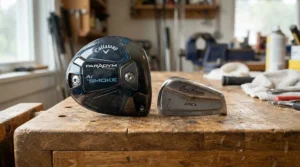
This is the fork in the road most buying guides gloss over. “Intermediate golf irons” and “game improvement irons” are effectively the same category — clubs built for golfers who’ve moved past the absolute beginner stage but aren’t yet accomplished enough for player’s irons. Players’ irons — thin toplines, minimal offset, compact heads — reward centered contact with better feel and workability, but punish mis-hits harshly. Game improvement irons trade some of that feel for a larger sweet spot, perimeter weighting, and forgiveness on shots struck away from center.
For golfers still working through the bogey-golf stage, avoiding player’s-distance or true player’s irons is often the right call — the extra forgiveness of a genuine game-improvement iron will directly reduce your scores. Meanwhile, the players’-style category is generally reserved for golfers with lower handicaps who value control, stability, and accuracy over raw forgiveness. The honest answer for most readers here: if you’re shooting in the high 80s to low 100s, lean game-improvement or players-distance (like the Mizuno JPX 925 Hot Metal or Wilson Dynapwr Max). If you’re consistently breaking 85, a set like the Titleist T250 or Wilson Staff Model XB gives you room to grow.
Cavity-Back vs Blade Irons
| Feature | Cavity-Back | Blade (Muscle-Back) |
|---|---|---|
| Sweet spot | Large, perimeter-weighted | Small, centered |
| Forgiveness | High | Low |
| Feel feedback | Moderate | Very precise |
| Best For | Intermediate to high handicaps | Low handicaps, tour pros |
The physics here are simple: a cavity-back hollows out the back of the clubhead and redistributes that mass to the perimeter, which resists twisting on off-center hits — exactly the forgiveness intermediate golfers need. A blade concentrates mass directly behind a small sweet spot, which produces incredible feel and shot-shaping control, but only if you strike the ball consistently in the same spot round after round. Every one of the seven irons in this guide is a cavity-back or hollow-body design for a reason: at the intermediate level, forgiveness compounds into lower scores far faster than workability does. Save the blades for when your miss pattern gets small enough to reward them.
Iron Set Makeup: What Belongs in Your Bag
A typical intermediate iron set runs from the 5-iron through pitching wedge (5-PW), sometimes extending to a 4-iron for golfers who still generate enough clubhead speed to launch it properly. Here’s the practical breakdown:
- 4-iron: Increasingly replaced by a hybrid for intermediate golfers — long irons are the hardest clubs in the bag to launch consistently.
- 5-7 irons: The workhorse scoring-approach clubs; forgiveness matters most here since these get hit from uneven fairway lies.
- 8-iron through PW: Precision clubs into the green; a slightly firmer, more controlled feel helps with distance control.
- Gap wedge: Fills the yardage gap most intermediate sets leave between pitching wedge and sand wedge — don’t skip it.
Most manufacturers, including several featured above, now sell 4-PW or 5-PW as the standard set and price gap/sand/lob wedges separately. Budget for those extra wedges when comparing total cost — a “$900 set” that’s actually 5-PW still needs two more clubs to round out a full 14-club bag.
Shaft Flex Fitting: Getting the Engine Room Right
The clubhead gets all the marketing attention, but the shaft does more to shape your ball flight than most golfers realize. Regular (R) flex generally suits swing speeds around 75-90 mph with a 6-iron, Stiff (S) suits 90-105 mph, and Senior (A) flex fits below 75 mph — though these bands vary by manufacturer and shaft model. Steel shafts remain the standard for intermediate iron sets because they offer more consistent feel and lower cost, while graphite shafts add swing speed for slower-tempo players at the expense of some feedback.
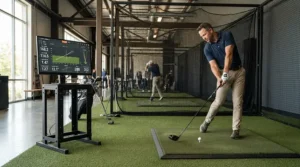
Here’s what to weigh: guessing your flex based on “I don’t swing that hard” is how a lot of intermediate golfers end up fighting a slice or a weak, ballooning flight they can’t explain. A launch monitor session at a fitting bay measures actual clubhead speed and spin rate, which removes the guesswork entirely — and most of the manufacturers behind these seven sets offer free or low-cost fitting sessions specifically to dial this in before you buy.
Intermediate Golf Clubs for Consistent Ball Striking
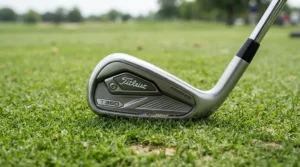
Consistency, not distance, is the real bottleneck for most intermediate golfers — and the good news is that modern intermediate irons are engineered specifically to close that gap. Golfers at this stage should look for irons that offer plenty of forgiveness and deliver consistency, helping build confidence with every swing. That shows up in three measurable ways: wider sweet spots that maintain ball speed on strikes away from center, lower and more forward centers of gravity that make solid contact easier to achieve, and perimeter weighting that resists twisting on toe and heel misses.
What the spec sheet won’t show you is how this translates on the course: a shot struck slightly thin with a forgiving cavity-back might land 5-8 yards short of a flush strike, while the same miss with an unforgiving blade can come up 20+ yards short and offline. That gap is the entire argument for game-improvement and players-distance irons at the intermediate stage — the forgiveness isn’t a crutch, it’s a scoring tool.
How to Choose Golf Irons for Intermediate Players
- Get your current handicap or scoring average honestly assessed — this determines whether you lean game-improvement or players-distance.
- Book a launch monitor fitting to measure real swing speed, not guessed swing speed.
- Prioritize forgiveness over workability until your miss pattern shrinks and tightens.
- Decide steel vs. graphite based on tempo and any joint or injury considerations.
- Test at least two sets from different categories before committing — feel is genuinely personal.
- Check the set makeup (4-PW vs 5-PW) and budget for wedges separately if needed.
- Compare price ranges, not exact prices, since retailer promotions shift constantly — always check current listings before buying.
Common Mistakes When Buying Intermediate Irons
Golfers at this stage repeatedly make the same handful of errors. Buying blades too early tops the list — chasing the look pros use before your strike pattern can support it just bleeds strokes. A close second is skipping fitting entirely and grabbing stock shafts off the rack, which can leave 10-15 yards of distance and real accuracy on the table. Many also underestimate offset, assuming it’s purely cosmetic when it actually helps square the clubface at impact for golfers still fighting a slice. Finally, plenty of buyers forget wedges aren’t included in a “7-iron set” price, leading to budget surprises at checkout.
Practical Usage Guide: Your First 30 Days With New Irons
New irons demand an adjustment period, even when they’re objectively easier to hit. In week one, spend range sessions hitting only mid-irons (6, 7, 8) to recalibrate distance control before taking them on-course. By week two, start tracking actual carry distances — new forgiveness technology often adds 5-10 yards versus older sets, and playing old yardages leads to consistently long approach shots. Clean grooves after every round; dirt buildup in the face grooves reduces spin control faster than most golfers expect, especially on wedges. Around the 30-day mark, revisit your full-set yardage gaps — if two clubs are producing nearly identical distances, a fitter can adjust loft spacing to fix it.
Real-World Scenario: Three Golfers, Three Iron Sets
Consider a 22-handicap golfer playing twice a month with a moderate budget — the Wilson Dynapwr Max delivers forgiveness and value without demanding a big financial commitment before they know if they’ll stick with the game. Now consider a 14-handicap golfer chasing single digits, practicing weekly, who wants room to develop shot-shaping skills — the Titleist T250 or Srixon ZXi5 bridges that gap between forgiveness and feel. Finally, picture a returning golfer who used to play scratch but has been away from the game for years and needs both ego-friendly forgiveness and a look that doesn’t feel like a downgrade — the Wilson Staff Model XB solves exactly that emotional and technical problem at once.
Long-Term Cost & Maintenance
For the average intermediate golfer playing once or twice a week, a quality set of irons will typically perform well for 5-7 years before groove wear and face fatigue become noticeable. Regrip every 12-18 months for golfers who play year-round, since worn grips quietly cost accuracy long before they look visibly damaged. Budget roughly $8-12 per grip plus labor if a shop handles it. The biggest upgrade triggers aren’t age alone — a measurable swing speed change, a handicap shift of five or more points, or evolving priorities in your game are the real signals it’s time to get refit rather than simply replaced. This is also worth checking against the USGA’s conforming-club standards if you play in sanctioned events — used or older sets occasionally fall outside current groove specifications.
FAQ
❓ What handicap range are intermediate golf irons for?
❓ Are game improvement irons the same as intermediate irons?
❓ How often should intermediate golfers replace their irons?
❓ Do I need a custom fitting for intermediate irons?
❓ What's the difference between steel and graphite shafts for intermediate irons?
Conclusion
There’s no single “best” set of golf irons for intermediate players — there’s only the best fit for your specific swing, budget, and where you’re trying to take your game next. If forgiveness and value matter most right now, the Wilson Dynapwr Max is hard to beat. If you want room to grow into a more refined players’ shape, the TaylorMade P790 or Titleist T250 both deliver distance without punishing your misses. And if you’re chasing that rare combination of tour looks with beginner-friendly forgiveness hidden inside, the Wilson Staff Model XB earns its spot for exactly that reason.
Whatever you choose, resist the urge to buy based on what your lowest-handicap friend plays. Your irons should match your actual strike pattern today — not the player you hope to become next season. Get fitted, test more than one category, and let the data settle the debate.
Recommended for You
- 7 Best Hybrid Clubs For Intermediate Golfers In 2026
- Golf Driver For Intermediate Golfers: 7 Top 2026 Picks
- Beginner Golf Clubs For Kids: 7 Best Sets In 2026 (Ranked)
Disclaimer: This article contains affiliate links. As an Amazon Associate, I earn from qualifying purchases. If you purchase products through these links, we may earn a small commission at no additional cost to you.
✨ Found this helpful? Share it with a golf buddy who’s still gaming blades they can’t hit yet! 💬⛳
