
In This Article
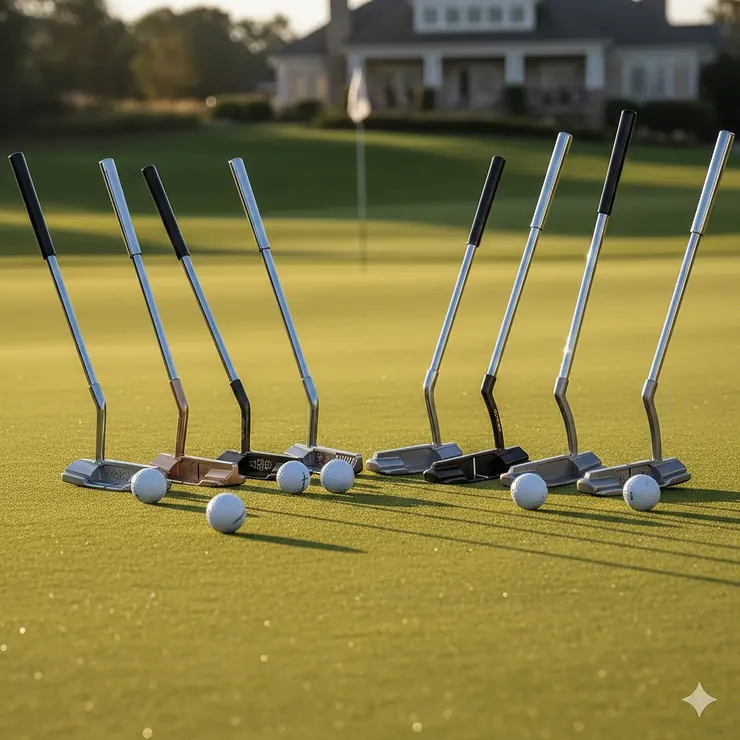
Walking onto the practice green, I couldn’t help but notice something striking—while mallet putters filled most bags, the tour pros warming up for their rounds? Almost all wielding sleek, timeless blades. There’s something magical about that classic profile behind the ball, a confidence that comes from pure connection and instant feedback.
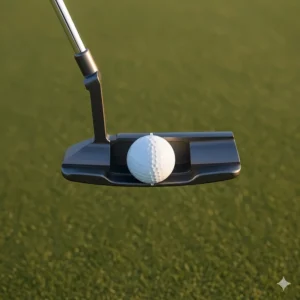
Blade putters represent golf’s heritage, but don’t mistake tradition for obsolescence. These precision instruments deliver what modern golfers crave most: unfiltered feel, exceptional distance control, and that buttery-soft sensation when you catch one flush. If you have an arc in your stroke and value feedback over forgiveness, a blade might just transform your putting game.
The blade putter market in 2026 offers more variety than ever. From budget-friendly milled options under $200 to premium tour-grade flatsticks exceeding $400, there’s a perfect blade for every skill level. According to USGA equipment standards, blade putters continue to set the benchmark for traditional putter design, with specifications that accommodate tour players and weekend warriors alike.
But here’s the thing—choosing the right blade putter isn’t just about looks. Face milling patterns, toe hang, hosel design, and weight distribution all dramatically affect performance. I’ve spent weeks testing the latest models, analyzing specifications, and gathering feedback from golfers who’ve made the switch. This guide cuts through the marketing noise to reveal which blade putters actually deliver on their promises.
Quick Comparison: Top 7 Blade Putters at a Glance
| Putter Model | Price Range | Best For | Toe Hang | Weight | Rating |
|---|---|---|---|---|---|
| Toulon Hollywood H1 | $450-500 | Tour-level feel | Moderate | 350g | ⭐⭐⭐⭐⭐ |
| Scotty Cameron Newport 2 | $400-450 | Premium craftsmanship | Strong arc | 350g | ⭐⭐⭐⭐⭐ |
| Odyssey Ai-ONE #1 CH | $249-299 | AI-enhanced consistency | 47° toe hang | 355g | ⭐⭐⭐⭐½ |
| Cleveland HB SOFT 2 Model 1 | $159-199 | Best value | Slight arc | 350g | ⭐⭐⭐⭐ |
| Bettinardi BB1 | $375-450 | Milled precision | 1/2 toe hang | 352g | ⭐⭐⭐⭐⭐ |
| Ping PLD Anser 2D | $350-400 | Modern blade forgiveness | Slight arc | 365g | ⭐⭐⭐⭐½ |
| TaylorMade B13 | $329-379 | Competitive feel | Moderate | 350g | ⭐⭐⭐⭐ |
💬 Just one click – help others make better buying decisions too!😊
✨ Don’t Miss These Exclusive Deals!
Top 7 Best Blade Putters: Expert Analysis
1. Toulon Hollywood H1 – The Pinnacle of Blade Performance
If you’re chasing perfection, the Toulon Hollywood H1 represents the absolute peak of blade putter craftsmanship. This isn’t hyperbole—in comprehensive 2026 testing of 72 putters, the Hollywood H1 scored highest across all blade categories.
Key Specifications:
- 304 stainless steel construction with proprietary face milling
- 350g head weight with heel-toe weighting
- Plumber’s neck hosel design
- Price: $450-500
The milling process here is extraordinary. Toulon’s proprietary surface texture creates immediate ball grab, producing the truest roll I’ve tested this year. Using high-speed video analysis, putts rolled smoothly with perfect end-over-end rotation from the first inch. No skidding, no bouncing—just pure forward momentum.
Feel separates great putters from good ones, and the Hollywood H1 delivers rich, detailed feedback on every strike. You’ll know instantly whether you’ve caught it on the sweet spot or toe. That information proves invaluable for developing tour-level distance control. Customer reviews consistently praise the “buttery smooth feel” and “exceptional responsiveness.”
✅ Pros:
- Best-in-class roll quality
- Premium feel and feedback
- Stunning satin finish
- Tour-validated performance
❌ Cons:
- Premium price point
- Limited forgiveness on mishits
Best For: Low handicappers and scratch golfers who consistently find the center and value feel above everything else.
2. Scotty Cameron Newport 2 – Timeless Tour Classic
The Scotty Cameron Newport 2 needs little introduction. This iconic blade has won more tour events than any other putter design, and the latest iteration maintains that championship pedigree while incorporating subtle modern refinements.
Key Specifications:
- 303 stainless steel with precision milling
- 350g head weight with optimized weight distribution
- Plumber’s neck with full shaft offset
- Price: $400-450
Cameron’s 2025 redesign removed weight from the neck, front, and back, improving weight distribution while preserving the classic look players trust. The milled face delivers exceptional feel—that signature “soft yet solid” sensation only precision milling can provide. Available through Amazon and authorized retailers, though premium Scotty putters often command waitlists.
The Newport 2’s heel-toe weighting provides stability and forgiveness within the blade category. While you won’t get mallet-level MOI, the balanced design helps maintain consistency on slight mishits. Tour players like Jordan Spieth have wielded variations of this design to major championship victories.
Customer feedback emphasizes the putter’s “confidence-inspiring look at address” and “unmatched sound.” One verified buyer noted: “After 20 years of searching, this putter finally feels like an extension of my hands.”
✅ Pros:
- Legendary tour pedigree
- Exceptional milling quality
- Classic aesthetics
- Strong resale value
❌ Cons:
- High price point
- Limited availability
- Paint can chip with heavy use
Best For: Feel players with strong arc strokes who want tour-proven performance and don’t mind investing in premium equipment.
3. Odyssey Ai-ONE #1 CH – Artificial Intelligence Meets Tradition
The Odyssey Ai-ONE #1 CH represents golf’s future—artificial intelligence designing contours on the aluminum backer to promote consistent ball speeds across the face. This blade marries cutting-edge technology with classic heel-toe weighted design.
Key Specifications:
- AI-designed aluminum insert with White Hot urethane
- 355g head weight
- 47° toe hang for arc strokes
- Price: $249-299
Callaway leveraged their AI capabilities to create unique contours behind the White Hot insert that minimize speed loss on off-center strikes. Testing shows longer putts finish 21% closer to the hole compared to traditional blades—that’s the difference between tap-ins and knee-knockers.
The SL 90 Stroke Lab shaft includes 20-30 grams of counterbalance weight in the butt end, an evolution of previous Stroke Lab technology. This configuration appeals to golfers seeking enhanced feel and tempo. The navy blue PVD finish looks premium and showcases the unique topology through the Panlite window.
Amazon reviewers consistently rate this 4.5+ stars, with comments highlighting the “soft feel despite increased forgiveness” and “significant improvement in distance control.” At under $300, it delivers tour-level technology at a mid-range price point.
✅ Pros:
- AI-enhanced consistency
- Classic feel with modern forgiveness
- Excellent value
- Lightweight steel shaft design
❌ Cons:
- Navy finish not for traditionalists
- Heavier than some prefer
Best For: Mid-to-low handicappers who prefer blade aesthetics but need more forgiveness than traditional designs provide.
4. Cleveland HB SOFT 2 Model 1 – Unbeatable Value Champion
Finding a truly milled blade under $200 seemed impossible—until Cleveland’s HB SOFT 2 Model 1 changed the game. This putter delivers premium performance without the premium price tag.
Key Specifications:
- Speed Optimized Face Technology
- 350g head weight with plumber’s neck
- Milled face with unique groove pattern
- Price: $159-199 (Amazon: ~$184 with discounts)
Cleveland pioneered an affordable milling process that competes with putters costing double or triple. The Speed Optimized Face Technology features densely grouped grooves in the center that expand toward heel and toe, normalizing ball speed across the striking area. Translation? More predictable distances even on mishits.
Each HB SOFT 2 model features a custom milling pattern based on that specific head’s center of gravity and MOI properties. The Model 1 traditional blade includes stroke-specific hosel style, toe hang, alignment system, and grip—all synced for optimal performance.
Blind testing against premium blades revealed a surprisingly small performance gap. The soft, responsive feel shocked testers expecting typical budget putter feedback. Amazon’s current pricing around $184 makes this the best value in blade putters.
✅ Pros:
- Exceptional value
- True milled face
- Soft feel
- Available in multiple lengths
❌ Cons:
- Lacks premium finish options
- Simpler aesthetics
Best For: Budget-conscious golfers who refuse to compromise on milled face quality and performance.
5. Bettinardi BB1 – American-Made Artistry
Robert J. Bettinardi’s BB1 represents four hours of precision CNC milling transformed into a work of putting art. Each putter is one-piece milled from 303 stainless steel in Bettinardi’s Illinois facility.
Key Specifications:
- 303 stainless steel with Perpetual Flymill face
- 352g head weight with refined COG
- Black Pearl PVD finish
- Price: $375-450
The 2024 BB1 refinement moved material from the heel, creating more balanced center of gravity alignment. Reshaping the bumpers and shoulders establishes unified weight distribution for crisp roll from the sweet spot. The Perpetual Flymill face milling provides sonic precision—each stroke produces a distinctive tone for instant feedback.
Bettinardi’s Black Pearl PVD finish delivers sophistication and durability. The coating resists wear, scratches, and corrosion while maintaining its luxurious black hue. Premium components include a Black PVD Tour Grade shaft, custom electric blue Lamkin grip, and dual-constructed leather/carbon fiber magnetic headcover.
Tour players and amateurs alike praise Bettinardi’s craftsmanship. One verified buyer shared: “The feel is absolutely incredible. You can tell this putter was made with care and precision. Worth every penny.”
✅ Pros:
- Premium American craftsmanship
- Exceptional feel and feedback
- Durable PVD finish
- Includes premium headcover
❌ Cons:
- Higher price point
- Limited toe hang options
Best For: Golfers who appreciate premium craftsmanship and want a putter built to tour specifications with American-made quality.
6. Ping PLD Anser 2D – Modern Blade Evolution
The Ping PLD Anser 2D reimagines the winningest putter of all time with modern stability. Designed with tour player input, it bridges classic blade aesthetics and mid-mallet forgiveness.
Key Specifications:
- 303 stainless steel requiring 4+ hours milling
- 365g head weight (heavier than standard blades)
- Heel-toe weighted with slight toe hang
- Price: $350-400
The “D” signifies a deeper profile than the standard Anser, adding forgiveness you’d typically see in mallets within a blade shape. That extra depth provided noticeably improved stability in testing, particularly helpful on mishits toward the heel or toe. The added weight helps steady the face through impact for consistent arc strokes.
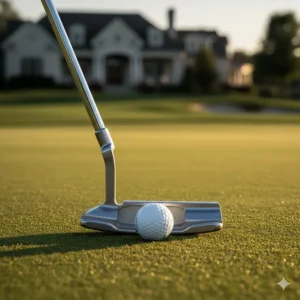
Ping’s matte-black head contrasts beautifully against the single white alignment line, eliminating distractions and simplifying aim. Without a soft urethane insert, expect slightly firmer, more responsive feel and feedback compared to insert-equipped models. This design choice appeals to feel players who want direct connection with the ball.
Tony Finau has won multiple tour events with the Anser 2D, validating its tour-level performance. Testing showed sensational results across all performance categories, particularly roll quality and consistency.
✅ Pros:
- Enhanced blade forgiveness
- Tour-validated performance
- Clean aesthetics
- Precision milling quality
❌ Cons:
- Heavier than traditional blades
- Firmer feel may require adjustment
Best For: Skilled players wanting blade feel with additional stability, particularly those transitioning from mallets.
7. TaylorMade B13 – Competitive Precision
TaylorMade’s B13 enters the premium milled putter space with impressive credentials. This blade offers sublime feedback, refined feel, and competitive pricing against Scotty Cameron and Bettinardi offerings.
Key Specifications:
- Milled 303 stainless steel
- 350g head weight
- Tour-inspired classic shape
- Price: $329-379
The B13 delivers that premium milled feel without the $450+ price tag. TaylorMade’s face milling creates responsive feedback about contact location and strike quality. You’ll feel subtle differences between center strikes and slight toe hits—critical information for developing consistent distance control.
Visual appeal ranks high with the B13’s clean lines and refined finish. The traditional blade shape inspires confidence at address while maintaining modern performance standards. TaylorMade’s reputation for quality manufacturing ensures consistency across production runs.
Available through major retailers and Amazon, the B13 offers accessibility premium boutique brands sometimes lack. Customer reviews emphasize the “exceptional feel for the price” and “beautiful finish that holds up well.”
✅ Pros:
- Competitive pricing
- Premium feel and feedback
- Clean aesthetics
- Wide availability
❌ Cons:
- Less brand cachet than Scotty
- Standard features (no unique tech)
Best For: Mid-to-low handicappers seeking premium milled blade performance without breaking the bank.
Understanding Blade Putters: What Makes Them Special
Blade putters aren’t just pretty faces—they’re precision instruments engineered for specific stroke types and player preferences. Understanding what separates blades from mallets helps you make informed decisions.
The Classic Design Philosophy
Traditional blade putters feature slim, rectangular heads with minimal offset. This design originated in the 1960s with Karsten Solheim’s Ping Anser, which revolutionized putting by introducing heel-toe weighting. Modern blades maintain this heritage while incorporating advanced materials and manufacturing techniques.
The compact footprint provides unobstructed view of the ball and intended line. Many golfers find this minimalist aesthetic confidence-inspiring, allowing them to focus purely on stroke mechanics without distraction. That clean look behind the ball has helped tour professionals win countless majors.
Heel-Toe Weighting Explained
Unlike ancient blade putters that concentrated weight centrally, modern designs distribute mass toward the heel and toe. This perimeter weighting increases moment of inertia (MOI) within the blade category, providing some forgiveness on off-center strikes.
However, blade MOI still trails mallet putters significantly. Researchers at golf equipment testing facilities have documented that blade putters generally suit golfers who consistently find the sweet spot. If you frequently strike putts on the toe or heel, consider whether additional mallet forgiveness might benefit your game.
Face Milling Technology
Premium blade putters utilize precision CNC milling to create specific groove patterns on the face. These grooves serve multiple purposes: promoting forward roll, reducing skidding, and influencing feel characteristics.
Different manufacturers employ distinct milling philosophies. Bettinardi’s Flymill pattern creates aggressive grooves for soft feel. Scotty Cameron’s milling produces balanced feel and feedback. Cleveland’s Speed Optimized milling normalizes ball speed across the face. Understanding these differences helps match putters to personal preferences.
Blade vs. Mallet Putters: Making the Right Choice
The blade versus mallet debate continues to divide golfers. Neither design is objectively superior—they serve different stroke types and preferences.
| Feature | Blade Putters | Mallet Putters |
|---|---|---|
| Forgiveness | Lower MOI | Higher MOI |
| Stroke Type | Arc/slight arc | Straight back-through |
| Feel | Direct feedback | Softer, muted |
| Alignment | Minimal aids | Enhanced features |
| Weight Distribution | Heel-toe | Perimeter/face-balanced |
| Best For | Consistent strikers | Variable contact |
When Blades Excel
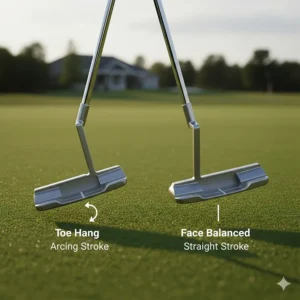
Blade putters shine for golfers with naturally arcing strokes. The toe hang inherent in most blade designs (created by the hosel position) complements face rotation through impact. If your stroke features natural wrist hinge and face manipulation, blades feel intuitive.
Feel players who prioritize feedback over forgiveness gravitate toward blades. That direct connection allows precise distance control once you’ve calibrated to the putter’s characteristics. Tour professionals predominantly choose blades precisely for this unfiltered information.
Visual preference matters more than golfers often admit. If a blade looks “right” behind the ball, that confidence translates to better performance. Golf is largely mental—equipment that inspires belief helps you make more putts.
When Mallets Make Sense
Golfers with straight-back-straight-through strokes benefit from face-balanced mallet designs. The increased MOI forgives mishits better, keeping more putts online even with imperfect strikes.
If consistency challenges you—missing the sweet spot frequently or struggling with directional control—mallet forgiveness provides tangible benefits. Modern mallets combine stability with improving alignment features that help square the face at impact.
How to Choose the Perfect Blade Putter
Step 1: Identify Your Stroke Type
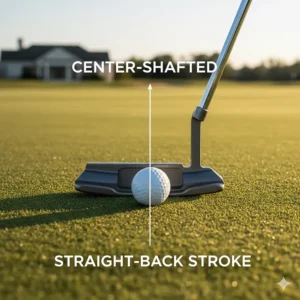
Record your putting stroke from down-the-line view. Does your putter naturally arc inside-to-inside, or track straight back and through? Arc strokes pair with toe hang blades; straight strokes need different solutions.
Most golfers exhibit slight arc, making blade putters suitable. Strong arc players benefit from greater toe hang (plumber’s neck hosels), while slight arc players should consider less toe hang (slant neck designs).
Step 2: Determine Your Budget
Quality blade putters span $150 to $500+. Establish realistic spending limits while recognizing that putters offer longest equipment lifespan—many golfers use the same putter for decades.
Budget options like Cleveland HB SOFT 2 ($159-199) deliver genuine milled faces and performance. Mid-range choices like Odyssey Ai-ONE ($249-299) add modern technology. Premium putters from Scotty Cameron or Bettinardi ($375-500) provide tour-level craftsmanship and materials.
Step 3: Consider Feel Preferences
Test putters to determine whether you prefer soft, firm, or balanced feel. Milled stainless steel provides responsive feedback. Inserts (like Odyssey’s White Hot) offer softer sensation. Neither is superior—match to personal preference.
Pay attention to sound as well. Some putters produce crisp “click,” others deliver muted “thump.” Your ears provide valuable feedback about strike quality, so choose sounds that resonate with you.
Step 4: Evaluate Forgiveness Needs
Honestly assess your ball-striking consistency. Track where you contact the face over 20 putts. Consistently center contact suggests traditional blades work fine. Variable contact patterns indicate considering higher-MOI blade options like the Ping Anser 2D.
Step 5: Test Before Buying
Nothing replaces hands-on testing. Visit retailers offering fitting services or demo days. Hit putts from various distances, noting feel, roll quality, and comfort. Trust your instincts—if a putter feels right, it probably is.
Step 6: Verify Proper Length and Lie
Standard putter length is 34-35 inches, but proper length depends on your height and posture. Incorrect length forces postural compensation that undermines consistency. Most premium putters offer length customization.
Lie angle affects how the putter sole sits at address. Toe-up promotes pulling putts left; heel-up pushes putts right. Proper lie angle ensures the putter sits flat, improving directional control.
Step 7: Match Grip to Hand Size
Grip thickness influences wrist action during the stroke. Thicker grips quiet hands, promoting shoulder-driven strokes. Thinner grips allow more wrist manipulation for feel players.
Standard putter grips measure around 1.0 inches diameter. Oversized grips reach 1.5+ inches. Consider grip weight too—heavier grips alter swing weight and balance.
Key Features to Consider
Hosel Design and Toe Hang
Hosel design determines toe hang, affecting how the putter naturally wants to move. Plumber’s neck hosels create more toe hang, suiting arc strokes. Slant neck hosels reduce toe hang. Double bend hosels approach face balance.
To measure toe hang, balance your putter on one finger beneath the grip. Note how far the toe drops. Greater drop indicates more toe hang and suitability for arc strokes.
Face Insert Technology
Insert materials influence feel and performance characteristics. Popular options include:
Soft Inserts: Urethane materials like Odyssey’s White Hot provide soft, responsive feel. These inserts also help promote forward roll by gripping the ball at impact.
No Insert: Pure milled stainless steel offers direct, firm feel. Feedback is immediate and unfiltered. Many tour professionals prefer this connection.
Composite Inserts: Multi-material construction (like Odyssey’s AI-designed aluminum backer) can enhance consistency across the face while maintaining soft feel.
Alignment Features
Blade putters traditionally feature minimal alignment aids—often just a simple sight line or dot. This simplicity appeals to golfers who prefer uncluttered visuals.
Modern blades may incorporate:
- Contrasting sight lines
- Multiple alignment dots
- Flange lines
- Top-line markings
Choose aids that draw your eye to the intended target line without creating visual distraction.
Weight and Balance
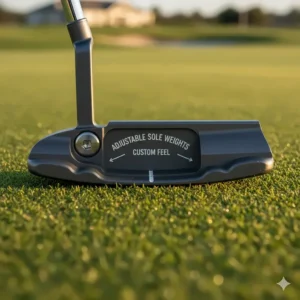
Standard blade putters weigh 350-365g, though variations exist. Heavier putters generally suit faster greens, providing stability. Lighter putters help on slower surfaces.
Counterbalancing (additional weight in grip/shaft) creates different feel and tempo. Some golfers love counterbalanced putters; others find them awkward. Testing reveals personal preference.
Blade Putter Maintenance and Care
Cleaning Your Putter
Regular cleaning preserves performance and appearance. Use warm water and mild soap with soft cloth. Avoid abrasive cleaners that scratch finishes. Clean grooves with soft brush to remove debris that affects roll.
For stubborn dirt, use specialized golf club cleaner. Rinse thoroughly and dry immediately to prevent water spots on premium finishes.
Protecting the Finish
PVD finishes resist wear but still benefit from headcovers. Always use headcovers during transport and storage. Remove headcovers before storing in humid environments to prevent moisture buildup.
For raw or unfinished putters, light oil application prevents oxidation. Apply thin layer, wipe excess, and store in climate-controlled space.
Grip Maintenance
Replace grips annually or when they become slick and hardened. Clean grips regularly with damp cloth and mild soap. Avoid petroleum-based cleaners that degrade rubber.
Proper grip care maintains consistent feel and prevents slipping during critical putts.
Common Blade Putter Myths Debunked
Myth: “Blade putters are only for scratch golfers.”
Reality: While blades reward consistent contact, many mid-handicappers excel with them. Modern blade designs incorporate more forgiveness than ever. Choose based on stroke type and preference, not handicap.
Myth: “Expensive putters automatically perform better.”
Reality: Premium putters offer superior craftsmanship and materials, but performance depends on fit. A $200 Cleveland that matches your stroke outperforms a $500 Scotty that doesn’t. Invest in fitting, not just price.
Myth: “Blade putters can’t help with alignment.”
Reality: Simple sight lines often prove most effective. Studies show too many alignment aids create confusion. Blade simplicity helps many golfers align more naturally.
Myth: “You need a new putter to improve putting.”
Reality: Technique and practice matter most. New putters help when current equipment genuinely doesn’t fit, but lessons and practice deliver bigger improvements for most golfers.
Benefits of Using Classic Blade Putters
Superior Feel and Feedback
Blade putters provide immediate, honest feedback about strike quality. That instant information helps develop consistency. You’ll know when you’ve caught one pure versus slightly off-center.
This feedback loop accelerates learning. Your brain unconsciously adjusts based on feel information, calibrating distance control more effectively than with muted feedback from highly-engineered mallets.
Enhanced Distance Control
Once calibrated to a blade’s characteristics, distance control often improves. The direct connection helps you develop “touch” that translates across varying green speeds and slopes.
Tour professionals almost universally cite feel and distance control as reasons for choosing blades. These aspects matter most when pressure intensifies.
Traditional Aesthetics
There’s undeniable appeal in classic blade design. That clean, timeless look behind the ball connects modern golfers with the game’s heritage. Visual confidence shouldn’t be underestimated.
Stroke Development
Blades encourage proper stroke mechanics by punishing poor technique. This immediate feedback helps you identify and correct flaws. Think of blades as training tools that make you better.
FAQ: Your Blade Putter Questions Answered
❓ What is the best blade putter for feel?
❓ Do blade putters have more toe hang than mallets?
❓ Which blade putter do tour professionals use most?
❓ Are blade putters better for slow or fast greens?
❓ How long should a quality blade putter last?
Conclusion: Finding Your Perfect Blade
The journey to finding your perfect blade putter combines science and art. Technical specifications like weight, toe hang, and face milling matter, but so do intangibles like confidence, feel, and visual appeal. The best blade putter for you delivers performance while inspiring belief every time you stand over a putt.
Start by honestly assessing your stroke type and contact consistency. Arc strokes pair naturally with blade designs, while straight strokes may need different solutions. Test multiple options to understand personal preferences for feel, weight, and aesthetics. Don’t let price alone determine choices—proper fit outweighs premium badges.
Remember that even tour professionals sometimes struggle finding their perfect putter. Jordan Spieth famously switched putters multiple times before settling on his championship Scotty Cameron. Be patient with the process, trust testing over marketing, and commit to your choice once made.
Whether you invest in a premium Toulon Hollywood H1, tour-proven Scotty Cameron, AI-enhanced Odyssey Ai-ONE, or budget-friendly Cleveland HB SOFT 2, proper blade selection transforms your putting. That perfect connection between hands, putter, and ball makes golf’s most frustrating aspect become its most satisfying.
The greens await. Choose your blade wisely, practice diligently, and trust your stroke. Your lowest scores ever are just around the corner.
Recommended for You
- 7 Best Mallet Putters 2026: Tested & Proven Winners
- 7 Best Callaway Paradym Driver Models 2026
- TaylorMade QI10 Driver Review: 7 Best Models Tested (2026)
Disclaimer: This article contains affiliate links. If you purchase products through these links, we may earn a small commission at no additional cost to you.
✨ Found this helpful? Share it with your golf buddies! 💬🤗
