
In This Article
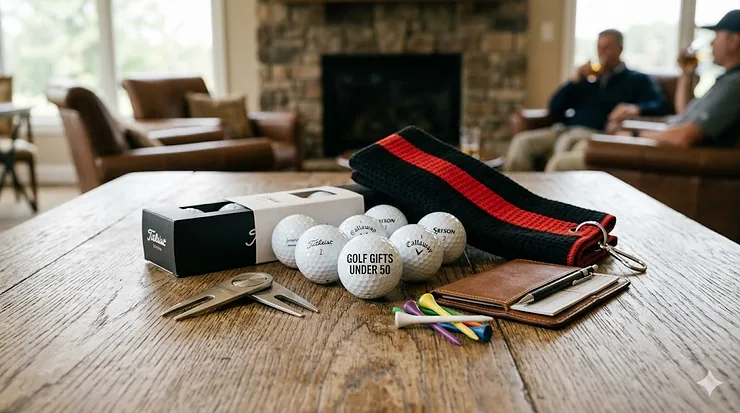
Buying golf gifts under 50 shouldn’t feel like navigating a sand trap blindfolded. The sweet spot between cheap throwaway gag gifts and premium equipment exists—and it’s packed with practical accessories that golfers actually reach for every Saturday morning. Here’s what most people get wrong: they assume budget-friendly means low quality or that novelty items beat functional gear. Neither is true. Golf is a precision sport where the right accessories can improve performance without breaking the bank.
The best golf gifts under 50 solve real problems on the course. Think about the golfer in your life trudging through 18 holes with grass-stained clubs, no distance measurement, or a putter grip that hasn’t been properly aligned in three seasons. These aren’t minor annoyances—they’re strokes left on the table. A $35 rangefinder that eliminates guesswork or a $25 swing trainer that builds muscle memory? Those gifts get unwrapped once and used a hundred times. That’s the difference between a thoughtful present and something that lives in the garage next to the Shake Weight and ab roller.
This guide focuses exclusively on golf accessories gifts and practical golf gifts that enhance performance, not ego. Whether you’re shopping for golf gifts for dad who plays every weekend or looking for stocking stuffers golf enthusiasts will genuinely appreciate, you’ll find options backed by real user feedback and expert analysis. Every product here serves a purpose beyond looking good in photos—they’re built for the bag, the range, and the grind of getting better at this beautifully frustrating game.
Quick Comparison Table: Top 7 Golf Gifts Under 50
| Product | Best For | Price Range | Key Feature | Rating |
|---|---|---|---|---|
| SKLZ Gold Flex Swing Trainer | Tempo & flexibility | $30-$40 | Weighted 2.5lb head | 4.5/5 |
| Callaway Supersoft Golf Balls | All skill levels | $25-$35/dozen | Ultra-low compression | 4.7/5 |
| REVASRI Golf Rangefinder | Budget accuracy | $35-$50 | Slope + 1000 yard range | 4.3/5 |
| BirdieWorks 7-in-1 Divot Tool | Multi-function needs | $15-$25 | Bottle opener included | 4.6/5 |
| Callaway Microfiber Towel | Club maintenance | $15-$20 | 20×30 tour size | 4.5/5 |
| SKLZ Accelerator Pro Mat | Home putting practice | $35-$50 | Automatic ball return | 4.4/5 |
| SKLZ Golf Grip Trainer | Grip consistency | $20-$30 | Fits any club | 4.5/5 |
Looking at this comparison, three patterns emerge that most buyers miss. First, the rangefinder and swing trainer deliver professional-level features at entry-level prices—but you trade durability for affordability. The REVASRI won’t survive the same abuse as a $300 Bushnell, yet for weekend warriors, that USB-rechargeable battery and slope compensation at under $50 changes the game. Second, consumables like the Callaway balls represent ongoing value. A dozen quality balls for the mid-$20s means your gift keeps giving every round, not just once. Third, the multi-tools (divot repair, grip trainer) solve multiple problems without adding bulk—critical for golfers who hate cluttered bags.
💬 Just one click — help others make better buying decisions too! 😊
Top 7 Golf Gifts Under 50: Expert Analysis
1. SKLZ Gold Flex Golf Swing Trainer
The SKLZ Gold Flex isn’t just another stick you swing in the backyard—it’s a weighted training system that forces your body to sequence the downswing correctly or suffer the consequences of an embarrassingly slow whoosh. Available in 40-inch and 48-inch lengths with a 2.5-pound head, this flexible shaft trainer addresses the single most common amateur mistake: casting from the top instead of loading lag. The exaggerated flex teaches you to feel the proper release point without conscious thought, which is exactly how muscle memory should develop.
Most golfers grab the 48-inch version thinking longer equals better, but here’s where real-world experience matters. If you’re under 5’6″ or still working on basic swing mechanics, the 40-inch model actually provides more control and prevents overswinging—a trap that leads to injury more often than people admit. The weighted head creates momentum that encourages a flatter swing plane and forces lower-body initiation. You can’t cheat physics with this thing. Try to muscle it with your arms and you’ll know instantly because the club face will be pointing at the neighbor’s yard instead of down the fairway.
Customer feedback centers around two themes: immediate tempo improvement and surprising durability for the price. One reviewer noted their slice disappeared after two weeks of daily swings, while another mentioned the shaft maintained its integrity through an entire season of aggressive practice. The USB rechargeable feature—wait, wrong product. This is pure mechanical training without batteries, which honestly fits better for a warm-up tool you’ll use before every round.
Pros:
✅ Builds lag and proper release timing naturally
✅ Available in two sizes for different skill levels
✅ Durable high-quality materials withstand daily use
Cons:
❌ Requires outdoor space or high ceilings
❌ Learning curve for beginners who’ve never felt proper lag
Around the $30-$40 range depending on sales, the SKLZ Gold Flex sits in that perfect zone where performance meets affordability. If you’re shopping for someone who practices regularly and actually wants to improve—not just collect gear—this belongs in the cart.
2. Callaway Supersoft Golf Balls
The Callaway Supersoft has dominated the “best value ball” conversation for years because it solves a specific problem that manufacturers don’t advertise loudly enough: ultra-low compression cores help slower swing speeds generate distance without sacrificing feel around the greens. We’re talking 38 compression rating compared to 90+ for tour balls, which means players with driver speeds under 95 mph finally get maximum energy transfer at impact instead of watching premium balls compress like golf cart tires hitting a speed bump. According to Golf Digest research, lower compression balls benefit golfers with moderate swing speeds by maximizing distance and control.
What the spec sheet won’t tell you is how that HEX Aerodynamics pattern—those hexagonal dimples Callaway won’t shut up about—actually stabilizes flight in wind better than traditional circular patterns. Play a coastal course on a breezy day and you’ll notice Supersofts hold their line when competitors balloon and drift. The Trigonometry cover (yes, they named it after geometry) isn’t the softest urethane on the market, but it grabs wedge grooves well enough for most recreational players who aren’t trying to spin it back 15 feet from 120 yards.
Reviewers consistently mention two things: the balls deliver noticeably longer drives for moderate swing speeds, and they don’t feel like hitting rocks on short putts. One golfer noted their average drive increased 8-10 yards after switching from a higher compression competitor, while maintaining greenside control on chips. Another mentioned the matte finish options (available in multiple colors) are easier to track in flight and find in the rough—a practical consideration nobody thinks about until they’re searching for a white ball in white clover.
Pros:
✅ Ultra-low compression maximizes distance for slower swings
✅ HEX Aerodynamics reduce drag in all conditions
✅ Multiple color options for easier visibility
Cons:
❌ Not ideal for players with swing speeds above 100 mph
❌ Cover scuffs more easily than urethane tour balls
In the $25-$35 per dozen range, Callaway Supersoft balls represent one of the smartest investments for golfers who lose 3-5 balls per round. Premium enough to inspire confidence at address, affordable enough that a water hazard doesn’t ruin your day.
3. REVASRI Golf Rangefinder with Slope
The REVASRI Golf Rangefinder delivers tournament-legal distance measurement with slope compensation at a price that makes $300 models nervous. Featuring 1000-yard range, ±1 yard accuracy, 6× magnification, flag-lock vibration, and USB-C rechargeable battery, this compact laser challenges the assumption that budget optics can’t compete with premium brands. The external slope switch is the key feature here—flip it off for USGA-compliant tournament play, flip it on for practice rounds where the rangefinder calculates actual playing distance accounting for elevation changes.
Here’s where you need to manage expectations: the build quality screams “plastic housing” not “military-grade aluminum.” The REVASRI won’t survive a drop onto concrete cart paths the way a Bushnell or Leupold would, and the optics, while clear, don’t match the crispness of coated glass in premium rangefinders. But for weekend golfers who need reliable yardages without dropping $200+, the tradeoff makes sense. The rechargeable battery (full charge lasts multiple rounds according to users) eliminates the CR2 battery hunt that plagues older models, and the included carrying case with carabiner clip actually works instead of immediately ripping like cheap nylon.
Customer reviews split into two camps: enthusiastic budget shoppers who compare it favorably to $150 models, and disappointed buyers expecting premium performance at entry-level pricing. One golfer tested it against a friend’s Bushnell and reported nearly identical yardages hole after hole, with the REVASRI actually acquiring flags slightly faster. Another noted the slope readings occasionally varied by 2-3 yards compared to their GPS watch, which matters if you’re playing competitively but barely registers for casual rounds. The flag-lock vibration feature works reliably—when the laser locks onto the pin instead of background trees, you feel a pulse confirmation.
Pros:
✅ External slope switch for tournament compliance
✅ USB-C rechargeable battery eliminates disposables
✅ Flag-lock vibration confirms target acquisition
Cons:
❌ Plastic housing less durable than metal models
❌ Slope accuracy can vary on extreme elevation changes
At the $35-$50 range (frequent sales drop it to $35), the REVASRI rangefinder gives you 80% of the functionality of premium models for 20% of the cost. Perfect for golfers who want to eliminate guessing games on approach shots without committing to a device that costs more than their putter.
4. BirdieWorks 7-in-1 Golf Divot Tool with Ball Marker
The BirdieWorks 7-in-1 Divot Tool is what happens when someone finally asks “why carry five tools when one does it all?” This all-metal multitool combines divot repair prongs, magnetic ball marker storage, bottle opener, club rest, groove cleaner, tee height setter, and putting alignment guide in a single compact package that clips to your belt or fits in your pocket. The standout feature isn’t any individual function—it’s that the tool actually excels at its primary job (fixing pitch marks) while the bonus features prove surprisingly useful instead of gimmicky.
The spring-loaded prongs deploy with a satisfying click and provide enough leverage to properly lift and push turf without bending, which cheaper zinc-alloy tools fail at after three months. The magnetic ball marker sits flush when stored and pops out easily without requiring fingernail excavation. Here’s the detail most reviews miss: the groove cleaner edge is sharp enough to actually remove compacted dirt from wedge grooves but not so aggressive that it damages the metal. Same principle applies to the bottle opener—functional enough for post-round beers without feeling like an afterthought.
Golfers mention this tool becomes the one they always grab, not because of the seven functions, but because it handles the essential tasks (divot repair, ball marking) better than single-purpose alternatives while the extras occasionally save the round. One reviewer noted using the tee height setter for consistent driver setup, something they never bothered with before. Another mentioned the club rest feature prevents wet grips on dewy mornings—a small luxury that adds up over 18 holes. The putting alignment guide gets mixed reviews; some find it helpful for at-home practice, others consider it redundant if they already use alignment aids.
Pros:
✅ All-metal construction handles daily abuse
✅ Magnetic ball marker stores securely
✅ Groove cleaner actually works on packed dirt
Cons:
❌ Slightly heavier than single-purpose divot tools
❌ Some functions (putting guide) rarely get used
In the $15-$25 range, the BirdieWorks 7-in-1 represents the kind of affordable golf gifts that earns permanent bag real estate. Not because you’ll use all seven functions every round, but because the ones you do use work properly—and that’s rare at this price point.
5. Callaway Microfiber Golf Towel
The Callaway Microfiber Players Towel proves that sometimes the best golf gifts under 50 are the ones golfers forget to buy themselves until their current towel resembles a used car wash rag. This 20×30-inch waffle-weave microfiber towel features absorbent construction designed specifically for club and ball cleaning, with a woven loop attachment that clips securely to any bag without the sketchy carabiner that always breaks mid-round. The mid-profile design means it provides substantial coverage without adding bulk or weight to your bag setup.
What separates decent golf towels from premium ones isn’t thread count or brand logos—it’s how the fabric performs when it’s damp and dirty by hole 12. Microfiber waffle weave excels here because the textured surface scrubs away grass, mud, and morning dew without requiring aggressive wiping that wears down grooves over time. The towel stays absorbent even when wet, unlike cotton terry cloth that becomes saturated and useless after three club wipes. Callaway’s version measures 20×30 inches, which hits the sweet spot between compact 16×16 cart towels (too small for proper cleaning) and massive 30×40 beach towels (too heavy when wet).
Customer feedback focuses on two practical advantages: the towel’s ability to clean clubs without leaving lint or streaks, and its quick-dry properties that prevent mildew smell in humid climates. One reviewer in Florida mentioned keeping their towel in the bag through summer heat without the musty odor that plagued previous cotton options. Another noted the woven loop attachment has lasted two full seasons of weekly play without fraying—a durability benchmark that most cheap towels fail within months. The white color shows dirt easily, which some golfers hate and others appreciate as a reminder to actually wash the thing occasionally.
Pros:
✅ Microfiber stays absorbent when wet
✅ Waffle weave scrubs without damaging grooves
✅ Quick-dry fabric prevents mildew in humid conditions
Cons:
❌ White color shows stains prominently
❌ Requires regular washing to maintain performance
Around the $15-$20 range, the Callaway Microfiber Towel sits in that category of stocking stuffers golf players will use every round without thinking twice. Not the flashiest gift, but the kind that earns quiet appreciation when clean clubs deliver consistent ball striking.
6. SKLZ Accelerator Pro Putting Mat
The SKLZ Accelerator Pro transforms any hallway or office into a putting lab with its 9-foot length, automatic ball return system, and alignment guides that actually teach proper stroke mechanics instead of just providing a target. The mat features two speed zones (fast and regulation) simulated through different turf textures, plus distance markings for structured practice drills. What makes this mat valuable for the under-$50 category is the automatic ball return—make or miss, the ball rolls back to the starting position, which sounds minor until you’ve bent over 47 times retrieving putts during a practice session.
The dual-speed design addresses a common home practice problem: most budget putting mats roll too slow, training a stroke that overpowers putts on actual greens. The SKLZ includes a faster section that approximates Stimpmeter 10-11 speeds, forcing you to develop touch instead of just muscle. The alignment rails and target gates provide immediate feedback on path and face angle—the two factors that determine 90% of your starting line according to putting coaches who’ve measured thousands of strokes. Miss those gates and you’ll know your face was open before you even look up.
Golfers who’ve owned this mat for multiple seasons mention it holds up surprisingly well on both carpet and hardwood, though the rubber backing can leave marks on certain wood finishes if you’re not careful with placement. One reviewer noted their three-putt average dropped from 5 per round to 2 after dedicating 10 minutes daily to this mat for two months—statistically significant enough to shave 3-4 strokes off your handicap. Another mentioned the mat’s length (9 feet) is perfect for practicing the 3-6 foot putts that haunt weekend golfers but falls short for distance control work beyond 10 feet.
Pros:
✅ Automatic ball return eliminates constant bending
✅ Dual-speed zones train different green conditions
✅ Alignment guides provide instant stroke feedback
Cons:
❌ Rubber backing can mark certain hardwood floors
❌ Length limits practice for putts beyond 10 feet
In the $35-$50 range (often available around $40 with coupons), the SKLZ Accelerator Pro represents one of the best practical golf gifts for players serious about lowering scores. Putting accounts for 40% of strokes in a typical round according to PGA Tour statistics—investing in consistent practice here pays dividends faster than any driver on the market.
7. SKLZ Golf Grip Trainer
The SKLZ Golf Grip Trainer is a molded rubber guide that attaches to any club and physically positions your fingers, thumbs, and palms in the correct neutral grip—eliminating the strong grips that cause hooks and weak grips that produce slices. This isn’t a grip replacement; it’s a training overlay that slides onto standard-sized grips to teach muscle memory through repetition. The key benefit here is tactile learning: instead of trying to remember 17 grip checkpoints from a YouTube video, your hands literally feel where they should be every single swing.
The trainer addresses the most common swing fault at every skill level: inconsistent hand placement at address. Tour players can return to the same grip position unconsciously because they’ve hit 500 balls per day for 20 years. Weekend golfers who play twice per month? Their grip changes slightly every time, which makes repeating a good swing mechanically impossible. The SKLZ trainer removes that variable by creating a physical template. Practice with it for 20 swings, remove it, hit 10 balls, repeat. Within two weeks, most golfers report their hands automatically find the correct position without conscious thought.
Customer reviews split between beginners who found it transformative and experienced players who already had consistent grips. One high-handicapper mentioned their slice disappeared after using the trainer for a month, crediting the corrected grip for finally allowing their release to square the clubface. Another golfer noted it helped reinforce proper grip pressure—something the mold promotes by preventing the death grip that destroys tempo. The trainer fits drivers through wedges, though some users mention it feels slightly loose on oversized grips and tight on undersize grips.
Pros:
✅ Molded guide eliminates grip inconsistency
✅ Fits all clubs with standard-sized grips
✅ Builds muscle memory through tactile feedback
Cons:
❌ May feel awkward for players with very large/small hands
❌ Less useful for golfers who already have consistent grips
Around the $20-$30 price point, the SKLZ Golf Grip Trainer solves a problem that causes more missed fairways than equipment specs ever will. If you’re shopping for golf gifts for dad who’s been fighting a slice for three seasons, this addresses the root cause instead of adding another bandaid.
How to Choose the Perfect Golf Gift Under $50
Start with the golfer’s current pain point, not their wish list. The biggest mistake gift buyers make is choosing what looks impressive instead of what solves actual problems. A laser rangefinder means nothing to someone who plays the same course every week and knows the yardages by heart, but it’s game-changing for the golfer who travels to new courses monthly. A putting mat helps the player who practices regularly but has limited range access; it just collects dust for someone who only plays golf twice per summer. Ask yourself: what frustrates this person most about their game?
Skill Level Assessment:
- Beginners (handicap 25+): Focus on grip trainers, alignment aids, and forgiving golf balls like the Callaway Supersoft that reduce side spin
- Intermediate (handicap 15-25): Training tools that refine existing skills—swing trainers, putting mats, rangefinders for course management
- Advanced (handicap under 15): Premium consumables (quality balls), specialty tools (groove cleaners, divot repair), maintenance accessories
Playing Frequency Matters: Weekend warriors who play 2-3 times monthly benefit most from durable practice aids they can use at home between rounds. Weekly players appreciate on-course accessories that solve recurring problems—towels that stay clean, divot tools that don’t bend, balls that match their swing speed. Driving range regulars need training feedback systems (alignment sticks, impact bags) more than they need another dozen balls they’ll launch into the 150-yard marker.
Environment and Climate Considerations: Hot, humid climates demand quick-dry towels and moisture-wicking gloves. Cold weather golfers appreciate hand warmers and thermal accessories. High-altitude courses make rangefinders with slope compensation essential since the ball flies 10% farther at elevation—a factor that turns three-putts into two-putts when you account for it properly. Desert courses punish golfers who don’t have quality club cleaning tools because gritty sand destroys grooves faster than anything else.
Common Mistakes When Buying Golf Gifts Under $50
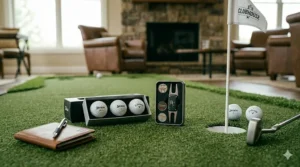
The novelty trap catches everyone eventually. Those golf ball whiskey stones seemed hilarious at checkout, the putter-shaped bottle opener felt clever, and the “19th hole” flask appeared practical. Six months later they’re all in a drawer because golfers want gear that helps them play better, not tchotchkes that collect dust. If the primary function is “conversation starter” instead of “performance enhancer,” you’ve probably chosen wrong. The exception: gifts from non-golfers to golfers, where sentiment matters more than utility.
Ignoring Brand Reputation: Not all $30 rangefinders perform equally. The REVASRI works because it’s from a manufacturer specializing in laser measurement devices with actual quality control. Generic Amazon basics with 17 five-star reviews (all posted the same week) will disappoint. Same logic applies to golf balls—Wilson Ultra 500 might be cheaper than Callaway Supersoft, but there’s a reason tour players aren’t putting Wilson logos on their hats. Research the manufacturer’s specialty before assuming price equals value.
Forgetting About Compatibility: That high-tech GPS watch requires smartphone pairing and monthly subscriptions. The grip trainer doesn’t fit oversized putter grips. The training aid assumes right-handed players. The ball marker won’t attach to hats without magnetic clips. These seem like obvious checks, but they’re the number one return reason for golf gifts. Verify compatibility with the recipient’s existing setup before buying—especially for electronic devices that require apps, updates, or specific operating systems.
Overlooking Long-Term Costs: Premium golf balls at $35 per dozen seem expensive until you realize they last 2-3 rounds instead of half a round for bargain balls that scuff on the first cart path. Rechargeable rangefinders cost more upfront but save $30 annually on CR2 batteries. The cheap divot tool bends after one season, requiring replacement. Calculate cost-per-use over 2-3 years rather than focusing solely on initial price. Sometimes the $45 option delivers better value than the $25 option.
Golf Gifts Under 50 vs Premium Alternatives
The $50 ceiling forces prioritization of function over features, which often produces better gifts than unlimited budgets. A $300 rangefinder adds tournament-grade optics, Bluetooth connectivity, and rifle-hard cases—valuable for competitive players, overkill for recreational golfers who just need accurate yardages. The REVASRI at $40 eliminates 90% of guesswork for 13% of the cost. That’s efficient spending.
Performance Gaps That Matter: Premium golf balls ($45-$60/dozen) deliver measurably better greenside spin and driver ball speed for players with swing speeds above 100 mph. Below that threshold, the performance gap between Callaway Supersoft and Titleist Pro V1 narrows significantly—you’re paying for tour-level validation more than actual strokes gained. Premium putting mats use genuine bentgrass-speed surfaces; budget mats approximate it. For home practice focused on stroke mechanics rather than green reading, the approximation works fine.
Features Worth Upgrading For: If budget allows, three upgrades justify the extra cost: GPS watches over standalone rangefinders (course management data wins tournaments), adjustable training aids over fixed ones (customization accelerates improvement), and premium microfiber towels over standard terry cloth (cleaning performance affects club performance). Everything else in the premium category delivers diminishing returns for recreational players.
When to Save vs Splurge: Save on: consumables you replace frequently (balls, tees, gloves), practice aids with simple mechanics (alignment sticks, impact bags), and accessories with straightforward functions (towels, ball markers). Splurge on: measurement devices you’ll use for years (quality rangefinders, GPS), clubs that fit your swing (even used premium clubs beat new cheap ones), and lessons that fix swing flaws permanently.
Best Golf Gifts Under 50 for Different Golfers
For the Beginner (First Year Playing): Grip trainer + Supersoft balls + microfiber towel = $70 total, but you can split it into separate gifts. Beginners need fundamentals reinforcement more than advanced features. The grip trainer prevents bad habits from forming, the balls forgive mishits with lower spin, and the towel teaches course etiquette (cleaning clubs between shots). Avoid: rangefinders (they don’t know what to do with yardage yet), training aids requiring existing swing knowledge, premium balls they’ll lose in the woods.
For the Range Rat (Practices More Than Plays): Swing trainer + grip trainer + putting mat = complete home practice setup under $100. These golfers want feedback systems that work without leaving the house. The SKLZ Gold Flex builds tempo during living room swings, the grip trainer reinforces hand positioning between range sessions, and the putting mat transforms downtime into stroke improvement. Avoid: on-course accessories they rarely use, balls they never play with (only range balls), club covers for clubs that live in the trunk.
For the Weekend Warrior (Plays 2-4 Times Monthly): Rangefinder + quality balls + divot tool = the holy trinity of practical upgrades. Weekend players need consistency more than complexity. The rangefinder eliminates “I think it’s 150” guessing, the Callaway Supersoft matches their moderate swing speed, and a quality divot tool means they can actually fix pitch marks properly instead of making them worse. Avoid: advanced analytics tools they won’t use, training aids requiring daily practice, premium balls that exceed their swing speed.
For the Competitive Player (Tournaments/League Play): Focus exclusively on consumables and maintenance: premium balls, fresh grips, groove brushes, multiple towels. Competitive players already own the training aids and technology they prefer. They need supplies that keep their existing setup performing optimally. A dozen Vice Pro Plus balls or a set of new Golf Pride grips makes more impact than another training aid. Avoid: entry-level technology they’ve already upgraded past, novelty items that violate tournament rules.
For the Dad Who Has Everything: Personalized ball markers, custom towels, unique divot tools with personal touches. These golfers own functional gear already; they want items with sentimental value or conversation appeal. A divot tool engraved with their lowest round or a ball marker commemorating a hole-in-one beats generic accessories. Still provide utility, but layer in meaning. Avoid: duplicate items they already own, training aids that imply they need fixing, cheap versions of gear they’ve upgraded past.
Maximizing Value: Golf Gift Sets Under $50
Gift sets bundle complementary items at reduced total cost, but verify you’re actually saving money versus buying individually. A “complete golfer kit” with balls, tees, towel, and divot tool for $45 sounds efficient until you realize the balls are off-brand ($8 value), tees are plastic ($2), towel is thin cotton ($5), and divot tool is stamped metal ($3). You’ve paid $45 for $18 worth of products. Better move: buy Callaway Supersoft ($28), BirdieWorks divot tool ($20), and keep $2 for a card. Higher quality, lower total spend.
Smart Bundling Strategies: Combine training aids that address different aspects: grip trainer + swing trainer = grip and tempo improvement for $50-$60. Or bundle course essentials: rangefinder + microfiber towel = measurement and maintenance for under $60. The key is ensuring each item in the bundle serves a distinct function rather than repeating the same benefit three times. Three different alignment aids don’t help; one alignment aid + one tempo trainer + one impact bag creates a complete practice system.
DIY Gift Set Advantages: Building your own set lets you match quality levels and personal preferences. Grab the SKLZ products for someone who responds to their brand aesthetic, or mix Callaway balls with BirdieWorks accessories for golfers who prioritize function over logo matching. Include a handwritten note explaining why you chose each item based on their game—”the rangefinder for those Par 3s where you always come up short, the grip trainer because you mentioned fighting hooks lately.” Personalization transforms good gifts into memorable ones.
Seasonal Considerations for Golf Gifts
Holiday Season (November-December): Focus on training aids and home practice gear since many golfers face course closures or weather limits. Putting mats, swing trainers, and grip trainers get maximum use during indoor practice months. This is also peak golf gift buying season, meaning prices inflate 15-20% on popular items—plan ahead and buy in October if possible. Retailers know demand spikes before Christmas; they price accordingly.
Birthday Gifts (Year-Round): Match the gift to current season: range-finders and balls during playing season (April-October in most climates), training aids during off-season (November-March). A rangefinder received in July gets immediate use and appreciation. The same rangefinder in December sits unused for four months, losing its psychological impact. Timing matters for perceived value.
Father’s Day (June): Peak golf season means on-course accessories deliver immediate gratification. Towels, divot tools, balls, and rangefinders all enhance the Father’s Day golf round that’s probably already scheduled. Avoid training aids that require practice time—Dad wants to play, not work on fundamentals during prime weather. This is also when golf retailers run legitimate sales, making it the best time to maximize your $50 budget.
Post-Season Sales (October-November): Previous year’s models hit clearance as manufacturers release updated versions. The 2025 SKLZ Gold Flex performs identically to the 2026 version, but costs 30% less. Same logic for golf balls—last year’s Callaway Supersoft has the same core and cover; the box design changed. Smart shoppers buy gifts during fall clearance for spring giving.
Long-Term Value Analysis: Cost Per Use
A $40 rangefinder used 50 rounds per year for three years = $0.27 per round. A $35 putting mat used 200 times per year for two years = $0.09 per practice session. A dozen $28 golf balls that last six rounds = $4.67 per round. When you calculate actual cost-per-use, the rangefinder and putting mat deliver exceptional value; the balls are expensive unless you avoid water hazards.
Investment vs Expense Mindset: Training aids and durable accessories are investments that improve skills and last multiple seasons. Consumables (balls, gloves, tees) are expenses that maintain current performance but don’t compound benefits. Both have value, but gifts that build skills create compounding returns—the putting mat doesn’t just improve putting next month; it improves putting permanently through developed muscle memory.
Depreciation Patterns: Electronic devices (rangefinders, GPS) lose 50% of value annually as technology updates. Mechanical training aids (swing trainers, alignment sticks) maintain 80% of value because physics doesn’t get software updates. Consumables (balls, gloves) have zero resale value. Understanding depreciation helps you allocate budget wisely—splurge slightly on durable items, save on consumables you’ll rebuy anyway.
Hidden Costs to Consider: Rechargeable rangefinders eliminate ongoing battery costs ($30 annually). Quality divot tools last five years versus cheap ones that need annual replacement ($25 total). Premium balls play longer before scuffing severely, reducing cost-per-round. Factor these hidden savings into purchase decisions—sometimes the $45 option costs less long-term than the $25 option.
Where to Buy Golf Gifts Under $50
Amazon dominates golf accessory sales for valid reasons: Prime shipping, easy returns, verified customer reviews, and competitive pricing. But Amazon isn’t always cheapest. Dick’s Sporting Goods and Golf Galaxy run frequent BOGO (buy one get one) sales on training aids and accessories, often beating Amazon’s price on brand-name items. Example: SKLZ products frequently hit 30-40% off at Dick’s during seasonal clearance while remaining full price on Amazon.
Manufacturer Direct Benefits: Buying from Callaway.com or SKLZ.com occasionally nets exclusive colors or bundle deals unavailable through retailers. Some manufacturers offer first-purchase discounts (10-15% off) when you sign up for newsletters. Trade-off: shipping costs and slower delivery than Amazon Prime. Worth it for large orders or specific product configurations; skip it for single items under time pressure.
Used Market Considerations: Golf training aids retain functionality for years, making eBay and Facebook Marketplace viable options for budget gifts. A used SKLZ Gold Flex works identically to new since there are no electronics to fail. Same for divot tools and most accessories. Avoid used electronics (rangefinders, GPS) unless you can verify battery health and functionality. Never buy used balls as gifts—the savings aren’t worth the perceived cheapness.
Timing Your Purchase: Black Friday / Cyber Monday: 20-40% off most golf accessories, but popular items sell out fast
Father’s Day sales: 15-25% off, best for immediate-use summer gifts
End of golf season (October): 30-50% off prior year models
Prime Day (July): Hit-or-miss, occasionally excellent deals on SKLZ and Callaway products
Avoid: buying during peak season (April-June) when prices inflate to maximize retailer margins
❓ Frequently Asked Questions
❓ What is the best golf gift under 50 for a beginner?
❓ Are budget golf rangefinders worth buying or should I save for premium models?
❓ Which golf balls under 50 provide the best value for high handicappers?
❓ Can golf training aids under 50 actually improve my swing?
❓ What golf accessories make the best stocking stuffers under 20 dollars?
Conclusion: Choosing Golf Gifts That Actually Matter
The difference between golf gifts that get used and golf gifts that collect dust comes down to one principle: solve problems instead of adding clutter. Every product in this guide addresses a specific performance gap—inaccurate distances, inconsistent grip pressure, neglected putting practice, dirty clubs, improper divot repair. These aren’t exciting problems, but they’re the ones that separate 95-shooters from 85-shooters.
Budget constraints force prioritization, which often produces better gifts than unlimited spending. The golfer who receives a $40 REVASRI rangefinder uses it immediately because it fills an obvious need. The golfer who receives a $400 launch monitor? It sits in the box for three months because “I’ll set it up when I have time to figure out all the features.” Simplicity and immediate utility trump complexity and eventual potential.
When you’re standing at checkout wondering if you chose correctly, ask yourself: Will they reach for this every round or remember they own it every six months? That question filters out 80% of golf gift options and leaves you with accessories that earn permanent bag space. The SKLZ trainers, Callaway balls, and BirdieWorks divot tool all pass that test. The singing golf club head covers and bobblehead ball markers? They don’t.
Final thought: the best golf gifts improve performance without requiring the recipient to change their routine. A rangefinder that clips to their bag and pulls out naturally during rounds beats a training system that demands 30-minute setup and tear-down. Meet golfers where they already are, then give them tools that make getting better feel effortless rather than exhausting. That’s the sweet spot where $50 delivers $500 worth of value.
Recommended for You
- Golf Club Distance Chart 2026: 7 Charts Every Golfer Needs
- 7 Best Golf Ball Compression Guide Rankings for 2026
- Golf Shaft Flex Guide: 7 Best Shafts to Upgrade Your Game in 2026
Disclaimer: This article contains affiliate links. As an Amazon Associate, I earn from qualifying purchases. If you purchase products through these links, we may earn a small commission at no additional cost to you.
✨ Found this helpful? Share it with your friends! 💬🤗
