
In This Article
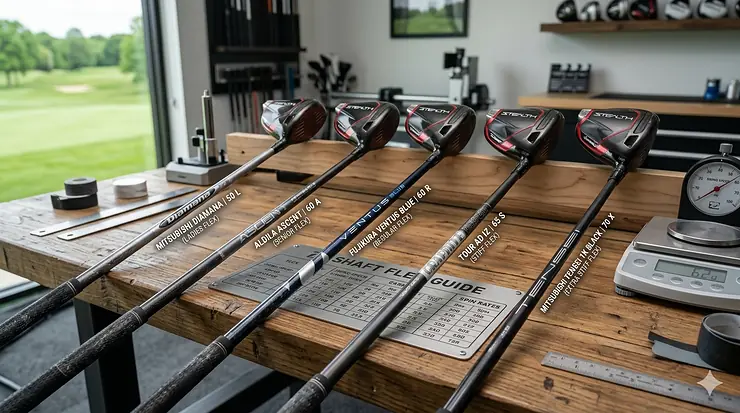
If you’ve ever stood on the tee scratching your head wondering why your brand-new driver produces a ballooning slice even with a textbook swing, the culprit might not be your technique at all — it could be your shaft flex. I’ve seen this scenario play out dozens of times: a golfer upgrades to a premium clubhead but sticks with the wrong flex, leaving 20–30 yards of distance and a mountain of frustration on the course.
This golf shaft flex guide breaks down everything you need to know — from what shaft flex actually is and how to use a swing speed flex chart, to 7 real, currently available shafts on Amazon that fit every budget and swing profile. Whether you’re debating stiff vs regular flex or trying to figure out what shaft flex do I need as a senior golfer, you’re in the right place.
What is shaft flex? Shaft flex is the degree to which a golf club shaft bends during the swing. It directly affects launch angle, spin rate, face angle at impact, and ultimately shot direction and distance. Matched correctly to your swing speed and tempo, it’s one of the single biggest equipment variables you can control.
Think of your shaft as the engine of your club. You wouldn’t put a motorcycle engine into a Formula 1 car and expect great results. The same logic applies here: mismatched flex = wasted energy, inconsistent contact, and a very annoyed playing partner behind you. Let’s fix that.
Quick Comparison: 7 Best Golf Shafts at a Glance
| Shaft | Flex Options | Weight | Launch | Best For | Price Range |
|---|---|---|---|---|---|
| Project X HZRDUS Smoke Black RDX | 5.5–6.5 / TX | 58–65g | Low | Aggressive swingers 100+ mph | $$$$ |
| Fujikura Ventus Blue | Regular–X-Stiff | 55–65g | Mid | Versatile 90–105 mph players | $$$$ |
| Fujikura Pro 2.0 Blue | Stiff (6S) | 60g | Mid | Mid-handicappers seeking value | $$ |
| Fujikura Air Speeder 45 | Senior / Regular | 45g | High | Seniors, smooth-tempo players | $$ |
| Aldila NV 65 Green | Stiff / X-Stiff | 65g | Mid-Low | TaylorMade driver owners | $$$ |
| Acer Velocity Graphite | Ladies–Stiff | 50–65g | Mid-High | Multi-club builds, beginners | $ |
| UST Mamiya Recoil ESX 460 | Regular–X | 75–95g | Mid | Iron upgrade seekers | $$$ |
Analysis: The table above reveals a clear pattern: premium low-torque shafts like the HZRDUS Smoke Black RDX and Ventus Blue command higher prices because they use aerospace-grade carbon fiber that genuinely tightens dispersion for faster swingers. But for golfers under 90 mph, that stiffness actually hurts performance — the Fujikura Air Speeder 45 and Acer Velocity are better investments. Budget buyers should note that going cheap on driver shafts often means sacrificing consistency, while going cheap on iron shafts (like the Recoil ESX) rarely costs you much at all.
💬 Just one click — help others make better buying decisions too! 😊
Top 7 Golf Shafts for Every Flex Category: Expert Analysis
1. Project X HZRDUS Smoke Black RDX — Best for Aggressive Swingers
The HZRDUS Smoke Black RDX is arguably the most recognizable name in performance driver shafts, and for good reason — it’s been played on professional tours worldwide and built with aerospace-grade HexTow HM54 and IM2C carbon fiber from Hexcel, the same material used in military aircraft.
Specs in plain English: At 58–65 grams across its 60-series models, it’s firm enough to resist tip deflection at impact speeds above 100 mph. The ultra-stiff midsection and stiff tip produce a low-launch, low-spin profile — meaning you’re trading height for roll-out distance, which works brilliantly on firm, fast fairways. Torque comes in around 2.0°–2.5°, significantly tighter than stock shafts that usually hover near 4.0°. That lower torque is what gives faster swingers the “glued-in” feel at impact that stock graphite simply can’t deliver.
Who is this for? Golfers swinging 100–115+ mph who are fighting high spin rates, inconsistent dispersion, or a ballooning ball flight with their current stock shaft. The HZRDUS isn’t forgiving — if you have a smooth, slow transition, it will feel like swinging a fence post. But if you load hard and rip it, the payoff in stability is remarkable.
Customer feedback: Buyers consistently praise the noticeable reduction in side spin and the “locked in” feel through impact, with several noting 5–10 yards of recovered distance after switching from a softer stock shaft.
✅ Aerospace-grade carbon fiber — tightest dispersion in class
✅ Multiple flex options from 5.5 to Tour X (TX)
✅ Compatible with most major adapters (TaylorMade, Callaway, Titleist, Ping)
❌ Not forgiving for slower tempos or swing speeds under 95 mph
❌ Premium price point
Available on Amazon in the $100–$200 range with adapter + grip pre-assembled.
2. Fujikura Ventus Blue — Best All-Around for 90–105 mph Players
If the HZRDUS Black is a sports car for pure speed, the Fujikura Ventus Blue is a luxury performance sedan — it rewards a wide range of swing types without punishing you for minor errors. The Ventus line features Fujikura’s proprietary VeloCore technology, a carbon fiber braid around the lower half of the shaft that dramatically reduces tip instability at impact.
Specs in plain English: Available in 5R (Regular) through 7X (Extra Stiff) flex and weighing 55–65 grams, the Blue colorway sits in the mid-launch, mid-spin sweet spot. This matters enormously in practice: the Black (lower launch, lower spin) is for the strongest hitters, the Red (higher launch, higher spin) is for distance seekers, but the Blue splits the difference in a way that suits the broadest range of skilled recreational golfers. Torque runs around 3.0°–3.5°, giving it enough feel without the looseness of higher-torque budget shafts.
Who is this for? The Ventus Blue shines brightest for golfers with 90–105 mph swing speeds who are already fairly consistent strikers but want to upgrade from a stock OEM shaft. It’s also ideal for golfers who’ve been over-shaft’d (playing stiff when they swing 88–92 mph) and are experiencing chronic thin misses and low spin.
Customer feedback: Reviewers frequently report a “buttery” feel at impact and improved consistency from heel-to-toe misses, with the VeloCore tip credited for smoothing out off-center strikes.
✅ VeloCore technology reduces tip deflection for better dispersion
✅ Widest flex range of any premium shaft — truly fits most players
✅ Multiple adapter configurations available pre-built
❌ Pricier than Ventus TR (budget version)
❌ Blue vs. Red vs. Black confusion — requires at least a basic fitting
Available on Amazon in the $120–$200 range depending on flex and adapter.
3. Fujikura Pro 2.0 Blue — Best Value for Mid-Handicappers
Here’s where the story gets interesting for golfers who want Fujikura performance without a three-digit price tag attached. The Pro 2.0 Blue comes pre-assembled with a TaylorMade adapter and a grip already installed — meaning you literally unbox it, grab your driver wrench, and you’re hitting bombs within minutes.
Specs in plain English: At 60 grams in 6S (Stiff) flex, it targets golfers in the 90–100 mph window. The mid-launch, mid-spin profile keeps ball flight consistent without the ultra-low spin stiffness of the HZRDUS, making it more forgiving on slightly off-center strikes. What the spec sheet won’t tell you is that the out-of-the-box ease of installation eliminates the single biggest barrier to shaft upgrades — nobody wants to epoxy a new shaft at home and risk voiding their $400 driver warranty.
Who is this for? Mid-handicappers (8–18 handicap range) who’ve been playing stock for years and want to dip their toe into the aftermarket shaft world without a $200 commitment. Particularly well-suited for TaylorMade driver owners given the pre-installed adapter.
Customer feedback: Buyers highlight the genuine “plug and play” experience and are consistently surprised by the performance quality at the price. The stock grip quality is noted as average, with many swapping it out after a few rounds.
✅ True plug-and-play — adapter + grip included
✅ Genuine Fujikura engineering at accessible price
✅ Near-perfect user ratings across major retailers
❌ Available only in 6S (Stiff) — limited flex flexibility
❌ 60-day warranty is shorter than competitors
Priced in the $50–$90 range on Amazon — outstanding value.
4. Fujikura Air Speeder 45 — Best for Senior Flex and Smooth Tempos
If you’ve been told by anyone that a “senior flex” shaft is somehow a step down, ignore them. The Air Speeder 45 is a 45-gram graphite marvel engineered specifically to create clubhead speed effortlessly — and creating effortless speed is the entire goal of equipment fitting.
Specs in plain English: At just 45 grams, this shaft is approximately 20–25% lighter than most standard driver shafts. For golfers swinging 72–85 mph, that weight reduction translates directly into measurable clubhead speed. It comes uncut at full length, giving you or your club fitter the ability to trim it to your exact preference for optimal swing weight. Available in Senior (A) or Regular (R) flex, with a higher launch and higher spin profile that helps players with slower speeds get the ball airborne quickly and keep it in the air longer.
Who is this for? Senior golfers (or anyone with sub-85 mph swing speed, regardless of age) who are losing 15–25 yards compared to their peak. Also excellent for golfers recovering from shoulder or elbow injuries who need lighter equipment to protect joints while still performing. According to fitting data from MyGolfSpy, players in the 72–83 mph range playing regular flex are often leaving 10–15 yards on the table.
Customer feedback: Senior golfers who’ve made the switch report immediate, noticeable gains in carry distance with no additional swing effort — exactly what a properly fitted lightweight shaft should deliver.
✅ Ultra-lightweight 45g for effortless speed
✅ Uncut length for custom fitting
✅ Excellent Fujikura engineering at entry price
❌ Not suitable for players over 88 mph swing speed
❌ Requires a club fitter to cut and install properly (no pre-assembled option)
Available on Amazon in the $40–$75 range.
5. Aldila NV 65 Green — Best X-Stiff for TaylorMade Owners
Aldila is one of the most trusted names in tour-level shaft manufacturing, and the NV 65 Green is their statement shaft for high-speed TaylorMade driver users who want low-ball-flight control without the extreme stiffness of the HZRDUS line.
Specs in plain English: At 65 grams in Stiff or X-Stiff flex, this shaft is pre-assembled with a TaylorMade Qi35/Qi10/Stealth/SIM-compatible adapter, making it a premium direct-upgrade for the most popular driver platform in recreational golf. The NV profile delivers a mid-low launch and mid-spin trajectory — think of it as the “control artist’s” shaft. Where the HZRDUS Smoke Black chases maximum spin suppression, the NV 65 Green prioritizes a more workable feel that allows skilled players to intentionally shape shots.
Who is this for? TaylorMade driver users swinging 95–110 mph who prioritize shot shaping and feel over raw distance maximization. Single-digit handicappers who want to hit controlled draws and fades will love how this shaft responds to intentional swing path adjustments.
Customer feedback: Buyers frequently note the satisfying “click” of a centered hit and how the mid-low launch keeps drives boring through the wind — an underrated quality for courses in coastal or open terrain.
✅ Ready-to-install with TaylorMade adapter + grip
✅ Premium Aldila NV profile — trusted by tour professionals
✅ Excellent for workable, shaped ball flights
❌ Pre-built specifically for TaylorMade — adapter swap needed for other brands
❌ 65g weight may feel heavy for golfers used to 55g shafts
Priced in the $80–$150 range on Amazon.
6. Acer Velocity Graphite Golf Shaft — Best Budget Multi-Club Option
Not every shaft upgrade needs to break the bank, and the Acer Velocity proves it. This Amazon’s Choice shaft is a rare find: a graphite option that spans the entire bag — drivers, fairways, hybrids, irons, and wedges — all from a single uncut blank at a price that makes club building genuinely accessible.
Specs in plain English: Available in Ladies/Senior, Regular, and Stiff flex across different weight profiles (50–65g), the Acer Velocity delivers a mid-to-high launch profile that benefits the majority of recreational golfers who need help getting the ball airborne. The key practical insight here: most weekend golfers are using steel shafts in their irons from sheer habit, and switching to a lightweight graphite like the Acer Velocity reduces joint strain and often adds 5–8 mph of clubhead speed without any swing changes.
Who is this for? Budget-conscious beginners building their first set, junior players outgrowing their current clubs, or seniors reconsidering the steel irons they’ve been playing for 20 years. Also excellent for club builders and DIY fitters who want to experiment across multiple clubs without a major investment per shaft.
Customer feedback: Buyers are consistently impressed by the smoothness and vibration dampening, and the breadth of flex and club-type options earns frequent praise for flexibility. For the price, reviewers call it “unbeatable value.”
✅ Amazon’s Choice — most accessible golf shaft on this list
✅ Multi-club compatibility (driver to wedge)
✅ Excellent vibration dampening — kind to joints
❌ Not suitable for competitive or low-handicap players needing precision
❌ Uncut — requires professional trimming to length
Budget-friendly in the $15–$40 range per shaft on Amazon.
7. UST Mamiya Recoil ESX 460 — Best Iron Shaft Upgrade
Most golfers obsess over driver shafts and completely ignore iron shafts — which is arguably backwards, since you use your irons 2–3× more per round. The UST Mamiya Recoil ESX 460 is one of the most respected iron shaft upgrades on the market, featuring a patented Recoil technology that stores and releases energy through the shaft more efficiently than conventional designs.
Specs in plain English: Available in Regular through X-Stiff flex with a .370 parallel tip (the universal iron standard), the ESX 460 runs 75–95 grams depending on flex — heavier than a driver shaft, as iron shafts should be, for greater precision and consistency on shorter shots. The “ESX” designation refers to its energy storage/release mechanism, which effectively smooths out harsh feedback from mis-hits. In practice, this means your off-center iron strikes feel softer and fly more consistently — a huge deal for golfers carrying 90–95 mph irons but missing greens due to wild dispersion.
Who is this for? Mid-to-high handicappers who’ve tried everything to improve iron consistency and haven’t considered the shaft as a variable. Also well-suited for golfers with hand, wrist, or elbow sensitivity who need vibration dampening without sacrificing feedback entirely.
Customer feedback: Golfers who’ve switched from steel irons specifically cite reduced hand shock and improved GIR (greens in regulation) statistics, while club fitters rate the Recoil family as a top recommendation for players seeking an all-around graphite iron upgrade.
✅ Patented Recoil technology — smoother feel from off-center hits
✅ Universal .370 parallel tip fits virtually every iron head
✅ Available in multiple flexes for a custom-matched set build
❌ Heavier than driver graphite — not for golfers expecting featherlight feel
❌ Per-shaft price adds up for a full set of 7–8 irons
Available on Amazon in the $30–$60 per shaft range.
✨ Don’t Miss These Exclusive Deals!
🔍 Take Your Game to the Next Level With These Carefully Selected Shafts! Click any highlighted product above to check current pricing and availability on Amazon. Whether you need a performance driver upgrade or an iron set overhaul, these shafts cover every swing speed and budget.
How to Choose Shaft Flex: A Step-by-Step Framework
Choosing the right flex isn’t guesswork — it’s a process. Here’s how to approach it rationally, even if you never set foot in a fitting studio:
Step 1 — Measure your swing speed. If you have zero data, your carry distance is a reliable proxy. Per the PGA TOUR Superstore shaft flex guide, carry distances under 200 yards indicate Ladies/Senior territory; 200–230 yards aligns with Regular flex; 230–260 yards suggests Stiff; and 260+ yards typically warrants X-Stiff.
Step 2 — Factor in your tempo. Swing speed isn’t the whole story. A golfer who swings at 95 mph with a smooth, late-loading tempo may actually perform better in Regular flex than Stiff. Conversely, a quick-transition, aggressive 90 mph swinger often benefits from Stiff. According to Golf Sidekick’s comprehensive shaft guide, tempo and transition are what determines kick point behavior — the section of the shaft that bends most in your downswing.
Step 3 — Know your miss. If your miss is a high, ballooning slice, your shaft is likely too flexible — it’s over-bending at transition, delaying the clubface squaring at impact. If you’re hitting low, boring pulls or pushes, the shaft may be too stiff, preventing proper loading. This is the fastest diagnostic tool available without a launch monitor.
Step 4 — Understand flex isn’t standardized. As noted by MyGolfSpy, a “stiff” from one brand can play like an “extra stiff” from another. This is why the shaft name matters — not just the flex label on the shaft. The HZRDUS Black RDX in “6.0 Stiff” plays considerably firmer than many generic “Stiff” shafts in retail sets.
Step 5 — Match iron and driver flex separately. Your driver swing speed doesn’t perfectly predict your iron swing speed. A golfer who needs X-Stiff in the driver may perform better in Stiff or even Regular in their irons, where the loading profile is entirely different due to shorter shaft length and heavier weight.
Step 6 — Test before committing. Most golf retailers have demo programs. If you can spend 30 minutes on a launch monitor with three different flexes before buying, do it. The data will almost always surprise you.
Swing Speed Flex Chart: Find Your Starting Point
Use this swing speed flex chart as your first filter. Remember — this is a starting point, not a final answer. Tempo and transition will adjust your position by one category in either direction.
| Swing Speed (Driver) | Recommended Flex | Carry Distance Range |
|---|---|---|
| Under 72 mph | Ladies (L) | Under 175 yards |
| 72–83 mph | Senior/Amateur (A) | 175–200 yards |
| 84–96 mph | Regular (R) | 200–230 yards |
| 97–104 mph | Stiff (S) | 230–260 yards |
| 105+ mph | Extra Stiff (X) | 260+ yards |
Shaft Flex Chart Analysis: The biggest trap in this swing speed flex chart is the ego factor at 90–96 mph. That zone is squarely in Regular territory, yet a large percentage of golfers in that range play Stiff because it “feels better.” In reality, a slightly under-loaded shaft produces lower launch and less carry — exactly the opposite of what most recreational golfers need. Don’t let flex be a status symbol. Let it be a performance tool.
Stiff vs Regular Flex: The Honest Comparison
This is the single most-asked question I receive, and the honest answer is that most recreational golfers are playing the wrong one. Here’s a direct breakdown:
| Factor | Regular Flex | Stiff Flex |
|---|---|---|
| Ideal Swing Speed | 84–96 mph | 97–104 mph |
| Ball Flight Tendency | Higher launch, more carry | Lower launch, more roll |
| Miss Shape | Slight draw tendency | Slight fade/push tendency |
| Feel at Impact | Softer, more whippy | Firmer, more stable |
| Best Handicap Range | 12–36 | 4–15 |
| Senior Application | ⚠️ Borderline (check tempo) | ❌ Rarely appropriate |
Analysis: The stiff vs regular flex decision comes down to one primary question — are you consistently losing distance and accuracy because the shaft is over-bending (Regular needed → Stiff) or because it’s under-bending (Stiff needed → Regular)? Most golfers under 95 mph who are slicing with a Stiff shaft will immediately notice improvement by dropping to Regular. The shaft isn’t “too easy to use” — it’s correctly matched to your speed.
One more note that the spec sheet won’t tell you: Regular flex shafts in graphite driver configurations often weigh 5–10 grams less than their Stiff counterparts from the same model family, which can further boost swing speed for golfers right on the border.
Common Mistakes When Buying a Golf Shaft
Mistake 1: Buying flex based on what your playing partner uses
Your friend’s HZRDUS Smoke in X-Stiff means absolutely nothing for your game if you’re swinging 15 mph slower. Shafts are personal. What works for one golfer at 108 mph will actively hurt performance at 88 mph.
Mistake 2: Assuming driver flex = iron flex
As highlighted earlier, your driver and iron swing speeds are not identical, and neither should your shaft flex be. Get fitted for both separately. Many club fitters find that golfers play 1–2 flex categories softer in irons than in their driver, and that mismatch is often responsible for inconsistent iron play.
Mistake 3: Ignoring shaft weight
Flex gets all the attention, but shaft weight is equally important. Dropping from a 75g steel iron shaft to a 65g graphite shaft can add 2–4 mph of clubhead speed without any change to your swing. For older players or those with slower swing speeds, this is the single most underutilized performance lever available.
Mistake 4: Treating flex labels as universal
As covered in the shaft flex chart section above, flex ratings are not standardized across brands. According to MyGolfSpy, a Stiff shaft from one manufacturer can play identically to an X-Stiff from another. Always research the specific model, not just the label.
Mistake 5: Never getting a professional fitting
The USGA does not mandate professional fittings, but every club fitter universally recommends them. A 30-minute Trackman session at a qualified fitting center will reveal more about your ideal shaft profile than any article or chart online — including this one. The data doesn’t lie.
Real-World Scenario: Which Shaft Fits Your Game?
Profile A: The Weekend Warrior (Mid-80s Swing Speed, 15 Handicap)
You play once a week, carry around 205–215 yards, and fight an occasional slice on longer holes. You’ve been playing the stock Regular-flex shaft that came with your driver.
Best match: The Fujikura Pro 2.0 Blue in Regular flex is a direct upgrade that delivers noticeably better energy transfer and feel without requiring a fitter. The plug-and-play pre-assembled option means zero installation risk.
Profile B: The Competitive Amateur (97–103 mph, 5 Handicap)
You play 3–4 times per week, are consistent with your distances, and want to tighten dispersion without losing ball speed. You occasionally fight a high, spinning drive into headwinds. Best match: The Fujikura Ventus Blue in 6S (Stiff) delivers the mid-launch, mid-spin control you need. The VeloCore tip reduces the side spin that’s punishing you into the wind.
Profile C: The Senior Golfer (72–80 mph, 20 Handicap)
You’ve been playing the same clubs for 8 years, notice you’re hitting shorter than your playing partners, and your back protests after 18 holes.
Best match: The Fujikura Air Speeder 45 in Senior flex. The 45-gram weight difference from your current shaft is immediately noticeable in swing effort — and less effort means your back will thank you after 36 holes.
Profile D: The Speed Merchant (108+ mph, 2 Handicap)
You’ve broken 80 consistently for years and are now fighting the “dial in” stage — you have the speed, you need the precision. High spin and occasional wild misses are costing you on scoring holes.
Best match: The Project X HZRDUS Smoke Black RDX in 6.5 (X-Stiff) or TX. This shaft was built for your exact swing profile and will immediately tighten your dispersion window.
Senior Flex Shaft: What You Need to Know in 2026
Senior flex shaft is one of the most misunderstood categories in golf equipment. The word “senior” is purely a speed designation — not an age category. According to fitting data compiled by Golf.com in partnership with True Spec Golf, any golfer with a driver swing speed between 72–83 mph — regardless of whether they’re 25 or 75 — should consider Senior or Amateur (A-flex) shafts.
The practical implications are significant. Senior flex shafts feature:
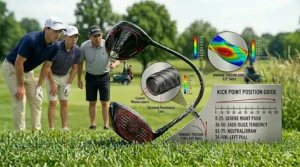
- Higher kick points — The shaft bends lower toward the tip, launching the ball higher even with lower swing speed
- Lower torque ratings — Typically 4°–5°, allowing more face rotation which helps slower swingers square the face naturally
- Lighter weight — Usually 45–55 grams vs. the 60–70g of standard shafts, reducing fatigue over 18 holes
- Softer tip sections — Helping generate spin that keeps the ball airborne longer on slower swing speeds
What most buyers overlook about senior flex shafts is that lighter + softer doesn’t mean “easier to hit well.” It means the shaft is engineered to amplify the energy you have available, rather than demanding energy you don’t have. There’s a meaningful difference between those two outcomes.
FAQ: Golf Shaft Flex Guide
❓ What shaft flex do I need if I swing at 90 mph?
❓ How to choose shaft flex without a fitting?
❓ Does stiff vs regular flex affect accuracy or just distance?
❓ Is senior flex shaft only for older golfers?
❓ Can I use the same shaft flex in irons and driver?
Conclusion: The Right Shaft Flex Changes Everything
After reviewing the science, the fitting data, and 7 real shafts currently available on Amazon, one truth stands out above all others: the wrong flex is the most fixable performance problem in golf — and it’s also the most ignored.
Whether you’re a 108 mph speedster who needs the Project X HZRDUS Smoke Black RDX to tighten dispersion, a smooth-swinging senior who’ll gain 15 yards overnight with the Fujikura Air Speeder 45, or a mid-handicapper looking for a no-fuss upgrade via the plug-and-play Fujikura Pro 2.0 Blue, the answer exists in this golf shaft flex guide. The swing speed flex chart and stiff vs regular flex comparisons above give you the framework — now it’s time to match that framework to a real product.
Stop leaving yards and accuracy on the table. Your shaft is the only component that connects your swing to the ball, and it deserves the same attention you give your driver head, your irons, and your putting stroke.
✨ Don’t Miss These Exclusive Deals!
🔍 Click any of the highlighted shafts above to check current pricing and availability on Amazon. These are real products, currently in stock, and suitable for every player from beginners to competitive amateurs.
Recommended for You
- 7 Best Ways How to Choose Golf Clubs in 2026
- Cast vs Forged Irons: 7 Best Options for 2026
- Kirkland Golf Balls vs Pro V1: 7 Real Tests Reveal Winner 2026
Disclaimer: This article contains affiliate links. As an Amazon Associate, I earn from qualifying purchases. If you purchase products through these links, we may earn a small commission at no additional cost to you.
✨ Found this helpful? Share it with your friends! 💬🤗
