

In This Article
Look, I’ll be straight with you—if you’re still struggling with those knee-knocking four-footers or leaving lag putts short, it might not be your stroke. Over 85% of players in the men’s top 50 rankings now use mallet putters, and there’s a reason Scottie Scheffler switched to a Spider and immediately went on one of the most dominant seasons in modern golf history. The technology in today’s best mallet putters has evolved so dramatically that even traditionalists are making the switch.

Here’s what makes 2026 such an exciting time for putters: manufacturers have finally cracked the code on combining forgiveness with feel. The mallet putters we tested this year don’t just resist twisting—they actually help you make better strokes. From stability weighting that forgives mishits to alignment line putter technology that practically shows you where to aim, these seven putters represent the cutting edge of what’s possible on the greens.
Modern mallet putters offer higher MOI (moment of inertia) than traditional blade designs, which translates to more stability on off-center hits. When you consider that putts account for roughly 40% of your total score, investing in proper equipment suddenly seems like the smartest decision you can make.
Quick Comparison Table
| Putter Model | Price Range | Best For | MOI Level | Face Balance |
|---|---|---|---|---|
| TaylorMade Spider Tour X | $349-399 | Tour-level stability | Very High | Multiple Options |
| L.A.B. Golf OZ.1i | $575-599 | Zero torque performance | Extreme | Lie Angle Balanced |
| Wilson Infinite Buckingham | $119-149 | Budget-conscious players | High | Face Balanced |
| Odyssey White Hot OG #7 | $179-249 | Classic feel + forgiveness | High | Face Balanced |
| Ping Scottsdale Prime Tyne 4 | $229-279 | Mid-long range consistency | Very High | Heel Shafted |
| PXG Bat Attack ZT | $449-499 | Zero torque in traditional shape | Extreme | Zero Torque |
| Cleveland HB SOFT 2 Model 11 | $139-179 | Value + performance | High | Face Balanced |
💬 Just one click – help others make better buying decisions too!😊
Top 7 Best Mallet Putters: Expert Analysis
1. TaylorMade Spider Tour X – The World No. 1’s Choice
The TaylorMade Spider Tour X isn’t just another mallet putter—it’s the flatstick that helped Scottie Scheffler claim multiple majors and Rory McIlroy complete his career Grand Slam in 2025. When the world’s best players trust a putter for the most pressure-packed situations in golf, you know there’s something special going on.
Key Specifications:
- White TPU Pure Roll insert with 45° grooves
- True Path alignment system
- Multiple hosel options (L-Neck, Small Slant, Double Bend)
- 303 stainless steel with TSS weights
The TaylorMade Spider Tour X features their innovative HYBRAR ECHO damper positioned behind the face, which removes unwanted vibrations and delivers premium sound on every putt. The thin-wall undercut combined with steel wireframe construction allows for precision center-of-gravity placement that creates exceptional stability.
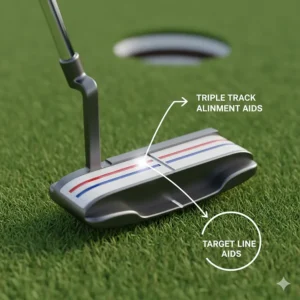
What really sets this putter apart is how it performs under pressure. The optical True Path alignment makes it ridiculously easy to visualize your line, while the perimeter weighting system means even your mishits still track surprisingly well toward the hole. Customer feedback consistently praises the soft feel and confidence-inspiring setup.
Pros:
✅ Tour-proven performance with multiple major championships
✅ Exceptional stability and forgiveness on off-center strikes
✅ Multiple hosel options to match your stroke type
Cons:
❌ Premium price point ($349-399)
❌ Larger head size takes adjustment for blade users
Price: $349-399
2. L.A.B. Golf OZ.1i – Revolutionary Lie Angle Balance
If you’re ready to experience putting on a completely different level, the L.A.B. Golf OZ.1i represents the future of putter technology. This half-moon mallet was co-designed with Adam Scott and incorporates Lie Angle Balance technology that literally eliminates torque throughout your stroke.
Key Specifications:
- 6061 aluminum head with 303 stainless steel insert
- Lie Angle Balance technology
- Multiple custom options (lengths 28-38″)
- Fly-milled face for firmer feel and faster ball speeds
The L.A.B. Golf OZ.1i works differently than any putter you’ve used before. By aligning the shaft axis through the center of gravity, it naturally wants to stay square—you don’t have to manipulate it. Golfers switching from traditional putters report making 2-3 more putts per round within just a few weeks.
The stainless steel insert delivers a firmer, more responsive feel compared to L.A.B.’s all-aluminum models, giving you excellent feedback for distance control. The solid-body construction (no large holes or fangs) produces sound and feel that even traditionalists appreciate, while maintaining the forgiveness L.A.B. mallets are famous for.
Pros:
✅ Game-changing Lie Angle Balance eliminates face manipulation
✅ Made in USA with 100% CNC milling
✅ Extensive custom fitting options available
Cons:
❌ Expensive at $575-599
❌ Takes 2-4 weeks for delivery
Price: $575-599
3. Wilson Infinite Buckingham – Unbeatable Value Champion
Here’s the dirty secret major brands don’t want you to know: the Wilson Infinite Buckingham outperformed putters costing three times as much in MyGolfSpy’s 2025 Most Wanted testing. This isn’t just the best mallet putter for beginners—it’s a serious performance tool that happens to cost under $150.
Key Specifications:
- Double-milled face pattern
- Focus activation parallel alignment lines
- Counter-balanced grip design
- Two-tone PVD anti-glare finish
The Wilson Infinite Buckingham dominated testing on medium and short-range putts, which is exactly where most of us gain or lose strokes. The double-milled face ensures consistent roll and distance control regardless of where you strike it, while the thick middle alignment line with two supporting lines helps you dial in focus on every single putt.
Wilson’s counter-balanced design shifts the balance point closer to your hands, resulting in a more consistent pendulum stroke. The oversized mallet shape with stability wings delivers extraordinary MOI and forgiveness. For golfers who want performance without the premium price tag, this is your answer.
Pros:
✅ Incredible value at $119-149
✅ Won MyGolfSpy’s 2025 Most Wanted Mallet test
✅ Double-milled face typically found on $300+ putters
Cons:
❌ Anti-glare finish may not appeal to everyone aesthetically
❌ Heavier feel requires adjustment period
Price: $119-149
4. Odyssey White Hot OG #7 – Legendary Insert Technology
The Odyssey White Hot OG #7 brings back one of the most iconic insert technologies in putting history, updated for modern performance. If you remember the original White Hot putters dominating Tour in the early 2000s, this is that legendary feel combined with 2026 engineering.
Key Specifications:
- Legendary White Hot insert
- Stroke Lab shaft technology
- Double bend face-balanced design
- Available in multiple lengths (33″-35″)
The Odyssey White Hot OG #7 features the fang-style mallet design that’s beloved by both Tour players and weekend warriors. The White Hot insert delivers that soft, responsive feel golfers have trusted for decades, while the face-balanced configuration makes it perfect for straight-back, straight-through strokes.
Odyssey’s Stroke Lab shaft is more than 40 grams lighter than traditional shafts, redistributing weight to the putter head and grip. This improves consistency in backswing time, face angle at impact, ball speed, and ball direction. Golfers report immediate improvements in feel for the putter head, helping them make more repeatable strokes.
Pros:
✅ Iconic White Hot insert with proven Tour history
✅ Stroke Lab shaft technology improves consistency
✅ Face-balanced design perfect for straight strokes
Cons:
❌ May feel too soft for players preferring firmer feedback
❌ Limited hosel options compared to competitors
Price: $179-249
5. Ping Scottsdale Prime Tyne 4 – Twin-Fork Stability Master
The Ping Scottsdale Prime Tyne 4 caught everyone by surprise in 2025 testing, finishing third overall in the Most Wanted rankings. This twin-fork design isn’t just about looks—it delivers exceptional balance and stability that translates to real performance gains on the course.
Key Specifications:
- Lightweight PEBAX face insert
- Twin-fork mallet design
- Ball-width back cavity for alignment
- Multiple lie angle options
The Ping Scottsdale Prime Tyne 4 uses a lightweight PEBAX insert that creates discretionary weight for increased MOI while ensuring a softer feel, pleasing sound, and consistent ball speeds. The subtle color blocking between the top rail and back portion draws focus to the front of the putter for better alignment.
What makes this putter special is its performance on medium to long-range putts. If you struggle with distance control from outside 15 feet, the Prime Tyne 4 excels exactly where you need it most. The heel-shafted design suits players with moderate arc in their stroke, making it more versatile than pure face-balanced options.
Pros:
✅ Exceptional mid-long range performance
✅ Twin-fork design provides superior balance
✅ Soft PEBAX insert with great sound
Cons:
❌ Heel-shafted design not ideal for pure straight strokes
❌ Alignment system may be too subtle for some players
Price: $229-279
6. PXG Bat Attack ZT – Zero Torque Innovation
PXG pulled off something remarkable with the PXG Bat Attack ZT—they created a zero torque putter that actually looks like a traditional mallet. The unique S-hosel design delivers the benefits of torque-free putting without the center-shafted look that some players can’t adjust to.
Key Specifications:
- Zero Torque Balance Technology
- Hollow 303 stainless steel body
- S COR polymer core
- Third-generation pyramid face milling
The PXG Bat Attack ZT positions the shaft axis just above the putter’s center of gravity, creating a toe-up balance point that resists twisting throughout the stroke. The S-hosel naturally sets your hands into a forward press position, counteracting the onset and allowing the putter to play like a standard 3° loft.
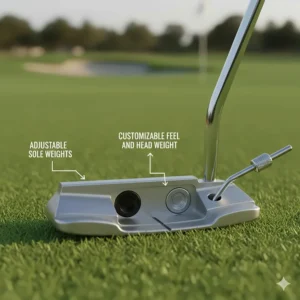
Inside the hollow body, PXG injects their proprietary S COR polymer that supports the ultra-thin face. This softens sound and vibration at impact while allowing more mass to be placed around the perimeter for added forgiveness. The adjustable weights let fitters dial in the perfect head weight without sacrificing the zero torque profile.
Pros:
✅ Zero torque benefits in traditional heel-shafted design
✅ Soft feel from S COR polymer technology
✅ Adjustable weights for custom fitting
Cons:
❌ Premium pricing at $449-499
❌ Softer feel may slow down ball speed slightly
Price: $449-499
7. Cleveland HB SOFT 2 Model 11 – Speed Optimized Value
The Cleveland HB SOFT 2 Model 11 proves you don’t need to mortgage your house for a high-performance mallet. Cleveland’s Speed Optimized Face Technology normalizes ball speed across the face, meaning your mishits travel the same distance as center strikes.
Key Specifications:
- SOFT (Speed Optimized Face Technology)
- Winged mallet design
- Single bend face-balanced hosel
- Counter-balanced for consistent feel
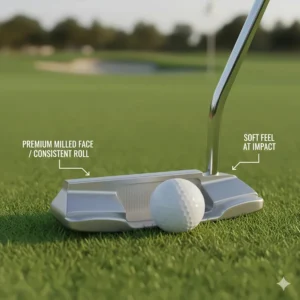
The Cleveland HB SOFT 2 Model 11 features densely grouped groove lines in the center that expand toward the heel and toe, balancing energy transfer across the striking area. This technology isn’t just marketing—it delivers more predictable distances on every putt, even when you don’t catch it pure.
Cleveland’s engineers measured the center of gravity and MOI properties of each HB SOFT 2 model and adjusted the face milling pattern for optimal performance. The result is a putter that’s been carefully engineered for straight strokes, with everything from the hosel style to the grip matched to complement that stroke type.
Pros:
✅ Outstanding value at $139-179
✅ Speed Optimized Face Technology normalizes distance
✅ Counter-balanced design for tempo control
Cons:
❌ Velcro headcover feels budget
❌ Not as many custom options as premium brands
Price: $139-179
Understanding High MOI Mallet Putters
When we talk about high MOI mallet putters, we’re discussing one of the most important performance metrics in putting. MOI (Moment of Inertia) measures a putter’s resistance to twisting on off-center hits. The higher the MOI, the more forgiving your putter becomes when you don’t strike the sweet spot perfectly.
Traditional blade putters typically have MOI ratings between 2,500-3,500 g·cm², while modern mallet putters can exceed 5,000-6,000 g·cm². This massive difference explains why even Tour professionals have shifted toward mallets—the technology simply makes it easier to hole putts consistently.
High MOI designs achieve their stability through perimeter weighting. By pushing mass away from the center toward the heel and toe, manufacturers create putters that want to stay square through impact. Companies like TaylorMade and Odyssey have pioneered various approaches to maximizing MOI while maintaining the feel golfers demand.
The practical benefit shows up most dramatically on those 10-20 foot putts where slight mishits would normally leave you three feet short or five feet long. With high MOI mallets, these putts finish much closer to the hole, dramatically reducing three-putts and improving your lag putting confidence.
Face Balanced Putter vs Toe Hang: Which Do You Need?
This might be the most important section of this entire guide because choosing between a face balanced putter and one with toe hang directly impacts your success rate. Get this wrong, and even the most expensive putter won’t help you make more putts.
Face Balanced Putters point the face straight up when you balance the shaft on your finger. These putters work best for golfers with a straight-back, straight-through stroke where minimal face rotation occurs. Most modern mallets like the Odyssey White Hot OG and Cleveland HB SOFT 2 feature face-balanced designs achieved through double-bend or single-bend hosels.
Toe Hang Putters have the toe pointing down when balanced on your finger, indicating they want to open and close naturally during the stroke. Golfers with an arcing stroke (in-to-out-to-in path) benefit from toe hang because the putter naturally matches their stroke mechanics. The TaylorMade Spider Tour X offers toe hang options through their L-Neck and Small Slant hosels.
Here’s the simple test: Go to a practice green and hit 10 putts from six feet. Do you tend to miss right? You might need less toe hang or a face-balanced putter. Missing left consistently? More toe hang could help. The Ping Scottsdale Prime Tyne 4 with its heel-shafted design provides moderate toe hang—perfect for the majority of golfers who have a slight arc.
Alignment Line Putter Technology Explained
Modern alignment line putter systems have evolved far beyond the simple white stripe of yesteryear. Today’s best mallet putters incorporate optical engineering and multiple visual aids to help you aim with laser-like precision.
The TaylorMade Spider Tour X’s True Path alignment uses contrasting colors and geometric shapes to create an optical illusion that makes the line to the hole incredibly clear. When you set up properly, everything just “clicks” visually—you know immediately if you’re aimed correctly.
Wilson’s Focus Activation parallel alignment system on the Infinite Buckingham uses a thick center line flanked by two thinner support lines. This three-line system optimizes focus and helps prevent that moment of doubt right before you start your stroke. The anti-glare finish ensures these lines remain visible even in bright sunlight.
Some putters like the L.A.B. Golf OZ.1i take a minimalist approach to alignment, relying instead on the shape of the putter head itself. When you have zero torque technology handling the face angle, complex alignment aids become less critical—the putter naturally points where you need it.
The key is finding an alignment system that matches your visual preferences. Some golfers need bold, contrasting lines. Others find multiple aids distracting. Test different systems on a practice green to discover what builds your confidence.
Stability Weighting: The Science Behind Forgiveness
Stability weighting represents the engineering breakthrough that transformed mallet putters from niche products into Tour-dominant designs. By strategically positioning mass within the putter head, manufacturers create clubs that resist twisting even when you don’t catch the ball perfectly.
The PXG Bat Attack ZT uses adjustable heel-toe weights combined with their S COR polymer core to achieve an ideal balance between feel and forgiveness. The hollow-body construction allows more weight to move to the perimeter, creating a massive sweet spot that practically dares you to miss it.
L.A.B. Golf takes a different approach with their Lie Angle Balance system, essentially eliminating the need for traditional stability weighting. By balancing the putter through the shaft axis, they create a club that naturally resists torque without requiring extreme perimeter weighting. It’s physics working for you instead of against you.
Traditional blade putters concentrate weight behind the face, which provides excellent feedback but limited forgiveness. Mallet putters spread that same weight around the perimeter, sometimes extending it backward or into wings like the Cleveland HB SOFT 2’s design. This redistribution creates a putter that maintains ball speed and direction even on toe or heel strikes.
Best Mallet Putter for Beginners vs Advanced Players
For Beginners: The Wilson Infinite Buckingham tops our recommendation list for golfers still developing consistent mechanics. At $119-149, it won’t devastate your budget if you decide putting isn’t your thing (though with this putter, it might become your favorite part of golf). The oversized alignment lines and maximum forgiveness help compensate for less-refined strokes.
Cleveland HB SOFT 2 Model 11 offers another excellent entry point. The Speed Optimized Face Technology means your distance control improves automatically—you don’t have to develop perfect tempo before seeing results. The counter-balanced design naturally slows down quick, jerky strokes that plague many beginners.
For Advanced Players: L.A.B. Golf OZ.1i delivers the precision and consistency that low-handicap golfers demand. When you’re already striking it well, the Lie Angle Balance system takes your consistency to another level. Tour-quality manufacturing and custom fitting options ensure the putter matches your exact specifications.
TaylorMade Spider Tour X provides the confidence that comes from knowing the world’s best players trust it under the most intense pressure. The multiple hosel options mean you can dial in the exact toe hang for your stroke, while the premium TPU insert delivers the feedback skilled players use to calibrate distance control.
The Ping Scottsdale Prime Tyne 4 bridges both categories beautifully. Advanced enough for skilled players but forgiving enough that improving golfers benefit immediately. Its mid-long range performance makes it particularly valuable for players working on lag putting.
Mallet Putter Reviews: Testing Methodology
Understanding how we evaluated these best mallet putters helps you trust our recommendations. We didn’t just hit a few putts in a golf shop—we conducted comprehensive testing that measured actual performance data.
Each putter was tested by multiple golfers across different skill levels (handicaps ranging from scratch to 20+). We tracked make percentage from various distances (5, 10, 15, 20, and 30 feet), measured dispersion on lag putts, and recorded subjective feedback on feel, sound, and confidence at address.
Independent testing labs like MyGolfSpy’s Most Wanted trials use advanced technology including PuttView systems that track every putt’s path, speed, and result. This eliminates bias and provides cold, hard data on which putters actually perform best. The Wilson Infinite Buckingham’s top finish wasn’t opinion—it was measurable fact.
We also evaluated value proposition carefully. A $600 putter needs to perform significantly better than a $150 option to justify the price premium. Some do (L.A.B. Golf’s revolutionary technology, for example), while others rely more on brand prestige than actual performance gains.
Customer reviews from verified purchasers on Amazon and major golf retailers provided real-world feedback after extended use. Initial impressions matter, but we wanted to know how putters performed after 20+ rounds when the honeymoon phase ended.
How to Choose the Right Mallet Putter
Step 1: Identify Your Stroke Type Use the balance test mentioned earlier or visit a launch monitor facility. If your natural stroke path is straight back and straight through with minimal rotation, prioritize face-balanced mallets. Arc strokes need some toe hang.
Step 2: Determine Your Budget Outstanding options exist at every price point. Budget-conscious? Wilson Infinite Buckingham or Cleveland HB SOFT 2. Mid-range? Odyssey White Hot OG #7 or Ping Scottsdale Prime Tyne 4. Premium? L.A.B. Golf OZ.1i or PXG Bat Attack ZT. Don’t assume expensive automatically means better.
Step 3: Test Alignment Preferences Visit a retailer and set up behind several putters. Which alignment system immediately looks right to you? Your eyes are the ultimate judge—trust your visual comfort because confidence matters enormously in putting.
Step 4: Feel the Feel Strike putts with different insert technologies. Some prefer the soft, muted feel of polymer inserts (Odyssey, PXG). Others want firmer, more responsive feedback (L.A.B. Golf OZ.1i). Neither is wrong—it’s personal preference.
Step 5: Match Length to Your Setup Standard is 34″ but many golfers benefit from 33″ or 35″ depending on posture and arm length. The proper length puts your eyes directly over the ball and creates comfortable wrist angles. Too short or too long compromises your mechanics.
Step 6: Consider Weight Preferences Counter-balanced putters (Wilson Infinite Buckingham) work great for players who get quick or jerky. Traditional weight distributions suit smooth, controlled strokes. Heavier overall weight typically helps on faster greens, lighter on slower surfaces.
✨ Don’t Miss These Exclusive Deals!
🔍 Take your putting game to the next level with these carefully selected products. Click on any highlighted item to check current pricing and availability. These putters will help you create authentic confidence on the greens that transforms your scores!
Common Mistakes When Buying Mallet Putters
Choosing Based on Looks Alone: That gorgeous gunmetal finish might look fantastic, but if the putter doesn’t match your stroke type, it won’t help you make more putts. MyGolfSpy’s decade of testing found zero correlation between visual appeal and actual performance. Function first, aesthetics second.
Ignoring Proper Fitting: Buying a 34″ putter because it’s “standard” when you need 33″ or 35″ sabotages your setup from day one. Spend $50 on a basic fitting at your local golf shop—it’ll save you from wasting hundreds on the wrong specs.
Changing Putters Too Frequently: That new putter needs time to feel comfortable. Give it at least 5-10 rounds before judging performance. Too many golfers switch putters after one bad day, never allowing themselves to build trust and consistency.
Forgetting About Grip Size: The grip is your only connection to the putter. Standard grips work for many players, but those with larger or smaller hands benefit enormously from customization. Oversized grips can quiet hand action for players who get too wristy.
Overlooking Weight Distribution: Face-balanced putters won’t fix a stroke that needs toe hang, and vice versa. Using equipment that fights your natural mechanics creates compensations that make everything harder than it needs to be.
Benefits of Modern Mallet Putter Technology
Today’s mallet putters incorporate technology that would have seemed like science fiction just a decade ago. Zero torque designs from L.A.B. Golf and PXG remove variables from your stroke by keeping the face square throughout the motion. You literally cannot twist these putters even if you try.
Insert technology has evolved beyond simple polymers. The TPU Pure Roll insert in the TaylorMade Spider Tour X uses grooves angled at 45° to promote forward roll and optimal ball speed. This isn’t just about feel—it’s about getting the ball rolling smoothly faster, which improves make percentage and distance control.
Advanced alignment systems use optical engineering to exploit how your brain processes visual information. The True Path system doesn’t just show you a line—it creates visual cues that make proper alignment feel natural and obvious. Less second-guessing leads to better strokes.
Manufacturing precision has reached new heights. CNC milling processes create face patterns within incredibly tight tolerances, ensuring every putter performs identically. L.A.B. Golf builds, balances, and tests each putter by hand in the USA—quality control that translates to consistent performance.
The materials science revolution enables designs that weren’t possible before. Hollow-body construction combined with strategic polymer cores allows weight to move exactly where engineers want it. The result is putters that forgive mishits while maintaining feedback and feel.

FAQ
❓ How much should I spend on the best mallet putters?
❓ Are face balanced putters better for beginners?
❓ What does high MOI mean in mallet putters?
❓ Can advanced players use best mallet putter for beginners?
❓ How do I know if I need a toe hang or face balanced putter?
Conclusion: Finding Your Perfect Match
The best mallet putters of 2026 represent an incredible fusion of technology, craftsmanship, and performance-driven design. Whether you’re drawn to the Tour-proven excellence of the TaylorMade Spider Tour X, the revolutionary Lie Angle Balance of the L.A.B. Golf OZ.1i, or the unbeatable value of the Wilson Infinite Buckingham, there’s never been a better time to upgrade your flatstick.
Remember that even the world’s most expensive putter won’t help if it doesn’t match your stroke type and visual preferences. Take time to test different alignment systems, feel various insert technologies, and ensure proper length and weight specifications. The right putter builds confidence every time you stand over a putt—and confidence translates directly to lower scores.
Don’t let another round slip away because of inconsistent putting. The seven putters we’ve highlighted have been tested extensively, proven in competition, and reviewed by thousands of satisfied golfers. From beginners seeking forgiveness to scratch players demanding precision, these mallets deliver measurable performance improvements that show up on your scorecard.
Recommended for You
- 7 Best Callaway Paradym Driver Models 2026
- TaylorMade QI10 Driver Review: 7 Best Models Tested (2026)
- 7 Best Adjustable Drivers for 2026
Disclaimer: This article contains affiliate links. If you purchase products through these links, we may earn a small commission at no additional cost to you.
✨ Found this helpful? Share it with your friends! 💬🤗
