
In This Article
Every January, golf brands roll out the same headline: faster, more forgiving, longer. It’s easy to tune that out as marketing noise, but there’s real engineering behind the claim, and it has a name — maximum distance driver technology. In short, maximum distance driver technology is the combination of high-MOI weighting, flexible carbon or titanium faces, and aerodynamic crowns that brands use to push ball speed and forgiveness as close as legally possible to the limits set by golf’s two governing bodies, without crossing into non-conforming territory.
That last part matters more than most buying guides admit. A driver can look incredible on a spec sheet and still be illegal for sanctioned play if an engineer pushed face flex too far. So this guide does two things most “best driver” roundups skip: it walks through seven real, currently available models — from a $250 value pick to $650 flagship heads — and it explains the rules (COR, MOI, length) that quietly shape every driver on the market this year.
If you’re shopping by feel alone, you’ll end up comparing marketing copy instead of performance. If you understand what the numbers actually mean for your swing, you’ll buy the right club once instead of three times. Let’s get into it.
Quick Comparison Table: 7 Maximum Distance Drivers at a Glance
| Driver | Best For | Price Range | Forgiveness Focus | Standout Tech |
|---|---|---|---|---|
| Ping G440 Max | High handicappers | $550–$650 | Very high MOI | Free Hosel + Carbon Fly Wrap |
| Callaway Quantum Max | All-around distance | Around $650 | High | Tri-Force multi-material face |
| TaylorMade Qi4D | Speed + tour fitting | Around $650 | Moderate-high | 60X carbon Twist Face |
| Titleist GT2 | Balanced speed/forgiveness | $400–$550 | High | Speed Ring + variable face thickness |
| Cobra OPTM Max-K | Slower swing speeds | $450–$500 | Very high (13K MOI) | H.O.T. Face + FutureFit33 |
| PXG 0311 Black Ops | Custom weight tuning | $400–$600 | High, fully adjustable | Precision Weighting (2.5g–20g) |
| Cleveland Launcher XL 2 | Best value/budget | $225–$300 | High for the price | MainFrame XL + Rebound Frame |
Looking at the spread above, the gap between the cheapest and most expensive driver here is roughly $400, but the forgiveness gap is much smaller than the price gap suggests — Cleveland’s MainFrame XL face and Cobra’s 13K-MOI design both punch above their price class. If raw ball speed and tour-level fitting matter most, the Qi4D and Quantum Max justify their premium; if you mis-hit often and want the engineering working hardest for you, the Ping and Cobra options are built specifically for that problem.
💬 Just one click — help others make better buying decisions too!😊
✨ Don’t Miss These Exclusive Deals!
💬 Found a driver you like above? One click helps you compare current pricing and lock in your fitting specs before stock shifts — and it helps other readers make better decisions too! 😊
Top 7 Maximum Distance Drivers: Expert Analysis
Before the individual breakdowns, here’s the full spec comparison so you can see where each head actually separates from the pack.
| Driver | Head Size | Adjustability | Shaft Options | Rating Signal |
|---|---|---|---|---|
| Ping G440 Max | 460cc | Fixed-weight, adjustable hosel | Alta CB / Tour 2.0 | “Most forgiving” in 2026 independent testing |
| Callaway Quantum Max | 460cc | 8-position loft/lie | Multiple stock + custom | Led distance category, runner-up overall |
| TaylorMade Qi4D | 460cc | 4 TAS weights (9g/4g) | Reax, Tensei, HZRDUS | Tour-validated; highest measured ball speed gain |
| Titleist GT2 | 460cc | Interchangeable back weight | Tensei, Denali, Tour AD | Top-12 dispersion in 2026 field testing |
| Cobra OPTM Max-K | 460cc | FutureFit33 (33 settings) | MCA Kai’li, Project X | Tightest YFC (forgiveness) at high swing speed |
| PXG 0311 Black Ops | 460cc | 8-weight system, 2.5g–20g | 10+ stock shafts | Combined MOI exceeds 10,000 g·cm² when tuned |
| Cleveland Launcher XL 2 | 460cc+ | Adjustable hosel, 12 positions | Stock graphite | Reported 20–40 yard gains for slower swingers |
A side-by-side like this tells a clearer story than any single spec sheet: the Cobra and Ping models trade a bit of raw speed for class-leading stability, the TaylorMade and Callaway heads chase outright ball speed first, and the PXG sits in its own lane because almost every performance variable is something you adjust yourself rather than something baked into one fixed head. Keep that distinction in mind — it changes which “best for” column actually applies to you.
1. Ping G440 Max — Best for High Handicappers
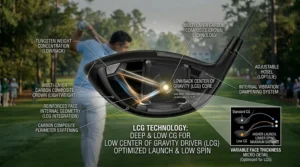
The G440 Max is built around one priority: stop punishing mis-hits. Its 460cc head carries one of the deepest centers of gravity Ping has ever shipped, and the Free Hosel design shaves weight from the neck of the club so more mass can sit low and back in the head. In practice, that means a strike an inch off-center loses noticeably less ball speed than it would on an older Ping driver — what most buyers overlook is that this stability matters more to scoring than chasing another five yards of carry. Testers in 2026 independent driver trials consistently ranked it among the most forgiving heads on the market, with tight left-right dispersion even at faster swing speeds. Feedback has been positive on acoustics too — noticeably friendlier sound at impact than the previous G430 generation, which was a common complaint.
✅ Pros: class-leading forgiveness, confidence-inspiring address look, suits a wide range of swing speeds.
❌ Cons: not the longest pure-distance option on this list; premium pricing. Price sits in the $550–$650 range — pricey, but if your miss is the problem you’re solving, it’s hard to find a more complete answer.
2. Callaway Quantum Max — Best Overall Distance
Callaway’s Tri-Force Face layers titanium, a poly mesh, and carbon fiber into one hitting surface — a construction no other brand on this list uses. That matters because each material flexes differently on impact, and Callaway’s AI face-mapping adjusts thickness across the face to keep ball speed consistent whether you catch it high, low, or off-center. In 2026 testing it finished first for distance and fourth for both accuracy and forgiveness — an unusually balanced result, since drivers that win on raw distance often sacrifice consistency to get there. Players testing it described solid feel at impact, strong clubhead speed, and manageable spin with less glare at address than expected. Best suited to golfers who already strike it reasonably well and want every yard the swing has to offer, rather than someone who needs heavy mis-hit insurance.
✅ Pros: best-in-class distance without major forgiveness trade-offs, eight loft/lie combinations, fast off-center performance.
❌ Cons: forgiveness still trails dedicated max-MOI heads like the Ping or Cobra; same premium price tier. Expect to pay around $650 — a fair price given it’s the rare driver that wins on speed without losing the all-around test categories.
3. TaylorMade Qi4D — Best for Tour-Level Fitting
The Qi4D swaps a titanium face for a 60X carbon Twist Face, and the weight that move saves gets redirected into a faster face and a new roll radius that keeps spin more consistent across different vertical impact points. The practical effect: testers measured roughly 1.5 mph more clubhead speed compared to other 2026 models, which compounds into real carry distance over a season of rounds. What the spec sheet won’t tell you is how it sounds — testers rated the feel as a powerful, distinct “crack” rather than a muted thud, and several called it the best-feeling TaylorMade driver in years. Tour adoption has been fast, with multiple top-ranked players putting it in play almost immediately, which is a meaningful signal since pros are far more sensitive to inconsistency than recreational golfers. The four-weight Trajectory Adjustment System gives a fitter real flexibility to dial in flight and spin.
✅ Pros: largest measured speed gain in this group, tour-validated consistency, genuinely improved feel over the prior generation.
❌ Cons: carbon face produces a distinctive sound some golfers don’t love; same $650 price ceiling as the Quantum Max. If outright ball speed and fitting precision matter most to you, this is the one to test first.
4. Titleist GT2 — Best Balanced Option
GT2 doesn’t chase a single headline number — it chases balance, and that’s by design. An upgraded titanium Speed Ring stabilizes the face perimeter while a variable-thickness center keeps ball speed high even slightly off-center, and mass shifted to the back of the head raises MOI without sacrificing the speed Titleist players expect. In 2026 testing it landed in the top half for ball speed while still posting one of the tighter dispersion numbers in the field — proof that “well-rounded” doesn’t have to mean “unremarkable.” With Titleist’s newer GTS line now arriving for tour players, GT2 pricing has eased noticeably, which is the kind of timing savvy shoppers should pay attention to: you’re buying last year’s flagship engineering at a discount because a new flagship just stole the spotlight. Best for golfers who want one driver that does several things well rather than one thing spectacularly.
✅ Pros: strong forgiveness-to-speed ratio, interchangeable back weight for swingweight tuning, pricing has dropped as newer Titleist models launch.
❌ Cons: doesn’t lead any single performance category outright; more conservative shaping than some rivals. Now typically found in the $400–$550 range, which makes it one of the better value-to-performance ratios in this entire list.
5. Cobra OPTM Max-K — Best for Slower Swing Speeds
Cobra built the Max-K around a 13K MOI target — the highest forgiveness number in the brand’s history — stabilized by deliberately lowering the club’s resistance to twisting on three axes rather than just one. The 11-gram fixed back weight pulls the center of gravity low and back, and in high-swing-speed testing it posted the tightest shot-to-shot consistency of any driver in its category along with an 81% “playable” rate, meaning more of its mis-hits stayed in a usable position than almost any competitor tested. The FutureFit33 hosel adds 33 individual loft and lie combinations, which is more granular tuning than most golfers will ever need but useful in a proper fitting session. Feedback has flagged that the high launch and added spin can cost a little raw distance for faster swingers chasing low, piercing flight — the trade-off for that extra stability. Best matched to golfers with slower-to-moderate swing speeds who need help getting the ball airborne and keeping it in play.
✅ Pros: exceptional MOI and dispersion control, extensive loft/lie adjustability, strong value relative to flagship pricing.
❌ Cons: higher launch and spin can trim distance for faster swingers; larger head profile won’t appeal to golfers who prefer a compact look. Pricing runs $450–$500, putting real flagship-level forgiveness within reach without the $650 price tag.
6. PXG 0311 Black Ops — Best for Custom Weight Tuning
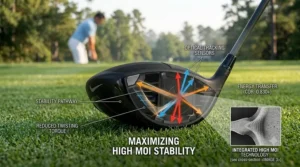
Where most drivers on this list ship with one or two fixed weight options, the Black Ops gives you eight — from 2.5 grams up to 20 grams — so a fitter (or a patient DIY golfer) can push combined MOI past 10,000 g·cm² or bias the head toward a draw, depending entirely on how the weights are arranged. The high-strength titanium alloy face is engineered to flex consistently across multiple impact points rather than just dead-center, which is the practical reason PXG markets it as forgiving despite its tour-leaning shape. Early hands-on feedback from golfers who tested the stock shaft options described a surprisingly forgiving feel for a head this adjustable, which isn’t always true of heavily customizable drivers. This is the pick for golfers who already know — or want to learn through fitting — exactly how their CG preference, spin, and bias should be configured, rather than golfers who want a single “set it and forget it” head.
✅ Pros: unmatched weight-tuning range in this group, premium titanium and carbon construction, strong forgiveness when properly configured.
❌ Cons: new-unit pricing runs higher than mainstream OEM flagships; fewer large-scale independent test rankings than the major brands. New units list around $600, but certified pre-owned and marketplace listings frequently bring the real-world price down to the $400–$450 range — worth checking before paying full retail.
7. Cleveland Launcher XL 2 — Best Value Pick
Cleveland’s reputation is built on wedges, but the Launcher XL 2 is a legitimate distance driver at a fraction of flagship pricing. The MainFrame XL face uses a variable-thickness pattern to maximize flex at impact, and a two-zone Rebound Frame — essentially two different flex zones working together instead of one — pushes more energy into the ball on contact. Buyers recovering from injury or carrying slower swing speeds have reported gains of 20 to 40 yards over older drivers, which is a bigger jump than most premium upgrades deliver, simply because the baseline club being replaced was often years out of date. An 8-gram counterweight in the grip end makes the club feel lighter on the takeaway while staying stable through impact, and the adjustable hosel covers a wide loft range in half-degree increments. The most common complaint isn’t about performance — it’s inconsistent fulfillment from third-party Amazon sellers on loft or flex, so buying from a verified retailer listing is worth the extra care.
✅ Pros: lowest price in this roundup by a wide margin, genuine distance gains for moderate swing speeds, simple and effective adjustability.
❌ Cons: fewer independently published forgiveness/dispersion numbers than flagship rivals; order accuracy varies by third-party seller. At $225–$300, it’s the easy recommendation for anyone upgrading from a driver that’s more than five years old without spending flagship money.
Buyer’s Decision Framework: Which Distance Driver Fits Your Game
Before scrolling back up to compare prices, run through this quick framework — it narrows seven options down to one or two in under a minute.
- If you slice consistently and lose distance to mis-hits, choose the Ping G440 Max or Cobra OPTM Max-K, because both are engineered specifically around maximizing MOI and stability on off-center strikes.
- If your ball-striking is already solid and you want maximum carry, choose the Callaway Quantum Max or TaylorMade Qi4D, because both led their respective testing fields in ball speed and distance.
- If you want one driver that handles a wide range of conditions without a steep price tag, choose the Titleist GT2, because its balanced forgiveness-to-speed ratio suits the widest range of swing types.
- If you’re getting professionally fitted and want full control over bias and MOI, choose the PXG 0311 Black Ops, because its eight-weight system supports the deepest customization here.
- If budget is the deciding factor or you’re replacing a driver that’s five-plus years old, choose the Cleveland Launcher XL 2, because it delivers the largest performance jump per dollar spent.
Real-World Scenarios: Matching Drivers to Golfers
The weekend warrior fighting a slice. A 20-handicap golfer playing twice a month with an inconsistent strike pattern doesn’t need more raw speed — they need their bad swings to cost fewer yards. The Cobra OPTM Max-K’s high MOI and draw-correcting weight options directly target that problem, and the FutureFit33 hosel lets a local fitter dial out the slice without buying a different head.
The mid-handicapper chasing extra yards. Someone shooting in the mid-80s with a repeatable swing is leaving the most distance on the table when ball speed, not forgiveness, is the limiting factor. The Callaway Quantum Max or TaylorMade Qi4D both target raw speed first, and either one is the more efficient upgrade than spending the same money on lessons aimed purely at swing speed.
The low-handicapper wanting more control. A scratch or near-scratch player who already controls dispersion well usually wants workability and tunability over forgiveness. The PXG 0311 Black Ops, fitted with the right weight configuration, gives that golfer a low-spin, draw-or-fade-biased setup that a fixed-weight head simply can’t replicate.
✨ Don’t Miss These Exclusive Deals!
🔍 Take your tee shots to the next level with the picks above. Click through to check current pricing and availability — these are the drivers that turn “almost in the fairway” into “right down the middle.”
Setup, Fitting & Maintenance: Getting the Most from Your New Driver
A new driver performs worse than your old one for the first few rounds if you skip basic setup — and that’s true even of the best heads on this list. Start with a proper fitting session if your retailer offers one; a 1-degree loft mismatch can cost more distance than the gap between two different drivers in this guide. Once you’ve got the right shaft and loft, recheck your adjustable weights or hosel setting after the first five rounds — what felt right on a launch monitor sometimes feels different once you’re hitting off real turf and uneven lies.
Common first-30-days mistakes: leaving the stock adjustable hosel at the factory setting without testing alternatives, ignoring grip wear (a worn grip changes swing feel more than people expect), and assuming a heavier or lighter shaft “feels better” without actually measuring ball speed and dispersion on a monitor. For the adjustable-weight models here — the PXG Black Ops and Cobra Max-K especially — write down your current setting before experimenting, since it’s easy to lose track of which configuration actually performed best after trying four or five combinations in one session.
How to Choose Maximum Distance Driver Technology: 7 Expert Criteria
Picking the right driver comes down to matching technology to your specific swing, not chasing whichever model is winning headlines this month.
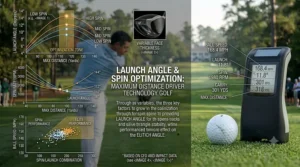
- Know your swing speed first. Faster swingers benefit more from low-spin, compact heads; slower swingers gain more from high-launch, high-MOI designs like the Cleveland or Cobra.
- Prioritize forgiveness over raw distance if your strike is inconsistent. A 10-yard average gain means nothing if half your shots are mis-hits losing 30 yards.
- Check adjustability before buying, not after. Loft sleeves, movable weights, and adjustable hosels let one head adapt as your swing changes over a season.
- Match face material to your priorities. Carbon faces (TaylorMade, PXG crown) often save weight for forgiveness; titanium faces (Ping, Cobra) tend to prioritize face speed and durability.
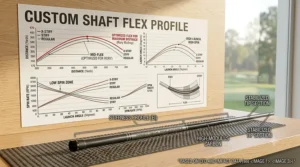
- Get fitted for shaft flex, not just head model. The wrong shaft flex can erase every advantage a premium head offers.
- Factor in resale and upgrade cycle. A $650 flagship loses value faster in year one than a $250 value driver, which matters if you upgrade often.
- Confirm conformance if you play competitively. Not every driver sold online is legal for sanctioned rounds — more on that next.
Legal Conforming Distance Drivers: COR, MOI & Length Limits Explained
This is the section most buying guides skip, and it directly affects every driver on this list. The USGA limits a clubface’s coefficient of restitution — essentially how much energy transfers from clubhead to ball at impact — to 0.83, meaning no more than 83% of the collision’s energy can pass into the ball. Anything higher and the USGA rules the club non-conforming for sanctioned play, regardless of how it tests on a launch monitor.
Forgiveness has its own ceiling. Moment of inertia — the clubhead’s resistance to twisting on off-center hits — is capped at 5,900 g·cm² (plus a small testing tolerance), which is exactly why brands like Ping and Cobra market “13K MOI” figures that actually measure combined inertia across multiple axes rather than the single capped axis. Club length is limited to 48 inches for anything other than a putter, and a separate model local rule lets tournament committees cap it further at 46 inches for elite competition. Wikipedia’s overview of the coefficient of restitution is a useful primer if you want the underlying physics rather than just the golf-specific number.
What this means practically: every driver featured above is built right up against these limits, not past them. The differences you feel between a Ping and a Callaway aren’t differences in legal “spring effect” — they’re differences in aerodynamics, weight distribution, and face flex within an identical energy-transfer ceiling. If you ever buy a driver advertised as “non-conforming” or “tour banned” for extra distance, understand that it’s explicitly illegal for USGA or R&A-sanctioned play — fine for a casual round with friends, not for handicap-posting rounds or club competitions.
Aerodynamic Crowns and Drag Reduction Features: Where the Hidden Yards Come From
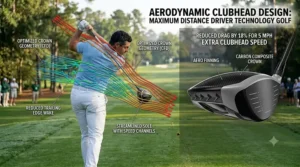
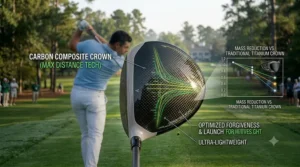
Face technology gets most of the marketing attention, but aerodynamic shaping is responsible for yards that have nothing to do with the COR limit at all — because there’s no rule capping how slippery a clubhead can be through the air. A driver with reduced drag lets a golfer generate more clubhead speed with the exact same swing effort, and faster clubhead speed at impact produces faster ball speed independent of face flex.
The practical features to look for: raised “fins” or ridges along the crown (used on the Ping models in this guide) that manage airflow separation during the downswing, thinner carbon crowns that shave overall weight so the head can be swung faster without changing swingweight, and reshaped heel and toe profiles that cut through the air more cleanly on the way down. None of this shows up on a typical spec sheet next to loft and head size, but it’s a meaningful piece of why modern drivers outperform 10-year-old heads even when both are legal under the same COR and MOI limits. If you’re choosing between two similarly forgiving drivers, the one with more deliberate aerodynamic shaping is usually the better bet for golfers with faster transitions and tempo.
Face Flex Technology and COR Limit Optimization: What’s Really Happening at Impact
“Face flex” is the engineering term for how much a clubface deforms and rebounds during the roughly half-millisecond of contact with the ball — and every driver in this guide is tuned to get as close to the 0.83 COR ceiling as manufacturing tolerances allow. The differences between brands come from how they approach that flex. Callaway’s Tri-Force Face layers three materials so different zones of the face can flex independently, which keeps ball speed more consistent across strikes that aren’t perfectly centered. TaylorMade’s carbon Twist Face saves enough structural weight that the company can redistribute it into a faster-responding center section. PXG’s titanium alloy face is engineered to deflect more uniformly across a wider area rather than concentrating flex in one hot zone.
What most buyers overlook is that face flex optimization isn’t really about beating the COR limit — that’s impossible by rule — it’s about maintaining COR-limit-level ball speed across a larger area of the face. A driver from a decade ago might have hit the legal COR limit dead-center but dropped off sharply an inch away; a 2026 driver holds closer to that ceiling across a much bigger zone. That’s the real story behind “more forgiving without losing distance” claims, and it’s worth more to your scorecard than another half-percent of peak ball speed you’ll rarely produce on the course.
Common Mistakes When Buying a Maximum Distance Driver
The biggest mistake is buying based on a tour player’s bag rather than your own swing speed — Rory McIlroy’s driver choice tells you almost nothing useful if your clubhead speed is 30 mph slower than his. A close second is skipping a fitting session to save time, then discovering the stock shaft flex doesn’t match your tempo at all. Many golfers also chase the highest advertised MOI number without checking whether that forgiveness comes at the cost of workability they actually use — useful for a 20-handicap golfer, often wasted on a single-digit player who shapes shots intentionally.
Another overlooked error: ignoring grip size and condition when testing a new driver, since an ill-fitting or worn grip changes swing feel enough to make a perfectly good head feel wrong. Finally, buyers shopping for value drivers like the Cleveland Launcher XL 2 should buy from verified retailer listings rather than the cheapest third-party marketplace seller, since loft and flex fulfillment errors are the most common complaint on budget-tier listings.
Maximum Distance Drivers vs. Older Models: Is the Upgrade Worth It
| Factor | Older Driver (5+ years) | 2026 Maximum Distance Driver |
|---|---|---|
| Forgiveness (MOI) | Often well below today’s near-5,900 g·cm² designs | Near the legal MOI ceiling in most flagship models |
| Aerodynamics | Limited or no deliberate drag-reduction shaping | Engineered crown/fin shaping for added clubhead speed |
| Adjustability | Single fixed weight or no adjustability | Multi-weight systems, adjustable hosels, loft sleeves |
| Face technology | Single-material titanium or steel face | Multi-material or carbon faces tuned for off-center flex |
| Typical cost to upgrade | — | $225–$650 depending on tier |
The table makes the case better than any marketing claim could: it’s not that older drivers were poorly made, it’s that forgiveness engineering, aerodynamics, and adjustability have all advanced together since the COR and MOI limits were finalized years ago. A driver bought before roughly 2018–2019 is very likely below today’s typical MOI numbers, which means even the budget-tier Cleveland Launcher XL 2 on this list may out-forgive a decade-old premium driver. If your current driver is approaching or past that age, the upgrade case is strong regardless of which tier you choose.
Long-Term Cost & Resale Value: What a Distance Driver Really Costs You
A driver’s sticker price is only part of the real cost. Flagship heads like the Qi4D or Quantum Max depreciate fastest in their first 12–18 months as the next model year arrives, which matters if you tend to upgrade annually — buying one generation behind, the way the Titleist GT2 currently sits relative to the newer GTS line, often delivers 80–90% of the performance at 60–70% of the original price. Budget options like the Cleveland Launcher XL 2 depreciate less in dollar terms simply because they cost less to begin with, making them a lower-risk entry point if you’re not sure how often you’ll want to upgrade.
Maintenance costs are modest but real: a fresh grip every 40–60 rounds, periodic shaft inspection if you travel with your clubs frequently, and the occasional re-fitting if your swing speed changes meaningfully (common after a fitness change or recovery from injury, which several Cleveland buyers specifically mentioned in their reviews). None of the seven drivers here carry unusual long-term costs beyond normal wear — the bigger financial decision is simply how often you plan to chase the newest model year.
Features That Actually Matter (And Those That Don’t)
Actually matters: moment of inertia appropriate to your miss pattern, shaft flex matched to your tempo (not just swing speed), and aerodynamic shaping if your swing has a fast transition. These three factors influence real, measurable yardage and dispersion.
Matters less than the marketing suggests: clubhead color and cosmetic finish, the exact gram-weight number printed on an adjustable weight (the range matters more than the specific number), and minor sound differences between similarly engineered faces — feel preference is real, but it doesn’t correlate with performance the way buyers often assume. If a retailer’s pitch leans heavily on adjectives like “explosive” or “revolutionary” without backing it up with a forgiveness or ball-speed number, that’s a signal to look at independent testing data rather than the product description alone.
❓ FAQ: Maximum Distance Driver Technology
❓ What is the best maximum distance driver technology for high handicappers?
❓ How much does a maximum distance driver cost in 2026?
❓ Is a high-MOI driver illegal or non-conforming?
❓ Can I buy a legal conforming distance driver on Amazon?
❓ How often should I replace my driver for more distance?
Conclusion
There’s no single “best” maximum distance driver technology in 2026 — there’s a best driver for your swing speed, your miss pattern, and your budget, and this list covers all three. If forgiveness is your priority, the Ping G440 Max or Cobra OPTM Max-K will do more for your scorecard than another five yards of theoretical carry. If you’re chasing raw distance with a swing you already trust, the Callaway Quantum Max and TaylorMade Qi4D are built specifically for that. And if budget matters more than bragging rights, the Cleveland Launcher XL 2 proves you don’t need flagship pricing to feel a real difference off the tee.
Whichever one you choose, get fitted before you buy if at all possible — every driver here performs noticeably better with the correct shaft flex and loft than with a guessed-at stock configuration. The technology has genuinely improved across the board this year; the only mistake left to make is picking based on price or hype alone.
✨ Don’t Miss These Exclusive Deals!
💬 Ready to pick your next driver? Click through on any model above to check current pricing and availability — and take your tee shots to the next level this season! 😊
Recommended for You
- Senior Driver Ultra Lightweight: 7 Best Picks for 2026
- Beginner Driver Golf Confidence Builder: 7 Picks That Work in 2026
- 7 Best First Drivers for Beginner Golfers in 2026 (No More Whiffs)
Disclaimer: This article contains affiliate links. As an Amazon Associate, I earn from qualifying purchases. If you purchase products through these links, we may earn a small commission at no additional cost to you.
Found this helpful? Share it with your friends! 💬🤗
