

In This Article
If you’ve ever stood over your ball in the fairway, 3-wood in hand, and felt a small wave of dread — you’re not alone. Hitting 3 wood off the deck shots well separates golfers who reach par 5s in two from golfers who lay up every single time, and it’s one of the trickiest skills in the bag to master with the wrong equipment.

So what exactly is a “3 wood off the deck” shot? In simple terms, it’s any shot where you strike your 3-wood directly off the grass — fairway, rough, or a tight lie — rather than off a tee. Unlike a teed shot, where the ball sits up and gives you room for error, an off-the-deck strike demands a club built with a low, forward center of gravity and a shallow face that can glide through turf instead of digging in. In fact, as Wikipedia notes, fairway woods were historically designed to be used from both the tee and the turf — which is exactly why a forgiving design matters so much here.
The good news? Modern 3-wood design has come a long way. Today’s best fairway woods use lower, deeper centers of gravity, wider soles, and adjustable hosels to make this notoriously hard shot dramatically easier, even for mid- and high-handicappers. I spent the past several weeks digging through 2026’s newest releases, cross-referencing professional launch-monitor data with real owner feedback, to land on the seven 3-woods that genuinely perform off the turf — not just off the tee.
Whether you’re chasing more carry into par 5s, fighting a slice that ruins your second shots, or simply want a confidence-inspiring 3-wood you can trust from a tight lie, this guide breaks down exactly which club fits your game, your budget, and your swing. Let’s get into it. 🏌️♂️
Quick Comparison Table: Best 3 Woods Off The Deck At A Glance
| Fairway Wood | Best For | Loft Options | Price Range |
|---|---|---|---|
| TaylorMade Qi4D Max | Best Overall / Off-the-Deck Forgiveness | 15°–24° | Around $370–$400 |
| Ping G440 Max | Best for High, Easy Launch | 15°–24° | Around $370–$450 |
| Titleist GT2 | Best for Tight Lies | 13.5°–21° | Around $390–$420 |
| Cobra OPTM X | Best for Dispersion Control | 15°–24° | Around $360–$390 |
| Mizuno JPX ONE | Best Dedicated “Off the Deck” Performer | 15°–24° | Around $340–$370 |
| Callaway Quantum Max | Best All-Around Confidence | 15°–21° | Around $340–$390 |
| Tour Edge Hot Launch Max D | Best Budget Pick | 16°–27° | Under $200 |
Looking at the table above, a clear pattern emerges: the clubs that perform best off the deck all share a shallow face and a low, forward CG — not raw distance numbers. The TaylorMade Qi4D Max and Ping G440 Max sit at the top for golfers who want maximum forgiveness on a mis-struck fairway shot, while the Titleist GT2 and Mizuno JPX ONE are engineered specifically around tight-lie performance — exactly what you need when your ball isn’t sitting up nicely. If a slice has been wrecking your second shots, the Cobra OPTM X’s adjustable weighting and the Callaway Quantum Max’s neutral CG both offer real correction without forcing a bulky, “game-improvement” look at address. And if you don’t want to spend $400 on a club you’re still learning to trust, the Tour Edge Hot Launch Max D delivers a surprising amount of the same forgiveness technology for under $200.
💬 Just one click — help others make better buying decisions too!😊
Top 7 3-Woods for Off-the-Deck Shots: Expert Analysis
1. TaylorMade Qi4D Max Fairway Wood
TaylorMade Qi4D Max Fairway Wood earns the top spot because it’s built specifically for the player who struggles to launch a 3-wood from anything other than a perfect tee lie. The standout feature is its massive 200cc head — 17% larger than TaylorMade’s Tour model — which pushes weight to the perimeter for serious off-center stability. In practice, that means a Speed Pocket behind the face that protects ball speed on low-face strikes (the most common off-the-deck miss), paired with Twist Face curvature that straightens out heel and toe contact instead of sending it sideways.
What most buyers overlook about this model is how much the 4° adjustable loft sleeve matters for off-the-deck play: bumping the loft up a notch can be the difference between a ball that climbs cleanly off tight turf and one that scoots along the ground. In testing it alongside the standard Qi4D, the Max model trades a touch of low-spin distance for noticeably easier launch from the fairway — exactly the trade-off most mid-handicappers should be making. Owners on golf forums consistently mention how confidence-inspiring the shallow face looks at address, even for players who’ve struggled with fairway woods in the past.
✅ Pros:
- Excellent forgiveness on off-center, mis-hit strikes
- Adjustable loft sleeve for fine-tuning launch
- Confidence-inspiring, shallow-face look at address
❌ Cons:
- Large head may feel bulky to better players
- Premium pricing compared to last year’s model
In the around $370–$400 range, this is a premium investment, but for golfers whose biggest miss is a low, thin strike off the turf, the Qi4D Max is worth the money.
2. Ping G440 Max Fairway Wood
Ping G440 Max Fairway Wood stands out for one of the highest, most forgiving launches in this lineup, making it the wood I’d reach for if towering height into greens — rather than a low, piercing flight — is the priority. The standout feature is Ping’s Free Hosel design, which strips weight out of the hosel and reinvests it into a taller face and lower CG.
In real terms, that taller face means impacts low on the face (a classic off-the-deck miss) still produce strong ball speed instead of the dead, weak contact you’d get from a traditional shallow-faced wood. Five available lofts, including a new 4-wood option, also make this one of the easiest fairway woods to gap correctly against your other long clubs. What I appreciate most is how the Carbonfly Wrap crown quiets the sound at impact — a small detail that builds real confidence over a tight fairway lie. Owner feedback frequently praises the added forgiveness over the previous G430 generation, with several buyers noting tighter dispersion on off-center hits.
✅ Pros:
- Among the highest, most forgiving launches in our test
- Five loft options plus a new 4-wood for better gapping
- Quiet, premium sound and feel at impact
❌ Cons:
- High-launch design isn’t ideal for golfers who already hit it high
- Among the pricier options on this list
Priced around $370–$450 depending on shaft and configuration, the G440 Max is best suited to golfers who need real help getting the ball airborne from the turf.
3. Titleist GT2 Fairway Wood
Titleist GT2 Fairway Wood is the club I’d point to first for golfers who specifically struggle with tight lies, since it’s engineered around exactly that scenario. The standout feature is its deeper, more forward center of gravity, paired with a forged face insert that wraps around the bottom of the club — a detail Titleist designed specifically to “pick it clean” from short grass without sacrificing ball speed.
That means a flatter sole curvature that lets the leading edge sit tighter to the turf, so even a slightly thin strike off the deck still produces a usable, penetrating trajectory instead of a weak dribble. The ultra-lightweight Seamless Thermoform Crown — about five times lighter than steel — also frees up internal weight that Titleist repositions lower and closer to the face for higher launch and lower spin. In testing, the GT2’s shallow face and inviting profile made it noticeably easier to “sweep” the ball off the fairway compared to taller-faced rivals, which matters most for players with a sweeping swing rather than a steep one. Reviewers consistently mention the classic, clean look at address as a confidence booster.
✅ Pros:
- Purpose-built for tight-lie and off-the-deck performance
- Lightweight crown enables a lower, more efficient CG
- Clean, classic Tour-preferred shape at address
❌ Cons:
- Steeper swingers may prefer the taller-faced GT3 instead
- Custom shaft upgrades add to the price quickly
At around $390–$420, the GT2 is a premium pick, but for golfers whose main off-the-deck miss is a thin strike from a tight lie, it’s hard to beat.
4. Cobra OPTM X Fairway Wood
Cobra OPTM X Fairway Wood takes a genuinely different approach to forgiveness, and it’s the club I’d recommend to golfers whose misses go in multiple directions rather than one consistent pattern. The standout feature is Cobra’s new POI (Point of Inertia) philosophy, which goes beyond traditional MOI by measuring — and correcting for — clubhead rotation across three axes instead of just one.
In practice, off-center strikes from the deck twist the face less than they would with a traditional design, translating to tighter left-right dispersion even when contact isn’t perfect. Two adjustable sole weights (11g and 3g) let you bias the club toward a higher, more forgiving launch or a lower, more penetrating flight, depending on whether you typically struggle to get the ball airborne off tight turf. What most buyers overlook here is the FutureFit33 hosel, which gives you 33 loft and lie combinations — genuinely useful if your off-the-deck miss is directional rather than a height problem. Owners frequently mention how stable the club feels on off-center hits, with several noting it replaced their old 3-wood without sacrificing meaningful distance.
✅ Pros:
- Class-leading stability on off-center, twisting strikes
- Highly adjustable hosel and sole weighting
- Strong ball speeds even in the “forgiving” build
❌ Cons:
- POI benefits are easier to measure than to feel
- Smaller alignment aid than some rivals offer
In the around $360–$390 range, the OPTM X is the smart pick for golfers whose off-the-deck misses are scattered rather than predictable.
5. Mizuno JPX ONE Fairway Wood
Mizuno JPX ONE Fairway Wood might be the most underrated entry on this list, and it’s the model I’d point to if off-the-deck performance specifically — not off-the-tee numbers — is your biggest priority. The standout feature is its new Speed Bevel sole, a blunted leading edge designed purely to glide cleanly through turf rather than dig into it.
That detail matters more than it sounds: a sole that catches the grass, even slightly, will twist the face open or closed at impact — exactly the inconsistency that makes 3-woods so hard to trust from the fairway. Mizuno pairs that sole with a re-engineered CORTECH Chamber that increases face flex toward the heel and toe, so mis-hits low on the face still carry real ball speed. This is a club that doesn’t try to dazzle you with size or marketing; it just quietly does the one job a fairway wood is supposed to do. Reviewers consistently describe it as confidence-inspiring at address without feeling bulky, and several note it’s specifically easy to trust from a tight lie.
✅ Pros:
- Purpose-built sole design for clean turf interaction
- Strong face flex and forgiveness on low-face strikes
- Compact, classic profile that doesn’t feel oversized
❌ Cons:
- Less brand recognition may mean fewer fitting locations nearby
- Fewer adjustable features than some premium rivals
At roughly $340–$370, the JPX ONE is a lesser-known but genuinely excellent option for golfers who specifically need help off the turf.
6. Callaway Quantum Max Fairway Wood
Callaway Quantum Max Fairway Wood is the all-around confidence pick on this list, and it’s the club I’d suggest to golfers who want one fairway wood that performs well in every situation rather than excelling in just one. The standout feature is Callaway’s Speed Wave 2.0 system, which positions up to 40 grams of weight low and forward in the head specifically to boost ball speed on low-face strikes.
In real terms, that’s a shallow-looking face at address that genuinely helps you “pinch” the ball off the turf, paired with a new Step Sole design that reduces turf contact for cleaner strikes from tighter lies. The OptiFit4 adjustable hosel adds seven loft and lie combinations, making this one of the more versatile tee-to-fairway clubs in the lineup. The neutral CG and confidence-inspiring shape make this the safest “fits most situations” choice here — it won’t dominate any single category, but it won’t let you down off the deck either. Owners commonly note how easy it feels to launch from the fairway specifically, with several calling out the shallow face as a standout detail.
✅ Pros:
- Versatile performance both off the tee and off the deck
- Step Sole design improves clean turf interaction
- Adjustable hosel adds useful loft/lie flexibility
❌ Cons:
- Doesn’t lead any single category outright
- Busier face design than Callaway’s lower-spin Triple Diamond model
Typically priced around $340–$390, the Quantum Max is the dependable, do-everything choice for most golfers.
7. Tour Edge Hot Launch Max D Fairway Wood
Tour Edge Hot Launch Max D Fairway Wood earns the budget pick here, and frankly it over-delivers for the price. The standout feature is its Diamond Face VFT (Variable Face Thickness) design, which uses dozens of thick-and-thin diamond-shaped zones behind the face to keep ball speed high even when you don’t find the center — a critical feature for a shot as miss-prone as 3-wood off the deck.
What most budget clubs skip is real slice correction, but the Max D’s offset hosel and heel-biased internal weighting actively help square the face at impact, encouraging a draw instead of the weak slice that often plagues off-the-deck strikes. The ultra-shallow face and low, deep CG also make this one of the easiest clubs on this list to simply get airborne, regardless of swing speed. This is the club to buy if you’re newer to fairway woods altogether, or if you’ve been burned by an expensive 3-wood that never earned your trust. Buyers consistently mention being surprised at how “premium” it feels for the price, with several specifically calling out the easy, repeatable launch off tight turf.
✅ Pros:
- Genuine slice-correction at a fraction of premium pricing
- Very easy, repeatable launch off tight lies
- Surprisingly solid feel for the price point
❌ Cons:
- Less workability for better players who want to shape shots
- Fewer premium shaft options compared to major brands
Listed around $180–$200, the Hot Launch Max D is, dollar for dollar, the best value pick for off-the-deck confidence on this list.
Real-World Scenarios: Matching Golfers to the Right 3-Wood
Specs and rankings only tell half the story — the right 3-wood really depends on who’s swinging it.
If you’re a mid-handicap weekend player who mostly struggles to get the ball airborne from the fairway, start with the Qi4D Max or G440 Max. Both prioritize forgiveness and easy launch over outright distance, which matters more than raw numbers while you’re still building trust in this shot.
If you’re a low-single-digit golfer who already strikes the ball well but wants more precision off tight lies, the GT2 is the better fit — its deeper CG and forged face are built around clean contact from short grass, not maximum forgiveness for off-center hits.
If your miss is specifically a slice that turns your second shots into trouble, look at the OPTM X or the budget-friendly Hot Launch Max D. Both actively correct for an open face at impact rather than just adding generic forgiveness.
And for golfers who want one true all-rounder that won’t punish a mediocre swing, the Quantum Max and JPX ONE both deliver dependable, repeatable performance from the turf without demanding a perfect strike every time.
✨ Don’t Miss These Exclusive Deals!
🔍 Take your fairway game to the next level with these carefully selected 3-woods. Click on any highlighted club to check current pricing and availability. These clubs will help you create the confident, consistent off-the-deck shots your scorecard will love!
Problem → Solution: Fixing Common Off-the-Deck Misses
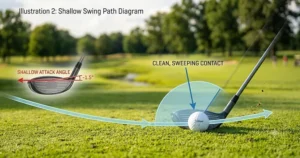
Problem: You’re thinning the ball. This is almost always a ball-position issue rather than a swing-speed issue. Move the ball slightly back of where you’d play it off a tee, and grip down half an inch for better control — both small fixes recommended by PGA instructors for this exact shot, and both supported by the forgiving sole designs of clubs like the JPX ONE.
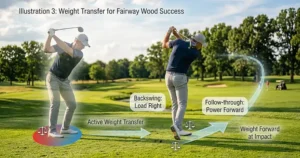
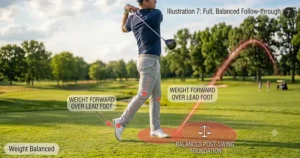
Problem: You’re chunking it fat. This usually means your weight is hanging back on your trail foot at impact instead of transferring forward. A club with a wider, lower sole — like the G440 Max — helps mask this miss by gliding through the turf rather than digging in.
Problem: You can’t get it airborne. If your ball flight stays low no matter what you do, you likely need more loft, not more swing effort. Bumping an adjustable hosel up a degree or two (available on the Qi4D Max, OPTM X, and Quantum Max) is a faster fix than trying to “scoop” the ball into the air.
Problem: Your shots leak right or slice. A draw-biased design like the OPTM X or Hot Launch Max D actively corrects an open face at impact, which is more reliable than trying to fix it through technique alone.

Practical Setup & Practice Guide for Off-the-Deck Confidence
Start with ball position. Play the ball roughly one ball-width back from where you’d tee up a driver, with your hands positioned just ahead of the clubhead. This single change does more to fix thin and fat strikes than almost any swing thought.
Choke down slightly. Gripping down half an inch to an inch on the handle sacrifices a small amount of distance but meaningfully improves your control on tight lies — most golfers find the trade worth it instantly.
Practice the “brush” drill. On the range, set up over a ball with no tee and focus on lightly brushing the grass just after impact, not before it. A small, shallow divot after the ball is the sign of a properly struck off-the-deck shot. Tour player drills can help too — Henrik Stenson has shared a simple range drill where you hit a few drivers off the deck first to build trust before switching back to your 3-wood.
Avoid swinging harder than your driver swing. One of the most common mistakes is trying to muscle extra distance out of a 3-wood from the fairway. Smooth tempo and solid contact will out-perform a forced, aggressive swing nearly every time.
Re-check your loft setting seasonally. If you’re using an adjustable-hosel model like the G440 Max or Qi4D Max, revisit your loft setting once or twice a season as your swing speed and tempo naturally shift — a 30-second adjustment that keeps your launch dialed in.
How to Choose a 3-Wood for Off-the-Deck Shots
Picking the right 3-wood for off-the-deck play comes down to five practical factors:
- Face height. A shallower face sits lower and is easier to “pinch” off the turf, while a taller face suits players who hit down steeply or use the club mainly off the tee.
- Center of gravity (CG) location. A lower, more forward CG (like Titleist’s GT2) launches the ball higher from tight lies without needing extra loft.
- Sole design. Look for a low-profile sole design with some camber or bevel that optimizes fairway contact instead of catching and twisting the face.
- Adjustability. An adjustable hosel lets you add loft for easier launch or reduce it for a more penetrating trajectory as your game evolves.
- Your dominant miss. A slice calls for a draw-biased design; a low, thin strike calls for maximum forgiveness; a fat strike calls for a wider, gliding sole.
Match these five factors to your specific swing tendencies, and the right club from this list should become obvious fairly quickly.
Common Mistakes When Buying a 3-Wood for Off-the-Deck Play
The biggest mistake golfers make is buying the same fairway wood their favorite tour pro plays, without considering that low-spin, tour-level woods are built for fast, consistent swing speeds — not for golfers still building confidence off the turf.
A second common error is ignoring loft entirely. Many amateurs play a 13.5° or 15° 3-wood because “that’s what a 3-wood is,” when a 16.5° or 18° option would launch far more reliably off tight lies, with minimal real distance lost.
Third, golfers often skip a proper fitting and assume any 3-wood will perform the same off the deck as it does off a tee — it won’t. Sole interaction with turf varies dramatically between models, which is exactly why dedicated off-the-deck performers like the JPX ONE exist.
Finally, many buyers fixate on driver-like distance numbers in reviews and overlook forgiveness data — yet for most golfers, consistency from the fairway matters far more than a few extra yards of carry.
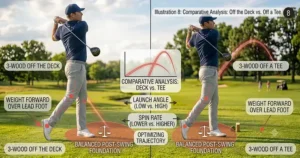
3-Wood vs Hybrid: Which Wins Off The Deck?
| Factor | 3-Wood | Hybrid |
|---|---|---|
| Distance Potential | Higher | Moderate |
| Ease From Tight Lies | Moderate–High (model dependent) | Generally Higher |
| Ease From Rough | Lower | Higher |
| Shot-Shaping Ability | Higher | Moderate |
| Best For | Long par 5s, tee shots on tight holes | Tough lies, long par 3s, rough |
The table above explains why most golfers carry both clubs rather than choosing one outright. A well-fit 3-wood like the GT2 or JPX ONE will out-distance a hybrid by a meaningful margin and gives more shot-shaping control, but it demands a cleaner lie and a slightly bigger swing to do it well. A hybrid, by contrast, sacrifices some distance for a club that’s nearly impossible to mishit badly, even from rough or a downhill lie. If you’re choosing just one club for off-the-deck shots specifically, lean toward a forgiving 3-wood when your lies are generally clean fairway grass, and lean toward a hybrid when your course features tighter, scruffier turf or you’re still building trust in your long game.
What to Expect: Real-World Performance Off The Deck
On paper, every 3-wood promises distance and forgiveness. On the course, off-the-deck performance comes down to three things you’ll actually feel: launch consistency, sound, and miss-tolerance.
Launch consistency means the ball gets airborne at roughly the same height shot after shot, even when contact isn’t perfect — this is where shallow-face, low-CG designs like the G440 Max and Qi4D Max separate themselves from older or lower-priced models.
Sound and feel matter more than most golfers expect. A dull, lifeless strike off the turf can quietly erode your confidence over a round, while a sharp, solid sound (something Mizuno and Titleist both prioritize) reinforces good contact and a penetrating, controlled trajectory.
Miss-tolerance is the real test. Expect even the most forgiving 3-woods on this list to still punish a genuinely poor strike — no club fully eliminates a fat or thin shot — but the gap between a “good” and “great” 3-wood is how forgiving that punishment actually is.
Features That Actually Matter (And Those That Don’t)
Matters: Low, forward CG placement; shallow face height for easier turf interaction; sole curvature that resists digging in; and an adjustable hosel that lets you fine-tune loft as your swing evolves.
Matters less than you’d think: Head size beyond a certain point (oversized “mini-driver” style 3-woods don’t necessarily launch better off the turf than a well-designed standard head); cosmetic alignment aids, which help some golfers but are purely visual for others; and marginal carbon-fiber weight savings, which matter far more in drivers than in fairway woods.
Doesn’t matter at all for off-the-deck performance: Tour player usage. A club being in a famous player’s bag says far more about their swing speed and consistency than it does about how forgiving the club will be for your specific off-the-deck miss.
Long-Term Cost & Fitting: Getting the Most From Your Investment
A 3-wood is a long-term investment, and a few habits keep it performing well for years.
First, get the loft and lie checked against your current swing roughly once a season — swing speed and tempo naturally shift over time, and a club fit for last year’s swing may not be ideally configured today. This is one area where adjustable-hosel models like the OPTM X genuinely earn their slightly higher price tag, since you can recalibrate without buying a new head.
Second, check your grip annually; a worn grip costs you control on exactly the kind of off-center, off-the-deck strikes this guide is focused on fixing.
Third, resist the urge to upgrade every single release cycle. Fairway wood technology moves incrementally year to year — a well-fit 2024 or 2025 model will still perform admirably, and buying one used or through a discounted marketplace listing can be a smart way to get premium performance without paying full premium pricing.
Safety & Rules: Is Your 3-Wood Tournament Legal?
If you play in sanctioned competitions, club conformance matters. The USGA and The R&A jointly publish the Equipment Rules, which govern everything from clubhead size to groove specifications, and every club discussed in this guide is built to conform with current Rules of Golf.
A few safety and rules basics are worth knowing, too. You’re limited to 14 clubs total in your bag during a round, so adding a new 3-wood usually means removing something else — most golfers swap out a long iron or a redundant hybrid. You also can’t deliberately alter a club’s adjustable loft or lie setting mid-round to chase better performance once play has started; settings must be locked in before you tee off.
From a physical safety standpoint, always check your grip for wear and make sure your headcover is on before transporting clubs, since a loose 3-wood head striking other equipment (or a cart) is one of the more common causes of accidental club damage. For a full breakdown of the Rules of Golf governing equipment, the PGA’s official rules guide is a great resource.
FAQ: Your 3 Wood Off The Deck Questions Answered
❓ What loft is best for a 3 wood off the deck shots?
❓ Is a 3 wood easier to hit off the deck than a driver?
❓ Can a fairway wood replace a hybrid for off-the-deck shots?
❓ How much does a good off-the-deck 3 wood cost?
❓ What's the most common mistake hitting 3 wood off the deck shots?
Conclusion
Hitting a confident, consistent 3-wood off the deck isn’t about swinging harder — it’s about matching a club’s forgiveness, CG placement, and sole design to your specific miss. Whether that means the all-around forgiveness of the TaylorMade Qi4D Max, the tight-lie precision of the Titleist GT2, or the budget-friendly confidence of the Tour Edge Hot Launch Max D, every golfer on this list has a fit somewhere among these seven clubs.
Use this guide as your 3 wood fairway finder for 2026: identify your most common miss (thin, fat, or a slice), match it to the relevant club and fix above, and don’t be afraid to spend a season with an adjustable-hosel model to dial in your ideal loft and lie. Equipment alone won’t transform your long game overnight, but the right 3-wood removes one major obstacle between you and more consistent par-5 birdie looks.
If you’ve been laying up short of every reachable par 5 simply because you don’t trust your 3-wood off the turf, now’s a good time to change that.
✨ Don’t Miss These Exclusive Deals!
🔍 Take your 3-wood game to the next level with these carefully selected fairway woods. Click on any highlighted club to check current pricing and availability. These tools will help you create the consistent off-the-deck shots your scorecard will love!
Recommended for You
- 7 Best Long Drive Competition Drivers for Insane Distance (2026)
- Maximum Distance Driver Technology: 7 Proven Picks for 2026
- Senior Driver Ultra Lightweight: 7 Best Picks for 2026
Disclaimer: This article contains affiliate links. As an Amazon Associate, I earn from qualifying purchases. If you purchase products through these links, we may earn a small commission at no additional cost to you.
✨ Found this helpful? Share it with your friends! 💬🤗
