

In This Article
If you’ve ever stood on the tee box wondering how some guys at the driving range hit it 40 yards past everyone else, the answer usually isn’t talent — it’s the club in their hands. A genuine long drive driver competition setup is built around a completely different rulebook than the driver in your current bag, and once you understand that rulebook, shopping for one gets a lot less confusing.
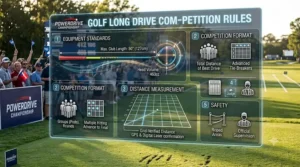
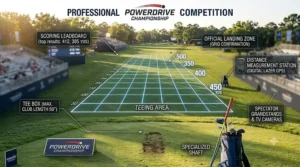
I’ve spent a lot of time poking around the non-conforming and distance-driver corner of the golf market, and what most buyers overlook is that “long drive” actually means two very different things. There’s the casual backyard version — guys trying to outdrive their buddies with an oversized, “illegal” head — and there’s the real, sanctioned sport, where pros like Kyle Berkshire have driven a golf ball over 579 yards using equipment that’s surprisingly close to what’s sitting on a pro shop wall. Both worlds shop on Amazon, and both deserve very different advice.
Below, I’ve pulled together seven real, currently available drivers that cover both ends of that spectrum: dirt-cheap novelty bombers, a couple of solid mid-range options, and one serious club built for the actual grid. I’ll also walk through how to pick the right one for your swing, where these clubs are legal to use, and the mistakes that get first-time buyers in trouble.
What Is a “Long Drive Competition” Driver, Exactly?
A long drive competition driver is any club built specifically to maximize carry distance and ball speed off the tee, rather than balance distance against control. Some are USGA-conforming clubs tuned with very low loft and stiff, long shafts for the actual sport of long drive; others are deliberately non-conforming, oversized “novelty” drivers sold for recreational use only.
Quick Comparison Table
| Driver | Head Size | COR/Conformity | Loft Options | Best For | Price Range |
|---|---|---|---|---|---|
| Power Play Juggernaut Hi-COR Titanium | 515cc | Non-conforming | 10.5° (Draw/offset avail.) | Slicers wanting forgiveness + distance | $130–$180 |
| Intech Behemoth | 520cc | Non-conforming | 10.5°–12.5° | Budget-first buyers, seniors | $70–$90 |
| Pinemeadow PGX 500cc | 500cc | Non-conforming | 10.5°–12° | First-time “illegal driver” buyers | $60–$100 |
| Speed System Golf Titanium | 460cc | USGA-conforming | 10°, 11.5°, 12.5° | Slower swing speeds wanting legal distance | $90–$150 |
| MoneyClub Senior Big & Tall | 520cc | Non-conforming | 12.5° | Tall/senior golfers needing easy launch | $70–$120 |
| Sooolong / White Ghost 750cc | 750cc | Non-conforming | 10.5° | Novelty, max sweet spot, casual fun rounds | $150–$250 range |
| Krank Golf Formula FIRE (LD/Tour) | 400–460cc | USGA-conforming | 4°–10.5° depending on model | Real long drive competitors, serious distance chasers | $350–$700 range |
Looking at this lineup, there’s a clear split worth paying attention to: six of these seven drivers are deliberately non-conforming and meant for casual rounds, while the Krank Golf line is built to actually compete on the sanctioned long drive grid. If your goal is bragging rights at a Saturday scramble, the cheaper non-conforming heads will get the job done; if you want a club that could legitimately enter you in a local long drive qualifier, Krank is the only one on this list that fits the bill.
💬 Just one click — help others make better buying decisions too!😊
✨ Don’t Miss These Exclusive Deals!
🔍 Take your tee shots to the next level with these carefully selected long-distance drivers. Click on any highlighted item to check current pricing and availability. These clubs will help you create the kind of drives your foursome won’t stop talking about!
Top 7 Long Drive Competition Drivers: Expert Analysis
1. Power Play Juggernaut Non-Conforming Hi-COR Titanium Driver
The Juggernaut has been a recognizable name in the non-conforming space for over a decade, and it’s still one of the most consistently reviewed options in this category. The Juggernaut‘s 515cc titanium head is roughly 12% larger than a standard 460cc driver, and that extra volume isn’t just for show — a bigger head pushes the moment of inertia outward, which is the real-world reason mis-hits don’t twist off line as badly as they would on a smaller, conforming head.
What most buyers overlook about this club is the offset “Draw” version. If you’re someone who slices everything right, the offset hosel does more for your scorecard than the extra distance does, since it helps square the face at impact before the ball ever leaves the tee. Owners on Amazon consistently mention picking up noticeable yardage, though a handful note the matte finish chips with heavy use.
Best for: Mid-handicap golfers who slice and want forgiveness alongside distance.
✅ Pros: Large forgiving head, offset version fixes slices, lightweight graphite shaft
❌ Cons: Finish wears over time, not legal for any sanctioned round
Price range: around $130–$180. For a non-conforming club with a real titanium face, that’s a fair value verdict compared to cheaper aluminum alternatives.
2. Intech Golf Illegal Non-Conforming Behemoth 520cc Driver
The Intech Behemoth is the budget entry point into this whole category, and it earns that spot honestly. At 520cc, it’s the largest head on this list besides the novelty 750cc options, built from 7075 aluminum rather than titanium — which is exactly why it costs a fraction of the Juggernaut.
In my experience browsing reviews, the trade-off is real but manageable: aluminum flexes less efficiently than titanium at impact, so you won’t get quite the same ball speed boost as the pricier heads, but the sheer size still delivers a forgiving, low center of gravity launch that’s noticeably easier to get airborne than a standard 460cc head. This is the club I’d point a curious first-timer toward before they spend real money finding out if oversized drivers fit their swing at all.
Best for: Budget-conscious buyers and seniors who want easy launch without titanium pricing.
✅ Pros: Very low price, huge forgiving sweet spot, pre-assembled with headcover
❌ Cons: Aluminum face feels and sounds cheaper than titanium options
Price range: around $70–$90 — the clear value pick on this list.
3. Pinemeadow PGX 500cc Illegal/Non-Conforming Driver
Pinemeadow built its reputation on no-frills, accessible golf equipment, and the PGX 500cc carries that same philosophy into the non-conforming space. It sits right between the Intech and Juggernaut in head size, and it’s a sensible choice for golfers who want the “illegal” distance boost but aren’t ready to commit to a 750cc novelty head that’s genuinely hard to control.
The spec sheet won’t tell you this, but the PGX’s graphite shaft tends to run a touch lighter than competing budget drivers, which helps moderate swing speeds generate a little extra clubhead speed without overswinging. Reviewers describe it as the “starter” non-conforming driver — forgiving enough to keep you in play, illegal enough to gain real yards.
Best for: Golfers testing the non-conforming category for the first time.
✅ Pros: Balanced size between forgiveness and control, lightweight shaft, affordable
❌ Cons: Less brand recognition, fewer loft/flex options than bigger names
Price range: around $60–$100.
4. Speed System Golf Titanium Driver
Not every distance driver for maximum yardage has to break the rulebook, and the Speed System Golf Titanium Driver proves it. This one is USGA-conforming, which makes it the only legal-for-tournament-play option on this list besides the Krank. It leans on an ultra-lightweight graphite shaft — reviews put it under 60 grams — paired with an oversized, aerodynamic titanium head designed to cut through the air faster on the downswing.
Here’s the practical insight that matters: lighter shafts amplify swing speed for players who don’t naturally generate much clubhead speed, which is exactly the carry optimization problem most amateur golfers actually have. You’re not getting an illegal spring face here, but you are getting a legitimate swing speed amplification tool that won’t get you disqualified from a club tournament.
Best for: Slower swing speed golfers who want legal distance gains.
✅ Pros: USGA-conforming, ultra-light shaft, multiple loft options
❌ Cons: Smaller distance ceiling than the non-conforming heads on this list
Price range: around $90–$150.
5. MoneyClub Senior Men’s Big & Tall Driver
The MoneyClub Big & Tall fills a genuinely underserved niche: golfers over 6 feet who need more length and loft than a standard-build driver offers. At 520cc with a 12.5° loft, it’s engineered for higher launch angles, which matters more than people realize for taller players whose natural swing plane tends to produce a flatter, lower-launching ball flight.
What stands out here isn’t raw distance — it’s how it’s built around a senior-flex graphite shaft and a cushioned grip clearly meant for comfort over multiple rounds, not a single grip-it-and-rip-it session. If you’ve tried oversized drivers before and found them too stiff or too short, this is the one purpose-built to fix that specific complaint.
Best for: Taller and senior golfers who’ve struggled with standard-length, standard-flex drivers.
✅ Pros: Tailored length and flex for big & tall golfers, high launch angle, comfortable grip
❌ Cons: Non-conforming, niche fit means it’s not ideal for average-height swingers
Price range: around $70–$120.
6. Sooolong / White Ghost 750cc Non-Conforming Driver
If the other six drivers on this list are non-conforming, the Sooolong 750cc is in a category of its own. At 750cc — nearly 65% larger than a legal driver — it has, by a wide margin, the biggest sweet spot of anything you’ll find for sale. The low center of gravity is built to launch the ball higher with less spin, which on paper sounds like exactly what a slower swing speed golfer needs.
The honest take: this is more novelty than serious equipment. The face technically generates explosive ball speed thanks to its oversized profile, but a head this large changes the swing weight and feel dramatically compared to anything you’ve used before, so expect an adjustment period before you’re actually controlling it instead of just swinging at it. It’s the driver people buy to see jaws drop at the range, not the one that quietly shaves shots off a scorecard.
Best for: Golfers who want maximum novelty and sweet spot size for casual, non-competitive rounds.
✅ Pros: Largest sweet spot available, high launch, genuinely fun to hit
❌ Cons: Unconventional feel takes adjustment, far outside any conforming standard
Price range: in the $150–$250 range depending on seller and shaft options.
7. Krank Golf Formula FIRE / LD Driver
This is the one club on this list built for the real sport, not the backyard version of it. Krank Golf‘s Formula FIRE line — including the LD (“long drive”) models — is USGA-conforming, which surprises a lot of shoppers who assume anything marketed toward long drive must be illegal. It isn’t. Sanctioned long drive competitions like World Long Drive actually require conforming balls and equipment within the same 460cc and 0.830 COR limits as regular tour golf; the difference is in setup, not legality.
What most buyers overlook is exactly that distinction. Krank’s deep-cupped, forged beta-titanium face is engineered around maximizing the legal spring-face effect right up to the conforming limit, paired with a lower-lofted head and a longer, stiffer shaft built for maximum legal distance rather than control. This is the genuine swing speed amplification club for someone who’s already fast and wants every legal yard the rules allow — not a beginner-forgiveness driver. Owners with high swing speeds report real carry optimization gains; slower swing speed golfers, by contrast, often report the thinner-faced versions actually underperform a standard driver, since the face is tuned for a specific speed range.
Best for: Serious distance chasers and golfers with swing speeds above 100 mph who want a real shot at long drive competition.
✅ Pros: USGA-conforming and tournament-legal, purpose-built for grid competition, three face thicknesses matched to swing speed
❌ Cons: Premium price, performs poorly if matched to the wrong swing-speed face thickness
Price range: roughly $350–$700 depending on configuration and seller — the clear premium pick on this list.
✨ Don’t Miss These Exclusive Deals!
Practical Usage Guide: Setting Up Your New Distance Driver
Buying the right head is only half the job — setup determines whether you actually see the yardage gain.
- Get fitted for flex, not just loft. A non-conforming head with the wrong shaft flex will cost you more accuracy than the COR boost gains you in distance.
- Re-grip before your first round, not after. Many of these budget drivers ship with serviceable but generic grips; swapping in a grip that matches your hand size and preferred tackiness pays off immediately.
- Break it in at the range first. Especially with oversized heads like the Sooolong 750cc, the swing weight feels different enough that your first few buckets of balls should be about timing, not distance.
- Check your headcover fit periodically. Oversized non-conforming heads often outgrow generic aftermarket headcovers — confirm the included cover actually seats fully before tossing it in a bag with irons that can scuff the face.
- Avoid the rookie mistake of switching loft mid-round. If your driver has adjustable settings, lock in your number during practice, not on the course, where ball-flight feedback is harder to read.
Real-World Scenarios: Which Driver Fits Which Golfer
The weekend slicer who just wants to find more fairways: the offset Juggernaut Draw is built specifically for this problem — the combination of size and offset hosel addresses both distance and direction at once.
The budget-first golfer trying non-conforming clubs for the first time: start with the Intech Behemoth or Pinemeadow PGX. Both let you test whether an oversized head suits your swing without a $300+ commitment.
The taller or senior golfer who’s been let down by standard-length drivers: the MoneyClub Big & Tall solves a fit problem that no amount of swing changes will fix on its own.
The competitive golfer chasing a real long drive title: skip the novelty heads entirely and go straight to a conforming Krank Golf model matched to your actual swing speed — anything else won’t be legal at a sanctioned event anyway.
How to Choose a Long Drive Competition Driver
- Decide if you need conforming or non-conforming. If you’ll ever play a USGA-sanctioned round, club tournament, or handicap-tracked round, a non-conforming head disqualifies that round entirely.
- Match the head to your swing speed, not your ego. Faster swing speeds need thinner, stiffer faces; slower swings need more forgiveness and a softer flex.
- Prioritize fit over hype. Length, lie angle, and flex affect your scores more than COR numbers ever will.
- Set a realistic budget tier. Budget aluminum heads (under $100), mid-range titanium (around $130–$180), and premium competition-grade builds ($350+) each serve a different goal.
- Read recent reviews for durability, not just distance claims. Non-conforming faces under extreme stress can fatigue faster than conforming designs built to a stricter engineering tolerance.
- Confirm headcover and warranty details. Smaller manufacturers vary widely here, and it’s an easy detail to overlook at checkout.
- Buy once, fit once. Returning and re-buying a different loft or flex costs more in the long run than getting properly fitted up front.
Conforming vs. Non-Conforming: What the COR Numbers Actually Mean
| Factor | USGA-Conforming Drivers | Non-Conforming Drivers |
|---|---|---|
| Max head size | 460cc | Often 500cc–750cc |
| COR/spring effect limit | Capped at 0.830 | Frequently 0.860+ |
| Legal for sanctioned play | Yes | No |
| Typical buyer | Tournament golfers, real long drive competitors | Casual rounds, friendly competitions |
| Typical price tier | $90–$700+ | $60–$250 |
The numbers above explain the appeal of non-conforming clubs pretty clearly: a higher COR transfers more energy to the ball on contact, which is where a lot of that extra distance comes from before swing speed even enters the equation. But that gain only matters if you’re not playing a round where it counts against your handicap or disqualifies your score — which is the trade-off every buyer in this category needs to accept going in.
Common Mistakes When Buying a Distance Driver
- Assuming bigger always means longer. A 750cc head launches higher and forgives more, but a properly fitted 460cc conforming driver in the right hands often outdrives an ill-fitted oversized head.
- Ignoring shaft flex entirely. Buyers fixate on COR and head size while a mismatched flex quietly costs them both distance and accuracy.
- Forgetting where the club is actually legal to use. More than a few buyers learn the hard way, mid-round, that their new driver got their scorecard tossed out.
- Skipping reviews on durability. Spring-faced heads under repeated stress can develop dents or face fatigue faster than a standard conforming driver — check recent reviews, not just star ratings.
- Buying a Tour-level Krank face thickness for a slow swing speed. As Krank’s own fitting guidance makes clear, the thinner faces actually underperform when swung too slowly, since the face can’t recover fast enough between impacts.
Features That Actually Matter (And Those That Don’t)
Actually matters: shaft flex matched to swing speed, head volume matched to your need for forgiveness, and loft matched to your typical ball flight.
Doesn’t matter nearly as much as marketing suggests: flashy paint jobs, head shape “aerodynamics” claims on budget aluminum heads, and oversized grip branding that has nothing to do with how the club actually performs at impact.
Genuinely worth paying for: a titanium face over aluminum, since titanium flexes more efficiently and holds up to repeated high-speed impact far better over time.
Long-Term Cost & Maintenance
Non-conforming, high-COR faces are under more structural stress than a standard driver face, simply because they’re engineered to flex more on every single strike. Over time, that can mean earlier face fatigue, especially on the cheaper aluminum heads. A $75 driver that needs replacing in a season isn’t actually cheaper than a $150 titanium head that lasts for several. Factor that into your real cost-per-round before assuming the lowest sticker price is the best value.
Safety, Rules & Where These Drivers Are (and Aren’t) Legal
This is the section most product listings skip entirely, and it matters. Per the USGA’s own equipment rules, a clubhead’s spring effect can’t exceed the limit set in their official testing protocol — any driver that does is simply not permitted in a sanctioned round, a posted handicap score, or most club tournaments. None of that makes owning or playing a non-conforming driver illegal in the legal sense; it just means the scores don’t count toward anything official.
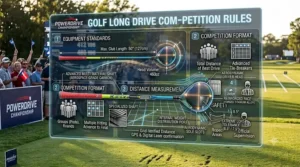
It’s also worth clearing up a common misconception: actual long drive competitions, including the World Long Drive Championship, require conforming golf balls and conforming clubs. The 750cc novelty heads and “illegal” titanium drivers in this guide are built for recreational fun, not for entering an actual sanctioned long drive event — that takes a conforming setup like the Krank Golf models above, paired with serious swing speed.
FAQ
❓ Are non-conforming drivers actually illegal to own?
❓ How much extra distance can a long drive competition driver add?
❓ Can I use a non-conforming driver in a real long drive competition?
❓ What swing speed do I need for a Krank Formula FIRE driver?
❓ Is titanium or aluminum better for a distance driver?
Conclusion
Shopping for a long drive driver competition club really comes down to one honest question: are you chasing backyard bragging rights, or are you chasing an actual title? If it’s the former, a non-conforming head like the Juggernaut or Intech Behemoth will get you noticeably more distance for a reasonable price, no fitting required. If it’s the latter, skip the novelty heads entirely and go straight to a conforming, swing-speed-matched build like the Krank Golf Formula FIRE line — it’s the only club on this list that could legitimately put you on a real long drive grid.
Whichever direction you go, match the club to your actual swing speed and intended use before you chase the biggest number on the spec sheet. That’s the difference between a driver that sits in your garage after two rounds and one that earns a permanent spot in your bag.
✨ Don’t Miss These Exclusive Deals!
🔍 Take your long drive game to the next level with these carefully selected distance drivers. Click on any highlighted item to check current pricing and availability. These clubs will help you create the kind of drives your friends won’t stop talking about!
Recommended for You
- Maximum Distance Driver Technology: 7 Proven Picks for 2026
- Senior Driver Ultra Lightweight: 7 Best Picks for 2026
- Beginner Driver Golf Confidence Builder: 7 Picks That Work in 2026
Disclaimer: This article contains affiliate links. As an Amazon Associate, I earn from qualifying purchases. If you purchase products through these links, we may earn a small commission at no additional cost to you.
✨ Found this helpful? Share it with your friends! 💬🤗
