
In This Article
Let’s be honest about what a driver actually is: it’s the longest, fastest, least forgiving stick in your bag, and somehow it’s also the first one anybody hands you when you walk up to the range. That’s a little like learning to parallel park in a school bus. A good first driver doesn’t just add yards — it gives you a swing you can actually repeat, which is the entire game when you’re starting out.
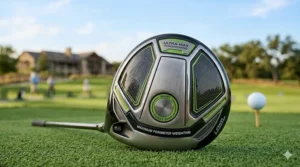
If you’ve been hacking away with a hand-me-down driver from your uncle’s garage, you already know the symptoms: the ball starts left, dives right, and somehow ends up in a tree that wasn’t even in play. That’s not a swing problem so much as an equipment problem. Modern beginner drivers are built with bigger faces, lower and deeper centers of gravity, and built-in draw bias specifically to bail you out of that exact slice. You don’t need a tour-pro swing to get tour-pro forgiveness anymore — you just need the right head on the end of your shaft.
This guide breaks down seven real drivers currently sold on Amazon, ranging from a genuinely budget-friendly option under $200 to a couple of premium picks if you’re ready to invest. No fictional models, no recycled spec sheets — just straightforward advice on what each one is actually good for, and who should walk right past it. (For more on how the modern driver — technically still classified as a wood despite having nothing wooden left in it — evolved into today’s forgiveness-obsessed designs, Golf Monthly’s testers break it down well.)
Quick Comparison: Which First Driver Fits You?
| Driver | Best For | Price Range | Forgiveness | Slice Help |
|---|---|---|---|---|
| Wilson Launch Pad 2 | True first-timers on a tight budget | $150–$250 | High | Built-in draw bias |
| Tour Edge Hot Launch E523 | Slow swing speeds, max forgiveness | $180–$230 | Very High | Offset + draw bias |
| Callaway Big Bertha B21 | Beginners who slice badly | $200–$300 | High | Strong draw bias |
| Cleveland Launcher XL2 | Lightweight swingers, faster tempo | $280–$350 | High | Moderate |
| TaylorMade SIM2 Max | Wide range of swing types | $250–$350 | High | Adjustable |
| Cobra DS-Adapt MAX-K | Beginners who want room to grow | $450–$550 | Very High (10K MOI) | Adjustable hosel |
| PING G440 Max | Buy-once, never-upgrade types | $550–$650 | Very High | Adjustable back weight |
Look at this table long enough and a pattern jumps out: the cheapest and most expensive drivers on this list are chasing the same goal — forgiveness — just with different budgets attached to the engineering. The Wilson and Tour Edge get there with simple, smart weighting; the PING and Cobra get there with adjustable hosels and tournament-grade materials. If you slice badly and don’t want to spend much, start with the Big Bertha or the E523. If you’ve got room in the budget and want a club that’ll still be relevant in five years, the G440 Max or DS-Adapt MAX-K won’t make you outgrow them anytime soon.
✨ Just one click — help others make better buying decisions too! 😊
✨ Don’t Miss These Exclusive Deals!
🔍 Take your first driver search to the next level — click on any highlighted club above to check current pricing and availability on Amazon. The right one could be the difference between dreading the first tee and actually looking forward to it.
Top 7 First Drivers for Beginners: Expert Breakdown
1. Wilson Launch Pad 2 Driver
The Wilson Launch Pad 2 is built around one idea: make the easiest driver Wilson has ever produced, and price it like an actual beginner could afford it. The face geometry was shaped using AI-driven simulations rather than guesswork, and the result is a strike zone that’s noticeably bigger than its predecessor — which matters enormously when you’re still figuring out where the center of the clubface even is.
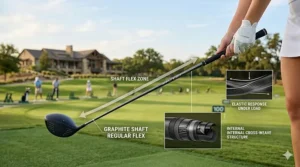
What the spec sheet doesn’t quite capture is how light this thing feels in your hands. Pair an already-light clubhead with an ultra-light EvenFlow shaft, and you get a swing that doesn’t require muscling the ball into the air — which is exactly the instinct beginners need to unlearn. The offset hosel and built-in heel weighting do real work fighting your natural slice before you’ve even started your downswing.
Reviewers and retailers consistently flag this as one of the most forgiving options at its price point, with some calling it a genuine steal when it’s discounted.
Pros: remarkably light, real draw bias, frequently discounted.
Cons: lower-end shaft options for faster swingers, limited adjustability. At $150–$250, depending on flex and retailer, the Launch Pad 2 earns its spot as the safest first purchase on this list — there’s very little risk in starting here.
2. Tour Edge Hot Launch E523 Driver
Tour Edge built a reputation on giving golfers tour-level engineering without the tour-level price tag, and the Hot Launch E523 is the clearest proof of that. The Houdini Sole pulls weight toward the back of the clubhead and lowers the center of gravity, which in plain English means the ball pops up into the air with very little effort on your part — exactly what a slower or still-developing swing needs.
The offset face design and heel-weighted construction square the clubface up at impact more often than a standard driver would, correcting for the open-face strikes that cause most beginner slices. Tour Edge also backs nearly everything it sells with a lifetime warranty, which is a quietly important detail for a first-time buyer who might be a little rough on equipment while learning.
What most buyers overlook is that this 460cc titanium head delivers genuinely high MOI — the stability metric that determines how much a mishit actually costs you in distance and direction — at a fraction of what big-name brands charge for similar numbers. Pros: very high forgiveness, lifetime warranty, light stock shaft.
Cons: less brand recognition, fewer loft/shaft combinations than majors. Priced around $180–$230, it’s arguably the best forgiveness-per-dollar driver on this entire list.
3. Callaway Big Bertha B21 Driver
The Big Bertha name has been doing slice-fighting duty since the 1990s, and the B21 version leans hard into that legacy with internal draw-bias weighting specifically engineered to straighten out your worst tee shots. Callaway’s A.I.-designed Flash Face spreads the high-ball-speed zone across more of the clubface, so the kind of off-center contact that used to cost you 30 yards now costs you maybe 10.
The Jailbreak bars connecting the crown and sole are the unsung heroes here — they stiffen the body of the club so more energy transfers into ball speed instead of getting absorbed by the clubhead flexing on impact. For a beginner who tends to hit the ball low on the face or out toward the toe, that stiffness is the difference between a weak dribbler and a shot that actually carries.
Now a few seasons old, the B21 sits at a sweet spot on Amazon: full Callaway engineering at a price that’s dropped well below its launch cost.
Pros: strong draw bias, proven Jailbreak tech, frequently available at a discount.
Cons: less cutting-edge than Callaway’s current flagship, limited to a handful of loft options. At $200–$300, this is the pick if your single biggest problem off the tee is a slice you can’t shake.
4. Cleveland Launcher XL2 Driver
Cleveland built its reputation on wedges and short irons, but the Launcher XL2 shows the same forgiveness-first philosophy applied to the big stick. The driver is engineered to be exceptionally light in the head and shaft combined, which rewards a smoother, faster tempo rather than a forced, muscled-up swing — a swing style that’s actually more natural for most beginners than they realize.
That lightness pays off most clearly for golfers who struggle to generate clubhead speed on their own. Less mass to accelerate means more of your effort converts directly into ball speed, instead of getting lost fighting the club’s own weight through the swing. It’s the golf equivalent of switching from a heavy door to one on smooth hinges — same push, more motion.
It consistently shows up as an Amazon’s Choice pick in the budget-to-mid-range driver category, which tracks with its reputation as an easy, no-fuss option for players who just want results without a steep learning curve.
Pros: very light overall build, easy to swing, strong forgiveness.
Cons: less adjustability than premium options, draw bias is more subtle than dedicated slice-fighters. Expect to pay $280–$350.
5. TaylorMade SIM2 Max Driver
The SIM2 Max was TaylorMade’s flagship forgiveness driver a few seasons back, and “flagship a few seasons back” is exactly the sweet spot smart beginners should be hunting on Amazon. Its Forged Ring Construction unites the crown, sole, and back-cup face into a single rigid structure, which keeps the clubhead stable instead of twisting open or closed on off-center hits — the single biggest cause of beginner mishits going sideways.
The Inertia Generator at the back of the head adds real moment of inertia, meaning a strike a half-inch off the sweet spot still produces a usable shot rather than a disaster. TaylorMade’s Twist Face technology also pre-curves the clubface to correct for the specific spin patterns that occur on heel and toe misses, which is a fancier way of saying it’s quietly fixing your mistakes before you’ve finished noticing you made one.
Equipment reviewers have repeatedly pointed to it as one of the best value drivers on the market specifically because it now sells at a steep discount to its original price while still outperforming many current budget-tier models.
Pros: wide forgiveness window, proven twist-face tech, strong resale recognition.
Cons: older shaft tech compared to TaylorMade’s newest releases. Pricing typically runs $250–$350.
6. Cobra DS-Adapt MAX-K Driver
If you’re the type of beginner who’s already plotting your second and third years in the game, the Cobra DS-Adapt MAX-K is built for you. It hits a combined 10,000 MOI — a genuine industry benchmark for forgiveness — through aggressive low-and-back weighting, which keeps the clubface stable even on the kind of strikes that would send a lesser driver’s distance numbers tumbling.
What sets this one apart from the rest of the list is FutureFit33, Cobra’s adjustable hosel system offering 33 separate loft-and-lie combinations. That matters more than it sounds: as your swing speed and angle of attack change over your first year or two, you can re-tune the same clubhead instead of buying a whole new driver. It’s effectively buying yourself a fitting session’s worth of adjustability built into the club itself.
Reviewers have praised its sound, feel, and top-tier forgiveness scores — MyGolfSpy’s testing specifically noted how consistent the center-face contact felt across repeated swings.
Pros: elite forgiveness, extensive adjustability, premium feel.
Cons: priced well above true budget options, adjustability can be more than a true beginner needs right away. Expect $450–$550.
7. PING G440 Max Driver
The PING G440 Max is the “buy it once” option on this list. PING built the deepest center of gravity in any driver they’ve made to date into this head, paired with a thinner, hotter face and a CarbonFly Wrap crown that shaves weight from the top of the club and reallocates it lower, where it does the most good for stability and forgiveness.
The three-position adjustable back weight lets you bias the club toward a draw if your slice is still showing up under pressure, or move it neutral once you’ve ironed that out — a feature that effectively grows with your game instead of needing to be replaced by it. PING’s Trajectory Tuning hosel adds another layer of fine control over loft and lie without requiring a full refitting.
It currently holds Best Seller status in Amazon’s driver category, and real buyer feedback consistently cites added distance and easier fairway-finding compared to whatever they were swinging before — exactly the kind of confidence boost a first real driver should deliver.
Pros: best-in-class forgiveness, adjustable weighting, excellent resale value down the line.
Cons: the highest price tag on this list by a clear margin. At $550–$650, it’s an investment — but one that should outlast your first three years of improvement.
Setting Up Your New Driver in the First 30 Days
Buying the right driver is half the battle. What you do with it in the first month determines whether it actually fixes your slice or just becomes an expensive paperweight in your bag.
Get the loft right before anything else. Most of these drivers ship at 10.5° or higher for a reason — beginners almost universally benefit from more loft than they think they need, because higher launch with lower spin is what actually produces carry distance at slower swing speeds. If your driver has an adjustable hosel (the PING and Cobra on this list both do), start a half-degree higher than you’d guess.
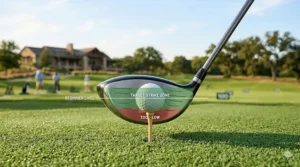
Resist the urge to tee it low to “control” the shot. Counterintuitively, teeing the ball higher — so roughly half the ball sits above the top edge of the clubface at address — encourages the upward strike these drivers are engineered around. Teeing low with a modern, low-CG driver fights the club’s own design.
Track your misses, not just your good shots, for the first ten rounds. Beginners tend to remember the one great drive and forget the four that went sideways. Knowing whether you’re consistently missing left or right tells you whether your draw-bias driver is doing its job or whether the issue is mechanical and needs a lesson, not new equipment.
Which Driver Fits Your Game? Three Real Profiles
The weekend warrior with a slow swing speed. If you’re playing once or twice a month, picking up the game later in life, or just know your swing speed tops out under 85 mph, the Tour Edge Hot Launch E523 or Wilson Launch Pad 2 are built specifically for you — both prioritize easy launch over raw speed, which is exactly what your swing needs.
The slicer who’s about to give up on driving entirely. If your slice is the single thing standing between you and enjoying this game, go straight to the Callaway Big Bertha B21. Its draw bias is the most aggressive, purpose-built correction on this list, and it’s priced to make that fix affordable.
The committed beginner planning to stick with golf long-term. If you’ve already decided this isn’t a phase, the Cobra DS-Adapt MAX-K or PING G440 Max make more financial sense than they first appear to. Their adjustability means you won’t outgrow them in a year, which often makes them cheaper in the long run than buying two budget drivers back to back.
✨ Don’t Miss These Exclusive Deals!
🔍 Whichever profile sounds like you, take a closer look at the matching pick above — check current pricing on Amazon before you commit, since availability and prices shift regularly.
How to Choose Your First Driver (7 Questions Before You Buy)
- What’s your typical miss — left or right? A slice (curving right for right-handers) calls for draw-bias models like the Big Bertha or Launch Pad 2. A hook is rarer for true beginners but calls for the opposite weighting.
- What’s your realistic budget, including the shaft? Decide this before you start browsing, or premium marketing will talk you into spending double what you need to right now.
- Do you know your swing speed? Most beginners don’t, and that’s fine — assume under 90 mph until a launch monitor tells you otherwise, and lean toward higher lofts.
- Is the loft adjustable? Adjustability buys you room to fine-tune as your swing changes, without buying a second driver.
- How forgiving is the face, realistically? Bigger 460cc heads with high MOI ratings cost you almost nothing in mishits — which matters far more than raw distance potential right now.
- Are you buying new or open-box/previous-gen? Drivers like the SIM2 Max prove that a flagship model from a couple of seasons back can outperform a brand-new budget club at the same price.
- What does the warranty actually cover? Tour Edge’s lifetime warranty, for example, is a meaningful safety net for a beginner who might be harder on equipment while still learning.
One more thing worth knowing: every driver on this list is a standard, legal golf club — but if you ever play in a club championship or other sanctioned event, double-check that your specific head and loft combination appears on the USGA’s List of Conforming Driver Heads. It’s rarely an issue with major-brand drivers like these, but it’s a five-minute check that saves you an awkward conversation on the first tee.
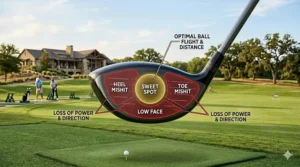
The Slice-Correction Myth: What Draw Bias Actually Does
Here’s something most first-time buyers get backwards: draw-bias technology doesn’t fix your swing — it shifts the starting conditions of the ball flight so that a swing path that used to produce a slice now produces something closer to straight. That’s a real, measurable benefit, but it’s not magic, and it’s not a permanent substitute for actually correcting your swing path over time.
What it does buy you is something more valuable for a beginner than raw correction: confidence. Standing over the ball knowing your equipment is working with you, not against you, changes how freely you swing — and a freer swing produces better contact even before any mechanical fix kicks in.
Driver vs. 3-Wood: Which Should Beginners Carry First
It’s a fair question, and the honest answer is: carry both, but lean on the driver off the tee on any hole wider than a par-3 lane. Modern beginner drivers, with their high-MOI heads and built-in draw bias, are genuinely easier to hit straight than most 3-woods, which sacrifice some forgiveness for the lower, more piercing trajectory better players want. A 3-wood earns its place for tighter tee shots and longer approach shots, but it shouldn’t be your default tee club just because it “feels safer” — the data on modern game-improvement drivers doesn’t really support that instinct anymore.
What to Expect: Real-World Performance for High Handicappers
Don’t expect a new driver to instantly add 30 yards — that’s marketing talk, not physics. What you should realistically expect, based on consistent feedback across the drivers on this list, is fewer disaster shots: less veering into the trees, fewer low rollers that travel 90 yards, and more tee shots that at least find the short grass. That consistency is what actually lowers your scores, far more than chasing maximum distance on your best swing of the day.
Long-Term Costs Nobody Mentions When You Buy a Driver
The sticker price is rarely the full story. Factor in a basic fitting session if you can (many golf retailers offer free fittings with purchase), a few replacement grips over the years as the original wears down, and the resale value if you ever upgrade — major brands like PING and TaylorMade hold value noticeably better on the used market than lesser-known names, which softens the cost of eventually moving up.
FAQ
❓ What loft should a beginner driver have?
❓ Is a used driver a bad idea for a first driver?
❓ How much should a beginner spend on a first driver?
❓ Do draw-bias drivers actually fix a slice?
❓ Can I use a women's or senior driver if I'm a beginner with a slow swing speed?
Conclusion
Your first driver doesn’t need to be your last one, and it definitely doesn’t need to be the most expensive club in your bag. What it needs to do is get the ball airborne, forgive the mistakes you’re still going to make plenty of for the next year or two, and give you enough confidence on the tee box that you actually want to keep playing. Whether that’s the budget-friendly Wilson Launch Pad 2 or the buy-once PING G440 Max depends entirely on your budget and how committed you already feel — and there’s no wrong answer between those two extremes.
✨ Found the Right Driver? Don’t Stop Here!
💬 Check current pricing on any of the seven drivers above, and take the first real step toward tee shots you don’t have to apologize for.
Recommended for You
- Mini Driver from Fairway: 7 Best Clubs to Buy in 2026
- Mini Driver vs Standard Driver: 7 Best Picks in 2026
- 7 Best Women’s Driver Petite Height Picks That Actually Work (2026)
Disclaimer: This article contains affiliate links. As an Amazon Associate, I earn from qualifying purchases. If you purchase products through these links, we may earn a small commission at no additional cost to you.
✨ Found this helpful? Share it with your friends! 💬🤗
