
In This Article
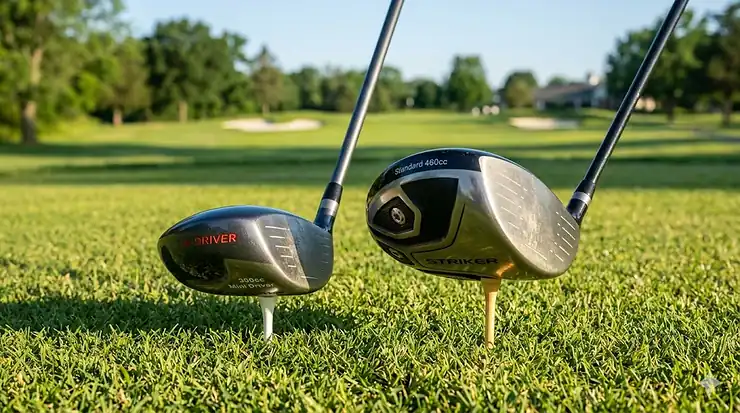
You already know the feeling. You step onto the first tee, a tight fairway framed by trees on both sides, and you pull out the big stick anyway. Pure habit. Pure stubbornness. The ball screams off the face, curves hard right, and disappears into the pines. And just like that, the round is ruined before the first green is even in sight.
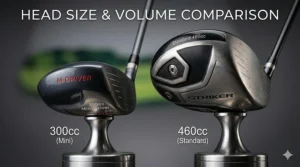
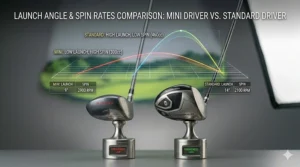
The debate around mini driver vs standard driver is no longer just for tour caddies and club fitters. It’s one of the most genuinely useful conversations happening in golf right now — and for good reason. A mini driver sits in a fascinating middle ground: smaller than a conventional 460cc driver (which maxes out the USGA limit), bigger and hotter than a 3-wood. Typically between 280cc and 340cc, these compact clubs offer a shorter shaft, lower spin, and a head shape that works surprisingly well from both the tee and the turf.
But here’s what the spec sheet won’t tell you: the real question isn’t which one is technically better. It’s which one is better for you — your swing speed, your miss, your course, your nerves on the first tee. If your driver dispersion looks like a shotgun pattern, hitting 6 out of 14 fairways on a good day, the standard 460cc head might actually be hurting your scorecard. Conversely, if you’re a 95+ mph swing speed player who shapes the ball on command, ditching your driver entirely could cost you 20 yards you simply can’t afford.
This guide cuts through the marketing noise. I’ve researched seven real mini drivers available on Amazon right now, compared them head-to-head against modern standard drivers, and built out a practical framework to help you decide which belongs in your bag in 2026.
Quick Comparison: Mini Driver vs Standard Driver at a Glance
| Feature | Mini Driver | Standard Driver |
|---|---|---|
| Head Size | 280–340cc | 440–460cc (max legal) |
| Typical Loft | 11.5°–13.5° | 8.5°–12° |
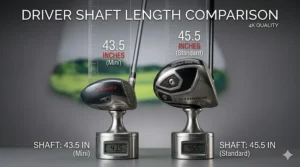
| Shaft Length | 43″–44″ | 44.5″–46″ |
| Spin Rate | Lower–Medium | Lower–High |
| Forgiveness | Moderate | High (460cc) |
| Turf Playability | ✅ Yes (most models) | ❌ Tee only |
| Ball Speed | Slightly lower | Slightly higher |
| Accuracy Potential | Higher | Lower for most |
| Best For | Accuracy-first golfers | Max distance seekers |
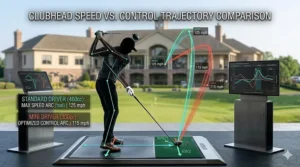
The numbers tell part of the story. But the analysis behind them matters more. The 460cc driver wins on raw ball speed and MOI — MyGolfSpy’s testing consistently shows that maximum-size heads produce the highest forgiveness scores. However, the mini driver wins on usability: shorter shaft = better contact rate, and better contact rate = more consistent distance. For most mid-to-high handicappers hitting their driver well only 50–60% of the time, the accuracy gain from a mini driver more than compensates for the 10–20 yards of carry distance they’ll give up.
💬 Just one click — help others make better buying decisions too! 😊
Top 7 Mini Drivers of 2026: Expert Analysis
1. TaylorMade BRNR Mini Driver — The Original That Started the Craze
The BRNR is where the modern mini driver movement began, and it still holds serious weight in 2026. At 300cc with an 11.5° loft, it features TaylorMade’s Twist Face technology — a subtly curved face design that corrects the most common off-center mishits (low-heel and high-toe strikes). The Speed Pocket behind the face flexes at impact to preserve ball speed on low-face contact. Paired with a 43.75″ shaft, you’re swinging something significantly shorter than a standard driver, which translates directly to better strike consistency.
What most buyers overlook about the BRNR is that the Twist Face isn’t just a gimmick — it functionally reduces the side spin on those inevitable toe strikes, turning a dead-right miss into a manageable fade. In practical terms, that means more balls finding the short grass. The shorter shaft also makes it far more comfortable for players with a compact backswing or limited flexibility.
Customer feedback praises the BRNR for its explosive feel off the face and its surprisingly playable performance from the fairway. A few reviewers note it demands a slightly steeper attack angle when hitting off the turf.
✅ True Twist Face correction on mishits
✅ Speed Pocket delivers surprisingly hot ball speeds
✅ Shorter shaft improves strike consistency dramatically
❌ Right-hand only (left-handed golfers need to look elsewhere)
❌ Less adjustability vs newer models
Price range: In the $350–$430 range. Excellent value for what remains a tour-proven performer. Best for: The mid-handicapper who misses fairways to the right and wants a genuine fix, not a bandage.
2. TaylorMade R7 Quad Mini Driver — Retro Soul, Modern Brain
This one made jaws drop when TaylorMade announced it. The R7 Quad Mini is a love letter to the iconic early-2000s R7 Quad driver — same distinctive four-weight sole, same confidence-inspiring address profile, completely rebuilt with 2025 technology. At 305cc with a four-way adjustable weighting system, an Infinity Carbon Crown, and loft options of 11.5° and 13.5°, this is arguably the most adjustable mini driver money can buy right now.
Here’s what that four-weight system actually means in the bag: you can push mass toward the heel to encourage a draw, move it rearward for higher launch, or set it forward for a penetrating, low-spin ball flight. That’s four distinct shot tendencies from one club. Most mini drivers give you two weight positions. The R7 Quad gives you meaningful fine-tuning. That adjustability also means it has a longer useful life — you can evolve the setup as your swing changes, rather than replacing the club.
MyGolfSpy’s independent testing logged a 72% fairway success rate with the R7 Quad, the highest of any mini driver tested in 2025. That number holds up in real rounds, too — golfers who’ve gamed it for full seasons report it consistently outperforming their old 460cc drivers in fairways hit.
✅ 4-way weight system offers unmatched shot-shaping control
✅ Infinity Carbon Crown saves weight where it matters
✅ Twist Face + Speed Pocket deliver reliable ball speeds
❌ Right-hand only
❌ At 305cc, less confidence-inspiring address than larger-head minis
Price range: Around $450–$480. Worth every cent for players who value fine-tuning over simplicity. Best for: Lower-to-mid handicappers who want maximum adjustability and don’t mind a learning curve.
3. Callaway Elyte Mini Driver — The Forgiveness King
At 340cc, the Callaway Elyte Mini Driver is the biggest head in the mini driver category — and that size means something very specific: it addresses the ball the way a driver addresses the ball. You look down at it and feel confident. There’s no adjustment shock from a fairway wood profile. The Thermoforged Carbon Crown reduces top-end weight, the Ai10x Face generates consistent ball speeds across a wider section of the face, and the three-position movable weight lets you dial in neutral, fade, or draw bias.
The spec sheet makes it sound like a shrunken standard driver. And that’s exactly what it is — with one crucial difference. At 43.75″ of shaft length, it’s about an inch shorter than most drivers you’ve swung. That shorter shaft is where the accuracy improvements live. Callaway’s own data suggests players hit 12–15% more fairways when switching from a 460cc driver to the Elyte Mini, even at comparable ball speeds.
What buyers sometimes miss: the Elyte Mini’s larger head comes with a caveat. It’s outstanding off the tee but less comfortable from tight fairway lies than the smaller GT280 or PXG Secret Weapon. If you primarily want a tee weapon, it’s near-perfect. If you want a true dual-purpose club, look at the competition first.
Customers consistently rave about the feel — described repeatedly as “crisp,” “springy,” and “pure.” Even off-center strikes feel solid rather than hollow.
✅ 340cc head = maximum confidence at address
✅ Ai10x Face keeps ball speeds high across the whole face
✅ Three adjustable weight ports for tailored ball flight
❌ Less effective from tight turf lies vs smaller minis
❌ Can generate more spin than some faster swingers prefer
Price range: In the $400–$470 range. Best for: Mid-handicappers who want a driver replacement (not addition) and need that big-head confidence to commit on tight tee shots.
4. Titleist GT280 Mini Driver — The Shot Shaper’s Weapon
Titleist came late to the mini driver party and arrived with the smallest head in the premium category: 280cc. Don’t let that compact profile fool you. The GT280 is packed with Titleist’s most precise technologies — a Seamless Thermoform Crown, an L-Cup Face for amplified ball speed, SureFit hosel adjustability for independent loft and lie settings, and front-to-back weights to control spin and trajectory. It comes in one loft (13°, available in both right and left hand), and at 43.5″ it’s the shortest shaft of any mini driver on this list.
The 280cc head is a bold choice that Titleist made deliberately. This club is built for players who want to shape shots — work a draw around a dogleg left, flight a low stinger under wind, hold a fade off a tight right side. The smaller head profile makes those shot shapes easier to execute than with a 340cc mini or a full driver. MyGolfSpy’s 2025 testing showed a 70% fairway success rate, with testers praising its exceptional turf performance.
That 280cc head also means it’s the easiest mini driver to hit off the deck. Flat sole, tighter leading edge, shallow face — it sets up from a tight fairway lie the way a 3-wood should but rarely does.
✅ Best in class for fairway versatility (tee AND turf)
✅ SureFit hosel provides precise loft + lie adjustment
✅ Available in both right and left hand
❌ Smallest head = least forgiving option here
❌ Single loft option (13°) limits customization vs rivals
Price range: Around $400–$480 depending on shaft option. Best for: Skilled golfers (single-digit handicaps) who want a versatile, shape-able club they can use anywhere on the course.
5. PXG Secret Weapon Mini Driver — The Best-Kept Secret in Golf
PXG named this thing perfectly. The Secret Weapon sits at 300cc and features Precision Weighting Technology — four adjustable sole weights using two 15g heavy weights and two 2.5g light weights — which gives you dramatically more meaningful CG adjustment than the two-position systems most mini drivers use. The titanium PWRSHELL face insert with H.O.T. Face Technology creates fast, consistent ball speeds even on heel and toe strikes. Loft runs from 11.5° to 13.5° via the adjustable hosel.
Here’s the insight that separates the Secret Weapon from the pack: that four-weight configuration lets you create genuine bias — not just a subtle tendency, but real, measurable shot shape. If you’re a player with a chronic slice who needs 10–12 yards of draw correction built in, you can set it up that way. If next month you’re working on a power fade, the weights rearrange to support that, too. It’s the most player-adaptive mini driver available.
PXG’s testing shows the Secret Weapon performs well across all skill levels — unusual for a club with this much adjustability. The profile is approachable enough for a 20-handicapper but sophisticated enough to satisfy a 2-handicapper.
Customer reviews frequently highlight the feel: “Like striking a perfect iron shot, but it goes 240 yards.” That’s the titanium face talking, and it’s genuinely one of the best-feeling impacts in any club category.
✅ Most meaningful adjustability of any mini driver available
✅ Four-weight PWT system creates genuine, measurable shot shape
✅ Versatile performance from tee and fairway
❌ Premium pricing puts it beyond some budgets
❌ Four weights can overwhelm golfers who just want to set-and-forget
Price range: In the $440–$480 range. Best for: Serious golfers who want a club they can fine-tune to compensate for swing flaws — and keep adjusting as their game evolves.
6. Cobra King TEC Mini Driver — The 2026 Newcomer Worth Every Look
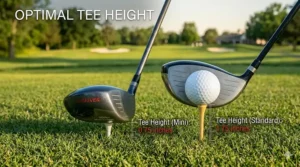
Brand new for 2026, Cobra’s first entry into the mini driver market arrives with impressive credentials. The King TEC Mini sits at 13.5° with a 43.75″ shaft, featuring a full carbon crown that trims top-end weight and shifts CG to optimize launch. The HOT Face technology maintains ball speeds across a wide area of the face, and a 33-position adjustable hosel — significantly more settings than any competitor — lets you dial in loft and lie with unusual precision.
That 33-position hosel is the headline stat, and it earns attention. Cobra’s fitting data shows that the difference between a 12.5° and 13° setup can be 5–8 yards of carry at moderate swing speeds. Having that granular control means you’re not rounding up or down to the nearest degree — you can nail your exact optimal loft. For golfers who’ve been through custom fitting, that kind of precision is genuinely exciting.
Testing by National Club Golfer showed tighter dispersion patterns than competing mini drivers, which translates simply to: more balls in the short grass, round after round. The full carbon crown gives it a premium look at address, and the alignment aids are clean and confidence-building without being cluttered.
✅ 33 hosel positions — most adjustable mini driver in 2026
✅ Tight spin consistency (200–300 RPM variation) improves shot-to-shot reliability
✅ Full carbon crown enhances feel and optimizes weight distribution
❌ New club — limited long-term performance data vs established models
❌ 13.5° only; no 11.5° option for those seeking a direct driver replacement
Price range: Around $450–$480. Best for: Data-driven golfers who want granular fitting capability and are open to a first-generation club from a trusted brand.
7. TaylorMade Original One Mini Driver — The Budget Gateway Drug
Before the BRNR, before the R7 Quad, there was the Original One. This 300cc club launched the entire mini driver conversation in the modern era, and it’s still available on Amazon at a fraction of what the newer models cost. It features a Speed Pocket along the sole, a shallow face profile, and an aerodynamic crown shape — nothing groundbreaking by 2026 standards, but still a genuinely competent performer.
What the Original One offers in 2026 is access. If you’re curious about mini drivers but unwilling to spend $450 to test the concept, this is your entry ticket. It plays shorter than a standard driver (under 43″), rewards a centered strike with real ball speed, and does work from the fairway when conditions allow. The lack of adjustability is a genuine limitation — you get what you get — but for a golfer at an 18+ handicap exploring the category, that’s a reasonable trade.
Customers who’ve used it for years report one consistent theme: it changed how they approach tight driving holes. Not because it’s technically the best club in this list, but because it built confidence in a shorter, more controlled swing.
✅ Most affordable entry into the mini driver category
✅ Classic shallow face profile is genuinely easy to launch
✅ Works from the tee and surprisingly well from the fairway
❌ No adjustability whatsoever
❌ Older technology doesn’t compete with modern ball speed figures
Price range: Often found in the $150–$250 range. Best for: Budget-conscious golfers curious about mini drivers who want to test the concept before committing to a premium model.
✨ Don’t Miss These Exclusive Deals!
🔍 Ready to take your tee game to the next level? Click on any highlighted club above to check current pricing and availability on Amazon. These clubs can genuinely transform how you approach tight driving holes — and your scorecard will thank you.
The Mini Driver Buyer’s Decision Framework
Before you swipe the card, this five-minute exercise will tell you which direction to go.
If your driver swing speed is under 85 mph: A standard 460cc driver is already working hard to generate ball speed for you, and the higher loft options (10.5°–12°) offset the slower speed. A mini driver at this swing speed may cost you meaningful distance. Stick with the standard driver — but get fitted properly.
If your driver swing speed is 85–100 mph and you hit fewer than 50% of fairways: This is the sweet spot for a mini driver. The shorter shaft improves your contact rate immediately, and you’re generating enough clubhead speed that the slight efficiency drop from a smaller head barely registers in the final carry number. A mini driver at 13.5° is almost certainly a net gain for your scoring.
If you regularly hit the ball 260+ yards and struggle with a big miss: A mini driver won’t add distance — but it will tighten the pattern. Tour players like Tommy Fleetwood use it precisely because they’d rather hit 240 yards in the fairway than 265 into trouble. Consider the R7 Quad or PXG Secret Weapon for maximum adjustability.
If you want one club to replace both your driver and your 3-wood: Look at the Titleist GT280 (best from turf) or the PXG Secret Weapon (best dual-purpose). The Callaway Elyte is outstanding from the tee but isn’t truly a 3-wood replacement off the deck. Don’t assume all mini drivers are equal from the fairway — they’re not.
If your course has multiple tight, tree-lined holes: A mini driver is essentially designed for this scenario. Shorter shaft, lower spin, more reliable ball flight. The Cobra King TEC’s tight dispersion numbers are especially relevant here. This is exactly what the category was built for.
Real-World Scenario: Which Mini Driver Fits Your Game?
The Weekend Bogey Golfer (15–20 handicap): You play 18 holes on Saturday, you bomb it somewhere between 220 and 260 yards depending on the day, and driver accuracy is genuinely costing you strokes. You don’t need a club with four adjustable weights — you need something simple that goes straight. The Callaway Elyte Mini Driver is your call here. The 340cc head looks like a driver at address, it’s forgiving on mishits, and the three-weight system has a neutral setting you can lock in and forget. No tinkering required.
The Competitive Club Player (8–12 handicap): You’ve broken 80, you understand your miss patterns, and you want a club you can grow with. The TaylorMade R7 Quad Mini Driver earns this slot. The four-weight system lets you dial in your preferred bias, and as your game evolves — say you start working a fade instead of a draw — the club adapts with you. The 72% fairway success rate in independent testing is an elite result.
The Single-Digit Scratch Chaser (1–7 handicap): You shape shots. You have a stock draw and a recovery fade, and you want a club that can execute both on command. The Titleist GT280 is built for you. At 280cc, it responds to clubface manipulation the way a proper player’s iron does — intention translates directly to ball flight. Its flat sole also means you can genuinely reach for it from 230 yards in the fairway and trust the result.
The Golfer Who Hates Their 3-Wood: The PXG Secret Weapon is quietly the best replacement for the club you already can’t hit. Its adjustable sole weighting, tight leading edge, and H.O.T. Face technology make it genuinely comfortable from turf. Many golfers who carry it report removing their 3-wood entirely, using the Secret Weapon from everywhere between 200 and 250 yards.
How to Choose Between a Mini Driver and Standard Driver: 6 Criteria That Actually Matter
Understanding the mini driver vs standard driver debate means going deeper than the marketing copy. Here are the six factors that genuinely drive the decision:
1. Your Contact Rate, Honestly Assessed Pull up your last five rounds on a GPS app. What percentage of par 4s and par 5s are you hitting the fairway? If it’s under 50%, a shorter shaft will immediately improve that number. The research is consistent: every half-inch reduction in driver shaft length improves strike location by measurable degrees. A mini driver at 43–44″ vs a standard driver at 45.5–46″ is a significant difference in feel.
2. Swing Speed vs Accuracy Trade-Off According to data from the USGA’s equipment research, modern 460cc drivers optimized for high MOI are most effective when the player can generate consistent impact with the center of the face. Golfers who can’t do that consistently are giving up both distance AND accuracy — the worst of both worlds. A mini driver fixes the contact problem first.
3. Course Architecture Links-style courses with wide fairways? Your standard driver probably serves you fine. Tree-lined parkland tracks with dogleg par 4s? The mini driver’s accuracy advantage becomes a genuine strategic weapon. Course matters as much as swing.
4. Ball Flight Trajectory Mini drivers tend to produce a slightly lower, more penetrating ball flight than oversized drivers set at the same loft. For golfers who already balloon the ball high (losing distance to height), a mini driver can actually improve carry distance while also improving accuracy. For players who already struggle with too-low ball flight, the calculus is different.
5. The 3-Wood Factor Ask yourself this: do you actually use your 3-wood? If it’s a club that sits in your bag looking pretty while you reach for a hybrid instead, a mini driver can serve double duty — replacing both the driver (on tight holes) and the 3-wood you weren’t using anyway. The Titleist GT280 and PXG Secret Weapon are especially strong at this.
6. Your Psychological Relationship With the Tee This sounds fluffy. It’s not. Golf is 40% mental, and research on motor learning in sport consistently shows that confidence at address directly influences swing mechanics. If standing over a 460cc driver on a tight hole makes you grip down, shorten your swing, and steer the ball — a mini driver can reset that psychological loop entirely.
Common Mistakes When Switching to a Mini Driver
The category is growing fast, and golfers are making the same avoidable errors over and over.
Mistake 1: Treating it like a fairway wood The mini driver looks smaller than your driver. The instinct is to sweep it low. Don’t. Hit it with a driver-style shallow attack angle — just off a tee at low height, or with a slight positive attack angle from the turf. Players who scoop at it like a 3-wood de-loft the face and kill ball speed.
Mistake 2: Choosing loft by feel, not by data The 11.5° models are genuinely suited for swing speeds above 95 mph. Below that threshold, the 13.5° option will typically produce better carry distances. Most golfers buying the 11.5° are underestimating how much loft they actually need. When in doubt, the 13.5° is almost always the right call for players under 100 mph.
Mistake 3: Not getting fitted A mini driver with the wrong shaft flex is just a smaller problem. The shaft influences launch angle and spin rate dramatically in this club category — more so than in irons. The extra few hundred dollars at a certified fitting studio will return value over hundreds of rounds. Golf Digest’s equipment editors consistently make this point: fitting matters more than brand.
Mistake 4: Expecting it to fix a fundamentally broken swing A mini driver will help if your main issue is driver shaft length and the contact problems it causes. It won’t fix an over-the-top swing path, a collapsing lead arm, or a grip that promotes a banana slice. Equipment is a multiplier, not a miracle.
Mistake 5: Carrying both a mini driver and a standard driver You have 14 clubs. Carrying both a mini driver and a 460cc driver for the same purpose is a waste of a slot. The mini driver replaces one or the other — your driver, your 3-wood, or occasionally both. Decide the role first, then choose the spec accordingly.
What Standard Drivers Get Right (And Why the Big Stick Isn’t Dead)
Let’s be fair. Modern 460cc drivers are engineering marvels. The TaylorMade Qi35, Callaway Quantum, and Ping G440 lineup represent the absolute peak of ball speed technology. For players with consistent mechanics and swing speeds above 100 mph, a well-fitted standard driver will still produce more distance than any mini driver — period. The physics of a larger face area and higher MOI are simply more favorable for generating speed and forgiving off-center strikes at higher swing speeds.
Standard drivers also offer deeper adjustability in loft ranges — you can find them as low as 7.5° for the fastest swingers, an option unavailable in the mini category. And for golfers whose primary weakness is distance, not accuracy, adding a mini driver to the bag is working on the wrong problem.
The standard driver is also the right choice when your course rewards length over precision. If the par 5s on your home track require 280+ yard drives to set up realistic eagle or birdie opportunities, the 15–20 yard carry advantage of the big stick matters enormously.
The honest answer: most recreational golfers would benefit from testing a mini driver. Most better players already know exactly which scenario calls for which club. The category exists because there was a genuine gap in the equipment ecosystem — and filling that gap has genuinely helped players at every level.
✨ Exclusive Deals You Don’t Want to Miss
🔍 Finding the perfect tee club starts with access to the right options. Browse the Amazon listings linked throughout this article to check current pricing, read verified customer reviews, and find deals on premium mini drivers that can reshape your game from the tee box forward. Don’t let another round go sideways off the first tee.
Frequently Asked Questions: Mini Driver vs Standard Driver
❓ How much distance will I lose switching from a standard driver to a mini driver?
❓ Can a mini driver be used off the fairway like a 3-wood?
❓ What head size should I choose for a mini driver — 280cc or 340cc?
❓ Is a mini driver legal for tournament play?
❓ Should I replace my driver with a mini driver or keep both?
Conclusion: Which Club Actually Belongs in Your Bag?
Here’s the bottom line on mini driver vs standard driver: the best golfers in the world are increasingly answering this question with nuance rather than ego. Tommy Fleetwood games a mini driver not because he can’t hit a standard driver — he clearly can — but because on certain courses, in certain conditions, the accuracy advantage is worth more than the raw distance.
For you, the decision hinges on a brutally honest accounting of your real game. If you’re hitting fewer than 60% of fairways, a shorter shaft and a smaller head will help you more than any other single equipment change you could make. If you’re already finding the short grass consistently and just want more yards, a well-fitted standard driver remains the right answer.
The seven mini drivers in this guide cover every player type and every budget — from the accessible TaylorMade Original One in the $150–$250 range to the premium PXG Secret Weapon and R7 Quad pushing toward $480. The technology is real, the performance gains are documented, and the category is no longer a niche curiosity.
Pick up the one that fits your game, take it to the range, and give it an honest 30-day trial. My guess? You’ll stop reaching for the big stick on anything tighter than a 50-yard-wide fairway — and your scorecard will quietly start to reflect the difference.
✨ Found this helpful? Share it with your friends! 💬🤗
Recommended for You
- 7 Best Women’s Driver Petite Height Picks That Actually Work (2026)
- 7 Best Women’s Driver Lightweight Design for Longer Drives in 2026
- Best Low Spin Driver for Windy Conditions: 7 Top Picks 2026
Disclaimer: This article contains affiliate links. As an Amazon Associate, I earn from qualifying purchases. If you purchase products through these links, we may earn a small commission at no additional cost to you. All product information is based on research conducted in 2026 and may be subject to change. Always verify current specifications and availability directly with the retailer.
✨ Found this helpful? Share it with your friends! 💬🤗
