
In This Article
There’s a dirty little secret most golfers don’t want to admit: their driver is spinning too much. Not a little too much — sometimes catastrophically too much. You catch it flush, you feel that satisfying “crack,” and then the ball climbs like it’s trying to escape the atmosphere before falling out of the sky 30 yards short of where it should’ve landed. That’s excess backspin doing its damage, quietly robbing you of distance every single round.
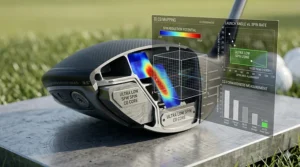
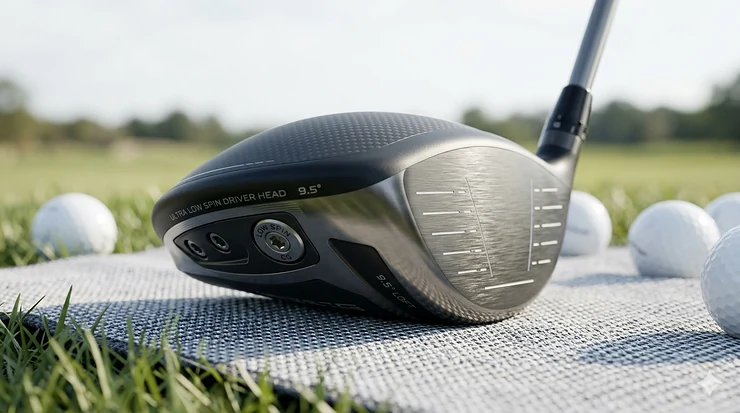
The fix? An ultra low spin driver head — a club engineered specifically to keep your launch angle up and your spin rate down, carving out that penetrating, boring trajectory that stays in the air longer and runs out further. A good ultra low spin driver head positions its center of gravity (CG) forward and low in the head, stripping away the backspin that kills distance for higher swing-speed players. According to USGA equipment standards, driver heads must comply with specific COR and face angle regulations — but within those limits, CG engineering is where brands fight their most important battles.
Who actually needs one of these? If your swing speed clears 95 mph and your current driver is ballooning the ball skyward, an ultra low spin driver head isn’t just an upgrade — it’s a correction. But if you’re swinging below 90 mph, tread carefully. Lower spin in the wrong hands means the ball drops out of the air early, and you’ll actually lose distance instead of gaining it.
This guide cuts through the marketing noise. We’ve tracked launch monitor data, dug into real-world feedback from players, and evaluated seven of the best ultra low spin driver heads currently available on Amazon — so you can stop guessing and start driving.
Quick Comparison: Top Ultra Low Spin Driver Heads at a Glance
| Driver | Head Size | CG Position | Adjustability | Price Range | Best For |
|---|---|---|---|---|---|
| TaylorMade Qi35 LS | 460cc | Lowest in class | 3 moveable weights | $450–$600 | Precision shapers |
| Callaway Elyte Triple Diamond | 450cc | Forward, low | Adjustable hosel + weight | $500–$600 | Speed-first players |
| Callaway Quantum Triple Diamond | 450cc | Forward, neutral-fade | Tri-Force face + weight | $500–$650 | Tour-inspired distance |
| Ping G440 LST | 450cc | Deepest CG in PING history | 3-position back weight | $550–$650 | Forgiving low spin |
| Titleist GT4 | 430cc | Most forward of GT range | Forward weight track | $550–$700 | Shot-shaping precision |
| Cobra DarkSpeed LS | 460cc | Radial low/forward | Adjustable MyFly8 hosel | $280–$400 | Best value |
| Srixon ZXi LS | 460cc | Swappable front/back CG | Dual weight ports | $450–$550 | Spin versatility |
Looking at this table, a few things jump out immediately. The Titleist GT4’s 430cc head is the most compact option — which means lower MOI but the most aggressive spin reduction of any driver here. That’s a trade-off you need to go in knowing about. Meanwhile, the Cobra DarkSpeed LS sits in a category of its own on the value front: it delivers legitimate low-spin performance at a price point that undercuts its competitors by $150–$200. The TaylorMade Qi35 LS and Callaway Quantum Triple Diamond represent the premium end, and both earn their price tags through adjustability and raw ball speed.
💬 Just one click — help others make better buying decisions too! 😊
Top 7 Ultra Low Spin Driver Heads: Expert Analysis
1. TaylorMade Qi35 LS Driver — The Undisputed Spin Killer of 2025
The TaylorMade Qi35 LS is a driver built for one purpose above all others: eliminating backspin. And in independent testing run by MyGolfSpy, it delivered — posting the lowest spin numbers of any driver tested in 2025, with the weight-forward configuration capable of pushing spin under 2,000 RPM in optimal conditions. That’s tour-level territory.
The engineering behind it is serious. TaylorMade’s lowest CG projection in the Qi35 family — achieved through a multi-material construction of chromium carbon, steel, aluminum, tungsten, and titanium — positions the center of mass as far forward and as low as physically possible within the 460cc head. Pair that with the Fourth Generation Carbon Twist Face and Thru-Slot Speed Pocket, and you’re looking at both spin reduction and maximum ball speed simultaneously.
What most buyers overlook about this model is the weight system’s range. The three moveable weights (13g × 1 and 3g × 2) don’t just offer micro-adjustments — they can swing CG position dramatically enough to change spin by nearly 500 RPM between full-back and full-forward configurations. That’s practically two different drivers in one head.
Customer feedback consistently praises the penetrating ball flight and the accuracy gains that come with it. Several reviewers specifically mention switching from the Callaway Paradym Triple Diamond and seeing noticeable improvements in dispersion. The advice that echoes across nearly every review: do not blind buy a shaft with this head — the performance ceiling only reveals itself through a proper fitting.
✅ Lowest spin output of any driver tested in 2025
✅ Three-position weight system for serious CG customization
✅ Proven Twist Face + Thru-Slot Speed Pocket tech
❌ Can punish mishits more than forgiving alternatives
❌ Traditional pear shape won’t suit every eye at address
Price range: $450–$600
For the low-handicapper with a repeatable swing above 100 mph who wants to absolutely squeeze every yard out of a forward CG design — this is the one.
2. Callaway Elyte Triple Diamond Driver — The Smarter, Faster Triple Diamond
Callaway built the Elyte Triple Diamond around one idea: what if you could have elite low spin and meaningful ball speed on off-center hits? The answer turned out to be their Ai10x Face — a face geometry with ten times more control points than their previous generation’s Smart Face, allowing for optimized launch and speed across a much larger hitting area.
The head is 450cc with a tour-inspired compact profile, and the Thermoforged Carbon crown does the heavy lifting on CG positioning. Because carbon fiber is substantially lighter than titanium, that mass gets freed up and repositioned low and forward — exactly where you want it for spin suppression. In head-to-head testing by Today’s Golfer, the Elyte Triple Diamond averaged 286.2 yards of carry in its standard configuration, edging out the TaylorMade Qi35 LS in more typical player-friendly settings despite posting similar ball speeds.
What that data reveals in practice: the Elyte Triple Diamond manages to extract more distance from a given spin rate through superior optimization of launch angle. You’re not just spinning less — you’re launching at a better angle simultaneously. Most low-spin drivers force a trade-off between the two; this one mostly avoids it.
Golfers who’ve gamed both the standard and Triple Diamond note that the compact head feels less risky at address than you might expect — it’s workable without feeling like you’re walking a tightrope.
✅ Ai10x Face delivers speed across wider hitting area
✅ Better forgiveness than most low-spin alternatives
✅ Superior aerodynamics reduce clubhead drag at impact
❌ Compact 450cc head may unsettle higher-handicap players
❌ Premium pricing for what’s now a 2025 model
Price range: $480–$580
Best for the player who wants Callaway’s proven Triple Diamond pedigree, prioritizes consistency on imperfect strikes, and swings between 95–105 mph.
3. Callaway Quantum Triple Diamond Driver — The 2026 Low-Spin Benchmark
If the Elyte Triple Diamond was impressive, the Quantum Triple Diamond is genuinely surprising. Callaway’s 2026 flagship low-spin head won the Today’s Golfer driver test outright, posting ball speeds of 162.8 mph and spin of just 1,996 RPM in expert testing — numbers that would make a tour player nod approvingly. It re-establishes Callaway at the top of the low-spin conversation.
The 450cc head runs a Tri-Force Face technology — a three-layer construction of ultra-thin titanium, inner carbon composite, and a polymer mesh joining them. The carbon element enables an intricate variable-thickness pattern that drives ball speed up and spin down simultaneously, while an AI-generated amorphous rippled face pattern contributes to what Golf Digest describes as “micro deflections” for better speed across the whole surface.
What genuinely stands out is the fade-ready weighting. A moveable 10-gram rear perimeter weight allows players to dial between neutral and fade bias, giving the tour player who fights a left miss a tangible equipment correction rather than a swing tip. The compact triangular profile won’t appeal to everyone at address — it’s assertively tour-inspired — but if you can get past the aesthetics, the performance is hard to argue with.
✅ Winner of the 2026 Today’s Golfer driver test
✅ Tri-Force Face for elite ball speed and spin management
✅ Adjustable fade/neutral bias via perimeter weight
❌ Triangular profile divides opinions at address
❌ Premium 2026 price point
Price range: $500–$650
This is the driver for the ambitious single-figure player who wants the current pinnacle of Callaway’s low-spin engineering and doesn’t mind paying for it.
4. Ping G440 LST Driver — Low Spin Without the Fear
Here’s what the other low-spin drivers on this list don’t quite offer: a genuinely forgiving head that also suppresses spin. The Ping G440 LST (LST = Low Spin Technology) achieves this through a design approach that’s almost philosophical in how it differs from its competitors. While everyone else is chasing the most extreme forward CG possible, PING focused on creating the deepest CG in their driver history while maintaining 9K MOI — which is extraordinarily high for a low-spin head.
The Free-Hosel Technology is the mechanism that makes this possible. By removing weight from a section of the hosel and redistributing it low in the head, PING pushed the CG as far down as they’ve ever managed in a 450cc driver. The CarbonFly Wrap crown — PING’s first-ever carbon application in this design — sheds more grams from the top of the head, dropping CG further still. The thinner, hotter face then translates all of that lower-CG energy into faster ball speeds across the face, including in the high heel region where most low-spin heads bleed speed badly.
In Golf Monthly testing, ball speed came in at 167 mph — competitive with the fastest in the 2023/2024 class. Spin was down significantly versus the Max and SFT versions of the G440, while remaining more consistent across mishits than most of its low-spin competition. One reviewer described it succinctly: “It’s the forgiving low-spin driver.” That is exactly the right framing.
✅ 9K MOI makes it the most forgiving low-spin driver here
✅ CarbonFly Wrap + Free-Hosel achieves PING’s deepest CG ever
✅ Consistent ball speed across the full face including heel
❌ Less spin reduction than TaylorMade or Callaway extremes
❌ Matte finish aesthetic is divisive
Price range: $550–$650
Ideal for players whose swing speed sits between 95–103 mph who want spin reduction without completely sacrificing the forgiveness safety net.
5. Titleist GT4 Driver — The Shot-Shaper’s Weapon
Titleist doesn’t make budget-friendly clubs, and the GT4 doesn’t pretend otherwise. It is, simply put, the most aggressively low-spin driver in the GT lineup — a 430cc head with a forward-positioned weight track that allows the golfer to fine-tune CG location further along the sole for maximum spin reduction and energy transfer. This compact head is explicitly designed for “golfers with a repeatable impact location looking to maximize ball speed,” per Golf Digest’s 2026 Hot List analysis.
The 430cc volume means a smaller sweet spot compared to the other drivers on this list. That’s not a bug — it’s a feature, for the right player. Less head volume allows Titleist to concentrate the weight more aggressively forward, pushing CG as close to the face as structurally possible. The result is the most spin-reducing driver Titleist makes, with ball flight characteristics that lean decidedly toward a penetrating, low-trajectory missile rather than a high-launching floater.
The aerodynamically shaped head also processes through impact faster, which contributes to higher smash factor at speed. Players switching from the GT2 or GT3 often comment that the GT4 feels like it’s working with their swing rather than around it — particularly those who generate very high launch naturally and need a club to counteract it.
✅ Most aggressive spin reduction in the Titleist GT family
✅ Forward weight track enables precise CG positioning
✅ 430cc compact design for workability and shot-shaping
❌ 430cc head punishes off-center hits more than 460cc alternatives
❌ Premium price — one of the most expensive options here
Price range: $580–$700
Built for the scratch or near-scratch player with a 105+ mph swing speed who hits the center of the face consistently and wants maximum spin elimination above all else.
6. Cobra DarkSpeed LS Driver — The Price-Defying Performer
Most “budget” low-spin drivers are budget in performance, too. The Cobra DarkSpeed LS is the genuine exception. Cobra engineered this head with radial weighting — positioning masses simultaneously low in the face and forward toward the leading edge — which is a CG configuration that competes directly with drivers costing $150–$200 more. The CNC Milled face adds precision that you simply don’t expect at this price point.
The T-Bar chassis is the structural innovation that enables all of this. By replacing the conventional internal ribbing structure with a T-shaped support beam, Cobra saved 7 grams — and immediately moved every bit of that saved mass low and forward where it suppresses spin most effectively. The result is a low-spin head that produces a penetrating ball flight without requiring you to swing 110 mph to get there.
The adjustable MyFly8 hosel gives eight loft settings, which is more adjustability than most competitors offer in this price range. Players can strengthen or weaken loft to dial in their optimal launch condition without committing to a specific fixed configuration. Customer feedback describes the Cobra DarkSpeed LS as genuinely surprising — many expected it to feel cheap relative to the premium alternatives and report being impressed with both the feel at impact and the consistency of their numbers.
✅ Radial weighting achieves genuine low-spin CG at accessible price
✅ MyFly8 hosel provides 8 loft settings
✅ CNC Milled face for precision ball speed and consistency
❌ Less adjustable weight system than premium alternatives
❌ Not as current as 2025/2026 competitors (2024 model)
Price range: $280–$400
The obvious pick for the mid-handicapper with a 95–100 mph swing speed who wants legitimate spin reduction without the premium price tag attached to the TaylorMade and Callaway flagships.
7. Srixon ZXi LS Driver — The Adjustable Spin Specialist
Srixon makes fewer drivers than the major American brands, but the ZXi LS punches well above its market position. The dual weight port system — allowing the player to swap a significant weight between a forward and back position — essentially gives you two drivers in one head. In the forward position, this is a genuine ultra low spin driver head; in the back position, it adds forgiveness and climb, functioning more like a mid-spin player’s driver. That flexibility is genuinely useful for players whose spin rates change between shaft or ball changes.
The carbon crown construction follows the industry playbook — save mass up top, move it low and forward — but Srixon adds their Rebound Frame technology, a series of elastically engineered frame points around the face that store and release energy at impact more efficiently. The practical result: ball speeds are competitive with more expensive competitors, and the deep milled face produces a distinctly solid, premium feel that Srixon’s loyal following specifically seeks out.
At around $450–$550, the ZXi LS positions itself as a genuine mid-tier alternative that doesn’t compromise on technology. Several reviewers with driver fitting experience note that in proper fitting sessions, the ZXi LS has surprised players who arrived expecting to buy a TaylorMade or Callaway — and left with the Srixon instead.
✅ Dual weight ports for genuine low/medium spin configuration
✅ Rebound Frame technology enhances ball speed efficiency
✅ Premium feel and consistent feedback at impact
❌ Smaller market presence means fewer fitting options
❌ Less brand recognition may affect resale value
Price range: $450–$550
Best for the experienced player who values adjustability and wants a legitimate alternative to the mainstream brands without compromising on engineering quality.
✨ Don’t Miss These Exclusive Deals!
🔍 Take your spin rate to the next level with these carefully chosen low-spin drivers. Click any highlighted product name to check current pricing and availability on Amazon. Finding the right ultra low spin driver head for your swing speed can be the single biggest distance unlock of your season.
How to Choose an Ultra Low Spin Driver Head: 6 Things That Actually Matter
1. Know Your Actual Swing Speed
This is non-negotiable. Low-spin drivers are optimized for players generating 95 mph or more of clubhead speed. Below that threshold, you need spin to keep the ball airborne — and a forward CG driver will actually shorten your drives, not lengthen them. Get a launch monitor reading before you buy. Trackman and FlightScope data at most golf shops takes five minutes and tells you everything.
2. Understand CG Position and What It Does
Center of gravity position determines where the club “wants” to send the ball. Forward CG = lower spin, more penetrating flight, less forgiveness. Rear CG = higher spin, more launch, more forgiveness. The drivers on this list all have forward-biased CG, but they differ in degree — the Titleist GT4’s 430cc head is far more extreme than the Ping G440 LST’s balanced approach.
3. Adjustability Is More Important Than It Looks
Fixed-weight low-spin heads are permanent commitments. Adjustable systems like TaylorMade’s three-weight Trajectory Adjustment System let you dial your spin rate and shot shape as conditions change or as your swing evolves. If you’re unsure exactly what settings work for you, lean toward more adjustability, not less.
4. Head Volume: 450cc vs. 460cc
Compact 450cc heads concentrate mass more aggressively forward, enabling greater spin reduction. But they have smaller faces and less MOI, meaning mishits cost more. The 460cc options on this list — like the TaylorMade Qi35 LS and Srixon ZXi LS — balance spin reduction with enough stability to recover from slightly off-center hits. Scratch players should consider the compact heads; everyone else should think carefully.
5. Don’t Skip the Fitting
According to the USGA’s equipment resources, no driver performs identically across all swing profiles. The best low-spin head for a 105 mph power fade player is fundamentally different from the best for a 97 mph draw bias. A one-hour fitting session — using a launch monitor and multiple shaft options — will outperform any spec-reading exercise by a large margin.
6. Shaft Is Half the Equation
The spec sheet won’t tell you this, but a low-spin head paired with the wrong shaft can actually increase spin compared to a well-fitted standard driver. A too-flexible shaft creates a dynamic loft spike at impact that pumps spin back up. Most low-spin drivers perform best with stiffer, lower-torque graphite shafts — but the specific profile depends entirely on your tempo and release point.
Real-World Scenarios: Which Spin-Reducing Driver Fits Your Game?
The Power Fade Player Who Can’t Stop Ballooning Drives
You’re swinging 100–105 mph, you hit a fade, and your ball flight looks like it’s trying to reach the clouds before dropping straight down. The fix isn’t your swing — it’s your CG. In your case, the Callaway Quantum Triple Diamond is the pick. Its neutral-to-fade bias weighting positions, combined with genuinely aggressive forward CG and the Tri-Force Face, will produce a penetrating right-to-left-resistant flight without fighting your natural shot shape. Move the rear weight toward the fade position and watch the ballooning disappear.
The Scratch Player Who Wants Maximum Distance Control
You already play to scratch, you hit the face consistently, and you want every extra yard. You don’t need forgiveness — you need precision. The Titleist GT4 was made for you. Its 430cc head and forward weight track give you the most aggressive spin reduction in this list, paired with the workability that lets you shape shots intentionally. It rewards a repeatable, high-speed swing with the most distance control available in a legal driver head.
The Mid-Handicapper on a Budget Who Spins the Ball Too Much
You’re a 10-handicapper swinging around 96 mph, you’ve watched enough YouTube to know your spin rate is too high, and you don’t want to spend $600 on a driver head. The Cobra DarkSpeed LS is exactly where your money should go. The radial weighting and T-Bar chassis deliver real spin reduction — not “budget” spin reduction — at a price that leaves room in the budget for a proper fitting and maybe a better shaft.
The Tour Wannabe Who Values Every Stat
You obsess over launch monitor data, you track your driving statistics, and you want to know precisely what each equipment adjustment does. The TaylorMade Qi35 LS is your laboratory. The three-weight system provides the most granular adjustability here — 500 RPM of spin range between configurations — and the chromium carbon multi-material construction is engineering-dense enough that your fitting sessions will reward detailed experimentation. This is the driver for the golfer who uses data.
Common Mistakes When Buying an Ultra Low Spin Driver Head
Buying low spin when you’re actually spinning normally. The average amateur driver spin rate sits around 2,700–3,000 RPM according to Trackman’s publicly shared performance data. Optimal spin for most players above 95 mph swing speed is 2,200–2,600 RPM. If you’re in that range, a high-MOI driver will serve you better than a low-spin head that strips away useful spin.
Assuming compact = better. The 430cc heads (like Titleist GT4) are optimized for players who hit the center of the face at high speed, consistently. Take even one inch off that consistent contact, and the smaller MOI punishes you with speed loss and directional error. Bigger is more forgiving — even in low-spin models.
Ignoring shaft stiffness in the rush to buy. The most common pattern seen in fitting studios: a player buys a low-spin head, installs a shaft that’s too flexible, and ends up spinning the ball more than before because the shaft is adding dynamic loft. The driver is doing its job; the shaft is undoing it. Low-spin heads need stiffer profiles to deliver their design intention.
Buying based on tour visibility without matching your profile. You see Rory McIlroy gaming a low-spin head and immediately assume it’s right for you. Rory’s swing speed hovers around 123 mph. His optimal equipment settings are not your optimal equipment settings. Context is everything.
Skipping the fitting because “I can figure it out.” With adjustable weight systems available on most of these drivers, golfers sometimes believe they can self-fit. The problem is that without launch monitor data showing exactly what each weight position does to your spin rate and launch angle, you’re just guessing in the dark. One fitting session eliminates months of expensive trial and error.
Low Spin vs. Standard Driver: What the Data Actually Says
This comparison matters because the term “low spin” is thrown around loosely in golf marketing. Not every driver marketed as “low spin” is actually an ultra low spin driver head. Here’s the practical breakdown:
| Category | Typical Spin Rate | Best For | Drawback |
|---|---|---|---|
| Ultra Low Spin (LS) | 1,800–2,400 RPM | 100+ mph swing speed | Less forgiving |
| Standard/Mid-Spin | 2,400–2,900 RPM | 85–100 mph swing speed | Balanced for most |
| High-Launch/High-Spin | 2,900–3,500 RPM | Under 85 mph swing speed | Loses distance at high speed |
| Draw-Bias | Variable | Slice correctors | May add spin for hooks |
The interesting insight from this table: many golfers buying “low spin” drivers are actually already in the 2,400–2,600 RPM range with their current equipment, which is already optimal. They don’t need a low-spin head — they need to optimize their current spin rate through shaft selection and loft adjustment. True candidates for an ultra low spin driver head are those spinning above 2,800 RPM at swing speeds above 95 mph, where the excessive rotation is actively costing them distance.
The table also makes clear that a standard driver versus a low-spin driver comparison isn’t inherently about better vs. worse — it’s entirely about matching the tool to the player’s profile.
What to Expect: Real-World Performance of Ultra Low Spin Heads
Reading the spec sheet is one thing. What does the game actually feel like when you’ve got the right ultra low spin driver head in your hands?
The most noticeable immediate change for most players is the ball flight shape. It’s boring — in the best possible way. The ball doesn’t climb steeply then fall steeply. It launches at a moderate angle and stays at that approximate height longer before descending on a shallower angle. That shallower descent translates directly into more roll-out, which is where a large portion of the distance gains actually come from.
The second thing most players notice is the sound and feel change. Low-spin heads with forward CG tend to produce a slightly firmer, crisper impact sound compared to the deeper thud of high-forgiveness, rear-CG drivers. This isn’t worse — it’s different, and most players adapt quickly.
The third change is more subtle: dispersion tightens on heel shots, opens up on toe shots. Forward CG reduces the gear effect that typically causes heel shots to hook. On the positive side, this means your pull-hooks become straighter pulls. On the negative side, toe strikes that would have curved back toward the fairway on a high-MOI driver now go further right. Knowing this in advance helps you adjust.
Realistic distance gains for the right player, validated by Golf Digest’s Hot List testing, sit in the 5–15 yard range for total drive length — mostly through roll-out improvement and spin normalization. That’s meaningful. But it only materializes if you’re actually spinning too much to begin with.
Long-Term Cost and Value: Which Low-Spin Head Is Worth the Investment?
Premium drivers depreciate in resale value, but they hold residual performance value — meaning the TaylorMade Qi35 LS you buy today will still be a genuinely excellent ultra low spin driver head in three years. Budget options like the Cobra DarkSpeed LS depreciate faster in resale, though the performance delivery remains.
| Driver | Value Rating | Expected Useful Life | Resale Value (2 Years) |
|---|---|---|---|
| TaylorMade Qi35 LS | ⭐⭐⭐⭐ | 3–4 years | $280–$380 |
| Callaway Quantum Triple Diamond | ⭐⭐⭐⭐⭐ | 3–5 years | $350–$450 |
| Ping G440 LST | ⭐⭐⭐⭐⭐ | 4–5 years | $350–$420 |
| Titleist GT4 | ⭐⭐⭐⭐ | 3–4 years | $300–$400 |
| Cobra DarkSpeed LS | ⭐⭐⭐ | 3 years | $150–$220 |
| Srixon ZXi LS | ⭐⭐⭐⭐ | 3–4 years | $250–$330 |
| Callaway Elyte Triple Diamond | ⭐⭐⭐⭐ | 3 years | $300–$380 |
The Ping G440 LST and Callaway Quantum Triple Diamond have the strongest long-term value proposition based on PING’s historically excellent build quality and Callaway’s current dominance in the low-spin category. The premium price tag stings at purchase; the durability and longevity soften that over time.
One factor not in the table: fitting cost. A $100–$150 fitting session that gets you into the right head and shaft configuration will add more distance and consistency than moving from a $400 to a $600 driver head without fitting. Always factor fitting into your total equipment budget.
Frequently Asked Questions About Ultra Low Spin Driver Heads
❓ What swing speed do I need to benefit from an ultra low spin driver head?
❓ How much distance can I realistically expect to gain from switching to a low spin driver?
❓ Is a 450cc or 460cc head better for low spin?
❓ Can I use an ultra low spin driver head if I have a natural draw bias?
❓ What's the difference between center of gravity positioning and spin rate in driver design?
Conclusion: Find Your Perfect Ultra Low Spin Driver Head
Here’s the bottom line: if you’re spinning your driver above 2,700 RPM at swing speeds above 95 mph, an ultra low spin driver head is one of the most impactful equipment changes you can make. Not because of marketing. Because of physics.
The best pick for most players reading this is the TaylorMade Qi35 LS Driver — it’s the most thoroughly tested, most adjustable, and most consistently proven performer in the class. Its weight system gives you a genuine fitting laboratory in the palm of your hand, and the independent testing data backs up TaylorMade’s claims.
If you want the current 2026 state-of-the-art, the Callaway Quantum Triple Diamond is the driver that won the most comprehensive testing suite run this year. If budget matters and you swing around 95–98 mph, the Cobra DarkSpeed LS is a genuine performance choice, not a compromise.
Whatever you choose, get a fitting. A good driver head in the wrong configuration is a waste of excellent engineering. The right driver head in the right configuration — matched to your swing speed, attack angle, and contact pattern — is one of the most satisfying things in golf. The ball just goes. Low, fast, boring, perfect.
✨ Don’t Miss These Exclusive Deals!
🔍 Ready to make the switch? Click any highlighted product above to check current pricing and availability on Amazon. Your ball flight is one decision away from a significant upgrade.
Recommended for You 📖
- 7 Best High MOI Drivers for Off Center Hits in 2026
- 7 Best Ultra High MOI Driver Heads for Forgiveness in 2026
- Fixed Driver vs Adjustable Pros Cons: 7 Best Picks (2026)
Disclaimer: This article contains affiliate links. As an Amazon Associate, I earn from qualifying purchases. If you purchase products through these links, we may earn a small commission at no additional cost to you.
✨ Found this helpful? Share it with your friends! 💬🤗
