

In This Article
Somewhere between your fairway wood and your longest scoring iron lives a gap that ruins more good rounds than three-putts do. You know the one — too far for a stinger 3-iron, too short (and too balloon-y in the wind) for your 5-wood. A golf utility hybrid driving iron exists specifically to close that gap, and it does it without asking you to swing any differently than you already do off a tight fairway
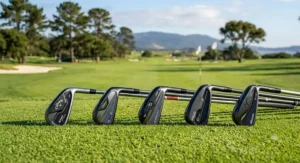
So what is a golf utility hybrid driving iron? It’s a hollow-bodied, iron-shaped club — usually 17 to 23 degrees of loft — engineered to launch lower and spin less than a traditional long iron while looking and feeling far more like an iron than a hybrid does at address. Think of it as the club that lets you keep your iron swing but borrows a hybrid’s forgiveness and ball speed.
I’ve spent the last several weeks digging through 2026 testing data, manufacturer specs, and aggregated player feedback to find seven models worth your consideration — from a $229 workhorse to a Tour-level option that better players are gaming right now. Whether you’re chasing a penetrating ball flight into a stiff coastal breeze or you just want a club that won’t punish a slightly thin strike, there’s a model here built for you. Let’s get into it.
golf.com recently profiled six competitive golfers who each went through full-bag fittings specifically to solve this exact gapping problem, and nearly all of them ended up carrying some form of utility iron or hybrid by the end of it — proof that even skilled players struggle to self-diagnose this part of the bag without real data.
Quick Comparison Table
| Club | Loft Range | Best For | Price Range |
|---|---|---|---|
| Titleist U-505 | 17°-23° | Best overall blend of power and control | $270-$330 |
| TaylorMade P-UDI | 18°-21° | Shot shaping and workability | $250-$300 |
| Cobra King Tec Utility | 18°-21° | Forgiveness with a hollow-body feel | $220-$260 |
| Tour Edge Exotics TI-Utility | 18°-24° | Best value / budget pick | $210-$240 |
| Srixon ZXiU | 17°-21° | Best price-to-performance ratio | $190-$230 |
| Mizuno Pro Fli-Hi | 18°-21° | Purest feel and forged feedback | $260-$300 |
| Cleveland Launcher HB Turbo | 19°-24° | Easiest launch for moderate swing speeds | $200-$230 |
A quick scan of this table tells most of the story before you even swing one. If you’re a faster-swinging player who wants to shape shots on command, the TaylorMade P-UDI and Titleist U-505 are your leading candidates, while the Srixon ZXiU and Tour Edge Exotics TI-Utility deliver a surprising amount of that same performance for noticeably less money. Golfers who struggle to get long irons airborne should lean toward the Cleveland Launcher HB Turbo or Cobra King Tec Utility, since both are built around a lower, more forward center of gravity that helps rescue mis-hits.
💬 Already leaning toward one? Tap a highlighted club above to check today’s price and availability — these tend to move in and out of stock fast.
💬 Just one click — help others make better buying decisions too!😊
Top 7 Golf Utility Hybrid Driving Iron Options: Expert Analysis
1. Titleist U-505 — best all-around blend of power and control
The Titleist U-505 earns its reputation the old-fashioned way: it doesn’t force you to choose between distance and control. Its hollow, forged face is paired with a compact, iron-like profile that sits behind the ball the way a long iron should, rather than looking like an apologetic hybrid stuffed into your set.
The variable-thickness face increases ball speed on the low-face contact that plagues fast, aggressive swings, while a heavier tungsten sole weighting keeps spin low enough for that penetrating ball flight serious players chase into the wind. In practice, that means a shot that holds its line rather than ballooning the moment a crosswind hits it.
This is squarely a better player hybrid alternative — it rewards centered contact with explosive ball speed but doesn’t fully bail out a mishit the way a game-improvement hybrid would. Reviewers consistently describe it as one of the more workable options in this category, with several noting that it draws and fades on command more predictably than most driving irons at this price point. Aggregated feedback also flags a learning curve for higher-handicap players who haven’t hit a true long iron before.
Pros:
- ✅ Genuine shot shaping capability for better players
- ✅ Compact, tour-inspired shape at address
- ✅ Strong ball speed retention on off-center hits
Cons:
- ❌ Less forgiving than hollow game-improvement hybrids
- ❌ Demands a repeatable, iron-like swing to unlock its benefits
Priced in the $270-$330 range depending on shaft selection, the Titleist U-505 isn’t the cheapest entry on this list, but for a mid-to-low handicap golfer replacing a long iron, it’s arguably the best value per stroke saved off the tee.

2. TaylorMade P-UDI — best for shot shaping and workability
If you’ve ever wanted to hit a low stinger into a headwind and then turn around and flight a soft draw around a tree on the next hole, the TaylorMade P-UDI is built for exactly that kind of versatility. Its thin, hot face uses a forged construction that channels speed through the center while a strategically placed tungsten weight lowers the center of gravity just enough to keep the ball flight boring through the wind rather than climbing.
What most buyers overlook about this model is how much the narrower sole width matters for turf interaction — it slides through the turf on descending strikes rather than digging, which is exactly what better players need from fairway lies on tight par-4s. Reviewers frequently describe the feel as “hot but controlled,” and aggregated sentiment suggests it’s particularly well liked among single-digit handicappers who previously carried a 2- or 3-iron.
The trade-off is real, though: this is one of the least forgiving clubs on this list, and mishits are punished more severely here than with almost anything else we cover. Getting properly fitted for shaft weight and loft is not optional if you’re considering this one.
Pros:
- ✅ Excellent shot shaping capability across draws and fades
- ✅ Hot, responsive forged face feel
- ✅ Narrow sole glides cleanly through turf
Cons:
- ❌ Unforgiving on inconsistent strikes
- ❌ Requires proper fitting to unlock its full benefit
At around $250-$300, this is a utility hybrid players club in the truest sense — built for golfers who already strike the ball consistently and want more precision, not more bailout.
3. Cobra King Tec Utility — best forgiveness with hollow-body feel
Cobra’s approach to the driving iron category leans hard into forgiveness without sacrificing that iron-like address look better players want. The hollow body is filled with a lightweight foam that dampens harsh vibration on off-center hits, while a healthy dose of tungsten weighting sits low and deep in the sole to boost launch for players who don’t generate elite swing speed.
In practical terms, that tungsten placement means the ball gets up in the air more easily than with a traditional long iron, which is exactly the appeal for mid-handicap players making the jump from a 3- or 4-iron they’ve never truly enjoyed hitting. Its face technology also varies thickness across the strike zone specifically to protect ball speed on those low-face and toe misses that plague less consistent ball strikers.
Aggregated review sentiment highlights the forgiving nature of the sole design and describes the feel as notably softer than rival hollow-body irons, though a handful of users note the higher launch can work against you on very windy days when a lower, more piercing flight is what you actually need.
Pros:
- ✅ Tungsten-boosted launch helps moderate swing speeds
- ✅ Foam-filled body softens feel on mishits
- ✅ Variable face thickness protects ball speed on off-center strikes
Cons:
- ❌ Higher launch can be a liability in strong wind
- ❌ Less workable than pure players’ models
At a mid-range $220-$260, the Cobra King Tec Utility hits a sweet spot for golfers who want driving-iron distance without driving-iron difficulty.
4. Tour Edge Exotics TI-Utility — best value pick under $240
Tour Edge doesn’t have the marketing budget of the majors, but the Tour Edge Exotics TI-Utility consistently punches above its price class in independent testing. Its thicker profile houses a hot face that testers have measured as competitive with clubs costing significantly more, and its higher, more consistent launch window makes it noticeably easier to find good contact than blade-style long irons.
Reviewers have specifically praised the piercing, out-of-the-wind ball flight this club produces despite its relatively accessible price point — a detail worth noting since driving irons are typically marketed as a premium, low-volume category. Based on the spec comparison against the field, its accuracy performance stands out as a genuine differentiator rather than marketing spin; several testers ranked it among the most precise clubs in the category regardless of price.
What this tells budget-conscious buyers is that you’re not necessarily sacrificing performance by going with a lesser-known brand here — you’re mostly giving up resale value and some cosmetic polish, not actual on-course results.
Pros:
- ✅ Genuinely competitive ball speed for the price
- ✅ Strong accuracy performance in independent testing
- ✅ Consistent, penetrating ball flight in windy conditions
Cons:
- ❌ Thicker topline may not suit players who prefer a compact look
- ❌ Lower brand resale value compared to major manufacturers
At around $210-$240, the Tour Edge Exotics TI-Utility is the easiest recommendation on this list for anyone who wants driving-iron performance without a driving-iron price tag.
5. Srixon ZXiU — unbeatable value for the performance
The Srixon ZXiU rarely gets the headline treatment its rivals do, but golfers who’ve actually fit it into their bags tend to become quiet evangelists for it. Its forged, hollow construction produces a soft, responsive feel through impact, while a lower, more forward CG helps mid-to-fast swing speed players compress the ball rather than scoop it — a critical distinction for anyone trying to generate that lower, more piercing trajectory this category is known for.
One panelist testing hybrids and utility irons across major manufacturers specifically praised this club’s ability to navigate tight fairways with precision, describing its accuracy as a standout trait compared to pricier alternatives tested in the same fitting session. That’s meaningful, independent-feeling praise for a club that typically sells for less than most of its direct competitors.
Aggregated feedback frequently mentions the ZXiU as the “sleeper pick” in this category — not flashy, but reliably accurate, and a legitimate option for golfers who want a better player hybrid feel without paying a premium brand tax.
Pros:
- ✅ Excellent accuracy for tight, demanding fairways
- ✅ Soft, forged feel through impact
- ✅ Strong value relative to premium competitors
Cons:
- ❌ Smaller aftermarket shaft selection than major brands
- ❌ Less brand recognition may affect resale value
Typically found in the $190-$230 range, the Srixon ZXiU may be the single best dollar-for-dollar performer on this entire list.
6. Mizuno Pro Fli-Hi — purest forged feel in the category
Mizuno built its reputation on forged-iron feel, and the Mizuno Pro Fli-Hi brings that same philosophy to the utility category. A hefty 23-gram tungsten weight sits low in the sole to boost both launch and forgiveness, while the matte black finish gives it a sleeker, more aggressive look at address than the traditional chrome finish you’d expect from a Mizuno iron.
What the spec sheet won’t tell you, but reviewers note, is how much that tungsten placement diversifies the club’s usability — this isn’t just a one-trick stinger club; it’s genuinely capable of holding greens on longer approach shots too, not merely bombing low shots off the tee. That dual-purpose functionality is rare in this category, where most models optimize hard for one specific shot shape.
Feel-focused testers have singled out the forged face for its feedback quality, describing the sensation through impact as noticeably purer than the cast or multi-material faces found on several rival driving irons — a meaningful distinction for better players who prioritize touch and feedback over raw forgiveness.
Pros:
- ✅ Exceptional forged feel and feedback
- ✅ Dual-purpose: effective off the tee and on longer approaches
- ✅ Distinctive, confidence-inspiring matte black finish
Cons:
- ❌ Premium price relative to launch numbers alone
- ❌ Bold cosmetic styling won’t suit traditionalists
Priced around $260-$300, the Mizuno Pro Fli-Hi is the pick for golfers who value feel and versatility as much as raw distance.
7. Cleveland Launcher HB Turbo — easiest launch for moderate swing speeds
Rounding out this list is a club built for accessibility rather than Tour-level workability. The Cleveland Launcher HB Turbo uses a two-steel construction with a milled, textured face insert that adds control and backspin without needing an elite swing to activate it. Its signature V-sole design improves turf interaction on most lies, trading a bit of steep-lie versatility for noticeably cleaner contact on standard fairway and tee shots.
Its hollow body construction — a hallmark of nearly every club in this category — boosts forgiveness on off-center hits, and the higher, easier launch window makes this arguably the most beginner-accessible driving iron on this list. Based on the spec comparison against pure players’ models like the TaylorMade P-UDI, this club sacrifices some workability for a much wider margin of error, which is exactly the trade-off many recreational golfers should be making.
Aggregated reviewer sentiment consistently frames this club as “competent from both the tee and fairway,” a phrase that shows up often enough to suggest genuine consensus rather than marketing language, though a few notes mention the V-sole struggles somewhat on steep downhill lies.
Pros:
- ✅ High, easy launch accessible to moderate swing speeds
- ✅ Milled face insert adds useful control and spin
- ✅ V-sole improves turf interaction on standard lies
Cons:
- ❌ V-sole is less forgiving on steep or uneven lies
- ❌ Less shot-shaping capability than players’ models
At roughly $200-$230, the Cleveland Launcher HB Turbo is a smart entry point for golfers moving away from a driver they can’t control off the tee.
Practical Usage Guide: Dialing In Your New Driving Iron
Buying the right club is only half the job — the first month determines whether it earns a permanent spot in your bag or ends up in the garage. Start by getting the loft dialed to fill the real gap between your longest iron and your shortest fairway wood; a driving iron that overlaps either club by more than 10-12 yards isn’t solving your problem, it’s just adding bag weight.
During your first few range sessions, resist the urge to swing it like a mini-driver. This category rewards a descending, iron-like strike far more than an upward sweep — the low-spin, penetrating ball flight everyone wants only shows up when you compress the ball properly. A common mistake in the first 30 days is gripping down and swinging harder to “make it go,” which almost always adds spin and kills the very flight you bought the club for.
Maintenance is minimal but not zero: wipe grooves after every round, since dirt-packed grooves reduce the spin control that makes these clubs playable in the wind, and check the ferrule and hosel connection periodically if you’re prone to steep, divot-heavy swings. A quick loft-and-lie check once a season also keeps performance consistent as the club logs rounds.
Real-World Scenarios: Which Golfer Should Buy Which Model
Picture a mid-teens handicapper who plays a windy municipal course twice a week and consistently loses tee shots right with the driver. For that golfer, the Cleveland Launcher HB Turbo or Cobra King Tec Utility makes the most sense — both prioritize forgiveness and easy launch over pure workability, trading a bit of shot-shaping control for a much larger margin of error.
Now picture a low single-digit handicap player who competes in weekend member-guest events on a links-style course with firm, fast fairways. That golfer needs genuine shot shaping capability and a penetrating ball flight that holds up in crosswinds — the Titleist U-505 or TaylorMade P-UDI are the clear fits, since both reward centered, compressed strikes with exceptional workability.
Finally, consider a budget-conscious college golfer building a competitive bag on a part-time job’s salary. The Tour Edge Exotics TI-Utility or Srixon ZXiU deliver a legitimate percentage of that premium performance without the premium price tag — proof that this category doesn’t require spending $300+ to get real results.
Problem → Solution: Common Driving Iron Struggles
Problem: The ball balloons instead of penetrating. This is almost always a spin issue caused by hitting up on the ball or choosing too much loft. Solution: drop down one loft option and focus on a descending strike; if the issue persists, a heavier shaft flex can also help control spin.
Problem: Mishits go dead right. A driving iron’s smaller face relative to a hybrid punishes an open face at impact more severely. Solution: check your grip and face angle at address before assuming the club itself is the problem — a proper fitting will usually reveal whether lie angle is also a contributing factor.
Problem: Distance gaps still feel awkward. Solution: measure your actual carry numbers with a launch monitor rather than assuming loft equals distance the way manufacturers market it; two clubs at the same stated loft can carry 10+ yards apart depending on shaft and CG design.
Problem: The club feels great on the range but not on the course. Solution: this usually points to lie angle or shaft weight mismatched to your tempo under pressure — book a fitting rather than trusting range-mat feel alone.

How to Choose a Utility Hybrid Players Club
- Identify your real distance gap first. Compare your longest iron’s carry distance to your shortest fairway wood’s carry distance — that gap is what you’re filling, not an arbitrary loft number.
- Be honest about your swing speed. Faster swingers benefit from lower-launching, workable models like the TaylorMade P-UDI; moderate speeds do better with higher-launch designs like the Cleveland Launcher HB Turbo.
- Prioritize turf interaction for your typical lies. If you play mostly off tight fairways and tee boxes, sole design matters less than if you frequently hit from rough or uneven lies.
- Weigh workability against forgiveness. A utility hybrid players club that shapes shots beautifully will also punish poor strikes more severely — know which trade-off actually serves your scoring.
- Get properly fitted rather than guessing loft and shaft. This category is more fitting-sensitive than almost any other in the bag.
- Factor in course conditions you actually play. Links and windy courses reward a penetrating ball flight; parkland courses with soft greens may favor a slightly higher-launching model.
- Don’t ignore feel. Two clubs with nearly identical launch numbers can feel completely different at impact — that subjective factor affects confidence, and confidence affects contact.
Common Mistakes When Buying a Golf Utility Hybrid Driving Iron
The single biggest mistake golfers make in this category is buying based on stated loft rather than actual measured carry distance — a 21-degree driving iron from one brand can easily out-carry a 19-degree model from another due to CG placement and face technology. A second common error is assuming a driving iron will fully replace a hybrid; in reality, most golfers who add one to their bag still benefit from carrying at least one true hybrid for approach shots or recovery from rough, since driving irons generally punish poor lies more severely.
Buyers also frequently skip fitting entirely, assuming a driving iron behaves like a standard iron off the rack. Given how sensitive this category is to shaft weight, lie angle, and swing speed, that’s a costly assumption — a poorly fitted driving iron is one of the more common reasons these clubs end up unused after a few rounds.
Golf Utility Hybrid Driving Iron vs Fairway Wood and Hybrid: Benefits vs Traditional Alternatives
| Factor | Driving Iron | Hybrid | Fairway Wood |
|---|---|---|---|
| Ball Flight | Low, piercing | Mid-to-high | High |
| Wind Performance | Excellent | Moderate | Weaker |
| Forgiveness | Lower | Higher | Highest |
| Best For | Wind, control, better players | Versatility, rough recovery | Max distance, easy launch |
This table makes the trade-off obvious: a driving iron wins decisively in wind and control but concedes forgiveness to a hybrid, while a fairway wood remains the easiest club to launch high for maximum carry. The practical takeaway is that these clubs aren’t really competing for the exact same bag slot — many of the golfers profiled in Golf.com’s 2026 fitting series ended up carrying both a hybrid and a utility iron once they saw their actual launch monitor numbers side by side.
✨ Ready to close the gap in your bag? Explore the driving irons above and find the one built for your swing.
What to Expect: Real-World Performance, Shot Shaping Capability and Penetrating Ball Flight
On paper, this category promises a lower, more piercing trajectory than a hybrid — and in real-world testing, that promise generally holds up, provided the swing matches the club. What most first-time buyers don’t expect is how much more the ball “checks” or holds its line in crosswinds compared to a hybrid, which tends to get pushed offline more easily due to its higher, spinnier flight.
Shot shaping capability also tends to surprise golfers moving up from long irons — because these clubs generate more consistent ball speed across the face, a controlled draw or fade becomes far more repeatable than it ever was with a traditional blade. That said, the learning curve is real; expect several range sessions before you’re shaping shots on command rather than by accident.
Better Player Hybrid Options for Different Skill Levels
Better players — typically single-digit handicaps with consistent, descending strikes — get the most out of workable models like the Titleist U-505 and TaylorMade P-UDI, since both reward centered contact with genuine shot-shaping control. Mid-handicap golfers in the 10-18 range tend to see the best results from a forgiveness-forward model like the Cobra King Tec Utility, which still offers iron-like looks without punishing every minor mishit.
Higher-handicap players or those transitioning away from a driver they can’t control should start with the most forgiving options here — the Cleveland Launcher HB Turbo or Srixon ZXiU — since both prioritize easy launch and a wider margin for error over pure workability. Regardless of skill level, a proper fitting remains the single biggest performance lever in this entire category.
Long-Term Cost & Maintenance
A golf utility hybrid driving iron typically holds up well over time since the forged or hollow-steel construction resists the kind of face wear that eventually degrades cheaper cast irons. Realistically, expect 3-5+ years of consistent performance before groove wear becomes noticeable enough to affect spin control, assuming normal rounds-per-year use and reasonable care.
Total cost of ownership favors this category over constantly upgrading drivers, since driving irons see far less frequent “technology leap” marketing cycles — a well-fitted model from two or three seasons ago still performs competitively against current releases, which isn’t always true in the driver category. Factor in the cost of a proper fitting (often $50-$150 depending on location) as part of your total investment; skipping it tends to cost more in mishits and returns than it saves upfront.
Safety, Regulations and USGA Compliance Guide
Every driving iron discussed here is designed to meet current USGA and R&A Equipment Rules, including groove and punch-mark specifications that govern how much spin control a face is allowed to generate. If you plan to use your driving iron in sanctioned competition, it’s worth confirming your specific model and loft against the USGA’s Informational Club Database rather than assuming conformance, since the rules distinguish clubs manufactured before and after 2010 groove standards.
For casual and recreational play, none of this affects you directly, but it’s a useful reminder that this category is closely monitored by golf’s governing bodies precisely because low-spin, high-ball-speed technology has real competitive implications.

FAQ
❓ What loft should a golf utility hybrid driving iron be?
❓ Is a utility hybrid players club harder to hit than a hybrid?
❓ Can beginners use a driving iron?
❓ Do I need both a hybrid and a driving iron in my bag?
❓ Why do driving irons produce a more penetrating ball flight than hybrids?
Conclusion
The gap between your longest iron and your shortest fairway wood doesn’t have to be a weak spot in your bag. A well-chosen golf utility hybrid driving iron closes that distance with a controllable, wind-cheating ball flight that neither a hybrid nor a long iron delivers on its own. Whether you land on the Tour-level workability of the Titleist U-505, the forgiving accessibility of the Cleveland Launcher HB Turbo, or the surprising value of the Srixon ZXiU and Tour Edge Exotics TI-Utility, the right pick comes down to matching the club’s forgiveness-versus-workability trade-off to your actual swing.
Don’t skip the fitting step — this category rewards precision more than almost any other part of the bag, and a poorly matched loft or shaft will undercut even the best club on this list. Get fitted, hit a few, and trust the numbers over the marketing copy.
✨ Don’t Miss These Exclusive Deals!
🔍 Take your golf utility hybrid driving iron search to the next level with the models above. Click on any highlighted club to check current pricing and availability, and find the exact gap-filler your bag has been missing!
Recommended for You
- Best Rescue Club From Rough in 2026: 7 Top Picks Compared
- Wood Hybrid Combo Set: 7 Best Picks Tested for 2026
- 7 Wood Long Iron Alternative: 7 Best Picks That Actually Work (2026)
Disclaimer: This article contains affiliate links. As an Amazon Associate, I earn from qualifying purchases. If you purchase products through these links, we may earn a small commission at no additional cost to you.
✨ Found this helpful? Share it with your friends! 💬🤗
