

In This Article
There’s a quiet revolution happening on fairways across America, and it doesn’t involve a swing coach or a new training app. It fits in your golf bag, sits between your driver and your 3-wood, and it’s making golfers look dangerously competent on tight, tree-lined layouts. We’re talking about the mini driver from fairway — a club that has gone from tour novelty to mainstream must-have almost overnight.

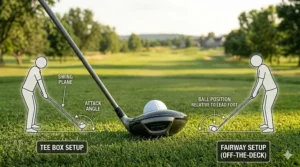
So, what exactly is a mini driver? At its core, it’s a club with a head volume between roughly 280cc and 340cc (compared to the standard driver’s 460cc maximum allowed by USGA rules), mated to a shaft that typically runs 43.5 to 43.75 inches — about two inches shorter than a traditional driver. That shorter shaft and extra loft translate to a smaller landing zone for your swing, tighter dispersion patterns, and — here’s where it gets interesting — the genuine ability to stripe one off the deck on a par 5 second shot.
Tommy Fleetwood helped put the mini driver on everyone’s radar. Jake Knapp won a PGA Tour event using a PXG Secret Weapon. Adam Scott, one of the purest ball-strikers on the planet, keeps one in his bag. When players of that caliber reach for something different, it’s worth paying attention.
But here’s the real story: the mini driver isn’t just for tour pros managing tight fairways. For mid-handicap golfers who spray their driver but never quite trust a 3-wood either, the mini driver from fairway occupies a genuinely magical gap in the bag. It goes further than a fairway wood. It’s more controllable than a driver. And on a reachable par 5, hitting one off a decent lie can make you feel like you’ve unlocked a cheat code.
This guide breaks down the seven best mini drivers available on Amazon right now in 2026, along with everything you need to know to choose the right one for your game.
Quick Comparison: Top 7 Mini Drivers at a Glance
| Club | Head Size | Loft | Shaft Length | Best For | Price Range |
|---|---|---|---|---|---|
| TaylorMade R7 Quad Mini Driver | 305cc | 11.5° / 13.5° | 43.5″ | Versatility & adjustability | $449–$499 |
| Callaway Elyte Mini Driver | 340cc | 11.5° / 13.5° | ~43.5″ | Forgiveness & AI speed | $449–$519 |
| TaylorMade BRNR Mini Driver | 304cc | 11.5° / 13.5° | 43.5″ | Nostalgia + off-deck performance | $350–$420 |
| Titleist GT280 Mini Driver | 280cc | 13° | 43.5″ | Control & turf playability | $449–$499 |
| PXG Secret Weapon Mini Driver | 300cc | 13° | 43.75″ | Tour-level adjustability | $440–$460 |
| Cobra KING TEC Mini Driver | 303cc | 13.5° | 43.75″ | Adjustability & forgiveness | $449–$479 |
| TaylorMade Burner Mini 2.0 Driver | 304cc | 11.5° / 13.5° | 43.5″ | Budget-friendly retro performance | $299–$380 |
The table above tells an interesting structural story. The largest heads (Callaway Elyte at 340cc) work best as tee-shot alternatives where forgiveness is paramount; smaller heads like the Titleist GT280 at 280cc shine when off-deck playability is the priority. Notice how the price range clusters between $350–$520 — this is a premium market segment, but every club here is USGA-conforming and tour-tested. The R7 Quad consistently leads independent testing data for versatility, while the Callaway Elyte holds the edge for raw forgiveness on miss-hits.
💬 Just one click — help others make better buying decisions too!😊
Top 7 Mini Drivers from Fairway: Expert Analysis
1. TaylorMade Golf R7 Quad Mini Driver
There are tribute acts, and then there’s the real thing reborn. The TaylorMade R7 Quad Mini Driver is the latter — a modern club wearing the skin of a legend, and doing it better than anyone expected.
The 305cc head features four movable weights: two at 13g and two at 4g. That might sound like spec-sheet trivia until you understand what it actually means on the course. Move the heavy weights forward and you get a penetrating, low-spin ball flight that absolutely threads through wind — perfect for links-style layouts. Move them rearward and the CG shifts back, making the club more forgiving and easier to launch. You’re not just buying one mini driver; you’re buying four different playing personalities in a single head.
The Infinity Carbon Crown saves weight at the top of the club, allowing engineers to redistribute that mass exactly where it creates the most benefit. Combine that with TaylorMade’s tried-and-true Twist Face technology — which subtly opens the face on low-toe strikes and closes it on high-heel misses — and you have a club that quietly corrects your errors without you ever noticing.
In independent testing at MyGolfSpy, the R7 Quad posted a 72% success rate from the turf — better than every competitor in the field. That’s not a small margin. Most golfers who pick up a mini driver exclusively for tee shots are leaving one of its best superpowers unused; the R7 Quad removes any excuse not to try it from the fairway.
Customers consistently rave about how much easier this is to hit than their previous 3-wood, particularly on longer holes where a slightly mishit fairway wood used to cost them 20 yards. The Speeder MD shaft keeps spin rates honest without feeling board-stiff.
Pros:
✅ Four movable weights offer elite shot-shaping flexibility
✅ 72% turf success rate — highest in independent testing
✅ Twist Face catches off-center strikes beautifully
Cons:
❌ Premium price; extra weight options sold separately
❌ Learning curve to dial in the weighting system optimally
In the $449–$499 range, this is as close to a “buy it once” mini driver as the market offers. Best for mid-to-low handicappers who want one club that does everything.
🔗 Check current price and availability on Amazon

2. Callaway Elyte Mini Driver
If the R7 Quad is a Swiss Army knife, the Callaway Elyte Mini Driver is a guided missile. Biggest head in this category at 340cc, a face designed by artificial intelligence, and enough forgiveness to make a 15-handicapper feel like they belong at Riviera.
Callaway’s Ai10x Face is the real headliner here. It’s built using actual player data and machine learning — ten times more control points than the previous Ai Smart Face — meaning the face geometry varies subtly across its entire surface to optimize spin and launch no matter where on the face the ball strikes. The result, as Callaway puts it, is measurably tighter downrange dispersion. Translation: your misses don’t punish you the way they used to.
The Thermoforged Carbon Crown is crafted from aerospace-grade material, lighter than steel, which allows discretionary weight to flow down and away from the crown for a lower, deeper CG. The club’s streamlined aerodynamic shape moves faster through the air than you’d expect something this forgiving to move.
What most buyers overlook about the Elyte is its Discrete Adjustable Weight system, borrowed directly from the full-size Elyte driver. You get neutral, draw, and fade settings — that’s rare at this price point in the mini driver segment, and it means you can configure the club specifically to combat your existing miss pattern. Golfers on Callaway’s own site report hitting 90% of fairways and losing only about 5 yards vs. their driver.
The 13.5° version, available in the Blackout Night Edition on Amazon, is arguably the better all-around choice for most players — easier to launch, more forgiving off the deck.
Pros:
✅ Ai10x Face is genuinely the most advanced in this category
✅ 340cc head offers maximum confidence at address
✅ Adjustable weight for draw/fade/neutral bias
Cons:
❌ Largest head makes tight-lie turf shots slightly more demanding
❌ Premium Night Edition costs significantly more
Price range sits around $449–$519 depending on configuration. The best choice for golfers prioritizing forgiveness and modern technology above all else.
🔗 Check current price and availability on Amazon
3. TaylorMade BRNR Mini Driver (Copper Edition)
Not every great club needs to look like it came from the future. The BRNR Mini Driver wears its heart on its sleeve — specifically a copper-tinted sleeve that channels the legendary TaylorMade Ti Bubble 2 of the late 1990s. It’s part nostalgia trip, part serious performance machine.
At 304cc with a 43.5-inch shaft, the BRNR occupies the same physical territory as the R7 Quad but with a different personality. The split weight system — one 13g weight and one 1.5g weight — is simpler than the R7’s quad system, but no less effective. Standard setting puts the heavy weight rearward for easy launch; the low-spin setting flips it forward for a Tour-friendly piercing flight. Choose your day.
The K-SOLE is the quiet hero nobody talks about enough. That “K” shaped sole geometry isn’t cosmetic — it’s engineered to let the club glide through turf with minimal resistance, which is exactly why the BRNR earns its reputation as a legitimate driver-off-the-deck option. On a firm fairway with a decent lie, this thing can go over 250 yards with a swing speed in the mid-90s. Add Twist Face technology for error correction, and Thru-Slot Speed Pocket for low-face ball speed, and you have a remarkably complete club.
Reviewers who already own the original BRNR and upgraded to the copper edition consistently note the better sound — crisper, more satisfying — and the subtle improvement in off-center feel. Tommy Fleetwood’s endorsement isn’t marketing fluff; this club genuinely suits the creative shotmaker who wants to work the ball.
Pros:
✅ K-SOLE design is exceptional for off-deck playability
✅ Retro aesthetic turns heads at the first tee
✅ Proven tour-level technologies (Twist Face, Speed Pocket)
Cons:
❌ Two-weight system less adjustable than competitors
❌ Some players find the copper finish distracting at address
In the $350–$420 range, this is strong value for what you get. Best for golfers who want serious off-deck capability wrapped in a club that looks absolutely unique.
🔗 Check current price and availability on Amazon
4. Titleist GT280 Mini Driver
Titleist doesn’t chase trends. The brand watches, waits, and enters only when it has something worth saying. The GT280 Mini Driver is exactly that kind of statement.
The 280cc head is the smallest in this roundup — and that’s entirely by design. Rather than building a shrunken driver, Titleist built a supercharged 2-wood that prioritizes control and versatility over raw head size. The Proprietary Matrix Polymer (PMP) composite replaces the traditional carbon crown, saving meaningful weight and allowing engineers to optimize CG placement with precision. A new Forged L-Cup Face — titanium, wrapping around the bottom of the head — specifically addresses low-center-of-face strikes, which are the exact miss pattern you encounter most when trying to hit off a tight lie.
The flatter sole profile is a subtle but crucial detail. It hugs the ground more naturally at address, giving you a lower leading edge that makes picking the ball clean from a firm fairway feel instinctive rather than terrifying. Independent reviewers across multiple platforms consistently flag this as the most versatile mini driver on the market in terms of lie variability.
Ball speeds from the GT280 sit 3-4 mph below the full-size Titleist GT4 driver but above the GT2 fairway wood — exactly where you’d want them for proper bag gapping. The SureFit hosel provides 16 different loft and lie settings, which is meaningful adjustability for a club that Titleist frames as a precision tool.
The feedback is demanding. It tells you exactly what you did. For better players, that’s a feature; for high-handicappers looking for a confidence blanket, consider the Callaway Elyte instead.
Pros:
✅ Flat sole excels on tight lies — best in category for off-deck feel
✅ 280cc head inspires workability and shot shaping
✅ Pristine Titleist sound and feel at contact
Cons:
❌ Smaller head less forgiving than 340cc alternatives
❌ Single 13° loft only (adjustable via SureFit hosel)
Priced around $449–$499. Best for scratch to 8-handicap golfers who want a versatile mini driver from fairway that plays like a true 2-wood.
🔗 Check current price and availability on Amazon
5. PXG Secret Weapon Mini Driver
The name was never going to stay a secret for long — not after Jake Knapp used it to win the Grant Thornton Invitational. PXG called it the Secret Weapon, and the club, rather inconveniently for the brand, immediately proved that it was exactly that.
At 300cc with a 43.75-inch shaft and a 13-degree loft, the Secret Weapon sits squarely in the middle of the mini driver universe. What sets it apart from every other option in this list is the four-weight port system in the sole. You get two 15g weights and two 2.5g weights, configurable in multiple combinations that allow you to dial in higher MOI, draw bias, or fade bias. PXG also sells additional weights in 2.5g increments from 2.5g all the way to 20g — no other mini driver on the market offers that kind of weight personalization.
The robotically polished titanium face maximizes ball speed and energy transfer. The composite crown redistributes mass lower and rearward for enhanced launch and forgiveness. The adjustable hosel adds another ±1.5 degrees of loft adjustment on top of all that weight flexibility.
In testing, the Secret Weapon ranked second for distance behind the R7 Quad in the MyGolfSpy 2025 field test and achieved a 71% turf success rate. One reviewer described it this way: “All it does is find fairways.” That’s not an accident. The PXG fitting process — if you’re anywhere near a PXG store — is the single best way to configure this club for your swing.
The one legitimate critique: it ranks last in the consistency/forgiveness category among tested mini drivers. Meaning a well-struck Secret Weapon is a joy; the off-center shots are punished more than with the Callaway Elyte.
Pros:
✅ Most adjustable mini driver on the market (4 weight ports)
✅ Tour-proven — won a PGA Tour event in first season
✅ Titanium face delivers elite ball speed
Cons:
❌ Less forgiving than competitors on true mishits
❌ Full value requires PXG fitting experience
In the $440–$460 range. Best for better players who take bag fitting seriously and want maximum customization potential from their mini driver from fairway.
🔗 Search for PXG Secret Weapon Mini Driver on Amazon
6. Cobra KING TEC Mini Driver
New to 2026 and already turning heads. Cobra took its time entering the mini driver segment, launched in January 2026, and it arrived with the FutureFit33 Adjustable Hosel — 33 unique loft and lie settings, more than double what any competitor offers. That number isn’t marketing fluff; it’s a meaningful engineering statement about how seriously Cobra has thought through fitting flexibility.
The 303cc head uses a multi-material construction: titanium body, carbon crown, and Cobra’s AI-developed PWRSHELL H.O.T. Face. The H.O.T. Face (High Strength Optimized Titanium) uses artificial intelligence to vary the face thickness across its surface, creating fast, consistent ball speeds even on shots struck toward the periphery. Two interchangeable external sole weights allow players to shift CG for higher or lower launch and more or less spin.
At 13.5° loft with a 43.75″ shaft, this plays like a club that genuinely bridges the driver/fairway wood gap. Reviewers at Golf Reviews Guide awarded it standout marks for forgiveness and adjustability, noting that the compact 303cc shape works well from a variety of lies — from the first cut to a clean fairway. Cobra’s president Dan Ladd specifically called out that recreational players can benefit as much as tour professionals here, and the testing data backs that up.
The FutureFit33 system is the real differentiator. Want a slightly flatter lie for your swing plane? Done. Need 1.5° extra loft to get more height? Dial it in. No other mini driver on the market lets you micro-tune your setup to this degree.
Pros:
✅ FutureFit33 hosel offers 33 settings — most in the category
✅ PWRSHELL H.O.T. Face AI for consistent speed across the face
✅ Strong forgiveness profile for a 303cc head
Cons:
❌ Only available in 13.5° standard loft
❌ Newest model; long-term durability still being evaluated
Priced around $449–$479. Best for golfers who value fitting flexibility above everything else and want the latest technology in a mini driver.
🔗 Check current price and availability on Amazon
7. TaylorMade Golf Burner Mini 2.0 Driver
Every category has a best value option. In the mini driver space, it’s the TaylorMade Burner Mini 2.0. Same core DNA as the original BRNR — 304cc head, K-SOLE, Twist Face, Speed Pocket — but without the premium copper trim and retro branding that pushes the price of the copper edition upward. This is the club for golfers who want mini driver performance without paying flagship prices.
The Movable Weight Technology works identically to the copper BRNR: 13g weight forward for low spin, 13g rearward for easy launch. The four-degree loft sleeve with 12 possible positions gives you genuine flexibility from 11.5° to 13.5° and beyond, with lie and face angle adjustments baked in.
What most buyers overlook about this model is the 4-loft sleeve’s lie adjustment capability. If you tend to hit your fairway clubs slightly right, adjusting the face angle through the sleeve can quietly straighten your ball flight without any swing change required. It’s a sneaky-useful tool for golfers who haven’t taken the time to get properly fitted.
Available in 11.5° and 13.5° right-handed configurations on Amazon, with regular and stiff shaft options. Customer feedback consistently praises the versatility — golfers who replaced their 3-wood with this club report hitting more fairways and losing minimal distance. One reviewer even runs two BRNR Mini 2.0s in their bag: the 11.5° as a driver replacement and 13.5° as a 3-wood substitute.
Pros:
✅ Best value for proven TaylorMade mini driver technology
✅ Available in multiple loft/flex combinations on Amazon
✅ K-SOLE off-deck performance matches premium models
Cons:
❌ Less sophisticated weight system than the R7 Quad
❌ Retro aesthetic is toned down vs. the copper edition
In the $299–$380 range. Best for budget-conscious golfers who want the mini driver from fairway experience without the flagship price tag.
🔗 Check current price and availability on Amazon
✨ Don’t Miss These Exclusive Deals!
🔍 Take your fairway game to the next level with these expertly selected mini drivers. Click any highlighted product name to check current pricing and availability on Amazon. These clubs will transform how you manage the long game — off the tee and off the deck.
How to Pick the Right Mini Driver from Fairway: A Real Decision Framework
Here’s where most buying guides fall short: they tell you what the clubs do but not which one suits you specifically. Let me fix that.
Step 1: Decide your primary use case. Are you predominantly replacing a trouble club off the tee, or do you genuinely want a club you can hit off the fairway? If it’s mostly tee shots, the Callaway Elyte’s 340cc head gives you the most forgiving address position. If off-deck performance is the priority, the Titleist GT280’s flat sole and 280cc compact head is engineered precisely for that.
Step 2: Assess your handicap honestly. Below 8: Look at the PXG Secret Weapon or Titleist GT280 — both reward clean, repeatable ball-striking and give you shot-shaping tools to work with. 9–18: The TaylorMade R7 Quad or Callaway Elyte delivers the best blend of forgiveness and performance. Above 18: The Burner Mini 2.0 or Cobra KING TEC gives you meaningful technology without complexity that’ll overwhelm.
Step 3: Check your bag gaps. This is something the spec sheets will never tell you. According to Golf Digest’s equipment experts, you need to ensure the mini driver creates a sensible yardage gap between your driver and your next longest club. If your driver goes 250 yards and your 3-wood goes 220 yards, a 13.5° mini driver that goes 235 yards slots in perfectly. If your driver already goes 235 yards, however, a mini driver might create a gapping problem rather than solve one.
Step 4: Consider shaft weight. TaylorMade’s own fitting team recommends matching your mini driver shaft to your driver shaft weight as a starting point, then going 10–20 grams heavier if you specifically need the mini to play shorter than the big stick for gapping purposes.
Step 5: Get fitted if possible. Every club in this list rewards fitting. PXG and Titleist especially — both brands have strong fitting networks and the clubs’ adjustability means a fitter can dial them into your swing in ways the stock settings never could.
Who Actually Benefits from a Mini Driver? Real-World Profiles
Profile 1: The Accurate Mid-Handicapper (Handicap 10–16)
This golfer hits maybe 45–50% of fairways with their driver and has stopped trusting their 3-wood off the tee because it either hooks or goes too short. They’re leaving 15–25 yards of distance per hole by playing conservatively. The R7 Quad or Callaway Elyte slots into the bag next to a 5-wood, replacing the 3-wood entirely. The result: more fairways hit, more approach shots from predictable yardages, and occasionally a second shot on a par 5 that was previously out of reach.
Profile 2: The Course-Savvy Low Handicapper (Handicap 3–9)
This player knows their driver is dangerous on specific holes — the ones with water left, OB right, or a landing zone so narrow a driver is essentially gambling. They don’t need more forgiveness; they need control they can count on. The Titleist GT280 or PXG Secret Weapon gives them a club they can work both ways off the tee, shape to a target, and occasionally punch down a fairway when the conditions call for it. At Pebble Beach, Augusta-style tight layouts, or any course where position matters more than power, this is the club.
Profile 3: The Weekend Golfer Replacing Their 3-Wood (Handicap 17+)
This golfer has never truly trusted their 3-wood off the deck. It’s effectively a tee club only. They’re leaving shots on the table on every par 5 they can’t reach in two. The Burner Mini 2.0 or Cobra KING TEC is the answer — enough forgiveness to cover swing inconsistencies, enough loft to get the ball airborne reliably, and a K-SOLE or H.O.T. Face that makes turf contact far more forgiving than a traditional fairway wood.
Mini Driver vs. 3-Wood: Stop Treating These as Interchangeable
This debate deserves a proper airing. Both clubs have about the same shaft length. Both are used off the tee and, occasionally, off the deck. But they are not the same animal, and choosing one over the other has meaningful scoring consequences.
| Factor | Mini Driver | 3-Wood |
|---|---|---|
| Head Volume | 280–340cc | 150–180cc |
| Off-Tee Distance | Higher | Moderate |
| Off-Deck Ease | Moderate | Higher (shallower face) |
| Forgiveness | Higher | Lower |
| Best Use | Tight fairways; par-5 second shots | Layups; approach shots from fairway |
| Workability | Good | Very Good |
| Price Range | $299–$519 | $200–$450 |
Here’s what the table doesn’t say outright: the mini driver beats a strong 3-wood for tee shots virtually every time. More mass behind the ball means more efficient energy transfer at the same loft, which means more distance. TaylorMade’s own data, confirmed by multiple independent testers, shows that a mini driver off the tee outperforms a fairway wood of similar loft by 10–20 yards in most swing speed ranges.
The 3-wood has a genuine advantage in one specific scenario: extremely tight lies in the fairway where a shallower face profile makes it easier to pick the ball clean. The Titleist GT280 mini driver narrows that gap considerably with its flat sole, but a traditional shallow-faced 3-wood still has a slight edge on ultra-firm lies.
The most interesting option — one more and more golfers are trying — is carrying both a mini driver and a 5-wood, leaving the 3-wood out. You get the tee-shot accuracy of the mini driver and the off-deck reliability of the 5-wood, without any significant yardage gap.
Analyzing this comparison, the mini driver clearly wins for players who primarily use their fairway wood off the tee. The 3-wood retains its edge only for golfers who consistently strike from challenging fairway lies where the shallower face geometry matters.

Common Mistakes When Buying a Mini Driver
The mini driver category is hot right now, and that means plenty of golfers are making expensive buying mistakes. Here’s how to avoid the most common ones.
Mistake 1: Assuming bigger head = better. The Callaway Elyte at 340cc is supremely forgiving off the tee. It’s also the most demanding to hit from tight fairway lies. If “mini driver from fairway” is what you’re actually after — meaning you want off-deck capability — a 340cc head works against you. The Titleist GT280 or TaylorMade R7 Quad at 280–305cc are better choices.
Mistake 2: Buying the wrong loft for your bag. The 11.5° version of the TaylorMade BRNR is a semi-driver replacement — essentially a precision driver with a smaller head. The 13.5° version is the true fairway finder. If you’re adding a mini driver alongside your driver, 13.5° is almost always the right call. If you’re replacing your driver entirely, 11.5° makes more sense.
Mistake 3: Skipping the fitting. According to Golf Digest, a professional fitting dramatically improves mini driver performance compared to playing off-the-rack settings. The adjustability in these clubs exists for a reason; a fitter can configure shaft weight, loft, and CG position specifically for your swing in under an hour.
Mistake 4: Ignoring yardage gapping. This is the most costly mistake. A mini driver that goes the same distance as your driver adds zero strategic value. Make sure there’s a 10–15 yard gap between your driver and mini driver before committing to the purchase.
Mistake 5: Expecting a miracle cure for swing flaws. The mini driver will not fix a path issue or a grip problem. It will produce straighter results than a driver if your swing is reasonably sound — the shorter shaft and extra loft tighten dispersion, but they don’t compensate for fundamental swing errors. If you’re hitting your driver with a severe outside-in path, the mini driver will still produce a slice — just a slightly shorter one.
Features That Actually Matter (And Those That Don’t)
The marketing departments of every golf company in this list are very good at their jobs. Here’s what I’d separate from the noise.
Actually Matters:
The sole design is real. The K-SOLE on TaylorMade’s BRNR series genuinely helps the club glide through turf more cleanly than a standard sole geometry. If off-deck performance is your goal, sole shape is one of the most practical differentiators between models.
Carbon crown construction matters — but not because carbon is magic. It matters because saving 10–20 grams of weight at the top of the head means those grams can be repositioned to the sole and perimeter, lowering CG and raising MOI. That physics reality directly translates to easier launch and more forgiveness.
Adjustability matters if you’ll actually use it. Four-weight systems (PXG, R7 Quad) give you meaningful ball-flight control. But if you set the club once and never touch the weights again — which is what most golfers do — that feature becomes irrelevant. Be honest with yourself.
Marketing Fluff to Take with a Grain of Salt:
Exact distance claims. “10x more control points” or “8 yards longer” are comparison figures taken under controlled testing conditions by the manufacturer. Your numbers will vary, sometimes dramatically. What matters is how the club performs relative to other clubs in your bag, not what it does in a controlled test environment.
“Tour-proven performance.” Every club in this roundup has been used by tour professionals. That doesn’t mean it’s the right club for a 14-handicapper playing a muni on weekends. Tour pros and amateur golfers have fundamentally different swing speed profiles and contact quality.
What to Expect in the First Month with a Mini Driver
The learning curve is real, and it’s shorter than you think. Here’s what to expect.
Weeks 1–2: The Adjustment Period
Your first instinct will be to swing the mini driver like your driver. Don’t. The shorter shaft naturally narrows the arc of your swing, which will feel strange if you’ve spent years with a 45-inch driver. Hit 30 balls at the range specifically focusing on tempo — not power. The club will surprise you with how much distance it generates from a controlled, repeatable swing.
Practice drill: Tee the ball slightly lower than you normally would for a driver, roughly half an inch off the deck rather than two inches up. The mini driver’s extra loft and smaller head want to connect with the ball on a slightly lower trajectory than a standard driver.
Weeks 2–3: Finding Fairways
By the second week, most golfers start to notice something: they’re finding fairways they used to miss. The tighter dispersion pattern — a natural result of the shorter shaft and extra loft — starts showing up in your stats. This is the club working as designed.
Week 4: The Off-Deck Experiment
Once you’re comfortable off the tee, try it from the fairway. Start from the first cut of rough, where the ball sits up slightly. Then work to cleaner fairway lies. Per research from The Left Rough, the larger head volume compared to a fairway wood means more mass behind the ball, which translates to noticeably more distance even at the same loft. Most golfers discover an extra 15–25 yards off the deck versus their previous fairway wood.
Common Mistake to Avoid: Don’t try to sweep the ball off a tight lie in your first two weeks. Dig into the turf slightly — the K-SOLE or flat sole geometry on most of these clubs will prevent the ground from killing your shot. Trust the design.
Long-Term Value and Maintenance: What These Clubs Cost to Own
Mini drivers occupy premium price territory for good reason — multi-material construction, adjustable systems, and tour-tested technology all add manufacturing cost. But let’s think about total cost of ownership rather than just sticker price.
Most golfers who add a mini driver to their bag remove either their 3-wood or, occasionally, a redundant hybrid. If a new 3-wood would have cost you $249–$349, and you’re spending $449 on a mini driver that outperforms it in your primary use case, the real incremental cost is less than $200. Over 30 rounds a year, that’s under $7 per round for a club that fundamentally changes how you manage long holes.
Maintenance is minimal. Keep the clubface groove clean after each shot — a simple groove brush handles this in 30 seconds. The adjustable hosel mechanism should be checked yearly; a small amount of anti-seize compound prevents the screw from binding. Shafts on these clubs (graphite, 65–75 grams) are durable but should be inspected for cracking near the hosel every season. Most manufacturers will replace a warped shaft under warranty.
The adjustable systems don’t wear out under normal use, but lose the torque wrench that comes with the club and you’ll pay $15–$25 to replace it. Worth keeping in the bag pocket.

FAQ
❓ Is a mini driver easier to hit from the fairway than a 3-wood?
❓ What loft should I choose for my mini driver — 11.5° or 13.5°?
❓ Can a mini driver replace my 3-wood in my golf bag?
❓ Are mini drivers legal for tournament play?
❓ What swing speed do I need for a mini driver to work effectively?
Conclusion
The mini driver from fairway isn’t a gimmick. It’s not a trend that’ll disappear by next year. It’s a club that addresses a real gap in most golfers’ bags — the no man’s land between a driver that’s hard to control and a 3-wood that doesn’t go far enough — and it does so with increasingly sophisticated technology at a range of price points.
The TaylorMade R7 Quad leads the 2026 field for outright versatility and turf performance. The Callaway Elyte is the forgiveness king. The Titleist GT280 is the purist’s choice. The PXG Secret Weapon rewards the fitter. The Cobra KING TEC brings unmatched adjustability. And the TaylorMade BRNR family offers proven technology at multiple price points for every budget.
Every golfer’s game is different, but if you’re regularly missing fairways with your driver, leaving par 5s unreachable because your 3-wood won’t go far enough, or simply looking for one club that does two important jobs exceptionally well — the mini driver is worth serious consideration in 2026.
✨ Don’t Miss These Exclusive Deals!
🔍 Ready to try a mini driver from fairway? Click on any highlighted product above to check current pricing and availability. Your fairways hit percentage will thank you.
Recommended for You
- Mini Driver vs Standard Driver: 7 Best Picks in 2026
- 7 Best Women’s Driver Petite Height Picks That Actually Work (2026)
- 7 Best Women’s Driver Lightweight Design for Longer Drives in 2026
Disclaimer: This article contains affiliate links. As an Amazon Associate, I earn from qualifying purchases. If you purchase products through these links, we may earn a small commission at no additional cost to you.
✨ Found this helpful? Share it with your friends! 💬🤗
