In This Article
Players irons for advanced golfers are compact, usually forged irons built for control rather than maximum forgiveness. They combine thinner toplines, minimal offset, and smaller heads so skilled ball-strikers can shape shots, manage trajectory, and read exactly what the face is telling them. Most suit players from the low single digits up to roughly a 10 handicap.

Here’s the uncomfortable truth about this category: the gap between a great set and a merely good one is tiny, and the gap between the right set and the wrong set for your swing is enormous. In the ClubTest better-players category, the top models are separated by fractions of a yard and a few points of spin. So the question isn’t “which iron is best?” It’s “which iron is best at what I do?”
That’s what this guide is for. You’ll find seven real, currently relevant models, from the tour-proven Titleist T100 to the 3D-printed Cobra 3DP MB. Each one gets honest analysis instead of spec-sheet recitation. We also dig into blades vs cavity back irons for advanced players, the muscle-back design, feel and feedback, and shot workability, then finish with golf clubs for shot shaping advanced players.
A quick word on method. We synthesized published tests, expert reviews, and reported user sentiment. We did not personally test these clubs. Where verified data is thin, we say so. Prices are ranges only, and they move, so check current pricing before you buy.
Quick Comparison Table: Players Irons for Advanced Golfers at a Glance
| Iron | Design Type | Forgiveness (relative) | Workability (relative) | Price Range (steel set, approx.) | Best For |
|---|---|---|---|---|---|
| Titleist T100 | Compact dual-cavity | Moderate | High | Roughly $1,300-$1,600 | Tour-style all-rounders |
| Srixon ZXi7 | Forged cavity | Moderate | High | Roughly $1,100-$1,400 | Feel-first players |
| TaylorMade P7CB | Forged cavity back | Moderate-high | High | Roughly $1,300-$1,700 | Players wanting long-iron help |
| Cobra 3DP MB | 3D-printed muscle back | Surprisingly high for a blade | Very high | Above $2,000 | Blade lovers who miss the middle |
| Mizuno Pro S-3 | Classic-style forged | Moderate | Very high | Roughly $1,300-$1,700 | Traditionalists |
| Takomo 301 MB | Forged muscle back | Low | Very high | Roughly $800-$1,200 | Pure ball-strikers on a budget |
| Wilson Staff Model CB | Forged cavity back | Moderate | High | Roughly $1,100-$1,500 | Value-minded better players |
Notice the pattern. Forgiveness and workability trade off along a diagonal, and price doesn’t always follow it. The Cobra 3DP MB breaks the pattern by using internal lattice structure to add stability to a blade profile, and that cleverness is why it costs so much. Meanwhile, the Takomo 301 MB gives you a true muscle back for noticeably less money, though it demands cleaner contact than anything else on this list.
💬 Just one click — help others make better buying decisions too!😊
Top 7 Players Irons for Advanced Golfers: Expert Analysis
1. Titleist T100 — the tour-proven benchmark
The T100 has been the reference point for this category for years, and Today’s Golfer notes the T-series remains the most popular collection across virtually every major tour. The appeal is balance: it looks like a players iron but doesn’t punish you like one.
The construction is a compact dual-cavity design with tungsten weighting, and the faces are now fully CNC milled. In practice, that tungsten pushes weight toward the perimeter, so a strike slightly off the toe loses less speed than the head size suggests. The updated grooves in the shorter irons are designed for more spin and control, while the longer irons launch a touch higher.
If you play tournament golf and want one set that never feels like the wrong choice, this is the safest recommendation. Reviewers consistently describe it as a polished blend of feel, forgiveness, and looks. The trade-off is that its topline and profile are refined rather than dramatic, so blade purists may want more character.
Pros:
- ✅ Compact head with hidden forgiveness
- ✅ Consistent CNC-milled face and refined grooves
- ✅ Huge tour pedigree and easy resale demand
Cons:
- ❌ Premium pricing versus similar forged cavities
- ❌ Less distinctive feel than softer competitors
Expect a price in the roughly $1,300-$1,600 range for a steel set. That’s fair for a benchmark, but check current pricing and availability first.
2. Srixon ZXi7 — the feel-first forged cavity
If your priority is how the ball comes off the face, the ZXi7 deserves a demo. Srixon’s new i-FORGED process and expanded PureFrame technology target impact sensation, and the ZXi7 earned a 2025 ClubTest Game Changer award in the better-players category.
Golfalot describes it as more workable than the ZXi5 but far more forgiving than Srixon’s Z Forged II muscle backs, which places it in the sweet spot for a skilled player who wants a blade-ish look. It sits flush at address with minimal offset and a square leading edge, a combination that inspires confidence on shots you intend to curve.
The key caution comes from Golfmagic’s testers, who found distance and dispersion suffered on toe and heel strikes, suggesting Srixon dialed feel up slightly ahead of forgiveness. That’s an honest trade. If you strike it centered, the softness is a delight. If your misses are wide, the ZXi5 may serve you better.
Pros:
- ✅ Buttery, soft feel from forged construction
- ✅ Clean, flush address with a square leading edge
- ✅ Strong value versus the big-name rivals
Cons:
- ❌ Off-center strikes lose noticeable ball speed
- ❌ Thicker topline than some rivals
The typical price is roughly $1,100-$1,400. Value verdict: excellent for the feel you get.
3. TaylorMade P7CB — the cavity back that helps your long irons
The P7CB is TaylorMade’s tour-inspired cavity back, and Today’s Golfer calls it a strong alternative to the T100, Ping Blueprint S, and Srixon ZX7 Mk II. Its distinguishing move is a sole about 2mm wider than the older P7MC, which makes it more playable through the set.
That extra sole width matters most in the 4-, 5-, and 6-irons, where a narrow sole can dig or stall. Reviewers point to added shot-stopping power in those long irons and a touch more forgiveness in the shorter ones. If your game demands a real 4-iron off tight lies, this is where the P7CB earns its keep.
Who is it for? Advanced golfers who want players-iron looks without babysitting every strike. Golf Monthly frames it as an iron for highly competent ball-strikers seeking a more user-friendly alternative to a true blade. Feel is crisp and lively rather than pillowy, so if you love cushiony impact, compare it against the Srixon ZXi7.
Pros:
- ✅ Wider sole helps long-iron playability
- ✅ Sleek, compact profile with tour looks
- ✅ Good shot-stopping ability for the category
Cons:
- ❌ Firmer feel than some rivals
- ❌ Priced at the premium end
Budget roughly $1,300-$1,700. Fair value if long irons are your weak spot.
4. Cobra 3DP MB — a muscle back that shouldn’t be this forgiving
This one is the wild card. Golf Digest reports the irons are entirely 3D printed, with an interior lattice that supports durability, produces a pleasing sound, and frees up weight for tungsten. That tungsten lowers the center of gravity, which is how a blade-profile iron gets forgiveness usually reserved for hollow-body designs.
Golfmagic goes as far as calling it the most forgiving blade on the market and says it could comfortably suit someone up to a 10 handicap. Golf Monthly agrees, praising its impact sensation and surprising forgiveness, while noting the price tag will put some buyers off.
Here’s what most buyers overlook: this is the answer to the classic muscle-back dilemma, “I love the look, but I can’t afford the misses.” You get the traditional silhouette, high workability, and a safety net you can’t see. What you pay for is engineering, not brand heritage.
Pros:
- ✅ True blade look with unexpected forgiveness
- ✅ Tungsten-assisted stability from lattice construction
- ✅ Excellent impact sound and sensation
Cons:
- ❌ Price is well above most competitors
- ❌ Limited history, so long-term durability data is thin
Expect above $2,000 for a set. Verdict: a splurge, justified only if you’ll actually use that blade profile.
5. Mizuno Pro S-3 — the classicist’s iron
The S-series is Mizuno’s “signature” line, and Today’s Golfer notes it runs on a four-year update cycle rather than two, because Mizuno reasons S-series buyers want a long-term club, not annual novelty. Head technology changes are minimal by design.
That philosophy is the entire pitch. You get a truly classic-style Mizuno shape, a thin blade-leaning look, and the brand’s famous impact feel. MyGolfSpy’s 2026 testing notes that Mizuno’s irons swept its subjective feedback awards in the distance category, evidence that the feel reputation isn’t just marketing.
Who should buy it? Skilled players who value looks, tradition, and a stable long-term set they won’t feel pressured to replace. Who shouldn’t? Anyone who wants cutting-edge forgiveness tech, because that isn’t what this iron is selling. Reviewer coverage of the S-3 specifically is thinner than for the T100, so demo before buying.
Pros:
- ✅ Classic shape with a sharp, thin look
- ✅ Legendary Mizuno forged feel
- ✅ Long update cycle protects your investment
Cons:
- ❌ Little new technology versus the last generation
- ❌ Less margin for error than modern hybrids of the concept
Price is roughly $1,300-$1,700. Value is solid if you keep clubs for years.
6. Takomo 301 MB — the budget muscle back
Direct-to-consumer brands have quietly changed the value equation, and the 301 MB is a good example. Today’s Golfer notes that Takomo updated its 101, 201, and 201T irons to Mkii editions while the 301 CB and MB carried on into 2026, a “if it ain’t broke” decision.
A pure muscle back is the most honest club in golf. There’s no cavity to hide behind, and the sweet spot is exactly where you’d expect it. That means unmatched feedback for a player who wants to learn from every strike, and unmatched punishment for the one who doesn’t hit the center.
Choose this if you’re a consistent, ball-first striker who wants a genuine blade without a premium-brand price. Avoid it if your dispersion is wide, because with no perimeter weighting to lean on, the results will be blunt. Verified independent review data on the 301 MB is sparse, so treat this as a demo-first purchase.
Pros:
- ✅ True muscle-back profile at a lower price
- ✅ Maximum feedback on strike quality
- ✅ Excellent shot-shaping potential
Cons:
- ❌ Very unforgiving on off-center hits
- ❌ Limited independent testing data available
Roughly $800-$1,200. Value verdict: outstanding for the right striker.
7. Wilson Staff Model CB — the value-minded cavity back
Wilson’s CB has appeared in the same MyGolfSpy players-iron test pool as the brand’s XB model, which highlights how broad this category is. It targets skilled players who want forged cavity-back performance without the badge premium of the biggest names.
Honest transparency: the verified review material we could locate for this specific model was limited, so we won’t manufacture sentiment. What we can say from category logic is that a forged cavity back in this class typically offers the middle path, with a moderate head size and a mix of feel and forgiveness closer to the TaylorMade P7CB than to a muscle back.
If you’re building a shortlist, put it in the demo lineup alongside the Titleist T100 and Srixon ZXi7. Wilson has been aggressive in this space, and pairing a fitting session with real launch monitor numbers will tell you more than any review.
Pros:
- ✅ Forged cavity-back category performance
- ✅ Typically priced below marquee rivals
- ✅ Good fit for the mid-to-low single digit player
Cons:
- ❌ Less independent review data available
- ❌ Smaller resale market than Titleist or Mizuno
Roughly $1,100-$1,500. Value verdict: promising, but verify with a fitting.
Buyer’s Decision Framework: Which Iron Fits Your Game?
Forget handicap for a moment. Modern fitting is about your misses, your delivery, and your goals. Use this as a priority checklist.
- If your strikes cluster in the center of the face and you crave feedback, choose a muscle back like the Takomo 301 MB or a classic like the Mizuno Pro S-3. A tight strike pattern rewards a small sweet spot.
- If you want blade looks but still miss the middle a few times a round, choose the Cobra 3DP MB, because its lattice and tungsten construction adds stability without changing the profile.
- If your long irons are the weak link, choose the TaylorMade P7CB. The wider sole helps the 4- through 6-irons.
- If feel is your first filter, choose the Srixon ZXi7, provided you can live with reduced speed on wide toe and heel misses.
- If you want the safest all-around pick, choose the Titleist T100.
- If value matters and you’re willing to demo, choose the Wilson Staff Model CB or Takomo 301 MB.
Pair this with a simple three-question test. First, where do 80% of your misses land? Second, do you shape shots on purpose or fix them accidentally? Third, would you rather lose two yards or gain twenty feet of dispersion? Your answers point to the design faster than any spec chart.
✨ Don’t Miss These Exclusive Deals!
🔍 Take your iron game to the next level with these carefully selected models. Click on any highlighted item to check current pricing and availability. These clubs will help you create the shot-shaping control you’ve been chasing!

Real-World Scenario: Three Advanced Golfers, Three Different Sets
Case studies beat theory, so here are three composite profiles. They’re illustrative scenarios built from typical player patterns, not real individuals.
The weekend competitor (scratch to 3 handicap, plays club tournaments monthly). Consistency under pressure is the goal. The Titleist T100 fits, because a slightly stable head protects against the one bad swing that ruins a round. Budget: a full set in the mid-$1,000s to $1,600, with a fitting.
The retired low handicapper (5 handicap, plays three times a week, speed dropping slightly). Long-iron help matters here more than pure workability. The TaylorMade P7CB and its wider sole make 4- and 5-irons playable at lower swing speeds, and that keeps the set usable for years.
The blade romantic (2 handicap, hits the center 70% of the time, loves the look). The Cobra 3DP MB justifies its cost by turning the other 30% into acceptable misses. If the budget won’t stretch, the Takomo 301 MB delivers the look and feedback for less, at the cost of forgiveness.
The takeaway: the “best” iron is the one that matches your miss pattern, not your ego. And yes, that includes admitting that you might be a cavity-back player in a blade lover’s body.
How to Choose Players Irons for Advanced Golfers
Featured snippet answer first: choose players irons by matching head design to your miss pattern, then verify with launch monitor data and a fitting. Here are the steps.
- Map your strike pattern. Track where contact lands on the face over 10-20 swings. Tight clustering supports smaller heads; scattered strikes need perimeter weighting.
- Decide how much workability you use. If you seldom curve the ball intentionally, a cavity back gives you everything you need.
- Check your long irons. A 4- or 5-iron you can’t launch is dead weight, so consider blended sets with wider soles.
- Match sole to your swing. Steep deliveries prefer more bounce and a wider sole; shallow deliveries can play tighter grinds.
- Prioritize feel honestly. Softer forged designs give better feedback, but they can trade forgiveness.
- Verify with data. MyGolfSpy’s 2026 players-iron test used 20 testers and more than 14,400 shots across 15 models, and it found little separation between top and bottom performers, so your personal numbers matter more than any ranking.
- Plan for shafts. The wrong shaft ruins the right head, so fit both together.
Blades vs Cavity Back Irons for Advanced Players
This is the big philosophical fork. A blade concentrates mass behind the center of the face; a cavity back moves mass to the perimeter. That single decision changes forgiveness, feedback, and how much you can bend the ball. Golf Digest’s Hot List panel scores players irons on performance, look/sound/feel, and innovation, and those three criteria neatly map to the trade-off.
| Factor | Blades (Muscle Back) | Cavity Back Players Irons |
|---|---|---|
| Forgiveness | Low | Moderate |
| Feedback | Very high | High |
| Workability | Very high | High |
| Head size | Smallest | Compact |
| Best For | Consistent, center-face strikers | Skilled players who still mishit |
| Example | Takomo 301 MB | Titleist T100 |
The table shows a real but narrowing gap. Modern engineering, especially the tungsten and lattice work in the Cobra 3DP MB, is closing the forgiveness difference without changing a blade’s profile. Meanwhile, the TaylorMade P7CB shows how far a cavity back can go toward tour aesthetics.
So which should you play? If you miss the center by less than about half an inch and enjoy dialing in trajectories, a blade is a rewarding choice. If not, a cavity back will lower your scores while looking nearly as sharp. Ego is expensive; a 3-yard loss on a bad strike usually costs less than a penalty stroke.
Muscle-Back Design: What You’re Really Buying
The muscle-back design has one job: put mass directly behind the impact zone and keep everything else out of the way. The result is a thin top edge, a compact head, and a small, precise sweet spot. Golf’s oldest clubs are, structurally, still its purest.
What does that mean at address? A cleaner, narrower look, minimal offset, and a slim sole that sits behind the ball. What does it mean at impact? Vibration is more directly communicated, because there’s no cavity to damp it. That’s why players describe muscle backs as both the best-feeling and the least forgiving irons.
Here’s the nuance most buyers miss. A muscle back doesn’t produce better ball-striking; it reveals it. If you’re honest about your contact, it becomes a training partner. If you’re not, it becomes an expensive frustration.
The category is also evolving. Traditional muscle backs like the Takomo 301 MB stay true to the format, while the Cobra 3DP MB hides internal latticing behind the same silhouette, giving forgiveness more akin to a modern hollow-body players model. Neither approach is “right.” They’re different answers to the same question about how much help you want.
Feel and Feedback: The Sensation Factor in Players Irons
Feel and feedback are separate things, and confusing them leads to bad purchases. Feel is the sensation: soft, firm, crisp, muted. Feedback is the information: where on the face did I hit it? A club can feel great yet tell you little, or feel harsh but tell you everything.
Forged construction is the traditional route to a soft feel. Srixon’s i-FORGED process is designed to strengthen the steel and improve immediate feedback, and Golfmagic’s testers described the ball as almost melting into the Srixon ZXi7 at impact. Mizuno’s reputation sits in the same territory, and MyGolfSpy’s 2026 testing gave the Mizuno Pro M-15 a clean sweep of its subjective feedback awards.
What should you actually weigh? Sound matters as much as vibration; a muted, dull click undermines confidence, while a crisp note reinforces it. Cavity fillings, badges, and lattice structures all tune this. On the Cobra 3DP MB, the interior lattice is credited with a pleasing sound.
A practical tip: hit at least ten shots off a mat, then ten off turf if you can. Mats flatter every iron, so if a club feels great only on artificial surfaces, keep looking. Feel is real, but so is a swing that changes with fatigue.
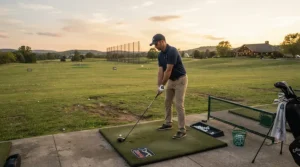
Shot Workability: Bending the Ball on Purpose
Shot workability is how easily you can curve the ball and vary trajectory on demand. It’s the reason advanced golfers choose players irons in the first place. Three design elements drive it: head size, sole width, and offset.
Smaller heads with less offset make it easier to open or close the face without the club fighting you. Narrow soles let you manipulate loft and lie, while low offset leaves the face aligned with the hosel. A square leading edge, like the one Golfalot noted on the Srixon ZXi7, helps you trust the alignment when you’re intentionally curving one.
Yet workability isn’t a free lunch. Most workable irons also start straighter, spin higher, and stop faster, so you’ll fly them shorter than a distance-oriented iron. That’s a feature at the green and a compromise at the tee.
Use it well: the Mizuno Pro S-3 and Takomo 301 MB sit at the workable extreme, while the Titleist T100 and TaylorMade P7CB trade a little curve for stability. If you hit a fade 90% of the time and want a draw only occasionally, you don’t need maximum workability. Choose the club that supports your usual shot and lets you cheat at the edges.
Golf Clubs for Shot Shaping Advanced Players: Matching Gear to Shot Type
Golf clubs for shot shaping advanced players are more than heads. Shafts, lofts, lie angles, and grooves all influence whether a shaped shot behaves the way you planned.
Shafts. A stable shaft in the correct weight and stiffness helps the face square consistently. Popular tour options include Dynamic Gold, KBS Tour, Project X, and Nippon Modus, and a fitter can measure which one tightens your dispersion.
Lie angle. If your lie is off by even a degree or two, the ball will start left or right of your target. That’s a fitting fix, not a swing fix.
Grooves and face milling. The Titleist T100 uses fully CNC-milled faces and revised grooves in the short irons for extra spin and control. That’s the type of detail that pays off on half-shots into firm greens.
Sole grind. Steep swingers benefit from more relief and width; the ZXi5 has drawn praise in GolfWRX’s roundup for a sole suited to steeper delivery. Shallow swingers generally like a tighter, flatter sole.
The point is simple: a perfect head with the wrong shaft or lie is a wasted purchase. Budget a fitting session and treat it as part of the price of the set.
Long-Term Cost and Maintenance: What Your Irons Really Cost
Sticker price is only the beginning. Total cost of ownership includes shafts, grips, lie-and-loft checks, and eventually replacement.
| Cost Item | Typical Range | Why It Matters |
|---|---|---|
| Iron set | Roughly $800-$2,000+ | Depends on model and shafts |
| Custom fitting | Often $50-$200 | Prevents costly wrong-shaft purchases |
| Regrip | Around $10-$15 per club | Grips wear before heads do |
| Loft and lie check | Around $5-$10 per club | Forged soft steel can bend over time |
| Resale | Varies by model | Titleist T100 and Mizuno tend to hold demand |
Prices here are approximate ranges and vary by shop. Notice that maintenance is small compared with the initial purchase. That’s why the fitting is the highest-value dollar you’ll spend.
Forged players irons use soft steel, so lofts and lies can drift with heavy use. Check them every 12-18 months if you play often. Clean grooves after every round; even a few packed grooves can change spin. And because the Mizuno Pro S-3 follows a four-year update cycle, it makes financial sense for anyone who keeps clubs a long time.
Cost per round tells the truth. A set that costs $1,500 and lasts five years of 60 rounds a year works out to roughly $5 a round. Even the pricier Cobra 3DP MB looks reasonable when spread across years of play.
Common Mistakes When Buying Players Irons
The most common error is buying the club you wish you could hit. Good ball-strikers who buy a muscle back for the look often lose distance control and confidence. As Today’s Golfer’s list shows across its 2026 players irons roundup, even the top picks demand a fitting to justify their reputation.
Other pitfalls worth avoiding:
- Ignoring long-iron playability. If a 4-iron is unhittable, skip it and use a hybrid.
- Chasing distance. Players irons prioritize control. If you need speed, look at players distance models instead.
- Skipping the shaft. Stock shafts are compromises.
- Trusting one test session. Numbers vary by ball, conditions, and fatigue, so retest.
- Buying on tour usage alone. Tour pros play custom-built specs you can’t replicate off the rack.
One more habit worth breaking: comparing headcover logos instead of comparing launch data. Modern irons are close enough that data, not brand loyalty, should break ties.

FAQ
❓ What handicap should play players irons?
❓ Are blades harder to hit than cavity back irons for advanced players?
❓ Do players irons go shorter than game improvement irons?
❓ How much should I budget for a set?
❓ Should I get fitted before buying players irons?
Conclusion
Choosing among players irons for advanced golfers comes down to honesty about your game. The Titleist T100 remains the safest all-round bet, the Srixon ZXi7 wins on feel, and the TaylorMade P7CB helps your long irons. The Cobra 3DP MB gives blade lovers an unexpected safety net, the Mizuno Pro S-3 rewards traditionalists, and the Takomo 301 MB and Wilson Staff Model CB offer value for those willing to demo.
Whatever you choose, remember that fractions of a yard separate the top models, while the fit between head, shaft, and swing separates good results from great ones. Match design to your miss pattern, then let a launch monitor confirm it.
Recommended for You
- Golf Club Set For 15 Handicap Golfers: 7 Picks To Break 90 (2026)
- 7 Best Golf Irons For Intermediate Players In 2026
- 7 Best Hybrid Clubs For Intermediate Golfers In 2026
Disclaimer: This article contains affiliate links. As an Amazon Associate, I earn from qualifying purchases. If you purchase products through these links, we may earn a small commission at no additional cost to you.
✨ Found this helpful? Share it with your friends! 💬🤗
