

In This Article
Somewhere between “can I try golf?” and actually loving it lies one make-or-break decision: the clubs. Beginner golf clubs for kids learning to play are not scaled-down toys, and they’re not your old 7-iron with six inches sawed off the shaft — they’re purpose-built tools, sized to a child’s height and swing speed, designed to make solid contact feel achievable on day one instead of day one hundred. Get that part wrong and you’ll watch a kid top three balls in a row, shrug, and wander off toward the trampoline. Get it right and you might just be buying the first piece of equipment in a lifelong hobby.

This guide walks through seven real, currently available junior sets spanning budget to premium, breaks down complete sets versus individual clubs, explains swing weight and adjustable-length options in plain English, and covers how youth golf lessons fit into the picture. Regular physical activity in children and adolescents promotes health and fitness, and compared to inactive peers, physically active kids show higher fitness levels, lower body fat, and stronger bones and muscles — golf checks that box while teaching patience most video games never will. We’ll skip the marketing fluff and focus on what actually matters when a 45-inch-tall human is about to swing a club for the first time.
Quick Comparison Table
| Product | Best For | Age/Height Range | Price Range |
|---|---|---|---|
| US Kids Golf UL7 Package Set | Precise height-based fitting | 39″–60″ (roughly ages 3–12) | $115–$250 |
| Callaway XJ Junior Set | Passed-down durability & premium tech | Ages 5–12 (3 size tiers) | $150–$280 |
| Wilson Profile JGI | Best all-around value complete set | Ages 5–8 primarily | $90–$160 |
| Cleveland Junior Series (CGJ) | Widest size range, easy launch | Ages 4–teens (3 package sizes) | $130–$260 |
| TaylorMade Team TaylorMade Junior Set | Lightweight graphite, brand familiarity | Ages 5–12 | $110–$220 |
| MacGregor DCT Junior Set | Tightest budget, first-time trial | Ages 4–10 | $60–$100 |
| Wilson Deep Red Tour Junior Set | Growing teens, custom-fit-in-a-box | Ages 10–15 (58″–69″) | $180–$320 |
A quick read of that table tells you most of the story: price climbs with graphite quality, headcover count, and how tightly a brand dials in the height fitting. The US Kids Golf UL7 Package Set and Cleveland Junior Series both win on sizing precision because they break their ranges into more increments than competitors, while the MacGregor DCT Junior Set wins on pure affordability for parents who aren’t sure golf will stick. None of these numbers reflect exact live pricing — always check current price on the retailer’s page before buying, since availability and cost shift by season and size.
💬 Just one click — help others make better buying decisions too!😊
Top 7 Beginner Golf Clubs for Kids: Expert Analysis
1. US Kids Golf UL7 Package Set — gold-standard height-based fitting
US Kids Golf built its entire brand around one idea: golf clubs should fit the child, not the other way around, and the UL7 line is where that philosophy shows up most clearly. The set uses a color-coded chart tied directly to height rather than age, and it’s broken into nine separate size increments so a 45-inch kid and a 51-inch kid aren’t swinging the same length shaft with a shrug and a “close enough.”
Specs-wise, the UL7 comes in configurations ranging from a compact 3-club starter (fairway wood, iron, putter) up through a 7-club set with driver, hybrid, mid-irons, wedge, and putter, all on ultralight composite graphite shafts roughly 25% lighter than an adult club. In practice, that lighter shaft matters more than people expect — a child’s grip strength and forearm rotation speed are nowhere near an adult’s, and a heavy clubhead dragging through impact is the single biggest reason beginners slice weakly to the right. Based on the spec comparison against the rest of this list, this is the set most likely to produce clean, centered contact in the first month of swings, which is exactly the confidence boost that keeps kids asking to go back to the range.
Reviewers consistently note that the tightly matched sizing means less “growing into it” awkwardness compared to one-size-fits-most junior sets, though a handful mention the stand bag straps run a little long for the smallest players. This is a trade-off, not a flaw — you’re paying for fit precision, and precision has a cost.
Pros:
- ✅ Nine-size height chart removes guesswork from fitting
- ✅ Ultralight graphite shafts ease clubhead speed for small swings
- ✅ Configurable club count as skills develop
Cons:
- ❌ Pricier than generic big-box junior sets
- ❌ Stand bag sizing can run long on smallest kids
Priced in the $115–$250 range depending on size and club count, this set earns its premium if your child has already tried golf once and you’re confident they want to keep going.

2. Callaway XJ Junior Set — most likely to get passed down between siblings
Callaway didn’t dumb down the tech for its XJ line — it shrank it. The set uses some of Callaway’s premium titanium and distance technology throughout the club design, and it’s often compared to US Kids Golf as a strong option for more advanced junior golfers. The standout inclusion is a scaled-down Odyssey Jailbird Junior putter, a legitimate premium touch most junior sets skip entirely in favor of a generic mallet.
What that titanium construction means practically: the driver and fairway wood heads are more durable against mishits and ground contact than the stamped-steel heads found in budget sets, so the club survives years of range abuse rather than denting after one bad chunk shot. In fact, coaches report the Callaway XJ gets passed down between siblings more than any other junior club, which speaks to build quality that outlasts a single child’s growth spurt. This is the set for a family with two or three kids coming up through the game, where cost-per-use drops dramatically across multiple children.
Pros:
- ✅ Titanium-based construction survives years of use
- ✅ Odyssey Jailbird Junior putter is a genuine premium touch
- ✅ Strong resale and hand-me-down value across siblings
Cons:
- ❌ Sizes may not include every club type (fairway woods sometimes sold separately)
- ❌ Highest price point on this list among mid-range options
At around $150–$280, the XJ set functions like a long-term family investment rather than a single-kid purchase.
3. Wilson Profile JGI — best all-around value for ages 5–8
If you want one set that quietly does everything well without draining the equipment budget, the Wilson Profile JGI is the answer most golf instructors reach for first. It’s frequently cited as the favorite set specifically for the 5-to-8-year-old range, and it holds up as an excellent choice for any young golfer in that window.
The cavity-back iron design here matters more than the marketing copy suggests — a cavity-back head redistributes weight to the perimeter of the clubface, which is exactly what forgives the off-center strikes every beginner makes. What most buyers overlook about this model is that its shaft flex is genuinely calibrated for slow youth swing speeds rather than a stiffened-down adult flex, so the ball actually gets airborne instead of skittering along the grass.
Aggregated review sentiment across major retailers consistently praises the complete-package value — bag, headcovers, and a full mixed set of clubs at a price that doesn’t make parents wince if a driver gets left on the practice green.
Pros:
- ✅ Cavity-back irons forgive off-center beginner contact
- ✅ Genuinely youth-calibrated shaft flex, not stiffened adult flex
- ✅ Strong price-to-completeness ratio
Cons:
- ❌ Narrower ideal age window (roughly 5–8) than competitors
- ❌ Fewer size gradations than US Kids or Cleveland
Sitting in the $90–$160 range, this is the set most likely to appear on a golf coach’s “just buy this” shortlist for younger beginners.
4. Cleveland Junior Series (CGJ) — widest size range, easy-launch forgiveness
Cleveland built its adult reputation on forgiving, easy-to-hit clubs, and the Junior Series brings that same DNA down in scale. The set is offered in three distinct packages: a small three-club configuration with hybrid, 7-iron, and putter; a medium six-club set adding a driver, hybrid, 7 and 9-irons, wedge, and putter; and a large seven-club package for older kids.
That tiered structure is the real selling point here — parents aren’t stuck buying a seven-club bag for a four-year-old who can barely carry it. Cleveland’s junior sets are designed to range from kids as young as 4 to 6 all the way through the early teens, with a stand bag and easy-launching clubheads bundled into every configuration. Based on the spec comparison, the oversized cavity-back heads and generous offset reduce the slice-inducing open clubface that plagues most beginner swings, which is a bigger real-world factor than the driver’s stated loft.
Pros:
- ✅ Three package sizes match kid’s actual age and strength
- ✅ Oversized, offset heads reduce beginner slice tendency
- ✅ Stand bag included at every size tier
Cons:
- ❌ Smallest (3-club) package limits early practice variety
- ❌ Mid-tier pricing sits above true budget options
Expect a range of roughly $130–$260 depending on package size, with the medium six-club configuration hitting the sweet spot for most true beginners.
5. TaylorMade Team TaylorMade Junior Set — lightweight graphite with brand-name familiarity
For kids who watch golf on TV and recognize logos before they can read yardage numbers, there’s real motivational value in a brand they already know. TaylorMade’s junior offering leans into that recognition while still delivering legitimate beginner-friendly engineering: graphite shafts throughout, oversized forgiving clubheads, and a lightweight stand bag sized to match.
Here’s what to weigh: the driver head on this set is notably larger than the irons in proportion to adult clubs, which — combined with a high-loft face — helps compensate for the mis-hits that happen when a kid swings a driver too hard trying to impress whoever’s watching. Reviewers note the set holds up reasonably well through a season of regular range use, though the headcovers tend to be the first thing lost or left behind, a minor but real annoyance parents mention repeatedly.
Pros:
- ✅ Oversized, high-loft driver forgives over-aggressive swings
- ✅ Full graphite shaft set reduces overall bag weight
- ✅ Strong brand recognition keeps motivation high
Cons:
- ❌ Headcovers frequently reported as easy to lose
- ❌ Less precise height-based sizing than US Kids or Cleveland
Priced around $110–$220, this set is a solid middle-of-the-road pick when brand appeal is part of what’s keeping your kid interested in the sport at all.

6. MacGregor DCT Junior Set — the honest budget entry point
Not every family needs to know if their five-year-old will still love golf in a year, and that’s exactly the gap the MacGregor DCT fills. It’s positioned as the entry-level set for parents on a budget, giving a junior golfer the basic tools needed to make the right first steps on the golfing journey.
Let’s be honest about what a set at this price point is and isn’t: the shafts are graphite but not tour-grade, the clubhead materials are simpler stamped construction rather than titanium, and the stand bag is functional rather than plush. None of that is a knock — it’s the right trade-off for a “let’s see if this sticks” purchase. What the spec sheet won’t tell you, but parent reviews suggest, is that this set performs perfectly well for the first six to twelve months of casual play before a child’s swing speed or interest level demands an upgrade.
Pros:
- ✅ Lowest cost of entry on this list by a wide margin
- ✅ Genuine graphite shafts, not toy-grade plastic
- ✅ Low-risk way to test a child’s interest in golf
Cons:
- ❌ Basic clubhead materials won’t hold up to years of heavy use
- ❌ Limited size range compared to premium fitted brands
Generally landing under $100, this is the smartest first purchase for any family still asking “will they actually like this?”
7. Wilson Deep Red Tour Junior Set — custom-fit-in-a-box for growing teens
Once a kid outgrows the “beginner” label but still isn’t ready for full adult clubs, most families hit an awkward equipment gap — and the Wilson Deep Red Tour set is built specifically for that in-between zone. Wilson designed this set to give junior players the feel of a custom-fit club, building what it calls the only custom-fit-in-a-box system available for junior golfers.
Practically speaking, that means the shaft flex, lie angle, and length are dialed in more tightly to a teen’s actual swing mechanics than a generic one-size junior set, which matters a lot once swing speeds start approaching adult territory. Based on the spec comparison, this is less a “learning” set and more a “bridge” set — ideal for the 58″–69″ height range where a kid is strong enough to overpower a true beginner club but not yet coordinated enough to handle full adult specs without bad habits creeping in.
Pros:
- ✅ Custom-fit-style specs tailored to teen swing speed
- ✅ Smooths the transition from junior to adult equipment
- ✅ Full 10-club configuration for serious practice
Cons:
- ❌ Overkill for true beginners just starting out
- ❌ Highest price point on this list
At roughly $180–$320, this set makes the most sense for a teenager who’s already shown real commitment to the game.
Looking at the lineup above, the US Kids Golf UL7 and Cleveland Junior Series win on fitting precision for younger beginners, the Callaway XJ and Wilson Deep Red Tour justify their higher prices through durability and advanced-player features, and the MacGregor DCT remains the smartest low-risk entry point. Budget-conscious families should note that a cheaper set isn’t a worse decision — it’s often the correct decision until you know golf is going to stick.
Complete Beginner Golf Club Set vs Individual Clubs: What Actually Works Better
This is one of the most common questions parents ask, and the honest answer is: it depends on your child’s size trajectory, not their skill level. Sometimes you can find individual junior clubs to add onto an existing set, but there’s often inconsistency in feel and overall performance when you mix and match brands or shaft weights. A complete set — like any of the seven above — guarantees matched swing weight, matched shaft flex, and matched grip size across every club, which matters enormously for a beginner still building basic muscle memory.
Individual clubs make sense in narrower situations: replacing a single lost or broken club from an existing set, adding a putter for a kid who’s outgrown theirs but not the irons, or building a highly specific bag for a competitive junior with a coach dictating exact specs. For a true beginner, though, a mismatched individual-club bag introduces variables — different swing weights feel different in the hands, different grip diameters change how a kid holds the club — that make it harder to develop consistent mechanics. The analysis here is fairly clear-cut: start with a complete, matched set, and only move to individual clubs once a coach or instructor identifies a specific gap.
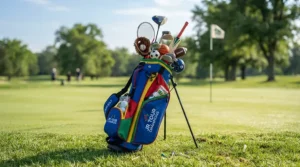
How to Choose Beginner Golf Clubs for Kids
What is the best way to choose beginner golf clubs for kids? The short answer: measure your child’s height with shoes on, match it against the manufacturer’s height chart (not their age), confirm handedness, and prioritize graphite shafts with a soft junior flex over steel or stiffer options.
Here’s the fuller process, step by step:
- Measure height, not age. Every reputable brand — US Kids, Cleveland, Wilson — sizes clubs by height in inches because swing mechanics track with limb length far more reliably than birthdate.
- Confirm handedness honestly. Don’t assume; hand a kid a broom or a bat and watch which side feels natural before buying a lefty or righty set.
- Prioritize graphite shafts. Lighter shafts let a slower swing speed still generate enough clubhead speed to get the ball airborne — the single biggest early-frustration fix.
- Check the size range flexibility. If your child is mid-growth-spurt, a brand with more size increments (like US Kids or Cleveland) reduces how fast they’ll outgrow the set.
- Count the clubs realistically. A true beginner doesn’t need 10 clubs; 5–7 (driver, hybrid, one or two irons, wedge, putter) covers 90% of early practice needs.
- Factor in bag style. A lightweight stand bag or cart bag matters more than people expect — a heavy bag discourages a small kid from wanting to carry it to the range.
- Budget for growth, not permanence. Assume a resize or upgrade every 12–24 months and buy accordingly rather than overspending on a “forever” set that doesn’t exist for a growing child.
Adjustable Length Clubs: Worth It or Gimmick?
Adjustable length clubs — shafts with a collar or extension mechanism that lets a single club grow with the child — sound like the obvious answer to the “kids grow fast” problem. In practice, the analysis is more nuanced. On paper, adjustable clubs save money by extending the useful life of a single purchase across a growth spurt or two. What the spec sheet won’t tell you is that most adjustable mechanisms add a small amount of weight and a joint in the shaft that can subtly change swing feel and flex consistency compared to a solid, purpose-built shaft.
For very young beginners (roughly ages 4–7) who are still developing basic coordination, that trade-off is usually worth it — the cost savings outweigh a minor feel difference they won’t even notice yet. For kids ages 8 and up who are starting to develop a real, repeatable swing, a properly sized fixed-length set from brands like US Kids or Cleveland tends to produce more consistent contact, since the club behaves identically every time rather than depending on how well the adjustment mechanism holds its setting. If budget is the deciding factor, adjustable clubs are a legitimate option; if consistent swing development is the priority, fixed-length, height-matched sets win the analysis.
Kid-Friendly Swing Weight Explained
Swing weight is one of those terms that sounds technical but boils down to something simple: it’s a measurement of how heavy the clubhead feels relative to the grip end when you swing it, not the club’s total weight. A club can be light overall but still feel “heavy” if too much weight sits in the head — and that’s precisely the problem with cutting down adult clubs for kids, since shortening a shaft without adjusting head weight makes the swing weight climb, not fall.
Junior-specific clubs solve this deliberately. Golf shafts in junior clubs are almost always graphite, and that lightweight graphite construction makes it considerably easier to get the ball airborne — lightweight clubs are consistently the best option for beginners who are new to the game, and they also help more experienced junior players start generating additional distance. Manufacturers like US Kids and Wilson engineer their junior heads specifically lighter, not just their shafts, to keep total swing weight in a range a small child can actually control through a full swing without losing the clubface angle at impact. The number one mistake parents make here is cutting down adult clubs for a junior golfer — adult shaft weight, flex, and swing weight are completely wrong for a child’s swing speed and will ingrain bad habits from the very first swing. If you remember one technical spec from this entire article, make it this one: swing weight, not total length, is what separates a real junior club from a shortened adult one.
Golf Club Set for Beginners With Cart Bag Included
Most true junior sets ship with a lightweight stand bag rather than a full cart bag, and that’s intentional — cart bags are built for adult golf carts and push carts, with a wider base and more pockets than a small kid needs to lug around. That said, a handful of sets and bundles do offer cart bag configurations, usually aimed at the older end of the junior range (ages 10+) who are starting to play full 9- or 18-hole rounds rather than just range sessions.
The practical trade-off: a cart bag holds more clubs, more balls, and rain gear, which is genuinely useful once a kid is playing real rounds with a coach or in a youth league. But it’s dead weight for a beginner who’s still working on contact at the driving range. Here’s what to weigh — if your child is enrolled in structured lessons or a junior league that involves playing actual holes, a cart-bag-compatible set (several of the age-10-and-up configurations above, like the Wilson Deep Red Tour or the largest Cleveland Junior Series package, pair well with a cart) makes sense. If they’re still in the “let’s see if this is fun” phase, skip it and stick with the included stand bag.
Practical Usage Guide: Getting Your Kid’s New Clubs Course-Ready
Setup (day one). Before the first swing, double-check grip size — junior grips should let small fingers wrap fully around the club without the thumb and fingers overlapping too much, which throws off control. Most package sets arrive properly gripped, but if you’ve bought individual clubs, this is worth confirming.
First 30 days. Resist the urge to hand a kid the full bag on day one. Start with a mid-iron and the putter — these build contact confidence faster than a driver, which has the smallest margin for error at a beginner’s swing speed. Add the driver and wedge once contact becomes consistent, typically two to four practice sessions in.
Maintenance schedule. Junior clubs need less upkeep than adult sets, but a quick wipe-down of grooves after each range session prevents dirt buildup that reduces spin and control. Check grip tackiness every few months — kids’ hands sweat just as much as adults’, and a slick grip is a common, invisible cause of mis-hits.
Common early mistakes to avoid. Don’t let a kid swing at full adult-driver speed with a driver that’s too long for their current fitting — it’s the fastest way to develop an over-the-top slice that takes months to unlearn. Also avoid the temptation to “size up” a club for growth room; an oversized club is genuinely harder to control than a slightly undersized one.
Real-World Scenarios: Which Set Fits Your Kid?
The curious 5-year-old, first time holding a club. Budget and low-commitment is the priority here — go with the MacGregor DCT Junior Set or the small 3-club Cleveland Junior Series package. Low club count, low cost, low pressure.
The 8-year-old already in weekly lessons. This kid needs a properly fitted, forgiving mid-tier set that can handle regular use — the Wilson Profile JGI or US Kids Golf UL7 both fit this scenario well, matching cavity-back forgiveness with real durability for two or three seasons of practice.
The 12-year-old committed to a junior league or travel team. Swing speed and consistency now matter more than pure forgiveness — the Callaway XJ or the larger Cleveland Junior Series package deliver the tech and durability this level of commitment demands.
The 14-year-old bridging toward adult clubs. Full custom-fit-style specs and a 10-club configuration make the Wilson Deep Red Tour Junior Set the clear fit, easing the transition to adult equipment without the jarring jump in shaft weight and length.

Common Mistakes When Buying Golf Clubs for Kids
The single most common and most damaging mistake, as covered above, is cutting down adult clubs instead of buying properly engineered junior equipment — it’s cheap and tempting, but it sets swing weight and flex completely wrong for a child’s mechanics. A close second: buying by age instead of height. Two eight-year-olds can differ by six inches in height, and a height-based fitting chart will always outperform an age-based guess.
Overbuying club count is another frequent misstep — a beginner doesn’t benefit from a full 10-club bag before they’ve learned to make consistent contact with three or four. Parents also commonly skip the handedness check, defaulting to right-handed sets without actually observing which side feels natural to the child. Finally, ignoring grip size is an easy oversight — a grip too thick for small hands forces a weaker hold and inconsistent clubface control, undermining even a well-fitted, correctly sized club.
Youth Golf Lessons: Pairing the Right Clubs With the Right Coaching
Properly fitted clubs solve half the beginner equation; structured instruction solves the other half. Programs like PGA Jr. League introduce boys and girls to the game in a team-based, inclusive environment, with trained PGA professionals teaching fundamentals, sportsmanship, and on-course etiquette through a two-person scramble format that keeps the pressure low for true beginners. That scramble format matters specifically for kids using their first set of clubs — because a teammate can cover a bad shot, the format removes the individual-performance anxiety that can turn a single bad swing into a reason to quit.
Beyond league play, one-on-one or small-group youth lessons with a certified instructor help correct grip and posture issues early, before they calcify into habits. A well-fitted club makes a lesson more effective — an instructor can’t fix a swing flaw that’s actually being caused by a too-heavy clubhead or an oversized grip. If your budget allows for only one investment this year, prioritize a properly fitted set from the list above; if you can stretch to two, pair it with even a handful of lessons through a local PGA-affiliated program or your municipal course’s junior clinic.
Long-Term Cost & Maintenance
Junior golf clubs aren’t a one-time purchase — they’re a recurring line item as a child grows, and planning for that upfront avoids sticker shock later. Quality junior sets generally start in the $40–$80 range at the very entry level, though as this guide’s comparison shows, mid-tier and premium sets run considerably higher. Budget for a resize roughly every 12–24 months during active growth years, and expect that cost-per-use drops sharply if a set gets passed down to a younger sibling — which is exactly why durability-focused sets like the Callaway XJ can be a smarter long-term value despite the higher upfront price.
| Set Tier | Price Range | Expected Lifespan | Best Value Scenario |
|---|---|---|---|
| MacGregor DCT | $60–$100 | 6–12 months | Testing interest, single child |
| Wilson Profile JGI | $90–$160 | 1–2 years | Steady casual play |
| US Kids Golf UL7 | $115–$250 | 1–2 years per size | Committed beginner, growth-phase fit |
| Callaway XJ | $150–$280 | 2–4 years (multi-child) | Multiple siblings, long-term use |
Looking at the table, the Callaway XJ‘s higher sticker price starts to make more financial sense once you factor in a second or third child using the same set, while the MacGregor DCT wins decisively for a single season of low-stakes trial. Maintenance costs stay minimal across every tier — regrooming and regripping run a small fraction of a full new-set purchase and can extend any set’s usable life by another season.
Safety and Fit Considerations
Beyond swing weight and shaft flex, fit affects safety in ways that are easy to overlook. An oversized club changes a child’s posture at address, often forcing them to hunch or stand too far from the ball, which increases strain on developing joints during repeated swings. Properly sized clubs let a child maintain a natural, upright posture matched to their actual limb length. Physical activity guidelines for school-aged children note that regular activity — golf included — supports stronger bones and muscles when done consistently, which is one more reason getting the fit right matters beyond just performance. A quick pre-swing safety habit worth teaching early: always check surroundings before a practice swing, since junior clubs, while lighter than adult clubs, still carry real swing force at head height.
Benefits vs Toy Clubs and Cut-Down Adult Clubs
| Factor | Toy/Plastic Clubs | Cut-Down Adult Clubs | Purpose-Built Junior Sets |
|---|---|---|---|
| Swing weight | Too light, unrealistic feel | Too heavy, wrong balance | Engineered for kid swing speed |
| Shaft flex | None (rigid plastic) | Adult flex (too stiff) | Junior-specific soft flex |
| Skill transfer | Minimal | Poor, builds bad habits | High, real technique |
| Best For | Toddlers, backyard play only | Not recommended | True beginners of all ages |
The analysis here isn’t close: toy clubs are fine for a three-year-old swinging in the backyard but teach nothing transferable, while cut-down adult clubs actively work against proper swing development due to mismatched swing weight and flex. Purpose-built junior sets — any of the seven featured earlier — are the only category genuinely designed around how a child’s body and swing speed actually work, which is why every credible instructor and fitting guide steers families away from the first two options.

FAQ
❓ What age should a kid start using real golf clubs?
❓ How often do kids need new golf clubs?
❓ Are expensive junior golf clubs worth it for beginners?
❓ Should a beginner kid use a full set or just a few clubs?
❓ Do kids need golf lessons if they have good clubs?
Conclusion
Choosing beginner golf clubs for kids learning to play really comes down to two honest questions: how tall is your child right now, and how committed are they to sticking with this sport? Answer those accurately and the rest of the decision gets much simpler. A properly height-fitted set with graphite shafts and correctly calibrated swing weight — whether that’s the fitting precision of the US Kids Golf UL7, the durability of the Callaway XJ, or the budget-friendly entry point of the MacGregor DCT — will always outperform a toy set or a cut-down adult club, both for early enjoyment and for building a swing that doesn’t need to be un-learned later.
Pair the right set with even a small amount of structured instruction, whether that’s a local youth clinic or a team-based program, and you’ve covered both halves of what actually makes a kid want to keep playing: clubs that work with their body, and a low-pressure environment to use them in. From here, the best next step is simple — measure your child’s height, match it to a chart above, and get them out to the range.
Recommended for You
- Beginner Golf Clubs For Women: 7 Top Picks To Start Strong In 2026
- Golf Club Set For Beginners: 7 Best Picks for 2026
- Scotty Cameron Custom Shop: 7 Putters Worth Building in 2026
Disclaimer: This article contains affiliate links. As an Amazon Associate, I earn from qualifying purchases. If you purchase products through these links, we may earn a small commission at no additional cost to you.
✨ Found this helpful? Share it with your friends! 💬🤗
