
In This Article
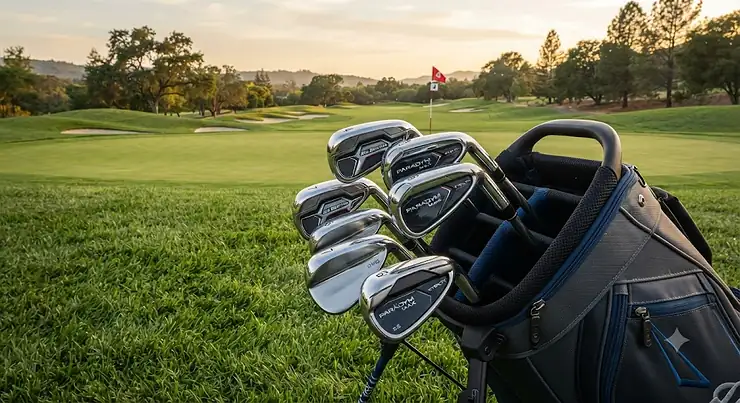
Let’s be honest about something most golf marketing won’t say out loud: if you’re searching for max game improvement irons, you already know your iron game isn’t the problem you thought it was. It’s your irons. Somewhere between the driving range confidence and the actual scorecard, a thin strike or a toe hit is turning what should be a green-in-regulation into a scramble for par. That’s not a swing flaw you need six months of lessons to fix — it’s a clubhead design gap, and max game improvement irons exist specifically to close it.

This category sits at the far end of the forgiveness spectrum, built around one obsessive goal: keep the ball flying reasonably straight and reasonably far even when your strike isn’t. Where a players iron rewards a pure hit and punishes everything else, a max game improvement iron spreads the punishment out so a mis-hit still finds the fairway. That’s the whole trade, and for the vast majority of golfers carrying a handicap north of 15, it’s a trade worth making every single time.
Over the next several thousand words, I’ve pulled together real specs, honest aggregated review sentiment, and genuine comparative analysis on seven current-production models — from budget-friendly hollow-body designs under $650 to premium tour-adjacent builds pushing past $1,300. I’ll walk through what perimeter weighting actually does to your mis-hits, why “high launch” is more physics than marketing, and which of these sets fits a slower-swinging senior versus a strong ball-striker who just can’t find the center. By the end, you’ll know exactly which max game improvement irons deserve a spot in your bag — and why.
What Is a Max Game Improvement Iron?
A max game improvement iron — sometimes called a super game improvement (SGI) iron — is a golf club engineered with an oversized head, thick topline, wide sole, and heavily perimeter-weighted cavity to maximize forgiveness, launch, and distance on off-center strikes. These clubs prioritize consistency over shot-shaping control, and they’re built for higher-handicap and slower-swing-speed players.
Golf Digest’s testing panel evaluates this entire category every year on exactly those terms — how a design performs when contact isn’t perfect rather than when it is — and their annual buying guide is a genuinely useful reference point if you want to see how independent testers rank these heads season over season. What’s notable in that testing is how far the gap has closed between “ugly but effective” and “actually good-looking” in this category — a shift you’ll see reflected in several of the models below.
Quick Comparison Table
| Iron | Category | Best For | Price Range |
|---|---|---|---|
| Cleveland Launcher XL Halo | Super Game Improvement | Best overall value | Around $600 |
| Tour Edge Hot Launch Max D | Super Game Improvement | Best budget performance | Around $600 |
| Wilson Dynapwr Max | Super Game Improvement | Slower swing speeds | $850-$900 range |
| Cobra Darkspeed Adapt Max | Game Improvement | Best sound and feel | $1,000-$1,100 range |
| Titleist T350 | Game Improvement | Premium construction | $1,100-$1,400 range |
| Callaway Quantum Max OS | Super Game Improvement | Widest confidence footprint | $1,100-$1,200 range |
| TaylorMade Qi Max HL | Super Game Improvement | Most stable feel | $1,000-$1,100 range |
Looking at this lineup, there’s a clear split between the sub-$650 hollow-body designs and the $1,000-plus builds from the major OEMs, and that split roughly tracks with how much R&D has gone into face flex technology and sound dampening rather than raw forgiveness. Don’t assume the expensive end automatically outperforms the budget end on the number that matters most — miss-hit ball speed retention — because in several independent tests, the budget models have actually beaten premium-branded competitors on that exact metric. The right pick really does come down to matching swing speed and priorities (feel versus pure forgiveness versus price) rather than just chasing the biggest name on the bag.
💬 Found a set that caught your eye already? Check current pricing before it changes — availability on these models shifts fast.😊
Top 7 Max Game Improvement Irons: Expert Analysis
Every model below made this list because it’s a genuine, currently available max game improvement iron with verifiable specs and real market presence — no filler, no discontinued relics. I’ve grouped them loosely from budget to premium so you can see where your money buys extra forgiveness versus where it buys extra polish.
1. Cleveland Launcher XL Halo — hollow hybrid design, budget MOI leader
The Cleveland Launcher XL Halo takes the hybrid-iron blending trend and pushes it about as far as it can go, and that standout feature alone tells you who this club is for.
Cleveland built the 7-iron around an oversized hollow head that reportedly reaches roughly 2,908 g-cm² of MOI — among the highest the brand has ever produced in this category — paired with an AI-designed variable-thickness face Cleveland calls MainFrame. In practice, that combination means a genuinely hollow, hybrid-like feel through the 4- through 7-irons, with a gliderail sole in the long irons that gradually shifts to a V-shaped sole through the shorter clubs. Based on the spec sheet, that progressive sole design is meant to solve the classic SGI problem of long irons that dig on anything but a perfect strike.
Who should care here: golfers coming from actual hybrids who’ve never been comfortable with a traditional long iron, and anyone whose miss is a fat strike rather than a thin one. The wide, gliding sole is specifically built to forgive exactly that miss. Reviewers consistently frame the Cleveland Launcher XL Halo as “easy” rather than “exciting” — a set that gets out of your way rather than one that wows you at impact, which for a high-handicap buyer is usually the correct priority.
Pros:
- ✅ Class-leading MOI for the price point
- ✅ Hybrid-like long irons genuinely easier to launch
- ✅ Progressive sole adapts through the set
Cons:
- ❌ Feel is muted compared to premium hollow-body rivals
- ❌ Cosmetically bulky at address for some golfers
Priced around $600 for a full set, the Cleveland Launcher XL Halo is arguably the strongest dollar-for-dollar forgiveness play on this entire list — check current price before deciding, since Cleveland’s promotional pricing shifts with new releases.
2. Tour Edge Hot Launch Max D — 2026’s top-rated super game improvement iron
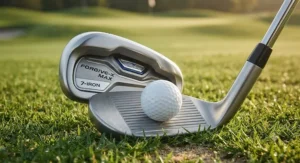
The Tour Edge Hot Launch Max D earned MyGolfSpy’s top spot in their 2026 super-game-improvement testing, and that standout result is worth unpacking rather than just repeating.
Tour Edge builds the Max D around an iron-wood hybrid shape — thicker through the long irons than a conventional cavity back — with internal weighting pushed to the perimeter to maximize stability on off-center contact. Based on the independent testing data, this model finished in the top three for both raw distance and forgiveness while also topping the accuracy metric outright, which is an unusually well-rounded result; most SGI designs sacrifice one of those three to win the others.
Who this suits: golfers who don’t care what a club looks like at address as long as it performs, plus buyers who assume “budget brand” means “budget performance” — a mistake the data flatly contradicts here. Aggregated tester feedback repeatedly describes the Tour Edge Hot Launch Max D as unusually consistent and confidence-inspiring over the ball, with the main knock being its chunkier, hybrid-adjacent profile rather than anything about how it actually hits.
Pros:
- ✅ Top-ranked in 2026 independent SGI testing
- ✅ Strong across distance, accuracy, and forgiveness
- ✅ Exceptional value relative to performance
Cons:
- ❌ Hybrid-like shape isn’t for everyone visually
- ❌ Less brand recognition than major OEMs
At around $600 for a full set, the Tour Edge Hot Launch Max D delivers what several independent testers called the best forgiveness-to-price ratio in the entire super game improvement field this year.
3. Wilson Dynapwr Max — lightest components for slower swing speeds
The Wilson Dynapwr Max takes Wilson’s PKR-Cup face technology and pairs it with a genuinely lighter component package, and that lightness is the standout feature driving everything else about how it plays.
Wilson built the Max around what it calls Open Heel Construction — mass pushed toward the toe rather than distributed evenly, which shifts the center of gravity closer to the geometric middle of the face. Combined with weaker lofts than the standard Dynapwr and a noticeably thicker topline, the practical result on the spec sheet is a set explicitly aimed at golfers who need help getting the ball airborne rather than golfers who already launch it fine and just want more forgiveness. Reviewers who’ve hit both the standard and Max versions side by side note the Max’s topline is visibly thicker and its offset more pronounced — visual cues, not just marketing language, that signal where the extra help is coming from.
Who should care: seniors, players with slower transition speeds, and anyone whose 7-iron carry has quietly shrunk over the last few seasons. What most buyers overlook about this model is that “lighter” isn’t just about swingweight — it changes tempo, and for a golfer fighting to generate speed, that tempo shift can matter more than the loft numbers.
Pros:
- ✅ Genuinely lighter build aids slower swing speeds
- ✅ Strong value against premium-branded competitors
- ✅ Two-model family lets you dial forgiveness precisely
Cons:
- ❌ Bulkier profile than the standard Dynapwr
- ❌ Below-average impact sound may feel muted to some
Running $850-$900 for a six- or seven-piece set depending on shaft choice, the Wilson Dynapwr Max undercuts most major-brand SGI competitors by a meaningful margin without cutting corners on the technology inside the head.
4. Cobra Darkspeed Adapt Max — best sound and feel in the category
The Cobra Darkspeed Adapt Max leans on Cobra’s PWRSHELL H.O.T. Face — a face reportedly 21 percent thinner than its predecessor — and that face is the standout feature behind its reputation for feel.
Cobra’s hollow-body construction here mirrors the approach used in its metal woods, and independent testers have specifically called out the impact sound as closer to a forged players iron than anything typically associated with a game improvement head — a tight, quiet “thud” rather than the tinny click some hollow-body rivals produce. On paper this means Cobra prioritized sensory feedback almost as heavily as raw numbers, which is a deliberate bet: the AI-optimized variable face thickness and CNC-milled grooves still deliver strong ball speed and forgiveness, but the engineering story here is as much about how the club feels in your hands as how far it flies.
Who this fits: golfers in the 12-20 handicap range who’ve been put off game improvement clubs by their typically hollow, clacky feel, and anyone upgrading from a Cobra driver or fairway wood who already trusts the brand’s hollow-body playbook. A common theme in aggregated reviews is that the low, penetrating ball flight suits stronger swingers within this handicap band better than golfers who already struggle to get the ball airborne — worth weighing against your specific miss.
Pros:
- ✅ Feel that rivals forged players irons
- ✅ AI-designed face maximizes ball speed on mis-hits
- ✅ Strong turf interaction through the mid-irons
Cons:
- ❌ Trajectory runs lower than category average
- ❌ Bold cosmetic styling won’t suit every taste
Priced in the $1,000-$1,100 range depending on shaft, the Cobra Darkspeed Adapt Max is the pick if feel matters to you as much as forgiveness — a combination this category doesn’t always deliver.
5. Titleist T350 — premium construction meets true forgiveness
The Titleist T350 brings a forged L-Face design with a multi-zone taper, and that face technology is the standout reason a brand known for tour-level precision now competes seriously in the max game improvement space.
Titleist paired the forged face with a hollow-body chassis and high-density tungsten weighting positioned to maximize stability on off-center strikes, plus a Variable Bounce sole developed with input from the brand’s wedge design team to reduce digging through the turf. Here’s what the spec sheet won’t fully convey: independent reviewers who came in skeptical — expecting Titleist’s usual restraint to compromise the forgiveness numbers — have consistently walked away noting the T350 delivers on the core promises of high launch, consistent carry, and full-face forgiveness without the “plasticky” feel some testers associate with cheaper hollow-body construction.
Who should care: golfers who want game improvement performance but refuse to carry a club that looks like a shovel at address, plus better players (low-to-mid teens handicap) who are losing distance but aren’t ready to commit to a fully oversized SGI head. This isn’t the right choice, by reviewers’ own admission, for single-figure players who need to shape shots or flight the ball low into wind — that’s what Titleist’s lower-numbered T-Series models are for.
Pros:
- ✅ Forged face delivers unusually refined feel for the category
- ✅ Tungsten weighting adds real off-center stability
- ✅ Cleaner, more premium look than most SGI rivals
Cons:
- ❌ Priced at the top of the game improvement segment
- ❌ Not built for shot-shaping or low, punched trajectories
At roughly $1,100-$1,400 for a seven-piece set depending on retailer and shaft, the Titleist T350 asks a premium — but the construction quality genuinely tracks with that price tag rather than just riding the Titleist name.
6. Callaway Quantum Max OS — largest footprint, AI-optimized face
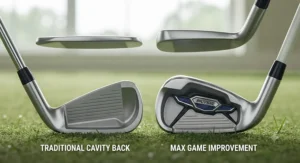
The Callaway Quantum Max OS is built around a 360° undercut cavity, and that undercut — fully exposed rather than partially hidden — is the standout engineering choice behind its forgiveness numbers.
Callaway’s two-piece design pairs that undercut cavity with extreme perimeter weighting and a Progressive Tri-Sole that changes shape from long irons into wedges, aimed at improving turf interaction and keeping ball speed up even on strikes low on the face. Based on the spec comparison against Callaway’s own standard Quantum Max, the OS version is simply bigger everywhere — longer blade length, thicker topline, more offset — engineered specifically for golfers who need the largest possible confidence-inspiring footprint at address. The OS earned a gold medal in Golf Digest’s 2026 Hot List testing and reportedly holds a strong average customer rating on Callaway’s own storefront, both signals worth weighing alongside independent reviewer commentary.
Who this suits: golfers newer to the game who haven’t yet built confidence standing over the ball, and anyone whose current irons are still intimidatingly small despite being labeled “game improvement.” Reviewers who tested the OS against the standard Quantum Max found no meaningful ball speed or clubhead speed difference between the two — meaning the extra size buys you confidence and forgiveness margin, not extra raw distance, which is a useful distinction most marketing glosses over.
Pros:
- ✅ Maximum forgiveness margin in Callaway’s current lineup
- ✅ AI-optimized face maintains ball speed across mis-hits
- ✅ Tri-Sole design improves turf interaction through the set
Cons:
- ❌ Among the largest-looking heads in this whole roundup
- ❌ Priced above several comparably forgiving rivals
Set pricing lands around $1,100-$1,200, placing the Callaway Quantum Max OS firmly in premium territory — appropriate given the tri-sole and AI face engineering packed into every head.
7. TaylorMade Qi Max HL — most stable sound and feel yet
The TaylorMade Qi Max HL introduces a sound stabilization bar alongside expanded damping material, and that stability system is the standout feature TaylorMade leaned on hardest after a two-year gap between iron releases.
TaylorMade’s HL — High Launch — model uses a taller face, longer blade length, and wider sole than the standard Qi Max, with lofts up to three degrees weaker to help slower swingers get the ball airborne without sacrificing ball speed. What most buyers overlook about this model is the face flex technology: TaylorMade’s engineers specifically redesigned the face to flex in unison across the strike zone rather than flexing more on the toe, a change aimed directly at reducing the fade-and-slice bias that plagues many oversized game improvement designs. On paper, that means straighter dispersion on the exact kind of off-center strikes this category exists to forgive.
Who should care: golfers who’ve been frustrated by persistent slices with previous game improvement irons, and buyers coming from the standard Qi Max who want meaningfully more forgiveness without switching brands entirely. Reviewers directly comparing the Qi Max HL against Callaway’s Elyte HL predecessor described the TaylorMade as straighter on mis-hits with a slightly “clickier” sound profile that most testers adjusted to quickly.
Pros:
- ✅ Face flex technology specifically targets slice-prone misses
- ✅ Sound stabilization bar improves feel over prior TaylorMade SGI irons
- ✅ Lightweight component package suits slower swing speeds
Cons:
- ❌ Priced at a premium versus budget SGI competitors
- ❌ Oversized profile and heavy offset won’t suit every eye
Priced around $1,000-$1,100 for a set, the TaylorMade Qi Max HL represents what may be the most complete forgiveness package TaylorMade has ever put into a super game improvement iron.
Super Game Improvement Technology: How the Category Evolved
Super game improvement technology didn’t emerge overnight — it’s the product of roughly two decades of OEMs chasing higher moment of inertia, lower centers of gravity, and thinner, faster-flexing faces, all while trying not to make the clubs look absurd at address. Early SGI designs from the 2000s and 2010s were blunt instruments: massive heads, huge offset, and face technology that was, frankly, an afterthought next to sheer size.
What’s changed in the current generation, visible across every model above, is that super game improvement technology now means something more specific: AI-optimized variable face thickness, hollow-body constructions borrowed directly from metal wood engineering, and sole designs that actively manage turf interaction rather than just being wide for the sake of confidence. Here’s what the spec sheet won’t tell you outright — this shift matters because it means today’s SGI irons forgive mis-hits without the old trade-off of a dead, lifeless feel on center strikes. Reviewers across this roundup consistently note feel quality that would have been unthinkable in a game improvement iron a decade ago.
The practical upshot for buyers: you no longer have to choose between “forgiving” and “doesn’t feel like hitting a brick.” Both the Cobra Darkspeed Adapt Max and Titleist T350 prove that point directly, delivering premium sound and feel inside genuinely oversized, high-MOI heads.
Game Improvement Irons Perimeter Weighting Explained
Perimeter weighting is the single most important concept in this entire category, and it’s worth explaining properly rather than just repeating the phrase. Every model in this roundup pushes mass away from the center of the clubhead and out toward the heel, toe, and sole — the perimeter — rather than concentrating it directly behind the strike zone the way a traditional blade does.
Why does that matter in practice? When you strike the ball off-center — toward the toe or heel — the clubhead wants to twist around its center of gravity, and that twisting is exactly what causes distance loss and off-line shots. Moving mass to the perimeter increases the clubhead’s resistance to that twist, a property engineers measure as moment of inertia, or MOI. Higher MOI equals less twisting on a mis-hit equals a shot that still finds the fairway instead of the trees. MyGolfSpy’s independent testing data — drawn from ball speed, carry distance, backspin, and dispersion across hundreds of test strikes per model — consistently shows the models with the most aggressive perimeter weighting posting the tightest dispersion patterns, exactly as the physics would predict; you can see how their full testing methodology breaks down model by model.
The Cleveland Launcher XL Halo and Callaway Quantum Max OS both take this concept to something close to its current limit, with hollow-body and undercut-cavity designs specifically engineered to push as much mass to the perimeter as their respective face technologies allow.
Game Improvement Irons High Launch: Why It Matters for Your Scores
High launch isn’t just about hitting the ball higher for the sake of it — it’s about landing angle, and landing angle determines whether your approach shot stops near the pin or releases twenty feet past it. Game improvement irons high launch design exists because slower swing speeds naturally produce lower, flatter ball flights that struggle to hold firm greens.
Here’s the honest analytical case for why manufacturers weaken lofts and lower centers of gravity to chase higher launch: a ball arriving at a steeper descent angle stops faster, which means more of your approach shots actually finish near where they landed rather than skipping through the back of the green. The TaylorMade Qi Max HL and Wilson Dynapwr Max both specifically weaken their lofts relative to their standard-model counterparts for exactly this reason — trading a few degrees of loft for a launch window that holds greens better.
The trade-off worth understanding: stronger lofts (a 27-29 degree 7-iron rather than a traditional 34 degrees) can add carry distance, but only if the ball still launches high enough and carries enough spin to stop on the green rather than release. A club that’s all strong loft and no launch help just means longer approach shots that don’t hold — which is why the best max game improvement irons pair strong lofts with genuine launch assistance rather than strong lofts alone.
Maximum Forgiveness Engineering: What’s Actually Inside These Heads
Maximum forgiveness engineering is the umbrella term for everything covered above working together — perimeter weighting, variable face thickness, hollow-body construction, and sole designs — but it’s worth breaking down what each piece contributes individually, because manufacturers rarely explain it this plainly.
Variable face thickness, often AI-optimized in current models like the Callaway Quantum Max OS and Cleveland Launcher XL Halo, means the face isn’t uniformly thick from heel to toe. Thinner sections flex more at impact, generating extra ball speed specifically on the strikes that would otherwise lose the most distance — the toe and heel misses. Hollow-body construction, used across nearly every model in this roundup, allows engineers to position tungsten or steel weighting exactly where it does the most good for stability, rather than being constrained by a solid casting.
What most buyers overlook is that maximum forgiveness engineering has diminishing returns tied directly to price: once a design hits a certain MOI threshold, additional forgiveness gains become incremental rather than dramatic. That’s precisely why the budget-tier Tour Edge Hot Launch Max D can post forgiveness numbers competitive with clubs costing nearly twice as much — the physics of perimeter weighting works the same whether the badge on the back says a premium brand or not.
Distance Boosting Features Worth Paying For
Not every distance boosting feature manufacturers advertise actually moves the needle, so let’s separate the ones backed by real physics from the ones that are mostly marketing language layered over a standard hollow-body design.
Genuinely effective distance boosting features include thin, fast-flexing faces (the trampoline effect that increases ball speed off center strikes), low-and-forward centers of gravity that add both launch and ball speed simultaneously, and lightweight shaft-and-grip combinations that let slower swingers generate more clubhead speed without sacrificing control. The Wilson Dynapwr Max‘s lighter overall component package is a clean example — it’s not adding distance through the face at all, it’s adding distance by letting you swing faster.
Features that sound like distance boosters but mostly aren’t: cosmetic sole graphics, marketing terms without a clear mechanical explanation, and lofts strengthened so aggressively that the ball simply doesn’t launch high enough to carry the extra distance the strong loft theoretically provides. Reviewers consistently note this exact issue is where some manufacturers oversell — a strengthened loft with inadequate launch support can actually cost you distance on mis-hits, not add it, because a low, weak-spinning shot that doesn’t carry is worse than a slightly shorter shot that holds its line.
Effortless Launch Technology: Marketing Buzzword or Real Benefit?
Effortless launch technology is one of those phrases that shows up on nearly every SGI product page, and it deserves a skeptical, honest look rather than blanket acceptance — because sometimes it’s genuinely earned and sometimes it’s just a label.
Where the phrase holds up: designs like the TaylorMade Qi Max HL and Callaway Quantum Max OS, where lower centers of gravity, wider soles, and weaker lofts combine into a measurable, testable launch advantage over their own standard-model siblings. That’s effortless in a real sense — the golfer doesn’t have to change their swing to get the ball airborne; the club’s engineering does the work.
Where it’s overstated: any club that simply has a big head and calls itself “effortless” without the CG placement, sole design, or face flex to back it up. Here’s an analytical filter worth applying whenever you see this phrase on a product page — ask whether the manufacturer publishes actual launch angle or spin data next to the claim. If they do, as TaylorMade and Callaway both do for the models above, the claim is at least testable. If a listing just says “effortless” with no supporting number, treat it as the marketing shorthand it probably is rather than a genuine differentiator.

How to Choose Max Game Improvement Irons
Picking the right set comes down to matching your specific miss and swing speed to the design priorities above, rather than chasing the newest release. Here’s the process a good fitter actually follows:
- Identify your dominant miss. A thin, low miss needs launch help first; a toe-or-heel miss needs MOI and perimeter weighting first — these call for different design priorities.
- Measure or estimate your swing speed. Slower swings (under roughly 85 mph with a 7-iron) benefit most from weaker lofts and lighter components like those in the Wilson Dynapwr Max.
- Decide how much size you can accept at address. Some golfers lose confidence looking down at an oversized head like the Callaway Quantum Max OS; others find that size reassuring.
- Weigh feel against pure forgiveness. If sound and feel matter as much as numbers, prioritize models like the Cobra Darkspeed Adapt Max or Titleist T350 that were specifically engineered around that balance.
- Set a realistic price range. Budget models like the Cleveland Launcher XL Halo and Tour Edge Hot Launch Max D post genuinely competitive forgiveness numbers, so don’t assume premium pricing buys proportionally more performance.
- Get fit for shaft weight and flex, even in a game improvement iron — the wrong shaft can undo everything the head is engineered to do.
- Test on a launch monitor if at all possible, since dispersion and launch data tell you far more than how a club looks on a shelf.
Common Mistakes When Buying Game Improvement Irons
The most expensive mistake buyers make is assuming brand reputation transfers evenly across every category a manufacturer sells — a brand’s driver reputation says very little about how its game improvement iron actually forgives mis-hits, and the Tour Edge Hot Launch Max D‘s top ranking against bigger names proves that point.
A second common mistake is ignoring shaft weight entirely, buying based on head technology alone and ending up with a stock shaft too heavy for an actual swing speed — which cancels out much of the launch benefit the head was designed to deliver. A third mistake, worth flagging directly: buying a set for casual or league play without checking club conformance if you ever plan to post scores in USGA-sanctioned events, since some heavily modified designs can run into equipment rule questions the R&A’s official Rules of Equipment spell out in detail.
Finally, plenty of buyers skip a fitting session entirely for game improvement irons, assuming forgiveness makes fitting unnecessary. It doesn’t — lie angle and length still meaningfully affect where a forgiving clubface delivers its energy.
Max Game Improvement Irons vs Players Distance Irons
The core difference between these two categories is priority: max game improvement irons prioritize forgiveness and launch above everything else, while players distance irons — think a slimmer, more compact profile with moderate offset — try to balance forgiveness against workability and a more traditional look and feel.
| Category | Head Size | Forgiveness | Workability | Best For |
|---|---|---|---|---|
| Max Game Improvement Irons | Oversized | Maximum | Minimal | 15+ handicap, slower swings |
| Players Distance Irons | Mid-to-compact | High | Moderate | 5-15 handicap |
| Players/Blade Irons | Compact | Low | High | Scratch to low single-digit |
Interpreting that table honestly: a mid-teens handicapper standing between the top two rows shouldn’t assume “more forgiving is always better” — a players distance iron that still lets you shape the occasional shot can be more useful than a max game improvement iron once you’ve developed enough consistency that shot-shaping starts mattering to your scoring. The Titleist T350 actually sits closer to that bridge than most models on this list, offering meaningfully more forgiveness than Titleist’s players distance options while still looking and feeling more refined than a typical oversized SGI head.
✨ Ready to compare specific models side by side? Click through to check current availability and pricing on the sets above.
Practical Fitting & Setup Guide
Getting a new set of max game improvement irons dialed in properly takes more than pulling them out of the box. Start with lie angle — oversized SGI heads are frequently built slightly upright from the factory to reduce toe-down droop at impact, and a quick dynamic lie check (using impact tape or a lie board) in your first week can catch a fit issue before it becomes an ingrained swing compensation.
In your first 30 days, resist the temptation to judge the set purely on the range with premium range balls; take them onto the course within the first two weeks, since real turf interaction — how the sole glides or digs — only shows up in actual fairway and rough lies, not a flat mat. A common early mistake is gripping too tightly out of unfamiliarity with a new, larger head; these clubs are engineered to do forgiveness work for you, so a lighter grip pressure actually helps rather than hurts.
For maintenance: clean grooves after every round, since even a game improvement iron’s forgiveness partly depends on consistent spin generation from clean grooves, and inspect graphite shafts periodically for hairline cracks near the hosel — a more common failure point on lighter-shafted SGI models like the Wilson Dynapwr Max than on heavier steel-shafted sets.
Real-World Scenarios: Which Iron Fits Which Golfer
Scenario one — the returning golfer in their late 50s, playing twice a month, swing speed around 75 mph with a 7-iron. This profile calls for maximum launch assistance and the lightest reasonable components: the Wilson Dynapwr Max or Cleveland Launcher XL Halo both fit directly, prioritizing getting the ball airborne over sheer distance.
Scenario two — the budget-conscious weekend player, mid-20s handicap, playing weekly on a tight equipment budget. Here, the Tour Edge Hot Launch Max D is close to an ideal match — independent testing shows it competing with clubs costing nearly double, and weekly play means durability and consistency matter more than premium branding.
Scenario three — the improving mid-teens handicapper who wants forgiveness without looking like they’ve given up on the game entirely. This golfer should look toward the Titleist T350 or Cobra Darkspeed Adapt Max, both of which pair genuine forgiveness with a cleaner look and better feel at address than a fully oversized SGI head.
Long-Term Cost & Maintenance
Total cost of ownership on a set of max game improvement irons extends well beyond the sticker price, and it’s worth running the numbers honestly. A $600 set like the Cleveland Launcher XL Halo amortized over five years of regular play works out to roughly $10 per month — genuinely negligible against green fees and balls lost to a slice these irons are specifically designed to reduce.
Premium sets in the $1,100-$1,400 range, like the Titleist T350 or Callaway Quantum Max OS, cost proportionally more but often hold resale value better thanks to stronger brand demand on the secondary market — something worth weighing if you expect to upgrade again within a few seasons. Regripping every 40-60 rounds (roughly once a year for a regular player) is a maintenance cost that applies across every model here regardless of price, typically running a modest amount per club at a local shop.
The real ROI question isn’t which set costs less upfront — it’s which set most directly reduces the wasted shots (lost balls, chunked approaches, thin long irons) that actually inflate your scorecard, since those wasted shots carry real costs in lost balls and wasted rounds that a genuinely well-fit forgiving iron can meaningfully reduce.
Safety, Regulations & Conformance Guide
If you play in USGA-sanctioned competitions, club conformance matters even for a category built around forgiveness rather than performance edges. It’s worth noting that the USGA’s moment-of-inertia cap — a rule that limits how forgiving a clubhead is allowed to be for competitive play — currently applies only to wood-type clubheads, not irons, which is part of why iron manufacturers have had so much room to push perimeter weighting and MOI aggressively in this category without bumping into a regulatory ceiling. The USGA’s own notice on clubhead moment of inertia lays out exactly how that limit is tested and calculated for the categories it does cover.
Practically speaking, this means every model reviewed above is conforming for standard competitive play as an iron, but it’s still worth double-checking any heavily customized build — non-stock shaft swaps, added weighting, or aftermarket grips — against current equipment rules before a sanctioned event, since modifications rather than the stock head are the more common source of conformance issues.
For casual and league play, none of this matters at all — play what helps you enjoy the round more, which is the entire point of this category to begin with.
Featured Snippet: 5 Signs You Need Max Game Improvement Irons
If you’re still unsure whether this category is right for you, watch for these signals: consistent distance loss compared to a few seasons ago, a persistent slice or hook that traditional lessons haven’t fixed, difficulty launching mid-and-long irons high enough to hold greens, low confidence standing over the ball with your current set, and a strike pattern that regularly misses the center of the face rather than clustering tightly. Two or more of these, and a max game improvement iron is very likely to lower your scores faster than more lessons alone would.
FAQ
❓ What handicap should play max game improvement irons?
❓ Are max game improvement irons legal for USGA competition?
❓ Do max game improvement irons add real distance?
❓ Are graphite or steel shafts better in super game improvement irons?
❓ How often should I replace max game improvement irons?
Conclusion
Choosing among these seven max game improvement irons really does come down to matching the club to your specific miss, swing speed, and budget rather than defaulting to whichever brand feels most familiar. If pure value and forgiveness matter most, the Cleveland Launcher XL Halo and Tour Edge Hot Launch Max D both punch dramatically above their price point. If you need genuine launch assistance from a slower swing, the Wilson Dynapwr Max is built specifically for that job. And if feel and premium construction matter as much as forgiveness itself, the Cobra Darkspeed Adapt Max, Titleist T350, Callaway Quantum Max OS, and TaylorMade Qi Max HL all deliver genuine engineering behind their higher price tags.
Whatever you land on, the honest truth about this category holds regardless of model: max game improvement irons won’t fix a fundamentally broken swing, but they will quietly, consistently turn your worst contact of the round into a shot you can actually play from — and for most golfers, that’s worth more strokes than any lesson could deliver in a single season.
Recommended for You
- 7 Best Forged Muscle Back Blades in 2026: Tour Blades Ranked
- Muscle Back Irons Workability: 7 Best Blades to Try in 2026
- 7 Best cavity back irons high handicap Picks for 2026 (Real Data)
Disclaimer: This article contains affiliate links. As an Amazon Associate, I earn from qualifying purchases. If you purchase products through these links, we may earn a small commission at no additional cost to you.
✨ Found this helpful? Share it with your friends! 💬🤗
