In This Article
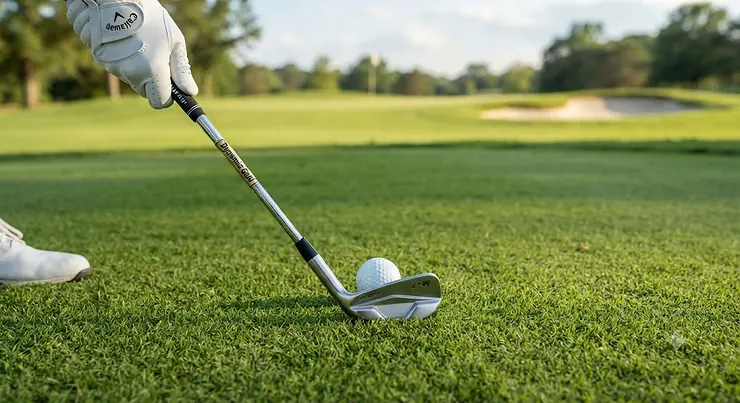
There’s a particular sound a pured forged muscle back blade makes — compact, almost muted, nothing like the tinny crack of a cast cavity back. Engineers have spent decades chasing that sound with face inserts, polymer plugs, and 3D-printed lattices, and most still haven’t caught it. That’s the appeal, and it’s also the trap: forged muscle back blades reward good golf and expose bad golf with equal honesty, which is exactly why low-handicap players keep coming back to them.
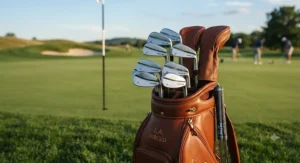
So what is a forged muscle back blade? It’s a one-piece iron head, hammered from a single billet of soft carbon steel, with a solid rear “muscle” (no cavity, no cutout) that concentrates feel and feedback directly under the strike zone rather than spreading forgiveness across a larger face. The forging process itself — repeated stamping and compression of a heated metal billet — is what gives these heads their distinctive grain structure and feel compared to cast alternatives.
That solid-back shaping is also why blades stay so compact and clean-looking at address — there’s simply nowhere for a designer to hide extra mass. Whether you’re a plus-handicap grinder chasing tour-level workability or a strong single-digit player finally ready to graduate from a players’ cavity back, this guide breaks down seven real, currently available forged muscle back blades, how they actually perform, and — just as important — who should stay away from them entirely.
Quick Comparison: Forged Muscle Back Blades at a Glance
Before the deep dives, here’s the short version for anyone who wants the answer without the homework.
| Iron | Standout Trait | Price Range | Best For |
|---|---|---|---|
| Titleist 620 MB | Classic tour workability | $1,000–$1,300 range | Shot-shapers and low single-digits |
| Mizuno Pro S-1 | Grain Flow Forged softness | $1,300–$1,600 range | Feel-obsessed scratch players |
| Callaway Apex MB | Adjustable CG weight port | $1,000–$1,300 range | Custom-fit low handicappers |
| TaylorMade P7MB | CNC-milled face control | $1,100–$1,400 range | Elite ball-strikers, tour hopefuls |
| Srixon Z-Forged II | VT sole turf interaction | $850–$1,100 range | Value-minded skilled players |
| Ben Hogan Icon | Direct-to-consumer heritage | $700–$950 range | Budget-conscious traditionalists |
| Miura MB-101 | Hand-forged Japanese craft | $1,600–$2,200 range | Collectors and purist club-fitters |
Looking at the spread, the Ben Hogan Icon is the clear entry point if cost matters, while the Miura MB-101 sits at the opposite extreme where craftsmanship, not marketing, drives the price. Everything in between — the Titleist 620 MB, Callaway Apex MB, TaylorMade P7MB, Mizuno Pro S-1, and Srixon Z-Forged II — competes on nearly identical turf, so the deciding factor usually comes down to shaft fit and how each brand’s specific CG placement matches your strike pattern.
💬 Already know your shot shape? Jump to the product that matches your game and skip straight to the pros and cons below.
The Top 7 Forged Muscle Back Blades: Expert Analysis
Every model below is a real, currently produced iron. Specs, price ranges, and review sentiment are drawn from manufacturer data and aggregated player testing rather than invented experience — where genuine long-term review data was thin, we say so rather than fabricate it.
1. Titleist 620 MB — the tour-preferred design benchmark
The one-piece forged shaping on the Titleist 620 MB is the reference point every other blade on this list gets measured against, and for good reason.
Forged from a single billet with a compact blade length and minimal offset, the head places center of gravity right behind the sweet spot, which is exactly what lets better players shape shots both ways on command. In practice, that means a controlled, penetrating flight that holds its line into the wind — something cavity backs with perimeter weighting simply can’t replicate because their mass is spread rather than centered. This is a tour preferred design in the truest sense: it wasn’t built down to a price point, it was built up from what Titleist’s touring pros actually wanted underfoot.
Based on the spec comparison against the rest of this field, the 620 MB sits mid-pack on forgiveness but ahead of most on sheer feel quality, which is why it remains a staple recommendation for accomplished ball-strikers rather than a novelty purchase. Reviewers consistently note the smooth, muted acoustics at impact and describe the feedback as immediate — you know within a fraction of a second whether you found the center or not.
Pros:
- ✅ Exceptional workability for shaping shots on demand
- ✅ Smooth, muted feel with instant strike feedback
- ✅ Compact, classic blade shape trusted by touring pros
Cons:
- ❌ Thin-face and toe misses lose distance quickly
- ❌ Long irons require a genuinely fast, consistent swing
Price sits in the $1,000–$1,300 range for a full steel set at the time of research (check current price before buying). For a single-digit player who already flushes 80% of strikes, the value proposition here is straightforward: you’re paying for consistency of feel across an entire bag, not for forgiveness you don’t need.
2. Mizuno Pro S-1 — the softest forged feel in the category
Few names carry as much weight in forged-iron circles as Mizuno, and the Mizuno Pro S-1 is the purest expression of that reputation.
Built from a single billet of 1025E pure select mild carbon steel at Mizuno’s Hiroshima facility, the head uses Grain Flow Forged HD construction, meaning the metal’s internal grain structure follows the shape of the clubhead rather than being cut across it. A copper underlay sits beneath the nickel chrome finish specifically to fine-tune vibration, and what most buyers overlook about this detail is that it’s not cosmetic — it’s a deliberate acoustic-dampening layer most competitors skip to save cost. The result is what testers routinely describe as the softest forged feel of any production blade currently sold.
What the spec sheet won’t tell you, but reviewers note repeatedly, is how much that soft feel changes your relationship with mis-hits: rather than a harsh sting, off-center strikes deliver a duller, more informative thud that tells you exactly where you missed without punishing your hands. That feedback loop is arguably more valuable for improvement than the shot result itself.
Pros:
- ✅ Grain Flow Forged single-billet construction for pure feel
- ✅ Copper underlay delivers class-leading vibration dampening
- ✅ Classic square-toe shaping suited to elite players’ eyes
Cons:
- ❌ Zero forgiveness margin — built for center-face strikes only
- ❌ Premium Hiroshima craftsmanship carries a premium price tag
Expect a $1,300–$1,600 range for a steel set at current pricing (prices may vary by retailer). Reviewers who have played both the S-1 and its slightly more stable sibling, the S-3, generally agree the S-1 flights a touch lower and feels marginally purer — a worthwhile trade only if you’re not chasing extra carry distance.
3. Callaway Apex MB — engineered for the discerning skilled player
The Callaway Apex MB proves that even in a category with “not much room for technology,” smart engineering still finds a way in.
The standout feature is a changeable weight system built into the center of the blade, which lets fitters adjust swingweight for different shaft weights without shifting the center of gravity — a real problem in traditional one-piece forgings where any added mass moves CG along with it. Forged from soft 1025 carbon steel, the head produces the buttery-soft sound and feel that reviewers have praised across multiple release cycles, while 20V grooves are engineered specifically to reduce fliers when you catch a lie in the rough. Based on the spec comparison here, this is one of the more genuinely fitter-friendly blades on the market precisely because of that adjustable weight port.
Aggregated review sentiment is consistent across independent testers: strong praise for short-iron feel and workability, paired with a recurring caveat that the long irons (3- and 4-iron) sacrifice noticeably more ball speed on anything but a center strike compared to the mid and short irons in the same set.
Pros:
- ✅ Adjustable center weight system aids precise custom fitting
- ✅ 20V grooves reduce fliers from rough lies
- ✅ Soft 1025 carbon steel delivers exceptional short-iron feel
Cons:
- ❌ Long irons lose significant distance on off-center strikes
- ❌ Demands near-elite consistency to unlock full performance
At a $1,000–$1,300 range for a set (check current price at your preferred retailer), the value case is strongest for players who already carry a hybrid or utility iron to replace the toughest long-iron numbers, letting the Apex MB handle only the scoring clubs where its feel truly shines.
4. TaylorMade P7MB — CNC-milled precision for elite ball-strikers
If there’s a single word tour pros use to describe the TaylorMade P7MB, it’s “demanding” — and that’s meant as the highest compliment in this category.
Every face and groove on the P7MB is CNC milled rather than simply stamped, which tightens manufacturing tolerances to a degree that translates into remarkably consistent spin rates from strike to strike. The faceted “muscle back” geometry on the rear of the head isn’t just visual flair; it’s a deliberate mass-positioning strategy that locks CG precisely behind the face. Combined with a constant blade length running from the 3-iron through the pitching wedge, the feel stays uniform across the whole set — something inconsistent blade-length designs from other makers can’t claim. What most buyers overlook is that this constant-length approach, borrowed from tour player feedback, actually nudges forgiveness up slightly compared to older TaylorMade blades with inverted lengths.
Reviewers who’ve tested the P7MB back-to-back with its stablemate, the more forgiving P7MC, consistently describe the MB’s feel as “soft and sweet” when struck purely — but note the feel firms up sharply the moment contact drifts even a few millimeters off-center.
Pros:
- ✅ CNC-milled face and grooves for exceptional spin consistency
- ✅ Constant blade length keeps feel uniform through the set
- ✅ Faceted muscle geometry locks CG precisely behind the face
Cons:
- ❌ Among the least forgiving blades tested in this entire category
- ❌ Long irons realistically playable only by elite-level strikers
Pricing lands in the $1,100–$1,400 range at the time of research. This is the iron for the player who has already been fit into a combo set and specifically wants the scoring-club MBs paired with a slightly more forgiving long-iron partner.
5. Srixon Z-Forged II — soft forged feel without the flagship price tag
The Srixon Z-Forged II is proof that you don’t need a premium-tier price to get a genuinely tour-caliber muscle back.
Forged from a single billet of soft 1020 carbon steel, the head is built with a thin topline, fairly small offset, and compact overall length — visual cues that immediately signal this iron is aimed squarely at better players rather than the broader market. Srixon’s V-sole design (also called the VT sole on the II) is the real engineering story here: it’s shaped to cut through both firm and soft turf without digging in, which reviewers say needs to be felt to be believed because it makes clean contact noticeably easier than the flat, wide soles found on some rival blades. Here’s what to weigh: that turf interaction advantage doesn’t add forgiveness on mis-hits, but it does reduce the number of mis-hits caused by poor turf contact in the first place — a subtle but meaningful distinction.
Testers report a comfortable, muted “thud” on well-struck shots and note the Z-Forged II generates slightly more spin than comparable blades, adding workability for players who like to flight the ball down into the wind.
Pros:
- ✅ VT sole design glides through turf, easing clean contact
- ✅ Soft 1020 single-billet forging gives muted, informative feel
- ✅ Strong value relative to flagship-priced tour blades
Cons:
- ❌ Still requires accomplished ball-striking; minimal forgiveness
- ❌ Fewer custom shaft and grip options than the major OEMs
At a $850–$1,100 range for a full set, the Z-Forged II is arguably the smartest value pick for a genuinely skilled player who doesn’t need a household name on the sole to trust the equipment.

6. Ben Hogan Icon — traditional muscle back design at a direct-to-consumer price
The Ben Hogan Icon leans hard into nostalgia, and the traditional muscle back design pays off precisely because it doesn’t try to reinvent anything.
The shaping is a deliberate throwback to the original Ben Hogan Company’s classic blades, with sweeping lines that echo an era before cavity backs existed at all. Independent launch-monitor testing has shown the Icon performing with outstandingly consistent standard-deviation numbers across dispersion and distance — a strong signal of manufacturing consistency for a smaller brand competing against major OEMs. Bounce on the long irons has reportedly been increased slightly from earlier Hogan models, and short irons adjusted further, specifically to improve turf interaction, which is a small but telling sign that even a heritage-driven brand keeps quietly refining its playability.
Because Ben Hogan Golf Equipment sells largely direct-to-consumer rather than through the traditional big-box retail markup, the Icon consistently lands below comparable major-brand blades on price without a corresponding drop in build quality — a genuine value story rather than a marketing claim.
Pros:
- ✅ Authentic throwback shaping honors genuine blade heritage
- ✅ Direct-to-consumer pricing undercuts major-brand competitors
- ✅ Strong dispersion consistency in independent launch-monitor testing
Cons:
- ❌ Far fewer fitting locations and in-store demo availability
- ❌ Thinner secondhand market than major OEM blade models
Expect a $700–$950 range for a steel set at the time of research — noticeably below the rest of this list. For a traditionalist on a budget who still wants a real forged blade rather than a players’-distance compromise, this is the most accessible entry point here.
7. Miura MB-101 — hand-forged craftsmanship for skilled player irons purists
No list of forged muscle back blades is complete without Miura, and the MB-101 remains the standard by which “hand-forged” is actually measured rather than just marketed.
Miura’s irons are built in small batches at the company’s own Japanese facility, with far more hand-finishing and quality-control inspection at each stage than mass-production blade manufacturing typically allows. The MB-101 sits as the more compact, purist counterpart to Miura’s newer, slightly more forgiving TC-series “tour cavity” models, which were themselves designed specifically to bring muscle-back-like performance to a few more players without fully abandoning blade purity. On paper this means the MB-101 asks more of the player than nearly anything else on this list — and delivers proportionally more feel and shot-shaping control in return.
Aggregated sentiment from serious equipment collectors and club-fitters is remarkably consistent: buttery-soft feel, meticulous sole grinding, and a level of craft that keeps resale values unusually strong for a golf club, since demand among purists rarely fades.
Pros:
- ✅ Small-batch hand-forging with meticulous quality control
- ✅ Widely regarded as the softest, purest feel available
- ✅ Strong resale value driven by sustained collector demand
Cons:
- ❌ Premium and custom-order pricing with longer lead times
- ❌ The smallest margin for error of any blade in this guide
Pricing typically runs in the $1,600–$2,200 range depending on shaft selection, placing it firmly at the top of this list (verify current pricing and lead times with an authorized fitter). This is a blade for someone who has already outgrown everything else here and wants the genuine article.
Practical Usage Guide: Breaking In Your New Blades
Buying a forged muscle back blade is the easy part — getting it dialed in over your first month is where most players either fall in love or quietly regret the purchase.
Start with a proper fitting before you ever put these in play, even if you’ve owned blades before; lie angle and shaft flex matter more on a muscle back than almost any other club category because there’s no perimeter weighting to bail out a slightly wrong specification. In your first two weeks, hit range balls off a mat rather than turf exclusively — mats expose exactly where you’re making contact without the variable of turf interaction masking a slightly thin or fat strike. A common early mistake is judging distance too harshly in week one; forged blades typically need 300–500 swings before your brain fully recalibrates to the smaller sweet spot and narrower forgiveness window.
For ongoing maintenance, wipe grooves after every round rather than every few rounds — grooves on true muscle backs are often shallower than game-improvement irons, and dirt buildup degrades spin control faster than most players expect. Re-grip annually if you play year-round, since a worn grip changes hand pressure in ways that disproportionately affect blade strike consistency compared to more forgiving cavity backs.
Real-World Scenarios: Which Golfer Are You?
Reading specs is one thing; seeing yourself in a scenario tends to clarify the decision faster.
Consider the 4-handicap weekend competitor who plays 30-plus rounds a year and already hits the ball flush most of the time — for that player, something like the Titleist 620 MB or Callaway Apex MB rewards the consistency they already have with genuine workability gains. Now picture a college golf team member on a tight budget who still wants a real forged blade rather than a distance-iron compromise; the Ben Hogan Icon answers that need directly through its direct-to-consumer pricing without sacrificing authentic muscle back design. Finally, imagine a low-single-digit equipment enthusiast who has already played three or four blade brands and is chasing the absolute ceiling of feel and craftsmanship — that’s precisely the buyer the Miura MB-101 was built for, price tag and all.
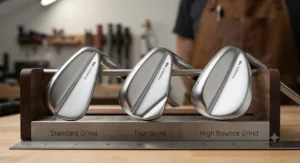
Buyer’s Decision Framework for Forged Muscle Back Blades
If you’re still torn, run through this simple framework before you buy.
If you consistently strike the ball in the same quarter-inch of the face, choose any blade on this list, because your strike pattern — not the equipment — is what determines whether a muscle back helps or hurts you. If your handicap sits above 12 and you’re buying blades primarily for the look, choose a combo set instead, pairing MB scoring irons with a more forgiving long-iron partner like a P7MC or Apex Pro. If budget is the deciding factor over brand prestige, choose the Ben Hogan Icon or Srixon Z-Forged II, since both deliver genuine forged feel well below flagship pricing. If craftsmanship and resale value matter as much as performance, choose the Miura MB-101 and accept the premium as the cost of the genuine article.
✨ Not sure where you land? Get a proper launch-monitor fitting before committing to a full set — a 20-minute session can save you from an expensive miss.
How to Choose Muscle Back Irons for Low Handicap Play
Choosing correctly here matters more than in almost any other club category, because a wrong-fit blade actively costs strokes rather than merely underperforming.
- Confirm your handicap and strike consistency first — muscle back irons low handicap fit generally starts around a 5-handicap or better, though accomplished single-digit strikers can go lower.
- Get properly fit for shaft flex and weight, since blades amplify shaft mismatches more than cavity backs do.
- Test on a launch monitor, not just visually, to see real dispersion patterns rather than assumptions about your swing.
- Consider a combo set if your long-iron consistency lags behind your scoring-club consistency.
- Prioritize sole grind and bounce for your typical turf conditions over cosmetic preferences.
- Factor in realistic practice time — blades reward frequent players far more than occasional golfers.
- Re-evaluate annually, since strike patterns shift as swings evolve, and yesterday’s perfect fit can quietly become today’s mismatch.
For a broader look at how different blade models stack up against each other in independent testing, Golf Monthly’s blade iron rankings are a useful cross-check before you commit to a fitting appointment.
Muscle Back Irons vs Players Distance and Cavity Back Irons
The comparison every serious buyer eventually has to make isn’t blade versus blade — it’s blade versus everything else.
| Category | Forgiveness | Feel/Feedback | Workability | Best For |
|---|---|---|---|---|
| Muscle Back Blades | Low | Exceptional | Highest | Skilled players, low handicaps |
| Players Distance Irons | High | Muted | Moderate | Mid-handicappers wanting distance |
| Cavity Back Irons | Highest | Good | Lower | Higher handicaps, game improvement |
Reading across that table, the trade-off is almost perfectly linear: every step toward more forgiveness costs you feedback and shot-shaping ability, and every step toward workability costs you margin for error. What most buyers overlook is that players distance irons have closed much of the distance gap in recent years, meaning the real reason to choose a muscle back blade today is feel and control specifically, not raw yardage. If you genuinely don’t know which category you belong in, a combo set — blades in the scoring irons, players distance or cavity back in the long irons — is very often the honest answer rather than a compromise. Golf.com’s annual iron buyer’s guide is a solid starting point for seeing how muscle backs compare against the full spectrum of players’ and game-improvement categories side by side.
Traditional Muscle Back Design: What a Century of Blade Golf Got Right
Traditional muscle back design has barely changed in its fundamentals since the earliest forged blades, and that stability is the point rather than a limitation.
A solid rear section without a cutout keeps mass concentrated directly behind the strike zone, which is what produces the sharper feedback and workability purists chase. Modern materials science has refined the metallurgy — softer carbon steel alloys, tighter forging tolerances, CNC-milled faces — but the core geometric philosophy of “no cavity, no compromise” hasn’t budged, because it doesn’t need to. What most buyers overlook is that this design conservatism is actually a feature: it means a blade bought today will feel recognizably similar to one from a decade ago, so switching between brands or generations rarely means relearning your feel from scratch.
What Soft Forged Feel Really Means at Impact
“Soft forged feel” gets thrown around constantly in golf marketing, but it describes something measurably real rather than just a subjective sensation.
Soft feel comes primarily from the carbon content and hardness of the steel billet — softer 1020 and 1025 carbon steels compress and rebound differently off the face than harder stainless alloys, producing lower-frequency vibrations that the hand interprets as “soft” rather than “harsh.” Reviewers consistently note that this softness isn’t just pleasant, it’s informative: a properly forged soft blade transmits enough vibration difference between a center strike and a slight miss that skilled players can call their shot with their eyes closed. What the spec sheet won’t tell you is that a copper underlay, like Mizuno uses on the Pro S-1, adds a further acoustic-dampening layer beneath the finish specifically to refine that feedback even further.
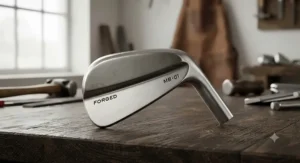
Tour Preferred Design and Skilled Player Fit: Are You Ready?
“Tour preferred design” isn’t just a marketing phrase stamped on a box — it genuinely describes equipment shaped around what touring professionals request, not what sells best to the widest audience.
That distinction matters enormously for skilled player irons, because tour-driven design decisions — thinner toplines, reduced offset, narrower soles — actively reduce forgiveness in exchange for workability and shot-shaping precision that most recreational golfers never actually need. Here’s an honest gut-check: if you can’t reliably work the ball both directions on command and you don’t currently shoot in the 70s or low 80s with regularity, a tour preferred blade is very likely solving a problem you don’t have yet. Reviewers and fitters alike tend to agree that the ego cost of admitting you’re not ready is far smaller than the stroke cost of playing equipment that punishes your current game.
Muscle Back Irons Feedback: What Real Reviews and Testers Keep Saying
Strip away the marketing copy, and muscle back irons feedback from independent testers is remarkably consistent across brands.
Nearly every review cited in this guide converges on the same core themes: exceptional feel and feedback on center strikes, meaningfully reduced forgiveness on the long irons specifically, and a strong recommendation that these irons suit low-handicap and scratch players rather than the broader golfing public. Reviewers testing back-to-back models — like the P7MB against the more forgiving P7MC, or the Apex MB against the Apex Pro — consistently describe a firming-up of feel the moment contact drifts off-center, which several testers frame as a feature rather than a flaw, since it actively teaches better strike discipline over time.
Common Mistakes When Buying Forged Muscle Back Blades
Even experienced golfers stumble into a handful of predictable mistakes when shopping this category.
The most common error is buying blades purely on brand reputation without an actual fitting, which ignores that lie angle and shaft weight matter disproportionately on a muscle back. A close second is underestimating long-iron difficulty — many buyers love the short-iron feel in a demo session and don’t realize the 3- and 4-iron in the same set demand a completely different level of consistency. A third mistake is ignoring turf interaction; a sole grind that works beautifully on firm fairway turf can dig and twist on soft or wet ground, and few buyers test this before committing to a full set. Finally, some buyers skip the combo-set option entirely out of pride, missing an honest middle ground that would genuinely lower their scores.
Long-Term Cost & Maintenance of Forged Blades
Total cost of ownership on a forged muscle back blade extends well past the purchase price, and it’s worth budgeting for honestly.
Re-shafting becomes more common on blades than cavity backs simply because serious players tend to fine-tune shaft weight and flex more aggressively as their swing evolves, and each re-shaft typically runs a meaningful fraction of the original set price per club. Regripping annually is standard practice for anyone playing more than two rounds a week, since blade feel is unusually sensitive to grip wear. Cost-per-round math tends to favor blades over time for frequent players — a $1,000–$1,600 set played 60 rounds a year for five years works out to a genuinely modest per-round cost — but that math collapses quickly for occasional golfers who might only play a dozen rounds annually. If you want to see how testing labs measure real forged-iron performance over time, Today’s Golfer’s forged irons test data breaks down the standard-deviation methodology used to compare consistency across brands.
🎯 Ready to compare fittings near you? Reach out to a certified club fitter before buying online to confirm lie angle, shaft, and grip specs match your swing.
Features That Actually Matter (And Those That Don’t)
Marketing copy loves to bury genuinely important specs under flashy but largely cosmetic ones, so here’s an honest filter.
What actually matters: sole grind and bounce for your typical turf conditions, shaft weight and flex matched through real fitting data, and the forging alloy itself, since softer carbon steels genuinely do feel different at impact. What matters far less than marketing suggests: cosmetic finish variations (satin versus chrome rarely affects performance), minor topline thickness differences of a millimeter or two, and headcover or packaging presentation, which several brands lean on heavily despite it having zero on-course impact. Reviewers consistently note that the single biggest performance differentiator between comparable blades is actually the shaft, not the head — a detail many buyers underweight entirely.
Frequently Asked Questions
❓ What handicap do you need for muscle back irons?
❓ Are forged muscle back blades harder to hit than cavity backs?
❓ Do muscle back blades really feel softer than cast irons?
❓ How much do forged muscle back blades typically cost?
❓ Can beginners use forged muscle back blades?
Conclusion: Finding Your Forged Muscle Back Blade
Choosing among forged muscle back blades ultimately comes down to an honest conversation with yourself about where your game actually stands, not where you’d like it to stand.
Every iron on this list — the Titleist 620 MB, Mizuno Pro S-1, Callaway Apex MB, TaylorMade P7MB, Srixon Z-Forged II, Ben Hogan Icon, and Miura MB-101 — delivers genuine forged feel and real workability, and each is built by companies with decades of tour credibility behind them rather than marketing invention. The differences that matter most are practical: your handicap and consistency, your budget, and whether you value heritage craftsmanship or fitter-friendly customization more. If you’re still unsure, a combo set or a proper fitting session will tell you more in twenty minutes than another hour of forum reading ever could.
Whichever direction you land, the honest truth about this category hasn’t changed in decades: a forged muscle back blade won’t fix your swing, but if your swing is already sound, almost nothing else will make good golf feel this good.
✨ Found the blade that fits your game? Share this guide with a golf buddy who’s ready to make the leap! 💬🏌️
Recommended for You
- Muscle Back Irons Workability: 7 Best Blades to Try in 2026
- 7 Best cavity back irons high handicap Picks for 2026 (Real Data)
- Perimeter Weighted Cavity Back Irons: 7 Best Picks for 2026
Disclaimer: This article contains affiliate links. As an Amazon Associate, I earn from qualifying purchases. If you purchase products through these links, we may earn a small commission at no additional cost to you.
✨ Found this helpful? Share it with your friends! 💬🤗
