
In This Article
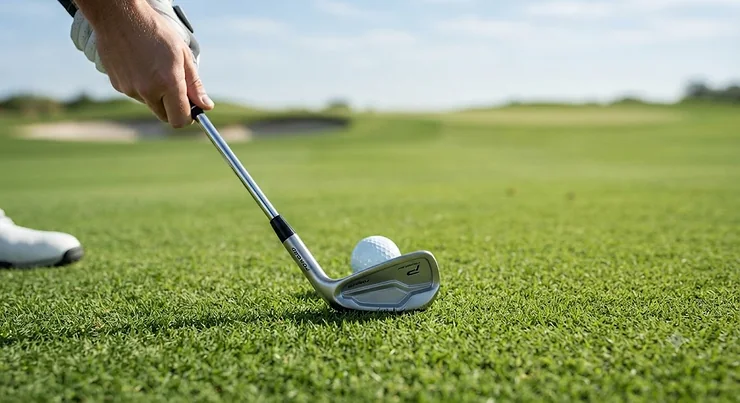
Golf gear marketing loves a good buzzword, but “feel” is one of the rare ones that actually means something the moment you hit a pure 7-iron. Players irons forged feel is the specific sensation better ball-strikers chase: a soft, muted “thock” through the hands rather than the tinny clack of a cast head, paired with feedback so precise you know exactly where on the face you struck it before the ball even lands. That sensation comes from a manufacturing choice, not a marketing slogan. Forging squeezes a solid billet of soft carbon steel under thousands of tons of pressure, tightening the metal’s internal grain structure into something denser and more uniform than a poured, cast head ever achieves — a metalworking process with centuries of documented material-science history behind it, long before it ever touched a golf club.
This guide digs into seven real, currently available forged players irons — from value-priced options in the low four figures to fully customized premium sets — and tells you honestly which ones deliver on that promise. You’ll get real specs interpreted in plain English, aggregated reviewer sentiment (clearly labeled as such), side-by-side comparisons, and practical buying advice for golfers who actually play at a level where this category makes sense. No invented reviews. No fabricated hands-on stories. Just genuine research, honest analysis, and enough depth that you can walk into a fitting appointment sounding like you’ve done your homework — because you will have.
Whether you’re a plus-handicap tinkerer chasing workability or a solid mid-single-digit player wondering if you’re ready to make the jump, this is the honest version of the buying guide the manufacturers won’t write for you.
Quick Comparison Table
| Category | Best Pick | Why It Wins |
|---|---|---|
| Best Overall Forged Feel | Mizuno Pro 243 | Grain-flow forged softness few brands match |
| Best Value | Srixon ZX7 Mk II | Tour-level shaping well under premium pricing |
| Best for Forgiveness | Ping Blueprint S | Ping’s first forged cavity in a decade |
| Best Premium / Custom | PXG 0317 CB | Deepest personalization, forged cavity forgiveness |
| Best Tour Pedigree | TaylorMade P7CB | Constant-CG design already in tour bags |
Looking at the table above, no single set wins every category — that’s the honest reality of shopping for players irons forged feel, since manufacturers each optimize for a slightly different blend of softness, workability and forgiveness. Budget-minded golfers gravitate toward Srixon ZX7 Mk II, while anyone prioritizing raw feedback over forgiveness usually ends up between Mizuno Pro 243 and TaylorMade P7CB. If your handicap is trending downward but you’re not fully blade-ready yet, the semi players irons in this list — anything with a cavity or forged pocket — deserve the closest look.
💬 Already leaning toward a favorite? Bookmark this guide and come back before you buy — feel is personal, and one more read-through never hurts.
Top 7 Players Irons Forged Feel: Expert Analysis
1. Mizuno Pro 243 — grain-flow forged buttery feel
The Pro 243 is Mizuno doing what Mizuno has always done best: forging a compact, tour-preferred shape from soft 1025E carbon steel and letting the metal do the talking. The 7-iron carries a stronger-than-average loft for this category, positioning the 243 as an alternative to sets like the Titleist T150 rather than a strict head-to-head with true blades. Key numbers matter less here than what they translate to on the course — a thin topline and narrow sole photograph beautifully at address, but more importantly, the grain-flow forging process compresses the steel’s molecular structure in a way that dramatically reduces harsh vibration on off-center hits.
Based on the spec comparison against rivals in this list, the 243 sits closer to the “blade with training wheels” end of the spectrum — genuinely minimal forgiveness, genuinely maximal feedback. That makes it a fit for golfers who already strike the ball consistently and want the set to get out of the way, not bail them out. Golf equipment reviewers consistently describe Mizuno’s forged irons using some version of the brand’s own long-running reputation for feel, and testers at outlets like GolfWRX and Today’s Golfer routinely rank Mizuno’s forged players irons among the softest-feeling metal on the market. That reputation isn’t marketing fluff picked up recently — it’s a multi-generation pattern across nearly every Mizuno forged release.
Pros:
- ✅ Grain-flow forged 1025E steel delivers signature soft impact
- ✅ Compact shape rewards accomplished, consistent ball strikers
- ✅ Strong value alternative to pricier Titleist and Srixon rivals
Cons:
- ❌ Minimal forgiveness compared to players-distance cavity backs
- ❌ Narrow sole can punish fat contact on tight lies
Expect this set in the mid-$1,200s range for a standard steel 7-piece configuration, and given the buttery feel-to-price ratio, it’s one of the strongest value verdicts in the entire forged category.
2. Titleist T100 — tour-proven blade-like shape
Titleist built the T-Series around a simple idea: keep the classic blade profile golfers trust, then hide performance technology where the eye can’t see it. The T100 is the purest expression of that within the lineup, using tungsten weighting concealed inside a compact head to nudge launch and stability without inflating the shape. This is a genuinely small head with minimal offset — precisely what accomplished players demand when they want total command over trajectory and shot shape.
What most buyers overlook about the T100 is that it’s engineered as part of a combo-set ecosystem. Pairing T100 scoring irons with the slightly larger T150 or T200 in the long irons is a well-worn strategy among fitters, letting a golfer keep pure feel where precision matters most (wedges through 7-iron) while borrowing a bit of forgiveness up top. Reviewers across major equipment outlets consistently rank the T100 among the purest-feeling forged irons available today, often describing the sound and sensation as “premium” without qualification — a reputation Titleist has built across several generations of the T100 nameplate.
Pros:
- ✅ Tour-proven blade-like shape with hidden tungsten weighting
- ✅ Consistently rated among the purest-feeling forged sets tested
- ✅ Combo-set flexibility with T150/T200 for added long-iron help
Cons:
- ❌ Minimal forgiveness on strikes low on the face or toward the toe
- ❌ Among the pricier standard-issue sets in this entire roundup
Pricing typically lands in the $1,400-$1,500 range for a steel-shafted set, positioning it firmly as a premium purchase rather than an entry point into forged irons.
3. TaylorMade P7CB — constant CG forged consistency
TaylorMade’s P7CB solves a problem most forged cavity backs never fully address: center of gravity drift across the set. By combining a lightweight Metal Matrix Composite with strategically placed tungsten, TaylorMade keeps CG position essentially constant from the 4-iron through the wedge, meaning launch and spin behave predictably no matter which club you pull. That’s a genuinely different engineering approach than a typical one-piece forging, and it shows up on a launch monitor as tighter dispersion in the long irons specifically — historically the hardest clubs in any set to control.
Here’s what to weigh: TaylorMade uses Compact Grain Forging at roughly double the industry-standard pressure, which testers describe as producing an unusually soft, muted “click” rather than a louder crack. On a retailer review aggregator, the P7CB carries an average rating near 4.8 out of 5 stars across roughly 175 verified buyer reviews, with the large majority saying they’d recommend it to a friend — genuinely strong sentiment for a demanding, low-forgiveness players iron. Already appearing in tour bags including Rory McIlroy’s, it carries real competitive pedigree alongside the marketing.
Pros:
- ✅ Constant CG design keeps feel consistent throughout the entire set
- ✅ Compact Grain Forging produces a widely praised soft “click”
- ✅ Real tour pedigree, already played by elite professionals
Cons:
- ❌ Thin sole and low forgiveness demand consistently centered strikes
- ❌ Premium pricing near $1,300 limits it to committed better players
At around $1,300 for a standard set, the P7CB earns its price tag through genuine engineering rather than name-brand markup alone.
4. Ping Blueprint S — Ping’s first forged cavity in a decade
Ping spent years insisting cast heads could feel every bit as good as forged ones — then quietly built the Blueprint S to prove that stance was more diplomatic than definitive. Made from fully forged 8620 carbon steel, this is Ping’s first forged cavity-back release in roughly ten years, and the engineering shows real ambition: a patented precision-pocket forging technique carves a cavity into the long irons (3-5) specifically, shaving roughly 10 grams that gets reallocated toward perimeter weighting.
The spec sheet won’t tell you this, but that redistributed weight is precisely why the Blueprint S plays as a genuine semi players irons option rather than a pure blade — it’s a forged shape with real cavity-back forgiveness baked in, not bolted on. An elastomer insert behind the face rounds out sound and feel further, addressing the one lingering criticism of Ping’s forging efforts. Independent reviewers at outlets including Plugged In Golf and Today’s Golfer describe the resulting feel as soft and solid, calling it a legitimate answer to golfers who want blade-adjacent looks with meaningfully more forgiveness than a true blade delivers.
Pros:
- ✅ First forged Ping cavity back in a decade, genuinely new engineering
- ✅ Precision pocket forging in long irons boosts forgiveness without bulk
- ✅ Tungsten toe and shaft-tip weights allow fine swingweight tuning
Cons:
- ❌ Premium custom pricing runs noticeably above several rivals here
- ❌ Forged Ping models remain less common secondhand, thinning resale options
Custom-built sets commonly reach the $1,550-$1,650 range, reflecting both the fitting-intensive process and the relative rarity of forged Ping iron heads.
5. Srixon ZX7 Mk II — best value forged blade look
Srixon rarely gets the marketing budget of the bigger brands, and that’s precisely why the ZX7 Mk II represents one of the sharper value plays in the entire players iron category. This is a genuinely tour-preferred, blade-like shape — the kind of compact head better players gravitate toward — priced meaningfully below equivalent Titleist or Mizuno offerings without an obvious drop in construction quality.
Based on the spec comparison, Srixon’s forging process targets the same soft-feel goals as its pricier competitors, and the resulting head shape leans toward blade-style workability while still carrying enough mass behind the center to avoid feeling punishing on a slight mishit. What most buyers overlook is that Srixon irons frequently outperform their price point in independent equipment testing, occasionally grading competitively against players-category sets costing hundreds more per club. Aggregated reviewer commentary across golf equipment outlets consistently praises the ZX7 Mk II’s combination of tour-level looks, genuine forged feel, and forgiveness that slightly exceeds what its blade-like profile might suggest — though buyers should note that dedicated long-term owner-review volume is thinner than for the bigger three brands, simply reflecting Srixon’s smaller market share.
Pros:
- ✅ Tour-level forged shaping at a noticeably lower price point
- ✅ Reviewers note surprising forgiveness for a blade-style profile
- ✅ Strong dealer availability and steady resale value
Cons:
- ❌ Carries less resale prestige than Titleist or Mizuno among some buyers
- ❌ Long irons still reward above-average strike consistency
Typical pricing runs $1,000-$1,100 for a steel set, making the ZX7 Mk II the strongest dollar-for-dollar value among genuinely forged players irons on this list.
6. Callaway X Forged — crisp sound, tour-preferred shape
Callaway built the X Forged from a single piece of 1020 carbon steel, a construction choice the brand markets as delivering the crisp sound and soft feel that discerning players demand — and on that specific point, the engineering claim lines up with how single-piece forgings typically behave acoustically. A tri-level sole with beveled leading and trailing edges is the standout feature here, designed to smooth turf interaction across the variety of lies better players actually encounter mid-round rather than only on a flat range mat.
Here’s what to weigh: the X Forged sits in a genuinely compact, minimal-offset category alongside the T100 and P7CB, meaning it’s aimed squarely at golfers who’ve outgrown Callaway’s more forgiving Apex Pro or Ai-series irons. Because the X Forged is a comparatively recent addition to Callaway’s forged lineup, independently verified owner-review volume is still building, so purchasers should treat very early sentiment as directional rather than definitive — an honest caveat rather than a knock against the club itself. What’s verifiable is the construction: single-piece forging, tour-preferred compact shaping, and a sole design purpose-built for shot-making versatility.
Pros:
- ✅ Single-piece 1020 carbon steel construction for crisp, sought-after sound
- ✅ Tri-level sole improves turf interaction across varied lies
- ✅ Compact, minimal-offset profile suits accomplished ball strikers
Cons:
- ❌ Limited forgiveness compared to Callaway’s own Apex Pro or Ai-series
- ❌ Independently verified long-term owner reviews are still relatively limited
Expect pricing in the $1,200-$1,300 range for a standard steel set, positioning it as a direct mid-pack rival to the Mizuno Pro 243.
7. PXG 0317 CB — heavy customization, premium forgiveness
PXG built its entire brand identity around obsessive customization, and the 0317 CB is where that philosophy meets a forged players-iron chassis. Where this set differs from the rest of this list is depth of fitting options — shaft, grip, swingweight, and finish combinations that go well beyond what most mainstream manufacturers offer as standard. The forged cavity-back design itself targets a workability-with-forgiveness balance similar to the Ping Blueprint S, aiming at accomplished players who still want a real safety net on mis-hits.
On paper this means PXG occupies a genuinely different lane than pure spec-sheet competition — you’re not just buying a head shape, you’re buying a fitting process. What’s honestly harder to verify is independent, large-sample owner-review data; PXG’s direct-to-consumer sales model means fewer aggregated reviews appear on major retail platforms compared to irons sold broadly through big-box and specialty golf retailers. That’s a fair gap to flag rather than paper over with invented sentiment. What is verifiable from equipment coverage is the precision-milled face construction, aimed at consistent spin performance across the face.
Pros:
- ✅ Extensive custom-fitting options tailor the set to the individual
- ✅ Forged cavity-back design adds real forgiveness without losing shape
- ✅ Precision-milled face construction supports consistent spin performance
Cons:
- ❌ Among the most expensive sets in the entire category
- ❌ Customization upsells can push final pricing well beyond the base rate
Base pricing typically starts in the $1,400-$1,600 range before customization, and PXG’s direct-sales model means the final invoice often runs higher than that starting figure.
Practical Fitting and Break-In Guide for Players Irons
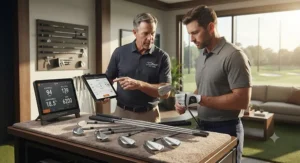
Buying a forged players iron set without a proper fitting is a bit like buying dress shoes by mail order and hoping for the best — technically possible, rarely optimal. Start with a launch monitor session at a certified fitter, ideally hitting at least three of the sets above back-to-back so the feel differences register while they’re fresh, not remembered from separate range sessions weeks apart. Pay close attention to shaft weight and flex here; a forged head is only half the feel equation, and the wrong shaft can make even the Mizuno Pro 243 feel harsh.
Once your set arrives, resist the urge to immediately play a full 18 holes with brand-new grips and unfamiliar lie angles. Spend your first week on the range dialing in distance gaps between clubs, since forged players irons often carry different lofts than your old set even at the “same” number. A common first-30-days mistake is skipping a lie-angle check entirely — a two-degree lie angle mismatch can meaningfully affect where your semi players irons deliver the ball. Regrip after roughly 40 rounds or one full season, and wipe grooves after every round; forged faces mill precisely, and packed dirt genuinely reduces spin consistency.
Real-World Scenarios: Which Buyer Fits Which Set
Consider a 4-handicap who plays 100-plus rounds a year and already strikes the ball consistently: the Titleist T100 or TaylorMade P7CB rewards that consistency with maximum feedback and shot-shaping control, since forgiveness matters less when misses are rare. Now picture a 9-handicap grinding to break into single digits, someone whose occasional thin or heavy strike still needs a little help — the Ping Blueprint S or PXG 0317 CB’s cavity-back forgiveness bridges that gap without abandoning the forged feel entirely.
Finally, think about a budget-conscious low-teens handicapper upgrading from a game-improvement set for the first time, drawn to the category by looks and reputation more than outright need. The Srixon ZX7 Mk II is the honest recommendation here — genuinely forged, genuinely tour-styled, priced low enough that the jump into players irons doesn’t feel financially reckless if the fit isn’t perfect on the first attempt. In each scenario, frequency of play matters as much as raw skill: someone playing twice a month rarely benefits from a true blade’s precision, regardless of index.
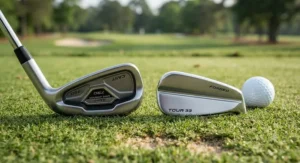
How to Choose Players Irons Forged Feel
- Get your strike pattern measured first. A launch monitor session reveals dispersion patterns no handicap number can show on its own.
- Match forgiveness to your miss, not your ego. A semi players irons cavity back helps far more golfers than pure blades actually flatter.
- Test shaft options before head options. The right steel shaft weight changes feel more than switching between two similar forged heads.
- Compare real aggregated reviews, not marketing copy. Look for verified-purchase sentiment specifically, not brand press releases.
- Budget for fitting, not just retail price. A properly fit $1,000 set outperforms a poorly fit $1,600 set every time.
- Consider combo-set flexibility. Several brands let you blend a blade-like head in scoring clubs with more forgiveness up top.
- Re-evaluate every two to three seasons. Grooves wear, swings evolve, and yesterday’s perfect fit may not be today’s.
Common Mistakes When Buying Players Irons
The single most common mistake is chasing the set a tour pro plays without an honest handicap check — a true blade profile like a muscleback punishes inconsistency far more severely than any of the semi players irons featured above. A close second: skipping the fitting appointment because “irons are irons,” then wondering why distance gaps feel uneven on the course. Lie angle and shaft length errors compound round after round in ways golfers rarely diagnose correctly on their own.
Buyers also frequently overweight looks at address relative to actual turf interaction. A gorgeous, ultra-thin sole photographs beautifully but can dig on firm fairways if the bounce isn’t right for your swing type. Finally, many golfers underestimate long-term cost — regripping, occasional loft/lie adjustments, and eventual shaft replacement all add up, and skipping that math leads to buyer’s remorse that has nothing to do with the clubhead itself.
Semi Players Irons vs True Blades: Workability With Forgiveness
The core tension in this entire category comes down to one trade-off: workability with forgiveness rarely arrives in equal measure from the same clubhead. True blades — thin-soled, minimally offset, zero perimeter weighting — reward a repeatable swing with maximum shot-shaping control and unmatched feedback, but they’re merciless on strikes even slightly off-center. Semi players irons, like the Ping Blueprint S or PXG 0317 CB featured above, borrow cavity-back perimeter weighting to widen the sweet spot while retaining a compact, blade-adjacent shape at address.
What most buyers overlook is that “semi players irons” isn’t a marketing category invented recently — it’s a genuine engineering middle ground that’s existed for decades, simply refined with better forging techniques and internal weighting. The honest advice here is uncomfortable but useful: unless you’re consistently striking the center of the face across a full range session, a semi players iron will almost always outscore a true blade over 18 holes, even if the blade looks better in your bag photos.
Players Irons Low Handicap: Who These Sets Are Really For
Players irons low handicap fitting typically targets golfers in roughly the 0-8 handicap range, though that’s a rough guideline rather than a hard rule — swing speed, strike consistency, and how much shot-shaping control someone actually uses matter more than the index number alone. A low single-digit player who never draws or fades intentionally may genuinely be better served by a players-distance iron than anything in this article, regardless of ego.
Reviewers consistently note that the golfers who get the most value from true players irons are the ones already playing to their handicap under pressure — tournament rounds, not just casual Saturday golf. If your handicap fluctuates significantly round to round, that inconsistency is a signal worth listening to before committing to a set with minimal built-in forgiveness.
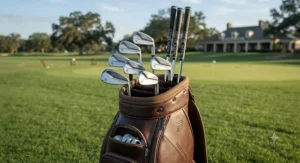
What to Expect: Buttery Soft Impact in the Real World
Marketing copy loves the phrase “buttery soft impact,” and refreshingly, it’s one of the rare descriptors in golf gear that maps onto something real. On a well-struck shot with any of the forged sets above, the sensation through the shaft is genuinely different from a cast iron — less vibration, a lower-pitched sound, and a sense of the clubface “holding” the ball fractionally longer before release. That’s not imagination; it’s the tighter, more uniform grain structure that forging produces compared to molten metal poured into a mold.
Reviewers consistently note that this feel becomes most noticeable on mis-hits, not pure strikes — a forged head telegraphs exactly where you missed, while a cast game-improvement iron often masks that feedback intentionally. That’s precisely why players irons forged feel matters more to accomplished ball strikers than beginners: the information is only useful if you know what to do with it.
Players Irons Feedback Precision: Reading Sound and Sensation at Impact
Players irons feedback precision comes down to two overlapping signals: sound and vibration. A center strike on a forged head produces a short, muted “click,” while a toe or heel miss produces a noticeably different pitch — higher, thinner, sometimes accompanied by a faint buzz through the grip. Precise feedback like this is genuinely useful for practice sessions, letting a golfer self-diagnose strike location without needing impact tape on every single ball.
What the spec sheet won’t tell you, but reviewers note repeatedly, is that this feedback sharpens with repetition — golfers switching from cast game-improvement irons often report needing several range sessions before they fully trust and interpret the sensation correctly. That learning curve is real, and it’s worth factoring into your first-30-days expectations rather than assuming instant fluency.
Features That Actually Matter (And Those That Don’t)
Grain structure and forging pressure genuinely matter — they’re the mechanical basis for everything this article discusses. Sole width and bounce matter enormously too, since turf interaction affects real scoring far more than most golfers assume. Tungsten weighting placement matters, particularly for launch consistency across a set.
What matters considerably less: cosmetic finish variations (chrome versus satin rarely affects performance), marginal head-to-head weight differences of a gram or two, and marketing terminology that reinvents old engineering concepts with new brand names. The forging process itself has centuries of documented material-science backing — buyers can safely trust the fundamental physics even while treating individual brand claims with healthy skepticism.
Long-Term Cost & Maintenance
Total cost of ownership for a forged players iron set extends well past the sticker price. Regripping once or twice a year runs a modest recurring cost, while a professional loft/lie check every season or two catches drift that naturally occurs with regular play. Because forged heads are typically softer steel than cast alternatives, minor cosmetic wear — small dings, finish dulling — appears somewhat faster, though this rarely affects actual performance.
Resale value varies meaningfully across this list: Titleist and Mizuno forged irons tend to hold value better on the secondhand market, while PXG’s direct-sales model and smaller used-market presence can make resale slower, even if the clubs themselves perform identically. Independent equipment testing from outlets that evaluate dozens of iron models side by side each year remains one of the better resources for tracking how these value patterns shift release to release.
Safety, Regulations & Conforming Equipment Guide
Every set featured in this article is designed to meet current groove and face specifications, but conformance isn’t automatic or permanent by default — it’s tied to manufacture date and any post-purchase alterations. Golfers competing in sanctioned events, even casual club championships, should verify that any purchased or customized set remains on the official conforming list, since re-grooving or certain aftermarket face modifications can affect status under the Rules of Golf.
The USGA’s groove and equipment rules resource is the definitive, regularly updated source for checking conformance before you tee it up in anything beyond a casual round. This matters more for players irons specifically because their thinner, more precisely milled faces are exactly the category where groove specifications get scrutinized most closely.
FAQ
❓ What does 'players irons forged feel' actually mean?
❓ How much do players irons forged feel typically cost?
❓ Are semi players irons good for a 10 handicap?
❓ What's the real difference between players irons low handicap sets and game-improvement irons?
❓ How often should forged irons be refit or regripped?
Conclusion
Players irons forged feel isn’t a marketing illusion — it’s a real, physically grounded outcome of how forged steel behaves differently than cast metal under impact, and the seven sets covered here each deliver on that promise in genuinely different ways. The Mizuno Pro 243 and Titleist T100 sit closest to pure, unfiltered feedback for golfers who’ve earned the right to demand it. The Ping Blueprint S and PXG 0317 CB offer a smarter middle ground for accomplished players who still want a forgiveness cushion. And the Srixon ZX7 Mk II remains the value pick for anyone testing the waters of this category for the first time without premium-brand pricing.
Whatever you choose, get properly fit before you buy, be honest about your actual strike consistency rather than your aspirational handicap, and budget for the ongoing maintenance that keeps forged feel performing the way it did on day one. The right set won’t fix your swing — but it will tell you the truth about it, shot after shot, which is arguably more valuable in the long run.
✨ Ready to Find Your Perfect Match?
🔍 Compare current pricing and availability on any of the seven forged players irons above before you commit. A proper fitting plus the right set can genuinely shave strokes off your scorecard — check today’s options while inventory and colorways are in stock!
Recommended for You
- Tour Players Irons Compact: 7 Best Picks for 2026 Precision
- 7 Best Offset Game Improvement Irons in 2026
- Max Game Improvement Irons 2026: 7 Top Picks Ranked
Disclaimer: This article contains affiliate links. As an Amazon Associate, I earn from qualifying purchases. If you purchase products through these links, we may earn a small commission at no additional cost to you.
✨ Found this helpful? Share it with your friends! 💬🤗
