
In This Article
Somewhere between a butter knife and a scalpel sits the modern tour players irons compact category, and if you’ve ever picked one up in a pro shop, you already know the feeling — that slightly intimidating, slightly thrilling sense that this club expects something from you. Compact heads, thin toplines, almost no room for error. It’s not a forgiving conversation. It’s a demanding one, and that’s exactly the point.
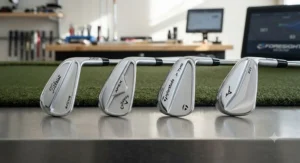
Tour players irons compact sets are built for golfers who’ve already done the hard work on their swing and now want the equipment to get out of the way. These are the clubs you see in PGA Tour bags — small, purposeful, often gorgeous — designed to reward center-face contact with pure feel and pinpoint distance control rather than bail you out on a mishit. If you’re a low single-digit handicapper wondering whether it’s time to upgrade from a game-improvement set, this guide breaks down seven real, currently available models, what actually separates them, and who each one is built for.
We researched specs, forging processes, and aggregated reviewer sentiment across major golf publications rather than repeating marketing copy, because — as irons have evolved from simple forged blades into today’s multi-material, tungsten-weighted tools, the differences between models have become more nuanced, not less. Let’s get into it.
Quick Comparison Table
Before we dig into full breakdowns, here’s a fast snapshot of how these seven tour players irons compact models stack up on the things that matter most: forgiveness-for-size, feel, and who they’re really built for.
| Iron | Construction | Forgiveness Level | Best For |
|---|---|---|---|
| Titleist T150 | Forged, dual-cavity, tungsten | Moderate-high for category | Single-digit handicaps wanting T100 looks with more stability |
| TaylorMade P-7MB | Forged 1025 carbon steel, muscle back | Low | Scratch golfers and elite ball strikers |
| Mizuno Pro 223 | Grain Flow Forged, chromoly/mild carbon | Moderate | Better players wanting Mizuno feel with a safety net |
| Callaway Apex CB | Forged 1025 carbon steel, cavity back | Moderate | Skilled golfers wanting classic shape with slight forgiveness |
| Srixon ZX7 Mk II | Forged 1020 steel, players cavity | Moderate-high | Golfers who want blade looks but tour-level consistency |
| PXG 0317 CB | 3x forged 8620 steel, milled | Moderate | Better players wanting PXG’s tunable weighting |
| Wilson Staff Model Blade | Forged 8620 carbon steel, muscle back | Low | Value-focused elite ball strikers |
Looking at the spread here, the real split isn’t premium versus budget — it’s blade versus cavity. The TaylorMade P-7MB and Wilson Staff Model Blade sit at the demanding end of the spectrum with almost no forgiveness cushion, while the Titleist T150 and Srixon ZX7 Mk II quietly smuggle in extra stability without looking like it. If your ball-striking has an occasional off day (whose doesn’t), that distinction matters more than any price tag.
💬 Just one click — help others make better buying decisions too!😊
Top 7 Tour Players Irons Compact: Expert Analysis
We picked these seven models to cover the full spread of the category — from forgiving-for-a-blade to unapologetically demanding, and from mid-range value to full tour-spec pricing. Every set here is genuinely played by tour professionals or built on the same platform as clubs that are.
1. Titleist T150 — compact shape with hidden forgiveness
The T150 looks like a players iron and plays like one that’s had your back covered. Titleist built this set around split high-density tungsten weighting inside a progressive dual-cavity body, which sounds technical but translates to something simple on the course: mishits don’t fall apart the way they do in a traditional blade.
The 7-iron carries a stronger, more contemporary 32-degree loft, and Variable Face Thickness technology keeps ball speed consistent even when you catch one slightly toward the heel or toe. Titleist also revised the groove pattern for the 2025-26 generation, tightening spin control from the rough and in wet conditions — a detail that matters more in real rounds than in range sessions.
Based on the spec comparison with the brand’s own T100 blade, the T150 trades a hair of workability for meaningfully more stability, and that’s exactly the trade most single-digit handicappers should want. Reviewers consistently note that mishits with the T150 land closer to target than with comparable blades, and that the compact profile still frames the ball beautifully at address — nobody feels like they’re playing a game-improvement iron here.
Pros:
- ✅ Tungsten weighting adds real stability without bulking up the head
- ✅ Compact, tour-inspired shape that still looks like a players iron
- ✅ Consistent carry distances even on centered mishits
Cons:
- ❌ Slightly less workable than a true muscle-back blade
- ❌ Premium pricing reflects the forged, multi-material build
Expect the Titleist T150 to land in the mid-to-upper price range for premium forged irons, generally in the $1,300-$1,600 range for a seven-piece steel set — check current pricing, as Titleist adjusts availability by generation. For a golfer who wants tour-level looks with a genuine performance cushion, this is one of the smartest players irons on the market right now.
2. TaylorMade P-7MB — the purest muscle-back on tour
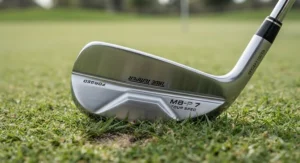
If the T150 is a players iron with training wheels quietly bolted on, the P-7MB is the opposite philosophy entirely. This is TaylorMade’s most uncompromising tour blade, forged from 1025 carbon steel using what the company calls Compact Grain Forging — a 2,000-ton press process that tightens the grain structure for an unusually solid, buttery feel at impact.
There’s essentially no forgiveness technology hiding in this head. A thin topline, minimal offset, and a narrow sole put all the responsibility on the golfer, which is exactly why it’s found in the bags of some of the best ball strikers in the world. What most buyers overlook about a true muscle back like this is that the “aggressive score line geometry” TaylorMade uses on the face isn’t just for looks — it meaningfully tightens spin consistency on center strikes, which is where a player of this caliber lives most of the time.
Reviewers who test extensively describe it as the most demanding iron in TaylorMade’s current lineup, rewarding pure strikes with buttery feedback while offering little forgiveness on anything else. That’s not a flaw — it’s the entire design brief.
Pros:
- ✅ Exceptional forged feel from compact grain forging process
- ✅ Aggressive milled grooves boost spin on flush strikes
- ✅ Classic muscle-back shape favored by multiple tour pros
Cons:
- ❌ Minimal forgiveness on strikes off the center
- ❌ Not recommended for anyone outside elite ball-striking territory
Price-wise, expect the TaylorMade P-7MB to sit in the premium tour-blade bracket, often in the $1,300-$1,500 range for a steel-shafted set — always check current pricing before buying. Value here isn’t measured in forgiveness per dollar; it’s measured in feedback per swing, and on that scale it’s hard to beat.
3. Mizuno Pro 223 — Hiroshima-forged feel with a safety net
Mizuno’s Pro 223 sits deliberately in the middle of the brand’s current Pro lineup, between the pure 221 muscle back and the more forgiving 225 players-distance model, and that middle ground is exactly why it belongs on this list. It’s Grain Flow Forged HD from a combination of chromoly steel in the 4-7 irons and 1025E mild carbon steel in the 8-PW, all built at Mizuno’s Hiroshima facility using the forging process the brand has leaned on for decades.
Here’s what the spec sheet won’t tell you outright: splitting the construction by iron number lets Mizuno add ball-speed technology (a Flow Micro-Slot) exactly where long-iron golfers need help, while keeping the scoring clubs pure forged steel for feel and control. The result is a compact head with a thin topline that still manages to be, as more than one reviewer has put it, “the blade you can actually miss with.”
Lofts stay traditional — a 33-degree 7-iron and 46-degree pitching wedge — which honestly serves better players well, since it keeps wedge gapping clean instead of chasing marketing-driven distance numbers.
Pros:
- ✅ Genuine Hiroshima Grain Flow Forged construction
- ✅ Compact players-cavity look with real-world miss tolerance
- ✅ Traditional lofts keep wedge gapping honest and consistent
Cons:
- ❌ Less workable than the Mizuno Pro 221 muscle back
- ❌ Two-material construction means feel varies slightly through the set
Prices generally run in the $185-$210 per club range at retail, so a seven-piece steel set typically lands around $1,300-$1,500 — prices may vary by retailer and shaft upgrade. Value verdict: it’s one of the more honest players irons on the market, and reviewers consistently praise the feel-to-forgiveness ratio.
4. Callaway Apex CB — the modern tour cavity-back
The Apex CB ’24 is Callaway’s answer to the question of what a forged tour cavity back should feel like in 2026. It’s forged in a five-step process from 1025 carbon steel, with the body and face forged as a single piece rather than welded together, and MIM (metal-injection-molded) tungsten weights placed strategically in the heel and toe for balance.
Callaway’s progressive center-of-gravity design is worth explaining in plain terms: the long irons carry a lower CG to help launch the ball higher and land it softer into greens, while the short irons shift that CG higher to promote the extra spin needed for precise scoring-club control. That’s a meaningfully different approach from a static, one-size CG placement, and it’s the kind of detail that separates a thoughtfully engineered players iron from a re-skinned old mold.
Reviewers who’ve tested the full current Apex lineup side-by-side consistently single out the CB for feel, describing it as the standout performer for softness and responsiveness even against the brand’s own MB muscle back. The blade length is slightly longer than the previous Apex ’21 generation, though the shaping disguises it well at address.
Pros:
- ✅ Single-piece forged body-and-face construction for pure feel
- ✅ Progressive CG design tailors launch and spin by iron number
- ✅ Dynamic Sole Design improves turf interaction through impact
Cons:
- ❌ Custom-fit only in most markets, adding lead time
- ❌ Slightly less compact than Callaway’s own Apex MB blade
Expect the Callaway Apex CB in the $215-$230 per-club range, putting a seven-piece set in the $1,500-$1,650 range at current pricing — check availability, as it’s custom-order only. For golfers who want tour shaping without the harshness of a true blade, this is one of the better player irons available today.
5. Srixon ZX7 Mk II — the complete-package players iron
Where a lot of tour players irons compact models force a choice between forgiveness and workability, the ZX7 Mk II keeps refusing to pick a side. Independent testing has repeatedly placed it near the top of its category for both accuracy and distance, which is an unusual double for a genuine players iron. It’s constructed from 1020 carbon steel for classic forged sound and feel, with a compact, traditional blade shape, thin topline, and minimal offset that suits the eye of a better player without a hint of game-improvement bulk.
Independent testing data backs this up: the ZX7 Mk II ranked second overall for accuracy and fourth for distance in a fourteen-model players-iron test, with sound and feel scoring among the highest in the field. The one honest weak point reviewers flag is forgiveness, where it lands outside the top five — still above average for the category, just not its strongest suit.
The Tour V.T. Sole design helps it move through turf impressively well for a compact iron, and reviewers note the workability is fully there for shaping shots in either direction or flighting trajectory up and down at will.
Pros:
- ✅ Rare blend of accuracy and distance in a true players iron
- ✅ Traditional compact blade shape with minimal offset
- ✅ V.T. Sole design aids consistent turf interaction
Cons:
- ❌ Forgiveness ranks mid-pack relative to other players irons
- ❌ Long irons demand quality contact to get the ball airborne
Pricing typically runs in the $999-$1,200 range for a steel seven-piece set, making it one of the stronger value plays among premium-forged players irons — prices may vary at time of research. If you want tour looks with genuinely well-rounded performance, this is hard to beat.
6. PXG 0317 CB — precision-milled and fully tunable
PXG’s 0317 CB sits in the compact-controllability lane of the brand’s 0317 family, positioned between the ST blade and the more forgiving T model. It’s a solid-body construction with a thick face and compact head, built from 8620 carbon steel that’s forged three separate times for a tighter grain structure and noticeably soft feel at impact.
What most buyers overlook about PXG irons specifically is the Precision Weighting Technology on the back of the head — a large, CNC-milled weight your fitter can physically swap to dial in swing weight without shifting the center of gravity. That’s a genuinely useful piece of engineering most competitors don’t offer at this price point, and it means the same head shape can be fitted more precisely to your swing speed than a fixed-weight competitor.
Reviewers consistently describe the CB as more compact than PXG’s own 0317 T model, with slightly less offset and a marginally thinner topline, while critics have specifically praised its improved forgiveness relative to the brand’s ST blade — a meaningful upgrade in shot stability without sacrificing that phenomenal forged feel PXG built its reputation on.
Pros:
- ✅ Adjustable Precision Weighting lets fitters dial in swing weight
- ✅ 3x forged 8620 steel construction for exceptional feel
- ✅ Compact shaping with more forgiveness than PXG’s ST blade
Cons:
- ❌ Fitting-dependent pricing can climb quickly with upgrades
- ❌ Square-toe PXG shape divides opinion at address
The PXG 0317 CB typically runs in the $1,400-$1,700 range for a fitted seven-piece set, reflecting PXG’s direct-to-consumer, fitting-first sales model — always confirm current pricing before ordering. For golfers who want a genuinely customizable players iron, the value proposition is strong despite the higher entry price.
7. Wilson Staff Model Blade — tour performance at a value price
Wilson’s Staff Model Blade proves that “value” and “tour-caliber” aren’t mutually exclusive, even in the players-iron category. It’s forged from 8620 carbon steel — one of the softer alloys used in blade construction — and features a Fluid Feel Hosel adapted from Wilson’s classic Dyna-Powered irons, which redistributes hosel weight toward the toe.
Here’s the practical benefit of that toe weighting most marketing copy skips over: it helps keep the face open fractionally longer through impact, which works against the low-left miss that plagues so many blade players. Combined with precision-milled grooves for spin and stopping power, this is a genuinely tour-inspired build at a price point well below the category’s premium brands.
Compared with Wilson’s own Staff Model CB, reviewers who’ve tested both side by side note the Blade has a noticeably thinner topline and a much narrower sole — meaning less insurance against fat shots, but a more satisfying bite through turf when contact is clean. Reviewers consistently frame it as one of the best-feeling forged irons in its price bracket, with the trade-off being a real forgiveness gap in the long irons versus the CB.
Pros:
- ✅ Genuinely soft forged 8620 steel feel at a lower price point
- ✅ Toe weighting helps counter the classic low-left miss
- ✅ Precision-milled grooves aid spin and stopping power
Cons:
- ❌ Narrow sole offers little insurance on fat contact
- ❌ Smaller brand means a thinner secondhand and fitting network
Expect the Wilson Staff Model Blade in the $900-$1,100 range for a steel seven-piece set, making it one of the most accessible true blades on this list — check current pricing, as Wilson runs frequent promotions. For a skilled golfer on a tighter budget, it’s arguably the best value entry point into real tour-blade performance.
Practical Usage Guide: Getting the Most from Your Compact Players Irons
Buying a set of tour players irons compact clubs is only step one — dialing them in is where the real gains happen. Start with a proper fitting rather than off-the-rack shafts; because these heads offer so little forgiveness, even a half-degree of lie angle error shows up as a consistent miss pattern rather than a random one.
In your first 30 days, resist the urge to judge the set on range sessions alone. Compact blades reward the same tempo and ball position every time, so use early rounds to groove consistent setup fundamentals before drawing conclusions about workability. A common mistake is gripping down for “control,” which actually shortens your swing arc and introduces inconsistency — trust the club’s built-in weighting instead.
For maintenance, forged carbon steel heads mark up and can rust faster than cast stainless if left wet in a bag, so wipe grooves and faces down after every round and store in a dry environment. Re-grip yearly if you play frequently, since a worn grip undermines the precise face control these clubs are designed around. Finally, get your lofts and lies checked annually — a bent players iron loses its carefully engineered CG placement far more noticeably than a forgiving game-improvement head would.
✨ Don’t Miss These Exclusive Deals!
🔍 Take your iron game to the next level with these carefully selected players irons. Click on any highlighted model to check current pricing and availability, and start hitting the kind of precise, tour-caliber shots your game has been ready for.
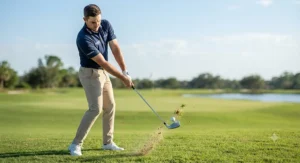
Real-World Scenarios: Which Compact Players Iron Fits Your Game
The consistent scratch golfer. If you’re a 0-3 handicap who strikes the ball flush more often than not and craves total shot-shaping freedom, the TaylorMade P-7MB or Wilson Staff Model Blade reward that consistency without any technology getting between you and the ball.
The ambitious 5-8 handicapper. You’re a strong ball striker but still miss occasionally under pressure. The Titleist T150 or Srixon ZX7 Mk II give you the tour look you want with enough built-in stability that a slightly thin 6-iron doesn’t turn into a chunked approach shot.
The feel-obsessed better player. If sound and feedback matter as much to you as the number on the scorecard, the Mizuno Pro 223 and Callaway Apex CB are built by companies whose entire forging philosophy centers on that sensation, while still offering a small forgiveness cushion in the cavity design.
The tinkerer who wants a custom build. Golfers who like adjusting swing weight and shaft combinations at a fitting should look closely at the PXG 0317 CB, where the modular back-weight system is built specifically for that kind of fine-tuning.
How to Choose Tour Players Irons Compact
What is a tour players iron? A tour players iron is a compact, low-forgiveness golf iron — usually forged, with a thin topline and minimal offset — designed to reward precise ball-striking with maximum workability and feel rather than help correct mishits.
Choosing the right set comes down to a handful of concrete decision points:
- Assess your handicap honestly. Most fitters and independent testing data agree that players irons suit golfers who strike the ball consistently well and don’t need forgiveness or extra distance help.
- Decide between blade and cavity back. A muscle-back blade like the P-7MB gives maximum feedback; a forged cavity back like the Apex CB or Mizuno Pro 223 keeps that feel while adding a forgiveness buffer.
- Match shaft weight to swing speed. Compact heads are shaft-sensitive — a heavier steel shaft can tame an aggressive transition, while a lighter option suits smoother tempo players.
- Check loft strength against your current set. Stronger-lofted models like the T150 hit further per club number, which can throw off wedge gapping if you don’t adjust your full set accordingly.
- Factor in turf interaction. Steep swingers benefit from narrower soles; sweepers need a touch more bounce, which varies notably between these seven models.
- Budget for fitting, not just retail price. A players iron fitted correctly outperforms an unfitted premium set virtually every time.
- Consider secondhand and combo sets. Mixing a more forgiving model in the long irons with a pure blade in the scoring clubs is common practice among better players.
Common Mistakes When Buying Tour Players Irons Compact
The single biggest mistake is ego-driven buying — choosing a pure blade because tour pros play one, without the ball-striking consistency to back it up. A players iron doesn’t make you better; it simply gets out of the way of a swing that already works.
Another frequent misstep is skipping a fitting to save money. Given how sensitive compact heads are to shaft flex, lie angle, and swing weight, an unfitted set can actively work against a good swing. Golfers also commonly ignore turf interaction, buying a narrow-sole blade despite a steep, digging swing that would perform better with a wider sole design like the Mizuno Pro 223 or Titleist T150.
Finally, many buyers underestimate maintenance. Forged carbon steel needs more care than cast stainless, and neglecting that reality leads to premature wear that actually changes how the club performs at impact.
Long-Term Cost & Maintenance
| Consideration | Budget Players Iron (e.g. Wilson Staff Model Blade) | Premium Players Iron (e.g. PXG 0317 CB) |
|---|---|---|
| Upfront cost (7-piece set) | Lower, generally under $1,100 | Higher, often $1,400+ |
| Re-grip / re-shaft frequency | Same across price points | Same across price points |
| Resale value | Moderate, smaller secondhand market | Stronger, established fitting network |
| Fitting cost | Often included with retailer | Typically bundled into custom order |
The long-term cost story here isn’t as simple as “premium costs more forever.” A well-maintained Wilson Staff Model Blade set can deliver years of tour-caliber feel at a fraction of the entry price, while the PXG 0317 CB‘s higher upfront cost is partly offset by its tunable back-weight system, which can extend a single set’s usable lifespan across swing changes. Either way, budget for annual loft/lie checks and periodic re-gripping as the real recurring cost, not the sticker price of the irons themselves.
Safety, Regulations & Compliance Guide
Every iron on this list conforms to current rules of golf equipment standards for grooves, clubhead volume for irons (not a concern for compact heads), and face characteristics, since none of these are marketed with speed-enhancing “hot face” technology that could trigger conformance review. That said, tour players irons compact designs with milled or micro-slotted faces should still be checked against your national golf association’s conforming list if you plan to play in sanctioned competition, since groove specifications are periodically revisited.
From a physical safety standpoint, forged carbon steel heads are more prone to rust and edge wear than cast stainless, so inspect grooves periodically for sharp, worn edges that could affect ball control or, in rare cases, glove wear during practice.
Features That Actually Matter (And Those That Don’t)
What actually matters: forging quality and grain structure (it genuinely affects feel and sound), tungsten or MIM weight placement (it directly shapes CG and mishit tolerance), and sole design relative to your swing type. Hands-on testing consistently confirms that feel differences between well-forged models are real and perceptible, not marketing fluff.
What matters less than the marketing suggests: cosmetic finish options (chrome versus dark finishes perform identically), and headline “technology” names that describe the same tungsten-and-cavity concept most brands have used for over a decade. Don’t pay a premium purely for a flashier name on the same underlying engineering.
Players Irons Shot Shaping: Why Workability Starts With Design
Shot shaping ability in a compact iron comes down to a simple physical reality: a thin topline and minimal offset let a skilled golfer manipulate face angle and path more freely through impact, without a bulky head fighting that manipulation. Reviewers consistently note that models like the TaylorMade P-7MB and Srixon ZX7 Mk II offer this kind of unrestricted movement, letting a player flight the ball high or low and curve it intentionally in either direction almost on command.
Here’s what most buyers overlook: shot-shaping ability isn’t purely about the clubhead — the narrower sole and reduced bounce on true blades let the club interact with turf more predictably from tight or firm lies, which is where controlled shot shaping actually gets tested on course. A cavity back with more built-in stability, like the Titleist T150, still shapes shots well, just with slightly less feedback about exactly how the face was delivered at impact.
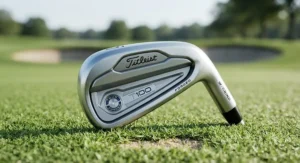
Players Irons Workability Control: What the Data Actually Shows
Workability and control are often used interchangeably, but they measure slightly different things. Workability is your ability to intentionally shape a shot; control is the club’s consistency in doing exactly what you asked of it. Independent testing on models like the Srixon ZX7 Mk II shows both can coexist in the same head — it ranked near the top for accuracy while still delivering the shot-shaping feedback better players expect from a true players iron.
Based on the spec comparison across our seven models, control tends to improve with smart weight placement (tungsten toe-heel weighting, MIM inserts) more than with sheer compactness alone. That’s the real lesson for buyers: a slightly larger, well-weighted cavity back can out-control a poorly balanced pure blade, even though the blade looks more “serious” on the shelf.
Compact Blade Length Explained: Why Smaller Isn’t Always Harder
Blade length — the heel-to-toe measurement of the clubhead — shrinks as you move from game-improvement irons toward true blades, and shorter blade length generally means a smaller, more precisely located sweet spot. But shorter isn’t automatically harder to hit well; it depends heavily on where the manufacturer places mass around that smaller footprint.
The Mizuno Pro 223 and PXG 0317 CB both use a genuinely compact blade length while still hiding meaningful forgiveness technology inside the head, proving that compact shaping and playability aren’t mutually exclusive when the engineering is done right. What most buyers overlook is that a shorter blade length often improves turf interaction too, since there’s simply less clubhead to catch on the ground during a slightly steep swing.
Better Player Irons for Skilled Golfer Design
“Better player” is golf-industry shorthand for a golfer whose swing is repeatable enough that a compact, low-forgiveness iron actually helps rather than hurts. Skilled golfer design in this category isn’t about adding more technology — it’s often about deliberately removing forgiveness features that would otherwise dull feedback and blunt shot-shaping precision.
That’s why models like the TaylorMade P-7MB strip out speed-enhancing inserts entirely, while the Callaway Apex CB and Titleist T150 add just enough tungsten or tungsten-adjacent weighting to stabilize mishits without diluting the feel a better player is paying for. Reviewers consistently frame this as a spectrum rather than a binary choice, and picking the right point on that spectrum is really what buying a players iron comes down to.
Shot Versatility: Turning Spec Sheets Into Scoring Clubs
Shot versatility — the ability to hit a full range of trajectories, curves, and spin levels with the same club — is the practical payoff of everything discussed above. A golfer who can flight a Srixon ZX7 Mk II 7-iron low and hot into a firm green, then hit the same club high and soft into a wet one, is getting the real value proposition of a compact players iron.
Reviewers consistently note that this versatility shows up most clearly in the scoring clubs (8-iron through pitching wedge), where traditional lofts and thinner faces on models like the Mizuno Pro 223 let skilled players control both distance and spin independently — something a stronger-lofted, thicker-faced game-improvement iron simply can’t replicate.
Benefits vs. Traditional Game-Improvement Alternatives
| Factor | Tour Players Irons Compact | Game-Improvement Irons |
|---|---|---|
| Forgiveness | Lower, rewards centered contact | Higher, more mishit tolerance |
| Workability | High, shot shaping is intuitive | Lower, harder to intentionally curve shots |
| Feel/Feedback | Precise, tells you exactly what happened | Muted, harder to diagnose mishits |
| Best For | Low handicap, consistent ball strikers | Mid-to-high handicap golfers |
The takeaway from this comparison is straightforward: players irons aren’t objectively “better” clubs, they’re differently optimized ones. A mid-handicap golfer forcing themselves into a TaylorMade P-7MB will likely lose strokes to inconsistency that a game-improvement iron would have absorbed, while a scratch golfer in oversized cavity backs may feel like they’ve lost the feedback loop needed to keep improving.

Frequently Asked Questions
❓ What handicap should play players irons?
❓ Are compact blade irons harder to hit than cavity backs?
❓ Can players irons help lower my scores?
❓ How often should I replace forged players irons?
❓ What's the difference between a muscle back and cavity back players iron?
Conclusion
Choosing among today’s best tour players irons compact models really comes down to being honest about your own game before falling for a tour pro’s bag list. The Titleist T150 and Srixon ZX7 Mk II offer real-world forgiveness dressed up in tour styling, the TaylorMade P-7MB and Wilson Staff Model Blade deliver uncompromising feedback for golfers who’ve earned it, and the Mizuno Pro 223, Callaway Apex CB, and PXG 0317 CB sit thoughtfully in between, blending forged feel with just enough built-in stability.
None of these seven clubs will fix a broken swing, and none of them should be bought purely because a favorite pro games one. But for the right golfer — someone who strikes the ball consistently and wants precise, honest feedback on every shot — any of these sets can genuinely sharpen shot-making in a way a game-improvement iron never will. Get fitted, be honest about your miss patterns, and pick the one that matches not just your eye, but your actual swing.
✨ Don’t Miss These Exclusive Deals!
🔍 Take your iron game to the next level with these carefully selected players irons. Click on any highlighted item to check current pricing and availability — these tools will help you create the precise, tour-caliber shots your game has been ready for.
Recommended for You
- 7 Best Offset Game Improvement Irons in 2026
- Max Game Improvement Irons 2026: 7 Top Picks Ranked
- 7 Best Forged Muscle Back Blades in 2026: Tour Blades Ranked
Disclaimer: This article contains affiliate links. As an Amazon Associate, I earn from qualifying purchases. If you purchase products through these links, we may earn a small commission at no additional cost to you.
✨ Found this helpful? Share it with your friends! 💬🤗
