
In This Article
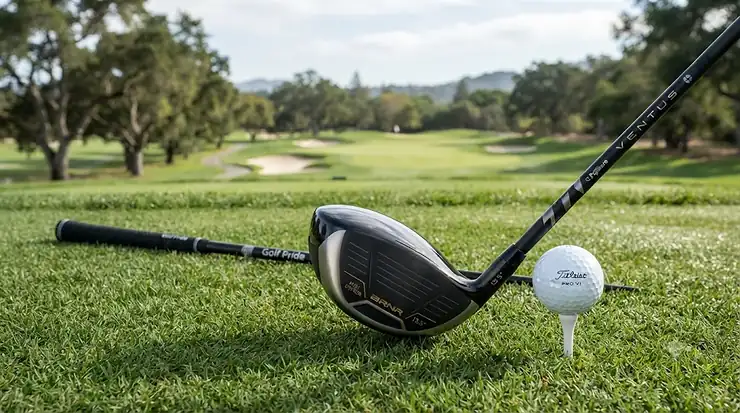
Somewhere between “grip it and rip it” and “just lay up,” there’s a swing thought a lot of golfers never get to have, because their bag doesn’t have the club for it. That’s the gap a strong 3 wood mini driver is built to close. Picture something with more muscle than your fairway wood but more manners than your driver — a club that lets you swing freely at a tight dogleg without the big-headed anxiety spiral. If your 3-wood feels underpowered off the tee and your driver feels like a loaded weapon on narrow holes, you’re exactly the golfer this category was invented for.
We’re not going to pretend this is a new idea dressed up in new packaging. Mini drivers have quietly become one of the fastest-growing categories in golf equipment, and the reason is refreshingly simple: they solve a real problem. A traditional driver sits at the legal maximum clubhead size, and while that’s fantastic for distance, it can be a lot of real estate to control when the fairway narrows. A strong 3 wood, meanwhile, often can’t match the ball speed of even a modest driver swing. A mini driver splits the difference — smaller head, shorter shaft, more forgiving than a fairway wood, and (in the right hands) nearly as long as driver.
Below, we’ve dug into seven real, currently available mini drivers spanning budget, mid-range, and premium price points, broken down what each one actually does well, and built out a full buyer’s framework so you’re not guessing your way through a purchase. We’ll also cover loft adjustment capability, how these clubs compare to a traditional 3 wood versatile club setup, and where a driver replacement option genuinely makes sense versus where it doesn’t.
What Is a Strong 3 Wood Mini Driver?
A strong 3 wood mini driver is a compact metalwood — typically 280cc to 340cc — that sits between a full-size driver and a fairway wood in both head size and loft (usually 11° to 15°). It’s designed to deliver more ball speed and forgiveness than a 3-wood while offering tighter dispersion and easier control than a standard driver off the tee.
The category isn’t just marketing fluff bolted onto an old idea, either. Under the USGA’s official equipment rules, a driver clubhead is capped at 460cc, and manufacturers have leaned into that ceiling for two decades to chase forgiveness and distance. Mini drivers deliberately step back from that limit, and the resulting smaller footprint changes how the club behaves both at address and at impact.
Quick Comparison Table
| Mini Driver | Head Size | Loft Options | Price Range | Best For |
|---|---|---|---|---|
| TaylorMade R7 Quad | 305cc | 11.5° / 13.5° / 15.5° | $450-$480 | All-around tee-to-fairway versatility |
| Titleist GT280 | 280cc | 13° | $400-$500 | Off-the-deck playability |
| Callaway Elyte Mini Driver | 340cc | 11.5° / 13.5° | $400-$470 | Maximum forgiveness off the tee |
| Cobra King Tec Mini Driver | ~300cc | 13.5° | $450-$480 | Hosel adjustability & shot shaping |
| PXG Secret Weapon | 300cc | 13° | $430-$500 | Tour-level ball speed and stability |
| TaylorMade BRNR Mini Driver | 304cc | 11.5° / 13.5° | $420-$460 | Movable-weight tuning, retro styling |
| COOLO Mini Driver | ~290cc | 22° strong loft | $100-$160 | Budget-friendly gap filler |
The spread here tells its own story: this is not a one-size-fits-all category. Notice that price and head size don’t move in lockstep — the Titleist GT280 is the smallest head on this list but sits mid-pack in price, while the budget-focused COOLO trades some refinement for a dramatically lower buy-in. If forgiveness off the tee is your top priority, the larger 340cc Callaway Elyte deserves a longer look; if you need a club that behaves like a strong 3-wood off the fairway, the compact Titleist and PXG options are built with that exact use case in mind.
💬 Just one click — help others make better buying decisions too!😊
💬 Already have a favorite on this list? Vote with your wallet — every click helps you (and other golfers) make a smarter buying decision!😊
Top 7 Strong 3 Wood Mini Drivers: Expert Analysis
1. TaylorMade R7 Quad Mini Driver — best all-around tee-to-fairway versatility
The R7 Quad revives TaylorMade’s iconic quad-weight system inside a modern 305cc mini driver shell, and that heritage isn’t just nostalgia bait. Four movable weights — two 13-gram and two 4-gram — let you shift the center of gravity forward for a flatter, lower-spin flight or backward for extra forgiveness and launch. Paired with Twist Face and a Speed Pocket borrowed from TaylorMade’s flagship drivers, the head is engineered to keep ball speed high even when you catch it slightly off-center. Independent testing has clocked this club’s fairway-finding success rate as high as the low-70% range, which, for a club this versatile, is a genuinely strong number.
Based on the spec comparison against its rivals, the R7 Quad earns its “best all-rounder” reputation because it doesn’t force you to pick a lane: the 15.5° option in particular opens the door for slower-swing-speed players who want tee performance without sacrificing launch. What most buyers overlook about this model is that the weight ports aren’t just a marketing checkbox — repositioning them measurably changes shot shape, which matters if you fight a two-way miss. Reviewers and club-fitting content consistently describe the R7 Quad as sitting closer to an 80/20 tee-to-turf ratio, meaning it’s happiest teed up but still workable off the deck for competent ball strikers.
Pros:
✅ Four-weight system genuinely changes launch and spin
✅ Available in three lofts, including a beginner-friendly 15.5°
✅ Twist Face technology improves off-center consistency
Cons:
❌ Right-hand only at this time
❌ Off-the-deck performance trails more turf-focused rivals
At around $450-$480, the R7 Quad sits at the premium end of this list, but for golfers who want one club that adapts to both tee shots and long par-5 second shots, it’s a legitimately strong value proposition.
2. Titleist GT280 — most compact and playable off the deck
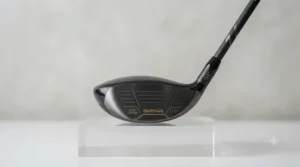
Titleist came late to the mini driver party, but the GT280 arrived with a clear point of view: instead of chasing the biggest head on the market, it went smaller — 280cc, the tightest profile in this roundup — and built the entire club around fairway playability. A forged L-Cup titanium face wraps around the bottom of the clubhead, which is textbook fairway wood engineering, while a softened sole curvature and lower leading edge help the club glide through turf rather than dig into it. The SureFit hosel adjusts loft and lie independently, and front-to-back weights let you bias the club toward stability or a lower, more penetrating trajectory.
Here’s what the spec sheet won’t tell you, but real-world testing suggests: the GT280’s smaller face height actually makes it feel more like an oversized 3-wood at address than a shrunken driver, which is exactly why better ball strikers gravitate toward it. Testers who’ve hit it side by side with bigger-headed rivals have described unusually clean turf interaction and consistent strikes even on shots played directly off the fairway — a real differentiator, since most mini drivers are optimized primarily for tee shots. That said, the tradeoff for compactness is a slightly smaller margin for error on off-center hits compared to the 340cc Callaway.
Pros:
✅ Best-in-class turf interaction for fairway shots
✅ SureFit hosel adjusts loft and lie independently
✅ Compact profile appeals to better ball strikers
Cons:
❌ Smaller head means less forgiveness on mishits
❌ Only one stock loft option (13°)
Retail pricing generally runs in the $400-$500 range, though it’s not unusual to catch it during a promotional price drop closer to the lower end of that band — worth checking current pricing before you buy.
3. Callaway Elyte Mini Driver — biggest head, maximum forgiveness
If the Titleist GT280 is the compact specialist, the Callaway Elyte Mini Driver is the other end of the spectrum entirely. At 340cc, it’s the largest head in this comparison by a meaningful margin — over 10% bigger than the next largest option — and Callaway leaned into that size rather than apologizing for it. An AI-designed Flash Face works alongside Jailbreak internal bars (the same technology found in Callaway’s full-size drivers) to keep ball speed high across a wider area of the face, while a three-way adjustable rear weight and independent hosel let you fine-tune both trajectory and shot shape.
The practical interpretation here is straightforward: more head volume generally means a higher moment of inertia, which is engineering-speak for “off-center hits don’t punish you as badly.” Reviewers consistently report that the Elyte Mini launches easily and holds a stable line even on firm-ground courses where control matters more than raw power. What most buyers overlook is that this forgiveness comes with a real off-the-deck tradeoff — the larger footprint that makes it so easy to launch off a tee also makes it noticeably harder to catch cleanly off the turf than the Titleist or PXG options on this list, so golfers buying it purely as a 3-wood replacement should test that use case specifically before committing.
Pros:
✅ Largest head on this list means maximum forgiveness
✅ Jailbreak and Flash Face borrowed from full-size drivers
✅ Three-way rear weight adjustability for shot shaping
Cons:
❌ Noticeably harder to hit cleanly off the fairway turf
❌ Bulkier look at address may not suit better players
Expect to pay somewhere in the $400-$470 range, with the standard finish generally landing toward the lower end and the Night Edition colorway pushing toward the top.
4. Cobra King Tec Mini Driver — most adjustable hosel on the market
Cobra’s first real swing at the mini driver category didn’t hold back on adjustability. The King Tec pairs a full carbon crown with H.O.T. Face technology and PWRSHELL construction to protect ball speed on off-center strikes, but the real headline is the Future Fit 33 hosel, which offers roughly double the adjustment settings of most competing sleeves. Forward and rear sole weights let you shift the center of gravity for a lower-spin, more piercing flight or a higher-launching, more stable one, and the shorter, fairway-wood-length shaft is built to keep swing tempo smooth.
Based on the spec comparison, the King Tec’s real advantage isn’t raw distance — testing has shown it trailing the TaylorMade R7 Quad slightly in outright ball speed — it’s shot-to-shot spin consistency. That 33-setting hosel gives club fitters (and motivated DIY golfers) an unusually fine level of control over starting line and curvature, which matters more than an extra five yards for players who are leaking strokes to a wayward tee ball. Reviewers who’ve compared it directly against rival minis note that the tighter spin window translates into a real, repeatable on-course benefit rather than just a number on a launch monitor.
Pros:
✅ Future Fit 33 hosel offers class-leading adjustability
✅ PWRSHELL face maintains ball speed on mishits
✅ Tightest spin consistency of the clubs tested here
Cons:
❌ Only available in a single 13.5° loft
❌ Slightly behind the R7 Quad in peak ball speed
Priced around $450-$480, the King Tec positions itself as a genuine alternative to the bigger-name premium options rather than a budget play — the value is in the fitting flexibility, not the sticker price.
5. PXG Secret Weapon — tour-proven stability and ball speed
PXG’s entry into this category arrived with an unusual credential: it helped a PGA Tour player win an official event within weeks of release. That’s not a guarantee it’ll work for your game, but it does say something about how the 300cc Secret Weapon is engineered. A thin titanium face maximizes energy transfer for distance, while a carbon-fiber composite crown redistributes weight low and back in the head to boost the moment of inertia. A four-weight system — two 15-gram and two 2.5-gram ports, expandable with optional weights in 2.5-gram increments — gives serious tinkerers an unusually granular level of customization for launch, spin, and draw/fade bias.
What the spec sheet won’t tell you, but user reports suggest, is that the Secret Weapon splits the difference nicely between the compact Titleist and the oversized Callaway: it’s a touch shallower-faced than the TaylorMade BRNR, which some players find easier to square up, while still carrying enough MOI to forgive a mediocre strike. Reviewers who’ve played it both off the tee and off the fairway describe a solid, slightly denser sound at impact compared to rivals, with the best feel coming specifically off a tee rather than the turf. The adjustable hosel rounds out a genuinely well-thought-out package for players who want tour-level engineering without a full driver-sized commitment.
Pros:
✅ Tour-validated performance and stability
✅ Four-weight system allows granular fine-tuning
✅ Strong ball speed retention on off-center hits
Cons:
❌ Only one stock loft (13°) limits flexibility
❌ Feel is noticeably better off the tee than off the turf
Pricing generally lands in the $430-$500 range depending on shaft upgrade, positioning it squarely alongside the other premium options on this list.

6. TaylorMade BRNR Mini Driver — best movable-weight tuning with retro styling
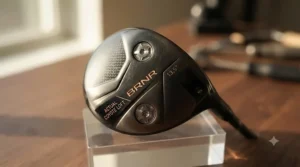
The BRNR Mini Driver leans hard into nostalgia — its copper-and-black colorway is a clear callback to TaylorMade’s late-90s Burner era — but underneath the throwback aesthetic sits a genuinely modern 304cc head built from carbon fiber, titanium, and steel. Split movable weights let you choose between a rear-weighted “standard” setting for balanced, forgiving performance or a forward “low-spin” setting for a flatter, more piercing trajectory with extra rollout. A K-SOLE design is specifically engineered to help the club glide through turf, and a 4-degree adjustable loft sleeve adds another layer of dial-in precision on top of the two stock loft options.
Here’s a data point that’s hard to argue with: independent measurement has put this club’s moment of inertia at roughly 6,700 g·cm², compared to around 4,700 g·cm² for a typical fairway wood — a jump of over 40%, which in plain terms means significantly more forgiveness on strikes away from the center of the face. On the review side, TaylorMade’s own retail platform shows an aggregated customer rating of 4.7 out of 5 with an extremely high recommendation rate among purchasers, though as with any brand-hosted review data, it’s worth cross-referencing that sentiment against independent testing before assuming it applies to your swing specifically. The most common criticism across independent reviews is that the loft options — 11.5° and 13.5° only — don’t go high enough to make this a true fairway-wood replacement for players who already struggle to launch their strongest-lofted 3-wood.
Pros:
✅ Highest measured MOI of any club on this list
✅ Split-weight system offers real launch/spin control
✅ Distinctive retro look that draws attention on the course
Cons:
❌ Lowest loft ceiling (13.5°) limits fairway-wood duty for some players
❌ Copper aesthetic won’t appeal to every taste
Retail price typically sits around $420-$460, making it competitively priced against its TaylorMade sibling while offering a genuinely different personality on the course.
7. COOLO Mini Driver — best budget-friendly gap filler
Not every golfer needs (or wants) to spend $450 to try this category, and that’s exactly the gap the COOLO Mini Driver fills. Built with a 22° strong loft and adjustable 4-gram weight screws, it’s positioned less as a driver replacement and more as an accessible way to test whether the mini driver concept even fits your game before committing serious money to it. The forward center-of-gravity placement, reinforced by the screw-in weights, is designed to promote a penetrating ball flight that holds its line in mild wind — a legitimate engineering approach, even if the execution doesn’t match the tour-level materials used by the premium options above.
Honest analysis here has to acknowledge both sides. On the positive end, real-world testing has shown this club outperforming traditional 3-woods in carry distance and accuracy specifically for golfers swinging under 95 mph, which covers a meaningful chunk of recreational players. On the downside, it lacks the twist-face and speed-pocket technology found in the premium options on this list, so off-center hits are punished more severely — there’s no MOI-boosting engineering doing damage control on a mishit. For a golfer who’s curious about the category but not ready to commit four hundred dollars to find out, it’s a genuinely reasonable entry point; for a low-handicap player chasing tour-level consistency, it’s not the right tool.
Pros:
✅ Dramatically lower price point than every other option here
✅ Adjustable weight screws allow basic CG tuning
✅ Strong loft promotes an easy, penetrating launch
Cons:
❌ No twist-face or speed-pocket forgiveness technology
❌ Off-center hits lose significantly more distance than premium rivals
At roughly $100-$160, the COOLO is less a competitor to the big-brand names above and more a low-risk way to answer the question, “Would this category even help my game?” before spending real money finding out.
Practical Usage Guide: Setting Up Your Mini Driver the Right Way
Buying the club is the easy part. Getting real value out of it in the first month depends on a few setup decisions most golfers skip. Start with tee height: because mini driver faces sit shallower than a full driver but deeper than most fairway woods, you generally want roughly a third of the ball above the crown at address — noticeably lower than a driver tee height, but higher than you’d tee a standard 3-wood. Getting this wrong is the single most common reason golfers mis-hit a mini driver in their first few rounds.
Next, resist the urge to leave the stock loft sleeve untouched. Most mini drivers ship in a neutral setting, but if you’re consistently seeing a low, spinny ball flight, adding a degree or two of loft via the adjustable hosel often solves it faster than a swing change would. If you’re building the club as a driver replacement option, match the shaft weight and flex to your current driver shaft as a starting point, then adjust from there — mismatched shaft weight is a frequent, easily fixed mistake. Finally, don’t skip a proper fitting session if one is available near you; even a 20-minute launch monitor session can save you from guessing your way through loft and weight settings that a fitter would nail in minutes.
Real-World Scenarios: Who Actually Benefits From a Mini Driver
The Wayward Bomber. If you generate above-average clubhead speed but consistently miss fairways with your driver, a mini driver tames that power without gutting your distance. You’ll likely give up single digits of yardage in exchange for a meaningfully tighter dispersion pattern — a trade most scorecards reward heavily.
The 3-Wood Skeptic. Some golfers simply never developed confidence with a traditional fairway wood off the tee. If that’s you, a strong 3 wood mini driver like the Titleist GT280 or PXG Secret Weapon can function as a true 3-wood tee shot alternative — same intended distance gap in your bag, but a head shape that’s psychologically easier to trust over the ball.
The Course-Specific Strategist. If your home course is dominated by tight, tree-lined doglegs, carrying a mini driver as a true 15th-club mentality (swapped in for a 3-wood you rarely hit anyway) gives you a dedicated positional weapon for exactly those holes, while your standard driver stays in the bag for wide-open par 5s.
Gap Filling Strategy: Using a Mini Driver to Solve Your Bag’s Biggest Hole
Most recreational bags have a yardage gap they don’t talk about — the awkward 20-30 yard no-man’s-land between a driver and the next club down, especially for golfers who don’t trust their 3-wood off the tee. This is where a smart gap filling strategy pays off. Rather than thinking of a mini driver as a 15th club competing for a spot, think of it as a direct swap for whichever club in your bag you currently hit the least. For most mid-to-high handicappers, that’s the 3-wood; for low-handicap players who already trust their fairway wood off the deck, it might mean carrying both and using the mini driver purely as a tee club on tight par 4s.
The math is simple once you track it: if your driver averages 250 yards but your 3-wood only reaches 210, a mini driver landing in the 225-235 range doesn’t just fill a number gap — it fills a strategic one, giving you a genuine positional option on holes where “driver” is too much club and “3-wood” leaves too long an approach shot.
✨ Ready to Close Your Own Yardage Gap?
🔍 Take your tee game to the next level with a mini driver built for your swing. Click on any highlighted option above to check current pricing and availability, and start finding more fairways this season!
How to Choose a Strong 3 Wood Mini Driver
Picking the right one comes down to matching a handful of specs to your actual game, not the marketing copy. Here’s the framework we’d walk a friend through:
- Define the job first. Decide whether this club is replacing your 3-wood, your driver, or filling a genuine gap between the two — the answer changes which loft and head size make sense.
- Match head size to your miss. If your typical miss is a big slice or hook, lean toward a larger 300-340cc head (Callaway Elyte, TaylorMade R7 Quad) for extra forgiveness; if you strike the ball consistently, a compact 280-300cc head (Titleist GT280, PXG Secret Weapon) rewards precision with better feel.
- Prioritize loft based on planned usage. If you’ll mostly play it off the tee, an 11.5° head keeps ball flight penetrating; if off-the-deck performance matters, 13.5°-15.5° will be far more forgiving on fairway strikes.
- Check the loft adjustment capability. Not every mini driver offers the same range — some sleeves only shift 2°, others (like Cobra’s FF33) offer dramatically more granularity, which matters if your swing changes seasonally.
- Set a realistic budget band. Premium options ($400-$500) buy you tour-level materials and adjustability; a budget option like the COOLO is a smart way to test the category before committing.
- Get fit if you possibly can. Shaft weight and flex have an outsized impact on mini driver performance because these clubs are swung at unusual lengths relative to their loft.
- Test off both the tee and the turf. Even if you plan to use it primarily off the tee, hitting a few shots off the deck during a fitting will tell you a lot about how forgiving the sole design really is.
Adjustable 3 Wood Loft: Why Loft Adjustment Capability Matters More Than You Think
Every club on this list ships with some form of adjustable hosel, but the range and precision of that adjustment vary more than most buyers realize. The Cobra King Tec’s Future Fit 33 sleeve offers roughly double the number of settings found on a typical rival hosel, while the TaylorMade BRNR’s 4-degree sleeve allows loft, lie, and face angle changes across twelve total combinations. Titleist’s SureFit system, by contrast, prioritizes independently adjusting loft and lie rather than maximizing raw setting count.
What most buyers overlook about adjustable 3 wood loft technology is that it’s not just about dialing in more distance — it’s a seasonal tool. A golfer who adds a degree or two of loft in cold winter conditions (when ball speed naturally drops) and dials it back down in summer is using the hosel exactly as intended. If you already own a strong 3 wood versatile club and are debating whether a mini driver duplicates it, the adjustability is often the deciding factor: a mini driver’s loft adjustment capability typically gives you a wider effective loft range than most fixed-hosel fairway woods, which is a real practical advantage worth weighing against the cost of adding a 15th club.
3 Wood Tee Shot Alternative: Mini Driver vs Traditional 3-Wood
| Factor | Mini Driver | Traditional 3-Wood |
|---|---|---|
| Head Size | 280-340cc | ~150-180cc |
| Typical Loft | 11°-15° | 15°-18° |
| Forgiveness (MOI) | Higher (up to ~6,700 g·cm²) | Lower (~4,700 g·cm²) |
| Off-the-Deck Ease | Moderate, varies by model | Generally easier |
| Best For | Tee shots needing control | Long par-5 approach shots |
The table makes the tradeoff visible at a glance: a mini driver generally wins on forgiveness and tee-shot control, while a traditional 3-wood still holds a real edge for shots played directly off tight fairway turf, mainly because of its shallower face and lower, more forgiving center of gravity for ground-level strikes. If your 3-wood mostly lives in the bag as a tee club anyway — which, per TaylorMade’s own product team, describes a large share of recreational golfers — a mini driver is very likely to outperform it as a genuine 3 wood tee shot alternative in both distance and dispersion.
That said, players who regularly hit long, low approach shots into par 5s from tight lies shouldn’t assume a mini driver is a strict upgrade; the specialized shallow-face design of a true fairway wood still has a real edge in that specific scenario, and experienced club builders note that golfers who already trust their 3-wood off the deck often keep both clubs in the bag rather than swapping one for the other.
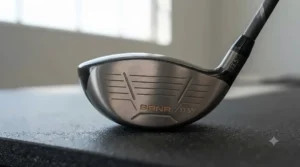
3 Wood Versatile Club Breakdown: Off the Tee and Off the Deck
Versatility is the entire pitch behind this category, but “versatile” means something different depending on which club you’re holding. A 3 wood versatile club, in the traditional sense, earns that label by being playable from the tee, the fairway, and even light rough thanks to its shallow face and forgiving sole. Mini drivers chase a similar reputation but arrive at it differently — through a bigger head and higher MOI rather than a shallow face profile.
In practice, that means the most versatile mini drivers on this list — the Titleist GT280 and PXG Secret Weapon, specifically — borrow design cues directly from fairway wood engineering (softened leading edges, turf-friendly soles) to close that versatility gap. The TaylorMade R7 Quad and Callaway Elyte, by contrast, lean harder into tee-shot performance and ask more of the golfer if they want to use them off the deck. Neither approach is wrong; it’s simply a matter of which side of “versatile” matters more for your course and your game.
Driver Replacement Option: Can a Mini Driver Really Replace Your Driver?
This is the question that generates the most debate in golf equipment forums, and the honest answer is: sometimes, but not universally. For golfers who consistently spray their driver off the tee — especially those generating high clubhead speed without matching control — a mini driver as a full driver replacement option can genuinely lower scores by trading a small amount of peak distance for a much tighter dispersion pattern. According to TaylorMade’s own product and tour team, a mini driver will consistently outperform a strong three-wood setup for players trying to find a straighter tee ball, and in certain fittings it can even edge out a driver on accuracy-focused holes.
Where it gets more nuanced is pure distance. Even the longest mini drivers on this list will generally trail a well-fit, full-size driver by roughly 10-20 yards on a flush strike, simply due to the smaller head and correspondingly lower peak ball speed ceiling. For scratch and low-handicap players who already control their driver well, swapping it out entirely rarely makes sense — the better move is usually carrying both and using the mini driver situationally on tight holes. For higher-handicap players who lose more strokes to a wayward tee shot than they’d gain from extra carry distance, a full swap is a far more reasonable consideration.
Common Mistakes When Buying a Strong 3 Wood Mini Driver
The most frequent misstep is buying based on loft number alone without considering head size — an 11.5° mini driver from one brand can play noticeably differently than an 11.5° from another because of face angle and CG placement differences. A second common mistake is skipping a fitting entirely and assuming stock shaft specs will suit your swing; because these clubs occupy an unusual length-and-loft combination, off-the-rack shaft fits miss more often here than with standard drivers or fairway woods. Third, some golfers buy the biggest, most forgiving head available assuming “more forgiving is always better,” without accounting for the fact that a smaller head can genuinely be easier to control for a repeatable, centered strike. Finally, plenty of buyers underestimate how much a mini driver changes their bag makeup — as club fitters at Golf.com’s equipment desk point out, the 14-club limit applies here just like anywhere else, so something typically has to come out to make room.
Features That Actually Matter (And Those That Don’t)
Movable weights and adjustable hosels genuinely matter — they’re not just marketing checkboxes, since real testing shows measurable launch and spin differences between settings. Moment of inertia matters too, even though it’s rarely advertised directly; the USGA caps MOI on drivers at a documented 5,900 g·cm² limit plus a small tolerance, and while that specific rule technically governs drivers rather than mini drivers, it’s a useful reference point for understanding how forgiveness is measured and regulated across the category. Face technology like Twist Face or Jailbreak also matters, because it directly affects how much ball speed you retain on a mishit.
What matters far less than the marketing suggests: headcover aesthetics, colorway “editions,” and marginal shaft length differences of half an inch or less. These affect how a club looks in your bag, not how it performs in it. If a retailer is leaning heavily on limited-edition branding rather than performance data, that’s usually a signal to look elsewhere for the actual spec comparison.
Long-Term Cost & Maintenance
A strong 3 wood mini driver is a relatively low-maintenance club compared to, say, a driver with a sensitive adjustable weight track, but it isn’t entirely maintenance-free. Face grooves and titanium inserts on premium models can show wear over a few seasons of heavy use, and adjustable hosels benefit from an occasional check to make sure the locking mechanism hasn’t loosened. In terms of total cost of ownership, the premium options on this list ($400-$500) represent a meaningful upfront investment, but because these clubs see less abrasive turf contact than an iron or wedge, they tend to hold resale value reasonably well — used marketplaces regularly show gently used premium mini drivers trading for 40-60% of original retail within the first year or two.
| Price Tier | Example Models | Typical Price Range | Value Verdict |
|---|---|---|---|
| Budget | COOLO Mini Driver | $100-$160 | Best for testing the category |
| Mid-Range | Callaway Elyte, BRNR | $400-$470 | Strong performance-to-price ratio |
| Premium | R7 Quad, King Tec, Secret Weapon, GT280 | $430-$500 | Best for serious, repeatable use |
Looking at the table above, the budget tier makes the most sense as a low-risk trial rather than a long-term investment, since it lacks the forgiveness technology that protects your distance on off-center strikes. The mid-range tier offers the best cost-per-round value for most golfers, while the premium tier is worth the extra spend specifically for players who’ll use the club frequently enough to benefit from its extra adjustability and durability.

FAQ
❓ Is a mini driver worth it over a 3-wood?
❓ What loft is best for a strong 3 wood mini driver?
❓ Can a mini driver replace my driver completely?
❓ How much does a good mini driver cost?
❓ Do I need a custom fitting for a mini driver?
Conclusion
A strong 3 wood mini driver isn’t a gimmick club chasing a trend — it’s a legitimate answer to a gap that shows up in a lot of real golf bags: the space between “too much club” and “not enough club” off the tee. Whether you land on the all-around versatility of the TaylorMade R7 Quad, the fairway-friendly precision of the Titleist GT280, or the budget-conscious COOLO as a low-risk way to test the category, the right pick comes down to matching head size, loft, and adjustability to your specific miss pattern and course conditions.
The category has matured fast — what started as a TaylorMade-only experiment has become a full-fledged segment with real competition, real technology, and real on-course results across nearly every major manufacturer. If your current bag has an obvious hole between the driver and the fairway wood you rarely trust, this is very likely the club that fills it.
Recommended for You
- 7 Best 3 Woods for Off The Deck Shots in 2026
- 7 Best Long Drive Competition Drivers for Insane Distance (2026)
- Maximum Distance Driver Technology: 7 Proven Picks for 2026
Disclaimer: This article contains affiliate links. As an Amazon Associate, I earn from qualifying purchases. If you purchase products through these links, we may earn a small commission at no additional cost to you.
✨ Found this helpful? Share it with your friends! 💬🤗
