

In This Article
Let’s be honest — there’s a specific, maddening frustration that comes from watching your drive fizzle 30 yards short of your playing partner’s, knowing you made clean contact. The problem isn’t always your swing. Sometimes, it’s the club. Specifically, your driver might be working against your natural swing speed rather than amplifying it.
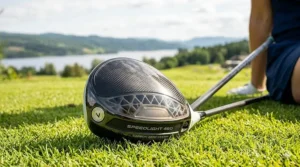
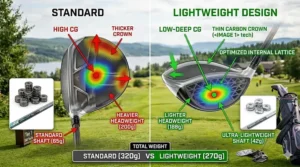
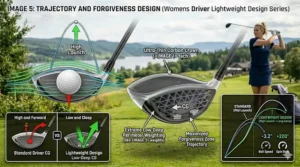
That’s where women’s driver lightweight design steps in, and it matters far more than most golfers realize. A driver engineered for a slower, smoother swing tempo isn’t a handicap — it’s physics working in your favor. When you swing a club built with lightweight graphite construction, a high-loft face, and a strategically lowered center of gravity, you don’t need to muscle the ball. The club does the heavy lifting.
What exactly is women’s driver lightweight design? It’s a driver built with total weight typically landing at 270–310 grams versus a standard 330–350g men’s club, combined with a ladies’ flex graphite shaft (usually 40–55 grams), higher loft angles running from 10.5° to 14°, and a head optimized for maximum forgiveness at swing speeds under 80 mph. The entire goal: more carry distance, higher ball flight, and fewer frustrated sighs on the first tee.
The women’s golf driver market has genuinely transformed. Gone are the days of “shrinking and pinking” a men’s club and calling it done. Today’s purpose-built options from Callaway, PING, TaylorMade, Cobra, Cleveland, and Wilson are engineering achievements in their own right, designed using actual women’s swing data and biomechanical research. According to USGA equipment standards, driver heads must comply with strict volume and face flex regulations — and leading women’s-specific models navigate these rules to extract every legal advantage for moderate swing speeds.
In this guide, I’ve researched and analyzed the 7 best options currently available on Amazon — ranging from budget-friendly starters to premium performance powerhouses — so you can walk into the 2026 golf season swinging a club that actually fits you.
Quick Comparison: 7 Best Women’s Driver Lightweight Design Options
| Driver | Head Size | Loft | Key Technology | Best For | Price Range |
|---|---|---|---|---|---|
| Callaway Paradym AI Smoke MAX Fast | 460cc | 12° | Ai Smart Face, 360° Carbon Chassis | Mid-to-high handicappers | $$$ |
| PING G Le3 | 460cc | 11.5° | Turbulators, Trajectory Tuning 2.0 | All-around performance | $$$ |
| TaylorMade Kalea Premier | 460cc | 12° | Twist Face, Carbon Inertia Generator | Moderate swing speeds | $$$ |
| Cobra Air-X 2 Offset | 460cc | 11.5° | H.O.T. Face, Offset Hosel | Slice-fighters | $$ |
| Callaway Big Bertha REVA 23 | 460cc | 10.5° | Flash Face AI, Lightweight Jailbreak | Distance & forgiveness | $$ |
| Cleveland Launcher XL 2 Draw | 460cc | 12° | Rebound Frame, HiBore Crown | Draw bias, high-forgiveness | $$ |
| Wilson Launch Pad 2 | 460cc | 13° | Power Hole Face, Ultra-Lite Shaft | Budget & beginners | $ |
Analysis: What this table reveals immediately is that price doesn’t automatically equal distance — at least not for all swing profiles. The Wilson Launch Pad 2, priced well below the premium tier, actually delivers a higher loft that suits golfers with swing speeds under 65 mph better than most $400+ clubs do. On the other hand, if you’re in that 70–80 mph range and want long-term adjustability as your game evolves, the PING G Le3’s Trajectory Tuning 2.0 hosel justifies the premium. And for chronic slicers who haven’t yet fixed the root-cause swing flaw? The Cobra Air-X 2 Offset delivers slice-correction technology at mid-range pricing that rivals features found at twice the cost.
💬 Just one click — help others make better buying decisions too! 😊
Top 7 Women’s Driver Lightweight Design Picks: Expert Analysis
1. Callaway Paradym AI Smoke MAX Fast Women’s Driver
The Paradym AI Smoke MAX Fast is Callaway’s most purposeful entry into the women’s driver lightweight design category, and it shows at every level of engineering. The redesigned 360° Carbon Chassis is 15% lighter than its predecessor, freeing up mass that Callaway redistributes into the head to improve launch conditions and add measurable forgiveness — that’s not marketing language, it’s physics improving your ball flight on misses you’d otherwise punch the air over.
The Ai Smart Face technology is where this driver genuinely separates itself. Rather than optimizing a single central sweet spot, the AI system creates multiple sweet spots across the entire face by analyzing thousands of real player swings. In practice, that means even your off-center contact on a windy Tuesday morning with tired legs still goes somewhere useful. Paired with the 12° loft and a lightweight ladies’ graphite shaft, the MAX Fast creates the kind of high-launch condition that golfers with swing speeds in the 65–80 mph range need to maximize carry distance. The draw-biased rear weight quietly nudges wayward shots back toward the fairway without making itself obvious.
This is the driver I’d hand to a 15–25 handicapper who’s exhausted by inconsistency. It doesn’t require perfect contact — it forgives your human moments. Customers consistently note that the generously stretched profile at address makes the ball look almost impossibly hittable, which is its own kind of performance advantage.
✅ Exceptional forgiveness across the entire face via Ai Smart Face
✅ Lightweight carbon chassis promotes faster, more natural swing speed
✅ Draw-biased design corrects the most common miss without overcooking it
❌ Premium price point — one of the pricier options in this lineup
❌ Less workability for stronger players who want to shape shots deliberately
Price range: $$$ — the technology-per-dollar ratio is hard to argue with for the right player profile.
2. PING G Le3 Women’s Driver
PING has been engineering women-specific drivers for decades while most competitors were still treating female golfers as an afterthought, and the G Le3 is the most refined expression of that commitment yet. The 460cc titanium body features a forged face engineered for higher flex and faster ball speeds, while aerodynamic crown turbulators reduce drag through the hitting zone — similar to the dimples on a golf ball, except they’re managing airflow over the clubhead rather than the ball. The result is measurably faster clubhead speed without you doing anything differently.
The Trajectory Tuning 2.0 hosel is the spec most buyers skip in the product description but absolutely should use: it allows loft and lie adjustments across several degrees, meaning this driver can evolve alongside your game over years of improvement. A fixed back weight positions the center of gravity low and back, promoting the towering, high-launch ball flight that carries beautifully even over water hazards and tight bunkers. Per USGA equipment guidelines, the G Le3 is designed specifically for swing speeds of 80 mph or less — and everything about its construction honors that design intention.
Who exactly is this for? The golfer who takes her game seriously, invests in lessons, tracks her handicap, and wants a driver from a brand with the deepest women-specific engineering history in the industry. Reviewers consistently describe straight, penetrating drives and a satisfying impact sound that builds confidence shot after shot.
✅ Industry-leading women-specific design heritage
✅ Adjustable Trajectory Tuning 2.0 hosel for long-term customization
✅ Low, back CG produces optimal launch angle and forgiveness
❌ Fewer bold colorway options compared to TaylorMade or Callaway
❌ Hosel adjustment requires the included wrench tool
Price range: $$$ — a premium investment that consistently delivers premium performance, season after season.
3. TaylorMade Kalea Premier Women’s Driver
The Kalea Premier may be the most visually stunning driver on this entire list. TaylorMade knows it. But underneath the elegant colorway is engineering that earns its price tag without apologizing. The ultra-lightweight head construction pairs a carbon crown with low-profile shaping to plant the center of gravity impressively low and back, creating the effortless high launch that moderate swing speed players need to maximize carry distance. The carbon Inertia Generator along the sole has been repositioned toward the heel to promote draw bias and optimize spin rates for the specific cadence of a women’s swing.
What most buyers miss in the feature list is Twist Face. Rather than a flat hitting surface, TaylorMade engineered a subtly twisted face that corrects for the two most common mishit patterns: shots struck low on the heel (which normally fly right and low) and shots struck high on the toe (which typically veer left and high). The face geometry actively compensates for these errors, producing a shot pattern noticeably tighter than you’d expect. That’s not a gimmick — according to Golf Digest’s equipment testing, face design at impact is one of the highest-leverage variables in distance and accuracy for moderate swing speeds.
The Kalea Premier suits players in the 65–77 mph range who want luxury aesthetics without sacrificing substance. Amazon reviewers who switched from older models reported significant distance gains, with several noting 20–25 yards of additional carry.
✅ Twist Face actively corrects the most common off-center mishit patterns
✅ Ultra-premium build quality and elegant design
✅ Carbon crown + low-profile shaping creates effortless high launch
❌ Fixed hosel — no loft adjustability
❌ Premium pricing that isn’t for every budget
Price range: $$$ — worth the investment for the player who wants a complete, long-term equipment solution.
4. Cobra Air-X 2 Offset Women’s Driver
Cobra built the Air-X 2 with a single, clear mission: get the ball in the air, make it go straight, and do it without demanding herculean swing speed from the golfer. The offset hosel design combined with draw-biased heel weighting is genuinely the most effective slice-correction system in this price range. Here’s the mechanics: the offset neck encourages your hands to lead the clubface through impact zone, which closes the face at the right moment and stops that dreaded banana ball from sailing right into the rough — or someone else’s fairway.
The H.O.T. Face (Highly Optimized Topology) is Cobra’s AI-designed face with variable thickness: reinforced sections in high-impact areas, thinner sections near the heel and toe that flex more to maintain ball speed on mishits. The 46.5-gram Ultralite shaft keeps total club weight dramatically low, and this is the feature the spec sheet undersells: for golfers who generate clubhead speed primarily through tempo rather than brute force, ultra-light construction can add 3–5 mph of swing speed that translates directly to 10–15 extra yards of carry.
This is the driver for the mid-to-high handicapper who slices and is honestly tired of being embarrassed on the first tee. It won’t give you a controlled tour draw. What it will do is take the severe right miss almost completely off the table, which might be worth more to your scorecard.
✅ Best-in-class offset hosel for genuine slice correction
✅ Ultra-lightweight 46.5g shaft maximizes swing speed from tempo
✅ H.O.T. Face maintains ball speed on heel and toe strikes
❌ Not ideal for players who already hit a natural draw — could overcook it
❌ Louder impact sound than some golfers prefer
Price range: $$ — excellent, honest value for specialized anti-slice technology that actually works.
5. Callaway Big Bertha REVA 23 Women’s Driver
The Big Bertha name has meant one thing since its debut in the early 1990s: maximum forgiveness, full stop. The REVA 23 continues that legacy with construction rebuilt from the ground up using actual women’s swing data — not men’s data with a lighter shaft bolted on. The triaxial carbon crown sheds grams that get redistributed into a dramatically lower center of gravity, while the updated lightweight Jailbreak system connects crown to sole internally, stiffening the body so the face can flex more freely. More face flex equals faster ball speeds across a broader area. The A.I.-designed Flash Face optimizes speed and spin simultaneously — a combination that used to require choosing one over the other.
Here’s what genuinely impresses me about the REVA 23: it’s one of the few drivers in the mid-range price tier that doesn’t make you trade forgiveness for distance. Most clubs in this price band do exactly that trade-off. The REVA 23 refuses the compromise, delivering both — which explains why it consistently appears on “best women’s driver” lists across every serious equipment review platform. The XL face shape at address is confidence-inspiring in a way that’s hard to quantify but very real.
This is the ideal driver for the developing player who wants to start posting lower scores without needing to fix every element of her swing first. Catch it on the heel, going for distance on a long par 5? You’re not losing 30 yards. You’re losing maybe 8. That’s the promise of the REVA 23.
✅ A.I. Flash Face optimizes both speed and spin across the entire face
✅ Triaxial carbon crown — lightweight, high-MOI construction
✅ Rebuilt using women’s-specific swing data from real players
❌ Slightly older technology versus the newest 2025/2026 models
❌ Fixed hosel limits loft adjustability
Price range: $$ — outstanding value for a driver that delivers premium-level performance at a mid-tier price.
6. Cleveland Launcher XL 2 Women’s Draw Driver
Cleveland doesn’t command the same marketing firepower as Callaway or TaylorMade in the women’s driver space, but the Launcher XL 2 is a quietly excellent overachiever. The HiBore Crown construction pushes the center of gravity lower below the face than traditional head designs allow, producing a naturally higher launch angle — more effortlessly — than you’d expect from reading the spec sheet. The Rebound Frame is Cleveland’s proprietary system of alternating flex and rigidity zones along the crown that stores energy during the swing and releases it into the face at impact, creating what genuinely feels like an explosive pop.
The Draw configuration is specifically tuned to promote a right-to-left shot shape for right-handed golfers. The bias is thoughtfully calibrated — strong enough to nudge a chronic slice back toward center, subtle enough that it won’t overcook an already straight ball flight into a hook. That’s a harder engineering balance to strike than it sounds.
What reviewers appreciate most is the sheer size and stability of the head design, which produces an MOI (moment of inertia) of 5,200 g·cm² — Cleveland’s highest-ever figure in a driver. In practical terms: when you catch the toe or heel, the head resists twisting and the ball maintains direction far better than you’d expect. It’s the driver equivalent of a wide-hull boat. Stable, reliable, going where you point it.
✅ Highest-ever MOI in Cleveland’s lineup — 5,200 g·cm² for maximum stability
✅ Draw bias corrects chronic slices without overcorrecting a neutral swing
✅ Rebound Frame technology delivers impressive ball speed from a simple design
❌ Less aerodynamically sophisticated than premium titanium-carbon models
❌ Fixed hosel — no loft or lie adjustability
Price range: $$ — a strong mid-range performer that consistently outperforms its modest price tag.
7. Wilson Launch Pad 2 Women’s Driver
Don’t let the budget price tag create false impressions. Wilson has been crafting golf clubs since 1914, and the Launch Pad 2 is carefully engineered to solve one problem better than anything else at its price point: getting the ball airborne for golfers with swing speeds under 65 mph. The Power Hole face technology cuts strategic slots along the perimeter of the face, allowing the hitting surface to flex across a broader area, generating more ball speed even when contact isn’t dead center. Combine that with an ultra-lightweight 45-gram graphite shaft and a generous 13° loft, and you have a driver that practically invites the ball to launch skyward.
The 13° loft is a strategic advantage that often goes unappreciated: higher loft directly reduces sidespin. Less sidespin means straighter drives, not just higher ones. For beginners or improving players whose timing and face angle aren’t yet dialed in, the 13° design is quietly correcting contact issues that would send a lower-lofted driver wildly off course. It’s passive forgiveness built into the geometry itself.
This is the ideal starter driver or a thoughtful gift for someone new to the game who wants a club that won’t intimidate or frustrate. It’s not glamorous. It won’t make you feel like a tour player. What it will do is put the ball in play consistently, which — at the beginning of anyone’s golf journey — is worth infinitely more than any technology.
✅ Ultra-high 13° loft maximizes launch for slower swing speeds
✅ Best price on this entire list — remarkable dollar-per-performance value
✅ Power Hole face adds meaningful forgiveness without complex engineering overhead
❌ Less sophisticated AI or carbon construction compared to premium tiers
❌ No adjustability at all — what you buy is what you play
Price range: $ — the honest budget champion. Your wallet will notice. Your scorecard might not.
From Bag to Fairway: Getting the Most From Your Lightweight Driver in the First 30 Days
Buying the right club is step one. Actually learning to trust it — and swing with it rather than against it — is step two, and this is where most golfers leave free distance on the table.
Days 1–7 — Don’t go to the range yet. Grip your new driver at home and take slow-motion swings in front of a mirror. The lightweight feel will be disorienting at first. Your muscle memory expects more resistance, and the instant temptation is to swing harder to compensate. Resist this completely. Lightweight graphite construction is specifically designed to generate speed from tempo, not force. Research cited by MyGolfSpy’s shaft flex analysis confirms that optimally fitted shafts improve ball speed by 4–8% — but only when the golfer works with the club’s natural timing.
Days 8–14 — Range sessions at 50% effort. One rule only: hit everything at half your perceived maximum effort. You’ll be surprised — possibly stunned — by how far the ball goes. This recalibrates your muscle memory and teaches your brain that lighter means faster, not harder.
Days 15–30 — Dial in tee height. With a lightweight driver built for high launch, tee the ball slightly higher than you did before — the equator of the ball should sit just above the crown of the driver head. This optimizes the upward strike angle that maximizes carry for your swing speed.
Critical mistake to avoid: Reverting to your old driver “just for one round” when you’re struggling during the adjustment period. Inconsistency in the first month is completely normal. Stay committed to the new club. By week four, you’ll wonder how you ever played with the heavier model.
Which Driver Fits Your Game? Three Real Player Profiles Matched to Products
The “best” lightweight driver is entirely relative to the golfer swinging it. Here’s how real player profiles match to specific products.
Profile A — The Weekend Social Golfer, 20–30 Handicap: Sarah plays 18 holes once a week, fights a chronic slice, and her swing speed hovers around 60–68 mph. She wants more distance and fewer embarrassing drives into the next fairway — but she’s not ready to drop $450 on a driver. Best match: Cobra Air-X 2 Offset. The offset hosel and draw bias directly address her slice, the ultra-lightweight construction maximizes her natural swing speed, and the mid-range price is appropriate for her current commitment level.
Profile B — The Improving Competitor, 10–18 Handicap: Michelle plays 2–3 times per week, takes lessons monthly, and has ironed out the major swing flaws. She wants a driver that rewards her improving consistency while still covering for the occasional bad round. Swing speed around 70–78 mph. Best match: PING G Le3 or TaylorMade Kalea Premier. Both offer real forgiveness for her remaining inconsistencies while delivering strong distance on centered strikes. The PING’s adjustable hosel is a meaningful long-term bonus as her swing continues improving.
Profile C — The Dedicated Low-Handicapper, 5–10 Handicap: Jennifer plays 4–5 rounds a week, shapes shots intentionally, and needs a driver that rewards well-struck balls with maximum distance without being over-corrective. Swing speed around 78–85 mph. Best match: Callaway Paradym AI Smoke MAX Fast. The Ai Smart Face technology rewards her consistent strike pattern with maximum ball speed across the face, while the carbon chassis keeps total weight low enough to benefit her naturally higher swing speed.

How to Choose the Right Women’s Driver Lightweight Design: 7 Key Criteria
Shopping for a driver without understanding these fundamentals is like buying running shoes without knowing your gait. Here is what actually moves the needle.
1. Total Club Weight: The most important and least-discussed spec. Look for total weights under 295 grams for swing speeds under 72 mph. Every 10 grams removed translates to approximately 1–2 mph of additional clubhead speed — significant when your baseline is 65–75 mph and every extra mph adds 3–4 yards of carry.
2. Shaft Weight and Flex: Women’s shafts in the 40–55 gram range with Ladies (L) flex are appropriate for swing speeds under 80 mph. Above that, senior (A) or regular (R) flex may actually perform better. According to data reviewed by Golf Digest, lighter isn’t universally better — your transition speed and tempo determine the optimal shaft weight. When spending over $300 on a driver, get fitted.
3. Loft Angle: For swing speeds under 65 mph, choose 13°–14°. Between 65–75 mph, 11.5°–12° is optimal. Above 75 mph, 10.5°–11° starts to make sense. High loft reduces sidespin, delivering straighter drives — not just higher ones. This is why ladies high launch angle designs exist as a distinct category.
4. Center of Gravity (CG) Position: Low and back CG promotes higher launch and maximum forgiveness. Forward and high CG is for low-spin, penetrating tour ball flights. For the vast majority of women golfers, low and back is the correct answer, every time.
5. Forgiveness Rating (MOI): Moment of inertia measures resistance to twisting on off-center hits. Higher MOI equals more forgiveness on mishits. Look for 4,500 g·cm² or above. The Cleveland Launcher XL 2 leads this lineup at 5,200 g·cm².
6. Adjustability: Adjustable hosels (PING G Le3, Callaway AI Smoke MAX Fast) let you dial in loft and lie angle as your swing evolves over time. Valuable for active students of the game; less critical if your swing is already settled.
7. Visual Confidence: Don’t underestimate this. The best driver is genuinely the one you feel most confident addressing the ball with. Studies in sports psychology consistently show that visual confidence at setup measurably improves contact quality. If the club looks good to you, you’ll swing better. Full stop. The Wikipedia overview of golf equipment provides additional context on how design psychology intersects with performance.
Features That Actually Matter (And Marketing Hype You Can Safely Ignore)
Premium driver spec sheets are long. Not all of it deserves your attention.
What genuinely matters: Face technology (AI-designed, H.O.T. Face, Twist Face types), shaft weight (grams, not just “lightweight”), total club weight, CG position description, and MOI rating. These are the variables with documented, measurable impact on distance and accuracy for moderate swing speeds.
What’s nice but not transformative: Carbon crown versus titanium crown (saves 2–4 grams — meaningful, not magic), specific colorway and aesthetic details (subjective, but they do influence confidence at address), and grip material (the stock grip is fine for most players; specialists can always regrip later).
What’s largely marketing noise: Vague claims about “revolutionary feel” or “tour-caliber performance” on sub-$200 drivers, unquantified “distance technology” language without specific measurements, and “tested by LPGA professionals” endorsements (LPGA players swing at 90–95 mph — what optimizes their swing is fundamentally different from what optimizes yours at 65–75 mph).
The single highest-ROI decision you can make for any driver over $300 is a 30-minute professional fitting session. A certified fitter can measure your actual swing speed, launch angle, and spin rate, then match you to the exact shaft and head combination that optimizes your specific motion. It eliminates $400 worth of guesswork.
Common Mistakes When Buying a Women’s Lightweight Driver
Learn from other people’s expensive errors. It costs nothing.
Mistake #1 — Buying a men’s driver with a lighter shaft. More common than it should be. Men’s heads are heavier, set at lower loft angles, and engineered for swing speeds 15–25 mph faster than most women produce. Installing a ladies’ shaft doesn’t fix those fundamental design mismatches. The result is low launches, weak carry distance, and a driver that never quite feels right.
Mistake #2 — Choosing purely on aesthetics. That rose gold-and-white driver looks stunning in the display case. But if the loft is wrong for your swing speed, it’s going to look stunning while sitting in your golf bag while you borrow a rental from the pro shop. Match the engineering to your actual swing profile first, then appreciate the aesthetics.
Mistake #3 — Overspending for your current skill level. A $500 tour-grade driver does not help a 28-handicapper meaningfully more than a $200 mid-range option. The technology premium in top-tier drivers rewards consistent, repeatable swings — patterns that typically arrive around the 10–15 handicap range. If your ball-striking is still developing, invest $200 in lessons before spending $500 on a driver.
Mistake #4 — Ignoring shaft flex specifics. “Ladies flex” is a category, not a universal specification. One manufacturer’s L-flex can be noticeably stiffer than another’s. This explains why the same loft and head can feel completely different between brands. Where possible, hit the actual club before purchasing. Amazon’s return window is generous — use it confidently.
Mistake #5 — Overlooking the grip. Nobody talks about grips, but the grip is your only physical connection to the club. Women’s hands average smaller than men’s, and an oversized grip kills wrist hinge, destroys timing, and costs distance. Most women’s-specific drivers ship with appropriately sized grips — but double-check before assuming.

Frequently Asked Questions
❓ What is the best women's driver lightweight design for beginners?
❓ What swing speed do I need for a ladies flex driver?
❓ Does a lightweight driver really add distance for women golfers?
❓ What loft should a women's driver have for maximum distance?
❓ Are women's lightweight drivers adjustable, and does it matter?
Conclusion: Stop Leaving Yards on the Table
The tee box is supposed to be your moment of total control. Stationary ball, no wind pressure, and a club designed specifically for this one task. If that club isn’t engineered for your swing speed and tempo, you’re surrendering 15–30 yards every single hole — not because of technique, but because of physics working against you.
Women’s driver lightweight design isn’t a category built for beginners or casual players. It’s precision engineering for a specific athletic profile, and the best manufacturers in the world have spent years and significant R&D dollars mastering it. Every driver on this list earns its spot: the Callaway Paradym AI Smoke MAX Fast for technology-forward forgiveness, the PING G Le3 for proven women-specific engineering, the TaylorMade Kalea Premier for elegant performance, the Cobra Air-X 2 Offset for genuine slice correction, the Big Bertha REVA 23 for distance-first design, the Cleveland Launcher XL 2 for maximum stability, and the Wilson Launch Pad 2 for honest, accessible performance.
Find your swing speed first — most golf retailers and practice ranges offer launch monitor access for free or a nominal fee. Match your speed to the loft and shaft weight guidelines in this guide. Then let the engineering do exactly what it was designed to do: put the ball farther down the fairway with less effort and more consistency than you thought possible.
✨ Don’t Miss These Exclusive Deals!
🔍 Take your golf game to the next level with these carefully selected drivers. Click on any highlighted product to check current pricing and availability on Amazon. These are the tools that will help you find more fairways, hit it longer, and genuinely enjoy the game from the very first tee.
Recommended for You
- Best Low Spin Driver for Windy Conditions: 7 Top Picks 2026
- 7 Best Ultra Low Spin Driver Heads That Crush Distance in 2026
- 7 Best High MOI Drivers for Off Center Hits in 2026
Disclaimer: This article contains affiliate links. As an Amazon Associate, I earn from qualifying purchases. If you purchase products through these links, we may earn a small commission at no additional cost to you.
✨ Found this helpful? Share it with your friends! 💬🤗
