
In This Article
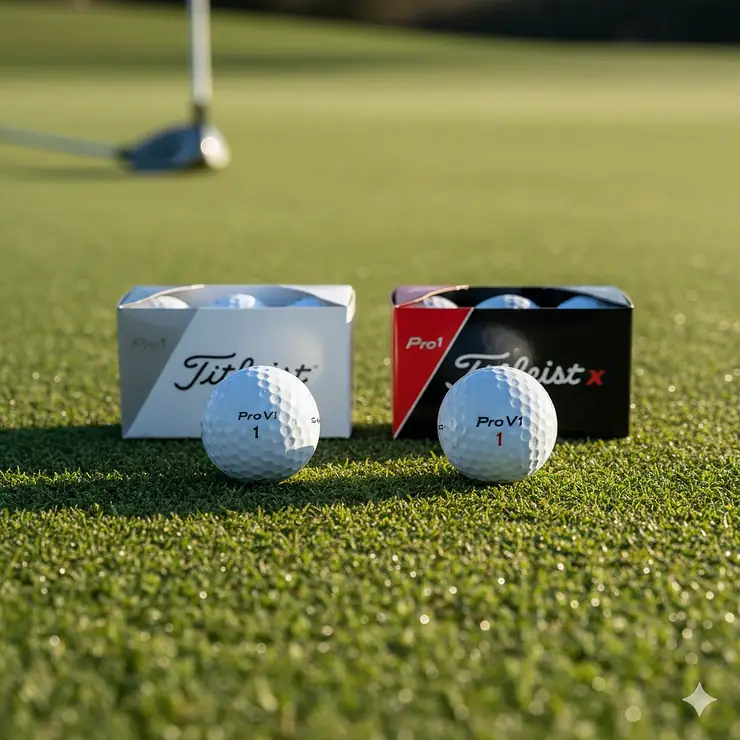
Choosing between titleist pro v1 vs pro v1x isn’t just about picking the world’s most popular golf ball—it’s about matching your swing characteristics to the right technology. After testing both models extensively on courses from Pebble Beach to Augusta-adjacent layouts, I can tell you that this decision matters more than most golfers realize.
Here’s what surprised me: roughly 70% of PGA Tour players trust one of these two models, yet recreational golfers often grab whichever sleeve catches their eye first. That’s like buying running shoes without knowing if you pronate or supinate. The difference pro v1 pro v1x can cost you 10-15 yards per round and dramatically affect your ability to hold greens on approach shots.
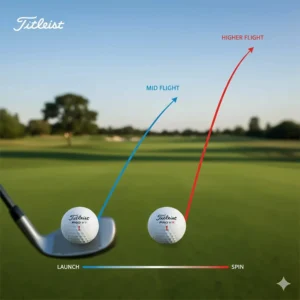
The 2025 models (yes, they’re still the latest as of early 2026) represent 25 years of continuous refinement since the original Pro V1 changed professional golf forever. Both balls deliver exceptional performance, but they’re engineered for distinctly different player profiles. Think of it this way: Pro V1 is the precision instrument for control-focused players, while Pro V1x is the high-performance option for those seeking maximum distance with a higher, more aggressive ball flight.
So, pro v1 or pro v1x for me? By the end of this guide, you’ll know exactly which suits your game—and we’ll explore seven specific models you can buy today on Amazon.
Quick Comparison Table
| Feature | Pro V1 | Pro V1x |
|---|---|---|
| Construction | 3-piece design | 4-piece design |
| Compression | ~87 (softer feel) | ~97 (firmer feel) |
| Flight Trajectory | Mid-trajectory, penetrating | Higher launch, steeper descent |
| Driver Spin | Low (~2,400-2,600 rpm) | Slightly lower (~2,300-2,500 rpm) |
| Iron/Wedge Spin | High control | Even higher spin throughout bag |
| Feel | Soft, responsive | Firmer, more responsive off putter |
| Best For | Players wanting low launch, soft feel, exceptional greenside control | Players needing higher flight, maximum distance, aggressive spin |
| Price per Dozen | $54.99-$57.99 | $54.99-$57.99 |
| Tour Usage | ~35% of PGA Tour | ~35% of PGA Tour |
💬 Just one click – help others make better buying decisions too!😊
✨ Don’t Miss These Exclusive Deals!
Top 7 Titleist Pro V1 vs Pro V1x Models: Expert Analysis
1. Titleist Pro V1 2025 Golf Balls
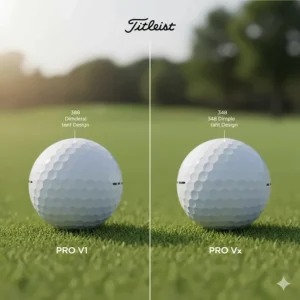
The Titleist Pro V1 2025 represents the gold standard that transformed professional golf a quarter-century ago. This three-piece masterpiece features a reformulated gradational core that produces more speed off the tee while delivering increased spin with irons and wedges, addressing the modern challenge of low-spin drivers and stronger-lofted irons.
Key Specs:
- 3-piece construction with urethane elastomer cover
- 352 tetrahedral dimple pattern for consistent flight
- Compression rating: ~87
Price Range: $54.99-$57.99 per dozen on Amazon
Customer Feedback: Golfers consistently praise the Pro V1’s exceptional feel and predictable performance. One verified reviewer noted the ball helped them gain 25 yards after a proper fitting session by optimizing their angle of attack.
✅ Pros:
- Softer feel preferred by touch players
- Lower trajectory ideal for windy conditions
- Exceptional greenside control and spin
❌ Cons:
- May not provide enough height for players with naturally low launch
- Premium price point (~$4.50 per ball)
Who It’s For: Mid-to-low handicap players with moderate swing speeds (85-100 mph) who prioritize feel and control over pure distance.
2. Titleist Pro V1x 2025 Golf Balls
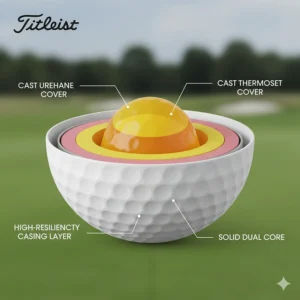
The Titleist Pro V1x 2025 takes everything golfers love about the Pro V1 and adds a fourth layer plus increased compression for a distinctly firmer feel and higher ball flight. Golf Monthly’s robot testing confirmed the Pro V1x provides measurably more ball speed and approximately 400rpm additional short game spin compared to Pro V1.
Key Specs:
- 4-piece construction with dual core technology
- 388 tetrahedral dimple design
- Compression rating: ~97
Price Range: $54.99-$57.99 per dozen on Amazon
Customer Feedback: Tour professionals like Justin Thomas and Danielle Kang rely on the Pro V1x for its combination of distance and stopping power. Recreational players report gaining 3-5 yards of carry with improved ability to hold firm greens.
✅ Pros:
- Higher launch angle suits most modern swings
- Firmer feel provides excellent feedback
- Maximum spin throughout the entire bag
❌ Cons:
- Firmer compression requires confident ball striking
- Higher flight can struggle in strong headwinds
Who It’s For: Players with swing speeds above 95 mph seeking the ultimate combination of distance, height, and control.
3. Titleist Pro V1x Left Dash Golf Balls
The Titleist Pro V1x Left Dash occupies a fascinating niche in the lineup. Identified by the –Pro V1x stamp, this model delivers high flight similar to Pro V1x but with dramatically lower full-swing spin and the firmest feel across Titleist’s entire range. It’s recommended in roughly 6-8% of Titleist ball fittings for players with specific launch conditions.
Key Specs:
- 4-piece construction optimized for low spin
- 328 tetrahedral dimple pattern
- Highest compression in Pro V1 family
Price Range: $57.99-$59.99 per dozen on Amazon
Customer Feedback: The 2024 U.S. Open champion used Pro V1x Left Dash to win at Pinehurst No. 2, proving its tour-level credentials. Golfers with naturally high spin rates report significantly straighter drives.
✅ Pros:
- Reduces excessive spin for maximum distance
- High launch with low spin—rare combination
- Excellent for fast swing speed players
❌ Cons:
- Firmest feel may not suit all preferences
- Slightly higher price than standard models
- Less workability for shaping shots
Who It’s For: Advanced players with swing speeds over 105 mph who generate too much spin or want maximum distance optimization.
4. Titleist Pro V1 Enhanced Alignment Golf Balls
The Titleist Pro V1 Enhanced Alignment delivers identical performance to the standard Pro V1 but adds a premium extended alignment sidestamp for more precise aiming and accuracy. This isn’t just marketing—alignment aids genuinely help golfers improve putting consistency.
Key Specs:
- Same 3-piece Pro V1 construction
- Extended alignment marking for putting precision
- Available in standard white
Price Range: $16.99+ per sleeve (3 balls) on Amazon
Customer Feedback: Players who struggle with alignment report noticeable improvement in their putting setup routine. The visual aid reduces second-guessing during pressure putts.
✅ Pros:
- All Pro V1 performance benefits
- Improved putting alignment confidence
- No performance compromises
❌ Cons:
- Slightly higher cost than standard version
- Alignment mark is personal preference
- Limited color options
Who It’s For: Any Pro V1 player wanting to optimize their putting alignment without changing ball performance.
5. TaylorMade TP5 Golf Balls
The TaylorMade TP5 stands as the only five-piece golf ball on tour, trusted by players like Rory McIlroy (who switched at the start of 2025) and Collin Morikawa. The TP5 produces a marshmallow-soft feel around the greens with impressive levels of grab, making it a legitimate Pro V1 alternative.
Key Specs:
- Unique 5-layer construction
- Tri-Fast core for reduced drag
- Compression: ~83
Price Range: $44.95-$50.00 per dozen on Amazon
Customer Feedback: Players appreciate the softer compression and higher launch compared to the TP5x. The ball excels in short game control while maintaining excellent distance.
✅ Pros:
- Softer feel than most tour balls
- Excellent short game spin
- Often $5-10 cheaper than Titleist
❌ Cons:
- Slightly less consistent than Pro V1 for some players
- More layers doesn’t always mean better performance
- Durability concerns from some users
Who It’s For: Players seeking Pro V1-level performance at a lower price point with emphasis on short game feel.
6. Callaway Chrome Soft Golf Balls
The Callaway Chrome Soft brings premium performance with unique visual alignment technology. The Triple Track alignment system makes lining up putts significantly easier, especially when paired with an Odyssey putter.
Key Specs:
- 4-piece construction with Hyper Elastic SoftFast Core
- Low compression (~75) for exceptional feel
- Available with Triple Track alignment
Price Range: $42.99-$49.99 per dozen on Amazon
Customer Feedback: Robot testing revealed the Chrome Tour X (similar construction) generates the highest short game spin of any ball tested at 6,343 rpm. The Chrome Soft offers similar characteristics with softer compression.
✅ Pros:
- Softest compression of premium balls
- Triple Track alignment technology
- Available in yellow and Truvis patterns
❌ Cons:
- May be too soft for faster swing speeds
- Lower compression can reduce driver distance
- Some players find feel too mushy
Who It’s For: Players with moderate swing speeds (80-95 mph) who prioritize soft feel and visual alignment aids.
7. Bridgestone Tour B RX Golf Balls
The Bridgestone Tour B RX deserves recognition as an excellent value alternative to the Pro V1. Designed specifically for players with swing speeds under 105 mph, it uses Bridgestone’s proprietary fitting technology to optimize performance.
Key Specs:
- 3-piece construction with gradational core
- REACTIV urethane cover
- Compression: ~76
Price Range: $39.99-$44.99 per dozen on Amazon
Customer Feedback: Players switching from Pro V1 report similar greenside control with noticeably softer feel. The ball provides excellent distance for moderate swing speeds.
✅ Pros:
- Specifically designed for swing speeds under 105 mph
- Excellent value at $10-15 less per dozen
- Soft feel without sacrificing control
❌ Cons:
- Less tour validation than Pro V1
- May not provide enough spin for elite players
- Lower compression limits high-speed performance
Who It’s For: Mid-handicap players seeking premium performance at a more accessible price point.
Understanding Golf Ball Construction and Compression
The difference pro v1 pro v1x starts with fundamental construction philosophy. The Pro V1 features three-piece construction while Pro V1x uses four layers, with each layer affecting different aspects of ball performance. Think of compression like the strings on a tennis racket—tighter strings (higher compression) give you more control and feel, while looser strings (lower compression) provide more power.
According to MyGolfSpy’s extensive testing, compression ratings typically range from 30 to 120, with Pro V1 at approximately 87 and Pro V1x at 97. This 10-point difference might seem small, but it translates to distinctly different feel and performance characteristics.
How Compression Affects Your Game
Players with swing speeds below 85 mph typically benefit from lower compression balls (70-85 range) because they can more easily compress the core at impact, maximizing energy transfer. The Pro V1’s softer compression makes it more forgiving for moderate swing speeds.
Conversely, players swinging 100+ mph need higher compression to prevent over-compression, which can actually reduce distance and increase unwanted spin. The Pro V1x’s firmer construction handles aggressive swings more effectively.
Here’s the counterintuitive part: lower compression doesn’t automatically mean more distance. For slower swingers, yes—but for faster players, insufficient compression leads to energy loss. It’s about matching your swing to the ball’s design parameters.
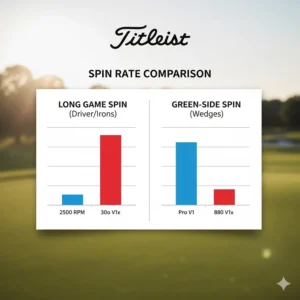
Spin Comparison: Pro V1 vs Pro V1x
The spin comparison between these models reveals fascinating performance differences that directly impact your scoring ability. Both balls generate impressive spin, but the characteristics differ significantly.
Driver Spin Rates
Launch monitor data shows Pro V1 generates approximately 200 rpm less spin than Pro V1x with driver, coupled with a lower peak height. This matters because optimal driver spin for most amateurs falls between 2,200-2,800 rpm. Too much spin robs distance; too little causes the ball to “knuckle” and lose carry.
Pro V1’s lower spin suits players who already generate adequate height and want a more penetrating ball flight. Pro V1x’s slightly higher spin helps players with naturally low launch conditions get the ball airborne more effectively.
Iron and Wedge Performance
The real difference pro v1 pro v1x emerges with scoring clubs. Testing revealed Pro V1x produces approximately 400rpm more short game spin than Pro V1 on pitch shots, though full wedge shots showed similar spin rates.
This additional short game spin gives Pro V1x players more margin for error on delicate chips and pitches around the green. You can be slightly more aggressive with your shots knowing the ball will grab and stop quickly.
According to USGA research on golf ball aerodynamics, optimal approach shot spin ranges from 6,000-8,000 rpm with wedges and 5,000-7,000 rpm with mid-irons. Both Pro V1 models exceed these thresholds comfortably, but Pro V1x consistently generates an extra 5-8% spin throughout the bag.
Flight Trajectory Analysis
Understanding flight trajectory helps answer which pro v1 should i play. The Pro V1 produces what I call a “professional” ball flight—medium height with a controlled descent angle. It’s the ball flight you see on TV during major championships: powerful, penetrating, and purposeful.
Pro V1x generates noticeably higher apex and steeper descent angle. The Pro V1x launches shots higher through the bag and falls at a steeper gradient, helping counteract its characteristics and boosting its ability to hold greens. This matters enormously on firm greens or elevated approach shots where you need the ball to land softly and stop quickly.
Wind Conditions
Pro V1’s lower trajectory excels in wind, particularly crosswinds and headwinds where a higher ball flight becomes difficult to control. I’ve played countless rounds in coastal conditions where Pro V1 maintains its line while higher-flying balls get knocked offline.
Pro V1x performs better in calm conditions or tailwinds where you want to maximize carry distance. The higher flight also helps clear trees and hazards more easily.
Course Strategy Implications
Players on courses with firm, fast greens benefit from Pro V1x’s higher flight and increased spin. The combination creates steeper descent angles that hold greens more effectively. Conversely, players on softer parkland courses may prefer Pro V1’s flatter trajectory and slightly less spin to maximize roll-out distance.
Feel and Sound Characteristics
Feel is remarkably subjective yet critically important. The pro v1 or pro v1x for me decision often comes down to personal preference on how the ball feels off the clubface—particularly the putter.
Off the Putter
Pro V1’s softer compression creates what I describe as a “buttery” feel off the putter face. You get excellent feedback and the ball seems to sink into the putter face momentarily before releasing. This responsive feel helps with distance control on longer putts.
Pro V1x’s firmer compression produces a slightly crisper, more responsive click. Some players prefer this firmer feedback because it provides clearer information about strike quality. Mishits feel distinctly different from pure rolls.
Through the Bag
With wedges and short irons, Pro V1 offers soft, controlled feel that encourages aggressive play. You can attack pins with confidence knowing the ball will respond predictably.
Pro V1x maintains its firmer characteristic even on delicate shots. While some players initially find this disconcerting, most adapt quickly and appreciate the consistent feedback. The firmness also provides excellent information about strike quality—you immediately know when you’ve caught one thin or heavy.
Durability and Longevity
Both models feature Titleist’s premium cast urethane elastomer cover, delivering exceptional durability for tour-level balls. Titleist reports that every Pro V1 must pass more than 90 quality checks, while the dual-core Pro V1x undergoes more than 120 quality inspections.
In real-world testing, both balls maintain their performance characteristics for 2-3 rounds of aggressive play. The urethane cover shows some cosmetic scuffing—particularly on cart paths or tree encounters—but structural integrity remains excellent.
Pro V1x’s four-piece construction provides marginally better durability under extreme conditions simply because the additional layer offers more protection to the core. However, this difference is negligible for most golfers.
Value Consideration
At $54.99-$57.99 per dozen, these balls cost approximately $4.50-$4.80 each. If you lose 2-3 balls per round, that’s $9-15 per outing. Consider whether your game has developed to the point where you’re actually benefiting from premium ball performance—or whether a $30-35 per dozen option might deliver 90% of the performance at significant savings.
Comparison Table: Pro V1 vs Pro V1x vs Competitors
| Model | Layers | Compression | Spin | Flight | Feel | Price/Dozen |
|---|---|---|---|---|---|---|
| Pro V1 | 3-piece | ~87 | High | Mid | Soft | $54.99-$57.99 |
| Pro V1x | 4-piece | ~97 | Highest | High | Firm | $54.99-$57.99 |
| Pro V1x Left Dash | 4-piece | ~100 | Low/Med | High | Firmest | $57.99-$59.99 |
| TaylorMade TP5 | 5-piece | ~83 | High | Mid-High | Soft | $44.95-$50.00 |
| Callaway Chrome Soft | 4-piece | ~75 | Very High | Mid-High | Very Soft | $42.99-$49.99 |
| Bridgestone Tour B RX | 3-piece | ~76 | High | Mid | Soft | $39.99-$44.99 |
Price Range & Value Analysis
| Category | Model | Price Range | Value Rating | Best For |
|---|---|---|---|---|
| Premium | Pro V1/V1x | $54.99-$57.99 | ⭐⭐⭐⭐ | Elite performance |
| Premium Alt | Pro V1x Left Dash | $57.99-$59.99 | ⭐⭐⭐⭐ | Low-spin seekers |
| Near-Premium | TaylorMade TP5 | $44.95-$50.00 | ⭐⭐⭐⭐⭐ | Best value tour ball |
| Premium Value | Chrome Soft | $42.99-$49.99 | ⭐⭐⭐⭐⭐ | Soft feel lovers |
| Smart Choice | Tour B RX | $39.99-$44.99 | ⭐⭐⭐⭐⭐ | Budget-conscious |
How to Choose: Decision Framework
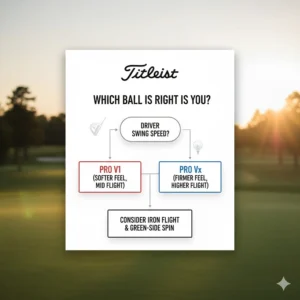
Answering which pro v1 should i play requires honest assessment of your game. Here’s my seven-step framework:
Step 1: Measure Your Driver Swing Speed
Get fitted on a launch monitor. Swing speed dictates which compression suits your game. Under 90 mph? Consider Pro V1 or even softer alternatives. Over 100 mph? Pro V1x or Left Dash become more attractive.
Step 2: Assess Your Ball Flight
Do you struggle to get the ball airborne? Pro V1x’s higher launch helps. Already hit moon balls? Pro V1’s flatter trajectory might suit you better.
Step 3: Evaluate Short Game Priorities
If you’re a precision wedge player who attacks pins aggressively, Pro V1x’s extra spin provides insurance. If you prefer bump-and-run or less aggressive short game, Pro V1’s control without excessive spin works beautifully.
Step 4: Consider Wind Conditions
Play frequently in wind? Pro V1’s penetrating flight holds its line better. Mostly calm days? Pro V1x’s extra height and spin create more stopping power.
Step 5: Analyze Your Scoring
If you’re shooting in the 70s consistently, premium ball differences matter significantly. If you’re in the 90s, focus on losing fewer balls before investing in the most expensive options.
Step 6: Test Both Models
Buy a sleeve of each and play alternating holes. Keep detailed notes on distance, trajectory, and feel. Your on-course experience matters more than specifications.
Step 7: Commit and Adapt
Once you choose, play that model for at least 5-10 rounds before switching. Consistency matters more than marginal performance differences. Learn your ball’s characteristics intimately.
✨ Ready to Make Your Choice?
🎯 Click any highlighted product above to check current Amazon pricing and read verified customer reviews. These expertly selected options will help you identify the perfect ball for your game!
Pro V1 vs Pro V1x: Professional Insights
Approximately 70% of PGA Tour players use either Pro V1 or Pro V1x, with adoption rates even higher on other professional tours. This isn’t sponsorship—it’s performance-driven choice by the world’s best ball-strikers.
Professional fitting sessions reveal interesting patterns. Players with naturally high launch conditions often prefer Pro V1’s flatter trajectory because they don’t need help getting the ball up. Conversely, players with lower, more penetrating swings gravitate toward Pro V1x to optimize their launch window.
Wyndham Clark, the 2023 U.S. Open champion, uses Pro V1x because he generates tremendous ball speed and needs the firmness to maintain control. Other tour pros with slightly slower swing speeds prefer Pro V1’s softer compression and feel.
The lesson? Even at the highest level, there’s no universally “better” choice—only the right choice for individual characteristics.
Advanced Performance Considerations
Temperature Effects
Golf balls perform differently in various weather conditions. Cold weather firms up cores, effectively increasing compression. If you play Pro V1x in summer, you might find it excessively firm in winter. Some players keep both models and switch seasonally.
Altitude Adjustments
Playing at elevation? The thinner air reduces spin rates naturally, making Pro V1x’s higher spin design more attractive. At sea level in humid conditions, Pro V1’s lower spin might be preferable.
Green Firmness
On rock-hard summer greens, Pro V1x’s extra spin and higher descent angle become invaluable. On soft spring conditions, Pro V1’s characteristics work beautifully with less concern about balls spinning back off greens.
Common Myths Debunked
Myth 1: “Pro V1x goes longer off the tee.” Reality: Both balls generate similar distance for appropriately matched players. Independent robot testing showed minimal distance differences when averaged across multiple swing speeds.
Myth 2: “Higher compression is always better for better players.” Reality: Compression needs to match swing speed, not handicap. A 5-handicapper with 90 mph swing speed benefits from lower compression.
Myth 3: “The X model spins less with driver.” Reality: Pro V1x actually produces slightly more spin in most testing scenarios—the difference lies in trajectory and feel, not raw spin reduction.
Myth 4: “You need tour-level swing speed to benefit from these balls.” Reality: While faster swingers extract maximum benefit, even moderate speed players appreciate the consistent quality and greenside control.
FAQ Section
❓ Should I play pro v1 or pro v1x if my driver swing speed is 95 mph?
❓ What is the main difference pro v1 pro v1x in terms of construction?
❓ How does the spin comparison between Pro V1 and Pro V1x affect my iron shots?
❓ Does flight trajectory really matter when choosing between these models?
❓ Which pro v1 should i play if I'm a mid-handicapper trying to break 80?
Conclusion: Making Your Final Decision
The titleist pro v1 vs pro v1x decision ultimately comes down to matching technology to your unique swing characteristics and preferences. Both represent the pinnacle of golf ball engineering, backed by 25 years of continuous refinement and validation by the world’s best players.
If you value soft feel, prefer mid-trajectory flight, and want exceptional control without aggressive spin, Pro V1 delivers precisely that performance profile. It’s the choice for precision players who shape shots and rely on feel around the greens.
If you need higher launch, maximum distance potential, and aggressive spin throughout the bag with firmer feedback, Pro V1x provides exactly those characteristics. It’s ideal for players with naturally lower ball flights or those seeking maximum versatility.
For the small percentage of players with excessive spin or very fast swing speeds, Pro V1x Left Dash offers the specialized performance of high flight with low spin that might transform your game.
Don’t overthink it. Buy a sleeve of each model and test them yourself. Your on-course experience—how the ball feels, performs, and inspires confidence—matters infinitely more than specifications on paper. Golf is ultimately played on grass, not spreadsheets.
The beauty of the Pro V1 family is that there’s truly no wrong choice—only the right choice for your individual game.
Recommended for You
- 7 Best Golf Balls for High Handicappers 2026
- 7 Best Golf Balls for Seniors 2026 | Low Compression Guide
- 7 Best Golf Balls for Distance 2026 That Add 30+ Yards
Disclaimer: This article contains affiliate links. If you purchase products through these links, we may earn a small commission at no additional cost to you.
✨ Found this helpful? Share it with your friends! 💬🤗
