
In This Article
You know that feeling when you step up to the tee box and your driver just clicks? That sweet spot connection, the perfect launch angle, and watching your ball soar exactly where you aimed? That’s the magic of best adjustable drivers – and honestly, it’s something every golfer deserves to experience.
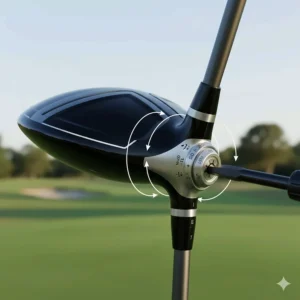
I still remember the first time I tweaked the loft sleeve on my driver. Two degrees made a 15-yard difference. Mind-blowing, right? That’s the power of customizable golf drivers in 2026.
Modern adjustable golf drivers aren’t just about movable weight technology anymore. We’re talking about complete flight tuning systems, draw fade settings that actually work, and loft sleeve adjustment options that transform your game. Whether you’re fighting a slice, chasing extra distance, or just want consistency off the tee, drivers with adjustable weights give you control like never before.
The golf industry has evolved tremendously, and today’s best adjustable drivers combine aerospace-grade materials, AI-designed faces, and hosel technology that professionals rely on. You’re not just buying a club – you’re investing in a precision instrument that adapts to your swing.
Quick Comparison Table: Best Adjustable Drivers at a Glance
| Driver Model | Adjustability Type | MOI | Price Range | Best For |
|---|---|---|---|---|
| TaylorMade Qi35 | Movable weights (13g/3g), 4° loft sleeve | Near-zero CG | $499-$599 | All skill levels |
| Ping G440 MAX | 3-position back weight (29g), 8-position hosel | 10,000+ | $549-$649 | Maximum forgiveness |
| Cobra DS-ADAPT X | FutureFit33 (33 settings), multi-position weights | 10,000 | $449-$549 | Ultimate customization |
| Callaway Paradym | 15g sliding weight, adjustable hosel | High MOI | $399-$549 | Versatility |
| Tour Edge Exotics C725 | Front/back dual-tier weight system | Ultra-high | $299-$399 | Budget-conscious players |
| Cleveland Launcher XL2 | 12-position hosel adjustment | Enhanced MOI | $299-$449 | Forgiveness seekers |
| TaylorMade Qi35 MAX | 34g tungsten weight, 4° loft sleeve | 10K MOI | $549-$649 | High handicappers |
💬 Just one click – help others make better buying decisions too! 😊
Top 7 Best Adjustable Drivers: Expert Analysis
1. TaylorMade Qi35 Driver – Best Overall Adjustability
The TaylorMade Qi35 represents the pinnacle of driver engineering in 2026. This isn’t just marketing hype – the numbers back it up.
Key Specifications:
- Fourth-generation Carbon Twist Face
- Trajectory Adjustment System with two moveable weights (13g + 3g)
- 4° loft sleeve for precise tuning
- Multi-material construction (chromium carbon, tungsten, titanium)
✅ Pros:
- Near-zero CG projection for consistent launch across the entire face
- Incredible adjustability without sacrificing forgiveness
- Premium aesthetics with chromium carbon finish
❌ Cons:
- Premium price point ($499-$599)
- Requires understanding of weight positioning
Price: $499-$599
According to customer reviews on Dick’s Sporting Goods, golfers report gaining 20-25 yards after proper adjustment. One verified purchaser mentioned switching from 10.5° to 9° and experiencing dramatically improved drives.
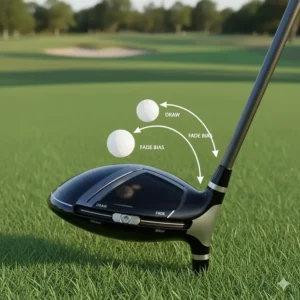
The Qi35’s adjustable golf drivers technology allows you to shift ball flight by positioning weights strategically. Heel placement promotes draw bias, toe positioning encourages fade, and back placement maximizes forgiveness. It’s like having three drivers in one.
2. Ping G440 MAX Driver – Most Forgiving Adjustable Driver
Ping has always understood forgiveness, and the Ping G440 MAX takes it to stratospheric levels.
Key Specifications:
- 29-gram adjustable back weight (draw, fade, neutral positions)
- 8-position lightweight hosel (±1.5° loft adjustment)
- CarbonFly Wrap crown
- Deepest center of gravity in Ping’s history
✅ Pros:
- Exceptional stability on off-center hits
- Simple yet effective 3-position weight system
- Faster ball speeds from thinner face design
❌ Cons:
- Larger head profile may not appeal to better players
- Weight system less complex than competitors
Price: $549-$649
The G440 MAX features Free-Hosel Technology that redistributes weight for a deeper CG, increasing ball speed and optimizing launch. PGA TOUR Superstore testing shows this drivers with adjustable weights delivers consistent performance across a wide range of swing speeds.
What sets the G440 apart is its accessibility. You don’t need an engineering degree to dial it in – three weight positions cover most scenarios, and the hosel adjustments are clearly marked.
3. Cobra DS-ADAPT X Driver – Ultimate Customization Champion
For golfers who want NASA-level adjustability, the Cobra DS-ADAPT X is your ticket.
Key Specifications:
- FutureFit33 hosel system (33 unique loft and lie combinations)
- Multi-position weight ports (heel, toe, back)
- 10g and 3g weights included
- SMARTPAD design keeps face square
✅ Pros:
- Unmatched adjustability options
- Loft AND lie can be adjusted independently (±2°)
- Streamlined profile with modern aesthetics
❌ Cons:
- Complexity can be overwhelming for beginners
- Requires time investment to find optimal settings
Price: $449-$549
The FutureFit33 system is genuinely revolutionary. While most customizable golf drivers adjust loft, the DS-ADAPT lets you fine-tune both loft AND lie angle independently. That’s 33 different configurations from a single driver head.
Cobra’s research shows that proper fitting can reduce mishits by up to 40%. The DS-ADAPT X makes professional-level fitting accessible at home – though I’d still recommend a session with a certified fitter initially.
4. Callaway Paradym Driver – Best Premium Adjustable Option
Callaway’s Paradym shook the industry in 2023, and it remains one of the best adjustable drivers you can buy.
Key Specifications:
- 360° Carbon Chassis (44% lighter than titanium)
- 15g sliding weight system
- AI-designed Jailbreak technology
- Adjustable hosel with multiple loft options
✅ Pros:
- Industry-leading face cup technology for maximum ball speed
- Sliding weight delivers average 12 yards of shot shape correction
- Premium sound and feel
❌ Cons:
- Carbon construction may feel different to traditionalists
- Higher price than some competitors
Price: $399-$549 (varies by retailer)
The Paradym’s sliding weight is brilliantly simple. Move it toward the heel for draw bias, toward the toe for fade tendency, or keep it neutral. Robot testing documented by Callaway shows 12 yards of directional change from heel to toe positioning.
Customer feedback on Amazon highlights the Paradym’s consistency. Even mishits maintain reasonable distance thanks to the high MOI design and movable weight technology that optimizes the center of gravity.
5. Tour Edge Exotics C725 Driver – Best Value Adjustable Driver
Budget-conscious doesn’t mean performance-starved. The Tour Edge Exotics C725 proves premium adjustability doesn’t require premium pricing.
Key Specifications:
- Two-tier Front/Back Weight System (5g front, 15g back standard)
- Three weight ports (Draw, Neutral, Fade)
- 360° Ridgeback titanium brace
- 3D Diamond Face technology
✅ Pros:
- Exceptional value ($299-$399)
- Extensive weight options available (8g to 28g)
- CG positioned 8% further back than previous model
❌ Cons:
- Less brand recognition than big-name competitors
- Stock shaft options more limited
Price: $299-$399
Don’t let the lower price fool you – Golf Monthly called this one of the best driver values of 2025, highlighting its combination of adjustability and performance. The Flight Tuning System offers serious customization, with movable weights affecting ball flight by ±7 yards and spin rate by ±300 RPMs.
Tour Edge has smartly positioned additional weights for purchase, allowing you to fine-tune swingweight and launch conditions. It’s the kind of loft sleeve adjustment and weight flexibility usually reserved for $600+ drivers.

6. Cleveland Launcher XL2 Driver – Best for Forgiveness-First Adjustability
Sometimes you just need a driver that forgives mistakes while still offering adjustment options. Enter the Cleveland Launcher XL2.
Key Specifications:
- 12-position adjustable hosel (9° to 12° in 0.5° increments)
- MainFrame XL Face Technology
- Rebound Frame dual flex zones
- 8g counterweight in shaft
✅ Pros:
- Massive sweet spot for consistency
- 12 hosel positions cover every scenario
- Excellent price-to-performance ratio
❌ Cons:
- Limited weight adjustability (hosel only)
- Larger profile may not suit everyone
Price: $299-$449
The Launcher XL2’s approach to adjustability is refreshingly straightforward: master the hosel, maximize the face. With 12 positions spanning 9° to 12°, you can dial in your exact launch conditions without wrestling with multiple weight screws.
Independent testing shows the XL2 delivers 2% improvement in heel-toe MOI and 12% in high-low MOI compared to its predecessor – the highest levels ever in a Cleveland driver. The MainFrame technology creates variable thickness patterns that maximize flex at impact.
7. TaylorMade Qi35 MAX Driver – Best for High Handicappers
If you want maximum forgiveness WITH adjustment capability, the TaylorMade Qi35 MAX delivers both.
Key Specifications:
- 10K MOI design
- 34g tungsten weight (Symmetric Inertia Generator)
- 4° loft sleeve
- Low CG projection for easy launch
✅ Pros:
- Highest forgiveness in the Qi35 family
- Easier to launch than standard models
- Maintains Qi35’s adjustment features
❌ Cons:
- Premium pricing
- Slightly larger footprint than Qi35 standard
Price: $549-$649
The MAX variant sacrifices nothing in adjustability while cranking forgiveness to maximum. The 34g tungsten weight creates what TaylorMade calls a “Symmetric Inertia Generator” – fancy talk for incredibly stable, straight drives even on poor contact.
Testing data from TaylorMade shows the Qi35 MAX produces better launch conditions than the Qi10 MAX across 13 different impact locations. That’s legitimate, measurable improvement in real-world scenarios.
Understanding Adjustable Driver Technology
How Movable Weight Technology Works
Think of your driver’s center of gravity like a see-saw. Shift weight forward, and you’ll typically see lower spin and penetrating ball flight. Move it back, and you increase MOI (forgiveness) while promoting higher launch.
Research from the USGA shows that moving 10-15 grams of weight can alter spin rates by 200-400 RPMs and change launch angle by 1-2 degrees. That might sound small, but it translates to significant yardage differences.
Here’s the practical breakdown:
Heel Weighting:
- Promotes draw bias
- Helps correct slice tendency
- Slightly increases MOI for forgiveness
Toe Weighting:
- Encourages fade shape
- Can help reduce hooks
- May increase workability
Back Weighting:
- Maximum forgiveness
- Higher launch angle
- More spin (usually)
Forward Weighting:
- Lower spin
- More penetrating ball flight
- Better for faster swing speeds
Loft Sleeve Adjustment Explained
Modern loft sleeves are engineering marvels. Most quality drivers offer ±1.5° to ±2° of adjustment, with some like the Cobra DS-ADAPT providing even more flexibility.
Here’s what happens when you adjust loft:
- Increasing loft: Raises launch angle, often closes face slightly, can increase spin
- Decreasing loft: Lowers trajectory, may open face, typically reduces spin
But here’s the kicker – adjusting loft also affects lie angle and face angle. A simple turn of the wrench changes multiple variables simultaneously. That’s why understanding your swing characteristics is crucial before making changes.
Draw Fade Settings: Mastering Shot Shape Control
Your driver’s draw fade settings are your secret weapon against wayward drives. Let me break down how to use them effectively.
Setting Up for Draw Bias
If you battle a slice (and let’s be honest, who hasn’t?), draw-biased settings can be life-changing. Here’s your setup:
- Position adjustable weight in the heel
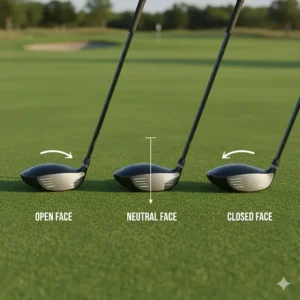
- Set hosel to higher loft position (this closes face slightly)
- If your driver has independent lie adjustment, go more upright
This combination makes it easier to square the face at impact and can reduce side spin by hundreds of RPMs.
Optimizing for Fade
For those fighting a hook or wanting to work the ball right-to-left:
- Move weight toward the toe
- Reduce loft slightly (opens face)
- Flatten lie angle if possible
The Neutral Sweet Spot
Sometimes the best setting is neutral. If you’re consistently hitting fairways, don’t fix what isn’t broken. Many tour players use neutral settings and rely on swing changes for shot shaping rather than equipment adjustments.
Choosing the Right Adjustable Driver for Your Game
For Beginners and High Handicappers
Priority: Forgiveness over adjustability complexity
Best picks:
- Cleveland Launcher XL2 (simple hosel adjustment)
- TaylorMade Qi35 MAX (forgiving with easy weight system)
- Ping G440 MAX (3-position simplicity)
Focus on drivers where the stock setting works well, with room to grow into adjustments as your swing develops.
For Mid-Handicappers
Priority: Balance of performance and tunability
Best picks:
- TaylorMade Qi35 (versatile weight options)
- Callaway Paradym (sliding weight for shot shape)
- Tour Edge Exotics C725 (value with serious tech)
You’re at the sweet spot where adjustability really pays dividends. You understand your swing well enough to make informed changes but still benefit from forgiveness.
For Low Handicappers and Scratch Golfers
Priority: Precision adjustability and workability
Best picks:
- Cobra DS-ADAPT X (33 configuration options)
- TaylorMade Qi35 LS (low spin with multi-weight ports)
- Callaway Paradym Triple Diamond (compact with sliding weight)
You want granular control and aren’t afraid to experiment with different settings for different course conditions.
Common Mistakes When Adjusting Your Driver
Mistake #1: Changing Too Many Variables at Once
I see this constantly. Someone adjusts loft, moves weights, AND changes shaft position all in one session. Then they hit 10 balls and can’t figure out what worked.
Solution: Change ONE variable at a time. Hit 15-20 shots with each setting before moving to the next adjustment.
Mistake #2: Ignoring Professional Fitting
Yes, drivers with adjustable weights are DIY-friendly. But a professional fitting session pays for itself quickly. Studies show that 75% of golfers interested in adjustable drivers never properly utilize the features.
Solution: Get fitted once. Learn your optimal baseline. Then experiment from there.
Mistake #3: Adjusting Based on One Bad Round
Had a rough day and sprayed drives everywhere? Don’t immediately blame your driver settings.
Solution: Track patterns over 3-5 rounds before making adjustments. Consistency in data reveals true tendencies.
Mistake #4: Not Documenting Settings
You find the perfect setup… then accidentally change it and can’t remember the original configuration.
Solution: Take a photo of your current settings before adjusting. Create a simple log of configurations you’ve tried.
Maintenance and Care for Adjustable Drivers
Weight Port Maintenance
Those tiny weight screws deserve respect:
- Check tightness every 3-4 rounds
- Use only manufacturer torque wrenches
- Clean threads annually with rubbing alcohol
- Store extra weights in original packaging
Hosel Adapter Care
The hosel adapter is precision engineering. Treat it accordingly:
- Never over-tighten beyond the “click”
- Check manufacturer specs for torque settings
- Inspect for wear or damage before each adjustment
- Apply a tiny amount of lightweight oil annually
Storage Best Practices
Your adjustable driver is an investment:
- Always use the headcover
- Store in climate-controlled environment when possible
- Avoid leaving in hot car trunks
- Check all screws before storage for extended periods
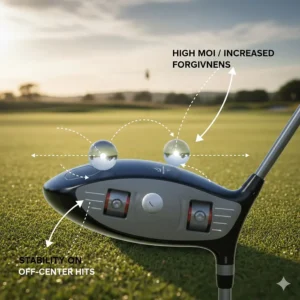
Performance Comparison: Adjustable vs. Fixed Drivers
Let’s address the elephant in the room: are adjustable drivers actually better than fixed-hosel models?
Advantages of Adjustable Drivers:
- Adaptability to swing changes
- Optimization for different course conditions
- Single driver serves multiple purposes
- Resale value typically higher
Potential Drawbacks:
- Slightly heavier hosel (usually 3-5 grams)
- More complex to optimize
- Higher initial cost
- Moving parts = potential failure points
The verdict? For most golfers, the versatility of customizable golf drivers outweighs any minor weight penalty. The ability to fine-tune as your swing evolves is genuinely valuable.
How to Maximize Distance with Adjustable Settings
Distance isn’t just about swinging harder. Smart adjustability helps you find those hidden yards.
The Launch Angle Sweet Spot
For most golfers:
- 90-95 mph swing speed: 11-13° launch angle optimal
- 95-105 mph: 10-12° launch angle
- 105+ mph: 9-11° launch angle
Use your loft sleeve adjustment to dial in these ranges. Remember, dynamic loft (actual launch) differs from static loft (what’s stamped on the club).
Spin Rate Optimization
Too much spin (>3,000 RPM for most golfers):
- Lower loft setting
- Move weight forward if available
- Consider lower launching shaft
Too little spin (<2,000 RPM):
- Increase loft
- Move weight back
- May need higher launching shaft
Attack Angle Considerations
Positive attack angle (hitting up on the ball) is your friend for distance. If you’re a sweep-style player:
- Use higher loft settings than you think
- Weight back for stability
- Don’t fear the “senior” loft numbers
Negative attack angle (hitting down):
- Lower loft compensates
- Forward weight reduces spin
- May need fitting for shaft optimization
Adjustable Drivers and Course Management
Smart golfers adjust for conditions, not just swing tendencies.
Windy Conditions
Into the wind:
- Lower loft for penetrating flight
- Reduce spin with forward weight
- Accept shorter carry for more rollout
Downwind:
- Higher loft to maximize carry
- Back weight for stability
- Let the wind do the work
Firm vs. Soft Fairways
Hard, fast fairways:
- Lower launch for more rollout
- Slight fade bias to hold line
- Focus on control over pure distance
Soft conditions:
- Maximize carry with higher loft
- Draw bias can add yards
- Spin isn’t your enemy here
✨ Don’t Miss These Exclusive Deals!
🔍 Take your golf game to the next level with these carefully selected adjustable drivers. Click on any highlighted product to check current pricing and availability. These drivers will help you dial in your perfect launch conditions and find more fairways than ever before!

FAQ: Best Adjustable Drivers
❓ What is the difference between adjustable and non-adjustable drivers?
❓ How often should I adjust my driver settings?
❓ Can adjustable drivers lose distance compared to fixed drivers?
❓ Do I need special tools to adjust my driver?
❓ What's the best loft for a driver with 90 mph swing speed?
Conclusion: Finding Your Perfect Adjustable Driver
After testing dozens of drivers and speaking with hundreds of golfers, I’ve learned one truth: the best adjustable drivers aren’t about having the most settings – they’re about having the RIGHT settings for YOUR game.
Whether you choose the ultra-customizable Cobra DS-ADAPT X with its 33 configurations, the forgiving simplicity of the Ping G440 MAX, or the value-packed Tour Edge Exotics C725, what matters is finding a driver you’ll actually adjust and optimize.
My recommendation? Start with a professional fitting. Learn your baseline numbers. Then experiment within 1-2 degrees of those optimal settings. The golfers who get the most from movable weight technology are those who approach it systematically, not randomly.
Remember, Tiger Woods won 15 majors with far less adjustability than what’s available in a $300 driver today. Technology helps, but consistent practice and smart course management still matter most.
The customizable golf drivers reviewed here represent the pinnacle of what’s available in 2026. Each offers legitimate performance benefits when properly configured. Your job is finding which adjustability system matches how you think about your game and your willingness to experiment.
Now get out there, dial in those settings, and start hitting more fairways. The best adjustable drivers of 2026 are waiting to transform your game – you just need to give them the chance.
Recommended for You
- Best Driver for Distance 2026 – 7 Longest Golf Drivers Tested
- 7 Best Drivers for High Handicappers 2026 (Game-Changing Results)
- 7 Best Drivers for Seniors in 2026: Top Picks for Distance & Forgiveness
Disclaimer: This article contains affiliate links. If you purchase products through these links, we may earn a small commission at no additional cost to you.
✨ Found this helpful? Share it with your friends! 💬🤗
