
In This Article
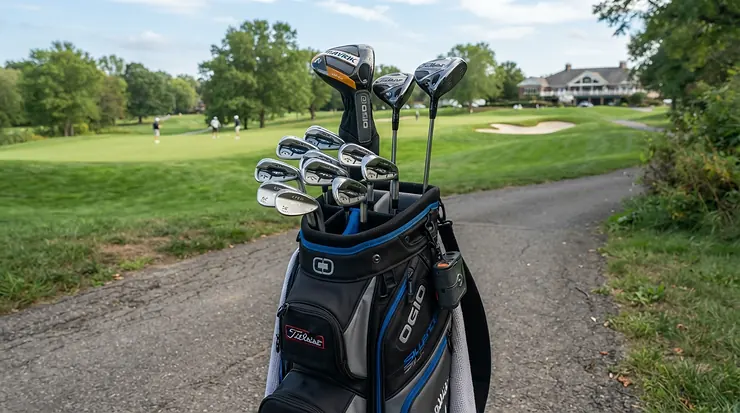
A right-handed golf driver is a low-lofted, 460cc-maximum wood built for right-handed players to launch the ball farthest off the tee. Its face angle, hosel geometry and weighting are designed for right-handed swings. That is why the right one decides whether your tee shots finish in play or in the trees.
Here’s the uncomfortable truth about distance. According to Arccos’ 2026 driving distance report, the average male amateur hits driver about 224 yards. That number has barely moved since 2018. Drivers have gotten flashier every year, yet the average golfer hasn’t gotten longer. So a new right-handed golf driver is not a magic wand. It is a stability upgrade, and stability is where mid-handicappers actually lose strokes.
This guide is built for that player. We pulled together 2026 testing data from Golf Digest, MyGolfSpy, Today’s Golfer, Golfalot and others. Then we filtered it through one question: which right-handed golf driver keeps your bad swings in play without gutting your good ones? You’ll find seven real models, a plain-English breakdown of driver forgiveness, a look at standard flex shafts, and realistic tee shot distance expectations. We also cover how right-handed golf irons for mid handicap players and a right-handed complete golf set for men fit into the same buying decision.
Quick Comparison: Best Right-Handed Golf Driver Options at a Glance
| Driver | Standout Trait | Price Range (check current price) | Best For |
|---|---|---|---|
| TaylorMade Qi4D | Carbon face, adjustable weights | $600-$700 | Golfers wanting one club that does everything |
| Callaway Quantum Max | Tri-Force Face speed | $600-$700 | Mid-handicappers chasing distance with stability |
| Ping G440 Max | Deep CG, high stability | $600-$700 | Anyone prioritizing forgiveness above all |
| Titleist GT2 | High launch, low spin | $450-$650 | Players who want premium feel plus forgiveness |
| Srixon ZXi Max | Slight draw bias, Hot List Gold | $400-$550 | Golfers fighting a slice on a tighter budget |
| Cobra OPTM Max-K | Cobra’s highest MOI | Around $600 | Fairway-finders who value straight flight |
| Wilson Dynapwr Max+ | 10K-class MOI at a lower price | $450-$500 | Budget-conscious buyers |
Based on the comparison above, the TaylorMade Qi4D, Callaway Quantum Max and Ping G440 Max sit at the premium end. They ask for roughly $600 to $700, and they justify it with the strongest 2026 test results. The Srixon ZXi Max and Wilson Dynapwr Max+ are where the value lives, delivering most of the forgiveness for a few hundred dollars less. If fairways matter more to you than raw yards, the Cobra OPTM Max-K deserves a closer look.
💬 Just one click — help others make better buying decisions too!😊
Top 7 Right-Handed Golf Driver Picks: Expert Analysis
Every model below is available in a right-handed build and was tested or reviewed by independent golf publications in 2026. Prices are ranges at the time of research and may vary by shaft, retailer and promotion.
1. TaylorMade Qi4D — the most complete all-rounder
If you only want to audition one right-handed golf driver, start here. Launched in late January 2026, the TaylorMade Qi4D is the fifth generation of TaylorMade’s carbon-face idea. It shows the polish that comes from refining a concept five times.
The 60x Carbon Twist Face is lighter than titanium. That frees engineers to push mass low and deep, which is the standard recipe for stability. Four sole weights (two 9g, two 4g) let a fitter adjust spin and shot shape without swapping heads. Lofts run 8°, 9°, 10.5° and 12°, though the 8° is right-hand only. The stock REAX shafts come in regular, stiff and extra-stiff, so standard flex shafts are an easy box to tick.
Based on the spec sheet, this suits the player who wants a club that won’t hold them back as their swing improves. In MyGolfSpy’s 2026 test it was named best overall driver, scoring above 9 out of 10 for distance, accuracy and forgiveness. Reviewers consistently praise the ball speed and tight dispersion. The recurring complaints are glare off the dark carbon face in bright sun and a quieter, more muted feel than titanium fans might like.
Pros:
- ✅ Fast ball speed with tight dispersion
- ✅ Four moveable weights for fine-tuning
- ✅ Regular, stiff and extra-stiff shaft options
Cons:
- ❌ Carbon face can glare in bright sunlight
- ❌ Muted sound and feel for some players
Price range: roughly $600-$700. Verdict: priced like a flagship, tested like one, and the safest single pick on this list.

2. Callaway Quantum Max — fastest face in the core class
Callaway’s 2026 headline is the Tri-Force Face. It layers ultra-thin titanium, poly-mesh and carbon fiber into one speed system, and Callaway says no driver face has combined those materials before. The Callaway Quantum Max is the most popular head in the family, and the numbers show why.
It arrived in February 2026 in 9°, 10.5° and 12° lofts, with OptiFit hosel adjustability and perimeter weighting. The stock length is 45.75 inches. Today’s Golfer named it best core driver, and MyGolfSpy ranked it runner-up overall while giving it the top distance score. Golf Digest’s mid-handicap Hot List panel also included it.
What does that mean in practice? The head uses a neutral center of gravity aimed at mid-to-low spin. That helps mid-handicappers who balloon drives with too much spin, but it asks for a reasonably neutral swing path. Golfalot reviewers highlight how forgiving it is across the face. Another reviewer describes a face that feels hot except at the very edges, with enough feedback to tell you where you struck it. If you fight a chronic slice, Callaway’s Quantum Max D is the draw-biased sibling to ask your fitter about.
Pros:
- ✅ Top-tier distance scores in independent testing
- ✅ Very forgiving across the face
- ✅ Straightforward, effective loft adjustment
Cons:
- ❌ Neutral setup won’t fix a big slice
- ❌ Premium price for a core model
Price range: roughly $600-$700. Verdict: the best pick if distance is the priority and you still want a safety net.
3. Ping G440 Max — maximum stability, minimal drama
Ping has always sold forgiveness without much fuss, and the Ping G440 Max is the clearest expression of that philosophy. It carries Ping’s deepest center of gravity in a driver to date, plus a thinner, shallower face designed to add ball speed.
The 460cc head weighs 203g and comes in 9°, 10.5° and 12°, with an eight-position hosel offering roughly 1.5° of loft adjustment either way. A movable tungsten back weight lets you pick draw, neutral or fade. The stock Alta CB Blue 50 shaft is available in senior, regular and stiff, and the standard length is 46 inches. That extra length is meant to build clubhead speed, but it also rewards good tempo. Ping also offers an HL build with a lighter shaft for slower swings.
Today’s Golfer named it best for forgiveness. Golf Digest’s 2026 Hot List charted a Ping driver, the company’s largest-looking head at address, with total MOI above 10,200, the highest it measured. The most common criticism from reviewers is cosmetic: the big profile isn’t pretty to everyone. Golfer Geeks called the cosmetics mediocre but ranked it neck and neck with the Titleist GT2 everywhere else.
Pros:
- ✅ Class-leading stability on off-center hits
- ✅ Adjustable weight for draw, neutral or fade
- ✅ Wide shaft and flex options, including HL build
Cons:
- ❌ Large address profile isn’t for everyone
- ❌ 46-inch length demands tempo control
Price range: roughly $600-$700. Verdict: the pick for players who want fewer disasters, full stop.
4. Titleist GT2 — premium polish with real forgiveness
Titleist has spent years convincing golfers that its drivers aren’t only for low handicaps. The Titleist GT2 is the most forgiving driver in the GT family, built for what Titleist calls players who don’t always find the center of the face.
It’s a 460cc head with high launch and low spin, a seamless thermoform crown for aerodynamics, and a single rear weight tucked out of sight. Lofts are 8°, 9°, 10° and 11°, the lie is 58.5°, and the stock length is 45.5 inches. That combination suits players with moderate to fast swings who need height without ballooning.
Reviewers describe a club that “doesn’t demand perfection” and still sounds and feels premium. One National Club Golfer reviewer reported gaining roughly eight yards over a previous Titleist model, with noticeably tighter front-to-back dispersion. Treat that as one golfer’s data point, not a promise. Titleist has since added the GTS family, so ask your fitter which version suits your swing.
Pros:
- ✅ Excellent sound, feel and appearance
- ✅ High launch with low spin
- ✅ Consistent distance on mishits
Cons:
- ❌ Premium pricing, especially with upgraded shafts
- ❌ Less workable than lower-MOI models
Price range: roughly $450-$650, depending on retailer and shaft. Verdict: worth the premium if sound and feel matter as much as numbers.
5. Srixon ZXi Max — forgiveness without the premium tax
Srixon doesn’t get the marketing budget of the big three, but the Srixon ZXi Max punches above its weight. It is Srixon’s highest-MOI driver to date, and it earned a Golf Digest Hot List Gold designation in 2026. MyGolfSpy also named a ZXi Max as best for forgiveness in its 2026 test.
The Rebound Frame helps energy transfer at impact. Laser face milling helps stabilize spin in wet conditions, which is a quiet advantage for anyone who plays morning dew rounds. The stock shaft is a Project X Denali Red, a lighter, higher-launching option chosen to match the head’s tendencies. Lofts include 9° and 10.5°, with a 45.75-inch length and an upright 59° lie.
Plugged In Golf called it one of the best-looking max-forgiveness drivers it has tested. It noted a noticeable but not extreme draw bias and a higher launch and spin than the standard ZXi. In practice, that makes it a gentle helper for the golfer who leaks shots to the right. Reviewers also point out that it is less adjustable than the standard ZXi.
Pros:
- ✅ Highest MOI in Srixon’s lineup
- ✅ Slight draw bias helps with slicing
- ✅ Often discounted below launch price
Cons:
- ❌ Less adjustability than the standard ZXi
- ❌ Higher spin can cost fast swingers distance
Price range: roughly $400-$550. Verdict: arguably the best value on the list for players who want a draw-friendly right-handed golf driver.
6. Cobra OPTM Max-K — Cobra’s most forgiving head yet
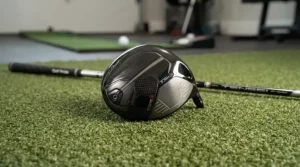
Where some drivers chase yards, the Cobra OPTM Max-K chases fairways. Cobra calls it its highest MOI ever, and Golfstead pegs the combined MOI at 13K across three axes. Remember that “10K” and “13K” numbers are marketing sums, not the single-axis figure the USGA regulates.
The Max-K uses an oversized 460cc shape, an AI-designed head and a fixed 11g rear weight that positions the center of gravity low and back. Lofts are 9°, 10.5° and 12°, and the face uses Cobra’s H.O.T. technology. National Club Golfer described it as one of the straightest, most forgiving drivers available, noting that shots start on line with minimal curvature. The same review suggests it may not be the longest Cobra ever made but could be the easiest to hit.
Golfalot’s reviewer flagged unimaginative looks and ball speeds that aren’t the highest. That’s the trade-off. If your scorecard is full of penalty strokes, the Cobra OPTM Max-K is a logical fix. If you already hit fairways, a faster head like the Callaway Quantum Max will likely serve you better.
Pros:
- ✅ Extremely forgiving with minimal curvature
- ✅ Fixed rear weight means no tinkering required
- ✅ Available in 9°, 10.5° and 12°
Cons:
- ❌ Not the highest ball speed in this group
- ❌ No adjustable weights for shot shaping
Price range: around $600. Verdict: a great “keep it in play” choice, less compelling if distance is your goal.
7. Wilson Dynapwr Max+ — the 10K-class bargain
Wilson’s golf division rarely makes headlines, which makes the Wilson Dynapwr Max+ a pleasant surprise. For 2026 it pushed MOI past the 10K threshold and became the most forgiving Wilson driver yet, available in 9°, 10.5° and 12° lofts. The stock shaft is a UST LIN-Q PowerCore Blue.
Plugged In Golf’s tester found it could compete with some of the fastest drivers in its test, while the previous Dynapwr Max ran a couple of mph slower. GolfMagic went further, calling it the best-value driver on the market. The hosel does not offer loft adjustment, so you’re buying the loft you pick. GolfMagic’s one caution is that the overall package might feel a touch light for some players.
Based on the specs and reviews, this is an easy recommendation for a golfer upgrading from a 10-year-old driver. It delivers modern forgiveness without pushing the budget toward $700.
Pros:
- ✅ Over-10K MOI at a much lower price
- ✅ Competitive ball speed for the money
- ✅ Neutral setup with a clean look
Cons:
- ❌ No loft adjustability on the hosel
- ❌ Light overall feel may not suit everyone
Price range: roughly $450-$500. Verdict: the smartest budget buy on this list.
Head-to-Head Spec Snapshot
| Driver | Lofts (RH) | Adjustability | Where Reviewers Rank It |
|---|---|---|---|
| TaylorMade Qi4D | 8°, 9°, 10.5°, 12° | Loft sleeve + four weights | Top overall in MyGolfSpy test |
| Callaway Quantum Max | 9°, 10.5°, 12° | OptiFit hosel + perimeter weighting | Best core driver (Today’s Golfer) |
| Ping G440 Max | 9°, 10.5°, 12° | Hosel + movable back weight | Best for forgiveness (Today’s Golfer) |
| Titleist GT2 | 8°, 9°, 10°, 11° | SureFit hosel + rear weight | Editor’s pick (Golfer Geeks) |
| Srixon ZXi Max | 9°, 10.5° and others | Hosel adjustability | Hot List Gold (2026) |
| Cobra OPTM Max-K | 9°, 10.5°, 12° | Hosel, fixed 11g weight | Straightest in NCG review |
| Wilson Dynapwr Max+ | 9°, 10.5°, 12° | Fixed hosel | Best value (GolfMagic) |
Read the table as a map of trade-offs, not a leaderboard. The TaylorMade Qi4D and Titleist GT2 give you the most tuning options. The Cobra OPTM Max-K and Wilson Dynapwr Max+ remove choices on purpose, which actually helps players who tend to overthink. Spend extra only for adjustability you will actually use.
Driver Forgiveness Explained: MOI, Face Tech and What the Numbers Really Mean
Driver forgiveness is how well a clubhead protects your ball speed and direction when you miss the sweet spot. The measurable version is moment of inertia (MOI), a number describing how much the head resists twisting on off-center hits. Higher MOI means less twist, which means less lost distance and a straighter ball.
Here’s where marketing gets slippery. The USGA capped single-axis clubhead MOI at 5,900 g·cm², with a 100 tolerance, effective May 1, 2006. That limit applies to the heel-to-toe axis. So when a brand advertises “10K MOI,” it is adding measurements across axes, not breaking the rule. It’s a useful shorthand for “this head is extremely stable,” but it isn’t directly comparable to the regulated number.
What should you take from this? Three things. First, every driver in this guide is built to be forgiving, so differences are smaller than ad copy suggests. Second, a higher-MOI head usually gives up some workability. If you like curving the ball both ways, the Cobra OPTM Max-K may feel boring. Third, face technology matters as much as head shape. The TaylorMade Qi4D‘s carbon face and the Callaway Quantum Max‘s Tri-Force Face aim to keep ball speed high even when contact drifts toward the heel or toe. Driver forgiveness protects your average shot, not your best one.

How to Choose a Right-Handed Golf Driver
- Start with your real miss. If you slice, look at draw-biased heads like the Srixon ZXi Max or the draw setting on the Ping G440 Max. If you hook, neutral or fade-leaning setups serve you better.
- Prioritize driver forgiveness over headline distance. Your average drive matters more than your best one, and mid-handicappers lose the most strokes to wayward tee shots.
- Match shaft flex to your average swing speed. Not your best swing, and not what you swing at on a launch monitor after a warm-up.
- Pick a loft that helps launch. Many mid-handicappers do better with 10.5° than 9°. More loft usually means more carry and fewer low, spinning drives.
- Decide how much adjustability you’ll actually use. If you never touch your weights, you’re paying for a feature that sits idle.
- Get fit, then compare prices. A quick fitting often changes which right-handed golf driver wins. Most major retailers offer return windows, so read the policy first.
✨ Don’t Miss These Exclusive Deals!
🔍 Take your tee game to the next level with these carefully selected drivers. Click on any highlighted item to check current pricing and availability. These clubs will help you build the confident, fairway-finding swing you’ve been chasing!
Standard Flex Shafts: Are They Right for Your Swing?
“Standard flex” usually means regular, the “R” stamped on most off-the-shelf shafts. It is the default stock offering for many right-handed golf driver models, which is why so many golfers end up with one without ever being measured.
According to a shaft flex chart on Golf.com, a driver speed of 97 to 104 mph points toward stiff. Other published charts commonly put regular flex at roughly 85 to 95 mph and stiff at roughly 95 to 105 mph. PGA TOUR Superstore’s chart stretches stiff to 95 to 110 mph. In short, there is no universal line, and brands calibrate flex differently.
What does that mean for you? Standard flex shafts suit moderate swing speeds that load the shaft smoothly. If you’re constantly hitting hooks or low, spinny drives, the shaft may be too soft. If your drives balloon or start right and stay right, it may be too stiff. A useful rule from fitters: use your average speed, not your best swing. A golfer who swings between 88 and 92 mph should test regular and stiff and let the data pick.
The good news is that the drivers above offer options. The TaylorMade Qi4D ships with regular, stiff and extra-stiff, the Ping G440 Max with senior, regular and stiff, and the Callaway Quantum Max with custom options at most retailers.
Tee Shot Distance: What Mid-Handicappers Actually Hit
Let’s calm the yardage anxiety. Arccos’ 2026 report found the average male amateur drives it about 224 yards total, roughly the same as in 2018. Scratch-to-4.9 handicap men average about 244 yards, while 30-plus handicappers average about 181, a gap of roughly 63 yards. An earlier Arccos edition put 10 to 14.9 handicappers near 225 yards, hitting about 45% of fairways.
The real story is accuracy. About 45% of 30-plus handicappers’ driver tee shots end in a penalty or recovery situation, versus about 12% for low handicappers. Even mid-handicappers had nearly double the wayward-shot rate of low handicappers. In other words, tee shot distance is only valuable if the ball stays playable.
Altitude matters too. Arccos found 10-handicap golfers gained about 19 yards when playing at 5,000-plus feet compared with sea level. So when comparing your numbers to anyone’s, check where they play.
What can a new right-handed golf driver realistically do? It likely won’t add 30 yards. It may add a handful, and it can meaningfully shrink the gap between your best and worst drive. Based on the data, that is where mid-handicap golfers gain strokes. Chase consistency first, and distance follows.
Right-Handed Golf Irons for Mid Handicap Players: Matching the Rest of Your Bag
Mid-handicappers generally play off a 10 to 20 handicap, which places their iron needs between game improvement and players’ distance. The sweet spot is forgiveness in a head that still looks like an iron.
Several 2026 roundups point to the TaylorMade P790 as the benchmark for this player: forgiving, fast and compact enough to avoid looking clunky. Fairway Jockey’s list also highlights the Srixon ZXi5 for golfers moving up from game improvement and the PING i540 as an all-around players’ distance option. If you need more help, the PING G440 irons and TaylorMade Qi Max are the more forgiving routes.
How do these tie back to your driver? Shaft consistency matters. One UST Mamiya iron guide recommends overlapping driver-speed ranges of roughly 80 to 95 mph for regular and 90 to 105 mph for stiff. A golfer swinging a driver at 92 mph could reasonably sit in either flex. So pick right-handed golf irons for mid handicap play based on feel and fitting, not just a number on a chart.
My practical take: buy the driver first. Driver forgiveness delivers the largest per-dollar improvement in most scorecards. Then upgrade irons when your current set is more than a few years old or the gaps between clubs feel uneven.
Right-Handed Complete Golf Set for Men: When a Package Makes Sense
A right-handed complete golf set for men bundles driver, woods, hybrids, irons, putter and bag into one purchase. Lists in 2026 frequently feature the Callaway Strata 12-piece set as a top all-around package, with the Wilson Tour Velocity and Cobra’s XL sets also appearing in roundups.
Here’s the honest analysis. A package set is excellent for a new golfer who needs everything. It is far less compelling for a mid-handicapper. The driver in a package set is typically a basic design, and the iron shafts are usually standard flex shafts chosen for the broadest audience. You gain convenience and a lower entry cost, but you lose fitting precision and the latest face technology.
Who should consider a right-handed complete golf set for men?
- A returning player rebuilding after years away.
- A golfer who wants a backup set for travel.
- Someone buying for a family member who is just starting.
For everyone else, a smarter hybrid approach exists. Keep a solid iron set or buy fitted right-handed golf irons for mid handicap play, and then add one of the drivers above. You get modern forgiveness exactly where it counts, without paying for clubs you won’t use.
Practical Usage Guide: Setting Up Your New Driver in the First 30 Days
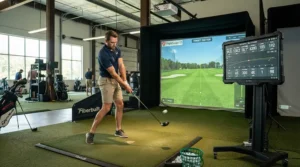
A good driver can underperform if it’s set up carelessly. Use this simple routine.
Week 1: Baseline. Keep the factory settings. Hit 20 to 30 balls per session and note where your misses go. Use a launch monitor or an Arccos-style tracker if you have access.
Week 2: Change one thing. Adjust loft by one notch, or move a weight toward draw or fade, but never both at once. If the TaylorMade Qi4D or Ping G440 Max feels too fade-prone, the weight is your first lever.
Week 3: Tee height and ball position. Tee the ball so roughly half of it sits above the crown at address, and play it off your front heel. Most mid-handicappers lose launch by teeing too low.
Week 4: On-course check. Play two rounds and track fairways hit and penalty strokes. Compare to your old driver, not to your best range session.
Avoid the common first-month mistakes: swinging harder because the club is new, changing settings after one bad round, and ignoring grip size. Your goal isn’t a longer drive. It is a tighter pattern.
Real-World Scenarios: Three Golfers, Three Right-Handed Golf Drivers
These are illustrative profiles built from the spec and review data, not testimonials.
The weekend slicer. A 16-handicap, playing once a week at a public course, swinging around 90 mph with a recurring slice. A draw-biased head such as the Srixon ZXi Max, or the draw setting on the Ping G440 Max, plus regular flex, is the logical start. Budget: moderate.
The improving ball-striker. A 12-handicap who plays twice weekly, swings closer to 100 mph, and wants room to grow. The TaylorMade Qi4D or Titleist GT2 gives forgiveness now and adjustability later. A stiff shaft is worth testing.
The budget upgrader. A golfer with a decade-old driver and a tight budget. The Wilson Dynapwr Max+ or a discounted Srixon ZXi Max delivers modern MOI without a flagship price. If fairway-finding is the priority, the Cobra OPTM Max-K is the straight-line alternative.
In each case, match the driver to the miss, not the marketing.
Modern High-MOI Driver vs Older Driver: Is the Upgrade Worth It?
| Factor | Modern High-MOI Right-Handed Golf Driver | Older Driver (5+ years) | Fairway Wood Off the Tee |
|---|---|---|---|
| Forgiveness | Very high; built around 10K-class stability | Moderate | High, but less distance |
| Distance potential | Highest | Lower on mishits | Lower |
| Adjustability | Often loft and weights | Often limited | Rarely |
| Best For | Golfers seeking tight dispersion | Players on a tight budget | Tight holes needing control |
Looking at the comparison, a modern head’s biggest edge is dispersion, not raw speed. That squares with Arccos data showing average distances haven’t moved since 2018. Your real gain is fewer penalty strokes. An older driver is fine if you already hit fairways. A fairway wood off the tee is a smart course-management tool, not a replacement for a good driver.
Common Mistakes When Buying a Right-Handed Golf Driver
Chasing the lowest-spin head is the classic error. A low-spin driver only helps if your launch, strike and swing speed support it, and many mid-handicappers need more spin and height, not less.
Second, ignoring the shaft. A head can be perfect and still disappoint on the wrong shaft. Third, skipping a fitting. Even a short session often changes the winner. Fourth, overpaying for adjustability. If you won’t tinker, the Cobra OPTM Max-K or Wilson Dynapwr Max+ may serve you better than a four-weight system.
Fifth, buying only on reviews. Even Golf Digest’s 2026 mid-handicap Hot List points out that its panel favored options offering flexibility, meaning no single driver wins for everyone. Use the lists as a shortlist, then test.
Finally, upgrading too often. The average golfer isn’t hitting farther than in 2018, so a new model every year rarely pays back.

FAQ
❓ Which right-handed golf driver is best for a 15 handicap?
❓ Is a regular flex shaft enough for a 90 mph swing?
❓ How much driver forgiveness do I really need?
❓ Can a right-handed complete golf set for men include a good driver?
❓ What tee shot distance should a mid-handicapper expect?
Conclusion
Choosing a right-handed golf driver in 2026 comes down to honesty about your game. The TaylorMade Qi4D is the best all-rounder, the Callaway Quantum Max is the speed pick, and the Ping G440 Max is the stability champion. The Titleist GT2 adds premium feel, the Srixon ZXi Max and Wilson Dynapwr Max+ deliver real value, and the Cobra OPTM Max-K is the straight-ball specialist.
Remember what the data says. Average tee shot distance hasn’t budged since 2018, so the goal is a tighter pattern, not a fantasy yardage. Pair your driver with the right shaft flex, consider right-handed golf irons for mid handicap play when your current set ages out, and think twice before assuming a right-handed complete golf set for men is the whole answer.
Book a quick fitting, shortlist two or three heads from this list, and let your own numbers decide.
✨ Ready to drive it straighter?
🏌️♂️ Click through to check current pricing and availability on your shortlist, and take your first fairway-finding swing with confidence!
Recommended for You
- Left-Handed Golf Clubs For Women: 7 Best Picks & Pitfalls 2026
- Left-Handed Complete Golf Set For Men: 7 Best Picks For 2026
- Left-Handed Golf Irons: 7 Best Forgiving Sets For 2026
Disclaimer: This article contains affiliate links. As an Amazon Associate, I earn from qualifying purchases. If you purchase products through these links, we may earn a small commission at no additional cost to you.
✨ Found this helpful? Share it with your friends! 💬🤗
