
In This Article
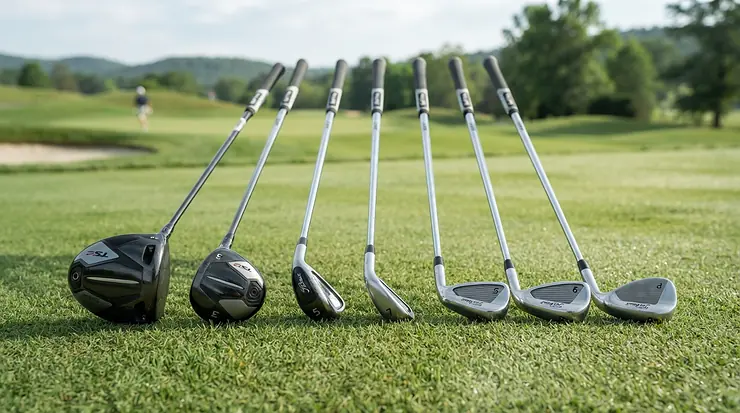
What are left-handed golf irons? Left-handed golf irons are iron clubs built as mirror images of right-handed models, with the hosel, face, and sole geometry flipped so players who swing from the left side of the ball can square the face at impact. Running from the 4-iron to the pitching wedge, they’re the scoring workhorses of any golf club set.
Here’s the lefty’s old gripe: you walk into a demo day, and the rep shrugs. “We only brought right-handed clubs.” Sound familiar? That shrug is why shopping for left-handed golf irons has historically felt like a treasure hunt with a map drawn for somebody else.
The good news for 2026 is that the major brands now build their best game-improvement heads in left-handed form. Every set below has a verified left-handed build. Several come in lightweight graphite, which matters a great deal if you’re hunting for left-handed golf clubs for seniors. We’ll also dig into iron set gapping, lefty shaft options, and forgiveness for southpaws, the three topics that decide whether a set helps your game or just looks pretty in the garage.
One honest note up front: left-handed review pools are small. Where I cite buyer or tester sentiment, it’s aggregated from published reviews, usually of the right-handed twin, since the heads share their specs. Prices are ranges only, so check current pricing before you buy.
Quick Comparison Table: 7 Left-Handed Golf Irons at a Glance
| Product | Best For | Lightweight Option | Price Range | Standout Trait |
|---|---|---|---|---|
| PING G440 | Distance plus forgiveness | Yes (HL build) | Premium, $1,100+ | Players-style look, huge sweet spot |
| TaylorMade Qi Max HL | Slower swing speeds | Yes (senior graphite) | Upper mid, $900-$1,100 | Highest launch, lightest build |
| Cobra Air-X | Seniors, smooth tempos | Yes (graphite and light steel) | Value, $500-$700 | Draw-biased and ultralight |
| Cleveland ZipCore XL | Balanced all-rounders | Graphite available | Mid, $800-$1,000 | Lofts stamped on the sole |
| Callaway Elyte HL | High launch, soft landings | Yes (graphite) | Premium, $1,000-$1,300 | AI-tuned face, fast ball speed |
| Mizuno JPX925 Hot Metal | Mid-iron distance | Steel-focused | Premium, $1,100+ | Tungsten-assisted launch |
| Wilson Dynapower | Budget distance | Check options | Value, $700-$900 | Big carry for the money |
Look at the table and you’ll see a split: Cobra Air-X and Wilson Dynapower win on value, while PING G440 and Mizuno JPX925 Hot Metal charge for polish. If your swing has slowed, the HL builds from TaylorMade Qi Max HL and Callaway Elyte HL deserve the first look because they combine weaker lofts with lighter shafts. Budget buyers should note that “cheaper” here means a few hundred dollars saved, not a compromise in basic forgiveness.
💬 Just one click — help others make better buying decisions too!😊
Top 7 Left-Handed Golf Irons: Expert Analysis
1. PING G440 — forgiveness wrapped in a players-iron look
The PING G440 hides its forgiveness well. A compact, tidy head sits over the ball, yet the engineering underneath is pure game-improvement.
Ping’s spec sheet lists a 19° 4-iron, and Golfweek’s coverage puts the 5-iron at 22°, the 9-iron at 37°, and the pitching wedge at 42°. Translation: you get real distance, but your wedge gap grows if you carry the standard set. The 4, 5, and 6 irons are 1/8 inch longer than standard, which helps launch and builds ball speed. Ping also sells Power Spec (1° stronger) and Retro Spec (1° weaker) lofts, which is gold if gapping worries you.
Based on the spec comparison, this set suits lefties who want one set to last years. The G440 HL build adds a lightweight Alta Quick shaft and lighter overall build, a smart route for slower swingers.
Editorial and retailer sources consistently praise the large sweet spot. Left-handed-specific reviews are scarce, so lean on the shared head design.
Pros:
- ✅ Large sweet spot with a sleek look
- ✅ Power and Retro loft options for gapping
- ✅ HL build suits slower swing speeds
Cons:
- ❌ Premium pricing versus rivals
- ❌ Strong lofts widen the wedge gap
Price: roughly $1,100-$1,300 for a typical set, depending on shaft. Strong value for long-term keepers, less so for bargain hunters.

2. TaylorMade Qi Max HL — the highest, lightest launch in the group
If your ball flight needs altitude, meet the TaylorMade Qi Max HL. HL stands for “Higher and Lighter,” and that’s the whole pitch.
TaylorMade pairs weaker lofts with a lightweight package, with total club mass up to 56 grams lighter than the standard Qi Max. Stock shafts include KBS Max Lite steel or the graphite KBS REAX HL 50, offered in stiff, regular, senior, and ladies flexes. That senior option matters for anyone shopping left-handed golf clubs for seniors. Lighter swing weight means you can accelerate through impact without muscling it, and the weaker lofts help the ball land softly.
The oversized head, thick topline, and extra offset won’t flatter a purist’s eye. But the point is forgiveness for southpaws who fight a weak slice-side miss, and the patented face technology aims to reduce “cut” spin.
A retailer listing showed roughly 4.9 out of 5 from a small pool of reviews, and one buyer who weighed it against the Callaway Elyte HL chose the TaylorMade for its straight, long flight. Small sample, so treat it as a signal, not a verdict.
Pros:
- ✅ Senior-flex graphite option available
- ✅ Very light for easier swing speed
- ✅ Straight, high ball flight
Cons:
- ❌ Chunky head won’t suit blade fans
- ❌ Weaker lofts mean fewer raw yards
Price: around $900-$1,100. Worth it if your launch is the problem.
3. Cobra Air-X — lightest build for smooth tempos
The Cobra Air-X is the iron to beat for seniors, and the price makes it hard to argue with.
Golf Monthly notes Cobra shaved 2 grams from the head and 6 grams from the grip, then added a 97-gram FST Ultralite steel shaft. The graphite options come in senior, regular, and stiff flexes. A heel-weighted, offset design builds in a draw bias. For a lefty, remember: a draw curves left to right, so this set fights the lefty’s slice (the leftward miss). Both men’s and women’s iron sets come in left-handed versions, and combo sets pair two hybrids with five irons, which simplifies long-iron life.
The spec sheet won’t say this, but reviewers do: the lightness changes tempo. Buyers in their seventies report easier launch and more consistent contact, and Golf Monthly’s tester said it suits seniors, beginners, and high handicappers.
Pros:
- ✅ Ultralight head, shaft, and grip
- ✅ Combo sets replace hard-to-hit long irons
- ✅ Draw bias helps lefty slicers
Cons:
- ❌ Draw bias may hurt natural hookers
- ❌ Less feedback for better ball strikers
Price: around $500-$700, with combo sets near the lower end. Best value in this roundup.
4. Cleveland ZipCore XL — a balanced blend of distance and control
The Cleveland ZipCore XL splits the difference between forgiving long irons and precise short ones.
MainFrame channels in the 4-7 irons increase face flex for ball speed, while ZipCore in the 8-iron through sand wedge positions the center of gravity right where you strike the ball. The lofts are stamped on the sole, which is quietly brilliant for gapping, since you instantly see what you’re comparing against your wedges. Cleveland also offers an “Accuracy build” half an inch shorter than standard.
Left-handed versions come in steel and graphite. The size reads as game-improvement, but reviewers describe a more traditional impact sound than most oversized heads.
Verified buyers on one retailer’s page praise the wide face and big sweet spot, and Golf Monthly’s tester said he enjoyed the set more than expected.
Pros:
- ✅ Lofts stamped for easy gapping
- ✅ Wide face with generous forgiveness
- ✅ Solid value for the technology
Cons:
- ❌ Standard build isn’t ultralight
- ❌ Oversized head divides opinion
Price: roughly $800-$1,000. A smart middle path.
5. Callaway Elyte HL — AI-tuned face with soft landings
The Callaway Elyte HL is built for golfers who need height. Callaway describes its High Launch concept as more carry and better stopping power.
The Elyte family uses an AI-designed face with more control points than the previous generation, and left-handed steel and graphite versions exist for the HL. The graphite is meant to cut weight, lift swing speed, and reduce fatigue. That’s why it shows up on lists of left-handed golf clubs for seniors.
Honest analysis: I couldn’t find lefty-specific testing for this model. Golf.com published handicap-tester notes on the broader Elyte lineup, and the testers were positive overall, though those comments covered other Elyte models. Treat the HL as a promising option, then try before you buy.
Offset is noticeable, particularly in the long irons, a feature that tends to calm a slice for right-handers and, mirrored, a leftward miss for you.
Pros:
- ✅ High launch with soft landings
- ✅ Graphite option reduces fatigue
- ✅ Fast ball speed from an AI face
Cons:
- ❌ Limited lefty-specific reviews
- ❌ Premium price tier
Price: roughly $1,000-$1,300. Great if launch is your biggest issue.

6. Mizuno JPX925 Hot Metal — long mid-irons with a steel-friendly feel
The Mizuno JPX925 Hot Metal is the distance-minded pick for stronger players.
Tungsten placed low in the 4-7 irons raises launch and creates a steeper landing angle. Golfalot lists left- and right-handed availability. The family includes the Hot Metal, a more compact Hot Metal Pro, and the higher-launching Hot Metal HL.
What the spec sheet won’t tell you is the feel. Plugged In Golf calls it firm and thin-feeling, yet concludes it’s long, solid on forgiveness, and prefers a draw. That draw preference suits a lefty with a leftward miss. Lofts are slightly stronger than the JPX923, so check your wedge gap.
Pros:
- ✅ Exceptional mid-iron distance
- ✅ Hot Metal Pro and HL variants
- ✅ Natural draw tendency
Cons:
- ❌ Firm, thin impact feel
- ❌ Premium price tag
Price: roughly $1,100-$1,300. Best for faster-swinging lefties who need ball speed, not for seniors chasing lightness.
7. Wilson Dynapower — budget distance that punches up
The Wilson Dynapower proves you don’t need to spend over a grand to get a real game-improvement set.
Wilson’s AI-designed face targets ball speed, and MyGolfSpy ranked the Wilson Dynapower the best game-improvement iron for distance, second for ball speed, but only 11th for accuracy. Golf Monthly’s tester carried the 7-iron beyond 180 yards. Left- and right-handed versions exist, per Golfalot.
The analysis: spin runs low, particularly in long irons, so the ball flies far but lands with less bite. Expect a draw, which suits lefties fighting a leftward miss.
Pros:
- ✅ Strong distance for the price
- ✅ Very forgiving long irons
- ✅ Left-handed availability confirmed
Cons:
- ❌ Accuracy ranks mid-pack
- ❌ Lower spin reduces stopping power
Price: roughly $700-$900, typically a few hundred below the big-name rivals. Excellent value for mid-handicap lefties.
✨ Don’t Miss These Exclusive Deals!
🔍 Take your game to the next level with these carefully selected left-handed golf irons. Click on any highlighted item to check current pricing and availability. These sets will help you create authentic confidence on every approach!
How to Choose Left-Handed Golf Irons
Choosing among left-handed golf irons is easier with a checklist. Work through these steps in order:
- Measure your real swing speed. Age is a poor proxy; launch monitor data is the real input for flex and weight.
- Choose a category. Game-improvement for consistency, players-distance for speed and feel.
- Pick shaft material. Graphite lightens the load; steel gives control for faster swings.
- Check the pitching wedge loft. Strong lofts demand more wedges.
- Verify left-handed availability. Confirm the exact model and shaft you want exists in a left-handed build.
- Decide set composition. Combo sets swap hard-to-hit long irons for hybrids.
- Fit before buying. Length, lie, and grip size matter more than brand.
Expert reasoning: step 4 is the sleeper. Lofts have been strengthening for decades, so a modern game-improvement set may have a 41-43° pitching wedge versus 45-46° in a traditional set, according to MyGolfSpy. That quietly changes how many wedges you need.
Left-Handed Golf Clubs for Seniors: What Actually Changes
Seniors shopping for left-handed golf clubs for seniors usually need three things: less weight, more launch, and easier contact. None of that means “old person clubs.” It means matching equipment to swing speed.
The most consistent advice across sources: swing speed, not age, should decide flex. A golfer in their forties with a slow, smooth swing may need senior flex; a seventy-year-old with a quick swing may not. Charts disagree on the exact cutoffs, with senior flex starting anywhere from the mid-60s to the low-70s mph and running into the mid-80s, so use the numbers as ranges.
Graphite is typically the better fit for slower speeds because it’s lighter and easier to accelerate, which is why nearly every true senior flex is graphite. The Cobra Air-X and TaylorMade Qi Max HL both offer senior-flex graphite, and Callaway Elyte HL and PING G440 have HL builds.
Combo sets earn their keep here. Replacing a 4- or 5-iron with a hybrid delivers easier launch, and that’s the whole point of Cobra’s combo format.
Practical takeaway: for left-handed golf clubs for seniors, test lighter builds first, confirm flex on a launch monitor, and don’t let ego nudge you into a stiffer shaft.
Lefty Shaft Options: Flex, Weight, and Material
Here’s a quiet fact: shafts aren’t handed. A lefty shaft is the same shaft a righty would use, mounted in a left-handed head. What differs is that stock lefty options can be narrower, so custom orders matter.
Flex. Common guidance for irons: regular for roughly 70-80 mph, stiff for roughly 80-90 mph, extra stiff above that, with senior flex below regular. Treat these as ballpark figures, because brands differ.
Weight. Lighter shafts lift swing speed but can feel less stable for strong swingers. Reference points from the sets above: Cobra’s steel option weighs 97 grams, its graphite 55 grams, and Ping’s HL Alta Quick is in the 38-41 gram range, per Ping’s spec page.
Material. Steel gives control and feedback; graphite cuts weight and vibration.
Lefty shaft options worth requesting: KBS Max Lite steel and KBS REAX HL graphite on the TaylorMade Qi Max HL; Ultralite graphite and FST Ultralite steel on the Cobra Air-X; Alta Quick on PING G440 HL; and Nippon N.S. Pro 950GH Neo steel offered on the Mizuno JPX925 Hot Metal.
If a retailer’s listed lefty shaft options feel limited, ask about a custom build. That’s often the unlock.
Iron Set Gapping: A Practical Guide
Iron set gapping is the art of spacing clubs so each one flies a distinct distance. Target about 10-12 yards between clubs, advises GolfWRX’s Wedge Guy, a figure that very slow swingers may reach with tighter loft steps.
Golf Digest recommends counting the clubs through your 9-iron, then filling the remaining slots with wedges. If your pitching wedge is 45° or less, add three wedges spaced no more than 4-5° apart.
| Reference | Loft Data | What It Means | Best For |
|---|---|---|---|
| PING G440 | 4-iron 19°, 5-iron 22°, 9-iron 37°, PW 42° | Strong lofts, bigger wedge gap | Distance seekers with a 3-wedge plan |
| Cobra Air-X | 7-iron 30° | Strong, high-launch lightweight | Seniors wanting easy yards |
| Typical game-improvement set | PW about 41-43° | Needs 48° or 50° first wedge | Mid and high handicappers |
| Traditional players set | PW about 45-46° | Classic 50° and 56° wedges | Better strikers |
Table takeaway: the wedge you add depends on your set, not on tradition. If your PING G440 pitching wedge is 42°, a 46° or 48° gap wedge keeps spacing sensible, while a traditional set pairs with a 50° and 56°.
A simple lefty gap test: hit six shots with your 8-iron, note the average carry, then do the same with your 9-iron and wedges. Wide or overlapping gaps tell you where to bend lofts or add a wedge. Wedges can be bent a degree or two, though bounce changes with loft.
Forgiveness for Southpaws: Reading the Head Design
Forgiveness for southpaws isn’t a special category. It’s ordinary forgiveness, mirrored, and a few translations are worth making.
A lefty’s slice curves left; a hook curves right. A draw-biased iron (heel weight, offset) fights the leftward miss. That’s why Cobra Air-X and Wilson Dynapower suit slicers, while a natural hooker may want a neutral design like the Cleveland ZipCore XL or PING G440.
What produces forgiveness: low and back center of gravity for launch, a larger head for stability, and thin or flexible faces that protect ball speed on off-center hits. PING G440 uses a more flexible face with a low and back CG; Mizuno JPX925 Hot Metal uses tungsten low in the 4-7 irons. TaylorMade Qi Max HL adds an oversized head, taller face, and wider sole.
Analytical bottom line: the most forgiving head isn’t the biggest. It’s the one that turns your typical miss into a playable one.
Real-World Scenarios: Matching Left-Handed Golf Irons to Your Game
These are composite profiles, not real people.
The 72-year-old weekend lefty. He plays twice weekly, carries a smooth, slow swing, and has a budget of around $600. The Cobra Air-X combo set in senior graphite is the match. The ultralight build and hybrids reduce long-iron frustration.
The 45-year-old mid-handicap slicer. She plays weekly, loses distance to a leftward miss, and has room for a $900 spend. The Wilson Dynapower or Cleveland ZipCore XL adds draw bias or balance. Add a gap wedge based on the pitching wedge loft.
The 34-year-old fast-swinging lefty. He hits it hard, wants steel feedback, and values looks. The Mizuno JPX925 Hot Metal delivers mid-iron yards, and the PING G440 offers a more forgiving option.
The 60-year-old returning player. Joint soreness has limited practice. The TaylorMade Qi Max HL with senior graphite offers launch and low effort.
Problem and Solution: Common Left-Handed Iron Headaches
Problem: you can’t demo lefty clubs. Solution: demo the right-handed equivalent for feel, then confirm lofts and shafts match your left-handed build. Retailers with trade-in programs reduce risk.
Problem: your wedge gap is huge. Solution: check pitching wedge loft and fill the gap. The MyGolfSpy loft chart suggests a 50° first wedge for traditional sets and 46-48° for stronger-lofted ones.
Problem: the long irons won’t launch. Solution: swap to a combo set like Cobra Air-X, or choose HL builds such as TaylorMade Qi Max HL.
Problem: arms tire by the back nine. Solution: lighter graphite shafts, as in Callaway Elyte HL or PING G440 HL.
Problem: leftward miss persists. Solution: draw-biased designs plus a lesson. Equipment helps but won’t cure a path issue.
New vs Used vs Combo Left-Handed Iron Sets
| Option | Benefits | Drawbacks | Best For |
|---|---|---|---|
| New full set | Fitted options, warranty | Highest cost | PING G440, Mizuno JPX925 Hot Metal buyers |
| Used full set | Often hundreds below new | Wear, limited fitting | Budget-minded Wilson Dynapower shoppers |
| Combo set | Easier long game | Fewer iron options | Cobra Air-X seniors |
Looking at the comparison, combo sets give the best ratio of ease to price, new gives the best fit, and used gives the biggest savings. Long-term cost: grips, reshafting, and loft-and-lie checks add up, so budget a modest amount beyond the sticker. Because lefty inventory is thinner, a good used set can vanish quickly.
Common Mistakes When Buying Left-Handed Golf Irons
- Trusting right-handed reviews blindly. Heads are mirrored, but confirm the lefty build, shaft, and lofts exist.
- Ignoring pitching wedge loft. It determines your gapping.
- Defaulting to regular flex. Match swing speed instead.
- Choosing steel out of pride. Slower swingers often gain from graphite.
- Skipping fitting. Length and lie affect dispersion more than brand.
- Buying a full set when you need a combo. Hybrids can beat long irons.
Fix these six and your left-handed golf irons will do more with every swing.
FAQ: Left-Handed Golf Irons
❓ Can a lefty use right-handed golf irons?
❓ Do left-handed golf irons cost more than right-handed?
❓ Which lefty irons suit slow swing speeds?
❓ How many wedges should I carry with a game-improvement set?
❓ Are combo iron sets good for seniors?
Conclusion: Choose the Set That Fits Your Swing, Not Your Pride
Lefties in 2026 finally have real options. The standouts come down to your swing. If you want lightness and value, Cobra Air-X is the clear pick. For high launch and a senior-flex graphite option, TaylorMade Qi Max HL leads. PING G440 and Mizuno JPX925 Hot Metal reward budgets with polish and distance, Cleveland ZipCore XL offers an easy blend, Callaway Elyte HL brings height and soft landings, and Wilson Dynapower delivers distance on a budget.
Before you click buy, measure your swing speed, check your pitching wedge loft, and lock in the lefty shaft options that match your swing. Do those three things and your iron set gapping will take care of itself.
Recommended for You
- Left-Handed Golf Driver: 7 Best Picks For Lefties In 2026
- Senior Golf Irons For Arthritis-Friendly Grip: 7 Proven Picks 2026
- Senior Golf Driver For More Distance: 7 Proven Picks For 2026
Disclaimer: This article contains affiliate links. As an Amazon Associate, I earn from qualifying purchases. If you purchase products through these links, we may earn a small commission at no additional cost to you.
✨ Found this helpful? Share it with your friends! 💬🤗
