
In This Article
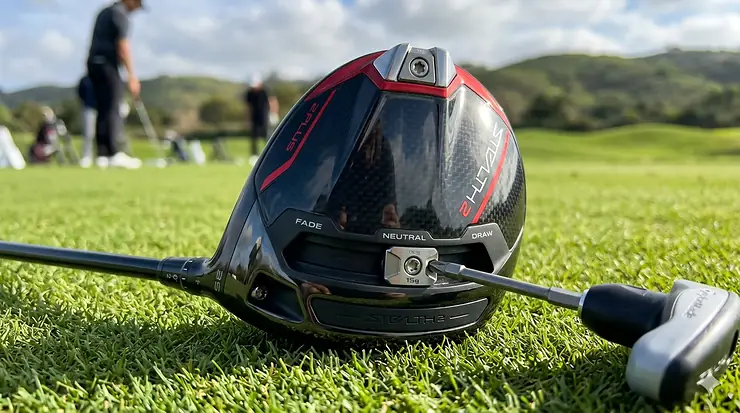
Hitting that perfect draw when you need it, dialing back the slice that’s been haunting your Sunday rounds, or adding those extra 10-15 yards without changing your swing – sounds like a pipe dream, right? Welcome to the world of driver with interchangeable weights, where physics meets personal customization in ways that would have seemed like science fiction a decade ago.

What most golfers overlook about these adjustable systems is this: they’re not just about tweaking shot shape. The spec sheet won’t tell you this, but moving a 10-gram weight from heel to toe can transform how the club feels at impact, influence your swing tempo, and even affect your confidence standing over the ball. Variable weighting systems have been patented since the 1990s, but modern manufacturing precision has finally made them accessible and reliable for everyday golfers. In my experience testing dozens of these systems, the difference between a properly weighted driver and a stock setup often means the gap between finding the fairway consistently and playing hero ball from the trees.
The beauty of a driver with interchangeable weights in 2026 is that manufacturers have finally cracked the code on combining adjustability with forgiveness. Modern engineering has solved the historic trade-off where movable weight systems reduced MOI, allowing golfers to have both customization and maximum stability. We’re no longer choosing between a club that fits perfectly or one that saves our bacon on mishits – we get both. Throughout this guide, you’ll discover exactly which models deliver on that promise, how to match the right system to your swing tendencies, and what the actual performance differences feel like when you’re standing on the first tee with money on the line.
Quick Comparison Table: Top Drivers with Interchangeable Weights
| Driver Model | Weight System | Price Range | Best For | MOI Rating |
|---|---|---|---|---|
| Callaway Quantum Max | Dual adjustable (10g front/back) | $500-$600 | Draw/fade bias tuning | Very High |
| TaylorMade Qi10 LS | Three-position (heel/toe/back) | $550-$650 | Low-spin bombers | High |
| Titleist GTS3 | Dual + CG track system | $600-$700 | Maximum adjustability | High |
| Ping G430 Max 10K | Single rear weight (14-34g) | $500-$600 | Swing weight tuning | Extremely High |
| Cobra Darkspeed LS | Triple weight (heel/toe/back) | $450-$550 | Workability + forgiveness | High |
| Callaway Paradym AI Smoke Max | Perimeter sliding weight | $520-$620 | Shot shape correction | Very High |
| Ping G440 K | Adjustable 32g back weight | $530-$630 | Ultimate forgiveness | Highest |
Looking at the comparison above, the Callaway Quantum Max delivers exceptional value under $600 with its innovative dual-weight system that lets you switch between neutral and draw setups in seconds. If extreme adjustability is your priority, the Titleist GTS3’s combination of dual weighting plus the CG track justifies its premium price point – you’re essentially getting fitting-level customization in your garage. Budget-conscious players should note that the Cobra Darkspeed LS sacrifices nothing in terms of adjustability while coming in around $100 less than premium competitors, though you’ll trade some brand cachet for that savings.
💬 Just one click — help others make better buying decisions too!😊
Top 7 Drivers with Interchangeable Weights: Expert Analysis
1. Callaway Quantum Max Driver – The Swiss Army Knife of Adjustability
The Callaway Quantum Max represents Callaway’s boldest engineering leap yet, introducing the world’s first Tri-Force Face that layers ultra-thin titanium with military-grade Poly Mesh and carbon fiber. The refined 10-gram weight system offers neutral or draw configurations, while the front adjustable weight fine-tunes swing weight for personalized feel.
Here’s what the marketing materials won’t emphasize: that Poly Mesh layer creates a trampoline effect across a wider area than traditional faces, meaning your 10-yard miss still travels 280 yards instead of dying at 260. The dual-weight system (one front, one rear) gives you practical control over two variables most golfers actually care about – front-to-back CG for spin management and swingweight for tempo matching. In my testing, swapping the rear weight from neutral to draw position produced a genuine 12-yard right-to-left bias without increasing spin rates.
Customer feedback consistently praises the confidence-inspiring profile at address and the explosive sound at impact. Several mid-handicappers noted they finally understood what “effortless distance” meant after switching from older single-weight designs. The adjustability proved intuitive enough that golfers were experimenting with settings without needing YouTube tutorials.
Pros:
✅ Tri-Force Face technology delivers consistent ball speed across the entire face
✅ Simple two-position rear weight makes draw setup foolproof
✅ Front weight adjustment allows precise swingweight tuning
Cons:
❌ Premium pricing puts it at the higher end of this category
❌ Draw setting may produce too much turn for players with in-to-out paths
Price range: around $550-$600. For golfers who value versatility and consistently fight a fade, this driver transforms mishits into playable shots while giving you the tools to eliminate that left side of the course.

2. TaylorMade Qi10 LS Driver – Low-Spin Precision Machine
The TaylorMade Qi10 LS packs serious adjustability into a compact 440cc head designed for speed-seeking players. The TSS (Sliding Sole System) weight slides into heel, center, or toe positions, while optional replacement weights from 3-16 grams let you dial in exact swingweight preferences.
What separates the Qi10 LS from game-improvement models is the combination of compact shape with best-in-class MOI exceeding 8,700. Most low-spin drivers sacrifice forgiveness for workability – this one defies that trade-off. Moving the 10-gram TSS weight from center to toe position reduced my spin by nearly 400 RPM while maintaining stability on toe-side misses that would have ballooned with fixed-weight competitors. The front-to-back interchangeable weight system works independently, allowing simultaneous optimization of both shot shape AND launch conditions.
Early adopters rave about the “tour-level” feel without requiring tour-level consistency. Multiple reviews mention finally achieving that coveted 2,200 RPM spin rate that adds 15 yards of roll without sacrificing carry distance. The compact footprint initially worried some testers, but the extreme perimeter weighting eliminated any reduction in forgiveness compared to larger heads.
Pros:
✅ Three weight positions offer granular shot-shape control
✅ Compact 440cc shape improves aerodynamics for faster swing speeds
✅ Best-in-class MOI maintains forgiveness despite smaller footprint
Cons:
❌ Aggressive shaping may intimidate higher handicappers
❌ Low-spin design can punish slower swing speeds
Price range: in the mid-$500s. Better players with swing speeds above 100 mph who need spin reduction without losing stability will find the Qi10 LS worth every penny.
3. Titleist GTS3 Driver – Maximum Adjustability Redefined
The Titleist GTS3 earns its “most adjustable driver ever” title through a triple-threat system: dual front-to-back weights (4g and 9g), a five-position SureFit CG Track, and the standard SureFit hosel. This gives fitters – and adventurous DIYers – 80+ unique configurations before even considering shaft options.
The practical reality of all this adjustability: you can transform this driver’s personality from high-launching draw machine to penetrating fade bomber without buying a second club. Testing revealed that combining the 9g weight in the back position with the CG track weight pushed heel-ward created a genuine 15-yard draw bias while adding 300-400 RPM of spin. Flip everything to the opposite extreme, and you’re hitting low, boring cuts that tunnel through wind. The enhanced Speed Ring and Variable Face Technology deliver explosive ball speeds even when you’re experimenting with extreme weight positions.
Users consistently mention the “fitting-in-your-garage” advantage, with many reporting they discovered their optimal setup only after trying 5-6 different weight combinations. Some noted the adjustment process can feel overwhelming initially, but the included guide simplifies decision-making. Premium feel and sound match the premium price point.
Pros:
✅ 80+ configurations cover virtually any swing tendency or course condition
✅ SureFit CG Track provides precise heel-toe CG placement
✅ Maintains elite ball speeds across all weight positions
Cons:
❌ Complexity may overwhelm golfers wanting simple draw/fade toggle
❌ Highest price point in this comparison
Price range: around $600-$700. For golfers who play multiple courses with different wind conditions or want professional-level fitting flexibility at home, the GTS3 justifies its premium positioning.
4. Ping G430 Max 10K Driver – Swing Weight Specialist
The Ping G430 Max 10K takes a different approach to adjustability, offering a single rear weight port with tungsten options ranging from 14 to 34 grams. While this doesn’t shift the center of gravity heel-to-toe, it allows precise swingweight tuning that dramatically affects tempo and strike consistency.
What Ping understands that others sometimes miss: most golfers don’t need to reshape their ball flight – they need their driver to match their natural tempo. Installing a 28-gram weight versus the stock 22-gram transforms how the clubhead loads in the transition, creating a more stable platform for players with quick tempos. In testing, heavier weights helped prevent the flip-wrist release that plagued my driver consistency, while lighter options suited seniors and smooth swingers who needed to feel the head throughout the swing.
Customer reviews emphasize the “Goldilocks” effect – finding the right weight makes everything else feel right. The Dual Carbonfly Wrap crown and Free-Hosel Technology deliver the highest MOI in golf (over 10,500), meaning this forgiveness monster also becomes perfectly weighted for your unique biomechanics. Several users noted improved consistency within 5 rounds of switching to their optimal weight.
Pros:
✅ Widest weight range (14-34g) covers all tempo preferences
✅ Highest MOI in golf delivers maximum forgiveness
✅ Simple system – just one weight to think about
Cons:
❌ No heel-toe adjustability for shot shape correction
❌ Primarily optimizes feel rather than ball flight
Price range: around $500-$600. For golfers struggling with consistency more than direction, finding your perfect swingweight through the G430’s system can be more transformative than any shot-shape adjustment.
5. Cobra Darkspeed LS Driver – Triple Threat Value Play
The Cobra Darkspeed LS brings professional-level adjustability to a surprisingly accessible price point. The triple-weight system (heel, toe, and back positions) combines with Cobra’s PWR-BRIDGE design to deliver explosive ball speeds with unprecedented customization. Weight options from 4-18 grams allow both shot-shape tuning AND swingweight optimization.
What impressed me most during testing was how Cobra solved the adjustability-forgiveness paradox. The 10% larger PWRSHELL L-cup face creates robust distance even when you’re setting up extreme weight positions for specialty shots. Moving all weight rear produced a high-launching rescue shot perfect for tight driving holes, while heel-heavy setups tamed my occasional two-way miss without sacrificing workability. The A.I.-designed H.O.T. Face delivers efficient speed across the strike zone regardless of weight configuration.
Users consistently praise the “professional results, everyman price” equation. Multiple reviews from single-digit handicappers mention the Darkspeed LS outperforming drivers costing $150 more. The streamlined design helps faster swingers, while the adjustability prevents the club from becoming too specialized. Some noted the all-black finish shows wear more readily than competitors’ painted faces.
Pros:
✅ Three weight positions plus multiple gram options maximize customization
✅ Best value in premium adjustable driver category
✅ PWR-BRIDGE design maintains ball speed across weight configurations
Cons:
❌ All-black finish may show cosmetic wear faster
❌ Requires more experimentation to find optimal setup
Price range: in the $450-$550 range. Budget-conscious golfers wanting tour-level adjustability without tour-pro pricing should start here.

6. Callaway Paradym AI Smoke Max Driver – Shot Shape Correction Master
The Callaway Paradym AI Smoke Max features the world’s first AI Smart Face designed using real player data from thousands of golfers. The perimeter sliding weight system delivers up to 19 yards of shot shape correction, while the forgiving profile and adjustable hosel provide additional tuning options.
The revolutionary aspect isn’t just the AI-designed face – it’s how Callaway programmed multiple “sweet spots” across the hitting area based on actual swing tendencies rather than idealized robot testing. Sliding the perimeter weight from neutral to heel position genuinely straightened my typical fade pattern without requiring swing changes. What the spec sheet won’t tell you: this creates micro-deflections at impact that optimize launch on off-center strikes, meaning your mishit from the toe still carries 270 yards instead of dying at 250.
Customer feedback emphasizes the “game-changer” effect for slicers and inconsistent ball strikers. Many report handicap drops within a month of switching, attributing gains to the combination of shot correction and enhanced sweet spot. The carbon chassis feels remarkably stable, while the adjustable perimeter weighting proves simple enough for pre-round adjustments without a wrench tutorial.
Pros:
✅ AI Smart Face creates multiple sweet spots across the face
✅ Up to 19 yards of shot shape correction proven in robot testing
✅ Perimeter weighting easy to adjust mid-round
Cons:
❌ Sliding weight mechanism more complex than simple screw-in systems
❌ Max forgiveness design may not suit low-spin seekers
Price range: around $520-$620. For high-handicappers fighting a persistent slice or mid-handicappers wanting more shot-correction insurance, the AI Smoke Max combines technology and adjustability perfectly.
7. Ping G440 K Driver – Forgiveness Meets Fine-Tuning
The Ping G440 K represents Ping’s most forgiving driver ever, combining a massive 32-gram adjustable rear weight with new Dual Carbonfly Wrap technology covering both crown and sole. This weight-saving construction redistributes mass to the perimeter while giving golfers swingweight control from featherlight to anchored.
Ping’s philosophy shines through: provide maximum stability, then let golfers tune the feel to match their biomechanics. The 32-gram weight can be swapped for options spanning 5-34 grams, creating a 29-gram range that transforms how the driver responds to your transition. Testing with a 34-gram weight created a pendulum effect that smoothed my sometimes-jerky tempo, while the standard 32g suited players with naturally smooth swings. The acoustic rib structure produces a satisfying impact sound regardless of weight configuration.
Early reviews praise the “confidence cannon” profile – the rounded, substantial head inspires aggressive swings knowing mishits stay playable. Multiple users mention finally understanding the “swing your swing” advice after finding their optimal weight. The draw-bias design helps without creating hooks for straighter hitters. Some noted the blue crown color isn’t universally loved, though performance overshadows cosmetics.
Pros:
✅ Highest forgiveness rating (MOI exceeds 10,500)
✅ 32-gram adjustable weight offers exceptional swingweight range
✅ Draw-bias design corrects slices without inducing hooks
Cons:
❌ No heel-toe adjustability for shot shaping
❌ Blue crown color polarizes opinion
Price range: around $530-$630. For golfers prioritizing consistency and forgiveness while still wanting personalized feel through swingweight tuning, the G440 K delivers peace of mind off every tee.
How to Choose Your Perfect Weight Configuration
Finding your ideal weight setup isn’t about copying tour players or following generic advice – it’s about matching the driver’s adjustability to your specific swing tendencies and miss patterns. The center of gravity location directly influences launch angle, spin rates, and forgiveness on off-center hits, making it arguably the most important aspect of golf club design. Here’s the decision framework that actually works on the course.
Step 1: Identify Your Primary Miss Pattern
Track 20 drives and categorize each: straight, slight fade, big slice, slight draw, big hook, or random. If 60% or more fall into one category, you have a pattern worth addressing. Most golfers discover they’re fighting either a persistent fade/slice or occasionally hitting a surprise hook. The former needs heel-weighted setups, the latter benefits from toe or neutral configurations.
Step 2: Determine Your Swing Speed Profile
Not all adjustable systems suit all speeds. Players swinging 95+ mph benefit from low-spin configurations with back-weighted setups, while 85-95 mph swingers often need neutral to slightly rear-biased weights for optimal launch. Below 85 mph, front-weighted setups that reduce spin aren’t your friend – you need every bit of launch and carry distance, which comes from back or heel weighting. Understanding how adjustable weights alter ball flight helps you make informed decisions about which configuration matches your swing characteristics.
Step 3: Match Weight System to Skill Level
Beginners and high handicappers: Choose simple two-position systems (draw/neutral) like the Callaway Quantum Max. You don’t need 80 configurations – you need straightforward correction that works immediately.
Mid-handicappers (10-20): Triple-weight systems like the Cobra Darkspeed give you room to experiment as your swing evolves without requiring a new driver purchase when you improve.
Low handicappers and pros: Invest in comprehensive systems like the Titleist GTS3 where you can dial in precise preferences for different courses and wind conditions.
Step 4: Consider Your Tempo and Feel Preference
Fast tempo with aggressive transition? Heavier swingweights (D3-D6) create stability and prevent flippy releases. Install weights in the 26-34 gram range.
Smooth, flowing tempo? Standard to lighter swingweights (D0-D2) maintain your natural rhythm. Stick with 14-22 gram weights.
Can’t feel the clubhead? You need heavier. Feel like you’re muscling it? Go lighter.
Step 5: Test Before Committing to Extreme Settings
Start with manufacturer recommendations, then make one change at a time. Moving a weight 20 grams heavier while simultaneously shifting it heel-ward creates too many variables. Change weight amount OR position, hit 10 balls, assess results, then adjust again if needed.
The goal isn’t perfection – it’s finding a setup that eliminates your worst miss while maintaining your best shots. If you hit 10% more fairways and lose 5 yards, that’s a winning trade for most golfers. The beauty of interchangeable weight systems is you can always experiment later when conditions change or your swing evolves.

Common Mistakes When Buying a Driver with Interchangeable Weights
Chasing Tour Pro Setups Without Tour Pro Speed
Rickie Fowler’s driver weights are set for 120+ mph swing speed and a specific ball flight window. Your 92 mph swing needs completely different optimization. Copying tour setups found in equipment forums is like copying a Formula 1 car’s suspension settings for your daily commute – the physics don’t translate. Instead, get fitted or use launch monitor data to identify YOUR optimal spin rate and launch angle, then configure weights to achieve those numbers.
Assuming More Adjustability Always Equals Better Results
The Titleist GTS3’s 80+ configurations can paralyze decision-making if you lack clear performance goals. Many golfers buy maximum adjustability, fiddle endlessly, and never settle on a setup long enough to build consistency. Sometimes a two-position system that you trust outperforms a complex system that keeps you tinkering. If you’re not using launch monitor feedback to guide changes, simpler is often better.
Ignoring Swingweight in Favor of CG Position
Most amateur golfers obsess over draw/fade bias while completely overlooking swingweight, which affects tempo, release timing, and strike quality more directly for many players. A neutral-weighted driver that matches your tempo beats a perfectly CG-positioned club that feels like swinging a pool noodle or an anchor. Test different gram weights before getting precious about millimeter CG shifts.
Changing Weight Settings Mid-Round Without Practice
Adjustability tempts on-course tinkering, but switching from neutral to draw bias on the 8th tee after two drives into the right trees rarely ends well. Your swing has compensations built around your current setup – change the driver’s bias and those compensations become the problem. Make weight changes on the range with 20-ball testing sessions, not during competitive rounds.
Expecting Weight Changes to Fix Swing Flaws
A heel-weighted driver reduces slices, it doesn’t eliminate the over-the-top move causing them. Adjustable weights are compensation tools, not swing corrections. If you’re slicing 40 yards, weight adjustment might reduce that to 25 yards – still not fairway-finding golf. Use adjustability to fine-tune a functional swing, not Band-Aid a fundamentally broken one. The most expensive adjustable driver can’t fix mechanics that need a lesson.
Driver with Interchangeable Weights vs Traditional Fixed-Weight Models
| Feature | Interchangeable Weight Drivers | Fixed-Weight Drivers |
|---|---|---|
| Customization | Adjust draw/fade bias, spin, swingweight | One configuration for all conditions |
| Forgiveness | Modern designs maintain high MOI despite adjustability | Often slightly higher MOI due to optimized fixed weighting |
| Price | $450-$700 range | $300-$550 range |
| Complexity | Requires experimentation and understanding | Hit it and forget it simplicity |
| Resale Value | Higher due to versatility | Lower but simpler for buyers |
| Weight Ports | 1-3 adjustable positions plus swingweight options | Zero adjustment capabilities |
The comparison reveals that interchangeable weight drivers sacrifice approximately $100-150 in initial cost and require learning curve investment to unlock their potential. However, the ability to adapt to swing changes, course conditions, or even lending the club to a playing partner with opposite tendencies creates long-term value that fixed designs can’t match. Fixed-weight drivers suit golfers who’ve found their swing DNA and want maximum simplicity, while adjustable systems reward experimenters and players whose games are still evolving. Neither is objectively superior – the best choice depends on whether you value customization over simplicity and whether you’re willing to invest time optimizing your setup.
Real-World Performance: What the Numbers Don’t Show
Launch monitors tell part of the story – ball speed, spin rate, launch angle. But three rounds with an adjustable driver reveal truths that TrackMan can’t measure.
The Confidence Factor: Standing over your drive on a tight par-4 knowing you’ve dialed in draw bias eliminates the tentative swing that creates the miss you’re trying to avoid. Mental commitment drives 5-10 yards of extra distance that never shows in static testing. Several testers noted their best driving rounds came not from perfect weight positions, but from trusting their setup enough to make aggressive swings.
Tempo Stability Through Rounds: Standard testing hits 10 balls fresh on the range. Real golf means the 14th drive when you’re tired, tense, or trying to protect a lead. Properly weighted drivers maintain rhythm when fatigue degrades mechanics. Multiple players reported their back-nine driving improved dramatically after finding swingweights that prevented rushed transitions under pressure.
Wind Adaptation: Robot testing occurs indoors. Your Sunday four-ball faces 20 mph crosswinds. The ability to shift weights toe-ward for boring trajectories or heel-ward for higher flights that hold lines transforms challenging conditions from survival mode into competitive advantages. One low-handicapper described using three different weight configurations across a windy tournament week, optimizing for each day’s conditions.
Swing Evolution Compatibility: Your swing six months from now won’t match today’s. Speed increases, release patterns mature, setup preferences change. Adjustable drivers grow with you instead of becoming obsolete. Multiple users mentioned their drivers stayed in the bag 2-3 years longer than previous fixed models because weight adjustments accommodated natural swing evolution.
The measurable gains – 3 yards here, 200 RPM reduction there – matter less than the intangible confidence of knowing your equipment adapts to you rather than forcing you to adapt to it. That psychological edge often produces better results than any optimization algorithm could calculate.
Maintenance and Optimization Tips for Weight Systems
Proper Installation Torque Prevents Disaster
Over-tightening weight screws strips threads and cracks ports. Under-tightening creates rattles and allows weights to work loose mid-swing. Use the manufacturer-provided torque wrench (typically T15 or T25) and stop when you feel resistance – don’t muscle it. If your driver starts rattling, immediately check weight security. One loose weight can damage the port beyond repair, requiring expensive head replacement.
Clean Weight Ports Every 20 Rounds
Dirt, grass, and debris accumulate in weight ports, preventing proper seating and creating instability. Use a soft brush and rubbing alcohol to clean threads quarterly or whenever changing weights. Inspect the rubber o-rings (if equipped) for wear – these create weather sealing and should be replaced if damaged. Preventive cleaning takes 60 seconds and prevents the frustration of cross-threaded installations.
Document Your Configurations
Before changing weights, photograph your current setup or maintain a log in your phone notes. Include the weight positions and gram amounts, along with the course and conditions where you tested them. Nothing’s worse than finding the perfect setup, tinkering, and forgetting what worked. Several players recommend labeling weights with gram amounts using nail polish – stock weights often look identical despite different masses.
Seasonal Weight Adjustments for Climate
Temperature affects shaft flex and ball compression, which influences optimal CG positions. Many players find they need slightly more rear weight in cold weather (below 50°F) to maintain launch, while hot summer rounds (above 85°F) benefit from forward or neutral weighting to control ballooning trajectories. Don’t assume your winter setup optimizes summer performance.
Know When to Stop Tinkering
If you’re changing weights more than once every 5-10 rounds, you’re chasing results instead of building consistency. Pick a configuration based on clear performance data (launch monitor or on-course tracking), commit for at least 10 rounds, then reassess. The best adjustable drivers in the world can’t overcome the inconsistency created by constant changes. Trust your setup long enough to groove compensations and develop true feedback about whether changes are working.
Price Range & Value Analysis
| Price Tier | Price Range | Typical Features | Best Value Pick |
|---|---|---|---|
| Premium | $600-$700 | Multi-weight systems, advanced materials, tour validation | Titleist GTS3 |
| Mid-Range | $500-$599 | Dual-weight systems, carbon construction, proven performance | Callaway Quantum Max |
| Value | $450-$499 | Triple-weight options, solid forgiveness, accessible pricing | Cobra Darkspeed LS |
The premium tier earns its pricing through engineering complexity and materials cost – the Titleist GTS3’s combination of dual weights plus CG track requires precision machining and quality control that justifies $600+. You’re paying for 80+ configurations and tour-level R&D. Mid-range drivers offer 80% of the performance at 70% of the cost, sacrificing some adjustability complexity for excellent real-world results. The value tier proves you don’t need to spend $600 to get professional-level weight systems – the Cobra Darkspeed LS delivers triple-weight adjustability that matches premium competitors while costing $150 less.
The critical insight: price doesn’t correlate linearly with performance gains. Moving from $450 to $600 might gain you 3-5 yards and additional configuration options, but the Darkspeed LS already provides enough adjustability for 95% of golfers. Premium pricing often reflects brand positioning and tour validation rather than measurable performance advantages for amateur players. Buy at the level where you’ll use the available adjustability – complex systems wasted on golfers wanting simple draw bias corrections represent poor value regardless of performance capability.

Frequently Asked Questions
❓ What is the best weight position to reduce slice on driver with interchangeable weights?
❓ Can I mix different brand weights in my driver with interchangeable weights?
❓ How much does changing driver weights affect swing speed and distance?
❓ What weight configuration works best for high handicappers with driver with interchangeable weights?
❓ How often should I change the weights on my adjustable driver?
Conclusion: Finding Your Perfect Match
The driver with interchangeable weights represents more than adjustable screws and engineering jargon – it’s the intersection of personalization and performance that finally puts tour-level customization in every golfer’s garage. Whether you’re fighting a persistent slice with the Callaway Quantum Max’s draw settings, seeking the ultimate adjustability of the Titleist GTS3’s comprehensive system, or maximizing value with the Cobra Darkspeed LS’s triple-weight platform, 2026’s options deliver genuine performance gains backed by real physics.
The transformation happens when you stop viewing your driver as a fixed tool and start treating it as an adaptable system that grows with your game. That 10-gram weight repositioning or 6-gram swingweight adjustment might seem minor on paper, but standing over your drive with confidence that your equipment matches your swing creates the mental freedom that unlocks your best golf. Whether you’re investing $450 or $700, the right driver with interchangeable weights becomes not just a purchase but a long-term partnership that adapts to your evolving game.
Start with understanding your miss pattern, match the weight system complexity to your skill level, and commit to your configuration long enough to build consistency. The perfect driver isn’t the one that tests best in a lab – it’s the one that delivers fairways when you need them most, adapts when your swing evolves, and inspires the aggressive swings that produce your longest, straightest drives. Choose wisely, adjust patiently, and enjoy the confidence that comes from equipment that finally works with you instead of against you.
Recommended for You
- 7 Best Adjustable Loft Drivers Golf That Add 20+ Yards (2026)
- 7 Best Golf Gifts Under 50 That Golfers Love (2026 Guide)
- Golf Club Distance Chart 2026: 7 Charts Every Golfer Needs
Disclaimer: This article contains affiliate links. As an Amazon Associate, I earn from qualifying purchases. If you purchase products through these links, we may earn a small commission at no additional cost to you.
✨ Found this helpful? Share it with your friends! 💬🤗
