

In This Article
Right-handed junior golf clubs are scaled-down golf clubs built for young players who swing from the right side, with shorter shafts, lighter graphite or lightweight steel, softer flex, smaller grips and sets sized by a child’s height rather than age. They exist so kids can learn real technique without wrestling adult equipment.

Most parents learn this the expensive way. A child swinging a grown-up 7-iron looks less like a golfer and more like a heron swatting a hornet. The shaft is too long and the head is too heavy, so the poor kid compensates with every trick in the book: choking down, flipping the wrists, leaning like a tipsy flagpole. Properly sized right-handed junior golf clubs fix that before the bad habits set. They’re short enough to swing on plane, light enough to finish the swing, and forgiving enough that a mishit still goes somewhere interesting.
This guide compares seven real, widely sold options, from a budget-friendly starter to a custom-fit premium pick. Along the way it digs into youth club sizing, junior swing development, and how to shop for growth-friendly clubs that don’t become garage-sale fodder in eight months. One note on method: the analysis comes from published specifications, manufacturer sizing charts and aggregated review sentiment, not from personal hands-on testing. Treat it as a research-driven buying guide, not a lab report. 🏌️
Right-Handed Junior Golf Clubs at a Glance: Quick Comparison
| Set | Height Range | Best For |
|---|---|---|
| Confidence Golf Junior Set | Up to 4’6″ (ages 4-7); 4’6″-5’1″ (ages 8-12) | Budget-friendly first set |
| Precise X7 Junior Set | Three tiers: 3’0″-3’8″ up to 4’4″-5’1″ | Value across several ages |
| Callaway XJ Junior Set | Roughly 42″-57″ across XJ1 to XJ3 | Name-brand feel and resale |
| Team TaylorMade Junior Set | 42″-59″ in three sizes | Lightweight heads, adult-style design |
| U.S. Kids Golf Ultralight | Matched in small height steps | Precise height-by-height fit |
| PING Prodi G Junior | About 4’5″-5’2″, custom-fit | Serious juniors, re-fit as they grow |
| Wilson Deep Red Junior | Age-banded (5-8, 8-11, 11-14) | Mid-budget package |
Looking at the comparison, Confidence Golf Junior Set and Precise X7 Junior Set are the value plays. Both pair graphite shafts with wide height bands, which keeps the cost per season low. Team TaylorMade Junior Set and Callaway XJ Junior Set cost more, mostly for brand engineering, lighter heads and better used-market demand. Note that Wilson Deep Red Junior groups by age, while U.S. Kids Golf Ultralight and PING Prodi G Junior key off height, which is the more reliable way to buy. Pick a budget tier first, then confirm the height range before you click anything.
💬 Just one click — help others make better buying decisions too!😊
Top 7 Right-Handed Junior Golf Clubs: Expert Analysis
Each set below gets the same treatment: what stands out, what the specs mean on the course, who it suits, what reviewers consistently report, and where the trade-offs hide.
1. Confidence Golf Junior Set — best budget-friendly first set
If your child has been in the sport for exactly one weekend, this is the set that won’t make your wallet wince. The Confidence Golf Junior Set comes in two versions: ages 4-7 for kids up to about 4’6″, and ages 8-12 for kids roughly 4’6″ to 5’1″. Both pair graphite shafts with an oversized 15-degree driver, cavity-back irons and a mallet putter with alignment lines.
That 15-degree loft is the quiet hero. Slow swing speeds need loft to get the ball airborne, and cavity-back irons push weight to the edges so off-center hits don’t twist and die. The auto-pop stand bag sounds trivial, but a bag that stands by itself saves a lot of “it fell over again.”
Based on the spec comparison, this suits families testing the waters and kids who simply need something light to swing. Roundups that relay Amazon feedback place it in the high-4-star range. The recurring caveat is that the smallest four-year-olds find the longest clubs a touch heavy, and the set really hits its stride around age five and up. That’s aggregated sentiment from third-party roundups, not individually verified reviews.
Pros:
- ✅ Very low cost of entry
- ✅ Forgiving cavity-back irons and 15° driver
- ✅ Self-standing bag with dual straps
Cons:
- ❌ Longest clubs feel heavy for the smallest kids
- ❌ Little brand pull on the resale market
Price range: roughly under $150 (check current price). Value verdict: excellent as a starter, less compelling once your child plays weekly.
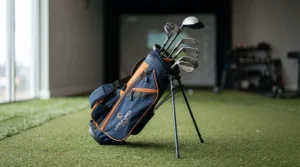
2. Precise X7 Junior Set — three height tiers, thousands of reviews
The Precise X7 Junior Set earns its spot by doing the unglamorous thing well. It’s offered in three tiers: ages 3-5 for kids about 3’0″ to 3’8″, a middle tier for ages 6-8, and ages 9-12 for roughly 4’4″ to 5’1″. Each version uses graphite shafts the maker pitches as about 30% lighter than steel, oversized forgiving heads, a hybrid, a putter and a dual-strap stand bag.
Here’s what that means in real life. The hybrid replaces the long iron that stumps most juniors, since it’s the easiest club to launch. The backpack-style straps spread the bag’s weight across both shoulders, so a small body isn’t leaning sideways for nine holes.
This is a sensible pick when you’d like one brand to follow your child through several growth stages. Listings carry thousands of Amazon reviews, and roundups quote averages around 4.6 to 4.7 stars. The main complaint is that taller kids at the top of the 9-12 band may find the clubs slightly short by age 12, which limits long-term use.
Pros:
- ✅ Three clear age and height tiers
- ✅ Lightweight graphite shafts and forgiving heads
- ✅ Dual-strap stand bag eases carrying
Cons:
- ❌ Lengths run short for tall 12-year-olds
- ❌ Likely weaker resale than big-name sets
Price range: roughly $150-$180 (check current price). Value verdict: one of the strongest dollars-per-feature options here.
3. Callaway XJ Junior Set — titanium drivers and strong resale
Brand heritage matters less to a seven-year-old than to their parents, but the Callaway XJ Junior Set backs it up with real design choices. The line runs from XJ1 for roughly 42″ to 46″ (fairway wood, 7-iron, sand wedge and putter) to XJ2 from about 50″ (driver, fairway wood, 7-iron, 9-iron, sand wedge and putter), up to XJ3 near 57″. Every set includes a stand bag and headcovers, plus graphite shafts and perimeter-weighted heads. The 2026 refresh also highlights titanium drivers.
A titanium driver keeps the head light while enlarging the sweet spot, so a juniors’ miss-hit loses less distance. Perimeter weighting does the same job in the irons. One practical wrinkle: retailers sometimes count the bag as a “piece,” so a “7-piece” XJ2 may be six clubs plus the bag, and the gap between XJ1 and XJ2 height ranges means in-between kids should check the chart.
Buyer feedback highlights light, forgiving clubs and a healthy used market, which softens the sticker price when your child outgrows a tier.
Pros:
- ✅ Titanium driver and forgiving perimeter weighting
- ✅ Bag and headcovers included
- ✅ Solid resale demand
Cons:
- ❌ Costs more than value-brand sets
- ❌ Height gaps between tiers need careful checking
Price range: roughly $200 for XJ1 up to the mid-$400s for larger sets (check current price). Value verdict: worth it if you’ll resell or hand down.
4. Team TaylorMade Junior Set — lightest heads, three clean sizes
The Team TaylorMade Junior Set is the cleanest sizing system in this group. Size 1 (ages 4-6, 42″-47″) has a 28-inch fairway wood, 25-inch 7-iron, wedge and putter. Size 2 (ages 7-9, 48″-53″) adds a 34-inch driver and a hybrid. Size 3 (ages 10-12, 54″-59″) grows to seven clubs, including a 39-inch driver and a 32.5-inch 7-iron.
The weight story is the real headline. A stock adult P-Series 7-iron weighs about 270 grams, while the junior 7-iron runs from roughly 205 grams in Size 1 to 248 grams in Size 3. For a child, that’s the difference between swinging a club and dragging one.
Team TaylorMade Junior Set suits beginners who’d like adult-style looks, plus included tips and drills from the brand’s tour ambassadors. Early retailer pages show uniformly positive feedback, and one parent praised the height chart for making size selection easy. It’s a newer line, so long-term durability data is still thin.
Pros:
- ✅ Very light heads and shafts
- ✅ Three sizes tied to exact height ranges
- ✅ Water-resistant stand bag
Cons:
- ❌ Among the pricier mainstream sets
- ❌ Size 1 includes just four clubs
Price range: roughly $250-$500 depending on size (check current price). Value verdict: premium but justified for a lightness-first buyer.
5. U.S. Kids Golf Ultralight — finest height-by-height fit
If most brands sell you a shoe size “small, medium, large,” U.S. Kids Golf Ultralight sells you half sizes. The Ultralight series is built in tight height steps, for example a 45-inch set for roughly 115-122 cm players and a 57-inch set for kids about 57″ to 60″. Shafts are lightweight graphite with a low kick point, and the latest UL7 generation was developed using launch-monitor data.
Why does fine-grained fit matter? Because a few inches of shaft length changes posture, and posture drives everything else. The flexible shafts and tuned head weights help young players get the ball up with less effort, and you can add clubs as the player progresses. Sets typically range from three to five pieces including a bag.
Review-wise, this brand is a junior specialist with a long track record, though I couldn’t verify individual review scores for specific current models. The honest trade-off is that precise fit means upgrading more often as your child grows.
Pros:
- ✅ Height-matched sizing in small steps
- ✅ Light, flexible graphite shafts
- ✅ Easy to add clubs later
Cons:
- ❌ More frequent size upgrades
- ❌ Base sets contain few clubs
Price range: roughly $250-$400 for newer sets (check current price). Value verdict: best when exact fit matters more than longevity.

6. PING Prodi G Junior — custom-fit clubs that get re-fit as kids grow
The PING Prodi G Junior is the “buy once, adjust twice” option. It’s built to order in right- or left-handed versions for golfers roughly 4’5″ to 5’2″ (ages 7-13). A fitting tool uses height, wrist-to-floor measurement and average driver carry to pick shaft length, flex, bag size and a color-dot lie angle.
Lie angle is the unsung hero here. If the club sits too flat or upright at impact, the ball starts off line no matter how good the swing is. The brand’s “Get Golf Growing” program adds value: buy five or more clubs in one transaction and you’re entitled to a one-time, no-charge service to re-shaft, lengthen, re-weight or re-grip the clubs later. In effect it’s two sets for the price of one.
Because these are fitting-led, verifiable consumer reviews on Amazon are scarce, so lean on a certified fitter instead. Availability on Amazon may be limited too, so confirm the listing.
Pros:
- ✅ Custom-fit lie angle, length and flex
- ✅ One-time no-charge re-fit program
- ✅ Adult-level technology in junior sizing
Cons:
- ❌ Premium pricing, sold per club
- ❌ Made to order, so expect lead time
Price range: premium tier, with a full set often well beyond $1,000 (check current price). Value verdict: strong for committed juniors, overkill for casual ones.
7. Wilson Deep Red Junior — balanced mid-budget package across ages
The Wilson Deep Red Junior is the sensible middle child. It’s sold in age-banded packages, with retailer listings showing ranges such as 5-8, 8-11 and 11-14. The packages feature lightweight graphite shafts, junior flex, forgiving heads, thinner grips for small hands and a junior stand bag. The 8-11 package includes a driver, hybrid, mid iron, short iron, wedge and putter.
Thinner grips matter more than they sound. A grip that’s too fat blocks the wrists from releasing, which produces the dreaded block-and-slice. Six clubs spanning driver to putter cover most on-course distances without bag clutter.
The caveat is that age bands are blunter than height bands, so a tall nine-year-old might belong in the next package up. I found limited verifiable review data for the current version, and most retailer listings were non-US, so confirm US availability before buying. Treat this as a spec-based pick.
Pros:
- ✅ Thin junior grips suit small hands
- ✅ Hybrid plus short iron and wedge
- ✅ Packages span ages 5 to 14
Cons:
- ❌ Age bands are less precise than height
- ❌ Limited verifiable review data found
Price range: roughly $200-$350 depending on package (check current price). Value verdict: dependable mid-tier value if the height fits.
✨ Don’t Miss These Exclusive Deals!
🔍 Take your junior golf journey to the next level with these carefully selected sets. Click on any highlighted item to check current pricing and availability. These clubs will help you build confident, lasting swings your family will love!
Side-by-Side: How the Top 7 Right-Handed Junior Golf Clubs Compare
| Set | Shafts | Price Range | Review Sentiment | Best For |
|---|---|---|---|---|
| Confidence Golf Junior Set | Graphite | Under ~$150 | High-4-star in roundups | Starter budget |
| Precise X7 Junior Set | Graphite | ~$150-$180 | Thousands of reviews, ~4.6-4.7 | Everyday value |
| Callaway XJ Junior Set | Graphite, titanium driver | ~$200-mid $400s | Praised for forgiveness, resale | Hand-down plans |
| Team TaylorMade Junior Set | Lightweight graphite | ~$250-$500 | Positive early retailer feedback | Light swing weight |
| U.S. Kids Golf Ultralight | Ultralight graphite | ~$250-$400 | Specialist brand, limited data | Exact fit |
| PING Prodi G Junior | Custom-fit | Premium, per club | Fitting-led, little Amazon data | Competitive juniors |
| Wilson Deep Red Junior | Graphite | ~$200-$350 | Limited verifiable data | Mid-budget buyers |
Looking at the table, the real split isn’t brand versus brand but fixed versus adjustable. PING Prodi G Junior is the only set designed to be re-fit rather than replaced, which is why its cost per year can undercut cheaper sets for a fast-growing child. For a casual player, Precise X7 Junior Set delivers the strongest balance of price and review volume. If resale matters, Callaway XJ Junior Set and Team TaylorMade Junior Set are the safest bets to recover some cost.

Youth Club Sizing: A Step-by-Step Guide to Measuring Your Child
Youth club sizing is the single most important skill in this whole hobby, and it takes about four minutes and a tape measure. 📏
- Measure height in shoes. Have your child stand straight against a wall wearing golf shoes or sneakers with similar heel depth.
- Add wrist-to-floor if you’re buying fitted clubs. Arms relaxed, measure from the wrist crease to the floor. The PING Prodi G Junior uses this to set lie angle.
- Match the chart. The Team TaylorMade Junior Set runs 42″-47″, 48″-53″ and 54″-59″. The Callaway XJ Junior Set spans roughly 42″ up to 57″. The Precise X7 Junior Set reaches 4’4″-5’1″ in its oldest tier.
- Trust height over age. Two 10-year-olds can be several inches apart, and the taller one needs the longer set.
- Re-measure each season. Kids don’t grow on a schedule, and the schedule is shifting. A large health-system dataset suggests growth spurts now peak about a year earlier than older figures, around 10.5 years for girls and 12.8 for boys. A ten-year-old may be closer to a size jump than the calendar suggests.
When your child sits between two sizes, the manufacturer’s chart should win over a hunch. A set that’s slightly short is easier to fix than one that’s too long.
Junior Swing Development: How the Right Clubs Shape Technique
Junior swing development depends on equipment far more than most parents expect. Here’s the reasoning: a club that’s too heavy forces the arms to drag it, so the hands do all the work and the body stays quiet. A right-sized club lets rotation drive the swing, which is exactly what coaches want to see.
Length works the same way. An overlong shaft pushes a child to stand tall and reach, which changes ball position and plane. Loft and flex matter too. Higher-lofted fairway woods and hybrids, like the ones in Precise X7 Junior Set, launch easily at slow speeds, so kids see the ball fly and stay motivated. That feedback loop is half of development.
Progression is another clue. Notice how Team TaylorMade Junior Set starts with four clubs at Size 1 and reaches seven by Size 3. Younger kids need fewer decisions, and older ones need distance gaps. Many local clinics, junior leagues and skills competitions expect players to bring their own clubs, so a properly fitted set also pays off at the first tee of PGA Jr. League or a Drive, Chip and Putt qualifier.
Growth-Friendly Clubs: How to Buy Smart Without Buying Too Big
Growth-friendly clubs sound like a code word for “buy bigger and hope.” Resist that urge, because oversized clubs wreck junior swing development faster than almost anything. Real growth-friendly shopping means choosing sets that stretch sensibly with your child.
- Choose wide height bands. Confidence Golf Junior Set spans about seven inches in its 8-12 version.
- Choose adjustable clubs. PING Prodi G Junior lets you re-shaft, lengthen, re-weight and re-grip once under its program.
- Buy low-to-mid in a size range. A child at the bottom of a band gets longer use than one at the top.
- Prioritize resale. Buyers report healthy demand for used Callaway XJ Junior Set clubs.
- Watch the feet. One longitudinal study found foot-length growth peaked roughly two years before height, so a sudden shoe-size jump is an early warning.
The takeaway is that growth-friendly clubs are about planning, not guessing. Budget for one upgrade at the next tier, and treat resale value as part of the price.
How to Choose Right-Handed Junior Golf Clubs: 7 Steps
Here’s the short answer for anyone skimming. Choosing right-handed junior golf clubs comes down to seven steps.
- Measure height in shoes. Height beats age every time.
- Confirm right-handed orientation. Most sets list right and left versions, so verify the selected option before ordering.
- Match the height band. Use the manufacturer’s chart, and size down if in doubt.
- Prefer lightweight graphite. Lighter shafts keep swing speed and balance.
- Check the club count. Younger kids need four to five clubs, older ones six to eight.
- Compare loft and forgiveness. A hybrid and a high-lofted driver help launch.
- Plan the next size. Decide whether you’ll resell, hand down or re-fit.
Common Mistakes When Buying Right-Handed Junior Golf Clubs
The pitfalls are predictable. Spotting them saves money and frustration.
- Buying by age. Age bands like those on Wilson Deep Red Junior are a starting point, not a verdict.
- Buying to “grow into.” Too-long clubs create bad habits, which cost more to fix than a new set.
- Chasing club count. Fourteen clubs can overwhelm a seven-year-old. Fewer clubs, properly spaced, win.
- Skipping the handedness check. Online listings often default to one option, so double-check right-handed before checkout.
- Ignoring grip size. Thick grips block the release and encourage slices.
- Overlooking gaps. Callaway-style tiers can leave in-between heights, so check the chart.
Experts and coaches often repeat the same advice: fit first, brand second, bag last.

Junior Sets vs Cut-Down Adult Clubs
Some families try a shortcut: trim an adult club to size. It can work in the right hands, but it rarely beats a purpose-built junior set.
| Factor | Junior Sets | Cut-Down Adult Clubs | Hand-Me-Down Adults |
|---|---|---|---|
| Weight | Built light | Head weight often too high | Far too heavy |
| Flex | Junior or softer | Often too stiff | Too stiff |
| Cost | Moderate | Fitter fees add up | Free, but costly in habits |
| Best For | Team TaylorMade Junior Set, Precise X7 Junior Set | Experienced juniors with a clubfitter | Short-term experiments |
Looking at the table, a purpose-built junior set wins because weight is engineered in, not trimmed after the fact. Team TaylorMade Junior Set‘s junior 7-iron weighs 205-248 grams versus about 270 grams for a standard adult version, and that gap is hard to reproduce by cutting a shaft. Cut-down clubs make sense only for experienced juniors working with a fitter.
Features That Actually Matter (And Those That Don’t)
What matters: shaft weight and flex, total club weight, loft, grip diameter and height-matched length. On weight, Golf Digest’s coverage notes that the Team TaylorMade Junior Set irons are about 30 percent lighter than the brand’s earlier junior sets. That’s the kind of spec that changes a swing. A hybrid, as in Precise X7 Junior Set, also matters more than a fancy driver.
What doesn’t: flashy colors, a fourteenth club, tour-pro branding, or a bag with seven pockets. A stand bag with sturdy straps helps. Headcovers are a nice extra, as with Callaway XJ Junior Set, but they won’t lower a score. What the spec sheet won’t tell you is how your child feels swinging it, so let them take practice swings in a shop whenever possible. If a club feels like work in the store, it will feel like punishment on the course.
Real-World Scenarios: Three Families, Three Sets
Scenario 1: the casual six-year-old. Height 46″, backyard and range once a week, budget under $150. Confidence Golf Junior Set fits the budget, and the reasoning is simple: low cost while interest is unproven.
Scenario 2: the league-bound ten-year-old. Height 54″, PGA Jr. League plus weekend rounds, budget around $400-$500. Team TaylorMade Junior Set Size 3 matches the height band and offers seven clubs for varied distances. Callaway XJ Junior Set is a close alternative if resale matters.
Scenario 3: the tall, committed twelve-year-old. Height 5’0″, plays three to four times a week, budget flexible. PING Prodi G Junior makes sense here because lie angle and shaft flex can be fitted exactly, and the one-time re-fit absorbs a growth spurt.
Notice the pattern. Budget, frequency of play and growth rate decide the set, not the logo.
Problem → Solution: Fixing Common Junior Club Headaches
Problem 1: Your child chokes down on the grip. The club is likely too long or too heavy. Re-check height, and consider the next size down, such as the finer steps in U.S. Kids Golf Ultralight.
Problem 2: The ball won’t leave the ground. Add loft and flex. A hybrid or higher-lofted driver, as in Confidence Golf Junior Set, helps slow swings launch.
Problem 3: A growth spurt mid-season. Growth timing varies widely, and research on peak height velocity shows a lot of variability in when kids hit that peak. Re-measure often, and consider a re-fit option like PING Prodi G Junior.
Problem 4: Heavy bag, grumpy kid. Choose a dual-strap stand bag, like the one in Precise X7 Junior Set, and carry fewer clubs.
Problem 5: Lost interest. Switch to short-game games and fun targets before upgrading. Equipment can’t fix boredom.
Long-Term Cost & Maintenance
| Tier | Examples | Price Range | Value Verdict | Best For |
|---|---|---|---|---|
| Budget | Confidence Golf Junior Set, Precise X7 Junior Set | ~$150 or less | High value, shorter lifespan | New players |
| Mid | Wilson Deep Red Junior, U.S. Kids Golf Ultralight | ~$200-$400 | Balanced | Regular players |
| Premium | Team TaylorMade Junior Set, Callaway XJ Junior Set, PING Prodi G Junior | ~$250 to well over $1,000 | Higher cost, better resale or re-fit | Committed juniors |
Cost per season is the metric that matters. A $150 set used for two seasons costs about $75 a year, while a premium set resold at a fair price after two seasons can land at a similar figure. Add small maintenance: wipe grooves after rounds, replace worn grips yearly, and store clubs dry. Looking at the table, mid-tier sets are the sweet spot for families unsure about long-term commitment, while premium tiers pay off when growth or competition is certain.

Frequently Asked Questions
❓ Are right-handed junior golf clubs different from left-handed ones?
❓ How long do right-handed junior golf clubs last before my child outgrows them?
❓ Should junior clubs have graphite or steel shafts?
❓ When should a junior move from youth club sizing to adult clubs?
❓ Can juniors use these sets for lessons and PGA Jr. League?
Conclusion: Fit First, Brand Second
The best right-handed junior golf clubs are the ones your child can swing comfortably, repeatedly and happily. For most families on a budget, Confidence Golf Junior Set or Precise X7 Junior Set offers a smart start. If lighter heads and clean sizing matter, Team TaylorMade Junior Set stands out, while Callaway XJ Junior Set adds resale confidence. U.S. Kids Golf Ultralight gives the finest height-by-height fit, Wilson Deep Red Junior fills the mid-budget middle, and PING Prodi G Junior is the choice for committed juniors who’ll benefit from a re-fit.
Remember the three themes: use youth club sizing based on height, protect junior swing development with light, forgiving clubs, and shop for growth-friendly clubs by planning the next size instead of buying too big. Prices change, so check current pricing and availability before you buy.
✨ Ready to get your junior golfer started?
🔍 Compare the sets above, confirm the height range, and click through to check current pricing. The right clubs make every swing feel like progress. ⛳
Recommended for You
- Right-Handed Golf Driver: 7 Best Forgiving Picks For 2026
- Left-Handed Golf Clubs For Women: 7 Best Picks & Pitfalls 2026
- Left-Handed Complete Golf Set For Men: 7 Best Picks For 2026
Disclaimer: This article contains affiliate links. As an Amazon Associate, I earn from qualifying purchases. If you purchase products through these links, we may earn a small commission at no additional cost to you.
✨ Found this helpful? Share it with your friends! 💬🤗
