In This Article
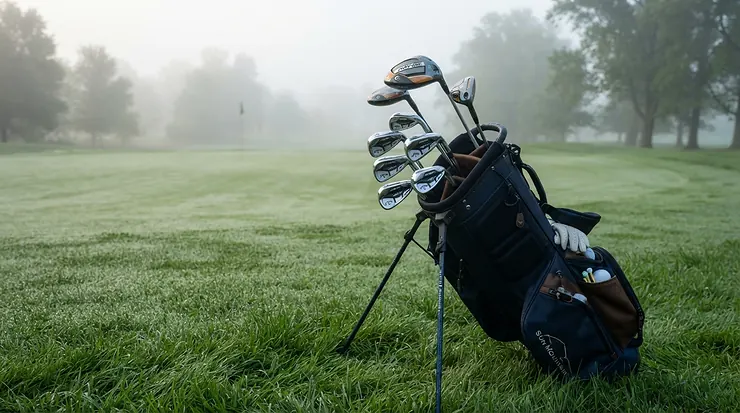
A premium golf iron set is a matched group of forged or multi-material irons, usually seven clubs from the 4-iron through the pitching or approach wedge. It uses tour-grade materials, refined head shaping, and upgrade-ready shaft options. Expect roughly $1,200 to $1,700 before custom shaft work, in exchange for better feel, tighter distance control, and stronger resale.
Why does the category matter? Irons are the clubs that decide your scorecard. Every approach shot, par-3 tee ball, and escape from the trees runs through that family of seven. Spend wisely and a premium golf iron set sharpens your distance control for years. Spend carelessly and you own a very shiny paperweight.
This guide leans on spec sheets, published 2026 test data, and tour-usage reports. It makes no hands-on claims and invents no owner reviews. Where a large pool of verified owner ratings wasn’t available, it says so and uses the published editorial consensus instead.
If you want the textbook foundation, Wikipedia’s overview of golf irons explains the cast-versus-forged distinction and how loft and shaft length change through the set. That context makes every spec sheet below easier to read.
Here’s what’s ahead: seven picks across budget, mid-range, and premium tiers, plus a real professional golf club set price comparison. We cover complete iron set pricing, the golf clubs used by PGA tour pros, the premium shaft upgrade, and whether any of this counts as an investment club set. Let’s get into it.
Premium Golf Iron Set Quick Comparison
Here’s the whole field at a glance. Prices are approximate ranges for a seven-iron set and shift with shafts and retailers, so check current pricing before you buy.
| Iron | Category | Approx. Price (7 Irons) | Standout | Best For |
|---|---|---|---|---|
| Titleist T100 | Players iron | around $1,500 | Tour-proven precision | Low-handicap ball-strikers |
| Mizuno Pro M-15 | Players distance | around $1,500 | Forged feel plus tungsten help | 5-15 handicaps |
| TaylorMade P790 | Players distance | $1,500-$1,700 range | Speed plus strong resale | Distance seekers who want a clean look |
| Ping i540 | Players distance | $1,300-$1,700 range | Longest of its class in one 2026 test | Speed-hungry mid and low handicaps |
| Callaway Apex Ai200 | Players distance | around $1,400 | Hittable long irons | Low-to-mid handicaps |
| Srixon ZXi5 | Players performance | around $1,300 | Soft feel, hidden forgiveness | Mid handicaps and combo builders |
| Wilson DYNAPWR Forged | Players distance | around $1,200 | Test-winning value | Improvers on a budget |
Looking at the table, the Wilson DYNAPWR Forged and Srixon ZXi5 undercut the field by $200 to $300, which matters more than it sounds once shafts and wedges join the bill. The Titleist T100 and Mizuno Pro M-15 share a price tier but sit at opposite ends of the forgiveness scale. The Ping i540 is the pick if raw speed tops your list.
💬 Just one click — help others make better buying decisions too!😊
Top 7 Premium Golf Iron Sets: Expert Analysis
Each pick below gets honest analysis built from real specs and published test results. Ratings and sentiment are editorial consensus, not invented owner quotes.
1. Titleist T100 — the tour’s most-played iron
If a premium golf iron set had a default setting, it would be the Titleist T100. Golf Monthly’s season tally found the T100 in the bags of nine 2026 PGA Tour winners.
The 2025 generation uses forged multi-material construction. It adds Variable Face Thickness in the 3-7 irons, sharper grooves in the scoring clubs, and a muscle channel in the 3- and 4-irons for easier launch. Lofts run a degree stronger than the previous T100, so you get a little extra carry without a bigger head. In plain English, the shape stays compact and the miss-forgiveness is better than the old model’s.
Based on the spec comparison, this suits confident ball-strikers who value trajectory control over yardage. One UK tester who ran it against the T150 saw the T100 post the shortest carry and highest spin, which is exactly the point. Distance chasers should look at the Ping i540 instead.
Published reviews praise the accuracy, the compact look, and a sound with more life than most forged irons. I couldn’t verify a large pool of owner ratings for this generation, so treat that as editorial consensus.
Pros:
- ✅ Compact, tour-preferred shape at address
- ✅ Muscle channel eases 3- and 4-iron launch
- ✅ Predictable spin and trajectory control
Cons:
- ❌ Shortest carry numbers in Titleist’s T-Series
- ❌ Punishes sloppy strikes more than the others here
Price range: around $1,500 for seven irons. That’s fair for a tour staple with deep resale demand.
2. Mizuno Pro M-15 — forged feel with a tungsten safety net
The Mizuno Pro M-15 replaces the Pro 245 and aims at golfers who love Mizuno’s butter-soft strike but want more help in the long irons. Think of it as a combo set in disguise.
The 4-8 irons pair Grain Flow Forged Chromoly with a hollow design and roughly 50 grams of tungsten weighting. That lifts launch and stability where mishits hurt most. The 9-PW come from a single piece of 1025E steel for control around the greens. Lofts are two to three degrees stronger than the M-13, so expect a longer flight than the badge suggests.
Reviewers rate it for handicaps of roughly 5 to 15. MyGolfSpy named it runner-up in its 2026 players-distance test and said it gives distance without sacrificing accuracy. One UK tester logged around 122 mph of 7-iron ball speed. That’s their swing, not a promise for yours.
The most common complaint in published reviews is price. Another reviewer found the sound louder than expected.
Pros:
- ✅ Tungsten-assisted long irons launch easily
- ✅ Single-piece forged scoring irons for control
- ✅ Elite looks and refined shaping
Cons:
- ❌ Premium price versus similar-performing rivals
- ❌ Sound can read louder than the forged reputation suggests
Price range: around $1,500, with some retailers listing it a touch higher. It’s strong value only if forged feel is your priority.
3. TaylorMade P790 — speed with resale muscle
Few irons have been the “safe premium choice” as long as the TaylorMade P790. GolfMagic still ranked it the top players-distance iron for 2026, praising its clean aesthetics.
The design pairs a hollow forged body with a foam-filled interior and tungsten placed low in the long irons. That lowers and moves back the center of gravity for easy launch and ball speed. Practically, 4- and 5-irons climb off the turf without you babying them.
For golfers wanting distance and forgiveness in a sleek head, the spec sheet delivers. Comment sections on the P790 Black launch are polarized. Some owners cite 20-plus extra yards and a higher flight, while others call them overrated. Treat the extra yards as swing-dependent and get a fitting before committing.
One used-club retailer’s data suggests the P790 holds resale value better than most irons, a point we’ll revisit in the investment section.
Pros:
- ✅ High launch and speed in the long irons
- ✅ Strong used-market demand
- ✅ Clean, premium look at address
Cons:
- ❌ Less shot-shaping nuance than blade-style irons
- ❌ Black edition carries a steep premium
Price range: roughly $1,500 to $1,700 for seven, with the Black edition at the top. Value verdict: solid if you plan to resell.
4. Ping i540 — the distance leader of its class
The Ping i540 earned “longest player’s distance iron” honors in MyGolfSpy’s 47-model 2026 test, which is a headline hard to ignore.
It uses a forged maraging-steel face, a covered cavity, and tungsten weighting in the 4-7 irons. The thinner, lighter face flexes more, while the tungsten drops the center of gravity for a higher launch. Ping also offers Power Spec and Retro Spec loft options, so fitters can tune gapping instead of living with one loft scheme.
Honest take: this is for golfers who want ball speed and stopping power in a head that doesn’t scream “game improvement.” National Club Golfer’s five-star review called it the best-sounding Ping they’d hit, and Golfalot tagged it best for distance. Real caution: the stock steel is True Temper Dynamic Gold Mid 100, so check whether it matches your tempo.
Pros:
- ✅ Class-leading distance in 2026 testing
- ✅ Improved sound and feel for a Ping
- ✅ Loft and shaft customization through fitting
Cons:
- ❌ Price swings widely with shaft and set makeup
- ❌ Distance-first design softens its feel versus forged blades
Price range: roughly $1,300 to $1,700 depending on shaft. Strong value if distance is the goal.
5. Callaway Apex Ai200 — long irons you’ll actually hit
The Callaway Apex Ai200 is built for golfers who want the forged look and sound of a players iron without losing speed. MyGolfSpy noted Callaway entered no new model in the 2026 players-distance test, so it remains the brand’s best option in this category.
It pairs a forged hollow body with a forged 455 face cup, tungsten-style MIM weighting for optimized CG, and Callaway’s Ai Smart Face. The 7-iron loft is 30 degrees. That means a compact head with real speed, plus long irons that launch higher than their numbers suggest.
Golf Monthly called the Ai200 an impressive performer with strong ball speeds and high forgiveness. They also noted it sits close to the Apex Pro in looks. GolfMagic and National Club Golfer praised the sound, and Golfer Geeks called the long irons easy to hit. If you want the smallest possible head, this may feel like a half-step up from your blades.
Pros:
- ✅ Forged feel from a hollow-body design
- ✅ Very hittable long irons
- ✅ Handsome, understated Apex styling
Cons:
- ❌ Looks very close to Apex Pro, which may confuse buying
- ❌ No 2026 update, so some testers see it as aging
Price range: around $1,400 to $1,450 for seven irons. Limited-edition finishes can exceed $2,000. Good value if you find the standard finish.
6. Srixon ZXi5 — the underrated sleeper
Fitters keep nominating the Srixon ZXi5. A GolfWRX panel called it the most underrated iron of 2026 and said it’s especially good for steep swingers.
Srixon’s i-Forging process uses a multi-piece construction with tungsten around the perimeter. Golf Monthly noted the face is 14 percent softer than the ZX5 Mk II’s. The 7-iron loft is 31 degrees, a degree weaker than the ZXi7. So when blending sets, check your gaps.
On paper, this is a players iron with a thick safety net. Published reviews call it easy to strike through the set, with mid-to-mid-high launch. The common knock is that the 2026 generation looks near-identical to last year’s, and it isn’t the longest option in the group.
Pros:
- ✅ Soft feel from i-Forging
- ✅ Easy long irons with refined looks
- ✅ Combo-friendly with the ZXi7
Cons:
- ❌ Not a distance leader
- ❌ Few changes versus the prior ZXi5
Price range: roughly $1,300 for seven, around $1,100 for six. Excellent value for mid handicappers.
7. Wilson DYNAPWR Forged — the value upset
Here’s the plot twist. In MyGolfSpy’s 2026 players-distance test, the Wilson DYNAPWR Forged won overall, leading in accuracy and forgiveness. The Mizuno came second.
The head is forged from soft 8620 carbon steel and uses Wilson’s PKR-Cup Face, which wraps the sole edge to boost face flex. AI-optimized face thickness protects ball speed on mishits. It sits between Wilson’s Staff Model XB and the standard DYNAPWR in size, so the profile stays slim while the flight stays high and straight.
Plugged In Golf’s reviewer said it will help most golfers have more fun and shoot lower scores. The stock steel shaft is KBS Tour Lite, which pairs well with moderate swing speeds. The brand cache is lower than Titleist’s, which affects resale.
Pros:
- ✅ Test-winning accuracy and forgiveness
- ✅ Soft forged feel at a lower price
- ✅ Stock KBS Tour Lite shaft
Cons:
- ❌ Less resale demand than Titleist or Mizuno
- ❌ Wilson cachet is lower for status buyers
Price range: around $1,200 for seven in steel. Best value of the seven.
Spec Showdown: How the Seven Stack Up
| Iron | Key Technology | Stock Shaft (as reported) | Best For |
|---|---|---|---|
| Titleist T100 | Multi-material forging, Variable Face Thickness, muscle channel | True Temper AMT Red (UK spec) | Precision players |
| Mizuno Pro M-15 | Hollow long irons, about 50g tungsten | AMT Silver (AMT Black optional) | Feel-first improvers |
| TaylorMade P790 | Foam-filled hollow body, tungsten in long irons | Varies by retailer | Resale-minded buyers |
| Ping i540 | Maraging-steel face, tungsten in 4-7, inR-Air | Dynamic Gold Mid 100 steel or Alta CB Blue graphite | Distance seekers |
| Callaway Apex Ai200 | Forged hollow body, 455 face cup, Ai Smart Face | Check retailer spec | Long-iron strugglers |
| Srixon ZXi5 | i-Forging, perimeter tungsten | Check retailer spec | Combo builders |
| Wilson DYNAPWR Forged | PKR-Cup Face, 8620 carbon steel | KBS Tour Lite | Value hunters |
Read this table sideways and a pattern emerges: tungsten and hollow designs now appear in nearly every premium golf iron set, so the difference lies in where each brand hides the forgiveness. If you hate hollow-sounding irons, the Titleist T100 and Srixon ZXi5 stay closer to traditional forged feel. For maximum launch help, the Ping i540 and Mizuno Pro M-15 lean hardest on tungsten.
How to Choose a Premium Golf Iron Set
MyGolfSpy’s 2026 players-distance testing logged 200 testing hours and scored accuracy, distance, and forgiveness. Those three metrics make a good checklist for any buyer. Here’s how to turn them into a decision.
- Know your miss. If you strike the center of the face most of the time, a compact players iron works. If you catch thin or toe shots, favor tungsten-assisted designs.
- Choose a category, not a brand. Blade, players iron, and players distance each sacrifice something. Pick the category first.
- Compare lofts, not numbers. Modern irons run stronger, and a modern 9-iron is comparable in loft to a 1990s 7-iron. Compare degrees, not the numbers stamped on the sole.
- Settle the shaft before the head. The stock shaft may not suit your tempo, and the premium shaft upgrade often changes feel more than the head does.
- Decide the set makeup. Do you want a 4-iron, or would a hybrid cover that slot? Plan gaps to your wedges.
- Budget the total. Add shafts, grips, lie adjustments, and a wedge to the sticker.
- Test with data. A launch monitor beats opinions, including this article’s.

Professional Golf Club Set Price Comparison
Sticker prices cluster tighter than the marketing suggests. This professional golf club set price comparison translates seven-iron ranges into per-club costs, so you can compare apples to apples. All figures are approximate.
| Iron | Approx. 7-Iron Range | Approx. Per Club | Value Verdict | Best For |
|---|---|---|---|---|
| Wilson DYNAPWR Forged | around $1,200 | around $170 | Best value | Budget improvers |
| Srixon ZXi5 | around $1,300 | around $185 | Strong value | Mid handicaps |
| Callaway Apex Ai200 | around $1,400 | around $200 | Fair | Long-iron help |
| Titleist T100 | around $1,500 | around $215 | Fair, strong resale | Precision players |
| Mizuno Pro M-15 | around $1,500 | around $215 | Premium for feel | Feel-first golfers |
| Ping i540 | $1,300-$1,700 range | around $215-$230 | Strong if fitted | Speed seekers |
| TaylorMade P790 | $1,500-$1,700 range | around $215-$240 | Good if you resell | Distance lovers |
The spread from cheapest to priciest is only about $300 to $500, which is small compared with what shafts and fitting can add. The Wilson DYNAPWR Forged is the clear price-to-performance outlier, since it won MyGolfSpy’s test while costing the least. If brand resale matters more than the initial discount, the Titleist T100 and TaylorMade P790 offset their higher entry cost.
Complete Iron Set Pricing: What You’re Really Buying
Complete iron set pricing hides in the fine print. A “set” can mean 4-PW, 5-PW, or 5-GW, and one extra club shifts the total by around $170 to $230.
Retail listings show the pattern. A Ping i540 listing in a 5-PW/UW configuration ranged from roughly $1,300 to $1,700 depending on shaft. The Srixon ZXi5 runs around $1,100 for six irons versus around $1,300 for seven. Titleist’s T100 spans the 3-iron to a 49-degree utility wedge, so you can buy exactly the clubs you want rather than a rigid package.
Here’s a simple formula for real complete iron set pricing:
- Base set (7 irons)
- Plus any shaft upcharge, usually small for stock options and larger for specialty shafts
- Plus grips if you want a size change
- Plus lie and length adjustments
- Plus a gap wedge if your pitching wedge sits too close to your 9-iron
Order matters, too. Buying a six-iron set and adding a long-iron hybrid often costs the same as a 4-iron you’ll struggle to hit.
Golf Clubs Used by PGA Tour Pros
Golf clubs used by PGA tour pros make great shopping research, with one catch: pros play whatever their sponsor and swing demand. Golf Monthly’s tally of every winning iron found 38 different iron models from 10 manufacturers among the 34 regular-season winners. Titleist’s T100 led with nine winners, five T200 models won, and the T250 appeared in three wins.
Golf.com added that Titleist has been the most-played iron on tour for 13 straight seasons. Meanwhile, Matt Fitzpatrick won three times with 13-year-old Ping S55 irons, and Chris Gotterup won three times with Bridgestone’s Tour B 220 MB blades. The takeaway? Pros blend models, mixing forgiving long irons with blade-style scoring clubs, and 28 winners used more than one iron model.
For you, that means a tour-used model is a starting point, not a prescription. A pro’s 7-iron strike pattern is tighter than yours. The Titleist T100 and Srixon ZXi5 show up in tour combo sets, while the Ping i540 and Callaway Apex Ai200 sit closer to what amateurs can actually launch. Use tour usage as proof of build quality, not as a swing-speed match.
Premium Shaft Upgrade: Where the Money Actually Goes
A premium shaft upgrade often changes feel more than a new head does. Think of the head as the engine and the shaft as the transmission: a mismatch ruins the drive.
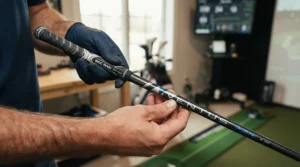
Step 1: Start with stock, then test. Hit your chosen set with the stock shaft first. Many are very good, such as the KBS Tour Lite in the Wilson DYNAPWR Forged.
Step 2: Know the common tour options. At the 2026 Tour Championship, True Temper Dynamic Gold Tour Issue X100 showed up repeatedly, alongside KBS Tour variants and Nippon Modus3 models. Pros favor heavy steel because it stabilizes fast tempos. Most amateurs benefit from lighter weights.
Step 3: Understand launch differences. Titleist’s own fitting forum has noted KBS Tour and Project X launch and spin similarly, with Project X slightly lower. Owners report KBS can launch a touch higher than Dynamic Gold.
Step 4: Budget by ranges. Old fitter and owner forum posts suggest custom-order upcharges for tour-spec steel run from nothing up to roughly $15 to $25 per club, while a full reshaft of clubs you already own has run roughly $40 to $65 per club including labor. Check current local pricing.
Step 5: Fit before you buy. A $300 mistake on shafts is as costly as buying the wrong head.
✨ Don’t Miss These Exclusive Deals!
🔍 Take your golf game to the next level with these carefully selected irons. Click on any highlighted item to check current pricing and availability. These sets will help you build lower scores you can be proud of!
Investment Club Set: Long-Term Cost and Resale
Let’s be honest about the phrase investment club set. Golf clubs depreciate, so this is cost-per-use math, not financial advice. But premium irons can be smart spending when you do the arithmetic.
One used-club retailer’s data says most irons lose more than half their resale value by year four, while the P790 is an exception that holds value unusually well. That’s one seller’s analysis, so treat it as directional. Premium brands such as Titleist, Callaway, and TaylorMade generally retain value better, and clubs under five years old in good condition resell best.
Here’s an illustration. Assume a set costing around $1,500 that you play 40 rounds a year for four years. If you resell for 40 to 50 percent of the cost, your net spend lands around $750 to $900. Across roughly 160 rounds, that works out to about $4.70 to $5.60 per round. Grooves matter too: heavy players wear them down, and worn grooves cut resale and spin.
For an investment club set, buy popular models, keep the original shafts or fitting specs on record, and protect the heads with iron covers to avoid dings. That is why the TaylorMade P790 and Titleist T100 lead on resale logic, while the Wilson DYNAPWR Forged wins on initial cost.
Premium Golf Iron Set vs Game-Improvement Irons
Premium sets trade size for precision. Game-improvement irons trade precision for forgiveness. Neither is wrong, but the wrong choice costs strokes.
| Feature | Premium Golf Iron Set | Game-Improvement Irons | Blade or Muscle-Back Irons |
|---|---|---|---|
| Head size | Compact to mid | Large | Smallest |
| Forgiveness | Moderate, tech-assisted | Highest | Lowest |
| Feel | Soft, forged | Firmer, powerful | Softest |
| Workability | Good | Limited | Best |
| Typical cost | Higher | Lower to moderate | Moderate to high |
| Examples | Titleist T100, Srixon ZXi5 | Wider-sole distance irons | Tour blades |
| Best For | Improvers and better players | Higher handicaps | Elite ball-strikers |
This table shows that the premium middle ground only makes sense when your strike quality is decent. If your misses are wild, a bigger head saves more strokes than a nicer badge. For better players, though, a premium golf iron set gives shot-shaping control that game-improvement heads can’t match, and sets like the Callaway Apex Ai200 narrow the gap by adding hollow-body help.
Premium Golf Iron Set for Specific Golfers: Real-World Scenarios
Here are three realistic profiles, matched to the best fit.
The committed single-digit player. Picture a 6-handicap who plays about 60 rounds a year on firm, fast courses and wants to flight shots down in wind. The Titleist T100 fits, thanks to compact looks and spin control. Budget roughly $1,500 to $2,000 including a fitted shaft.
The mid-handicap upgrader. Picture a 14-handicap playing about 30 rounds annually on soft parkland tracks, who wants forged feel but still needs help on mishits. The Srixon ZXi5 or Wilson DYNAPWR Forged keep spending near $1,200 to $1,300 while adding launch help. The Callaway Apex Ai200 is a step up for those with a bit more budget.
The speed-seeking club champion. Picture a 9-handicap with a fast swing playing 45 rounds a year in competitions. The Ping i540 matches that profile, since it chases ball speed and stopping power. Budget $1,500 or more with a fitting.
The pattern across all three: match the iron to your frequency, course type, and miss, not to what a tour pro bags.
Your First 30 Days: Setup, Break-In and Maintenance
A new premium golf iron set rewards a short, disciplined break-in. Here is a practical schedule.
- Day 1-3: Verify specs. Confirm lie angle, length, and grip size match your fitting sheet. Small errors compound.
- Week 1: Map your yardages. Hit 10 to 15 shots per club on a launch monitor or range and note carry numbers. Stronger lofts mean your old distances are obsolete.
- Week 2: Check wedge gaps. If your pitching wedge sits too close to your 9-iron, add a gap wedge.
- Weeks 3-4: Course test. Play nine holes with your usual shots and note which long irons you trust.
- Ongoing: Clean grooves. Use warm water and a soft brush, not metal tools, after each round.
- Ongoing: Protect the heads. Use iron covers, because bag chatter dents forged heads and wrecks resale.
- Each season: Check grips. Worn grips make you squeeze harder and ruin tempo.
Common Mistakes When Buying a Premium Golf Iron Set
Buyers repeat the same errors every year. Avoid these five.
- Buying what the pros bag. Tour usage is proof of quality, not of fit.
- Ignoring the shaft. A premium head on the wrong shaft underperforms a cheaper complete set.
- Chasing distance numbers. Stronger lofts can add yards, but if you lose gapping and spin, you hit the green with less control.
- Skipping a fitting. Even a short session catches lie and length errors that cost accuracy.
- Buying too little forgiveness. Ego purchases of blade-like heads cost strokes for mid handicappers.
A sixth mistake deserves a mention: assuming every review you read is independent. Some published comparisons come from retailers and fitting shops, so cross-check any single source.
Features That Actually Matter (And Those That Don’t)
Marketing loves buzzwords. Here’s the filter.
What matters:
- Center-of-gravity placement, which drives launch and forgiveness
- Shaft weight and flex, which drive feel and dispersion
- Loft spacing, which drives gapping
- Sole shape, which affects turf interaction
- Sound and feel, because you’ll hit these thousands of times
What matters less:
- AI-optimized face labels. Callaway’s Ai Smart Face and Wilson’s AI-tuned face thickness are real engineering, but every brand now has something similar.
- Finish color. Black or copper PVD can wear, and it adds cost.
- The number of “technologies” listed. The question is what the club does on your swing.
When you compare the Mizuno Pro M-15 to the Ping i540, the meaningful difference is feel and speed, not the length of the feature list.
Rules, Conformance and Fitting Checklist
Before you buy, make sure your irons are legal for the golf you play. The USGA’s conforming club and ball resources include an Informational Club Database listing groove and punch-mark conformance. Clubs made after January 1, 2010 are required to meet groove rules, and it’s the player’s responsibility to confirm before play. A “No” in the database doesn’t automatically mean non-conforming, so ask about individual testing for competition.
Use this quick pre-purchase checklist:
- Confirm the exact model and year against the USGA database if you play competitions.
- Verify lofts, lie, and length against your fitting notes.
- Confirm the return or exchange policy on custom builds.
- Photograph the heads and shafts on arrival for warranty documentation.
- Retest gapping after your first range session.
Frequently Asked Questions
❓ How long does a premium golf iron set last?
❓ Is graphite or steel better in a premium golf iron set?
❓ Should I buy a premium golf iron set used?
❓ Can beginners buy a premium golf iron set?
❓ Can I mix models in a premium golf iron set?
Conclusion
A premium golf iron set is a long-haul purchase, so the best choice is the one that fits your strike, your tempo, and your budget. Here’s the short version.
- Best overall for better players: the Titleist T100, backed by the most tour wins.
- Best feel with help: the Mizuno Pro M-15.
- Best resale logic: the TaylorMade P790.
- Best for distance: the Ping i540.
- Best for long-iron struggles: the Callaway Apex Ai200.
- Best sleeper: the Srixon ZXi5.
- Best value: the Wilson DYNAPWR Forged.
Remember the three money multipliers: shaft, fitting, and set makeup. A well-fitted $1,200 set beats a mismatched $1,700 one every time, and any real investment club set strategy starts with buying a model other golfers want later. Compare lofts, get on a launch monitor, check complete iron set pricing in full, and don’t forget the premium shaft upgrade.
Recommended for You
- Putter Used By Professional Golfers: 7 Proven Picks (2026)
- Tour-Issue Golf Irons: 7 Proven Blades Worth Buying In 2026
- Golf Driver For Advanced Players wWith Low Spin: 7 Best Picks 2026
Disclaimer: This article contains affiliate links. As an Amazon Associate, I earn from qualifying purchases. If you purchase products through these links, we may earn a small commission at no additional cost to you.
✨ Found this helpful? Share it with your friends! 💬🤗
