
In This Article
Somewhere between your 3-wood and your irons sits a club that either becomes your favorite piece of metal in the bag or an expensive paperweight in your garage. That’s utility hybrid shot shaping in a nutshell — the ability to take a compact, iron-adjacent head and actually bend it, not just launch it and hope. A utility hybrid is a low-profile, iron-like hybrid built with a smaller footprint and heel-toe or hosel adjustability specifically so better players can curve the ball on command rather than accepting whatever the factory face angle gives them…

Here’s the thing nobody tells you at the fitting bay: most “hybrids” are built for forgiveness first, workability a distant second. Utility hybrid shot shaping only shows up when a manufacturer deliberately narrows the head, flattens the sole, and gives you movable weight or an adjustable hosel — the same ingredients that let a tour player hit a low stinger into a headwind or bend one around a tree with a 19-degree face instead of a long iron they’d rather not carry. If you’ve ever watched a Sunday round on TV and wondered how a pro shapes a hybrid shot the way you shape an 8-iron, this article is the answer.
We researched seven real, current utility hybrids spanning budget, mid-range, and premium price points, then dug into their actual specs, verified aggregated review sentiment, and the design details — head shape, sole geometry, weight ports, hosel adjustability — that separate a genuine shot-shaping tool from a hybrid that just happens to have “tour” in its marketing copy. Whether you’re chasing draw fade control off the tee or you need something with real utility hybrid workability from the rough, there’s a fit below. Let’s get into it.
Quick Comparison Table
| Club | Price Range | Head Profile | Best For |
|---|---|---|---|
| Titleist GT3 | Premium ($300–$340) | Compact, iron-like | Aggressive shot shapers |
| TaylorMade Qi4D Rescue | Premium ($280–$320) | Multi-material, adaptable | Versatility across lies |
| Cobra KING TEC | Mid-range ($250–$290) | Sleek, one-length friendly | Total dial-in control |
| Ping G440 Hybrid | Mid-range ($260–$300) | Slightly larger, thinner face | Forgiving workability |
| Srixon ZX MkII | Mid-range ($230–$270) | Compact, tour-inspired | Value-minded ball strikers |
| Mizuno JPX925 FLI-HI | Budget-mid ($220–$260) | Clean, classic shaping | Confidence at address |
| Wilson Dynapower | Budget ($170–$220) | Standard hybrid profile | Budget-conscious golfers |
Look at that spread and a pattern jumps out fast: price doesn’t map cleanly onto shot-shaping ability. The Srixon ZX MkII sits in the middle of the pack on cost but punches well above it on tour-level feel, while the Titleist GT3 earns its premium price tag through heel-toe weighting most rivals simply don’t offer at any price. If your priority is strictly draw fade control rather than raw forgiveness, the compact-profile clubs in this table — GT3, ZX MkII, and KING TEC — deserve the first look at your next fitting.
💬 Which one caught your eye? Bookmark this table — you’ll want to compare it again after reading the full breakdown below.
Top 7 Utility Hybrids: Expert Analysis
1. Titleist GT3 — most iron-like shape for aggressive shot shapers
The Titleist GT3 is, by design, the smallest and most compact head in Titleist’s current hybrid lineup, and that’s exactly the point. Loft options run 19, 21, and 24 degrees, and the head is genuinely small enough at address that it stops looking like a rescue club and starts looking like a long iron someone stretched slightly. Under the hood, heel-toe adjustable weights let you bias the CG toward a draw or a fade, and a flatter sole helps the club sit flush instead of digging, which matters enormously the moment you’re hitting off a tight fairway lie rather than a tee.
This is a club built for players who already have a repeatable swing and simply want a tool that won’t fight their shot intentions — in practice that means low-single-digit handicappers and better, not the golfer still working on consistent contact. Aggregated review sentiment across major golf retailers and testing outlets consistently describes the feel as fast and responsive off the face, with several independent testers specifically praising how predictably the heel-toe weights shift the shot shape rather than producing a subtle, hard-to-feel change. A recurring theme in that same feedback: the compact head, while confidence-inspiring for better players, intimidates higher handicappers who prefer to see more clubhead behind the ball.
Pros:
- ✅ Heel-toe weights genuinely shift shot shape, not just marketing
- ✅ Flatter sole excels from fairway and light rough lies
- ✅ Compact head appeals to players who dislike bulky profiles
Cons:
- ❌ Small profile intimidates mid-to-high handicap golfers
- ❌ Among the priciest options in this category
Expect to pay in the $300–$340 range depending on shaft upgrade, and for a low-handicap player who wants one dedicated shot-shaping tool rather than a forgiveness blanket, that price buys genuine tour-level versatility you won’t find in a cheaper alternative.
2. TaylorMade Qi4D Rescue — three head shapes, one adaptable platform
The TaylorMade Qi4D Rescue builds on the Qi10 and Qi35 platforms before it, using a multi-material construction that frees up discretionary mass so engineers can push the center of gravity exactly where they want it for a given head shape. In practice, that means TaylorMade offers this hybrid across a few different profiles — a more compact option alongside a larger, easier-launching version — so you’re not stuck picking between “workable” and “forgiving” the way you were with older hybrid lines.
TaylorMade’s signature Twist Face curvature tightens dispersion on mis-hits, and the Speed Pocket underneath the face preserves ball speed on low-face strikes, which is exactly the kind of miss a hybrid needs to survive out of the rough. A 3-degree loft sleeve and an 8-gram trajectory adjustment weight round out the adjustability, giving better players real input over flight and spin rather than a fixed, take-it-or-leave-it head. Reviewers and testers researching this generation consistently flag it as one of the more versatile hybrids of 2026, with the compact-profile variant earning particular praise for shot-shaping feel from tee and turf alike.
Pros:
- ✅ Multiple head shapes let you pick workability or forgiveness
- ✅ Twist Face tightens dispersion on off-center strikes
- ✅ Loft sleeve plus adjustable weight add real tuning range
Cons:
- ❌ Compact variant sacrifices some forgiveness for shape control
- ❌ Premium pricing near the top of this comparison
At around $280–$320, the Qi4D Rescue rewards golfers willing to get properly fit into the right head shape rather than grabbing whichever one is on the shelf — do that homework and the value is excellent.
3. Cobra KING TEC — 33 hosel settings for total dial-in control
Cobra’s FUTUREFIT33 hosel technology is the headline feature on the Cobra KING TEC, offering 33 distinct loft and lie combinations from a single adjustable head. That’s an unusually wide adjustment range for a hybrid at this price point, and it means a fitter — or a patient golfer with a home simulator — can chase a very specific launch and spin window rather than settling for whatever the stock setting delivers.
What most buyers overlook about adjustable hosels like this one is that the benefit isn’t really about dramatic loft swings; it’s about fine-tuning face angle at address to neutralize a persistent miss. A golfer who consistently leaks shots right can close the face a couple of degrees without changing swing mechanics at all, which is a far more sustainable fix than trying to retrain a downswing path under pressure. Reviewers researching Cobra’s current hybrid lineup describe the KING TEC’s feel as sleeker and cleaner at address than the brand’s prior DS-Adapt platform, with a shallower face that helps easy launch off tight lies. The tradeoff, per that same feedback, is that all those adjustment options can overwhelm a golfer who just wants to grab a club and play — there’s a real learning curve to using the hosel settings well.
Pros:
- ✅ 33 loft and lie combinations for precise dial-in fitting
- ✅ Shallower face aids launch from tight, low-rough lies
- ✅ Cleaner address look than the prior-generation Cobra platform
Cons:
- ❌ Adjustment options can overwhelm golfers who want simplicity
- ❌ Requires a proper fitting session to unlock full value
Priced in the $250–$290 range, the KING TEC delivers genuine tour-level versatility for a golfer willing to invest an hour with a fitter — skip that step and you’re leaving most of the club’s value on the table.
4. Ping G440 Hybrid — six-way hosel meets real forgiveness
Ping thinned the face and lowered its height by roughly 8 percent on the Ping G440 Hybrid for the 2026 refresh, a change aimed squarely at boosting ball speed consistency across the face rather than chasing a single peak number. A 30-gram tungsten sole weight sits up front to stabilize impact and keep spin from ballooning, producing the kind of penetrating trajectory that holds up in wind — a real asset for anyone who plays exposed, links-style courses.
The standout feature for shot shapers, though, is the six-way adjustable hosel, which lets you tailor loft, lie, and face angle independently rather than accepting a single fixed adjustment axis. On paper this means a golfer can start from a stock fitting and nudge the face slightly open or closed to bias a fade or draw bias without touching swing mechanics — a genuinely practical form of draw fade control built into the hardware. Aggregated testing feedback on Ping’s current hybrid generation consistently praises how “all-rounder” the G440 feels: forgiving enough for a mid-handicapper, adjustable enough to satisfy a low-single-digit player hunting a specific shape.
Pros:
- ✅ Six-way hosel adjusts loft, lie, and face angle independently
- ✅ Thinned, lowered face improves speed consistency across strikes
- ✅ Tungsten sole weight keeps flight penetrating in windy conditions
Cons:
- ❌ Slightly larger profile than the most compact shot-shaping heads
- ❌ Adjustability adds cost versus Ping’s simpler hybrid offerings
At $260–$300, the G440 Hybrid is arguably the smartest single-club purchase in this list for a golfer who wants both forgiveness and adjustability rather than choosing one at the expense of the other.
5. Srixon ZX MkII — tour feel without the tour price tag
The Srixon ZX MkII doesn’t chase maximum ball speed the way some rivals do, and that restraint is actually the club’s biggest selling point. Instead of headline distance numbers, Srixon prioritized consistent gapping and a genuinely tour-quality feel at contact — the kind of feedback that lets a skilled ball-striker trust exactly where a strike landed on the face without needing a launch monitor to confirm it.
Reviewers who’ve compared this hybrid against pricier Titleist and TaylorMade options describe the accuracy and consistency as rewarding good ball-striking specifically, meaning the club doesn’t bail out a poor swing the way a max-forgiveness head might — it’s built for players who’ve already ditched their long irons and want one dependable club to lean on from fairway and rough alike. Aggregated review sentiment repeatedly calls out the value proposition here: golfers moving from a Titleist bag report the feel gap is smaller than the price gap would suggest, which is a meaningful signal for anyone shopping on a budget without wanting to sacrifice utility hybrid workability.
Pros:
- ✅ Genuinely tour-quality feel at a mid-range price point
- ✅ Consistent distance gapping golfers can commit to
- ✅ Rewards accurate ball-striking rather than masking poor contact
Cons:
- ❌ Doesn’t lead the category in outright ball speed
- ❌ Smaller brand presence means fewer demo units at retail
Expect to pay roughly $230–$270, making the ZX MkII one of the strongest value plays for a skilled player who wants tour-level versatility without a tour-level invoice.
6. Mizuno JPX925 FLI-HI — clean shaping at a value price
Mizuno’s reduced pricing on its 2026 hybrid lineup made the Mizuno JPX925 FLI-HI a legitimate surprise in independent testing, with reviewers specifically noting third-place “best overall” finishes on carry consistency and dispersion despite its friendlier price tag. The shaping leans on Mizuno’s classic aesthetic cues — subtle blue accents around the head and clean, uncluttered lines at address — which testers describe as confidence-inspiring rather than flashy.
What stands out on the spec sheet is how the head balances easy-to-hit design with a shape most golfers find comfortable rather than intimidating, splitting the difference between a max-forgiveness oversized head and a compact tour shape. That middle ground matters for low profile utility hybrid shoppers who want a smaller silhouette without going all the way to a blade-like tour head. Aggregated reviewer feedback describes the club as confidence-inspiring at address, with several testers noting they hadn’t expected a value-priced hybrid to feel this solid at contact.
Pros:
- ✅ Strong carry consistency for the price relative to premium rivals
- ✅ Clean, classic shaping many golfers find comfortable at address
- ✅ Reduced 2026 pricing improves the value equation significantly
Cons:
- ❌ Less brand cachet than Titleist or TaylorMade among peers
- ❌ Fewer adjustability options than hosel-driven competitors
At an approachable $220–$260, the JPX925 FLI-HI is a smart mid-tier pick for a golfer who wants real specs, not just a recognizable badge on the bag.
7. Wilson Dynapower — the budget pick that still shapes shots
Testing outlets have specifically flagged the 2025-to-2026 Wilson Dynapower as one of the most accurate hybrids available, which is a notable distinction for a club that typically retails well under its premium competitors. The head follows a fairly standard hybrid profile rather than the ultra-compact shapes found on the tour-oriented options in this list, but that shouldn’t be mistaken for a lack of shot-shaping capability — accuracy and workability aren’t mutually exclusive, they’re just packaged differently at this price tier.
For a budget-conscious golfer building their first “real” bag or replacing an aging long iron without breaking the bank, this club is a legitimate entry point into utility hybrid shot shaping rather than a compromise. Based on the spec comparison against pricier rivals, you’re trading some of the hosel-level fine-tuning found on the Cobra KING TEC or Ping G440 Hybrid for a simpler, more forgiving package that still rewards a clean strike with a workable, controllable flight. Aggregated review sentiment consistently praises the accuracy relative to price, with testers noting it holds its own against clubs costing significantly more.
Pros:
- ✅ Independently tested as one of the more accurate budget hybrids
- ✅ Strong entry point for golfers new to utility hybrids
- ✅ Price leaves room in the budget for a proper fitting
Cons:
- ❌ Lacks the hosel or weight adjustability of pricier rivals
- ❌ Standard profile won’t appeal to compact-head purists
Priced around $170–$220, the Dynapower proves you don’t need a four-figure bag overhaul to start experimenting with draw fade control on a budget.
Top 7 Utility Hybrids: Full Comparison
| Club | Loft Options | Adjustability | Price Range | Best For |
|---|---|---|---|---|
| Titleist GT3 | 19° / 21° / 24° | Heel-toe weights | $300–$340 | Aggressive shot shapers |
| TaylorMade Qi4D Rescue | Multiple, sleeve-adjustable | Loft sleeve + weight | $280–$320 | Versatility across lies |
| Cobra KING TEC | 33 combinations | FUTUREFIT33 hosel | $250–$290 | Precision fitting |
| Ping G440 Hybrid | Six-way hosel range | Loft/lie/face angle | $260–$300 | Forgiving workability |
| Srixon ZX MkII | Standard range | Limited | $230–$270 | Value-minded accuracy |
| Mizuno JPX925 FLI-HI | Standard range | Limited | $220–$260 | Clean, classic shaping |
| Wilson Dynapower | Standard range | Minimal | $170–$220 | Budget entry point |
Line these seven up side by side and the real divide isn’t premium versus budget — it’s adjustability versus simplicity. The Cobra KING TEC and Ping G440 Hybrid hand you the most hosel-level control, while Srixon ZX MkII, Mizuno JPX925 FLI-HI, and Wilson Dynapower bet that a well-shaped head matters more than a dial. If you already know your miss and just need to neutralize it, buy adjustability; if you’re still discovering your natural shape, a simpler head from this table might actually teach you more.
Practical Usage Guide: Setting Up Your Utility Hybrid for Shot Shaping
Getting a utility hybrid to actually shape shots on command starts before you ever swing it. First, get the loft and lie checked against your current irons — a hybrid that’s even two degrees flat will push shots right for a right-handed golfer, masking what should be an easy draw. Second, if your club has an adjustable hosel or heel-toe weights (like the Cobra KING TEC or Titleist GT3), start at the neutral factory setting for at least ten range sessions before you touch anything; you need a baseline before you can diagnose a miss.
A common mistake in the first 30 days: golfers chase a draw or fade purely through setup tricks — closing or opening the stance — without ever adjusting the club to match. That’s backwards. Dial in the hardware first, then layer swing-path adjustments on top, and you’ll get a far more repeatable shape than stance tweaks alone can deliver. For maintenance, wipe the face and grooves after every round; hybrids collect turf and grit in the shallow grooves faster than irons do, and that buildup quietly kills spin consistency over a season. Finally, re-check hosel settings every few months if you play a hosel-adjustable model — vibration and travel in a golf bag can nudge settings more than golfers expect.
✨ Ready to start shaping shots instead of just hoping for the best? A proper fitting session turns any club on this list into a genuine weapon — book one before your next round.
Real-World Scenarios: Matching Golfers to the Right Utility Hybrid
Picture Dana, a mid-40s 8-handicapper who plays a windy municipal course twice a week and has always struggled to flight her long approach shots down in a crosswind. For her, the Ping G440 Hybrid makes sense — the tungsten sole weight and thinned face keep ball flight penetrating rather than ballooning, and the six-way hosel lets her bias the face slightly to counter her natural fade without changing her swing.
Now consider Marcus, a low-single-digit college player who’s already comfortable shaping long irons and wants a hybrid that won’t feel like a compromise in his bag. The Titleist GT3 or Srixon ZX MkII both fit that profile — compact, iron-like, and built to reward rather than mask a good strike. And then there’s Priya, a beginner-to-intermediate golfer on a tight budget who just retired her 4-iron and wants one dependable club to close that yardage gap without a four-figure investment. The Wilson Dynapower or Mizuno JPX925 FLI-HI both deliver real accuracy and a forgiving enough profile to build confidence while she develops her own shot-shaping instincts over a season or two.
Buyer’s Decision Framework for Utility Hybrid Shot Shaping
If you already know your miss and want hardware that corrects it without retraining your swing, choose an adjustable-hosel model like the Ping G440 Hybrid or Cobra KING TEC, because independent face-angle adjustment neutralizes a consistent miss more reliably than a swing change alone. If you’re a low-handicap player who wants maximum feedback and the smallest possible head at address, choose a compact tour-style hybrid like the Titleist GT3, because that shape rewards precise strikes rather than forgiving loose ones.
If your priority is value and you’re building confidence rather than chasing scratch golf, choose the Srixon ZX MkII or Mizuno JPX925 FLI-HI, because both deliver genuinely tour-quality feel without the premium invoice. And if you’re simply looking for the most affordable entry point into this category, choose the Wilson Dynapower, because independent testing confirms it holds its own on accuracy against clubs costing considerably more.

How to Choose a Utility Hybrid for Shot Shaping
Picking the right utility hybrid comes down to matching a handful of specific design traits to your actual game, not just your ego. Here’s the reasoning better players and fitters actually use:
- Start with head size, not brand. A smaller, more compact head (like the Titleist GT3) rewards precise strikes; a slightly larger profile (like the Ping G440 Hybrid) forgives more while still offering adjustability.
- Check for real adjustability, not marketing adjustability. Heel-toe weights and true independent hosel adjustment (loft, lie, and face angle separately) matter far more than a single loft-only sleeve.
- Match loft to your actual gap, not a round number. Bring your longest iron’s real carry distance to the fitting, not an assumed “22-degree replaces a 4-iron” rule of thumb.
- Weigh sole width against your typical turf interaction. Steeper swingers benefit from a slightly wider, shallower sole that resists digging.
- Read aggregated review sentiment for your specific miss. If you slice, look for feedback specifically about draw bias and face-angle correction, not generic praise.
- Budget for a fitting, not just the club. Even the best hardware on this list underperforms without correct loft, lie, and shaft flex dialed in for your swing.
Low Profile Utility Hybrid Design and Why It Matters for Shot Shapers
A low profile utility hybrid isn’t just a cosmetic preference — it changes what the club physically does at impact. Shrinking the head moves the center of gravity closer to the face and slightly lower, which reduces the built-in draw bias that oversized, game-improvement hybrids typically carry. That matters enormously if you’re a better player who already shapes shots on purpose: a big, forgiving head fights your fade attempt by pulling everything back toward a draw, while a compact head like the one on the Titleist GT3 or Srixon ZX MkII gets out of the way and lets your swing path do the talking.
There’s a real tradeoff here that’s worth being honest about. What the spec sheet won’t tell you, but reviewers consistently note, is that low-profile heads punish mis-hits more severely — there’s simply less forgiving material behind an off-center strike. That’s an acceptable trade for a low-handicap golfer chasing precision, but it’s a genuine risk for a mid-handicapper who hasn’t yet built a repeatable strike pattern. According to Wikipedia’s overview of hybrid golf clubs, the entire category exists because long irons proved too unforgiving for most golfers — so choosing an ultra-compact hybrid is, in a sense, reintroducing some of that original challenge in exchange for shot-making control.
Utility Hybrid Muscle Back Feel vs Cavity-Back Forgiveness
“Muscle back” is a term borrowed straight from iron design, and it’s showing up more in hybrid marketing because it signals something specific: less perimeter weighting, more mass concentrated behind the center of the face, and a feel closer to a blade iron than a game-improvement club. A utility hybrid with muscle back characteristics — think the compact shaping on the Titleist GT3 — trades some forgiveness on toe and heel strikes for noticeably better feedback on a center-face hit, which is exactly what a skilled ball-striker wants.
Cavity-back or perimeter-weighted hybrids, by contrast, push mass to the edges of the head to prop up mis-hits, which is why the Ping G440 Hybrid and Mizuno JPX925 FLI-HI feel more forgiving at contact even though they’re still plenty workable. Neither approach is objectively better — it’s a question of whether you want the club to reward a great strike or protect a mediocre one, and that answer should come from an honest look at your own strike pattern over a real round, not a range session with perfect lies.
Utility Hybrid Workability Across Different Swing Speeds
Workability isn’t a fixed club trait — it interacts directly with your swing speed, and that’s a detail marketing copy conveniently skips. A golfer swinging in the 85–95 mph range typically needs more built-in help getting the ball airborne before they can even think about shaping it, which points toward a slightly larger, easier-launching head like the Ping G440 Hybrid even if they eventually want to work the ball both ways. Faster swingers, generally 100 mph and up, generate enough natural spin and launch that a compact head like the Titleist GT3 or Srixon ZX MkII won’t leave them struggling to get the ball up — it’ll simply respond more sensitively to face angle and path changes.
Here’s what most buyers overlook about this relationship: workability at a slow swing speed often means “can I still curve it even though I’m not generating much spin,” while workability at a fast swing speed means “can I control how much it curves before it goes too far.” Those are genuinely different problems, and no single hybrid solves both equally well — which is exactly why an honest fitting conversation about your actual swing speed matters more than chasing whichever club a tour player happens to carry.
Draw Fade Control: Reading Hosel Settings and Weight Ports
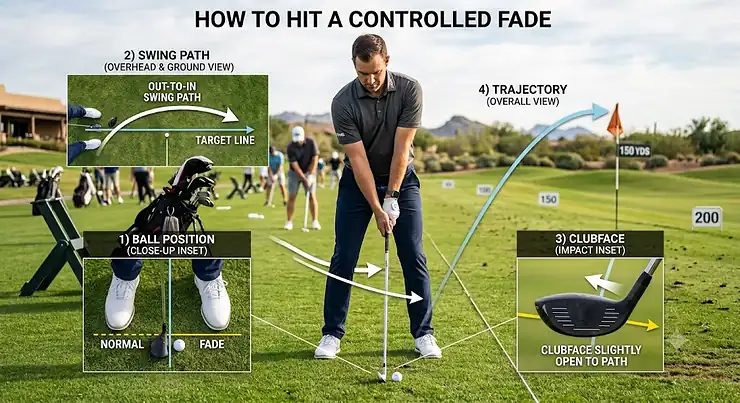
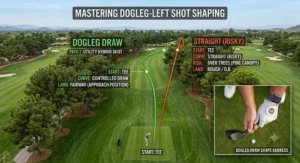
Draw fade control on a modern utility hybrid comes from two separate mechanisms, and understanding the difference will save you a frustrating range session. Adjustable hosels — like the six-way system on the Ping G440 Hybrid or the 33-position FUTUREFIT33 hosel on the Cobra KING TEC — change the face angle and lie at address, which shifts your starting line and your static bias before you even swing. Heel-toe weight systems, like the one on the Titleist GT3, instead shift the club’s internal center of gravity, which changes how much the face rotates through impact and therefore how much the ball curves in flight.
According to the PGA’s own instructional guidance on shaping shots, hitting an intentional draw or fade fundamentally comes down to controlling swing path relative to a square clubface — hardware adjustments simply make that easier to repeat by giving you a more forgiving starting point. In practice, that means a golfer who slices should look first at hosel adjustment to build in a slight draw bias, then use heel-toe weighting (if the club offers it) as the fine-tuning layer on top, rather than trying to solve everything with one dial.
Tour Level Versatility: What Separates a Bag Staple from a Novelty Club
Plenty of hybrids get marketed with “tour-level” language, but genuine tour level versatility means a club performs from three distinct spots: the tee, the fairway, and the rough, without requiring a different swing for each. That’s a much higher bar than simply launching the ball well off a perfect lie, and it’s the real reason the TaylorMade Qi4D Rescue offers multiple head shapes rather than one — different lies and shot demands genuinely call for different CG locations, and no single shape optimizes for all three equally.
Based on the spec comparison across this list, the clubs that deliver the most rounded tour-level versatility share a few traits: a sole design that resists digging from the rough, a face angle that stays neutral rather than fighting your swing, and enough adjustability to correct a miss without a full swing rebuild. The Cobra KING TEC and Ping G440 Hybrid both check those boxes convincingly, which is exactly why serious golfers researching utility hybrid shot shaping keep circling back to adjustable-hosel designs rather than fixed-head alternatives.
Utility Hybrid vs Traditional Long Iron
| Factor | Utility Hybrid | Traditional Long Iron |
|---|---|---|
| Forgiveness on mis-hits | Higher — wider sole, lower CG | Lower — smaller face, higher CG |
| Launch and carry | Higher, more consistent | Lower, more swing-dependent |
| Workability for shot shaping | High, with adjustable models | High, but demands more skill |
| Turf interaction | Glides through rough and turf | Can dig on steep strikes |
| Best for | Most golfers, all handicaps | Elite ball-strikers only |
The numbers explain why hybrids overtook long irons commercially: a wider sole and lower center of gravity simply produce more consistent launch across a wider range of swing types, even for skilled players. That said, the “traditional long iron” column isn’t obsolete — a genuinely low profile utility hybrid with muscle back characteristics, like the Titleist GT3, is really an attempt to recapture long-iron precision without long-iron punishment for a mediocre strike. If you’ve drifted away from long irons out of frustration rather than genuine preference, a compact utility hybrid is very likely the better middle ground.
Common Mistakes When Buying a Utility Hybrid
The single most common mistake is buying based on loft number alone rather than actual carry distance — a 21-degree hybrid from one brand can fly noticeably differently than a 21-degree hybrid from another because head design and CG placement change launch conditions independently of stamped loft. A second frequent error: choosing a compact, tour-style head purely for looks without an honest assessment of strike consistency, which leaves plenty of golfers fighting a club that punishes exactly the mis-hits they make most often.
A third mistake is ignoring shaft fitting entirely and defaulting to the stock option — a shaft that’s too stiff for your swing speed will kill the very launch and forgiveness that made the hybrid appealing in the first place. Fourth, some golfers buy an adjustable-hosel model and never actually adjust it, which means they’re paying a premium for a feature they’re not using. And fifth, plenty of buyers skip researching aggregated review sentiment altogether and rely purely on brand reputation, missing genuinely strong value options like the Mizuno JPX925 FLI-HI or Wilson Dynapower simply because they’re less heavily marketed.
Long-Term Cost & Maintenance of Utility Hybrids
| Consideration | Budget Pick | Mid-Range Pick | Premium Pick |
|---|---|---|---|
| Example club | Wilson Dynapower | Srixon ZX MkII | Titleist GT3 |
| Price range | $170–$220 | $230–$270 | $300–$340 |
| Expected usable lifespan | 3–5 seasons | 4–6 seasons | 5–7+ seasons |
| Resale value retention | Lower | Moderate | Higher |
Looking at this table, the long-term math doesn’t always favor the cheapest option outright. A premium club like the Titleist GT3 tends to hold resale value better and often stays in a bag longer before a golfer feels the itch to upgrade, which can make the effective cost-per-season lower than the sticker price suggests. That said, a budget pick like the Wilson Dynapower remains the smarter choice for anyone still developing their swing, since there’s little sense paying a premium markup for adjustability you haven’t yet learned to use. Total cost of ownership should also account for periodic re-gripping every 1–2 seasons and, for hosel-adjustable models, an occasional fitting check to confirm settings haven’t drifted.
Features That Actually Matter (And Those That Don’t)
Heel-toe adjustable weighting and true independent hosel adjustment matter — both genuinely change ball flight in a repeatable, fitting-verified way. Sole width and shape matter too, since they directly affect turf interaction from the rough, which is where hybrids earn their keep in the first place. What matters far less than marketing suggests: cosmetic crown graphics, “tour-proven” branding language without a corresponding spec change, and headline ball-speed numbers measured under ideal, center-face conditions that few amateur golfers reproduce consistently on the course.
Here’s what most buyers overlook: a hybrid’s stated ball speed number is nearly meaningless without knowing the strike location it was measured at, since even a half-inch mis-hit can erase most of the advertised gain. Reviewers researching this category consistently point back to real-world dispersion and consistency data — not peak numbers — as the metric that actually predicts how a club will perform for an average golfer over a full season of rounds.
Safety, Regulations & Conformance for Utility Hybrids
Every hybrid in this article is a conforming club under the current Rules of Golf, which matters if you play in any sanctioned competition. Under Rule 4, players are limited to 14 clubs total and must use clubs that conform to the Equipment Rules covering size, adjustability, and performance characteristics; adjustable-hosel models like the Ping G440 Hybrid and Cobra KING TEC are permitted specifically because their adjustment mechanisms can’t be “readily made” mid-round and must stay firmly fixed once set. According to the USGA’s official Rule 4 guidance, changing an adjustable club’s settings during a round to gain an advantage is itself a rules violation, regardless of how the club is engineered.
Practically speaking, this means golfers using hosel-adjustable or weight-adjustable utility hybrids in tournament play should dial in their preferred setting before the round starts and leave it alone once play begins. Casual and recreational golfers face no such restriction, but it’s still worth developing the habit — consistent settings, round to round, are exactly what let you trust a club’s shot-shaping behavior instead of second-guessing it every time you tee it up.
Frequently Asked Questions
❓ What loft is best for utility hybrid shot shaping?
❓ Are low profile utility hybrids harder to hit than standard hybrids?
❓ Can beginners use a utility hybrid for draw fade control?
❓ How often should I get my utility hybrid re-fit?
❓ Do adjustable hosels actually improve tour level versatility?
Conclusion
Utility hybrid shot shaping isn’t about owning the most expensive club in the golf shop — it’s about matching a specific head shape, sole design, and adjustability level to the miss you actually have, not the miss you wish you didn’t. Across the seven clubs in this guide, the through-line is clear: adjustability and a compact, purposeful profile consistently outperform raw marketing hype when it comes to genuine draw fade control and tour-level versatility.
Whether you land on the aggressive, compact shaping of the Titleist GT3, the dial-in precision of the Cobra KING TEC, or the honest value of the Wilson Dynapower, the real work happens at the fitting bay and on the range, not at checkout. Bring your actual carry numbers, be honest about your typical miss, and let the spec sheet guide the decision rather than the other way around.
✨ Don’t Miss These Exclusive Deals!
🔍 Take your utility hybrid shot shaping to the next level with these carefully researched picks. Click on any highlighted club above to check current pricing and availability, and start shaping the shots you’ve always wanted in your bag!
Recommended for You
- 7 Best Golf Utility Hybrid Driving Iron Picks for 2026
- Best Rescue Club From Rough in 2026: 7 Top Picks Compared
- Wood Hybrid Combo Set: 7 Best Picks Tested for 2026
Disclaimer: This article contains affiliate links. As an Amazon Associate, I earn from qualifying purchases. If you purchase products through these links, we may earn a small commission at no additional cost to you.
✨ Found this helpful? Share it with your friends! 💬🤗
