
In This Article
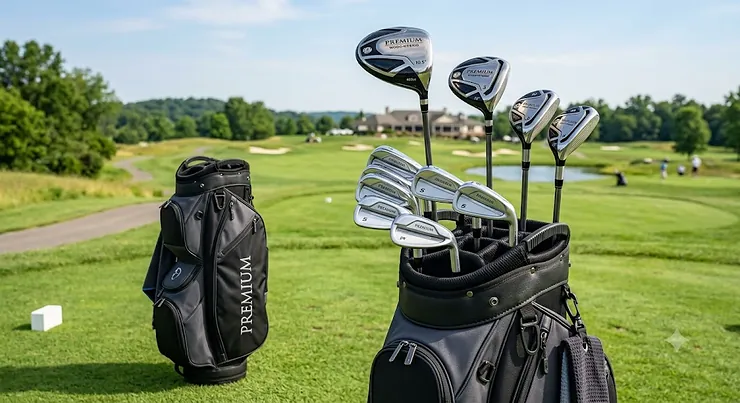
Somewhere between your driver and your irons sits a gap that quietly wrecks more scorecards than a three-putt. You know the yardage. It’s the one where your 3-wood flies the green and your 4-iron comes up 15 yards short, and you stand there deciding between two bad options. A wood hybrid combo set exists specifically to close that gap, pairing a fairway wood built for distance off the tee or deck with a hybrid designed to replace the long irons nobody actually enjoys hitting. Think of it less as “two clubs” and more as a matched pair that talks to each other — similar face technology, complementary lofts, and a shared design philosophy that keeps your ball flight predictable from 150 yards out to 220.

This guide breaks down seven real 2026 combo options, from direct-to-consumer bargains to tour-level premium builds, with honest analysis pulled from spec sheets, launch monitor data, and aggregated review sentiment — not fabricated hands-on stories. If you want the deeper mechanical history of how the hybrid category came to exist, it’s a genuinely interesting rabbit hole once you’re done here. A wood hybrid combo set, in plain terms, is a matched fairway wood and hybrid sold or built to work together, typically sharing face technology and adjustability features so the two clubs produce consistent gapping rather than overlapping or leaving holes in your bag. Whether you’re filling a gap in an existing bag or building your long game from scratch, you’ll find a fit somewhere in this lineup.
Quick Comparison Table
| Combo Set | Best For | Price Range | Standout Feature |
|---|---|---|---|
| Callaway Quantum Max Combo | All-around blended performance | $250-$300 per club | AI-optimized face + tungsten CG |
| TaylorMade Qi4D Combo | Premium ball speed seekers | $300-$380 per club | Highest tested ball speed in class |
| Titleist GT2 Combo | Buyers who want resale value | $320-$400 per club | Highest MOI in the GT family |
| Cobra Darkspeed OPTM Combo | Tinkerers who love adjustability | $260-$330 per club | FutureFit33 (33 loft/lie settings) |
| Tour Edge Exotics Max Combo | Best value for the money | $180-$230 per club | Carbon crown at a budget price |
| Wilson Dynapower Combo | Style-conscious mid-handicappers | $200-$260 per club | AI-designed PKR2 face |
| Stix Golf Combo | Direct-to-consumer shoppers | $250-$350 for the pair | No middleman markup |
The spread above tells its own story: you can build a competent wood hybrid combo set anywhere from roughly $400 to over $700 for the pair, and price correlates loosely with adjustability and face technology rather than pure distance. Budget options like the Tour Edge Exotics Max Combo and Stix Golf Combo genuinely compete on ball speed thanks to modern carbon-composite construction, even though they skip the loft-sleeve adjustability found on the Cobra Darkspeed OPTM Combo. If you’re a tinkerer who wants to dial in exact yardages, that adjustability is worth paying for — but if you just want a wood-hybrid pairing that gets out of your way, the budget tier holds up better than most golfers expect.
💬 Ready to close your yardage gap? Check today’s price on any set above before it changes!
Just one click — help others make better buying decisions too!😊
Top 7 Wood Hybrid Combo Sets: Expert Analysis
Choosing between seven legitimate options isn’t about finding a single “best” club — it’s about matching design philosophy to your swing speed, budget, and how much fiddling you actually want to do with lie and loft settings. Below, each set gets the same honest treatment: real specs, what those specs mean on the course, and where actual review sentiment lands.
1. Callaway Quantum Max Combo — best all-around blended club characteristics
The Quantum Max pairing leans hard into Callaway’s newest face architecture, and that’s the first thing worth understanding before anything else. Both the fairway wood and hybrid in this combo use an AI-optimized face designed to hold ball speed consistently across mishits, which matters more than a single “sweet spot” number ever could — most amateurs don’t strike the center nearly as often as they think. A 24-gram floating tungsten bridge sits low and forward in the hybrid’s sole, dropping the center of gravity in a way that promotes a higher, more controlled flight that tends to hold its line rather than ballooning in the wind. Based on the spec comparison with last year’s Elyte lineup, the wraparound cup face and flexing front sole are doing real work here, not just marketing copy.
Who should care? Mid-handicappers who’ve been burned by hybrids that felt “too easy” and ballooned every shot will appreciate that this one launches high without feeling floaty. Reviewers consistently note that the semi-draw bias helps tame a fade without turning every shot into a hard hook, which is the kind of nuance that separates a thoughtfully built combo from a generic forgiveness play. Aggregated user feedback across major retailers points to strong satisfaction with feel at impact, though a handful of buyers mention the shallower face profile takes a round or two to trust at address.
Pros:
- ✅ AI-optimized face holds ball speed on mishits
- ✅ Draw bias helps golfers who fight a slice
- ✅ Optifit hosel offers seven loft and lie combinations
Cons:
- ❌ Shallow face profile needs an adjustment period visually
- ❌ Fewer loft options than Cobra’s adjustability system
Expect to pay in the $250-$300 range per club, putting the full combo around the $500-$600 mark before any bundle discount. For the technology packed in, that’s a fair value verdict — you’re getting last year’s tour-level face design at a price that undercuts the true premium tier.

2. TaylorMade Qi4D Combo — best ball speed in its class
If raw numbers move you, this is the combo to study first. Independent testing on TaylorMade’s Qi-series hybrid clocked a 105.4 mph clubhead speed producing 148.1 mph of ball speed, a 244.6-yard carry, and a tight 24.3-yard left-to-right dispersion window — figures that place it near the top of every hybrid tested in its category this year. What that actually means on the course is simple: less energy lost at impact translates directly into more carry distance without needing a faster swing, which is exactly the kind of “free yardage” better players and long-hitting seniors alike are chasing. The matching fairway wood shares the same face-speed philosophy, so the transition between the two clubs in the bag feels seamless rather than like switching design languages mid-round.
Here’s what the spec sheet won’t tell you outright: that 41.3-degree descent angle means the ball comes down steeply enough to hold greens on longer approach shots, a real advantage over older-generation hybrids that skipped and rolled through the back of firm putting surfaces. Based on the spec comparison with the brand’s own previous-generation Qi35 hybrid, gains are real but incremental — worth knowing if you already own last year’s model and are wondering whether to upgrade. Reviewers frequently praise the crown’s visual appeal at address, describing the shape as confidence-inspiring rather than intimidating, which matters more than most buyers admit when they’re standing over a 200-yard approach.
Pros:
- ✅ Class-leading ball speed and carry distance in testing
- ✅ Steep descent angle helps shots hold the green
- ✅ Fairway wood shares matching face technology
Cons:
- ❌ Premium pricing puts it above most combo budgets
- ❌ Incremental gains over prior-generation model
Priced in the $300-$380 range per club, this is the combo for golfers who treat their long game as a scoring weapon rather than an afterthought. The value verdict hinges on your priorities: if carry distance and stopping power are worth a premium to you, the number don’t lie.
3. Titleist GT2 Combo — best resale value and build quality
Titleist doesn’t chase headlines with its hybrid line, and the GT2 combo reflects that. What most buyers overlook about this model is that it actually carries the highest moment of inertia (MOI) in the entire GT hybrid family — even higher than the dedicated forgiveness-focused GT1. In practice, that means more stability on off-center hits than the naming convention would suggest, so golfers shouldn’t assume the “2” model is automatically less forgiving than the “1.” The flatter sole design sits closer to the turf, improving contact consistency from tight fairway lies, while a refined leading edge reduces the tendency to catch grass and twist the face open at impact.
The matching fairway wood in the GT lineup shares this flatter, more forgiving sole geometry, so golfers moving between the two clubs get a consistent low-point feel through the turf. Based on real-world trade-in data, Titleist clubs consistently hold their resale value better than most competitors, which is a genuine long-term-cost consideration that rarely gets discussed in a spec sheet. Aggregated review sentiment praises the traditional, understated look at address — a deliberate departure from the oversized, tech-forward shapes some competitors favor — and reviewers who prioritize workability over raw forgiveness tend to gravitate toward this set specifically.
Pros:
- ✅ Highest MOI in the entire GT hybrid family
- ✅ Excellent resale value versus competing brands
- ✅ Flatter sole improves contact from tight lies
Cons:
- ❌ Premium price with limited discount availability
- ❌ Less forgiving profile than max-forgiveness rivals
Expect $320-$400 per club, making this the priciest combo on this list. The value case rests on longevity and resale rather than sticker price — golfers who keep clubs for years and eventually trade up will recoup more of that premium than the raw price tag suggests.
4. Cobra Darkspeed OPTM Combo — best adjustability system
Adjustability is the whole pitch here, and Cobra backs it up with genuine engineering rather than a single loft sleeve. The OPTM hybrid’s FutureFit33 adapter offers 33 separate loft and lie combinations, which sounds like overkill until you realize how much that flexibility helps golfers dial in exact gapping between clubs rather than accepting whatever stock loft the manufacturer assumed would suit “the average golfer.” Add-in weighting technology shifts the center of gravity for a more controlled trajectory, and H.O.T. Face Technology — Cobra’s speed-focused face design — is aimed squarely at golfers who want distance without sacrificing the adjustability.
What that means in practice: a fitter (or a patient golfer with a launch monitor app) can genuinely tune this hybrid’s flight rather than just accepting “high, medium, or low” presets. The matching Darkspeed fairway wood carries a similarly adjustable hosel, so the whole combo can be tuned as a unit rather than compromising on one club to match the other. Reviewers on major retail platforms consistently flag the adapter system as the most comprehensive on the market, though a recurring theme in aggregated feedback is that casual golfers rarely use more than two or three of the 33 available settings — the depth is there for those who want it, not a requirement for everyone.
Pros:
- ✅ 33 loft and lie combinations for precise tuning
- ✅ Adaptive weighting improves trajectory control
- ✅ Shallower profile aids easier launch for most swings
Cons:
- ❌ Adjustability can overwhelm golfers who just want simplicity
- ❌ Mid-range pricing sits above true budget combos
Priced around $260-$330 per club, this combo rewards golfers willing to spend fifteen minutes with an adjustment wrench. If you’re the type who enjoys tinkering with your setup between rounds, the value here is genuinely excellent.
5. Tour Edge Exotics Max Combo — best value for the money
Every category needs a set that proves premium performance doesn’t require a premium price, and the Exotics Max combo is that set here. A carbon fiber crown reduces overall head weight, letting engineers redistribute mass lower and further back for a higher, more forgiving launch — a construction approach usually reserved for clubs costing considerably more. Independent testing ranked this hybrid third overall among tested models in 2026, a genuinely strong result given its price positioning well below the flagship brands on this list.
Here’s what most buyers overlook about value-tier equipment: the performance gap between a $200 hybrid and a $350 hybrid has narrowed considerably over the past few product cycles, and the Exotics Max is a clear example of that trend. The matching fairway wood uses the same carbon-composite philosophy, producing ball speeds that reviewers describe as surprising for the price bracket. Aggregated feedback does flag one recurring theme — the adjustability options are more limited than Cobra’s system, and buyers looking for extensive loft tuning should look elsewhere. But for golfers who just want a well-performing wood hybrid combo set without breaking $500 for the pair, this is the value benchmark other budget options get measured against.
Pros:
- ✅ Carbon crown construction rare at this price point
- ✅ Third-place overall ranking in independent 2026 testing
- ✅ Strong ball speed for a value-tier combo
Cons:
- ❌ Limited adjustability compared to premium rivals
- ❌ Smaller aftermarket accessory and fitting ecosystem
At $180-$230 per club, this is the combo to recommend to a friend who’s skeptical that budget golf equipment can actually perform. The value verdict is straightforward: dollar for dollar, few combos on this list compete.

6. Wilson Dynapower Combo — most style-conscious build
Some golfers buy on numbers, and some buy on how a club looks staring back at them at address — Wilson clearly built the Dynapower combo for the second group without skimping on the first. The matte black finish with subtle red accents gives both the fairway wood and hybrid a streamlined, modern profile that stands out in a category full of similar silver-and-white designs. But the AI-designed PKR2 face isn’t just cosmetic; it’s engineered to maintain ball speed and stability on off-center strikes, which is the practical translation of “forgiveness” that actually shows up on the course rather than in a marketing headline.
What most buyers overlook about the Dynapower specifically is its subtle draw bias, which reviewers consistently note helps tame a fade or slice without feeling like an overcorrection. The hybrid produces a notably high, steep-landing ball flight — useful for attacking greens on approach shots where stopping power matters more than roll-out. Aggregated review sentiment across retail platforms is generally positive on looks and feel, with a recurring note that performance is “consistent rather than flashy,” which is a fair characterization: this isn’t the longest hybrid on this list, but it’s rarely a disappointing one either.
Pros:
- ✅ Distinctive matte black design with red accents
- ✅ AI-designed face aids stability on off-center hits
- ✅ Steep, high ball flight good for holding greens
Cons:
- ❌ Not a standout distance leader versus premium rivals
- ❌ Smaller dealer network for in-person fitting
Priced around $200-$260 per club, the Dynapower combo makes sense for golfers who want a set that looks as sharp as it performs, without paying flagship prices for either.
7. Stix Golf Combo — best direct-to-consumer value
Stix Golf takes a different route to value than Tour Edge: instead of trimming construction cost, it trims the retail markup by selling directly to golfers rather than through traditional dealer networks. That business model matters more than it sounds — cutting out a middleman layer means more of your dollar goes toward the actual clubhead and shaft rather than distribution costs, according to the brand’s own positioning. The fairway wood and hybrid are designed and marketed as a matched pairing from the outset, which is a genuine point of difference versus buying two separate clubs from a big-box brand and hoping the lofts and feel line up.
What that means in practice for a buyer: a premium-feeling club at a price point that would otherwise buy a mid-tier option from a legacy brand. Reviewers who’ve made the switch from traditional retail brands frequently comment on the minimalist, clean aesthetic and describe the feel at impact as comparable to clubs costing considerably more — though it’s worth being honest that Stix has a smaller track record and review volume than century-old manufacturers, so buyers should weigh that against the cost savings. If you’re comfortable buying golf equipment without testing it in a retail bay first, the value proposition here is compelling.
Pros:
- ✅ No middleman markup keeps pricing genuinely competitive
- ✅ Designed from the start as a matched wood-hybrid pairing
- ✅ Minimalist, premium-feeling build quality
Cons:
- ❌ Smaller review volume than legacy club manufacturers
- ❌ No in-person retail fitting network
The full combo runs roughly $250-$350 for the pair — not per club — making it one of the most budget-friendly options on this list when purchased as a bundle.
Practical Usage Guide: Setting Up Your New Combo Set
Buying the right wood hybrid combo set is only half the job; getting it dialed in during your first month determines whether it actually lowers your scores. Start with a basic lie-angle check — even a five-minute chalk-spray test on an impact board at a local range can reveal whether the toe or heel is digging in, which throws off both direction and distance more than most golfers realize. If your combo set includes an adjustable hosel like the Cobra OPTM or Callaway Optifit, resist the urge to crank the loft up immediately; start at the manufacturer’s standard setting and only adjust after you’ve hit at least fifty balls and have a real trajectory baseline to compare against.
A common mistake in the first 30 days is treating the hybrid like a 3-wood and swinging with the same sweeping motion. Reviewers and fitters alike consistently note that a hybrid rewards a slightly more descending strike, closer to how you’d hit a long iron, while the fairway wood wants that traditional sweeping contact. Practicing both swings separately — even for ten minutes each at the range — helps your body learn the distinction faster than trying to figure it out mid-round. For maintenance, wipe the face and grooves down after every round; modern face inserts are thin and precisely engineered, and dried mud or grass residue in the grooves measurably reduces spin consistency over time. Finally, re-check your yardage gaps every few months. Swing speeds change with practice, fatigue, and even the weather, and a gap that felt perfect in April can quietly reopen by August.
Real-World Scenarios: Who Actually Needs a Combo Set
Picture a 15-handicap weekend player in his mid-40s who’s been carrying a stiff-shafted 3-iron since college because “that’s what came with the set.” He’s not hitting it solidly more than once a round, and every miss costs him a stroke or worse. For him, a budget-to-mid combo like the Tour Edge Exotics Max Combo or Wilson Dynapower Combo solves a real problem without demanding a swing overhaul — the wider sole and forgiving face do the heavy lifting his declining consistency needs.
Now consider a low-single-digit-handicap player who plays competitively and values shot-shaping control over pure forgiveness. She’s less interested in “easy” and more interested in “precise,” which points toward the Titleist GT2 Combo or the adjustability of the Cobra Darkspeed OPTM Combo — both offer enough workability that a skilled player won’t feel boxed in by an overly forgiving, one-dimensional design. Finally, think about a college golfer on a tight budget who still wants tour-relevant technology without a tour-relevant price tag. The Stix Golf Combo or Callaway Quantum Max Combo both deliver modern face technology at a price a student budget can actually absorb, proving that “affordable” and “outdated” aren’t the same thing anymore in this category.
✨ Found the profile that matches your game? Compare current pricing before you commit!
Problem → Solution: Fixing Common Wood Hybrid Combo Set Mistakes
Problem: The hybrid launches too low and rolls out instead of stopping on the green. This is usually a loft or strike-location issue rather than a bad club. Try moving the ball slightly forward in your stance and confirm the loft hasn’t been accidentally adjusted down on models with adaptive hosels like the Cobra OPTM.
Problem: The fairway wood produces inconsistent contact from the deck. A shallow sole angle paired with too steep a swing is the usual culprit. Practicing a “brushing” motion off a tee before moving to the ground helps recalibrate the low point of your swing.
Problem: The two clubs in the combo don’t feel like they belong together. This typically happens when golfers mix a hybrid from one brand with a fairway wood from another rather than buying a true matched combo like the ones featured above — the face technology and swing weight simply won’t correspond the way a designed pairing does.
Problem: Distance gaps still feel uneven after buying a combo set. Get a proper gapping session done, even an informal one at a range with a rangefinder. Reviewers and fitters alike agree this is the single most overlooked step after purchase — the clubs are only as good as the gapping between them.
Problem: Grip feels slick within a few months of regular play. This is a wear-and-tear issue independent of the clubhead technology; regripping is inexpensive relative to the cost of a full set and restores the confidence that a fresh grip provides at address.

How to Choose a Wood Hybrid Combo Set
- Identify your actual distance gap first. Take your current longest iron and shortest fairway wood to a range session and note the real (not aspirational) yardage difference — that number tells you what loft your hybrid needs.
- Match forgiveness to your consistency, not your ego. If you’re not striking the center reliably, prioritize MOI and a wider sole over a compact, better-player shape.
- Decide how much you value adjustability. Golfers who enjoy tinkering benefit from systems like Cobra’s FutureFit33; golfers who want to buy once and forget it are better served by simpler, fixed-hosel designs.
- Weigh resale value if you upgrade equipment often. Premium brands like Titleist tend to hold value better on the secondhand market, which matters if you trade in clubs every few seasons.
- Confirm the fairway wood and hybrid actually share design DNA. A true combo set — not just two unrelated clubs bought separately — keeps face technology, feel, and swing weight consistent across both clubs.
- Set a realistic budget band before shopping. This list ranges from roughly $400 to $700+ for the full pair; deciding your ceiling first prevents overspending on features you won’t use.
- Get fit if at all possible, even informally. A fifteen-minute session with a launch monitor app or a big-box retail fitting bay will tell you more about lie angle and shaft fit than any spec sheet.
Fairway Wood Hybrid Design: What’s Actually Different Under the Skin
The phrase “fairway wood hybrid design” gets thrown around loosely, but there’s a real engineering distinction worth understanding. A fairway wood’s head is deeper front-to-back with a longer shaft, built to generate club speed through a sweeping strike, while a hybrid’s head is shallower and more compact, with a shorter shaft designed for a more descending, iron-like strike. Woods have traditionally handled long-distance fairway and tee shots, while hybrids borrow deliberately from both irons and woods, which is exactly why the category has grown so popular over the past two decades. The center of gravity placement is where the real difference lives: hybrids push mass lower and further back than a comparable fairway wood, which is why a hybrid launches a ball higher than its wood counterpart at the same loft number.
What this means practically for a combo set buyer is that you’re not choosing “two versions of the same club.” You’re choosing a matched pair built around two genuinely different strike patterns, and the best combo sets — like the Titleist GT2 Combo and TaylorMade Qi4D Combo — carry that design philosophy through both clubs so the transition between them feels intentional rather than jarring. Golf’s own hybrid category history bears this out: the design was built specifically to borrow from both irons and woods while differing from each, blending the familiar swing mechanics of an iron with the forgiveness and distance of a wood — which is exactly the balance a well-built combo set is trying to deliver in a single purchase.
Hybrid Fairway Wood Technology Explained
Modern hybrid fairway wood technology centers on three engineering levers: face flex, weight distribution, and adjustability. Face flex refers to how much the clubface itself compresses and rebounds at impact — a “trampoline effect” that increases ball speed without requiring faster swing speed from the golfer. Weight distribution, usually achieved through tungsten weighting or carbon-fiber crown construction, lowers and shifts the center of gravity to promote higher, more forgiving launch. Adjustability, seen most extensively in the Cobra Darkspeed OPTM Combo, lets a golfer fine-tune loft and lie without buying a new club.
What most buyers overlook is that these three technologies interact rather than working independently. A face designed purely for speed but paired with poor weight distribution will produce inconsistent, unpredictable flight — which is exactly why brands market these as complete systems rather than isolated features. Reviewers consistently note that combos from brands investing in all three areas simultaneously, like Callaway’s Quantum Max lineup and TaylorMade’s Qi4D family, tend to produce the most consistent real-world performance rather than just impressive-looking spec sheet numbers.
Transitional Hybrid Wood vs Traditional Long Irons
The debate between a hybrid and a traditional long iron isn’t really close for most amateur golfers, and the data backs that up. A hybrid at the same loft as a 3- or 4-iron launches higher, more consistently, and with more forgiveness on off-center strikes, largely because of its lower, more rearward center of gravity and larger clubface. Long irons demand more clubhead speed and a more precise strike to achieve comparable height and distance — a combination most recreational players simply don’t have on tap round after round.
For a plain-English breakdown of why so many golfers make this switch, golf.com’s explainer on hybrids is worth a read alongside this guide. That said, long irons aren’t entirely obsolete. Better players who prioritize a lower, more penetrating ball flight in windy conditions sometimes still prefer a long iron’s flatter trajectory and greater workability. Shop-floor observation from equipment resellers suggests a large majority of trade-in iron sets arrive missing the 3-iron entirely, with plenty more showing a 4-iron that’s clearly seen almost no use — a strong real-world signal that most golfers have already voted with their bags. If you’re building a wood hybrid combo set specifically to replace long irons, expect an adjustment period of a few range sessions before your distances stabilize, since the swing feel is genuinely different even though the intended outcome — solid, high, controllable ball flight — is the same.
Blended Club Characteristics: Features That Actually Matter (And Those That Don’t)
Not every feature on a spec sheet translates into strokes saved. Sole width and center-of-gravity placement matter enormously — they’re the primary drivers of forgiveness and launch consistency across every combo on this list. Adjustable hosels matter if you’ll actually use them; if you’re the type of golfer who sets a club once and never touches it again, that feature is paying for engineering you won’t use. Face technology marketed under flashy internal names (AI-optimized, Speed Wave, H.O.T. Face) genuinely does affect ball speed on mishits, though the differences between top-tier brands are smaller in practice than marketing copy suggests.
On the “doesn’t matter much” side: crown color and cosmetic finish affect confidence at address more than actual performance, though that psychological boost is real and shouldn’t be dismissed outright — the Wilson Dynapower Combo leans into this deliberately. Shaft branding also matters less than golfers assume; a well-fit generic graphite shaft frequently outperforms a name-brand shaft that doesn’t match your tempo. What most buyers overlook is that a proper fitting for shaft flex and length will move the needle on consistency more than any single clubhead feature discussed above.
Versatile Club Selection for Every Type of Golfer
Beginners should prioritize forgiveness above everything else — a combo like the Tour Edge Exotics Max Combo or Wilson Dynapower Combo removes complexity from the equation while a new golfer is still developing a repeatable swing. Mid-handicappers, the largest single group of golfers, typically benefit most from a balanced combo that offers both forgiveness and some workability, making the Callaway Quantum Max Combo and Cobra Darkspeed OPTM Combo natural fits for this group. Low-handicap and competitive players tend to gravitate toward combos that prioritize control and consistency over maximum forgiveness, which points toward the Titleist GT2 Combo.
Seniors and golfers with slower swing speeds specifically benefit from lighter overall club weight and a hybrid loft on the higher end of the range, since generating adequate launch becomes harder as swing speed declines with age. As a general reference, a lower-loft hybrid around 19-21 degrees typically replaces a 3-iron, a mid-loft hybrid around 22-24 degrees replaces a 4-iron, and a higher-loft hybrid around 25-27 degrees replaces a 5-iron — a useful reference point regardless of which combo set you ultimately choose.
Gap Optimization: Long-Term Cost & Performance Value
Gap optimization is really a cost conversation disguised as a performance one. A poorly gapped bag means you’re carrying redundant clubs — two clubs that go roughly the same distance — which is a wasted equipment expense every time you buy a new club without checking how it fits into your existing set. A properly optimized wood hybrid combo set eliminates that redundancy by design, since the fairway wood and hybrid are built from the outset to occupy distinct, complementary yardage windows rather than overlapping.
Over a multi-year ownership period, the total cost of a well-gapped combo set is lower than buying individual clubs piecemeal and discovering gaps or overlaps after the fact — you avoid the sunk cost of a club that never earns its place in the bag. Premium options like the Titleist GT2 Combo also hold resale value better, which factors into long-term cost even though the upfront price is higher. Budget combos like the Stix Golf Combo minimize upfront cost but typically carry a lower resale value if you decide to upgrade in a few seasons — a tradeoff worth weighing honestly rather than assuming cheaper is always more cost-effective long-term.
Common Mistakes When Buying a Wood Hybrid Combo Set
The most frequent mistake is buying based on a friend’s recommendation without accounting for swing speed differences — a hybrid that launches beautifully for a 95 mph swing can feel dead and low for someone swinging at 80 mph. A close second is ignoring shaft flex entirely and assuming stock regular flex fits everyone, when in reality shaft fit affects both distance and dispersion as much as the clubhead itself. Buyers also frequently skip checking whether the fairway wood and hybrid they’re buying are actually a designed combo versus two unrelated clubs bundled together at checkout — the difference in cohesive feel is real and noticeable on the course.
Another overlooked mistake: focusing entirely on the hybrid and treating the fairway wood as an afterthought, when in a true combo set both clubs should receive equal consideration since they’re meant to work as a system. Finally, some buyers skip a basic fitting session entirely to save time, then wonder why a well-reviewed combo doesn’t perform for them the way it did in a review — reviews reflect aggregate experience, not your specific swing.
Safety, Regulations & Compliance Guide
If you play in sanctioned competitions or post scores for handicap purposes, your equipment needs to conform to the official Equipment Rules. Rule 4 of the Rules of Golf governs how clubs are composed and assembled, and this area keeps evolving as manufacturers apply new technology to club design each year. Adjustable hosels — a feature on several combos in this guide, including the Cobra OPTM and Callaway Quantum Max — are permitted under current rules, but golfers cannot deliberately change a club’s loft or lie mid-round during a stipulated round without breaching the rules. For a full breakdown of what’s currently permitted, the official Equipment Rules resource is worth bookmarking before a competitive season.
From a physical safety standpoint, always inspect your fairway wood and hybrid heads periodically for cracking around the face insert, particularly on carbon-crown designs like the Tour Edge Exotics Max, since repeated impact over hundreds of rounds can eventually compromise structural integrity. Store clubs in a temperature-stable environment where possible; extreme heat (a car trunk in summer, for example) can degrade epoxy bonds between the shaft and head faster than normal wear would.

FAQ
❓ What is a wood hybrid combo set?
❓ Is a hybrid better than a 3-iron for most golfers?
❓ How much does a good wood hybrid combo set cost?
❓ Can I mix a hybrid from one brand with a fairway wood from another?
❓ Do I need to get fitted for a wood hybrid combo set?
Conclusion
A wood hybrid combo set isn’t a flashy purchase, but it’s one of the more quietly impactful upgrades a mid-handicap golfer can make to their bag. The seven sets covered here span a genuinely wide range — from the direct-to-consumer value of the Stix Golf Combo to the tour-tested ball speed of the TaylorMade Qi4D Combo — which means the right fit depends far more on your swing speed, budget, and appetite for adjustability than on chasing whichever model currently tops a “best of” list. Start with an honest look at your actual distance gaps, decide how much you value tuning versus simplicity, and let that guide you toward budget, mid-range, or premium rather than the other way around.
Whichever combo you land on, remember that a hybrid is really just a long iron that finally sorted itself out — built to give you the distance and control of a long iron with the forgiveness and easy launch of a fairway wood. Pair it with a matched fairway wood built on the same philosophy, and you’ve closed a gap that’s been quietly costing you strokes for longer than you probably realized.
✨ Don’t Miss These Exclusive Deals!
🔍 Take your long game to the next level with the combo sets above. Click on any highlighted set to check current pricing and availability — the right pairing could be the easiest strokes you save all season!
Recommended for You
- 7 Wood Long Iron Alternative: 7 Best Picks That Actually Work (2026)
- 7 Wood for Seniors Ladies: 7 Easy-Launch Picks for 2026
- 5 Wood From Rough: 7 Best Picks to Escape Trouble in 2026
Disclaimer: This article contains affiliate links. As an Amazon Associate, I earn from qualifying purchases. If you purchase products through these links, we may earn a small commission at no additional cost to you.
✨ Found this helpful? Share it with your friends! 💬🤗
