
In This Article
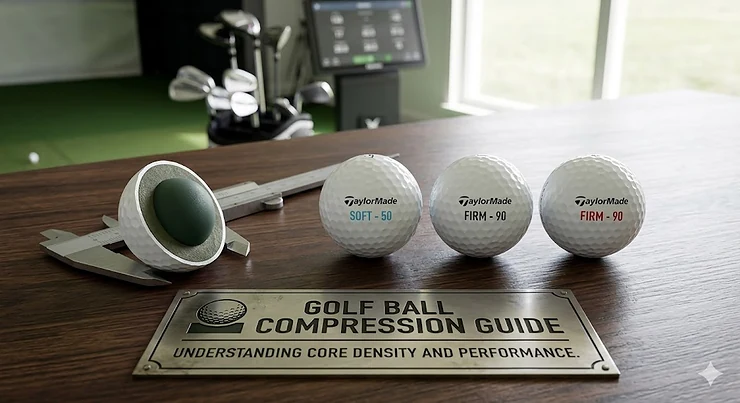
You’ve probably grabbed whatever golf balls were on sale at your local pro shop, tossed them in your bag, and wondered why your buddy with a similar handicap is suddenly outdriving you by 15 yards. Here’s the secret nobody talks about: you’re likely playing the wrong compression.
Golf ball compression isn’t just another marketing buzzword that manufacturers throw around to sell more sleeves. It’s the single most important specification that determines whether you’re maximizing—or completely wasting—the energy from your swing. Think of it this way: hitting a high-compression tour ball with an 80 mph swing speed is like trying to squeeze a rock. The ball simply won’t compress enough to spring back efficiently, and you’re leaving 10-20 yards on the table with every drive.
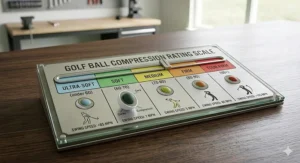
The compression rating, measured on a scale from 29 to 120, tells you how much force is required to deform the ball at impact. Lower numbers mean softer balls that compress easily (perfect for slower swing speeds), while higher numbers indicate firmer balls designed for faster swingers who can fully activate the core. What most weekend golfers don’t realize is that playing a ball with the wrong compression for your swing speed doesn’t just cost you distance—it murders your spin control around the greens and makes the game unnecessarily difficult. According to USGA equipment standards, all conforming golf balls must meet strict specifications for weight, size, and velocity, but compression remains the variable that separates a $20 ball from a $60 premium offering.
In this guide, I’m breaking down exactly how to match compression to your game, revealing the specific balls that deliver the best performance at every swing speed bracket, and showing you why that Pro V1 sitting in your bag might actually be holding you back.
Quick Comparison Table: Top 7 Golf Balls by Compression Rating
| Golf Ball | Compression | Swing Speed Match | Price Range | Best For |
|---|---|---|---|---|
| Wilson Duo Soft | 29 | Under 75 mph | $20-$25/dozen | Maximum softness, beginners |
| Callaway Supersoft | 38 | 70-85 mph | $22-$28/dozen | Forgiveness, straighter flight |
| Bridgestone e12 Soft | 50 | 75-90 mph | $30-$35/dozen | Mid-handicappers, distance |
| Srixon Q-Star Tour | 72 | 85-95 mph | $35-$40/dozen | Tour feel on a budget |
| TaylorMade TP5 | 85 | 90-105 mph | $55-$60/dozen | Balanced performance |
| Titleist Pro V1 | 87 | 95-105 mph | $55-$60/dozen | Premium all-around |
| Titleist Pro V1x Left Dash | 97 | 105+ mph | $55-$60/dozen | Speed demons, low spin |
Looking at this comparison, the pattern becomes clear: your driver swing speed should roughly align with the compression number. The Wilson Duo Soft at 29 compression excels for seniors and beginners who struggle to break 75 mph, while the Pro V1x Left Dash at 97 compression requires serious clubhead speed to unlock its potential. Mid-handicappers swinging 85-95 mph should gravitate toward the 50-75 compression sweet spot where balls like the Bridgestone e12 Soft and Srixon Q-Star Tour live—these offer enough responsiveness without demanding tour-level speed.
💬 Just one click — help others make better buying decisions too!😊
Top 7 Golf Ball Compression Guide Products: Expert Analysis
1. Titleist Pro V1 — The Gold Standard That Actually Lives Up to the Hype
The Titleist Pro V1 remains the most-played ball on professional tours worldwide, and for 2026, Titleist refined the high-gradient core to deliver even faster ball speeds while maintaining that signature soft feel everyone raves about. With a compression rating of 87 and a 388 tetrahedral dimple pattern, this isn’t just another premium ball—it’s the benchmark every other manufacturer tries to beat.
Here’s what the spec sheet won’t tell you: that 87 compression means you need approximately 90-95 mph of driver swing speed to properly activate the core. Go below that threshold and you’re essentially hitting an expensive rock that won’t compress enough to maximize distance. But hit it with 95+ mph and you’ll immediately understand why tour players trust this ball in major championships—the energy transfer is remarkably efficient, and the mid-trajectory flight stays stable even in 15 mph crosswinds.
From an expert perspective, the Pro V1 is the smart choice for single-digit handicappers who prioritize greenside control over raw distance. The cast urethane elastomer cover provides that “drop-and-stop” spin everyone wants on approach shots, typically generating 8,000+ rpm with wedges. Customer feedback consistently highlights two things: the ball feels noticeably softer than the Pro V1x (which matters on mishits), and it stops faster on firm greens than any ionomer-covered ball in this price range.
Pros:
✅ Exceptional greenside spin and control (8,000+ rpm with wedges)
✅ Penetrating mid-trajectory flight that holds up in wind
✅ Softer feel than Pro V1x reduces harsh feedback on mishits
Cons:
❌ Requires 90+ mph swing speed to maximize performance
❌ Scuffs more easily than firmer tour balls
Price & Value: In the $55-$60 range per dozen, the Pro V1 costs more than budget options but delivers performance that justifies the premium for serious players who can consistently compress it.
2. Callaway Supersoft — The Forgiveness King for Slower Swing Speeds
The Callaway Supersoft has dominated Amazon’s best-seller lists for years, and the 2025/2026 version continues that streak with an ultra-low 38 compression rating specifically engineered for golfers swinging under 85 mph. This is a pure two-piece construction with a HEX aerodynamic dimple pattern and a hybrid cover that prioritizes durability over spin.
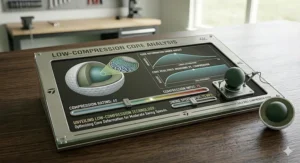
What makes this ball special isn’t just the soft feel—it’s the sidespin reduction. That 38 compression core compresses so easily that slower swingers actually achieve better energy transfer than they would with a firmer ball. Translation: if you’re currently playing a Pro V1 with an 82 mph swing, switching to the Supersoft will immediately add 8-12 yards off the tee. The low compression also means less sidespin, which is why so many high-handicappers report hitting more fairways with this ball. Your slice becomes a manageable fade instead of a two-fairway disaster.
Expert opinion: this is the best ball for anyone who loses more than three balls per round or shoots above 95. You’re not sacrificing much greenside control because, let’s be honest, you probably weren’t generating enough spin with that firmer ball anyway. Customer reviews consistently mention straighter drives and better feel on putts, though some skilled players note the ball runs out more on pitch shots compared to urethane-covered models.
Pros:
✅ Extremely forgiving on mishits with reduced sidespin
✅ Excellent value around $22-$28 per dozen
✅ Durability outlasts most premium balls
Cons:
❌ Limited greenside spin compared to tour balls
❌ Not ideal for players above 90 mph swing speed
Price & Value: At around $22-$28 per dozen, the Supersoft delivers exceptional value for high-handicappers who prioritize forgiveness and distance over scoring control.
3. TaylorMade TP5 — Revolutionary Microcoating Technology Meets Five-Layer Performance
The TaylorMade TP5 underwent a complete overhaul for 2026, introducing microcoating paint technology that solves an invisible problem you never knew existed. Traditional golf ball painting leaves inconsistent pooling in dimples, creating slight flight variations ball-to-ball. TaylorMade’s new process applies an ultra-thin, perfectly even coat that delivers predictable dispersion shot after shot—Rory McIlroy and Collin Morikawa switched immediately after testing.
At 85 compression, the TP5 sits in the sweet spot for golfers swinging 90-105 mph with their driver. The five-layer construction includes TaylorMade’s largest tour core yet, which decreases contact time with the clubface to retain more energy and boost ball speed. What this means in real-world terms: you’re getting tour-level distance without needing tour-level swing speed. The reengineered Tour Flight Dimple Pattern creates a lower, more penetrating trajectory that holds its line in wind better than the previous generation.
From my experience, the TP5 feels firmer than most players expect—it’s not a “soft” ball despite the name. That responsiveness translates to incredible feedback on every shot, letting you know immediately whether you’ve caught it pure. Customer feedback reveals that mid-handicappers love the versatility, though some note the firmer feel takes getting used to if you’re switching from a Supersoft or Duo.
Pros:
✅ Microcoating delivers consistent flight ball after ball
✅ Five-layer construction optimizes both distance and spin
✅ Penetrating trajectory excels in windy conditions
Cons:
❌ Firmer feel won’t appeal to golfers wanting maximum softness
❌ Premium pricing around $55-$60 per dozen
Price & Value: The TP5 justifies its $55-$60 price point with tour-level technology that actually makes a measurable difference, especially for players in the 90-105 mph swing speed range.
4. Srixon Q-Star Tour — Tour-Level Urethane Performance Without the Premium Price Tag
The Srixon Q-Star Tour delivers a three-piece urethane construction with FastLayer Core technology at a price point that undercuts the Pro V1 by around $20 per dozen. With a 72 compression rating and Spin Skin+ coating, this is Srixon’s softest tour ball ever, targeting golfers in the 85-95 mph swing speed bracket who want greenside control without requiring tour-level clubhead speed.
The FastLayer core is the secret weapon here—it transitions from soft in the center to firm around the edges, which means slower swingers still compress the ball enough to generate distance while maintaining that soft feel on iron shots. The Spin Skin+ coating (borrowed from Srixon’s premium Z-Star line) digs into wedge grooves to create friction and bite that you simply won’t get from ionomer-covered balls. In practical terms, expect 6,500-7,500 rpm with wedges, which is enough to stick approach shots on firm greens.
Expert perspective: the 2026 Q-Star Tour is ideal for skilled mid-handicappers (8-15 handicap range) who play at least once a week. You’re getting about 85% of Pro V1 performance at 65% of the cost. Customer reviews consistently praise the soft feel and greenside spin, though a few faster swingers note they prefer a firmer ball for maximum distance. The glossy finish on the new Divide color options also makes the ball significantly easier to track in flight.
Pros:
✅ Urethane cover provides tour-level greenside spin
✅ Excellent value around $35-$40 per dozen
✅ FastLayer core suits wide range of swing speeds
Cons:
❌ Not quite as long as firmer tour balls for 100+ mph swingers
❌ Softer feel may lack responsiveness some players prefer
Price & Value: At $35-$40 per dozen, the Q-Star Tour represents outstanding value for golfers wanting urethane performance without paying for the Titleist or TaylorMade logo.
5. Bridgestone e12 Soft — Active Acceleration Mantle Delivers Distance for Average Swingers
The Bridgestone e12 Soft targets the massive segment of golfers swinging under 105 mph with a three-piece Surlyn construction featuring Bridgestone’s proprietary Active Acceleration Mantle layer. At approximately 50 compression, this ball sits between the ultra-soft options (Duo, Supersoft) and mid-compression tour balls, making it perfect for 75-90 mph swing speeds.
The Active Acceleration Mantle is where the engineering magic happens—this High Performance Polymer material increases thrust and initial velocity at impact while allowing Bridgestone to soften the core for better feel. In simpler terms, you’re getting more distance off the tee without sacrificing the soft response that makes chipping and putting easier. The Delta Wing Dimple pattern reduces drag and straightens flight, which explains why customer reviews frequently mention hitting more fairways with this ball.
From a practical standpoint, the e12 Soft is the smart pick for golfers in the 15-25 handicap range who struggle with slicing. The reduced sidespin won’t completely fix your swing, but it will keep wayward drives in play more often. Customer feedback highlights excellent durability and straighter flight, though some note the ball doesn’t check up as aggressively as urethane models on short approach shots.
Pros
✅ Active Acceleration Mantle boosts distance for moderate swing speeds
✅ Delta Wing dimples reduce sidespin for straighter drives
✅ Great durability with Surlyn cover
Cons:
❌ Less greenside spin than urethane-covered competitors
❌ Feel is firmer than you’d expect from “Soft” branding
Price & Value: Around $30-$35 per dozen, the e12 Soft delivers solid performance for average golfers who need help straightening drives without breaking the bank.

6. Wilson Duo Soft — World’s Softest Ball for Seniors and Beginners
The Wilson Duo Soft holds the title as the world’s softest golf ball with an absurdly low 29 compression rating, engineered specifically for golfers with swing speeds under 75 mph. This two-piece construction features a re-engineered velocity-boosting core and ionomer cover that prioritizes maximum compression at lower swing speeds.
What the 29 compression means in practice: if you’re a senior golfer who’s lost some clubhead speed over the years, or a beginner who hasn’t developed much power yet, this ball will compress more fully than any other option on the market. That full compression translates directly into better energy transfer and more distance. The high-energy core compensates for slower swing speeds by launching the ball higher and reducing spin, which creates a straighter flight path that keeps casual golfers in play.
From an expert viewpoint, the Duo Soft is the correct choice for roughly 40% of recreational golfers who should never be playing a premium tour ball. You’re not giving up much around the greens because—let’s be realistic—you weren’t generating enough spin with a firmer ball anyway. Customer feedback overwhelmingly focuses on the extremely soft feel, easier launches, and straighter drives, though skilled players note the ball feels almost mushy and lacks feedback.
Pros:
✅ Industry-leading 29 compression perfect for slow swing speeds
✅ Exceptional value around $20-$25 per dozen
✅ Straighter flight helps high-handicappers find fairways
Cons:
❌ Minimal greenside spin for skilled players
❌ Very soft feel won’t appeal to better golfers
Price & Value: At just $20-$25 per dozen, the Duo Soft is a no-brainer for seniors, beginners, and anyone swinging under 75 mph who wants maximum distance on a tight budget.
7. Titleist Pro V1x Left Dash — Extreme Speed and Low Spin for Bombers
The Titleist Pro V1x Left Dash is engineered for one specific type of golfer: players swinging 105+ mph who want maximum distance with dramatically reduced spin. With a 97 compression rating and a dual-core chemistry upgrade, this is Titleist’s fastest ball, producing higher ball speeds and a more penetrating trajectory than the standard Pro V1x.
The Left Dash differentiates itself through the thicker smart-spin casing layer that produces extremely low long-game spin while maintaining tour-validated short-game performance. In real-world terms, if you currently flight a Pro V1 and it balloons on you with driver (creating excess spin and distance loss), the Left Dash will fly lower, cut through wind better, and roll out farther. Titleist data shows this ball reduces driver spin by 200-400 rpm compared to Pro V1x while maintaining similar wedge spin rates.
Expert opinion: this is a niche ball for fast swingers who generate too much spin with conventional tour balls. If you’re swinging 105+ mph and your current ball climbs too high or curves excessively, the Left Dash solves both problems. The firmer feel (97 compression) provides instant feedback and responsiveness that faster swingers appreciate. Customer reviews from long hitters consistently mention lower, more penetrating drives and better wind performance, though some note the ball feels almost too firm on putts.
Pros:
✅ Extremely low driver spin ideal for fast swingers
✅ Dual-core upgrade delivers fastest ball speeds in Pro V1 family
✅ Penetrating flight excels in windy conditions
Cons:
❌ Requires 105+ mph swing speed to maximize benefits
❌ Firmer feel (97 compression) not for everyone
Price & Value: At $55-$60 per dozen, the Pro V1x Left Dash is worth the premium for fast swingers who’ve struggled with excessive spin on conventional tour balls.
How to Match Your Swing Speed to the Right Compression
Here’s the decision framework nobody explains clearly: swing speed determines compression needs, but it’s not a perfect 1:1 ratio. The conventional wisdom says match your swing speed in mph to the compression number, but that oversimplifies the physics.
The Real Swing Speed Brackets
Under 75 mph → You need ultra-low compression (29-40) like the Wilson Duo Soft or Callaway Supersoft. At this speed, you’re not generating enough force to properly compress anything rated above 50. Playing a Pro V1 at 70 mph is literally leaving 15-20 yards on the table because the ball won’t deform enough to spring back efficiently.
75-85 mph → Low-to-mid compression (40-60) balls are your sweet spot. The Bridgestone e12 Soft or Callaway Supersoft work beautifully here. You’re generating enough speed to activate the core but not so much that you need a tour ball’s firmness.
85-95 mph → Medium compression (60-75) delivers optimal performance. This is where the Srixon Q-Star Tour shines. You’ve got enough speed to properly compress tour-level constructions, and you’ll benefit from the added spin control around greens.
95-105 mph → High compression (80-90) balls like the Titleist Pro V1 or TaylorMade TP5 finally make sense. You’re generating tour-level forces, and these balls are engineered to handle that energy transfer efficiently.
105+ mph → Very high compression (90+) balls such as the Pro V1x Left Dash deliver maximum performance. You actually need this firmness to prevent over-compression, which would create energy loss and ballooning trajectory.
The Launch Monitor Test
Want to know your exact swing speed? Stop guessing. Most golf retailers and courses now offer launch monitor sessions for around $30-50. Spend one hour getting real data on your driver speed, and you’ll immediately know which compression bracket fits your game. What you’ll probably discover: you’re swinging 5-10 mph slower than you think, which means you’ve been playing balls that are too firm.
Common Mistakes When Choosing Golf Ball Compression
Mistake #1: Buying Whatever the Pros Use
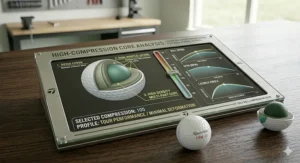
Tiger Woods plays a high-compression tour ball because he swings 120+ mph. You swing 87 mph. Playing his ball won’t make you better—it’ll make the game harder. Tour players need compression ratings above 90 to prevent over-compression and maintain control. You need 60-75 compression to maximize distance and feel. Stop trying to play like a tour pro when your swing speed doesn’t support it.
Mistake #2: Assuming Soft Always Means More Distance
The golf industry has conditioned recreational players to believe “soft = more distance,” but that’s only true if your swing speed matches the compression. A 105 mph swinger playing a 38-compression Supersoft will actually lose distance because the ball over-compresses, creating inefficient energy transfer and excess spin. Soft balls work for slow swingers. Fast swingers need firm balls. Match compression to speed, not marketing claims.
Mistake #3: Ignoring Greenside Performance for Driver Distance
Too many golfers obsess over gaining 5 yards off the tee while ignoring the fact they’re leaving shots all over the green because their ball won’t spin. If you’re a single-digit handicap, those three extra yards from a distance ball won’t help nearly as much as a ball that checks up on a tucked pin. Compression affects both distance and spin—prioritize what matters most for your scoring zone.
Mistake #4: Playing Different Compressions Based on Weather
Some golfers switch to softer balls in cold weather, thinking it compensates for temperature effects. Here’s the physics reality: cold weather reduces ball compression across the board by about 10-15 points regardless of rating. Playing a 50-compression ball in 40°F weather means you’re effectively hitting a 35-40 compression ball. The solution isn’t changing balls—it’s accepting the distance loss and adjusting club selection.
Compression and Swing Speed: The Science Behind the Numbers
The relationship between compression and swing speed comes down to energy transfer efficiency. When a golf ball compresses at impact, it stores elastic energy in the deformed core. That energy then releases as the ball springs off the clubface, converting stored energy back into kinetic energy (ball speed).
The critical concept is “full compression.” You want to compress the ball just enough to maximize energy storage without over-compressing. Over-compression wastes energy as heat and creates excess spin, both of which reduce distance. Under-compression means you’re not storing enough energy in the first place.
According to research published by the USGA on golf ball testing standards, ball speed depends heavily on how efficiently the core compresses and rebounds. The optimal compression point varies by swing speed—faster swings require firmer cores to prevent over-compression, while slower swings need softer cores to achieve full compression.
Think of it like a spring: too stiff and you can’t compress it fully (under-compression), too soft and you bottom it out (over-compression). The goal is matching your swing force to the spring rate for maximum rebound efficiency.
Temperature Effects on Compression
Golf balls get firmer in cold weather and softer in heat, shifting effective compression by approximately 10-15 points. A 75-compression ball in 90°F weather plays more like 65 compression, while the same ball in 40°F plays closer to 85-90 compression. This explains why your drives feel dead in January—the ball isn’t compressing as efficiently due to increased core stiffness.
Low vs High Compression: Which Delivers More Distance?
The answer depends entirely on your swing speed, but recent robotic testing has challenged some long-held assumptions. For years, the industry preached that slow swingers should use low-compression balls for maximum distance. That’s still mostly true, but with important caveats.
For swing speeds under 90 mph: Low compression (40-60) delivers measurably more distance because these swingers can’t generate enough force to fully compress firmer balls. Robot testing at 80 mph shows low-compression balls producing 8-12 more yards of carry than high-compression tour balls.
For swing speeds 90-100 mph: Medium compression (70-85) delivers optimal distance. Interestingly, some studies show these swingers actually gain slight distance from higher-compression balls due to reduced spin, though the difference is marginal (2-3 yards).
For swing speeds above 100 mph: High compression (85+) prevents over-compression and excessive ballooning. Fast swingers playing soft balls often lose distance because the ball over-compresses, creating energy waste and too much spin.
The myth that needs debunking: “Soft balls always go farther for everyone.” Recent data from golf ball laboratories shows that across swing speeds above 95 mph, firmer balls actually produce faster ball speeds due to more efficient energy transfer. The sweet spot principle applies—match compression to swing speed for optimal results.
Practical Usage Guide: Getting the Most from Your Compression Choice
Breaking In New Balls
Golf balls don’t actually need “breaking in,” but temperature matters. Store balls at room temperature (65-75°F) for optimal performance. Balls stored in hot car trunks (120°F+) or cold garages (under 40°F) will play differently due to compression changes. Before important rounds, keep your balls at room temperature overnight.
Rotation Strategy
Even if you’ve found your perfect compression match, rotate between two different compression ratings based on conditions. On firm, fast courses where roll-out matters, consider stepping up 10-15 compression points. On soft courses where stopping power is critical, your normal compression works best. This isn’t about changing your game—it’s about optimizing for course conditions.
Maintenance Tips
Compression doesn’t change significantly over a ball’s playable life unless you’re hitting cart paths. A scuffed cover affects spin, not compression. Clean balls with warm water and mild soap to maintain optimal performance. Heavily scuffed balls lose about 5-10% spin performance but maintain compression characteristics.
Storage Guidelines
Store balls in a cool, dry place away from direct sunlight. While modern balls don’t degrade like wound balls from the 1990s, UV exposure over months can harden the cover slightly. The compression rating itself won’t change, but the cover’s responsiveness to wedge grooves can decrease.
Golf Ball Compression Chart: Complete Reference Guide
Understanding where each major model falls on the compression spectrum helps you make informed decisions. Here’s the complete landscape:
Ultra-Low Compression (29-40): Wilson Duo Soft (29), Callaway Supersoft (38), Titleist TruFeel (60). These balls maximize compression for golfers swinging under 80 mph.
Low Compression (41-60): Bridgestone e12 Soft (50), Srixon Soft Feel (60), TaylorMade Tour Response (70). The sweet spot for average recreational golfers in the 75-90 mph range.
Medium Compression (61-80): Srixon Q-Star Tour (72), Callaway Chrome Tour (75), Vice Pro (75). Designed for mid-to-low handicappers swinging 85-95 mph.
High Compression (81-95): TaylorMade TP5 (85), Titleist Pro V1 (87), Titleist AVX (90). Tour-level balls requiring 95+ mph swing speeds to maximize performance.
Very High Compression (96+): Titleist Pro V1x (97), Titleist Pro V1x Left Dash (97), some legacy tour balls. Built exclusively for bombers swinging 105+ mph who need to prevent over-compression.
The pattern reveals a critical insight: there’s a ball engineered for every swing speed bracket. The mistake most golfers make is jumping to high-compression tour balls before their swing speed supports it.
Soft vs Firm Golf Balls: Feel Preferences Beyond the Numbers
Compression determines firmness, but “feel” encompasses more than just the moment of impact. The cover material, construction layers, and even dimple pattern affect how a ball feels across different shot types.
Off the Driver
Firm balls (85+ compression) provide crisp, responsive feedback that faster swingers describe as “explosive.” You feel exactly where you caught it on the face. Soft balls (under 60 compression) deliver muted impact sensation—some golfers love the cushioned feel, others find it unsatisfying.
On Iron Shots
Medium-compression balls (60-80) often deliver the most pleasing feel on irons because they balance responsiveness with softness. You get enough feedback to know if you’ve struck it pure without harsh vibrations on thin shots.
Around the Greens
Cover material matters more than core compression for greenside feel. Urethane-covered balls (like Pro V1, TP5, Q-Star Tour) feel noticeably softer on chips and pitches than ionomer-covered balls (Supersoft, Duo Soft), even if core compressions are similar. The urethane grips wedge grooves differently, creating that “sticky” sensation skilled players prefer.
On the Putter
Personal preference dominates here. Some golfers prefer the soft, muted click of low-compression balls, while others want the responsive feel of firmer models. Interestingly, blind testing shows golfers can’t reliably identify compression on putts alone—cover material and construction have bigger impacts on putting feel.
Compression Rating Explained: What the Numbers Actually Mean
The compression scale theoretically runs 0-200, but modern balls fall between 29-120. The number represents how much the ball deforms under a standardized 200-pound load applied by testing equipment. Lower numbers indicate more deformation (softer), higher numbers mean less deformation (firmer).
Here’s what golfers misunderstand: compression isn’t a linear scale. The difference between 50 and 60 compression feels far more dramatic than the difference between 85 and 95 compression. This is because the human perception of firmness follows a logarithmic curve—small changes at the soft end of the spectrum create bigger perceived differences than similar numerical changes at the firm end.
Industry Testing Variations
Not all manufacturers measure compression identically. Some measure core-only compression, others measure the entire ball. This explains why two balls with identical compression ratings can feel different—they might be measuring different components. When comparing balls across brands, pay more attention to the stated swing speed recommendations than the raw compression number.
The Compression Myth
The biggest myth in golf equipment: “You should match your swing speed in mph to the compression rating.” This oversimplifies the physics. A 90 mph swinger doesn’t necessarily need a 90-compression ball. Core construction, cover material, and mantle layers all affect how a ball performs at a given swing speed. Use compression as a general guideline, but trust on-course performance over numerical matching.
Compression Comparison Table: Budget vs Premium Options
| Price Tier | Ball | Compression | Construction | Sweet Spot Swing Speed |
|---|---|---|---|---|
| Budget | Wilson Duo Soft | 29 | 2-piece ionomer | Under 75 mph |
| Budget | Callaway Supersoft | 38 | 2-piece ionomer | 70-85 mph |
| Mid-Range | Bridgestone e12 Soft | 50 | 3-piece Surlyn | 75-90 mph |
| Mid-Range | Srixon Q-Star Tour | 72 | 3-piece urethane | 85-95 mph |
| Premium | TaylorMade TP5 | 85 | 5-piece urethane | 90-105 mph |
| Premium | Titleist Pro V1 | 87 | 3-piece urethane | 95-105 mph |
| Premium | Titleist Pro V1x Left Dash | 97 | 4-piece urethane | 105+ mph |
The table reveals an uncomfortable truth for many golfers: premium balls aren’t universally better—they’re better for specific swing speeds. A $25 Callaway Supersoft will outperform a $60 Pro V1 for a golfer swinging 78 mph with driver. The Pro V1 won’t compress efficiently at that speed, resulting in less distance and harsher feel on mishits. Meanwhile, the Supersoft’s 38 compression will deform properly, maximizing energy transfer and delivering a softer response.
Budget balls aren’t just “cheap versions” of tour balls—they’re purpose-built for slower swing speeds where low compression actually delivers superior performance. You’re not compromising by playing an e12 Soft if your swing speed falls in the 75-90 mph range. You’re optimizing.
Long-Term Cost Analysis: Does Higher Compression Mean Better Value?
Here’s the calculation most golfers never make: cost per round versus performance gain. If you lose 2-3 balls per round (which describes roughly 60% of recreational golfers), paying $5 per ball for Pro V1s means you’re throwing $10-15 into the woods every 18 holes.
The Math for High-Handicappers (15+ handicap):
- Premium balls (Pro V1, TP5): $5 per ball × 3 balls lost = $15 per round wasted
- Budget balls (Supersoft, Duo): $2 per ball × 3 balls lost = $6 per round wasted
- Annual savings (50 rounds): $450
If you’re not breaking 90 consistently, you’re not skilled enough to exploit the performance advantages of premium balls anyway. The Supersoft’s forgiveness actually helps your scores more than the Pro V1’s spin control, and you’re saving $450 annually.
The Math for Low-Handicappers (under 8 handicap):
- Premium balls rarely get lost (maybe 0.5 per round)
- Performance gain around greens worth approximately 1-2 strokes per round
- Cost difference: $30 more per dozen justified by scoring benefits
For skilled players who rarely lose balls and can actually generate enough spin to exploit urethane covers, premium balls represent good value despite higher upfront cost.
❓ Frequently Asked Questions
❓ What compression golf ball should I use for an 85 mph swing speed?
❓ Does golf ball compression really affect distance that much?
❓ Are low compression golf balls better for seniors?
❓ Can I use high compression balls if I have a slow swing speed?
❓ How do I know my exact driver swing speed?
Conclusion: Your Next Round Starts with the Right Compression
Stop playing golf balls based on what your buddy uses or which brand sponsored the latest tournament winner. Your swing speed determines which compression delivers maximum performance, and that compression rating matters more than every other specification combined.
If you’re swinging under 85 mph, low-compression balls (29-60) will immediately add distance and improve feel without changing your swing. The Wilson Duo Soft, Callaway Supersoft, and Bridgestone e12 Soft all deliver exceptional performance for moderate swing speeds at price points that won’t wreck your budget. You’re not compromising—you’re optimizing for your actual game.
For golfers in the 85-100 mph range, medium-compression balls (60-85) like the Srixon Q-Star Tour or TaylorMade TP5 provide the best balance of distance and control. You’ve developed enough speed to benefit from tour-level constructions, and these balls will reward consistent ball-striking with both distance and spin.
Fast swingers above 100 mph should embrace high-compression balls (85-97) without hesitation. The Titleist Pro V1, TaylorMade TP5, and Pro V1x Left Dash are engineered specifically for your swing speed, preventing over-compression and delivering optimal energy transfer.
The bottom line: match compression to your measured swing speed, not the marketing claims on the box. Spend one hour getting launch monitor data, then buy balls engineered for your actual performance. The difference in your scores will justify the research immediately.
Recommended for You
- Golf Shaft Flex Guide: 7 Best Shafts to Upgrade Your Game in 2026
- 7 Best Ways How to Choose Golf Clubs in 2026
- Cast vs Forged Irons: 7 Best Options for 2026
Disclaimer: This article contains affiliate links. As an Amazon Associate, I earn from qualifying purchases. If you purchase products through these links, we may earn a small commission at no additional cost to you.
✨ Found this helpful? Share it with your friends! 💬🤗
