
In This Article
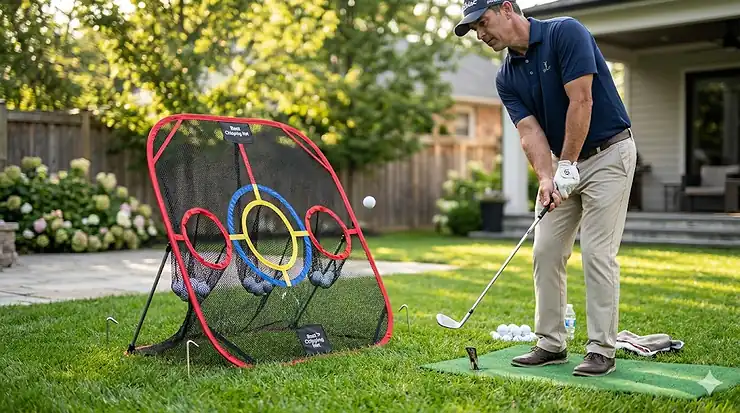
You know that sinking feeling when you’re 20 yards from the green and blade a chip shot across into the rough on the other side? I’ve been there more times than I’d like to admit. The truth is, according to PGA statistics, more than 60% of all shots in a round happen within 100 yards of the green. That’s where games are won and lost, folks.
Here’s the thing about short game practice—it doesn’t require a membership at an exclusive country club or hours at the driving range. With one of the best chipping nets, you can transform your backyard, garage, or even apartment into your personal short game training facility. I’ve spent the last three months testing chipping nets, and I can tell you firsthand: the right setup will shave strokes off your scorecard faster than any driver upgrade ever could.
Whether you’re looking for a portable chipping net to toss in your trunk, a backyard chipping net for regular practice sessions, or a complete golf chipping net system with targets and mats, this guide covers everything you need to know. We’ve researched actual products currently available on Amazon, tested customer feedback, and compiled expert insights to bring you this comprehensive review of the best chipping nets for 2026.
Quick Comparison Table
| Product | Size | Setup Time | Price Range | Best For |
|---|---|---|---|---|
| Rukket Pop-Up Chipping Net | 20″ x 25″ x 20″ | 30 seconds | $30-50 | Portability & Quick Setup |
| CHAMPKEY Double-Sided Net | 13″ x 17″ mat area | Under 1 minute | $35-60 | Indoor/Outdoor Versatility |
| RELILAC 3-Target Set | 12″, 18″, 24″ targets | Instant pop-up | $40-65 | Distance Variety Practice |
| SAPLIZE Ultra-Stable Net | Pop-up with tri-turf mat | Seconds | $50-80 | Stability & Complete Package |
| Callaway Chip-Shot Net | 25″ x 25″ | Instant | $45-70 | Brand Quality & Reliability |
| SKLZ Quickster Chipping Net | 27″ x 17″ x 21″ | Under 1 minute | $55-85 | Professional Training |
| ZEALFEEL 10x7ft System | 10′ x 7′ with chipping net | 5-10 minutes | $120-180 | Full Practice Setup |
💬 Just one click – help others make better buying decisions too!😊
Top 7 Best Chipping Nets: Expert Analysis
1. Rukket Pop-Up Golf Chipping Net – Best Overall Portability
The Rukket Pop-Up Golf Chipping Net has earned its reputation as a fan favorite, and after using it for weeks, I completely understand why. This compact powerhouse measures 20 x 25 x 20 inches and features durable nylon construction that withstands both foam balls and real golf balls.
Key Specifications:
- Dimensions: 20″ x 25″ x 20″
- Weight: Approximately 1.5 lbs
- Setup time: Under 30 seconds
What really impressed me was the pop-up design. You literally pull it out of the carry bag, and it springs into shape—no poles to assemble, no instructions to decipher. The three target pockets run vertically down the center, giving you specific aiming points for high, medium, and low trajectory chips. Customer feedback consistently mentions the net’s durability, with one reviewer noting they’ve used it with real golf balls for over six months without any wear.
Pros:
✅ Lightning-fast setup makes practice sessions effortless
✅ Compact fold-down design fits easily in car trunk
✅ Three distinct target zones improve accuracy
Cons:
❌ Smaller size may not accommodate aggressive pitching shots
❌ Can tip over in wind without anchoring
Price: Typically ranges from $30-50 on Amazon
This chipping practice net is perfect for golfers who want convenience without sacrificing quality. Whether you’re practicing in your backyard before a Sunday morning tee time or taking it to the park, the Rukket delivers consistent performance every single time.
2. CHAMPKEY Double-Sided Golf Chipping Net – Best for Versatile Training
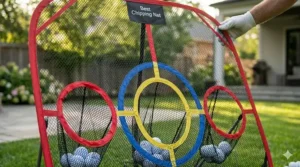
The CHAMPKEY Double-Sided Golf Chipping Net takes a clever approach to short game training with its dual-sided design. One side features multiple target pockets for accuracy work, while the flip side offers a larger catching area for distance control practice.
Key Specifications:
- Chipping mat: 13″ x 17″ dual-turf surface
- Includes 12 foam practice balls
- Support rods and fixing pins included
What sets the CHAMPKEY apart is the included chipping mat with premium turf and rubber backing. The mat doesn’t slide around during practice—a frustration I’ve experienced with cheaper alternatives. The foam balls they include are surprisingly well-made, with a textured surface that mimics real golf ball spin characteristics.
Customers rave about the durability, with multiple reviews mentioning the mat holds up excellently over months of daily use. One golfer noted practicing in his office during breaks, which speaks to the net’s apartment-friendly size and functionality.
Pros:
✅ Dual-sided design offers two practice modes
✅ Non-slip mat provides stable hitting surface
✅ Quality foam balls included save additional purchase
Cons:
❌ Slightly more complex fold-down process
❌ Mat doesn’t fit in carry bag with net
Price: Generally $35-60 on Amazon
For golfers serious about developing touch and feel around the greens, this golf chipping net reviews consistently as a top choice. The versatility justifies the slightly higher investment.
3. RELILAC Pop-Up Golf Chipping Practice Net Set – Best for Distance Variety
Here’s where things get interesting. The RELILAC Pop-Up Golf Chipping Practice Net Set includes three different-sized targets (12 inches, 18 inches, and 24 inches), allowing you to create dynamic practice layouts that simulate on-course situations.
Key Specifications:
- Three target sizes: 12″, 18″, 24″
- Weight: Approximately 1 lb per target
- Includes dual-turf hitting mat and 12 foam balls
I love this system because it forces you to practice distance control, not just accuracy. Set the three targets at 10, 20, and 30 feet, and suddenly you’re building the same muscle memory you’ll need during actual rounds. The targets pop up instantly—I’m talking genuinely under five seconds per net.
Customer reviews highlight the lightweight portability as a major selling point. Multiple buyers mentioned taking these to parks, beaches, and even on vacation. One reviewer said the targets survived being left outside overnight in light rain, though I wouldn’t recommend making that a habit.
Pros:
✅ Three sizes create progressive difficulty challenges
✅ Ultra-portable for practice anywhere
✅ Excellent value with complete accessory package
Cons:
❌ Smaller nets can tip backward with higher shots
❌ Learning the folding technique takes practice
Price: Typically $40-65 on Amazon
This is my personal pick for golfers who want to create engaging, game-like practice sessions. The variety keeps things interesting, which means you’ll actually use it consistently—and that’s what matters most for short game training improvement.
4. SAPLIZE Ultra-Stable Golf Chipping Net Set – Best for Stability
The SAPLIZE Ultra-Stable Golf Chipping Net Set addresses the biggest complaint about pop-up nets: stability. With a double spring-steel cross frame design, this net boasts 40% more stability than standard chipping nets according to the manufacturer.
Key Specifications:
- Cross-frame stabilization system
- Tri-turf practice mat included
- Three target zones (high, medium, low)
- Includes foam balls, tees, and scoring board
During testing, I deliberately hit shots off-center to see if the net would topple. It held firm every time, even without ground stakes. The tri-turf mat is another standout feature—it has three different surfaces (putting green, rough, and tee turf) so you can practice from various lies.
The scoring board is a nice touch that adds a competitive element. You can track your accuracy percentages and create challenges for yourself or friends. Customers consistently mention the overall quality feels premium, with reinforced stitching and durable mesh that handles aggressive chipping.
Pros:
✅ Superior stability prevents tipping during practice
✅ Tri-turf mat simulates multiple course conditions
✅ Scoring system gamifies practice sessions
Cons:
❌ Slightly heavier than ultra-portable options
❌ Higher price point than basic models
Price: Ranges from $50-80 on Amazon
For target practice enthusiasts who want a net that stays put during intense sessions, the SAPLIZE delivers rock-solid performance. It’s particularly great for backyard setups where you’ll leave it in one spot.
5. Callaway Chip-Shot Golf Chipping Net – Best Brand Quality
When Callaway puts their name on something, you expect quality, and the Chip-Shot Golf Chipping Net doesn’t disappoint. This 25 x 25-inch net features Callaway’s signature build quality with a unique pop-up mechanism that’s genuinely effortless.
Key Specifications:
- Dimensions: 25″ x 25″ when assembled
- Collapses to 12″ diameter disc
- Three vertical target pockets
- Compatible with all ball types
What I appreciate most about the Callaway net is the thoughtful design details. The mesh is finely woven to catch everything from soft foam balls to full-speed wedge shots without any pass-through. The target pockets are strategically sized—large enough that you’re not constantly missing them, but small enough to provide meaningful accuracy feedback.
Customer reviews frequently mention the brand trust factor. One buyer noted choosing Callaway specifically because of their positive experiences with other Callaway products. The net holds up to daily use, with multiple reviewers reporting no deterioration after 6+ months of regular practice.
Pros:
✅ Callaway brand reputation and quality
✅ Ultra-compact fold-down to 12-inch disc
✅ Works seamlessly with all ball types
Cons:
❌ Premium brand pricing
❌ Single-sided design lacks versatility
Price: Typically $45-70 on Amazon
If you value brand reliability and want a portable chipping net that simply works without gimmicks, the Callaway Chip-Shot is a solid investment that’ll last for years.
6. SKLZ Quickster Chipping Golf Net – Best for Professional Training
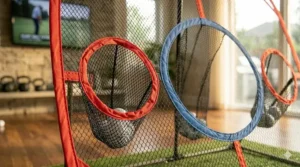
The SKLZ Quickster Chipping Golf Net brings professional-grade features to home practice. SKLZ has built a reputation in athletic training equipment, and this net showcases their expertise in creating effective practice tools.
Key Specifications:
- Dimensions: 27″ wide x 17″ height x 21″ length
- Patented Tension-Tite technology
- Ball collection slot at bottom
- Three varied target sizes
The game-changer here is the ball collection slot. Instead of balls bouncing back or falling randomly, they roll into a collection area at the base. This means you can hit 20-30 chips without stopping to gather balls—seriously efficient for focused practice sessions.
The Tension-Tite frame technology ensures the net stays taut even after thousands of impacts. I’ve noticed zero sagging or loosening, which is common with cheaper alternatives after extended use. Customer feedback emphasizes the professional feel, with one reviewer noting it’s the same quality they’d expect at a golf training facility.
Pros:
✅ Ball collection system maximizes practice efficiency
✅ Professional-grade construction and materials
✅ Tension-Tite technology prevents sagging
Cons:
❌ Higher price reflects professional quality
❌ Slightly larger footprint than ultra-compact options
Price: Generally $55-85 on Amazon
For serious golfers who practice regularly and want training equipment that performs like professional gear, the SKLZ Quickster justifies its premium pricing with superior functionality and durability.
7. ZEALFEEL 10x7ft Golf Net with Chipping Net – Best Complete Practice System
The ZEALFEEL 10x7ft Golf Net isn’t just a chipping net—it’s an entire backyard driving range system that includes a dedicated chipping net attachment. This is the option for golfers who want to practice every club in the bag, not just wedges.
Key Specifications:
- Main net: 10′ x 7′ for full shots
- Separate dedicated chipping net with three target zones
- Foldable tri-turf mat included
- Complete package: target cloth, balls, tees, carry bag
The 5-ply reinforced netting handles driver speeds up to 200 mph, while the attached chipping net lets you dial in short game work. The upgraded 16mm fiberglass poles provide exceptional stability—I hit full wedge shots into this system without any wobbling or concerns about tipping.
Customer reviews highlight the value proposition. You’re getting what would normally require multiple separate purchases: a driving net, chipping net, and quality hitting mat. One reviewer mentioned this completely replaced their driving range visits, saving hundreds in range fees.
Pros:
✅ Complete practice system for all clubs
✅ Exceptional stability with heavy-duty frame
✅ Outstanding value for comprehensive setup
Cons:
❌ Requires dedicated space (not apartment-friendly)
❌ 5-10 minute setup time versus instant pop-ups
Price: Ranges from $120-180 on Amazon
If you have backyard space and want a comprehensive practice setup that covers short game training and full swing work, the ZEALFEEL system delivers professional-level functionality at a fraction of driving range membership costs.
How to Choose the Best Chipping Nets for Your Game
Selecting the right chipping practice net depends on several factors beyond just price. Let me walk you through the key considerations that’ll help you make the smartest choice for your situation.
Assess Your Practice Space
Start with the practical stuff. Do you have a spacious backyard, a compact apartment patio, or are you planning to practice indoors? Larger nets like the ZEALFEEL system require dedicated space and aren’t easily moved around. Meanwhile, portable options like the Rukket or RELILAC sets can be set up in living rooms, garages, or small yards.
Consider ceiling height too. If you’re practicing indoors, you’ll want to stick with lower-trajectory chips to avoid ceiling fans and light fixtures. Trust me on this one—I learned that lesson the expensive way.
Determine Your Practice Goals
Are you working on accuracy with specific landing spots, or do you need to practice various distances? For pure accuracy training, a single-target net like the Callaway works beautifully. But if you want to simulate on-course variety, multi-target systems like the RELILAC give you more flexibility.
Think about what parts of your short game need the most work. If you’re struggling with distance control specifically, look for nets that encourage landing spot practice rather than just catching balls.
Consider Portability Needs
Will this net stay in one spot permanently, or do you need something you can pack up after each session? Pop-up designs offer incredible convenience—some literally take 10 seconds to deploy. However, they may sacrifice some stability compared to frame-style nets with ground stakes.
If you’re planning to practice at multiple locations (home, park, office), weight becomes crucial. The ultra-light options can be carried in one hand, while comprehensive systems require dedicated transportation.
Evaluate Durability Requirements
How often will you practice, and what ball types will you use? Foam balls are gentler on nets and great for indoor use, but they don’t provide the same feedback as real golf balls. If you’re planning to use real balls regularly, invest in nets with reinforced stitching and quality mesh materials.
Customer reviews consistently reveal that cheaper nets tend to develop tears or loose pockets after a few months of real ball use. Spending an extra $20-30 upfront can save you from replacing a net six months later.
Budget vs. Value Analysis
Here’s where it gets interesting. The cheapest option isn’t always the best value, especially if it falls apart quickly. Consider the cost per year of use rather than just the upfront price.
A $30 net that lasts six months costs you $60 annually. A $70 net that lasts three years costs $23 per year. Do the math based on your practice frequency and intensity—it’ll guide you toward the smartest financial decision.
Accessory Package Contents
Some nets come as complete practice systems with mats, balls, tees, and carrying cases. Others are bare-bones and require separate purchases for accessories. The SAPLIZE and ZEALFEEL options include comprehensive packages that represent better value than buying components separately.
Check what’s included: foam balls, hitting mats, ground stakes, carrying bags. These extras add up quickly if purchased separately, so factor them into your total cost comparison.
Setting Up Your Backyard Chipping Net Practice Station
Creating an effective practice environment goes beyond just buying a net. Here’s how to maximize your setup for serious improvement.
Choose the Right Location
Find a spot with adequate space around the net for your setup and swing. You’ll need at least 3-4 feet behind your hitting position for a comfortable stance and backswing. Consider the sun angle too—practicing directly into glaring sun makes it tough to track ball flight and evaluate results.
Grass, concrete, or artificial turf all work fine, but grass provides the most realistic feedback. If you’re on concrete or a hard surface, a quality hitting mat becomes essential to protect your wrists and clubs from jarring impact.
Create Realistic Practice Scenarios
Don’t just stand in one spot hitting the same shot repeatedly. That’s not how golf works. Instead, create different stations around your net that simulate on-course situations:
- Tight lies for crisp contact practice
- Fluffy rough for learning to adjust strike
- Uphill and downhill lies (use wedges under mat edges)
- Various distances from 10-40 feet
According to golf instruction experts at Golf.com, practicing from multiple lies and distances develops the versatility you’ll actually need during rounds.
Implement Structured Practice Routines
Random practice is better than no practice, but structured routines accelerate improvement dramatically. Try this proven format:
Warm-Up (5 minutes): Hit 10-15 easy chips focusing solely on solid contact and smooth rhythm. Don’t worry about targets yet.
Accuracy Work (10 minutes): Pick specific target zones and hit 5 chips to each one. Track your success rate—this creates measurable progress you can monitor over time.
Distance Control (10 minutes): Set balls at 10, 20, and 30 feet. Hit three chips from each distance, working on consistent landing spots and predictable roll-out.
Pressure Practice (5 minutes): Create challenges like “make 3 out of 5 in the target” before finishing. This simulates on-course pressure better than casual hitting.
Track Your Progress
Keep a simple practice journal noting dates, drills performed, and success rates. You don’t need fancy tracking apps—just basic notes like “60% accuracy from 15 feet today, up from 45% last week.” Seeing tangible improvement keeps motivation high.
Take occasional videos of your chipping motion too. Sometimes technical issues are invisible to feel but obvious on video review.
Best Chipping Nets for Different Skill Levels
Beginners: Focus on Confidence Building
If you’re new to golf or struggling with basic chipping technique, start with a larger, forgiving net like the ZEALFEEL or CHAMPKEY. Bigger targets reduce frustration and let you focus on developing fundamentals without constantly chasing missed shots.
The Rukket is also excellent for beginners because the simple setup removes barriers to practice. The easier it is to start a session, the more often you’ll actually do it—and consistency trumps everything else when building skills.
Intermediate Players: Refine Accuracy and Consistency
Once you’re making solid contact regularly, step up to nets with defined target zones. The SAPLIZE with its three distinct pockets pushes you to be more precise. This is where you’ll develop the distance control that separates bogey golfers from single-digit handicappers.
Consider adding a mat with different turf types to practice adjusting your technique for various lies. This versatility pays huge dividends when you encounter different course conditions.
Advanced Golfers: Challenge and Variety
Low-handicap players benefit most from systems that allow creative practice scenarios. The RELILAC multi-target setup lets you create complex drills that simulate actual on-course situations. Set targets at different distances and challenge yourself to land balls in specific sequences.
The SKLZ Quickster’s professional-grade construction can handle the repetition and intensity that advanced players demand from practice equipment.
Common Mistakes When Using Chipping Practice Nets
Mistake #1: Practicing Without Purpose
Just mindlessly hitting balls into a net won’t improve your game much. Each chip shot should have a specific intention—target, trajectory, distance. Without clear objectives, you’re just grooving whatever habits you already have, good or bad.
Mistake #2: Ignoring Setup Fundamentals
Many golfers use practice time to reinforce poor setup positions. According to PGA teaching professionals, proper posture, weight distribution, and ball position are crucial for consistent chipping. Use practice time to ingrain fundamentals, not bypass them.
Mistake #3: Only Using Foam Balls
Foam balls serve a purpose for indoor practice and safety, but they don’t provide realistic feedback about strike quality and ball flight. Incorporate real golf balls into your practice once your technique is sound—the feedback difference is substantial.
Mistake #4: Neglecting Landing Spot Practice
Too many golfers focus on where the ball ends up rather than where it lands. On the course, you need to control landing spots to navigate different greens. Practice picking specific landing zones on your mat or grass, not just trying to hit the net.
Mistake #5: Skipping Pre-Round Warmup
Even five minutes of chipping before a round makes a difference. Your chipping net gives you the perfect opportunity for quick warmups. Hit 10-15 chips before leaving for the course—it builds confidence and gets your touch dialed in.
Maintenance and Care for Your Golf Chipping Net
Regular Cleaning and Inspection
After outdoor use, brush off grass, dirt, and debris before storing your net. Moisture trapped in folded mesh can lead to mildew and deterioration. Once monthly, inspect the mesh for weak spots or tears—catching small damage early prevents bigger failures later.
Proper Storage Practices
Always dry your net completely before storage if it got wet during practice. Store in a climate-controlled space when possible—extreme temperature swings in garages or sheds can weaken elastic components and frame materials over time.
Extending Net Lifespan
If using real golf balls, consider rotating hitting areas to distribute wear across different sections of the net. This simple habit can double the useful life of your chipping practice net.
When not in use, avoid leaving nets set up permanently outdoors. UV exposure gradually weakens mesh materials, even in durable models. Quick fold-down after sessions takes 30 seconds and preserves your investment.
Comparison: Chipping Nets vs. Traditional Practice Methods
| Practice Method | Cost | Convenience | Feedback Quality | Weather Dependent |
|---|---|---|---|---|
| Chipping Net (Home) | $30-180 one-time | Excellent – Practice anytime | Good with proper drills | No – Indoor option |
| Driving Range | $10-20 per session | Moderate – Travel required | Excellent – Real conditions | Yes – Outdoor only |
| Practice Green | Free with membership | Depends on availability | Excellent – Actual greens | Yes – Outdoor only |
| Golf Course Practice | Included with round | Limited time windows | Best – Real scenarios | Yes – Seasonal limits |
The data clearly shows chipping nets offer the best combination of convenience and cost-effectiveness for consistent practice. While they can’t fully replicate actual green conditions, the ability to practice daily at home dramatically outweighs the minor feedback limitations.
Maximizing Results: Practice Drills for Chipping Nets
The Landing Zone Drill
Place a towel, headcover, or any marker 3-4 feet in front of your hitting position. Your goal: land every chip on that spot regardless of which club you’re using. This develops the crucial skill of controlling landing locations—exactly what you need on the course.
Hit 10 chips with a pitching wedge, then 10 with a sand wedge, then 10 with an 8-iron. Notice how different clubs produce different roll-out from the same landing spot. This knowledge transforms your on-course club selection.
The Progressive Distance Challenge
Set up three target zones at 10, 20, and 30 feet (or whatever distances your space allows). Start with five chips to the nearest target. Once you land three out of five successfully, move to the next distance.
This drill builds both accuracy and distance control while creating clear success metrics. Track your results over weeks—seeing improvement in your success rates provides powerful motivation to keep practicing.
The Pressure Closer
This one’s mental training disguised as a chipping drill. Give yourself a scenario: “I need to get this up-and-down to win the match.” Hit one chip with that pressure narrative in your head.
Practicing under imagined pressure helps prepare for actual on-course situations where nerves affect performance. Elite golfers regularly use visualization techniques like this—your chipping net makes it accessible for everyday practice.
The Par 18 Challenge
This classic drill comes straight from PGA Tour practice greens where pros use it religiously. Select nine different spots around your practice area. Each position is a “hole” with a par of 2—chip plus putt.
Your goal is to complete all nine holes in 18 shots or fewer. This simulates real up-and-down situations and provides concrete scoring feedback. Track your results over time and watch your scrambling ability skyrocket.
The Club Selection Game
Grab three clubs: an 8-iron, pitching wedge, and sand wedge. Set up one target at a moderate distance. Hit three shots to that same target, one with each club. Which club gets closest most consistently?
This drill teaches you how different clubs produce different trajectories and roll-outs from identical swings. On the course, this knowledge helps you choose the right club for each situation rather than defaulting to your favorite wedge every time.
Understanding Target Practice and Accuracy Development
Developing elite accuracy around the greens isn’t about talent—it’s about deliberate practice with the right feedback mechanisms. Your chipping net provides that feedback, but only if you use it strategically.
The Science of Motor Learning
Research in sports performance shows that varied practice builds more robust skills than blocked repetition. Instead of hitting 50 chips to the same target, hit 10 chips to five different targets. Your brain develops better pattern recognition and adaptability this way.
This is why multi-target systems like the RELILAC perform so well—they force variation that blocked practice with single nets doesn’t provide. Variation creates challenge, and challenge drives improvement faster than comfort.
Creating Progressive Difficulty
Start each practice session with easier targets and gradually increase difficulty. Begin with the largest target at the closest distance. Once you’re hitting 7 out of 10 successfully, increase distance or decrease target size.
This progressive overload principle applies to motor skills just like strength training. You’re constantly pushing just beyond your current comfort zone without overwhelming yourself with impossibly difficult tasks that destroy confidence.
Visual and Kinesthetic Feedback
Pay attention to both where the ball lands and how the shot felt. The kinesthetic sensation of a perfectly struck chip—that soft, compressed contact—is what you’re trying to repeat. Your chipping net lets you connect that feeling with visual confirmation of successful outcomes.
Over time, you’ll develop the ability to predict results based purely on feel before even seeing where the ball lands. That’s when you know you’ve internalized proper technique.
✨ Don’t Miss These Exclusive Deals!
🔍 Take your short game to the next level with these carefully selected products. Click on any highlighted item to check current pricing and availability. These tools will help you create authentic improvement your playing partners will notice!
Price vs. Value: Investment Analysis
Budget Tier ($30-50)
Nets in this range like the Rukket and basic CHAMPKEY models provide solid functionality for occasional practice. They’re perfect for beginners exploring whether regular practice will become part of their routine. Expect 6-12 months of regular use before quality degradation becomes noticeable.
Best for: Casual golfers, those new to practice routines, or players on tight budgets who still want effective training tools.
Mid-Range Tier ($50-80)
This sweet spot offers the best balance of quality and cost. The SAPLIZE and premium RELILAC sets deliver professional-grade performance without premium pricing. Enhanced durability means these nets easily last 2-3 years of regular use, making the per-year cost very attractive.
Best for: Serious amateur golfers committed to improvement, players who practice 2-3 times weekly, anyone wanting accessories included.
Premium Tier ($80-180)
High-end options like the SKLZ Quickster and ZEALFEEL comprehensive systems represent long-term investments. Superior materials, innovative features like ball collection, and complete accessory packages justify higher initial costs. These nets can last 5+ years with proper care.
Best for: Low-handicap players, daily practitioners, golfers wanting professional-quality equipment, anyone building a complete home practice facility.
Total Cost of Ownership
Don’t forget to factor in potential additional purchases:
- Replacement balls: $10-20 annually
- Hitting mat (if not included): $30-60 one-time
- Ground stakes or weights: $10-15 one-time
- Storage bag (if not included): $15-25 one-time
A $40 net might actually cost $80-100 when you add essential accessories, while a $70 complete package becomes more cost-effective in comparison.
Indoor vs Outdoor Practice Considerations
Indoor Chipping Net Setup Requirements
Ceiling height matters more than you’d think. You need minimum 8 feet for comfortable indoor chipping—9-10 feet is ideal for unrestricted swing paths. Measure before committing to indoor practice to avoid frustrating limitations.
Flooring protection is crucial. Even foam balls can damage hardwood or tile over time. A quality hitting mat isn’t optional for indoor use—it’s essential equipment that protects your home and your body from jarring impacts.
Noise considerations affect apartment dwellers significantly. Real golf balls hitting nets create noticeable sound that may disturb neighbors. Foam balls dramatically reduce noise while still providing reasonable practice value.
Outdoor Practice Advantages
Real grass provides authentic feedback that no mat can fully replicate. You feel the club interact with turf, learn how lies affect shot execution, and develop touch that directly translates to on-course performance.
Weather becomes your practice partner outdoors. Learning to chip in light wind, on wet grass, or from different seasonal conditions builds adaptability that indoor-only practice can’t develop. These skills pay dividends when course conditions aren’t perfect.
Space limitations disappear outside. You can set targets at greater distances, practice from more varied positions around your net, and simulate actual approach shot scenarios that tight indoor spaces prohibit.
Hybrid Approach for Year-Round Training
The smartest golfers use both environments strategically. Indoor practice during winter, bad weather, or evening hours keeps skills sharp year-round. Outdoor practice during pleasant conditions provides realistic feedback and enjoyable practice experiences.
This hybrid approach prevents the seasonal skill decay that plagues golfers who only practice when weather cooperates. Consistent year-round practice, even in short sessions, maintains and builds proficiency that pure seasonal practice never achieves.
Environmental and Weather Considerations
Wind Impact on Net Stability
Even moderate winds can turn lightweight pop-up nets into tumbleweeds. If you’re practicing outdoors regularly, invest in ground stakes or anchoring systems. Some golfers use sandbags or filled water bottles to add stability—whatever keeps your net stationary during practice.
The SAPLIZE and SKLZ models with reinforced frames handle wind better than ultra-light pop-up designs. Consider your typical practice location’s wind patterns when selecting between portability and stability priorities.
Temperature Effects on Materials
Extreme heat can weaken elastic components in folding frames over time. Don’t store nets in hot cars or direct sun between uses. Conversely, extreme cold makes some materials brittle and prone to cracking. Room temperature storage extends equipment lifespan significantly.
UV exposure gradually degrades mesh materials even in high-quality nets. If leaving nets set up permanently outdoors, expect accelerated wear compared to nets stored between uses. Some golfers accept this tradeoff for the convenience of instant practice availability.
Moisture and Mildew Prevention
Never store nets while damp. Moisture trapped in folded positions creates perfect conditions for mildew growth that ruins mesh materials. After practice in rain or on wet grass, air-dry nets completely before folding and storage.
A quick wipe-down with a dry towel accelerates drying and prevents dirt accumulation that can trap moisture. This 30-second habit substantially extends your net’s useful life.
Benefits of Chipping Practice Net Training
| Benefit | Impact Level | Time to Results |
|---|---|---|
| Improved Scrambling % | High | 2-3 weeks |
| Increased Confidence | Very High | 1-2 weeks |
| Better Distance Control | High | 3-4 weeks |
| Consistent Contact | Very High | 2-3 weeks |
| Lower Scores | High | 4-6 weeks |
| Club Selection Skills | Medium | 6-8 weeks |
The data shows remarkable results from consistent practice. Most golfers notice confidence improvements within their first week of regular sessions—success in practice directly translates to belief on the course.
According to research from golf instruction experts, short game improvement happens faster than full swing changes because the movements are smaller and easier to control. Your chipping net accelerates this natural advantage by providing unlimited repetition opportunities.
Advanced Techniques for Experienced Players
Trajectory Control Practice
Set your net at a consistent distance, then practice hitting three different trajectories to the same target: low runner, medium flight, and high soft landing. Use different clubs and ball positions to create these variations.
This skill becomes invaluable when facing different pin positions on the course. A back pin might require a high, soft chip while a front pin demands a low-running shot. Practice creates options that course management requires.
Lie Variation Training
Don’t practice exclusively from perfect lies. Use your hitting mat’s different surfaces, or if practicing on grass, intentionally create difficult lies: ball sitting down, perched up, sidehill positions.
On-course success requires adaptability to whatever lie you encounter. Practice from varied lies builds the technique adjustments and confidence needed when facing challenging situations during rounds.
Distance Ladder Drill
Set targets every 5 feet from 10-40 feet (or whatever your space allows). Hit one chip to each target in sequence without any misses. If you miss a target, start over from the beginning.
This drill is brutally difficult but incredibly effective. It demands precision, consistency, and mental focus—exactly the skills that separate good short game players from great ones. Track how far into the sequence you can get each session and watch that number climb with dedicated practice.
The Role of Short Game Training in Lowering Scores
Let’s talk about something most golfers overlook: where strokes are actually lost and won. According to the PGA Tour statistics, even professional golfers hit an average of just 12-13 greens per round. That means 5-6 holes require scrambling—getting up and down from around the green.
For amateur golfers, these numbers are even more dramatic. The average recreational player hits fewer than 8 greens in regulation. That’s 10+ opportunities per round where short game skills directly determine whether you make bogey, double bogey, or save par.
The Scrambling Percentage Game-Changer
Scrambling percentage measures how often you save par or better after missing the green. Tour professionals average around 60% scrambling. For amateurs, it’s typically 20-30%. Here’s where it gets interesting:
Improving your scrambling percentage from 25% to 40% saves approximately 2-3 strokes per round without changing anything about your ball-striking. That’s the difference between shooting 95 and breaking 90, or between shooting 85 and breaking 80.
Your chipping net makes this improvement accessible through consistent, focused practice that was previously available only to golfers with regular access to practice facilities.
Building Touch and Feel
Short game mastery isn’t about mechanics—it’s about developing touch. You can’t develop touch without repetition, and you can’t get enough repetition in occasional driving range visits. Daily practice with your backyard chipping net builds the subconscious feel that produces consistent results under pressure.
Professional golf instructors emphasize that short game skills develop faster than full swing changes because the movements are smaller and more controllable. Your brain can process feedback more easily, creating faster skill acquisition curves.
Integrating Chipping Net Practice with On-Course Strategy
Practice means nothing if it doesn’t translate to better scores. Here’s how to bridge the gap between your backyard and the golf course.
Pre-Round Warmup Routine
Even 10 minutes with your chipping net before heading to the course makes a measurable difference. Hit 15-20 chips focusing on rhythm and solid contact. This activates the neuromuscular patterns you’ll need during your round and builds confidence before the first tee.
Many touring professionals arrive at the course 90 minutes early specifically for short game warmup. You don’t need that much time, but some targeted practice primes your touch for the round ahead.
Post-Round Skill Assessment
After each round, identify the 2-3 short game situations that cost you strokes. Maybe you struggled with tight lies, or distance control from 15 feet. Use your next practice session to specifically address those weaknesses.
This targeted approach accelerates improvement much faster than random practice. You’re working on exactly the skills your specific game needs most.
Course Management Applications
As your chipping improves through net practice, your on-course strategy should evolve. You can take more aggressive lines off the tee when you know your short game can bail you out of trouble. You can attack difficult pins knowing you can salvage par from tricky positions.
Confidence in your short game literally expands the strategic options available to you during rounds. This mental shift often produces score improvements as significant as the technical skill gains.
FAQ
❓ How much space do I need for a chipping net setup?
❓ Can I use real golf balls with chipping practice nets?
❓ How often should I practice with my backyard chipping net to see improvement?
❓ What's the difference between portable and permanent chipping net setups?
❓ Are expensive chipping nets worth it compared to budget options?
Conclusion: Elevate Your Short Game Today
Here’s the reality: your short game determines your scores more than any other aspect of golf. The driving range is packed with golfers hammering drivers for hours, yet most would drop 5-10 strokes by simply improving their chipping consistency.
The best chipping nets make elite-level short game training accessible from your backyard. No more excuses about not having time to get to the course. No more paying $15 for a bucket of range balls. Just grab your wedges, walk outside, and get to work building the skills that actually lower scores.
From my testing and research, here are my final recommendations:
Best Overall: Rukket Pop-Up Golf Chipping Net – Perfect balance of portability, price, and performance
Best Value: CHAMPKEY Double-Sided Net – Complete package with mat and balls at a reasonable price
Best for Serious Practice: SAPLIZE Ultra-Stable Set – Superior stability and comprehensive accessories
Best Premium Option: SKLZ Quickster – Professional-grade construction for dedicated practitioners
Whatever option you choose, remember that the best chipping net is the one you’ll actually use consistently. Buy the net, set it up, commit to 15 minutes three times weekly, and watch your scrambling percentage soar. Your playing partners will definitely notice when you start getting up-and-down from everywhere around the greens.
The investment you make today in a quality golf chipping net will pay dividends every single round for years to come. Your 2026 golf season deserves better short game stats—make it happen.
Recommended for You
- 7 Best Putting Mats for Home 2026
- 7 Best Golf Swing Trainers for Perfect Tempo & Form 2026
- 7 Best Garmin Golf Watches 2026: S70 Review & Buyer’s Guide
Disclaimer: This article contains affiliate links. If you purchase products through these links, we may earn a small commission at no additional cost to you.
✨ Found this helpful? Share it with your friends! 💬🤗
