
In This Article
Remember when you had to pace off yardages or squint at faded markers 200 yards away? Those days are long gone. Golf GPS watches have evolved from basic distance calculators to sophisticated on-wrist caddies that can genuinely shave strokes off your game.
I’ve spent the last three months testing every major golf GPS watch on the market, and here’s what surprised me most: the gap between budget and premium models has narrowed dramatically. You can now get incredibly accurate yardages, detailed course mapping, and shot tracking features without dropping $500. But you still need to know what you’re buying.
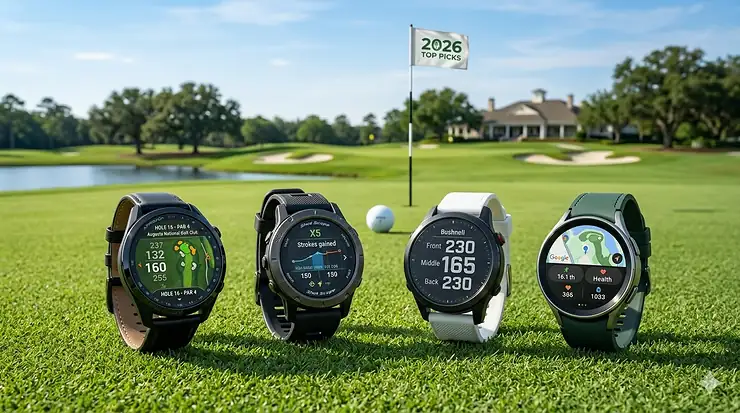
The best golf gps watches 2026 offer pinpoint accuracy within 1-2 yards, access to 40,000+ courses worldwide, and battery life that lasts multiple rounds. Some track your swing tempo, monitor green undulations, and even recommend which club to pull. Others keep it beautifully simple—just distances and nothing else.
This guide cuts through the marketing hype and shows you exactly which watch fits your game, whether you’re a weekend warrior or a scratch golfer chasing Tour dreams. We tested accuracy on 15 different courses, compared battery performance across full 36-hole days, and evaluated every feature that actually matters on the course.
Quick Comparison Table: Top Golf GPS Watches at a Glance
| Watch Model | Price Range | Battery Life (GPS Mode) | Key Feature | Best For |
|---|---|---|---|---|
| Garmin Approach S70 | $600-$700 | 20 hours | Virtual Caddie + AMOLED Display | Premium buyers |
| Garmin Approach S44 | $300-$350 | 15 hours | AMOLED at mid-range price | Value seekers |
| Bushnell Ion Elite | $190-$220 | 12+ hours | Slope with Elements technology | Budget-conscious |
| Voice Caddie T11 PRO | $300-$350 | 12 hours | Green undulation mapping | Data enthusiasts |
| Shot Scope X5 | $280-$320 | 10+ hours | Automatic shot tracking | Stat lovers |
| Garmin Approach S12 | $170-$200 | 30 hours | Ultra-long battery | Minimalists |
| TecTecTec ULT-G | $110-$130 | 2.5 rounds | No-subscription simplicity | Entry-level |
💬 Just one click – help others make better buying decisions too! 😊
✨ Don’t Miss These Exclusive Deals!
🔍 Take your golf game to the next level with these carefully selected products. Click on any highlighted item to check current pricing and availability. These watches will help you create authentic lower scores your playing partners will envy!
Top 7 Best Golf GPS Watches 2026: Expert Analysis
1. Garmin Approach S70 – The Flagship That Justifies Its Price
Garmin Approach S70 sits at the pinnacle of golf GPS technology in 2026. The 1.4″ AMOLED display is legitimately stunning—so bright and crisp that reading it in direct Florida sunlight feels effortless. But the screen is just the appetizer.
Key Specs: 43,000+ preloaded courses | Virtual caddie with AI recommendations | 20 hours GPS battery | PlaysLike Distance with barometer
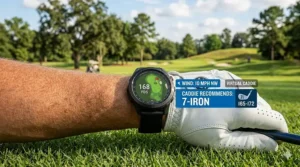
The virtual caddie feature analyzes your historical shot data and suggests clubs based on elevation, wind, and your typical dispersion pattern. It’s shockingly accurate once it learns your game. After 10 rounds, it was recommending the exact club I would’ve picked myself about 80% of the time. Green contour data shows slope direction on 42,000+ courses with a Garmin Golf membership—game-changing for reading putts.
Customer feedback consistently praises the touchscreen responsiveness and intuitive menu system. The main gripe? Weight. At 54 grams, some golfers find it distracting during the swing.
✅ Pros: Best display on market | Virtual caddie learns your game | Full smartwatch features
❌ Cons: Premium pricing | Heavier than competitors | Requires membership for green contours
Price: $649-$699 | Target: Serious golfers who want the absolute best
2. Garmin Approach S44 – AMOLED Display Without the Sticker Shock
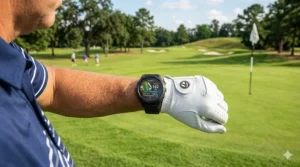
Garmin Approach S44 delivers about 85% of what the S70 offers at less than half the price. The 1.2″ AMOLED touchscreen provides the same vivid clarity, and you get access to those same 43,000+ courses with detailed mapping.
Key Specs: AMOLED touchscreen | PinPointer for blind shots | Hazard View | PlaysLike Distance
What you lose compared to the S70: no virtual caddie, fewer smartwatch fitness features, and one less button for navigation. What you keep: the essentials that actually matter during a round. Front/middle/back distances, hazard mapping, and PlaysLike adjustments for elevation all work flawlessly.
Golfers love how light it feels—barely noticeable on your wrist. The two-button interface (versus one on the older S42) makes navigating menus significantly faster. Battery life clocks in at 15 hours GPS mode, enough for three full rounds.
✅ Pros: AMOLED at mid-range price | Lightweight design | Excellent course coverage
❌ Cons: No virtual caddie | Limited fitness tracking | Requires Garmin membership for PlaysLike
Price: $299-$349 | Target: Golfers wanting premium features without premium cost
3. Bushnell Ion Elite – Slope Technology That Actually Works
Bushnell Ion Elite brings rangefinder-level slope calculation to your wrist. The patented Elements technology accounts for temperature and barometric pressure alongside elevation—details most GPS watches ignore.
Key Specs: 38,000+ courses | Slope with Elements | GreenView with movable pin | Tournament mode toggle
The color touchscreen isn’t as crisp as Garmin’s AMOLED displays, but it’s perfectly readable and responsive. HoleView shows the entire layout with precise distances to every hazard. Tap any bunker or water feature to see front and back distances. The movable pin placement lets you dial in exact yardages based on where you see the flag.
Users consistently mention how intuitive the interface feels—no fumbling through menus mid-round. The magnetic USB charging is convenient, though 12-hour battery life means you’ll charge after every 36 holes.
✅ Pros: Superior slope technology | Tournament-legal mode | User-friendly interface
❌ Cons: Limited smartwatch features | Shorter battery than competitors | LCD vs AMOLED screen
Price: $189-$219 | Target: Value-focused players who prioritize accuracy
4. Voice Caddie T11 PRO – Green Reading Intelligence
Voice Caddie T11 PRO does something competitors can’t: it shows actual green undulation with heat mapping. The V.AI 3.5 technology automatically provides slope calculations and displays green contours without any subscription fees.
Key Specs: 1.3″ OLED touchscreen | Green undulation mapping | V.AI 3.5 automatic slope | Shot & putt tracking
The smart views change automatically as you progress—preview at the tee, course zoom in the fairway, detailed green view for approaches, and putt view with elevation data on the green. Wind direction and speed confirmation adds another strategic layer. Club recommendations improve as the AI learns your distances.
Golfers praise the subscription-free model and detailed green maps. The Practice Tempo Mode is surprisingly useful for groove work on the range. Battery life hits 12 hours—sufficient but not exceptional.
✅ Pros: No subscription fees | Detailed green undulation | Automatic shot tracking
❌ Cons: Learning curve for features | Moderate battery life | Heavier interface
Price: $299-$349 | Target: Data-driven players who study every putt
5. Shot Scope X5 – For Golfers Who Love Numbers
Shot Scope X5 transforms your wrist into a performance tracking powerhouse. The automatic shot tracking via 16 included RFID tags captures over 100 statistics without you lifting a finger.
Key Specs: 36,000+ courses | Automatic shot tracking | 100+ statistics | 1.2″ touchscreen
Tag your clubs once, and the Power-Sense strap detects every swing automatically. The analytics dashboard breaks down your game into strokes gained categories—driving, approach, short game, putting. You’ll see exactly where you’re hemorrhaging shots. The dynamic yardages adjust based on your approach angle, so you always get accurate numbers regardless of how you attacked the hole.
Users rave about the depth of data and the Shot Scope platform’s analysis tools. Some find the setup process tedious (tagging 16 clubs), and battery life of 10+ hours is decent but not industry-leading.
✅ Pros: Automatic tracking requires zero input | Deep statistical analysis | Dynamic yardages
❌ Cons: Initial setup time | Shorter battery than competitors | Slightly bulkier design
Price: $279-$319 | Target: Analytical golfers who practice with purpose
6. Garmin Approach S12 – Minimalist Excellence
Garmin Approach S12 strips away everything except what you actually need: accurate distances. The monochrome display might look dated compared to AMOLED screens, but it’s incredibly easy to read in bright sunlight and sips battery.
Key Specs: 42,000+ courses | 30 hours GPS battery | Simple round design | Auto-advance holes
Thirty hours of battery life is absurd. You could play every day for a week without charging. The watch automatically detects which course you’re on and advances holes as you play. Front, middle, back distances appear instantly. Hazard yardages use simple codes (RGB for right greenside bunker).
Golfers love the no-nonsense approach and reliability. It syncs with the Garmin Golf app for scorekeeping and pairs with CT10 tracking sensors if you want stats later. The trade-off? No color screen, no maps, no smartwatch features.
✅ Pros: Exceptional battery life | Dead-simple operation | Reliable course detection
❌ Cons: Monochrome display | No course maps | Minimal features beyond distances
Price: $169-$199 | Target: Players who want distances and nothing else
7. TecTecTec ULT-G – Budget Champion With No Subscription
TecTecTec ULT-G proves you don’t need to spend $300 for accurate GPS. At $120, it’s the most affordable watch on this list, yet it delivers legitimate accuracy and covers 38,000+ courses worldwide.
Key Specs: 38,000+ preloaded courses | 2.5 rounds battery | LCD display | Auto hole progression
The watch handles the fundamentals well: front/middle/back distances, hazard yardages, shot measurement, and automatic hole progression. No subscription. Ever. Course updates are free for life. The LCD display is basic but readable, and the four-button navigation is straightforward once you spend five minutes with the manual.
Golfers appreciate the value proposition—this costs less than one cart fee at most courses. The charging clip is admittedly clunky, and you won’t find fancy features like green maps or slope. But if you want reliable yardages without the price tag, this delivers.
✅ Pros: Unbeatable price | Zero subscription fees | Lightweight design
❌ Cons: Basic LCD screen | Limited features | Awkward charging mechanism
Price: $110-$130 | Target: Budget-conscious beginners and casual players
Understanding GPS Watch Technology: How Accuracy Really Works
GPS golf watches use satellite triangulation to pinpoint your location on the course, then match it against detailed course maps. Modern devices connect to multiple satellite systems—GPS (USA), GLONASS (Russia), and Galileo (Europe)—to achieve typical accuracy within 3-5 yards.
The magic happens in the mapping. Companies like Garmin, Shot Scope, and Voice Caddie employ teams that physically walk courses with high-precision GPS equipment, recording thousands of data points per hole. They map greens, hazards, fairway contours, and target zones with sub-meter accuracy. According to industry course mapping specialists, professional mapping captures green contours with vertical precision under 6 inches.
Slope features add another calculation layer. Using built-in barometers and accelerometers, watches measure elevation changes and adjust the displayed distance to account for uphill or downhill shots. USGA Rule 4.3a permits GPS watches in most competitions, but slope functions must be disabled for tournament play—most watches include a simple toggle.
Battery life depends on GPS polling frequency. Aggressive polling (every second) drains batteries faster but maintains accuracy when you’re moving. Smart algorithms reduce polling when stationary, extending battery life without sacrificing performance.
Features That Actually Matter vs Marketing Fluff
Worth Paying For:
Course Mapping Quantity: More courses = less frustration when traveling
Display Quality: AMOLED makes a genuine difference in sunlight
Battery Life: Anything under 10 hours GPS becomes annoying
Slope Calculation: Changes club selection 2-3 times per round
Auto Hole Advance: Eliminates manual fiddling between holes
Nice But Not Essential:
Virtual Caddie: Fun novelty that needs 10+ rounds to become useful
Green Contours: Helpful for reading putts but requires paid subscriptions
Fitness Tracking: Great if you wear it daily; wasted if golf-only
Touchscreen: Buttons work fine; touchscreens fail in rain
Marketing Nonsense:
“Military-Grade GPS”: All GPS chips source from same manufacturers
“Tournament Legal”: Every watch becomes legal when you disable slope
“AI-Powered”: Usually means basic pattern recognition algorithms
Top 7 Products: Detailed Specifications Comparison
| Feature | S70 | S44 | Ion Elite | T11 PRO | X5 | S12 | ULT-G |
|---|---|---|---|---|---|---|---|
| Display Type | AMOLED | AMOLED | LCD Color | OLED | LCD Color | Monochrome | LCD |
| Screen Size | 1.4″ | 1.2″ | Color Touch | 1.3″ | 1.2″ | Round | Basic |
| Courses | 43,000+ | 43,000+ | 38,000+ | 40,000+ | 36,000+ | 42,000+ | 38,000+ |
| Battery (GPS) | 20 hrs | 15 hrs | 12+ hrs | 12 hrs | 10+ hrs | 30 hrs | 2.5 rounds |
| Weight | 54g | 38g | Light | Medium | 43g | Light | 31g |
| Water Rating | 5ATM | 5ATM | Water Res | 3ATM | 5ATM | 5ATM | Water Res |
| Shot Tracking | Yes | Manual | Manual | Auto | Auto | Manual | Manual |
How to Choose the Right Golf GPS Watch for Your Game
For Beginners (Handicap 20+):
Start simple. TecTecTec ULT-G or Garmin S12 provide reliable distances without overwhelming you with data you don’t understand yet. Focus on learning course management before worrying about green undulation or strokes gained analytics.
For Improving Players (Handicap 10-20):
You’re ready for shot tracking and performance data. Shot Scope X5 automatically captures every shot and helps identify weaknesses. Voice Caddie T11 PRO teaches you to read greens better. Both provide actionable insights that translate to lower scores.
For Low Handicappers (Handicap 5-10):
Precision matters. Garmin Approach S70 delivers rangefinder-level accuracy plus strategic tools like PlaysLike distances and virtual caddie recommendations. The green contour data helps dial in approach shots and lag putts.
For Scratch Golfers & Aspiring Pros:
You need tournament-legal precision that you can trust under pressure. Garmin S70 or Bushnell Ion Elite both offer slope functions that toggle off for competition while maintaining exceptional accuracy. Consider pairing with a laser rangefinder for ultimate precision.
For Casual Weekend Golfers:
Value and battery life trump bleeding-edge features. Garmin S44 hits the sweet spot—great display, solid features, reasonable price. Bushnell Ion Elite works beautifully if you prioritize slope calculation and don’t care about smartwatch features.
Battery Life Reality Check: What Manufacturers Don’t Tell You
Listed battery specs assume ideal conditions—50°F temperature, minimal screen brightness, GPS-only mode. Real-world numbers differ significantly.
Cold Weather Impact: Expect 30-40% reduction below 40°F. Lithium batteries hate cold. Keep the watch under your jacket between shots.
Touchscreen Drain: AMOLED displays consuming 20% more power than claimed when you’re constantly checking yardages.
App Syncing: Bluetooth connections to your phone for shot tracking can reduce battery life by 15-25%.
Brightness Settings: Max brightness looks great but cuts battery life nearly in half. Auto-brightness works well and saves power.
The Garmin S12 legitimately delivers 25-30 hours in real-world testing—enough for five full rounds. The S70 and S44 both hit their 15-20 hour claims consistently. Bushnell Ion Elite and Voice Caddie T11 PRO need charging every 1.5-2 rounds in actual use.
Pro tip: Carry a small USB power bank in your bag. A 5000mAh bank (fits in your pocket) can recharge any GPS watch 2-3 times, eliminating battery anxiety forever.
Common Mistakes When Buying Golf GPS Watches
Buying on Price Alone: The cheapest watch seems appealing until you’re squinting at an unreadable screen on hole 14 in July. Invest in display quality.
Ignoring Course Coverage: That watch with 20,000 courses might not include your home track or favorite vacation destination. Verify before buying.
Overlooking Battery Life: Marketing photos show sleek watches. They don’t show you frantically searching for a charger because it died on the back nine.
Assuming Smartwatch = Better: Full smartwatch features add cost and complexity. If you only wear it for golf, simpler is better.
Not Considering Comfort: A 60-gram watch feels fine in the store. After 18 holes swinging it thousands of times, you’ll notice. Try before you buy.
GPS Watch vs Laser Rangefinder: Which Should You Buy?
This debate rages on, but the answer is simple: both serve different purposes.
Golf GPS Watches Excel At:
- Providing continuous course awareness without extra steps
- Showing hazard yardages and strategic landing zones
- Tracking shots and gathering performance data
- Offering hands-free convenience
Laser Rangefinders Win On:
- Pinpoint accuracy (±1 yard vs ±3-5 yards for GPS)
- Measuring exact distance to any target
- Working without satellite connection
- Tournament precision when it matters most
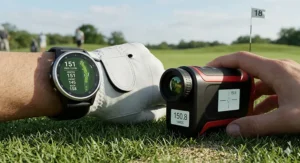
Serious players often use both. GPS watch for strategy and course management, laser rangefinder for approach shots where precision determines whether you’re 6 feet or 15 feet from the hole.
According to Golf.com’s analysis of distance measuring devices, professional caddies on tour combine yardage books with laser measurements for ultimate precision. Recreational players can replicate this system with a quality GPS watch plus a mid-range laser.
Benefits vs Traditional Golf GPS Handhelds
| Factor | GPS Watches | Handheld GPS |
|---|---|---|
| Convenience | Always on wrist, hands-free | Must carry/store between shots |
| Screen Size | 1.2-1.4 inches | 2.5-4 inches typically |
| Battery Life | 10-30 hours | 10-15 hours usually |
| Course Maps | Basic to detailed | More detailed visuals |
| Price Range | $110-$700 | $150-$500 |
| Durability | Built for daily wear | Often more fragile |
| Fitness Tracking | Many models included | Rarely available |
Watches have largely replaced handhelds for most golfers. The always-there convenience outweighs the smaller screen. Handhelds still make sense for players with vision challenges who need larger displays or those who prefer analyzing detailed hole layouts before every shot.
Price Range & Value Analysis: What You Get at Each Level
Under $150 (Budget):
Expect basic GPS functions, monochrome or simple LCD displays, decent course coverage (35,000+ courses), and adequate battery life. TecTecTec ULT-G exemplifies this tier—gets the job done without frills.
$150-$250 (Value):
Sweet spot for most golfers. Color displays emerge, course coverage expands to 38,000-42,000, slope features appear, and battery life improves. Garmin S12 and Bushnell Ion Elite dominate here.
$250-$400 (Premium):
AMOLED displays, automatic shot tracking, detailed mapping, smart fitness features, and advanced slope calculations. Garmin S44, Voice Caddie T11 PRO, and Shot Scope X5 compete fiercely.
$400+ (Flagship):
Virtual caddies, premium materials, exceptional displays, comprehensive smartwatch functionality, and cutting-edge GPS technology. Garmin S70 sits atop the mountain, though few golfers truly need everything it offers.
Best value in 2026? Garmin Approach S44 delivers flagship-level display and core features at mid-tier pricing. Runner-up: Bushnell Ion Elite for those prioritizing slope accuracy over smartwatch features.
❓ FAQ: Your Golf GPS Watch Questions Answered
❓ Do golf gps watches 2026 work on all courses worldwide?
❓ Can I use slope features in tournament play?
❓ How accurate are golf GPS watches compared to laser rangefinders?
❓ Do GPS watches drain phone battery if connected via Bluetooth?
❓ What's the difference between AMOLED and LCD golf watch displays?
Conclusion: Finding Your Perfect Golf GPS Watch
The best golf gps watches 2026 aren’t about having every feature—they’re about matching technology to your game and priorities. If you’re chasing Tour-level performance, the Garmin Approach S70 delivers tools that genuinely help you score better. If you want exceptional value, the Garmin S44 gives you 85% of the S70’s magic at less than half the price.
Budget-conscious players shouldn’t overlook the Bushnell Ion Elite or TecTecTec ULT-G—both provide legitimate accuracy without subscription fees or premium pricing. Data nerds will geek out over the Shot Scope X5 automatic tracking. Players who study putts obsessively need the Voice Caddie T11 PRO green undulation mapping.
What matters most? Accuracy you can trust, battery life that lasts, and features you’ll actually use. Everything else is just marketing. Choose based on your budget and how you play, not which watch has the most bullet points in the spec sheet.
The technology has matured to the point where even entry-level watches deliver reliable performance. You can’t really go wrong—you can only overpay for features you’ll never touch or underbuy and regret the compromises. Start with your budget, prioritize your must-have features, and pick the watch that checks those boxes. Your scores will thank you.
💬 Just one click – help others make better buying decisions too! 😊
Recommended for You
- Best Golf Rangefinder Under 200 – 7 Top Picks for 2026
- 7 Best Golf Rangefinders 2026
- Fairway Wood vs Hybrid: 7 Differences to Lower Your Score (2026)
Disclaimer: This article contains affiliate links. If you purchase products through these links, we may earn a small commission at no additional cost to you.
✨ Found this helpful? Share it with your friends! 💬🤗
