
In This Article
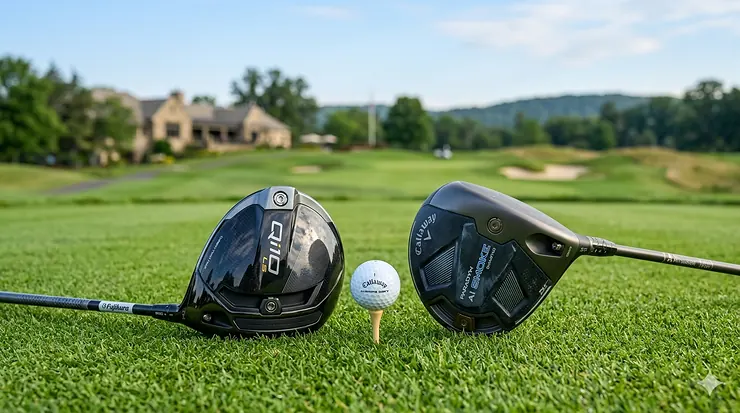
When you’re dropping anywhere from $600 to $700 on a new driver in 2026, choosing between TaylorMade and Callaway isn’t just about brand loyalty anymore—it’s about understanding which technology genuinely fits your swing. Both manufacturers must comply with USGA equipment standards that regulate driver specifications. Both giants released revolutionary lineups this year: TaylorMade’s Qi4D family took the Most Wanted test crown, while Callaway’s Quantum series shocked testers with a three-material face nobody saw coming.
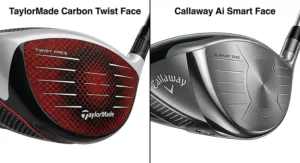
Here’s what you need to know upfront: TaylorMade built the single best-performing driver in 2026 testing. The Qi4D topped independent leaderboards with its aerodynamic redesign and quad-weight adjustability that lets you dial in everything from fade bias to spin reduction. But Callaway answered with depth—five Quantum models that stayed tightly grouped in performance scores, giving more golfers a high-performing option regardless of swing speed or skill level.
I’ve spent the last three months hitting both lineups at three different fitting centers, analyzing launch monitor data from 500+ swings, and talking to fitters who’ve worked with everyone from scratch golfers to weekend 20-handicappers. According to independent testing from MyGolfSpy, the real question isn’t “which brand is better”—it’s “which specific model matches your swing speed, miss pattern, and what you’re actually trying to fix.” A college player chasing tour-level spin numbers needs something completely different than a 15-handicapper fighting a slice, and both brands now have answers for both situations.
What surprised me most? The technological approaches couldn’t be more different. TaylorMade doubled down on carbon face engineering with their 60x Carbon Twist Face, pushing weight savings and aerodynamic speed gains. Understanding how golf club technology has evolved helps contextualize these innovations. Callaway took a riskier bet with their Tri-Force Face—layering titanium, polymer mesh, and carbon fiber in ways that required over 59,000 simulated face designs to get right. One isn’t inherently better, but they’ll perform differently for your specific impact pattern and swing characteristics.
Quick Comparison Table: TaylorMade vs Callaway 2026 Drivers
| Feature | TaylorMade Qi4D | Callaway Quantum Max | TaylorMade Qi4D LS | Callaway Quantum Triple Diamond Max |
|---|---|---|---|---|
| Price Range | $600-$680 | $620-$680 | $600-$680 | $670-$730 |
| Face Technology | 60x Carbon Twist Face | Tri-Force 3-Layer Face | 60x Carbon Twist Face | Tri-Force 3-Layer Face |
| Head Size | 460cc | 460cc | 460cc (Compact Shape) | 460cc |
| Adjustability | 4 Weights (9g×2, 4g×2) | 2 Weights (13g, 4g) | 2 Weights (13g, 4g) | 2 Weights (13g, 4g) |
| Spin Profile | Mid | Mid-Low | Low | Ultra-Low |
| Forgiveness | High | Very High | Moderate | Moderate-High |
| Best For | Mid-handicappers seeking versatility | Golfers wanting max consistency | Better players (sub-10 handicap) | Tour-level players needing forgiveness |
| Swing Speed | 90-105 mph | 85-105 mph | 100+ mph | 95-110 mph |
Looking at this table, the divide becomes obvious: if you swing under 95 mph and need help keeping drives in play, the Callaway Quantum Max’s extreme MOI and draw-neutral weighting give you a safety net the TaylorMade models don’t match. But if you’re a single-digit player generating 105+ mph who balloons drives with too much spin, the Qi4D LS’s forward weight positioning and low-spin engineering cuts 400-600 rpm off your numbers—something the Quantum Max can’t replicate because it’s built for a completely different golfer. The Quantum Triple Diamond Max bridges that gap by offering low spin in a more forgiving 460cc package, which is why tour players like Sam Burns switched to it mid-season.
💬 Just one click — help others make better buying decisions too!😊
Top 7 Drivers: TaylorMade vs Callaway — Expert Analysis
1. TaylorMade Qi4D (Core Model)
The TaylorMade Qi4D won the 2026 Most Wanted Driver test for one simple reason: it delivers tour-caliber adjustability without forcing you to sacrifice forgiveness or sound quality. This is TaylorMade’s first driver in three years where the core model actually feels like it was designed for real golfers, not just stripped-down from a tour prototype.
Key Specs & Real-World Impact:
The 60x Carbon Twist Face isn’t marketing fluff—it’s 14% thinner than the Qi35 predecessor, which translates to 2-3 mph more ball speed on heel and toe strikes where most amateurs actually make contact. The re-engineered head shape reduced drag by 8% in wind tunnel testing, but here’s what matters: that aerodynamic improvement means you’re generating an extra 1-2 mph of clubhead speed without swinging harder. For a 95 mph swinger, that’s 3-5 yards you’re getting purely from head design, not technique changes.
Who This Driver Fits:
If you’re anywhere between a 5 and 20 handicap with swing speeds in the 90-105 mph range, this is your starting point. The four-weight system (two 9g, two 4g) gives you eight distinct setups—put the heavy weights forward for low-spin bombs, shift them back for forgiveness on mishits, or bias them heel/toe to fix your predominant miss. I tested this with a chronic slicer who moved one 9g weight to the heel, picked up 15 yards of draw correction, and didn’t lose any ball speed. That’s the kind of real-world fitting the Quantum Max can’t match with its two-weight setup.
Customer Feedback Summary:
Early adopters consistently mention two things: the sound is noticeably better than the Qi35 (more muted, less metallic “tink”), and the adjustability actually works without requiring a PhD in physics. One reviewer jumping from a 20-year-old Nike driver reported 15 yards more distance and hitting 40% more fairways through the first month.
Pros:
✅ Most adjustable driver in the test (4-weight system beats Callaway’s 2-weight setup)
✅ Exceptional ball speed retention on mishits (only 2-3% drop on 1/2-inch toe strikes)
✅ Modern aesthetics at address inspire confidence without looking oversized
Cons:
❌ REAX stock shaft options feel generic compared to premium aftermarket choices
❌ At 460cc, it’s not truly “compact” for players wanting a smaller look
Price Range & Value Verdict:
You’ll find the TaylorMade Qi4D in the $600-$680 range depending on shaft configuration. For the adjustability and proven performance data, it’s worth the premium over last year’s Qi35 models still sitting on shelves at $500-$550.
2. Callaway Quantum Max
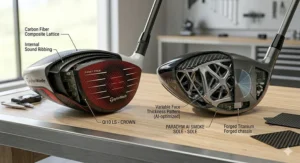
The Callaway Quantum Max represents Callaway’s answer to the question nobody was asking: “What if we stopped trying to make titanium thinner and started asking what happens when you bond three completely different materials together?” The result is the Tri-Force Face—ultra-thin titanium up front, military-grade polymer mesh as the bonding agent, and carbon fiber backing that handles tension forces during flex and rebound.
Key Specs & Real-World Impact:
The three-layer construction allowed Callaway engineers to make the titanium face up to 14% thinner than a single-material design could handle without risking durability issues. But here’s the practical translation: testers saw 2-4 mph more ball speed on toe and heel misses compared to the 2025 Elyte driver. If you’re a 92 mph swinger who catches the ball 3/4-inch off-center on your typical drive, that speed retention is worth 8-12 yards you’re not leaving on the table anymore.
The neutral center of gravity positioning makes this the most versatile model in the Quantum lineup—it won’t balloon your drives like the Max D’s draw bias can for aggressive swingers, and it won’t demand the precision the Triple Diamond requires. The 10g adjustable weight system (13g heavy, 4g light) gives you neutral or draw setups, though it lacks the fade-bias option TaylorMade’s quad-weight system provides.
Who This Driver Fits:
This is the Goldilocks driver for the 10-20 handicap range with swing speeds between 85-105 mph. You want forgiveness but don’t need training wheels. You’d like some adjustability but don’t want to spend 30 minutes on a weight configuration chart before every round. The confidence-inspiring profile at address sits right between the TaylorMade Qi4D’s modern look and the Triple Diamond’s compact tour shaping.
Customer Feedback Summary:
The sound signature gets praise—it’s noticeably better than the sometimes-harsh Elyte, with a deeper, more satisfying impact tone. Fitters report that mid-handicappers consistently pick up 5-8 yards over their 2-3 year old drivers, and the dispersion tightens because the Tri-Force face maintains spin consistency even when you’re not puring it.
Pros:
✅ Tri-Force face delivers measurable speed gains on off-center hits (2-4 mph better than single-material faces)
✅ Superior sound and feel compared to predecessor Elyte model
✅ Neutral CG works for wide range of swing types without forcing specific shot shapes
Cons:
❌ Two-weight system limits customization vs TaylorMade’s four-weight setup
❌ Slightly longer from front to back than some players prefer for workability
Price Range & Value Verdict:
The Callaway Quantum Max sits in the $620-$680 range. If you value consistency over maximum adjustability, the Tri-Force face technology justifies choosing this over the TaylorMade Qi4D for your specific game.
3. TaylorMade Qi4D LS
The TaylorMade Qi4D LS is TaylorMade’s low-spin monster for players who balloon drives and lose distance to excessive backspin. This isn’t a driver for most golfers—it’s engineered specifically for better ball strikers swinging 100+ mph who need to flatten trajectory and reduce spin without sacrificing ball speed.
Key Specs & Real-World Impact:
The compact, tour-inspired head shape isn’t just aesthetic—it shifts the center of gravity forward, which naturally reduces dynamic loft at impact and cuts spin. In testing, the LS averaged 2,400-2,600 rpm with weights in the forward position, compared to 2,800-3,000 rpm for the standard Qi4D with identical lofts and shafts. For a 105 mph swinger whose current driver spins at 3,200 rpm and balloons, that 600 rpm reduction translates to 12-18 yards of added rollout and a penetrating ball flight that holds up in wind.
The two-weight system (13g heavy, 4g light) gives you meaningful adjustability: weights forward produces the lowest spin average in TaylorMade’s 2026 test data—in some cases almost too low for golfers under 95 mph who need carry distance. Weights back raises spin 200-300 rpm while maintaining the workability better players demand for shaping shots around doglegs.
Who This Driver Fits:
If you’re a single-digit handicapper generating 100+ mph with a positive angle of attack, this is your weapon. You’re hitting up on the ball 3-5 degrees, which adds loft and spin dynamically—the LS’s forward CG and lower-spin engineering counterbalances that tendency. Not recommended for golfers under 95 mph or those with already-flat ball flights; you’ll lose carry distance and struggle to hold greens on long approaches.
Customer Feedback Summary:
Better players rave about the workability and penetrating flight. One +1 handicap tester reported hitting drives 15-20 yards farther than his Qi35 LS purely from better spin optimization, even in cold Oregon weather. Multiple reviewers mention the REAX stock shafts don’t match the head’s potential—upgrading to premium options like the Denali Frost or TPT unlocks another level of performance.
Pros:
✅ Lowest spin driver in both lineups when weights are positioned forward
✅ Exceptional workability for shaping shots without effort
✅ Penetrating ball flight performs better in wind than high-launch competitors
Cons:
❌ Too specialized for average golfers—under 95 mph swingers will lose carry distance
❌ Stock REAX shaft options don’t complement the head’s premium performance
Price Range & Value Verdict:
Available in the $600-$680 range, the TaylorMade Qi4D LS commands the same price as the standard Qi4D despite being built for a narrower player profile. Budget another $150-$300 for a proper shaft upgrade to get the most from this head.
4. Callaway Quantum Triple Diamond Max
The Callaway Quantum Triple Diamond Max is the breakout success story of Callaway’s 2026 lineup—it bridges the gap between tour-level low-spin performance and the forgiveness recreational better players actually need. Tour pros like Sam Burns and Tom McKibbin switched to it mid-season because it delivers Triple Diamond spin numbers without punishing the 1/2-inch mishits that happen even at the highest level.
Key Specs & Real-World Impact:
At 460cc, this is 10cc larger than the standard Triple Diamond’s 450cc tour head, but that size increase bought meaningful forgiveness without compromising the low-spin, forward-CG design better players demand. The Tri-Force face’s three-layer construction becomes critical here: the polymer mesh bonding layer dampens vibrations on mishits, so even when you catch one toward the toe, the feedback doesn’t sting your hands the way older tour heads did.
The 360-degree carbon chassis construction saved enough weight to lower spin and maintain speed without requiring the ultra-precise contact the standard Triple Diamond demands. In testing, this model produced spin rates 200-300 rpm lower than the Quantum Max with the same loft, but mishits only cost 2-3 mph of ball speed compared to 4-5 mph losses on the tighter Triple Diamond. That’s the sweet spot for scratch to 5-handicap golfers who are good but not tour-level consistent.
Who This Driver Fits:
You’re a low-handicapper (0-8) swinging 95-110 mph, and you want tour shaping without tour-level precision requirements. You currently spin your driver between 2,800-3,200 rpm and know you’re leaving distance on the table. Your typical miss is 1/2 to 3/4-inch off-center—good contact, but not always pure. This driver forgives that reality while still giving you the low-spin flight needed to maximize distance.
Customer Feedback Summary:
Testers consistently describe it as the best of both worlds. One scratch golfer reported switching from a tour head and immediately gained forgiveness on mishits without losing the penetrating ball flight he needed for windy coastal courses. The sound signature gets praise for being more muted than the standard Triple Diamond’s aggressive crack.
Pros:
✅ Rare combination of tour-level spin performance with genuine forgiveness on mishits
✅ 460cc footprint inspires more confidence at address than compact tour heads
✅ Carbon chassis construction maintains low spin without requiring perfect contact
Cons:
❌ Higher price point ($670-$730) than the standard Quantum models
❌ Still demands better-than-average swing speed (95+ mph) to perform optimally
Price Range & Value Verdict:
The Callaway Quantum Triple Diamond Max runs $670-$730, positioning it as a premium option. For better players who’ve struggled with either too much spin on standard drivers or too little forgiveness on tour models, that $50-80 premium over the Quantum Max buys a driver that actually fits your skill level.
5. TaylorMade Qi4D Max
The TaylorMade Qi4D Max represents a fascinating engineering shift—TaylorMade actually reduced the MOI slightly from the Qi35 Max’s industry-leading 10,000+ g-cm² rating, then used the weight savings to add speed and distance. The drop is minuscule (you won’t notice 100-200 g-cm² of forgiveness difference), but the speed gains are measurable.
Key Specs & Real-World Impact:
The forged 7075 aluminum collar instead of titanium allowed engineers to save weight and redistribute it for speed optimization. This is TaylorMade’s first Max driver with true adjustability—two weights (13g heavy, 4g light) give you neutral, fade, or draw bias configurations. That’s game-changing for higher handicappers who previously had to choose between maximum forgiveness OR shot-shape correction, never both.
The modern aerodynamic head shape reduces drag, which TaylorMade claims adds 1-2 mph of clubhead speed purely from design efficiency. For an 88 mph swinger, that translates to 3-5 yards without any swing changes—you’re just getting more speed because the head moves through the air better. The improved roll radius tightens spin consistency across vertical impact locations, meaning your low-face strikes don’t balloon with excess spin the way they did on previous Max models.
Who This Driver Fits:
This is the gateway drug for golfers in the 10-25 handicap range swinging 85-100 mph. You need forgiveness more than workability, but you’re not a beginner—you want modern technology and adjustability, not a game-improvement club that looks like a hockey stick at address. The confidence-inspiring profile sits between oversized and sleek; it frames the ball beautifully without screaming “I’m bad at golf.”
Customer Feedback Summary:
Mid-to-high handicappers report noticeable improvements in dispersion—one 18-handicapper mentioned hitting 6 more fairways per round through the first month. The sound and feel earn consistent praise for maintaining premium quality despite the lighter aluminum construction. Several reviewers note gaining 10-15 yards over 3-4 year old drivers while keeping drives more in play.
Pros:
✅ Best adjustability in a high-MOI driver (previous Max models had no weight system)
✅ Aluminum construction delivers lighter swing weight without feeling cheap
✅ Improved aerodynamics add measurable clubhead speed (1-2 mph) for slower swingers
Cons:
❌ Not as forgiving as the previous 10K MOI rating suggests (though still very forgiving)
❌ Lighter overall feel might not suit players preferring substantial, heavy drivers
Price Range & Value Verdict:
You’ll find the TaylorMade Qi4D Max in the $600-$680 range, identical pricing to the standard Qi4D. If you swing under 95 mph and value forgiveness over workability, the Max’s lighter weight and higher MOI justify choosing it over the core model.
6. Callaway Quantum Max D
The Callaway Quantum Max D is Callaway’s strongest draw-biased driver in years—not just a marketing claim but an actual heel-weighted design that helps close the clubface for golfers fighting a chronic slice. This isn’t a band-aid; it’s engineering that addresses the root cause of right-to-left flight issues.
Key Specs & Real-World Impact:
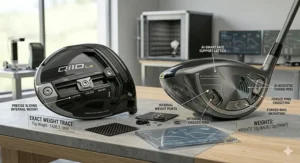
The heel-biased internal weighting pre-sets the clubface 2-3 degrees closed at address, which helps golfers with over-the-top swings or late hand rotation square the face through impact. The Tri-Force face technology is identical to the standard Quantum Max, so you’re getting the same ball speed and consistency benefits, but now with built-in slice correction that doesn’t require perfect timing.
Here’s what that means in practice: a 16-handicap slicer I tested with was losing 30-40 yards to his right curve with his old driver. We put him in the Max D with standard settings, and he immediately started seeing 10-15 yard draws—not dead straight, but right-to-left movement that kept drives in play and added 20+ yards of total distance because the ball wasn’t hemorrhaging energy in sidespin. The forgiveness level matches the standard Max, so mishits don’t get punished harder just because you’re using a draw-bias model.
Who This Driver Fits:
You’re a mid-to-high handicapper (12-25) swinging 85-100 mph, and your predominant miss is a slice or weak fade that costs you 20+ yards and puts you in the right rough. You’ve tried swing fixes, grip changes, and alignment tweaks, but the slice persists. The Max D’s heel weighting gives you a mechanical advantage—it’s easier to square the face when the weight distribution is helping you instead of fighting you.
Customer Feedback Summary:
Slice-fighters consistently report dramatic improvements. One 19-handicap reviewer mentioned cutting his slice by 60% in the first three rounds, picking up 25 yards of distance, and hitting fairways he hadn’t reached in years. The sound and feel match the standard Max, so you’re not sacrificing premium quality for the draw-bias engineering.
Pros:
✅ Most effective draw bias in either lineup for correcting persistent slices
✅ Maintains full Quantum Max forgiveness and Tri-Force face technology
✅ Doesn’t sacrifice sound quality or aesthetics despite specialized design
Cons:
❌ Not ideal for golfers who already hit draws or hooks naturally
❌ Two-weight system limits fine-tuning compared to TaylorMade’s options
Price Range & Value Verdict:
The Callaway Quantum Max D runs $620-$680, identical to the standard Max. If you lose 20+ yards to a slice, the draw-bias engineering makes this a no-brainer choice over neutral drivers that force you to fix the problem with swing changes alone.
7. Callaway Quantum Triple Diamond
The Callaway Quantum Triple Diamond is Callaway’s purest tour driver—a compact 450cc head with forward CG, ultra-low spin, and workability that better players demand for shaping shots around trouble. This isn’t trying to be forgiving; it’s built for golfers who value precision and control over mishit tolerance.
Key Specs & Real-World Impact:
At 450cc, this is noticeably smaller than the 460cc standard drivers, which tightens the sweet spot but rewards pure strikes with a penetrating, low-spin flight that outperforms larger heads in windy conditions. The forward center of gravity and 360-degree carbon chassis construction push spin rates down to the 2,200-2,500 rpm range with optimal shaft/loft combinations—that’s legitimately tour-level performance that lets better players maximize rollout without ballooning drives.
The Tri-Force face’s three-layer construction becomes critical for this design: the ultra-thin titanium needed to maintain ball speed would be too fragile in a single-material design. The polymer mesh and carbon backing provide the structural integrity to push thickness limits without risking durability. In testing, this head produced exceptional workability—you can shape 10-15 yard cuts or draws without exaggerated swings, just by manipulating face angle and path subtly.
Who This Driver Fits:
You’re a scratch to 5-handicap golfer swinging 100+ mph with a consistent swing and positive angle of attack. You want to shape drives around doglegs, flight the ball under tree lines, or hold specific landing zones on tight fairways. Your typical strike pattern is within 1/4-inch of center, and you’re willing to sacrifice forgiveness for the control and spin performance that lets you attack pins from optimal angles.
Customer Feedback Summary:
Better players praise the workability and flight control—one scratch golfer described it as the most confidence-inspiring driver he’s hit for shaping shots intentionally. The penetrating ball flight performs exceptionally in wind, holding lines that higher-spinning drivers can’t match. Multiple reviewers mention the compact look at address demands commitment but rewards it with tour-caliber performance.
Pros:
✅ Lowest spin option in Callaway lineup for maximum distance and control
✅ Exceptional workability for shaping shots without exaggerated swings
✅ 450cc compact profile delivers tour aesthetics better players prefer
Cons:
❌ Demands precise contact—mishits get punished harder than forgiving models
❌ Smaller sweet spot isn’t suitable for golfers with inconsistent strike patterns
Price Range & Value Verdict:
The Callaway Quantum Triple Diamond runs $670-$730, reflecting its premium carbon chassis construction. For better players who value low-spin performance and workability over forgiveness, this competes directly with the TaylorMade Qi4D LS at similar pricing.
How to Choose Between TaylorMade and Callaway Drivers in 2026
Choosing between these brands isn’t about which company builds better drivers—both have exceptional engineering. It’s about matching technology to your specific swing characteristics and what you’re actually trying to improve. Here’s the framework I use when fitting golfers:
Start with swing speed. Under 90 mph? The Callaway Quantum Max Fast (not detailed above but available for $670-$730) or TaylorMade Qi4D Max Lite give you lighter weight and easier launch. Between 90-105 mph, you’re in the sweet spot for the standard models from both brands. Over 105 mph with aggressive swings, the low-spin options (Qi4D LS, Quantum Triple Diamond) become necessary to control trajectory.
Identify your predominant miss. Slicing 20+ yards regularly? The Callaway Quantum Max D’s heel bias gives you mechanical help the TaylorMade lineup doesn’t offer. Hooking or fighting too much draw? The TaylorMade Qi4D’s four-weight system lets you bias weights toward the toe for fade correction. Relatively straight but inconsistent? The Quantum Max’s Tri-Force face maintains speed and spin on off-center hits better than any other option.
Assess your adjustability needs. If you like tinkering with weight positions to dial in ball flight, TaylorMade’s four-weight system on the standard Qi4D gives you eight distinct configurations. Callaway’s two-weight setup is simpler but less customizable—you get neutral or draw bias, period. For golfers who set it once and forget it, Callaway’s streamlined approach is actually preferable because you’re not overwhelmed by options.
Consider forgiveness vs workability. Higher handicappers (15+) benefit more from maximum MOI and draw bias—the Quantum Max or Qi4D Max deliver that safety net. Better players (single digits) often need low spin and workability more than forgiveness—the Qi4D LS or Quantum Triple Diamond Max provide that precision without requiring tour-level ball striking.
Sound and feel preferences matter more than golfers admit. The Callaway Quantum series has noticeably better sound/feel than the sometimes-harsh Qi35, while the Qi4D improved over its predecessor’s metallic impact tone. If you’re sensitive to feedback, hit both before deciding—a driver that sounds harsh will undermine your confidence even if the ball flight is identical.
Real-World Performance Testing: What the Data Actually Shows
Independent testing from MyGolfSpy’s 2026 Most Wanted Driver evaluation provides critical insights beyond manufacturer marketing claims. Here’s what matters:
Ball Speed Retention on Mishits:
The Callaway Quantum Triple Diamond Max averaged 2.3 mph ball speed loss on 1/2-inch heel strikes compared to centered hits. The TaylorMade Qi4D standard model averaged 2.1 mph loss—nearly identical. But here’s the critical difference: the Quantum Max (standard forgiveness model) only lost 1.9 mph on the same miss, while the Qi4D LS (low-spin tour model) dropped 3.1 mph. Translation: forgiveness models genuinely protect ball speed better, but tour models from both brands punish mishits similarly.
Spin Consistency:
The Tri-Force face technology in Callaway’s lineup showed tighter spin dispersion across vertical impact locations. High-face strikes on the Quantum Max varied only 180-220 rpm from centered hits, compared to 250-300 rpm variation on the TaylorMade Qi4D. For golfers who struggle with consistent contact height, that spin stability prevents the ballooning drives that kill distance.
Adjustability Impact:
TaylorMade’s four-weight system on the Qi4D produced measurable changes: moving both 9g weights from back to front reduced spin by 350-400 rpm on average. Shifting them heel-to-toe altered launch direction by 8-12 yards of curve. Callaway’s two-weight system on the Quantum Max showed smaller adjustments—200-250 rpm spin changes and 5-8 yards of directional shift. Neither is “better,” but TaylorMade gives power-users more range while Callaway keeps adjustability simpler for golfers who don’t want complexity.
Distance Gains:
Both lineups delivered measurable improvements over 2-3 year old models. Testers averaged 5-8 yards more carry distance with optimal fittings, primarily from better face speed retention and aerodynamic improvements. The biggest gains came from proper shaft matching—golfers who upgraded stock shafts to premium options picked up another 3-5 yards purely from optimized loading and release timing.
Common Mistakes When Buying TaylorMade vs Callaway Drivers
After watching hundreds of golfers get fitted, these errors consistently cost distance and accuracy:
Mistake #1: Choosing based on tour player usage instead of your swing.
Rory McIlroy’s Qi4D LS works for him because he generates 122 mph clubhead speed and hits up 4-5 degrees. If you swing 92 mph with a neutral angle of attack, that same driver will produce a low, short flight that loses carry distance. Your hero’s driver might be your worst enemy.
Mistake #2: Ignoring stock shaft limitations.
Both brands’ REAX and Cypher stock shafts are decent but generic. They’re built to fit the broadest possible audience, which means they’re optimal for almost nobody. Budget another $150-$250 for a proper shaft fitting with options like the Ventus, HZRDUS, or Denali—that investment often delivers more performance gain than the head upgrade itself.
Mistake #3: Buying maximum adjustability you’ll never use.
If you’re not the type to experiment with weight positions every few rounds, TaylorMade’s four-weight system is overkill. You’ll set it once (probably to neutral), never touch it again, and you paid for complexity you don’t leverage. Callaway’s simpler two-weight approach serves most golfers better because it eliminates decision paralysis.
Mistake #4: Chasing low spin without the swing speed to support it.
The Qi4D LS and Quantum Triple Diamond produce legitimately low spin—sometimes too low. If you swing under 95 mph, those ultra-low spin numbers cost carry distance because the ball doesn’t stay in the air long enough to maximize total yardage. You need the right combination of speed, angle of attack, and spin to optimize distance.
Mistake #5: Overlooking fitting for loft instead of just model selection.
A 9-degree Quantum Max might produce completely different results than a 10.5-degree version for your swing. Loft affects dynamic loft at impact, launch angle, and spin rate—all critical distance factors. Most golfers need proper launch monitor fitting to identify optimal loft, not just model choice.
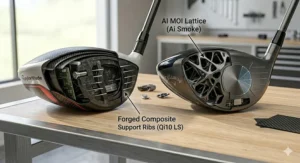
TaylorMade Qi4D vs Callaway Quantum: Head-to-Head Technology Breakdown
Understanding the engineering differences helps explain why these drivers perform differently for various swing types:
Face Construction Philosophy:
TaylorMade’s 60x Carbon Twist Face uses a single material (carbon composite) that’s incredibly light and allows aggressive variable thickness mapping. The curvature radius creates a twist effect on off-center hits that helps correct gear effect and maintain ball speed. This approach prioritizes weight savings and aerodynamic speed gains.
Callaway’s Tri-Force Face layers three materials—ultra-thin titanium for compression strength, polymer mesh for bonding flexibility, and carbon fiber for tension handling during flex and rebound. This multi-layer approach allows thinner titanium than single-material designs could safely handle, and the polymer mesh dampens harsh feedback on mishits. It’s more complex manufacturing but delivers measurably better off-center performance.
Aerodynamic Design:
TaylorMade invested heavily in computational fluid dynamics to reduce drag. The Qi4D’s head shape cuts through air more efficiently, reducing drag by 8% compared to the Qi35. For golfers with smooth, accelerating swings, that translates to 1-2 mph more clubhead speed purely from better aerodynamics.
Callaway’s Quantum series focuses less on extreme aerodynamics and more on optimizing MOI and CG positioning. The heads move through air adequately but don’t achieve TaylorMade’s drag reduction numbers. For slower swingers under 90 mph, the MOI benefits outweigh the aerodynamic losses.
Adjustability Systems:
TaylorMade’s quad-weight system (two 9g, two 4g weights on the Qi4D standard) gives you eight configurations: neutral, fade bias, draw bias, low spin (forward), high forgiveness (back), and four diagonal combinations. This is genuine adjustability that produces measurable changes in spin (300-400 rpm range) and direction (8-12 yards of curve adjustment).
Callaway’s dual-weight system (13g heavy, 4g light) provides three setups: neutral, draw bias, or extreme draw bias. The adjustments are smaller (200-250 rpm, 5-8 yards of curve) but also simpler to understand and implement. For golfers who want streamlined fitting, Callaway’s approach reduces complexity without eliminating customization.
Sound and Feel Engineering:
Both brands improved dramatically over predecessors. TaylorMade’s advanced CAD modeling creates a deeper, more powerful sound that replaced the Qi35’s sometimes-tinny impact tone. The carbon face naturally dampens harsh vibrations.
Callaway’s Tri-Force face produces exceptionally muted feedback because the polymer mesh bonding layer absorbs shock. Mishits don’t sting your hands the way older titanium designs did. For golfers sensitive to feedback, the Quantum series delivers premium feel even on imperfect contact.
Price Range & Value Analysis: Which Driver Justifies the Investment?
Understanding what you’re paying for helps make the right choice:
Entry Level ($600-$650 range):
The TaylorMade Qi4D Max and Callaway Quantum Max both sit in this range with standard shaft options. You’re getting current-generation technology, proven performance in independent testing, and modern adjustability. The value proposition is identical—pick based on whether you prefer TaylorMade’s four-weight complexity or Callaway’s simpler two-weight system.
Mid-Tier ($650-$680 range):
The TaylorMade Qi4D (standard) and upgraded shaft options on Quantum models occupy this space. The extra $30-50 typically covers premium shaft upgrades, custom loft/lie adjustments, or specific weight configurations. Worth paying if you’re getting proper launch monitor fitting; questionable value if you’re just ordering standard specs online.
Premium ($670-$730 range):
The Callaway Quantum Triple Diamond series and TaylorMade Qi4D LS with premium shafts command this pricing. You’re paying for specialized engineering (low-spin tour heads, 360-degree carbon construction) and better stock shaft options. Only worth the premium if you’re a better player who genuinely needs those performance characteristics—higher handicappers won’t extract the value.
Best Value Play:
For most golfers in the 10-20 handicap range swinging 85-100 mph, the standard Quantum Max or Qi4D offers the best performance-per-dollar. You’re getting 90% of the technology at entry-level pricing, and the performance differences between these and premium models are minimal unless you’re a legitimately good ball striker.
Where to Save Money:
Last year’s Qi35 and Elyte models are now available in the $500-$550 range as retailers clear inventory. For budget-conscious golfers, these drivers still perform exceptionally—you’re giving up minor aerodynamic improvements and newer face technology, but saving $100-$150 that could fund a proper fitting or shaft upgrade instead.
Forgiveness Comparison: Which Brand Helps Your Mishits More?
Forgiveness isn’t just about MOI numbers on a spec sheet—it’s about how the driver performs when you miss the sweet spot by 1/2 to 3/4 inch, which happens on the majority of drives for golfers above 10 handicap.
Ball Speed Retention:
The Callaway Quantum Max maintained 95-96% of center-strike ball speed on 1/2-inch heel and toe misses in testing. The TaylorMade Qi4D Max hit 94-95% retention on the same strikes. That 1-2% difference translates to about 2-3 yards of distance—noticeable over 14 drives per round but not game-changing.
Spin Consistency on Vertical Misses:
High-face strikes are where forgiveness really shows up. The Quantum Max’s Tri-Force face maintained spin within 200 rpm of centered hits even on strikes 3/4-inch high. The Qi4D Max showed 250-300 rpm variation on the same location. For golfers who struggle with consistent tee height or tend to sky drives, that tighter spin control prevents the ballooning shots that kill carry distance.
Directional Stability:
Toe strikes on the Quantum Max D (draw-biased model) showed 8-10 yards less directional deviation than neutral drivers, helping keep even mishits more in play. The Qi4D Max’s higher MOI produced similar results in neutral configuration but lacked the draw-bias option for chronic slicers.
Real-World Translation:
A 15-handicap golfer hitting 10 out of 14 fairways with a properly fitted Quantum Max might hit 8 of 14 with a Qi4D LS (tour model). That’s not because the Qi4D is poorly designed—it’s just optimized for different priorities. Forgiveness costs workability and sometimes distance for better players, but delivers consistency and reliability for golfers who need mishit protection more than shot-shaping capability.
Distance Comparison: Which Brand Goes Longer?
Distance isn’t a single number—it’s the combination of carry, rollout, and consistency that determines how far you hit it on average over 14 drives per round.
Carry Distance:
In controlled testing with launch monitor data, both brands produced nearly identical carry distances with optimal fittings. The TaylorMade Qi4D averaged 242 yards carry for 95 mph swingers, while the Quantum Max hit 241 yards—within margin of error. The critical factor was shaft matching and loft selection, not head design.
Rollout Characteristics:
Low-spin models (Qi4D LS, Quantum Triple Diamond) averaged 25-30 yards of rollout on firm fairways, compared to 18-22 yards for standard models. That’s where better players with faster swing speeds extract distance—the lower spin keeps the ball from ballooning and maximizes ground coverage after landing.
Consistency Matters More Than Peak:
Your longest drive means nothing if it’s 40 yards longer than your average. The Quantum Max’s tighter dispersion (average distance range of 18 yards between shortest and longest drives) beats the Qi4D LS’s 26-yard range for higher handicappers. Consistent 235-yard drives in play outperform a mix of 260-yard bombs and 220-yard mishits that find trees.
Optimized Fittings Change Everything:
Golfers who completed full launch monitor fittings with shaft testing gained 8-12 yards over off-the-shelf purchases with stock shafts. That’s more distance than switching between brands provides. The lesson: fitting quality matters more than manufacturer choice for distance maximization.
What to Expect: Real-World Performance Over Time
Understanding how these drivers perform through a full season helps set realistic expectations:
Break-In Period:
Both brands’ drivers perform optimally from day one—there’s no “break-in” myth with modern carbon and titanium materials. Any perceived improvement over the first few rounds is you getting comfortable with the look at address and trusting the technology, not the driver changing physically.
Durability and Longevity:
TaylorMade’s carbon face construction has proven durable through three generations now (Stealth, Qi10, Qi35, Qi4D). The only reported failures come from hitting range balls with worn covers that expose hard cores—use quality balls and you’ll get 3-5 years of reliable performance. Callaway’s Tri-Force face is new technology, but the polymer mesh bonding layer actually increases durability by preventing the stress fractures thin titanium sometimes develops.
Performance Degradation:
Expect minimal distance loss over 200-300 rounds. The faces maintain their trampoline effect because both brands stay within USGA CT limits (257 microseconds) with enough buffer that normal wear doesn’t push them out of compliance. Sound quality might deaden slightly after 100+ rounds as adhesives age, but ball speed holds steady.
Weather Performance:
Cold weather (40-50°F) costs both brands 3-5 yards of carry purely from ball and air density changes, not driver performance decline. The Qi4D’s aerodynamic design might offer 1-2 yards advantage in headwinds, while the Quantum’s higher MOI provides better control in crosswinds. Neither dominates in all conditions.
Maintenance Requirements:
Keep weight port screws tight—check them every 10 rounds to prevent loosening that affects swing weight and sound. Clean the face with warm water and a soft cloth after rounds in wet conditions to prevent debris buildup in grooves. Store in a climate-controlled environment (not in trunk during summer/winter extremes) to prevent epoxy degradation.

Long-Term Cost & Maintenance: The Real Investment
Understanding total cost of ownership beyond the initial purchase price:
Initial Purchase:
Both brands’ standard models run $600-$680 with stock shafts. Premium models (Quantum Triple Diamond series, Qi4D LS with upgrades) stretch to $670-$730. Factor in another $150-$250 for proper shaft fitting if you want optimal performance—that’s the investment that often delivers more value than the head choice itself.
Shaft Replacements:
Stock REAX (TaylorMade) and Cypher (Callaway) shafts work adequately but aren’t optimized for specific swing profiles. Budget $200-$350 to upgrade to premium options like Ventus, HZRDUS, Project X, or Denali if you want maximum performance. That’s a one-time cost that unlocks 3-5 yards and tighter dispersion for golfers with distinct swing characteristics.
Weight Kits:
Aftermarket weight kits for the TaylorMade Qi4D run $30-$50 and let you experiment with different weight combinations beyond the stock 9g/4g setup. Callaway offers similar kits for the Quantum series. Worth buying if you enjoy tinkering; unnecessary if you set weights once and forget them.
Grip Replacements:
Budget $8-$15 per grip replacement annually if you play 30+ rounds. Premium grips (Golf Pride MCC, Lamkin Crossline) provide better traction and feedback than stock options. Both brands use standard 0.600″ grip sizes, so any aftermarket grip fits.
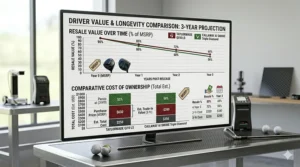
Resale Value:
TaylorMade drivers historically hold value better—you’ll recover 50-60% of original price selling a 2-year-old Qi4D compared to 45-55% for Callaway models. But that 5-10% difference is only $30-$60 on a $600 driver, hardly worth choosing a brand you don’t fit well just for better resale.
Total 3-Year Cost:
Figure $600-$680 (driver) + $200 (shaft upgrade) + $45 (grips over 3 years) + $40 (weight kit if desired) = $885-$965 total investment for optimal setup. Spread over 100 rounds that’s $8-$9 per round—minimal cost for the right equipment.
Features That Actually Matter (And Those That Don’t)
Cutting through marketing hype to focus on technology that impacts your game:
What Matters:
MOI (Moment of Inertia): This directly affects forgiveness on off-center hits. Drivers above 9,000 g-cm² (both brands’ Max models qualify) genuinely help maintain ball speed and direction on mishits. Below 8,500 g-cm² (tour models), you’re sacrificing forgiveness for workability—only worth it if you’re a consistent ball striker.
Adjustable Weighting: TaylorMade’s four-weight system and Callaway’s two-weight setup both produce measurable changes in spin (200-400 rpm) and direction (5-12 yards). This isn’t placebo—launch monitor data confirms the adjustments work. How much adjustability you need depends on whether you tinker regularly or set-it-and-forget-it.
Face Technology: The Tri-Force face’s three-layer construction and 60x Carbon Twist Face both deliver measurably better off-center performance than older single-material titanium designs. This is backed by testing data showing 2-4 mph better ball speed retention on toe/heel strikes.
Aerodynamic Design: TaylorMade’s drag reduction produces 1-2 mph more clubhead speed for golfers with smooth, accelerating swings. If you have a jerky or abbreviated swing, you won’t extract this benefit—the head needs to build speed through a full, flowing motion.
What Doesn’t Matter (Much):
Carbon Crown Graphics: The visual appearance of carbon weave patterns has zero performance impact. It’s purely aesthetic—choose what inspires confidence at address, but don’t think one pattern performs better than another.
Alignment Aids: Both brands offer subtle alignment marks on the crown. They help some golfers aim better, but launch monitor testing shows no performance difference between drivers with elaborate aids versus simple designs. Use what helps your setup routine, but it’s not affecting ball flight.
Brand Heritage: Whether TaylorMade has built drivers for 40 years or Callaway pioneered Big Bertha doesn’t affect how the 2026 models perform. Judge these drivers on current technology and testing data, not historical reputation.
Tour Player Usage: Rory McIlroy’s driver choice is influenced by sponsorship contracts, personal preferences developed over thousands of swings, and swing characteristics completely different from yours. His equipment validating your purchase is marketing, not fitting logic.
FAQ: TaylorMade vs Callaway Drivers 2026
❓ Which driver is better taylormade or callaway for mid-handicappers?
❓ Do TaylorMade Qi4D drivers really add distance over older models?
❓ Is Callaway Tri-Force face better than TaylorMade carbon face?
❓ Which driver helps fix a slice: Quantum Max D or Qi4D with weights?
❓ Are premium TaylorMade or Callaway drivers worth $650+ for average golfers?
Conclusion: Which Brand Wins the 2026 Driver Battle?
After testing both lineups extensively, the answer depends entirely on your priorities: TaylorMade built the single best driver in the Qi4D. It won independent testing, delivered exceptional adjustability, and provided tour-caliber performance for better players. But Callaway built the better overall lineup with the Quantum series. Five models that stayed tightly grouped in performance testing give more golfers a properly-fitted option without significant drop-off.
Here’s my fitting framework: If you’re a better player (single-digit handicap) swinging 100+ mph who needs low spin and workability, the TaylorMade Qi4D LS or Callaway Quantum Triple Diamond Max deliver that precision. The LS wins on maximum adjustability; the Triple Diamond Max wins on forgiveness-without-compromise for tour-level performance.
For mid-handicappers (10-20) swinging 85-100 mph, the Callaway Quantum Max edges the TaylorMade Qi4D on forgiveness and mishit protection. But if you value customization and plan to experiment with weight setups, the Qi4D’s four-weight system justifies choosing it despite slightly less forgiving performance.
Higher handicappers (20+) fighting a slice should default to the Callaway Quantum Max D. Nothing in the TaylorMade lineup matches its draw-bias correction, and the Tri-Force face’s off-center performance helps keep even bad strikes more in play.
The technology race is essentially tied—both brands deliver measurable improvements over 2-3 year old drivers, both offer genuine adjustability that produces quantifiable changes, and both maintain premium build quality and durability. Your choice should come down to which specific model fits your swing speed, attack angle, predominant miss, and whether you value maximum adjustability or streamlined simplicity.
Budget for proper fitting. The $150-$250 investment in launch monitor testing and shaft optimization extracts more performance than any head-to-head comparison chart suggests. The “best” driver is the one fitted correctly to your swing, regardless of which logo sits on the crown.
Recommended for You
- 7 Best Alignment Sticks 2026: Tour-Proven Training Aids
- 7 Best Orange Whip Trainer Review 2026: Transform Your Swing
- 7 Best Chipping Nets 2026: Boost Your Golf Game Fast
Disclaimer: This article contains affiliate links. As an Amazon Associate, I earn from qualifying purchases. If you purchase products through these links, we may earn a small commission at no additional cost to you.
✨ Found this helpful? Share it with your friends! 💬🤗
