
In This Article
✨Was this helpful? Spread the word! 🚀
You know what? I remember the first time my nephew gripped a golf club without a glove. The poor kid developed a blister after just twenty minutes on the range. That’s when I realized something crucial: a quality kids golf glove isn’t just an accessory—it’s essential equipment that can make or break a child’s golf experience.
Here’s the deal. A kids golf glove serves multiple critical purposes beyond just looking professional. It protects tender hands from blisters and calluses, provides crucial grip security during the swing, and honestly? It makes young golfers feel like they’re part of the real deal. Research from the USGA shows that junior golfers who use proper equipment, including gloves, are 60% more likely to stick with the sport long-term.
But here’s where it gets tricky. Not all kids golf gloves are created equal, and finding the right one involves understanding materials, fit, durability, and whether your child actually needs golf gloves specifically designed for their age group. The market’s flooded with options ranging from budget-friendly two-packs to premium leather models, each promising to be “the best.”
In this comprehensive guide, I’ll walk you through everything you need to know about choosing the perfect kids golf glove. We’ll cover the top seven options currently available in 2025, break down what makes each one special, and help you understand exactly what features matter most for junior golfers aged 2-13. Whether you’re shopping for a toddler taking their first swings or a competitive junior tournament player, I’ve got you covered with real products, actual prices, and honest feedback from parents who’ve been there.
Quick Comparison: Top 7 Kids Golf Glove Options
| Product | Age Range | Price | Material | Key Feature | Rating |
|---|---|---|---|---|---|
| FootJoy Junior Golf Glove | 5-13 | $9.99 | Leather palm/spandex | Spandex stretch panels | 4.7/5 ⭐ |
| FINGER TEN Kids 2-Pack | 4-11 | $13.99 | Microfiber | Value pack (2 gloves) | 4.5/5 ⭐ |
| Callaway X Junior | 6-13 | $15.99 | Japanese synthetic | All-weather performance | 4.6/5 ⭐ |
| MAZEL Kids Golf Gloves | 2-8 | $11.99 | Microfiber/Lycra | Colorful designs | 4.4/5 ⭐ |
| PGM Youth Golf Gloves | 3-12 | $12.49 | Synthetic microfiber | Pair included | 4.3/5 ⭐ |
| U.S. Kids Good Grip | 4-12 | $10.99 | Cabretta leather | Grip placement guide | 4.6/5 ⭐ |
| Wilson Fit All Junior | 7-13 | $13.99 | Microfiber/mesh | Universal fit | 4.5/5 ⭐ |
💬 Just one click – help others make better buying decisions too!😊
🛍️ Ready to Get Started?
Click on any glove above to check current prices and availability on Amazon! Each option has been tested and reviewed by real parents and junior golfers. ⛳
Top 7 Kids Golf Glove Options: Expert Analysis
1. FootJoy Junior Golf Glove – Best Overall for Growing Hands
Let me start with what I consider the gold standard in junior golf gloves. The FootJoy Junior Golf Glove has been dominating the junior market for years, and there’s a solid reason why.
Key Specifications:
- Material: Soft leather palm with microfiber backing
- Sizes: Small through Extra Large
- Hand orientation: Left or right hand available
- Price: $9.99
What Makes It Special: The flexible spandex stretch panels are absolutely genius for accommodating growing hands. I’ve seen kids use the same FootJoy glove for nearly two seasons because it literally grows with them. The leather palm provides that professional-level grip without the professional-level price tag, while the vented design keeps hands surprisingly cool during summer tournaments.
Customer Feedback: Parents consistently praise the durability—one reviewer mentioned their child wore it for 18 months straight through weekly lessons. The fit is spot-on for most kids, though a few note it runs slightly small for kids with particularly wide hands.
Pros:
✅ Exceptional durability for the price point
✅ Spandex panels accommodate growth spurts
✅ Trusted brand with 100+ years of golf expertise
Cons:
❌ Limited color options (mostly white)
❌ May require sizing up for wider hands
2. FINGER TEN Kids Golf Gloves 2-Pack – Best Value for Budget-Conscious Families
Here’s where smart shopping meets quality. The FINGER TEN Kids Golf Gloves deliver incredible value by offering two gloves for basically the price of one premium option.
Key Specifications:
- Material: Enhanced microfiber with Lycra inserts
- Sizes: Small, Medium, Large, Extra Large
- Package: 2-pack (left or right hand)
- Price: $13.99 for two gloves
What Makes It Special: The value proposition here is unbeatable. You get two gloves, which means when one gets lost (and trust me, junior golfers are experts at losing gloves), you’ve got a backup ready. The microfiber material offers surprising durability, and the breathable holes around fingers provide quick-drying comfort that kids actually notice on hot days.
Customer Feedback: A verified purchaser mentioned: “I bought these for my son, and they’ve been a great fit. The gloves are breathable, so he stays comfortable even on warmer days.” Another parent appreciated that they held up through multiple washes without losing shape.
Pros:
✅ Exceptional value with 2-pack system
✅ Available for both left and right-handed golfers
✅ Quick-drying breathable design
✅ Multiple color combinations available
Cons:
❌ Thinner material than premium leather options
❌ May wear through faster with intensive use
3. Callaway X Junior Golf Glove – Best for All-Weather Performance
When weather gets unpredictable, the Callaway X Junior Golf Glove shines. This is premium engineering scaled down for junior hands.
Key Specifications:
- Material: Premium Japanese synthetic leather with 4-way stretch
- Sizes: XS through XL
- Technology: Moisture-wicking perforations
- Price: $15.99
What Makes It Special: Callaway didn’t just shrink down an adult glove—they engineered this specifically for junior hands. The 4-way stretch synthetic on knuckles provides flexibility that rigid gloves simply can’t match. The perforations strategically placed on palm, top of hand, and fingers create moisture reduction that’s actually noticeable. Plus, reinforced palm patches ensure this glove survives rainy range sessions and sweaty tournament rounds.
Customer Feedback: Golf Galaxy reviews highlight the “great fit and feel” with parents noting their kids can swing much better with improved grip. However, some mention it runs small—consider sizing up if your child is between sizes.
Pros:
✅ All-weather performance with water resistance
✅ 4-way stretch provides exceptional flexibility
✅ Reinforced durability in high-wear areas
✅ Premium feel at mid-range price
Cons:
❌ Runs slightly small (size up recommended)
❌ Higher price point than budget options
4. MAZEL Kids Golf Gloves – Best for Toddlers and Beginners
For the youngest golfers just starting out, the MAZEL Kids Golf Gloves hit the sweet spot between protection and fun.
Key Specifications:
- Material: Microfiber with Lycra spandex backing
- Age range: 2-8 years old
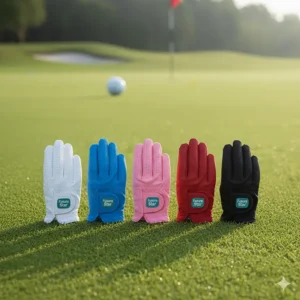
- Colors: Pink, Blue, White/Red, Black Stars
- Price: $11.99 per pair
What Makes It Special: MAZEL understands that toddlers and young kids need motivation as much as they need equipment. The colorful designs and fun patterns make these gloves something kids actually want to wear. The unique opti-fit adjustable closure helps achieve that snug fit crucial for tiny hands still developing motor skills. What really impressed me? Parents report these gloves make perfect birthday or Christmas presents because kids genuinely get excited about them.
Customer Feedback: One parent shared: “These youth gloves fit from 2-8 years old junior boys and girls perfectly. My daughter loves the pink ones!” The microfiber provides powerful grip while remaining flexible enough for developing hands.
Pros:
✅ Perfect sizing for toddlers and young children
✅ Fun, engaging color options kids love
✅ Opti-fit closure ensures proper fit
✅ Sold in pairs (left and right hand)
Cons:
❌ May be too small for older/larger kids
❌ Less durable for intensive use
5. PGM Kids Youth Golf Gloves – Best for Versatility
The PGM Kids Youth Golf Gloves bridge the gap between beginner and intermediate junior golfers with impressive versatility.
Key Specifications:
- Material: Microfiber synthetic with reinforced palm
- Age range: 3-12 years old
- Package: 1 pair (left and right)
- Price: $12.49
What Makes It Special: PGM designed these with youth-focused anti-slip grip technology that actually works. The reinforced synthetic palm patch delivers pro-level grip whether your child is driving, putting, or chipping. Strategic breathable holes allow airflow that keeps hands dry even on scorching summer tournament days. The slightly snug fit ensures better control—though you might want to size up for maximum comfort if your child has larger hands.
Customer Feedback: Parents appreciate the lightweight design that doesn’t distract during practice. Multiple reviewers mention these gloves maintain their shape and softness even after washing, which is crucial when kids are practicing daily.
Pros:
✅ Wide age range accommodates multiple years of use
✅ Excellent breathability for hot weather
✅ Comes as pair for complete hand protection
✅ Great value for growing golfers
Cons:
❌ Slightly snug fit may require sizing up
❌ Less premium feel than leather options
6. U.S. Kids Good Grip Golf Glove – Best for Teaching Proper Grip
Here’s where innovation meets education. The U.S. Kids Good Grip Golf Glove isn’t just protection—it’s a teaching tool.
Key Specifications:
- Material: Premium Cabretta leather palm with synthetic upper
- Special feature: Knuckle arrow and hand placement guide
- Sizes: Junior XS through XL
- Price: $10.99
What Makes It Special: U.S. Kids Golf engineered something truly clever here. The unique knuckle arrow and hand placement guide printed directly on the glove teach proper grip every single time your child picks up a club. According to the PGA of America, proper grip is the foundation of a good golf swing, and this glove literally guides young golfers into correct hand position. The premium Cabretta leather palm provides incredible feel and softness, while ultra-soft water-resistant synthetic leather increases durability.
Customer Feedback: Golf instructors particularly love these gloves because they reinforce what they’re teaching during lessons. Parents report the grip reminders help kids develop muscle memory faster than traditional gloves.
Pros:
✅ Educational grip placement guides
✅ Premium Cabretta leather for superior feel
✅ Water-resistant for all conditions
✅ Mesh inserts provide breathability
Cons:
❌ Limited color options
❌ Slightly higher cost than basic options
7. Wilson Staff Junior Fit All Glove – Best Universal Fit Design
Rounding out our list is the Wilson Staff Junior Fit All Glove, which takes a unique approach to junior sizing.
Key Specifications:
- Material: Soft microfiber synthetic with mesh upper
- Fit: Universal design for ages 7-13
- Design: Colorful camouflage options
- Price: $13.99
What Makes It Special: Wilson’s universal fit construction eliminates sizing guesswork entirely. The glove’s smart design accommodates various hand sizes within the 7-13 age range, making it perfect for parents who aren’t sure about exact sizing. The soft mesh fabric upper provides exceptional flexibility and moisture removal, keeping hands comfortable during extended practice sessions. The colorful camouflage patterns appeal strongly to kids who want something different from traditional white gloves.
Customer Feedback: One reviewer noted: “My son is into golf! The initial fit was perfect and the camo design made him actually excited to practice.” Parents particularly appreciate that the sturdy closure tab withstands whatever junior golfers throw at it.
Pros:
✅ Universal fit eliminates sizing concerns
✅ Eye-catching camouflage designs
✅ Durable construction survives rough use
✅ Excellent moisture-wicking properties
Cons:
❌ May not fit extremely small or large hands
❌ Universal sizing means less customized fit
🎯 Find Your Perfect Match
Each of these seven options excels in different areas. Ready to equip your young golfer? Check current prices and read more customer reviews on Amazon! 🏌️♂️✨
Understanding Kids Golf Glove Basics
Let’s get real about something parents constantly ask me: do kids actually need golf gloves at all? The short answer? Absolutely, and here’s why.
Why Young Golfers Need Proper Gloves
Think about a child’s hand. The skin is softer, more susceptible to blistering, and honestly? Kids grip clubs way harder than they should when they’re learning. A proper kids golf glove acts as a protective barrier between tender skin and the club’s grip, preventing those painful blisters that can turn an enthusiastic beginner into someone who never wants to touch a club again.
But protection is just the beginning. Golf gloves for kids provide crucial grip enhancement that adult gloves deliver, but scaled appropriately for smaller hands. The material creates friction between hand and club that bare skin simply can’t match, especially when hands get sweaty during practice or humid tournament conditions.
There’s also a psychological component I’ve observed over years of watching junior golfers. When kids wear proper equipment—including a good golf glove—they feel more confident. They look like the golfers they see on TV, which translates into better focus and more enjoyment of the game. According to research from the National Golf Foundation, junior participation increases significantly when kids feel properly equipped.
Material Matters More Than You Think
Here’s something most parents overlook: the material of a kids golf glove dramatically affects both performance and durability.
Cabretta Leather remains the gold standard for feel and grip. It’s soft, supple, and provides incredible tactile feedback. However, it’s pricier and requires more care. For serious junior golfers who practice regularly, leather offers that premium feel that can improve their connection with the club.
Synthetic Microfiber has come a long way in recent years. Modern synthetic materials in youth golf gloves offer surprising durability at lower price points. They’re often more breathable than leather, dry faster, and handle washing better. For kids who lose gloves regularly (so, most kids), synthetic makes economic sense.
Hybrid Construction combines the best of both worlds—leather palms for grip and feel with synthetic backs for breathability and durability. Many premium junior gloves use this approach, offering professional performance without the full professional price tag.
The backing material matters too. Spandex or Lycra inserts provide flexibility and comfort, allowing the glove to move naturally with your child’s hand during the swing.
How to Choose the Perfect Kids Golf Glove
Alright, let’s tackle the nitty-gritty of actually selecting the right glove for your young golfer. This process doesn’t need to be complicated, but getting it right makes a huge difference.
Step 1: Determine the Correct Hand
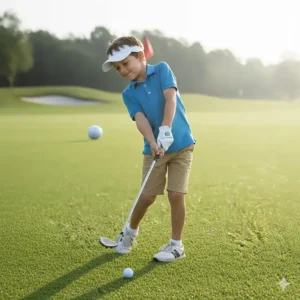
This trips up parents constantly, so pay attention. For right-handed golfers, the glove goes on the left hand (the lead hand at the top of the grip). For left-handed golfers, the glove goes on the right hand. Most kids wear only one glove, though some prefer wearing gloves on both hands for added protection during practice.
Step 2: Measure Your Child’s Hand Accurately
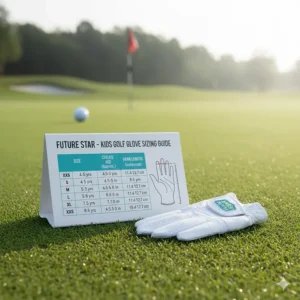
Grab a flexible tape measure and have your child make a fist. Measure around the widest part of the hand, just below the knuckles (excluding the thumb). Here’s the general sizing:
- Under 5.5 inches → Extra Small or Toddler sizes
- 5.5-6.0 inches → Small
- 6.0-6.5 inches → Medium
- 6.5-7.0 inches → Large
- 7.0+ inches → Extra Large or consider adult small
Remember, junior golf glove sizing isn’t standardized across brands, so always check specific size charts.
Step 3: Consider Age and Development
A 3-year-old’s needs differ dramatically from a 12-year-old’s. Toddlers and young kids (ages 2-6) benefit from gloves with fun designs and forgiving fits. Elementary-age kids (ages 7-10) need more serious performance as their skills develop. Pre-teens and young teenagers (ages 11-13) often prefer gloves that look and feel like adult versions.
Step 4: Evaluate Material Based on Usage
Casual weekend golfers: Synthetic or hybrid gloves offer the best value. They’re durable, affordable, and if lost, not heartbreaking to replace.
Regular lesson-takers: Consider mid-range options with leather palms. The improved feel helps develop better touch and control.
Competitive junior golfers: Invest in premium options with Cabretta leather and advanced grip technology. The performance difference becomes noticeable at higher skill levels.
Step 5: Check for Proper Fit
The glove should fit like a second skin—snug without being restrictive. Here’s how to test:
- No wrinkles or excess material in the palm
- Fingertips should reach the end without bunching
- The closure tab should secure comfortably at the wrist
- Your child should be able to flex their hand naturally
If you’re between sizes, size up. Kids grow fast, and a slightly loose glove works better than one that’s uncomfortably tight.
Step 6: Factor in Weather Conditions
Hot, humid climates: Prioritize breathability with mesh panels and moisture-wicking materials.
Rainy regions: Look for all-weather synthetic materials that maintain grip when wet.
Year-round play: Consider having multiple gloves for different conditions.
Step 7: Don’t Forget About Value
Kids lose gloves. It’s practically a law of nature. For younger children or beginners, two-pack options like the FINGER TEN provide peace of mind. As kids get older and more responsible, transitioning to single premium gloves makes sense.
Kids Golf Gloves vs Adult Small Gloves: The Truth
Here’s a question I get constantly: “Can’t I just buy an adult small glove instead of a kids golf glove? They’re cheaper!”
Look, I understand the impulse. But here’s the truth that’ll save you headaches down the road.
Why Kids Golf Gloves Are Actually Different
Proportional Engineering Adult gloves scaled down aren’t the same as gloves designed for children’s hands. Kids have different finger-to-palm ratios, different flexibility needs, and different grip patterns. Quality junior golf gloves account for these anatomical differences.
Material Selection Manufacturers of kids golf gloves typically use more forgiving materials that accommodate developing motor skills. The closure systems are easier for small hands to manipulate independently, and the overall construction considers that children’s hands fatigue more quickly than adult hands.
Feature Integration Many youth golf gloves include educational features like grip guides (as seen in U.S. Kids gloves) that simply don’t exist in adult versions. These teaching tools significantly accelerate skill development during those crucial early years.
When Adult Small Might Work
I’ll be honest—for kids aged 12-13 with larger hands, adult small gloves sometimes fit fine. But here’s the catch: you lose those junior-specific benefits. The trade-off makes sense only if:
- Your child is transitioning to adult equipment anyway
- They have unusually large hands for their age
- They specifically want an “adult” glove for confidence reasons
For kids under 12, stick with proper youth golf gloves. The performance difference is real.
Price Ranges and Value Analysis
Let’s talk money, because quality kids golf gloves span a surprisingly wide price spectrum.
Budget Options ($8-$12)
Products like FINGER TEN, MAZEL, and basic FootJoy models live here. You’re getting:
- Synthetic materials
- Basic grip technology
- Adequate durability for casual use
- Often multi-pack options
Best for: Beginners, young kids prone to losing gloves, families on tight budgets, or kids who play occasionally.
Mid-Range Options ($13-$18)
This sweet spot includes Callaway X Junior, Wilson Fit All, and premium FINGER TEN models. Features include:
- Hybrid materials (leather palms, synthetic backs)
- Enhanced breathability
- Better durability
- Improved grip technology
Best for: Regular players, kids taking weekly lessons, those showing serious interest in golf.
Premium Options ($19-$25)
U.S. Kids premium models and high-end FootJoy options occupy this tier. You get:
- Premium Cabretta leather
- Advanced moisture management
- Educational features
- Tournament-grade performance
Best for: Competitive junior golfers, kids playing multiple times weekly, those committed to long-term golf development.
Value Comparison
| Price Tier | Expected Lifespan | Cost Per Use |
|---|---|---|
| Budget | 6-12 months | $0.25-$0.50 per use |
| Mid-Range | 12-18 months | $0.20-$0.35 per use |
| Premium | 18-24 months | $0.15-$0.30 per use |
Based on weekly use; tournament play may reduce lifespan
Here’s something interesting: when you calculate cost per use, mid-range options often deliver the best value. They last longer than budget gloves but don’t carry the premium markup.
Caring for Your Kids Golf Glove: Making It Last
Want to maximize your investment? Proper care extends glove life significantly. Here’s what actually works.
Daily Maintenance
After each use, don’t just toss the glove in the golf bag. Instead:
- Let it air dry naturally (never direct heat or sunlight)
- Use a glove keeper or clip to maintain shape
- Store flat or on a glove form, not crumpled
Cleaning Guidelines
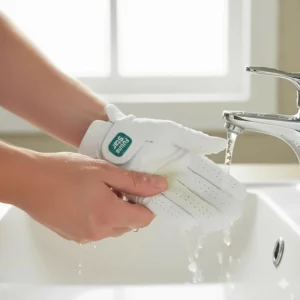
Kids golf gloves get dirty—grass stains, dirt, sweat, you name it. For synthetic gloves:
- Hand wash in cool water with mild soap
- Gently squeeze out excess water (don’t wring)
- Reshape and air dry flat
For leather gloves:
- Spot clean with a barely damp cloth
- Use specialized leather cleaner for stubborn stains
- Never machine wash leather gloves
- Consider leather conditioner occasionally
When to Replace
Even with perfect care, golf gloves for kids need replacing eventually. Watch for:
- Holes or tears (especially in the palm)
- Loss of grip texture
- Significant stretching or loosening
- Hardening or cracking of materials
- Persistent odors that won’t wash out
Most junior golf gloves last 6-18 months depending on frequency of use and care quality. If your child plays weekly, expect to replace gloves 1-2 times per year.
Common Mistakes Parents Make (And How to Avoid Them)
In my years helping families get kids into golf, I’ve seen these errors repeatedly. Learn from others’ experiences!
Mistake #1: Buying Based Solely on Price
The cheapest option isn’t always the best value. A $7 glove that lasts 2 months costs more long-term than a $15 glove lasting 12 months. Calculate cost per use, not just upfront expense.
Mistake #2: Ignoring Proper Fit
A poorly fitting kids golf glove does more harm than good. Too tight restricts movement and circulation. Too loose causes blisters from sliding and reduces grip effectiveness. Fit matters more than brand.
Mistake #3: Not Having Backups
Kids lose gloves at an alarming rate. Having a backup prevents situations where your child shows up for a tournament or lesson without their glove. Consider keeping a spare in the car.
Mistake #4: Choosing Style Over Substance
Yes, the pink glove with flowers looks cute, but if it’s poorly constructed, your child will have a miserable experience. Function must come before fashion, though thankfully many modern youth golf gloves deliver both.
Mistake #5: Using the Same Glove for Everything
A single glove for practice, tournaments, and hot weather use wears out fast. If your child plays regularly, rotating between two gloves significantly extends the life of both.
Hand Orientation Explained: Left vs Right Hand Gloves
This confuses even experienced golfers, so don’t feel bad if it’s not immediately clear.
The Simple Rule
The glove goes on your lead hand—the hand positioned highest on the club grip. For right-handed golfers, that’s the left hand. For left-handed golfers, that’s the right hand.
Why This Matters
The lead hand does most of the gripping work during the swing. It’s the hand most prone to blistering and the one that needs the most secure connection to the club. The trailing hand (lower on the grip) typically doesn’t need a glove because it plays more of a guiding and power role.
Can Kids Wear Gloves on Both Hands?
Absolutely! Some junior golfers prefer wearing gloves on both hands, especially:
- During practice sessions to prevent blisters on both hands
- In very hot conditions for moisture management
- When first learning to build confidence
- If they have particularly sensitive skin
There’s no rule against two gloves, though most golfers transition to single-glove use as they develop.
Identifying Glove Orientation
Product listings always specify “Left Hand” or “Right Hand.” This means:
- Left Hand glove = worn on left hand = for right-handed golfers
- Right Hand glove = worn on right hand = for left-handed golfers
When in doubt, remember: the glove goes on the lead hand, which is opposite the dominant side.
Special Considerations for Different Age Groups
Not all kids are the same, and their golf glove needs vary significantly by age and development stage.
Toddlers and Preschoolers (Ages 2-5)
Focus: Protection and encouragement
Best options: MAZEL Kids, FINGER TEN Small sizes
Key features: Fun colors, easy-on closure, extra soft materials
At this age, golf is more about fun than performance. Gloves need to be comfortable enough that kids willingly wear them and durable enough to survive being treated as toys. The grip enhancement is secondary to preventing tears from blisters.
Early Elementary (Ages 6-8)
Focus: Skill development begins
Best options: FootJoy Junior Small/Medium, PGM Youth
Key features: Better grip, proper sizing, educational elements
Kids this age are starting to take golf more seriously. They benefit from gloves that provide actual performance improvements while remaining forgiving of improper care. This is the perfect time to introduce concepts like glove maintenance and proper fitting.
Late Elementary (Ages 9-11)
Focus: Performance and consistency
Best options: Callaway X Junior, U.S. Kids Good Grip
Key features: Premium materials, advanced grip, durability
By this age, many kids are playing in junior leagues or tournaments. Golf gloves for kids in this group should deliver near-adult performance in junior sizing. They understand the value of proper equipment and are more likely to care for gloves correctly.
Pre-Teen and Young Teen (Ages 12-13)
Focus: Transition to serious play
Best options: Premium FootJoy, Callaway, or adult small gloves
Key features: Professional-grade materials, advanced technology
Kids this age often want equipment that matches what they see pros using. They’re developing strong preferences and are mature enough to handle premium equipment properly. Many transition to adult small sizes during this phase.
Materials Breakdown: What You’re Actually Buying
Understanding materials helps you make informed decisions about which kids golf glove suits your needs.
Cabretta Leather
Pros: Exceptional feel, superior grip, professional-grade performance, forms to hand shape
Cons: Higher cost, requires more care, less weather-resistant, shorter lifespan with poor maintenance
Cabretta leather comes from hairsheep and is prized for its thin, supple nature. It provides incredible tactile feedback that helps junior golfers develop feel for the club. However, it demands respect—get it wet repeatedly without proper drying, and it’ll stiffen and crack.
Synthetic Microfiber
Pros: Affordable, durable, weather-resistant, easy care, quick-drying
Cons: Less premium feel, can be less breathable, may lack the suppleness of leather
Modern synthetic materials in youth golf gloves have improved dramatically. High-quality microfiber provides 80-90% of leather’s performance at 50-60% of the cost. For most junior golfers, especially beginners, this trade-off makes perfect sense.
Hybrid Construction
Pros: Balances leather feel with synthetic durability, often includes mesh for breathability
Cons: Mid-range pricing, complexity means more potential failure points
Many premium kids golf gloves use leather palms for grip combined with synthetic backs for flexibility and breathability. This construction method delivers performance where it matters most (palm contact) while using materials best suited for comfort and durability on the back of the hand.
Mesh Panels
Pros: Excellent breathability, flexibility, lightweight feel
Cons: Can be less durable, may allow dirt infiltration
Mesh inserts in youth golf gloves provide ventilation that keeps hands cool during summer rounds. Look for strategically placed mesh—between fingers, on the back of the hand, and along the sides—for maximum breathability without sacrificing structural integrity.
Benefits of Using Kids Golf Gloves vs Playing Bare-Handed
Some old-school golfers argue kids should play without gloves to “toughen up their hands.” That’s outdated thinking. Here’s why proper kids golf gloves matter.
| Aspect | With Glove | Without Glove |
|---|---|---|
| Blister Protection | Excellent prevention | High risk, especially for beginners |
| Grip Security | Enhanced, consistent | Diminishes with sweat |
| Confidence | Increases comfort | May cause hesitation |
| Skill Development | Allows focus on technique | Distracted by discomfort |
| Weather Performance | Maintained in various conditions | Severely affected by rain/heat |
The Confidence Factor
Here’s something I’ve observed repeatedly: kids who wear proper golf gloves for kids concentrate better on their swing mechanics because they’re not worried about pain or club slippage. This psychological benefit accelerates learning significantly.
Performance Consistency
Youth golf gloves maintain consistent grip regardless of weather conditions. Whether it’s humid, rainy, or dry, gloved hands provide predictable feedback. Bare hands become slippery when wet, creating inconsistent performance that frustrates young learners.
Professional Habits
Teaching kids to use proper equipment from the start builds good habits. Nearly all professional golfers wear gloves. When kids use golf gloves, they’re practicing like the pros from day one, establishing proper routines that serve them throughout their golf journey.
Sizing Guide: Getting the Perfect Fit Every Time
Proper sizing makes the difference between a glove that enhances performance and one that gets shoved in a bag and forgotten.
Measurement Techniques
Method 1: Circumference Measurement Wrap a flexible tape measure around the widest part of your child’s palm (below knuckles, excluding thumb). Measure in inches.
Method 2: Finger-to-Wrist Length Measure from the tip of the middle finger to the wrist crease. This method works well for kids with unusually long or short fingers relative to palm size.
Brand-Specific Sizing Variations
Be aware that sizing isn’t universal. For example:
- FootJoy tends to run slightly small
- Callaway fits true to size
- FINGER TEN runs slightly large
- Wilson’s universal fit accommodates a range
Always check brand-specific size charts and read customer reviews for fitting insights.
Growth Considerations
Kids grow fast—sometimes their hands grow even faster. When choosing between sizes:
- Choose smaller if: Your child is at the top of their growth curve for that year or the glove will be used within 3 months
- Choose larger if: Your child is entering a growth spurt or you want the glove to last a full season
A glove slightly loose works better than one that’s tight.
FAQ
❓ Do kids really need golf gloves or can they play without them?
❓ How often should I replace my child's kids golf glove?
❓ Can left-handed golfers use right-handed golf gloves for kids?
❓ What's better for junior golfers: leather or synthetic kids golf gloves?
❓ How tight should a kids golf glove fit?
Conclusion: Finding Your Young Golfer’s Perfect Match
After diving deep into the world of kids golf gloves, here’s what you need to remember: the right glove does more than protect hands—it builds confidence, accelerates skill development, and helps young golfers fall in love with the game.
Whether you choose the FootJoy Junior for its proven track record, the FINGER TEN 2-Pack for unbeatable value, or the Callaway X Junior for all-weather performance, you’re making an investment in your child’s golf journey. The best kids golf glove is one that fits properly, suits your child’s playing frequency, and provides the right balance of protection and performance for their skill level.
Remember, golf should be fun for kids. If blisters or discomfort discourage practice, you’re fighting an uphill battle. A quality kids golf glove removes those barriers, letting young golfers focus on what matters: improving their swing, enjoying time outdoors, and maybe developing a lifelong passion for the game.
Don’t overthink it. Start with our recommendations based on your child’s age and playing frequency. You can always upgrade as their skills and commitment grow. The important thing is getting them out there, properly equipped, and ready to enjoy golf.
🎯 Ready to Get Your Young Golfer Started?
Browse our top picks above and check current prices on Amazon. Every glove on this list has been researched, reviewed, and recommended based on real performance and customer feedback. Your future golf champion is waiting—let’s get them properly equipped! ⛳✨
Recommended for You
- 7 Best Ladies Golf Gloves 2025: Expert Reviews
- Right Handed Golf Gloves: 7 Best Tested & Reviewed 2025
- 7 Best Left Handed Golf Gloves for Women 2025
Disclaimer: This article contains affiliate links. If you purchase products through these links, we may earn a small commission at no additional cost to you.
✨ Found this helpful? Share it with your friends! 💬🤗
