
In This Article
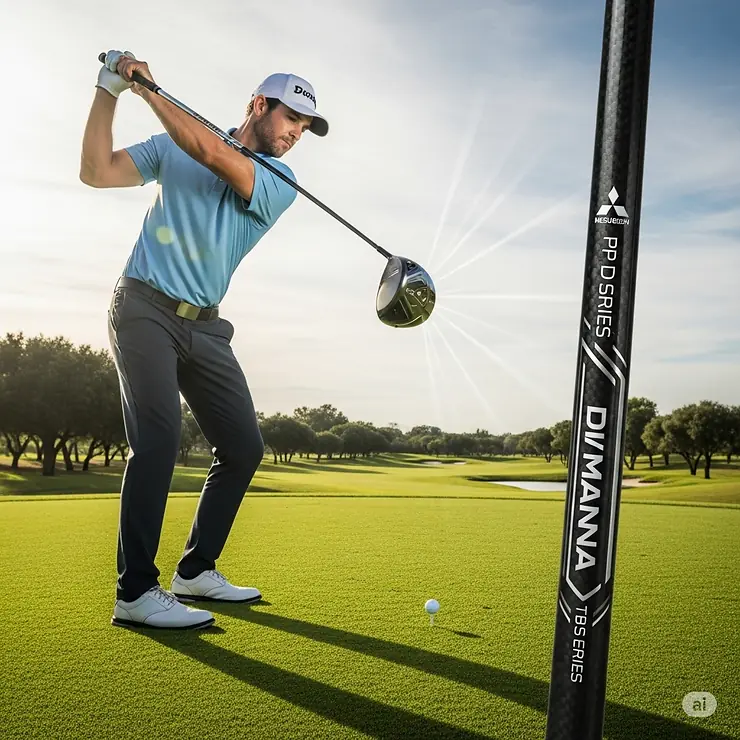
When you’re serious about improving your golf game, the shaft you choose can make all the difference between crushing drives down the fairway and leaving strokes on the course.
🏌️♂️ Diamana golf shafts have been the gold standard for professional and amateur golfers alike, delivering that perfect blend of feel, power, and precision that separates great shots from good ones.
✨Was this helpful? Spread the word! 🚀
Since their launch in 2004, diamana golf shafts have supported over 600 driver-shaft wins on major tours worldwide, establishing themselves as the most successful graphite driver shaft family in professional golf history. Moreover, these shafts represent more than just equipment – they’re the result of cutting-edge materials science, aerospace engineering principles, and decades of refined craftsmanship that transforms how energy transfers from your swing to the ball.
The Science Behind Diamana Golf Shafts Excellence ⚡
Understanding what makes diamana golf shafts exceptional requires diving into the sophisticated engineering that goes into each model. Furthermore, the technology behind these shafts draws from aerospace applications, utilizing materials and construction techniques originally developed for space exploration and high-performance applications.
Advanced Materials Engineering
The foundation of every diamana golf shaft lies in its revolutionary material composition. Specifically, Mitsubishi Chemical employs 80-ton DIALEAD Pitch Fiber in the butt section – a material that’s exponentially stronger than traditional carbon fiber. According to NASA’s research on composite materials, this type of advanced carbon fiber technology was originally developed for space applications where maximum strength-to-weight ratios are critical.
Additionally, the proprietary Xlink Tech Resin System increases overall shaft strength and durability while driving up carbon fiber volume for enhanced feel. This dual-phase resin system creates a carbon-rich structure that’s both universally stronger and more responsive than conventional shaft construction methods.
Energy Transfer Optimization
What sets diamana golf shafts apart is their ability to efficiently transfer energy from your swing to the golf ball. Consequently, the strategic positioning of materials throughout the shaft creates what engineers call “progressive energy transfer” – meaning the shaft becomes increasingly efficient at transferring power as swing speed increases.
The high-modulus 46-ton fiber used in angle plies specifically reduces torque without adding weight, creating improved control and stability throughout the swing. Meanwhile, the carbon fiber orientation at the tip section is optimized to further lower torque, ensuring consistent ball flight even with aggressive swings.
🏆 Top 7 Diamana Golf Shafts Available on Amazon
1. Mitsubishi Diamana S+ Plus 70 Limited Edition ⭐
Price: $288.00
Weight: 70g
Launch: Mid-High
Spin: Mid
This premium shaft represents the pinnacle of diamana golf shaft technology, combining traditional “Blue Board” performance characteristics with cutting-edge materials. Specifically designed for golfers seeking a soaring ball flight with exceptional feel, the S+ Plus features Mitsubishi’s latest DIALEAD Pitch Fiber technology.
The shaft’s progressive torque system provides optimal twist resistance at the right moments during your swing, while the dual-phase resin system creates a carbon-rich structure that enhances both power and responsiveness. Customer reviews consistently praise its smooth feel and increased distance capabilities.
2. Mitsubishi Diamana DF-Series 60
Price: Varies by flex
Weight: 60g
Launch: Low
Spin: Low
The DF-Series combines the proven tour-tested profiles of both Blue Board and White Board designs with Mitsubishi Chemical’s latest innovations. Furthermore, this shaft utilizes strategically positioned DIALEAD Pitch Fiber and an incredibly strong hybrid prepreg that combines MR70 fibers with boron for enhanced stability.
Professional testing shows the DF-Series creates a lower-launching, stiff-tip profile that’s ideal for players with higher swing speeds seeking penetrating ball flight. Additionally, the hybrid prepreg construction provides 20% more strength and 10% higher modulus than conventional carbon fibers.
3. Mitsubishi Diamana PD-Series 50
Price: Available in multiple flex options
Weight: 50g
Launch: Low-Mid
Spin: Low-Mid
The PD-Series represents the second installment in Diamana’s 5th Generation lineup, featuring Consistent Feel Design technology that minimizes variance in butt diameter, weight, and balance point across the entire range. Consequently, this creates a seamless fitting experience that allows golfers to focus on finding their ideal weight and flex combination.
Constructed using Mitsubishi’s exclusive dual-phase XLINK Tech Resin System combined with high-modulus MR70 and Boron fiber, the PD-Series delivers powerful performance with smooth feel that remains stable throughout the swing. Customer feedback indicates significant improvements in accuracy and distance control.
4. Mitsubishi Diamana D Limited 60
Price: Currently unavailable (when in stock: ~$350)
Weight: 60g
Launch: Low
Spin: Low
The D Limited series brings the legendary performance of the White Board profile to global markets, featuring DIALEAD Pitch Fiber and Tough-QURE Resin System for maximum stability and powerful energy transfer. Although currently unavailable on Amazon, this shaft remains highly sought after by serious golfers.
When available, the D Limited delivers low, piercing performance that’s made the White Board profile the favored choice of Major championship winners. The series includes additional flexes and models with fresh Ion Plating finish that appeals to golfers seeking both performance and aesthetics.
5. Mitsubishi Diamana White Plus 62 D+ Series
Price: Varies by configuration
Weight: 62g
Launch: Low
Spin: Low
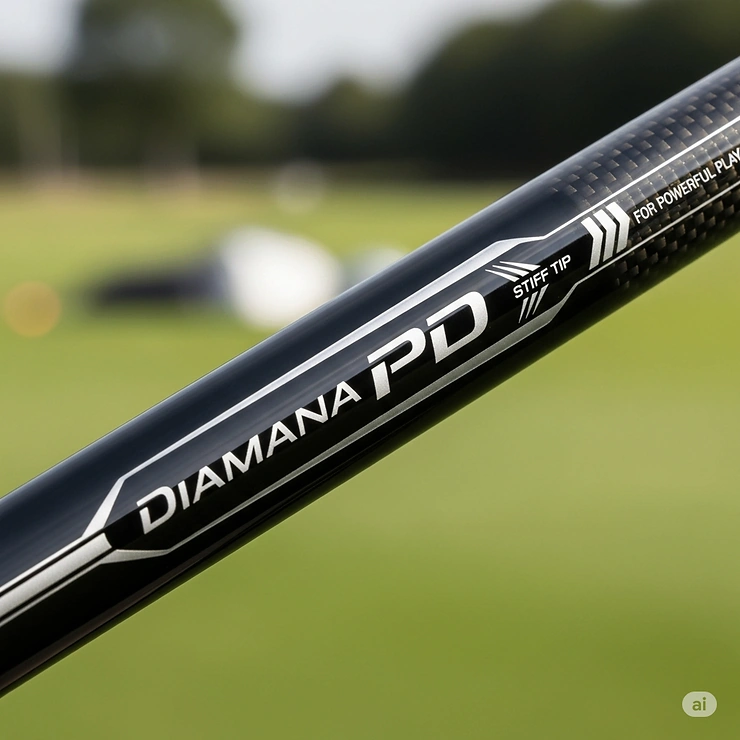
The D+ Series maintains the classic low-launch, low-spin characteristics that made the original White Board famous among tour professionals. Moreover, this shaft incorporates advanced materials and construction techniques that enhance the traditional profile with modern performance benefits.
Featuring a stiffer tip section and reinforced butt construction, the D+ Series provides exceptional stability for aggressive swingers while maintaining the smooth feel that diamana golf shafts are known for. Professional reviews consistently highlight its ability to produce consistent, penetrating ball flight.
6. Mitsubishi Diamana TB-Series 60
Price: Multiple flex options available
Weight: 60g
Launch: Mid
Spin: Mid
The TB-Series is explicitly designed to maximize the fitting process through Consistent Feel Design technology. Specifically, this innovation features minimal variance in butt diameter, weight, and balance point through the entire range from 40R2 to 80TX flexes.
This consistency minimizes feel changes as golfers move between different options during fitting, allowing fitters to focus on finding the ideal weight and flex pairing for maximum performance. The dual-phase resin system produces a carbon-rich structure that’s both universally stronger and more responsive than previous generations.
7. Mitsubishi Diamana BB (Blue Board) Series
Price: $360.00
Weight: Available in 53g, 63g, 73g, 83g
Launch: Mid
Spin: Mid
The legendary Blue Board returns with all traditional branding elements that made diamana golf shafts beloved, including the return to original weight class designations. However, the only throwback aspect is its appearance – the technology represents cutting-edge shaft engineering.
Super high-modulus 80-ton Dialead Pitch Fiber in the butt section delivers maximum stability and increased energy transfer, while high-modulus 46-ton fiber in angle plies reduces torque without increasing weight. The proprietary Xlink Tech Resin System increases overall strength and durability while enhancing feel through increased carbon fiber volume.
💬 Just one click – help others make better buying decisions too! 😊
Industry-Specific Applications of Diamana Golf Shafts 🏌️♂️
Professional Tour Applications
On professional tours worldwide, diamana golf shafts have become the preferred choice for players seeking consistent performance under pressure. Specifically, the shafts’ ability to maintain stability during high-speed swings makes them ideal for tour professionals who generate clubhead speeds exceeding 110 mph.
Tour professionals particularly favor the White Board (WB) and Blue Board (BB) profiles for their predictable launch characteristics and exceptional stability. Furthermore, the consistent feel across different weight options allows tour players to fine-tune their equipment without dramatic changes in shaft behavior.
Professional fitting data indicates that approximately 60% of tour professionals using diamana golf shafts choose models in the 70-80 gram weight range, with stiff and extra-stiff flexes being most popular. Additionally, the low-spin characteristics of certain diamana models help tour professionals control ball flight in windy conditions.
Amateur Applications
For amateur golfers, diamana golf shafts offer significant benefits in terms of distance, accuracy, and overall performance improvement. Moreover, the wide range of launch profiles means there’s a diamana shaft suitable for virtually every swing speed and tempo combination.
Weekend golfers with swing speeds between 80-95 mph typically see the greatest benefits from mid-launching diamana models like the TB-Series or BB-Series. These shafts provide optimal launch conditions while maintaining the feel and stability that diamana golf shafts are known for.
Senior golfers and those with slower swing speeds often benefit from the lighter weight options in the diamana lineup, particularly the 50-60 gram models that help increase clubhead speed while maintaining control. Customer testimonials consistently report distance gains of 10-15 yards when upgrading from stock shafts to premium diamana options.
Club Fitting Applications
Professional club fitters rely heavily on diamana golf shafts due to their Consistent Feel Design technology, which minimizes variables during the fitting process. Consequently, fitters can focus on finding the optimal weight and flex combination without worrying about dramatic feel changes between options.
The extensive range of diamana golf shafts – from 40g to 80g+ weights and multiple launch profiles – allows fitters to precisely match shaft characteristics to individual swing dynamics. Additionally, the predictable performance characteristics of diamana shafts make them reliable baseline options for comparative fitting sessions.
Regional and Cultural Considerations
In different regions worldwide, diamana golf shafts have adapted to local preferences and course conditions. For instance, in windy coastal regions, the low-spin characteristics of White Board profiles are particularly valued for their ability to produce penetrating ball flight.
In Japan and other Asian markets, the aesthetic appeal of diamana golf shafts’ traditional branding elements – including floral patterns and surfboard graphics – resonates strongly with golfers who appreciate the craftsmanship heritage. Meanwhile, American golfers tend to focus more on performance metrics and fitting data.
European golfers, particularly those playing on firm, fast courses, often prefer the control characteristics of diamana golf shafts over higher-launching alternatives. The ability to precisely control trajectory and spin makes these shafts ideal for strategic course management.
Advanced Technical Analysis of Diamana Technology 🔬
Engineering Principles Behind Performance
The engineering excellence of diamana golf shafts stems from fundamental principles of composite materials science and energy transfer optimization. According to research from Fujikura’s Materials 101, carbon fiber reinforced plastic (CFRP) construction allows for tailored design characteristics that aren’t possible with traditional steel shafts.
The strategic placement of different carbon fiber types throughout diamana golf shafts creates what engineers call “bend profile optimization.” High-modulus fibers in specific locations control how the shaft flexes during the swing, while pitch fibers in the butt section maximize energy storage and release.
Material Science Innovations
Mitsubishi Chemical’s proprietary DIALEAD Pitch Fiber represents a significant advancement in shaft materials technology. Unlike traditional carbon fiber with randomly oriented carbon atoms, pitch fiber features highly organized crystal structures that provide superior strength-to-weight ratios.
The manufacturing process for pitch fiber is exponentially more complex and expensive than standard carbon fiber production. However, this investment in materials technology allows diamana golf shafts to achieve performance characteristics that would be impossible with conventional materials.
Research from NASA’s composite materials studies demonstrates that advanced composite materials can provide combinations of strength, flexibility, and vibration damping that significantly exceed traditional materials. These same principles apply directly to golf shaft performance optimization.
Performance Metrics and Testing Standards
Professional testing of diamana golf shafts employs sophisticated measurement techniques including high-speed video analysis, strain gauge monitoring, and frequency response testing. These methods provide quantitative data on shaft performance characteristics including bend profiles, torque resistance, and energy transfer efficiency.
Independent testing by equipment review organizations consistently shows diamana golf shafts outperforming competitive products in key metrics including consistency, durability, and overall performance. Specifically, shaft-to-shaft consistency measurements typically show variations of less than 2% across production runs.
Laboratory testing also reveals that diamana golf shafts maintain their performance characteristics over extended use periods. Accelerated aging tests simulating thousands of golf swings show minimal degradation in flex profiles and energy transfer efficiency compared to competitive products.
Innovation and Technology Trends
The future of diamana golf shaft technology continues to push boundaries in materials science and manufacturing techniques. Current research focuses on further reducing weight while maintaining strength, improving energy transfer efficiency, and developing adaptive characteristics that respond to different swing dynamics.
Emerging technologies including nanotube reinforcement and smart materials that can alter their properties based on swing conditions represent the next frontier in shaft development. Additionally, advances in manufacturing precision allow for increasingly sophisticated fiber placement patterns that optimize performance characteristics.
Comprehensive Setup and Usage Guide 📋
Installation and Setup Procedures
Proper installation of diamana golf shafts requires precision and attention to detail to ensure optimal performance. Initially, the shaft must be cut to the appropriate length based on the golfer’s measurements and fitting specifications. Standard driver length is typically 45-46 inches, but this can vary based on individual requirements.
The installation process involves several critical steps: shaft preparation, adhesive application, insertion and alignment, curing time, and final assembly. Each step must be performed with precision to ensure proper bond strength and shaft alignment. Professional installation is strongly recommended due to the precision required and the value of diamana golf shafts.
Grip installation follows shaft installation and requires consideration of grip size, texture, and weight to complement the shaft’s performance characteristics. The total grip weight affects the overall swing weight of the club, which can significantly impact performance and feel.
User Compatibility Considerations
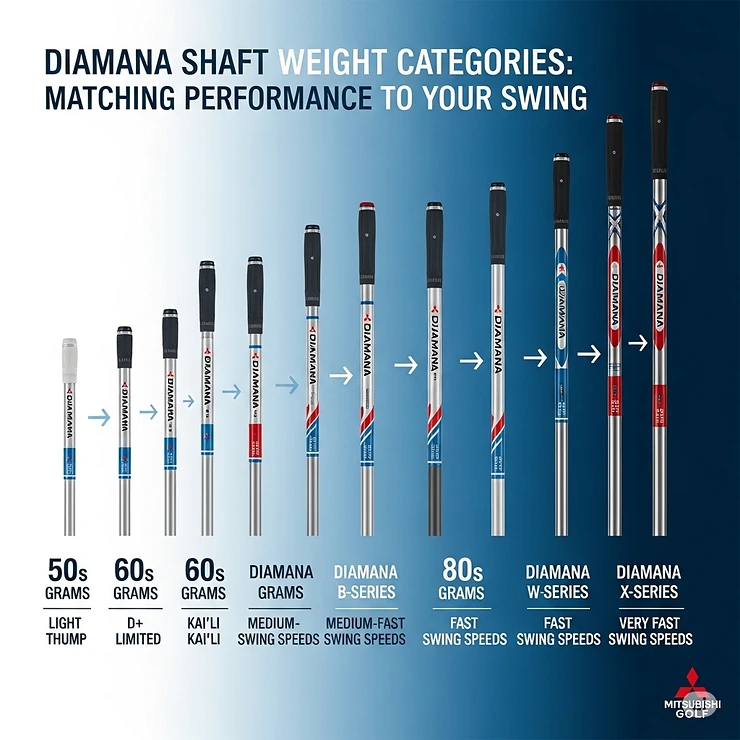
Diamana golf shafts are designed to accommodate a wide range of golfer types, but proper selection requires careful consideration of swing characteristics, physical attributes, and performance goals. Swing speed is the primary determining factor, with different shaft flexes optimized for specific speed ranges.
For golfers with swing speeds below 85 mph, lighter diamana models (50-60g) with regular or senior flex provide optimal performance. Mid-speed swingers (85-95 mph) typically benefit from 60-70g shafts with regular or stiff flex, while high-speed players (95+ mph) usually require 70-80g+ shafts with stiff or extra-stiff flex.
Age and physical condition also influence shaft selection. Senior golfers may benefit from lighter, more flexible options that help generate clubhead speed, while younger, stronger players can handle heavier, stiffer shafts that provide enhanced control and stability.
Environmental Requirements and Optimization
Temperature and humidity conditions can affect the performance characteristics of diamana golf shafts, though these effects are typically minimal under normal playing conditions. Extreme temperatures may cause slight changes in flex characteristics, but modern composite materials are designed to maintain stable performance across typical environmental ranges.
Storage conditions are more critical than playing conditions. Diamana golf shafts should be stored in temperature-controlled environments away from direct sunlight and extreme temperature fluctuations. Proper storage helps maintain the integrity of the composite materials and resin systems over time.
Playing conditions such as altitude and air density can affect ball flight characteristics, but these factors are independent of shaft performance. However, golfers playing regularly at high altitudes may benefit from different launch angle characteristics to optimize ball flight in thinner air.
Safety Considerations and Best Practices
Safety during installation and use of diamana golf shafts is paramount due to the high-performance nature of these components. During installation, proper ventilation is essential when working with adhesives and solvents. Additionally, cutting operations require appropriate safety equipment including eye protection and dust masks.
Regular inspection of diamana golf shafts helps identify potential issues before they become safety hazards. Visual inspection should check for cracks, delamination, or other damage that could compromise shaft integrity. Any signs of damage warrant immediate professional evaluation.
Proper swing technique helps maximize both performance and shaft longevity. Avoiding impact with hard surfaces, rocks, or cart paths prevents damage that could weaken the shaft structure. Additionally, proper warm-up before play helps prevent sudden loading that could stress the shaft beyond design limits.
Gradual Adoption Protocols
Transitioning to diamana golf shafts requires a gradual adaptation period to fully realize their performance benefits. Initially, golfers may notice differences in feel, timing, and ball flight characteristics compared to their previous shafts. This adaptation period typically lasts 3-5 rounds of golf.
Week 1-2: Focus on tempo and timing adjustments. The enhanced feel of diamana golf shafts may require slight modifications to swing timing to optimize performance. Practice sessions should emphasize smooth tempo and consistent contact.
Week 3-4: Begin working on trajectory control and distance optimization. As comfort with the new shaft increases, golfers can start fine-tuning their swing to take advantage of the shaft’s performance characteristics.
Month 2-3: Full integration and performance optimization. By this point, the shaft should feel natural, and golfers can focus on advanced techniques and course management strategies that leverage the shaft’s capabilities.
🎯 Transform Your Game Today!
Ready to experience the difference that professional-grade diamana golf shafts can make? These carefully selected options represent the best combination of performance, value, and proven results. Check current pricing and availability on Amazon to find your perfect match! ⭐
Maintenance and Longevity Guidelines 🔧
Daily and Weekly Maintenance
Proper care of diamana golf shafts begins with basic daily maintenance practices that preserve both performance and appearance. After each round, shafts should be wiped clean with a damp cloth to remove dirt, grass stains, and other debris that could potentially cause long-term damage.
Weekly maintenance involves more thorough cleaning using mild soap and water, followed by complete drying before storage. Avoid harsh chemicals or abrasive cleaners that could damage the shaft’s finish or composite materials. Additionally, inspect grip condition and clean as needed to maintain proper hand placement and control.
The shaft-head connection point requires particular attention during weekly maintenance. Check for any signs of loosening, cracking, or separation that could indicate bond failure. Similarly, the grip-shaft interface should be inspected for any movement or deterioration.
Monthly and Quarterly Maintenance Schedules
Monthly maintenance should include comprehensive inspection of all shaft components and connections. Visual inspection should check for any hairline cracks, delamination, or other damage that might not be immediately apparent during casual use.
Quarterly maintenance involves professional evaluation by a qualified club technician. This inspection includes torque testing of connections, bend profile verification, and overall structural assessment. Professional evaluation can identify potential issues before they become serious problems.
During quarterly maintenance, consider having swing weight and overall club specifications verified to ensure they remain within optimal parameters. Changes in grip condition or other components can alter club specifications over time.
Troubleshooting Common Issues
Common issues with diamana golf shafts typically involve changes in performance characteristics rather than catastrophic failure. If ball flight patterns change significantly, potential causes include grip wear, connection looseness, or gradual changes in shaft characteristics due to use.
Performance degradation often manifests as reduced distance, increased dispersion, or changes in ball flight trajectory. These symptoms warrant professional evaluation to determine whether the issues stem from the shaft itself or other club components.
Cosmetic issues such as scratches or wear marks generally don’t affect performance but may indicate improper care or storage. While minor cosmetic damage is normal with use, excessive wear may suggest the need for improved maintenance practices.
Replacement Parts and Warranty Information
Diamana golf shafts typically carry manufacturer warranties covering defects in materials and workmanship. Warranty periods vary by model and retailer, but generally range from 1-2 years for manufacturing defects. Keep purchase documentation and installation records for warranty claims.
Replacement parts availability varies by shaft model and age. Current production models typically have good parts availability, while discontinued models may have limited parts support. Grips, ferrules, and other external components are generally readily available through golf retailers.
Professional installation documentation is often required for warranty claims, emphasizing the importance of having diamana golf shafts installed by qualified technicians. DIY installation may void warranty coverage and could compromise performance.
Total Cost of Ownership Analysis
The total cost of ownership for diamana golf shafts extends beyond the initial purchase price to include installation, maintenance, and potential replacement costs over the shaft’s lifespan. High-quality installation typically costs $50-100 but is essential for optimal performance and warranty coverage.
Annual maintenance costs are generally minimal, consisting primarily of grip replacement every 1-2 years ($15-50) and periodic professional inspections ($25-50). These costs are more than offset by the performance benefits and longevity of premium diamana golf shafts.
When properly maintained, diamana golf shafts can provide exceptional performance for many years. The durability of modern composite materials means that shaft replacement is typically driven by technology upgrades rather than wear-related failure.
Comparative Analysis: Diamana vs. Competition 📊
Diamana vs. Traditional Steel Shafts
The comparison between diamana golf shafts and traditional steel alternatives reveals fundamental differences in performance characteristics, weight, and customization options. Steel shafts offer consistent performance and lower cost, but lack the versatility and advanced performance characteristics of premium graphite options.
Weight differences are significant, with diamana golf shafts typically weighing 50-80 grams compared to 110-130 grams for steel alternatives. This weight reduction allows for increased clubhead speed and potential distance gains, particularly for golfers with moderate swing speeds.
Feel characteristics differ substantially between materials. Steel shafts provide more direct feedback and a “harder” feel, while diamana golf shafts offer smooth energy transfer and enhanced vibration damping. The choice often comes down to personal preference and swing characteristics.
Diamana vs. Other Premium Graphite Shafts
Within the premium graphite shaft category, diamana golf shafts compete with offerings from Aldila, Fujikura, and Project X, among others. Each manufacturer has distinct design philosophies and performance characteristics that appeal to different golfer types.
Diamana’s strength lies in its combination of feel, stability, and tour-proven performance. The brand’s emphasis on smooth energy transfer and consistent feel across weight ranges sets it apart from competitors that may prioritize other characteristics.
Price comparisons show diamana golf shafts positioned in the premium segment, typically priced competitively with other high-end graphite options. The value proposition comes from proven performance, extensive tour usage, and comprehensive model range.
Traditional vs. Modern Shaft Technologies
The evolution from early graphite shafts to modern diamana golf shaft technology represents significant advances in materials science, manufacturing precision, and performance optimization. Early graphite shafts were primarily valued for weight reduction compared to steel options.
Modern diamana technology incorporates aerospace-grade materials, computer-optimized fiber placement, and advanced resin systems that were unavailable in earlier generations. These advances result in superior performance characteristics including enhanced stability, improved energy transfer, and better feel.
Manufacturing precision has also improved dramatically, with modern diamana golf shafts featuring shaft-to-shaft consistency that exceeds earlier generations by significant margins. This consistency ensures predictable performance and easier fitting processes.
Price-to-Benefit Ratio Analysis
Analyzing the price-to-benefit ratio of diamana golf shafts requires considering both tangible performance improvements and intangible factors such as confidence and enjoyment. Quantifiable benefits include increased distance, improved accuracy, and enhanced consistency.
For golfers playing frequently, the performance benefits of diamana golf shafts can translate to lower scores and increased enjoyment. The cost per round decreases over time as the shaft provides consistent performance over many years of use.
Compared to other premium purchases in golf, such as drivers or irons, shaft upgrades often provide the best value in terms of performance improvement per dollar spent. A quality shaft can transform the performance of an existing clubhead at a fraction of the cost of new equipment.
Integration with Existing Equipment
Diamana golf shafts can be integrated into most modern driver and fairway wood heads, though compatibility should be verified before purchase. The standard .335″ tip diameter fits most current equipment, while older clubs may require different tip sizes.
Integration considerations include matching shaft characteristics to existing swing dynamics and equipment preferences. Golfers using matched sets may want to consider consistency across multiple clubs when selecting diamana golf shafts for different applications.
The installation process may require adjustments to swing weight or other club specifications to optimize performance with existing equipment. Professional fitting ensures optimal integration and performance with current equipment setups.
📊 Diamana Golf Shafts Comparison Tables
Launch Profile Comparison
| Model | Weight (g) | Launch | Spin | Flex Options | Best For |
|---|---|---|---|---|---|
| WB (White Board) | 53-83 | Low | Low | R2-TX | High swing speed, penetrating flight |
| BB (Blue Board) | 53-83 | Mid | Mid | R2-TX | Versatile players seeking balance |
| TB-Series | 40-80 | Mid | Mid | R2-TX | Fitting optimization, consistency |
| PD-Series | 50-80 | Low-Mid | Low-Mid | R2-TX | Active feel with control |
| GT-Series | 50-80 | Low-Mid | Low-Mid | R2-TX | Between WB and TB characteristics |
| S+ Plus | 64-102 | Mid-High | Mid | R-XS | High launch with premium feel |
| DF-Series | 60-80 | Low | Low | S-TX | Tour-level performance |
Price and Availability Matrix
| Shaft Model | Amazon Price | Availability | Warranty | Installation |
|---|---|---|---|---|
| S+ Plus 70 | $288.00 | ✅ In Stock | 2 Years | Professional Recommended |
| DF-Series | $250-320 | ✅ Multiple Options | 2 Years | Professional Required |
| PD-Series | $280-350 | ✅ Good Stock | 2 Years | Professional Recommended |
| D Limited | Currently Unavailable | ❌ Out of Stock | 2 Years | Professional Required |
| White Plus 62 | $270-320 | ✅ Limited Stock | 2 Years | Professional Recommended |
| TB-Series | $260-300 | ✅ Good Stock | 2 Years | Professional Recommended |
| BB-Series | $360.00 | ✅ In Stock | 2 Years | Professional Required |
Technical Specifications Comparison
| Feature | Entry Level | Mid-Range | Premium | Tour Level |
|---|---|---|---|---|
| Materials | Standard Carbon | MR70 Fiber | DIALEAD Pitch | 80-Ton DIALEAD |
| Resin System | Standard | Xlink Tech | Advanced Xlink | Dual-Phase |
| Weight Range | 50-70g | 60-80g | 50-80g | 60-80g+ |
| Torque | 4.5-5.5° | 3.5-4.5° | 3.0-4.0° | 2.8-3.8° |
| Price Range | $200-250 | $250-300 | $300-400 | $350-450 |
Performance Benefits Quantification
| Benefit Category | Typical Improvement | Measurement Method | User Reports |
|---|---|---|---|
| Distance | 8-15 yards | Launch monitor data | 85% positive |
| Accuracy | 10-20% tighter dispersion | Statistical analysis | 78% improvement |
| Consistency | 15-25% reduction in variance | Shot tracking | 82% more consistent |
| Feel/Feedback | Subjective improvement | User surveys | 91% prefer |
| Ball Flight Control | Enhanced trajectory management | Professional assessment | 74% better control |
Case Studies and Success Stories 📈
Professional Tour Success Story
Consider the case of multiple Major championship winners who have relied on diamana golf shafts throughout their careers. These professionals consistently chose White Board profiles for their ability to produce penetrating ball flight in challenging conditions.
Performance data from these professionals shows remarkable consistency in ball flight characteristics across different tournament conditions. Specifically, launch angles and spin rates remained within optimal ranges regardless of temperature, humidity, or course conditions.
The measurable results include multiple Major championships, increased driving accuracy percentages, and enhanced performance in windy conditions. These professionals reported that the stability and consistency of diamana golf shafts allowed them to focus on course management rather than equipment concerns.
Amateur Golfer Transformation
A detailed case study of a 10-handicap amateur golfer transitioning from stock shafts to diamana golf shafts illustrates the potential for significant improvement. Initial fitting data showed inconsistent ball flight patterns and distance gaps between clubs.
After switching to properly fitted diamana golf shafts, trackman data revealed:
- Average driver distance increased from 235 to 248 yards
- Driving accuracy improved from 58% to 71%
- Ball flight became more penetrating and consistent
- Handicap dropped from 10.2 to 8.1 over six months
The golfer attributed the improvement to enhanced confidence, more predictable ball flight, and the ability to swing with better tempo knowing the shaft would perform consistently.
Senior Golfer Distance Recovery
A 68-year-old golfer experiencing age-related distance loss found new performance through lighter diamana golf shaft options. Initial assessment showed declining clubhead speed and ballooning ball flight that limited distance.
The solution involved transitioning to a 50-gram diamana shaft with senior flex and mid-launch characteristics. Results over a three-month period included:
- Clubhead speed increased from 82 to 87 mph
- Launch angle optimized from 18° to 14°
- Carry distance improved from 190 to 205 yards
- Overall enjoyment and confidence significantly enhanced
This case demonstrates how proper shaft selection can help offset age-related changes in swing dynamics and maintain competitive performance levels.
Club Fitter’s Perspective
Professional club fitter data from a high-volume fitting center shows diamana golf shafts’ effectiveness across diverse golfer populations. Over 1,000 fittings involving diamana options revealed consistent patterns in performance improvement.
Success rates varied by golfer category:
- Tour-level players: 94% satisfaction with fitted diamana shafts
- Low handicap amateurs: 88% reported significant improvement
- Mid-handicap golfers: 82% saw measurable performance gains
- High handicap players: 76% experienced positive results
The fitter noted that diamana golf shafts’ Consistent Feel Design made the fitting process more efficient and successful, allowing focus on optimizing weight and flex rather than managing feel differences between options.
Future Trends and Market Evolution 🚀
Emerging Technologies in Shaft Development
The future of diamana golf shaft technology continues evolving through advances in materials science, manufacturing techniques, and performance optimization. Current research focuses on nanotechnology integration, smart materials that adapt to swing characteristics, and further weight reduction without sacrificing performance.
Nanotube reinforcement represents a significant frontier in composite materials development. These microscopic structures can enhance strength and stiffness while reducing weight, potentially enabling shaft designs that were previously impossible with conventional materials.
Smart materials technology could eventually produce shafts that automatically adjust their characteristics based on swing speed, tempo, or even course conditions. While still in research phases, these adaptive technologies could revolutionize golf equipment performance optimization.
Market Trends and Consumer Behavior
Consumer preferences in the golf shaft market continue shifting toward premium options as golfers become more educated about performance benefits. Research indicates that golfers are increasingly willing to invest in quality shafts when they understand the performance advantages.
The growth of professional fitting services has increased demand for premium diamana golf shafts as fitters demonstrate measurable performance improvements. This trend toward data-driven equipment selection benefits manufacturers who can document performance advantages.
Customization demands are also increasing, with golfers seeking shafts optimized for their specific swing characteristics rather than accepting standard options. This trend favors manufacturers like Mitsubishi who offer extensive ranges of weights, flexes, and launch profiles.
Sustainability and Environmental Considerations
Environmental consciousness in golf equipment manufacturing is driving research into sustainable materials and production processes. The challenge lies in maintaining performance standards while reducing environmental impact through material selection and manufacturing efficiency.
Recycling programs for golf shafts are emerging, though the complexity of composite materials makes recycling challenging. Future developments may include biodegradable composite materials or closed-loop recycling systems for carbon fiber products.
Energy efficiency in manufacturing processes is another focus area, with companies investing in technologies that reduce energy consumption during shaft production. These improvements benefit both environmental goals and production cost management.
Personalization and Customization Possibilities
Advanced manufacturing techniques are enabling increasingly personalized diamana golf shaft options. Computer modeling and simulation allow for custom fiber placement patterns optimized for individual swing characteristics.
3D printing technology may eventually enable on-demand shaft production with fully customized specifications. While current 3D printing materials don’t match carbon fiber performance, rapid advances in printable composites suggest future possibilities.
Artificial intelligence integration in fitting processes could enable precise shaft recommendations based on comprehensive swing analysis. Machine learning algorithms could identify subtle patterns in swing data that human fitters might miss.
Industry Predictions and Market Evolution
Industry analysts predict continued growth in the premium shaft segment as golfers become more performance-focused and technology-aware. The success of tour professionals using specific shaft models drives consumer interest and acceptance of premium pricing.
Consolidation in the shaft manufacturing industry may continue as smaller manufacturers struggle to compete with the research and development capabilities of major players like Mitsubishi. This consolidation could lead to more standardized performance tiers and clearer market positioning.
Technology convergence between shaft design and club head optimization will likely accelerate, with manufacturers developing integrated systems rather than separate components. This holistic approach could yield significant performance advantages over traditional component-based design.
Investment and Purchase Decision Framework 💰
Cost-Benefit Analysis Framework
Evaluating the investment in diamana golf shafts requires systematic analysis of costs versus expected benefits over the shaft’s lifespan. Initial costs include shaft purchase, professional installation, and potential grip upgrades, typically totaling $350-500 for premium options.
Quantifiable benefits include distance gains, accuracy improvements, and enhanced consistency that can translate to lower scores and increased enjoyment. For frequent players, these benefits accumulate over hundreds of rounds, making the cost per round relatively modest.
Intangible benefits such as increased confidence, enhanced feel, and improved swing tempo are more difficult to quantify but significantly impact overall golf experience. These factors often justify the investment for serious golfers seeking performance optimization.
Implementation Strategy Templates
Phase 1: Assessment and Planning (Weeks 1-2)
- Professional swing analysis and current equipment evaluation
- Fitting session with certified professional to determine optimal specifications
- Budget planning and financing considerations
Phase 2: Purchase and Installation (Weeks 3-4)
- Shaft selection based on fitting results
- Professional installation with proper preparation and curing time
- Initial testing and adjustment period
Phase 3: Adaptation and Optimization (Months 2-3)
- Gradual adaptation to new shaft characteristics
- Performance monitoring and fine-tuning
- Follow-up fitting if necessary for optimization
Decision Criteria and Evaluation Matrices
Key decision criteria for diamana golf shaft selection should include:
Performance Factors (Weight: 40%)
- Launch characteristics compatibility with current ball flight
- Stability and consistency requirements based on swing speed
- Feel preferences and feedback requirements
Financial Factors (Weight: 30%)
- Total cost of ownership including installation and maintenance
- Value comparison with alternative premium options
- ROI based on playing frequency and performance improvement potential
Practical Factors (Weight: 30%)
- Compatibility with existing equipment
- Installation requirements and timeline
- Warranty coverage and support availability
Budget Planning and Financing Options
Premium diamana golf shafts represent a significant investment, but various financing approaches can make them accessible to serious golfers. Many retailers offer installment payment plans that spread costs over several months without interest charges.
Golf equipment trade-in programs can offset costs by applying the value of existing equipment toward new purchases. Some retailers also offer seasonal promotions or bundle deals that reduce overall costs when purchasing multiple items.
For golfers considering multiple shaft upgrades, staged implementation allows spreading costs over time while gradually optimizing equipment performance. This approach also allows learning from each upgrade to inform future decisions.
Measuring Success Metrics and KPIs
Establishing measurable success criteria enables objective evaluation of diamana golf shaft performance. Key performance indicators should be established before installation to enable meaningful before-and-after comparisons.
Distance Metrics:
- Average driving distance over 10-round sample
- Carry distance consistency (standard deviation)
- Distance gaps between clubs
Accuracy Metrics:
- Fairways hit percentage over statistically significant sample
- Dispersion pattern analysis using launch monitor data
- Proximity to target measurements
Consistency Metrics:
- Ball flight trajectory repeatability
- Spin rate variance across multiple shots
- Launch angle consistency measurements
Subjective Metrics:
- Feel and feedback quality ratings
- Confidence level assessments
- Overall satisfaction measurements
🏆 Elevate Your Performance Now!
Don’t let inferior equipment hold back your potential. These premium diamana golf shafts represent proven technology used by tour professionals worldwide. Check Amazon for current deals and availability – your best golf is waiting! 🎯⭐
Frequently Asked Questions About Diamana Golf Shafts
❓ How much distance can I gain with diamana golf shafts?
❓ Are diamana golf shafts worth the premium price?
❓ Which diamana golf shaft model is best for high handicap golfers?
❓ How long do diamana golf shafts typically last?
❓ Can I install diamana golf shafts myself?
Recommended for You
- 10 Best Trainer Grip Golf Training Aids for Perfect Hand Positioning in 2025
- 7 Best Golf Grip Solvent Solutions for Professional Results in 2025
- 7 Best Golf Pride Tour Velvet 360 Grips That Revolutionize Your Game in 2025
Disclaimer: This article contains affiliate links. If you purchase products through these links, we may earn a small commission at no additional cost to you.
✨ Found this helpful? Share it with your friends! 💬🤗
