
In This Article
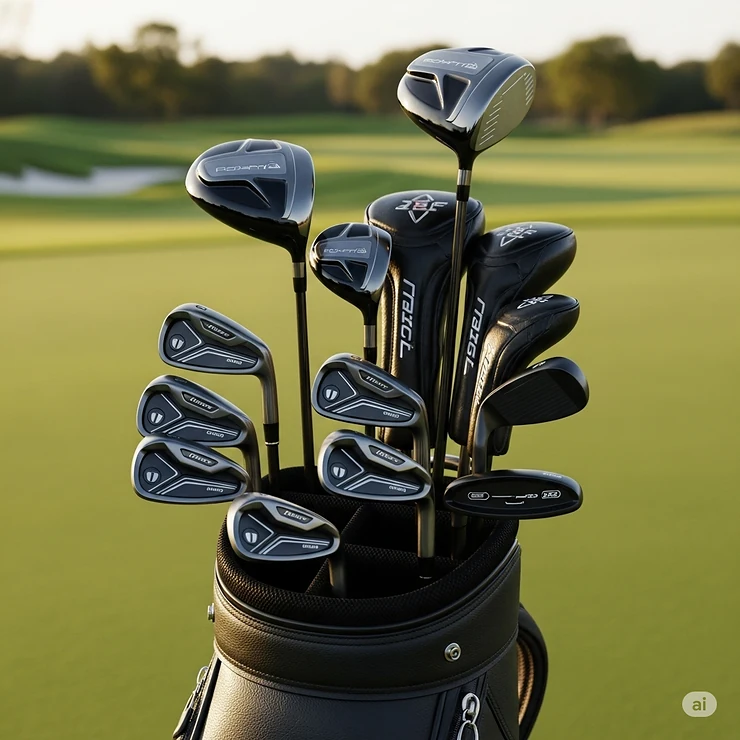
Let’s be honest: nobody ever hit a 7-iron farther because it was black. And yet, walk down any practice range in 2026 and you’ll see a growing wave of stealth-colored gear. Matte drivers swallow the sunlight, and jet-black wedges sit in bags like tiny pieces of obsidian. Black golf clubs have gone from novelty to a legitimate category, and the reasons go beyond looks.
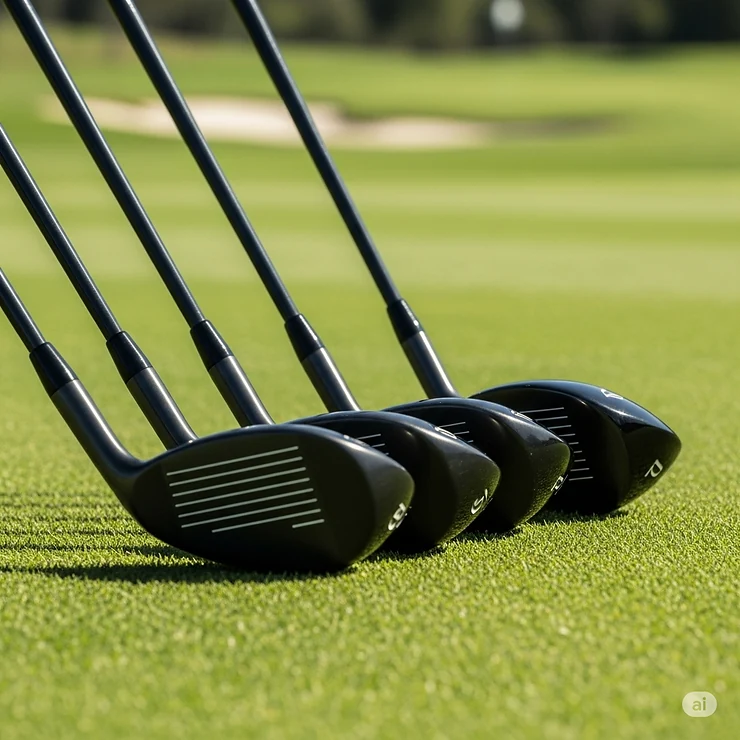
Here’s the catch. “Black” is a finish, not a performance spec, and finishes behave very differently. Some are a thin coating that fades to pewter-gray in a season. Others are baked into the metal or built into the head’s carbon-fiber crown. If you shop black golf clubs by color alone, you can end up paying a premium for something that looks tired by next spring. Choose well, and the payoff is real: less glare at address, a cleaner and smaller-looking head, and a bag that looks like you mean business.
This guide does the homework for you. It’s built from manufacturer specs, tested-and-published reviews, and the aggregated sentiment of real buyers, with no invented testing and no fake quotes. You’ll see seven real products across budget, mid-range, and premium tiers. You’ll also see how black finishes like PVD (physical vapor deposition) actually work and how to keep them looking sharp. Prices are shown as ranges because they move constantly, so always check current pricing before you buy.
Ready? Let’s start with the cheat sheet.
Quick Comparison Table: Black Golf Clubs at a Glance
| Product | Type | Black Look | Price Range | Best For |
|---|---|---|---|---|
| Stix P02 Perform 12 Club Set | Full set + bag | Matte black | Budget (check current price) | Stix P02 Perform 12 Club Set: upgraders, 10-25 handicap |
| Wilson Dynapwr Irons | Irons | Black and red accents | Mid-range value | Wilson Dynapwr Irons: mid-handicappers wanting easy launch |
| Cobra DS-Adapt Max-K Driver | Driver | Matte black, carbon crown | Roughly $300-$550 | Cobra DS-Adapt Max-K Driver: maximum forgiveness |
| Callaway Elyte Driver | Driver | Traditional black crown | Around $600 at launch | Callaway Elyte Driver: most golfers |
| PXG 0311 Black Ops Driver | Driver | Carbon-fiber black | Roughly $400-$600 | PXG 0311 Black Ops Driver: tinkerers and speed seekers |
| Titleist Vokey SM10 Jet Black Wedge | Wedge | Raw black QPQ finish | Roughly $160-$190 per wedge | Titleist Vokey SM10 Jet Black Wedge: short-game scorers |
| Titleist T-Series Black Irons | Irons | High-polish black vapor | Premium (check current price) | Titleist T-Series Black Irons: better players who want durability |
Read the table as three buckets. The Stix P02 Perform 12 Club Set and Wilson Dynapwr Irons are the value plays, built to get a whole bag or a set of irons onto the course without wrecking a budget. The three drivers are where black does the most for looks and confidence, since a dark crown is the most visible part of any club. The Titleist Vokey SM10 Jet Black Wedge and Titleist T-Series Black Irons sit at the premium end, where finish durability and fitting options start to matter. If you want maximum forgiveness, Cobra DS-Adapt Max-K Driver leads. If you want the safest all-around pick, Callaway Elyte Driver does that job.
💬 Just one click — help others make better buying decisions too!😊
Top 7 Black Golf Clubs: Expert Analysis
Every pick below is a real, currently documented product. The analysis rests on published specs and aggregated review sentiment, not on personal testing claims. Where I couldn’t verify independent reviews, I say so.
1. Stix P02 Perform 12 Club Set — a complete blacked-out bag on a budget
Most black golf clubs are sold one piece at a time, which makes a full blacked-out setup expensive. The Stix P02 Perform 12 Club Set flips that: twelve clubs plus a bag, marketed under a “matte black, no glare” banner, with regular and stiff flex options.
The irons in this line use a deep cavity design in 17-4 stainless steel, a common choice for cast game-improvement heads. In practice, a deep cavity pushes weight low and to the perimeter, which helps a ball launch higher and twist less on a miss. The brand targets upgraders in roughly the 10-25 handicap range, and that’s a fair read. Think of this as a set for someone leaving a hand-me-down bag behind, not a tour-level fitting project.
Here’s the honest caveat. I could not find independent third-party reviews with test data for this specific set, so there’s no aggregated user sentiment to summarize yet. The maker lists a two-year warranty on its site, which is a meaningful signal for a direct-to-consumer brand. A matte coating on budget gear will likely scuff faster than the premium finishes covered later, so manage expectations.
Pros:
- ✅ Full set and bag in one purchase
- ✅ Matte look cuts glare at address
- ✅ Deep-cavity heads suit mid-to-high handicaps
Cons:
- ❌ No independent review data found yet
- ❌ Limited fitting and shaft options versus big brands
Price range: budget territory. Check current price. Verdict: strong value if you want one-and-done, with the review gap as the main risk.
2. Wilson Dynapwr Irons — easy launch in black and red
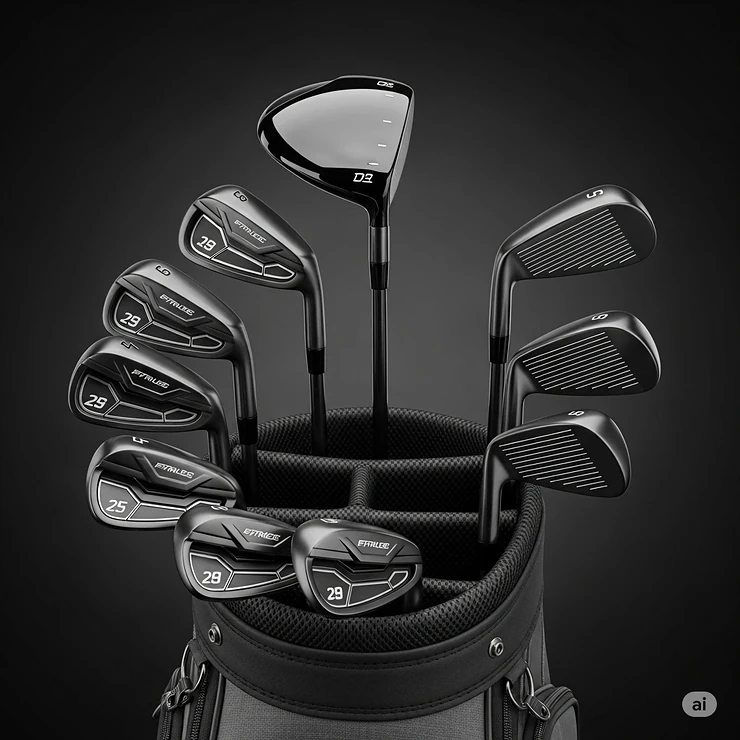
Wilson doesn’t get the marketing megaphone that Callaway and TaylorMade do, which is exactly why the Wilson Dynapwr Irons are worth a look. Reviewers describe the look as a clear step up from earlier Wilson game-improvement irons, thanks to a black-and-red colorway. A black Lamkin Crossline 360 grip finishes the theme.
The standard model has less offset, a thinner topline, and a narrower sole than its Max sibling, so it suits golfers who want help without a shovel-like head. Wilson says the face thickness was shaped with AI-assisted design to wake up more of the clubface, especially from center to toe, where many amateur strikes land. In plain English, that means mishits lose less speed.
Reviewers consistently report easy launch and a responsive feel for a cast game-improvement iron. One published test saw 7-iron carry just over 140 yards, in line with pricier rivals like the Cobra DS-Adapt and Callaway Elyte irons tested alongside. Listed lofts run strong, so some of that distance is loft-driven. Keep that in mind before comparing yardages across brands.
Pros:
- ✅ Distance comparable to pricier iron sets
- ✅ Easy-launching, forgiving design
- ✅ Black-and-red styling looks sharp
Cons:
- ❌ Strong lofts inflate the yardage numbers
- ❌ Less brand recognition and resale demand
Price range: reviewers place it a couple hundred dollars below comparable Callaway and TaylorMade sets. Check current price. Verdict: one of the smartest value buys on this list.
3. Cobra DS-Adapt Max-K Driver — 10K MOI forgiveness in matte black
If you want a black driver that forgives almost anything, start here. The Cobra DS-Adapt Max-K Driver is a 460cc head built for maximum stability, and in the 9.0° and 10.5° lofts Cobra says it hits a combined 10,000 MOI. MOI is the resistance to twisting on off-center hits, so a higher number keeps your ball flight tighter when you miss the sweet spot.
The finish is a matte black over a carbon-fiber chassis with silver detailing. Cobra’s FUTUREFIT33 hosel offers 33 loft and lie combinations that can be changed independently. That matters if your driver launches too low or flies too far left or right. The stock shaft is a True Temper Denali Black, so even the shaft stays on theme.
Reviewers consistently praise how hard it is to hit this driver badly. One published review calls it fairway-finding and well suited to average swing speeds. Forum members on GolfWRX liked how the matte black topline blends into the carbon crown. The common trade-off is that ultra-forgiving heads can feel less workable if you like shaping shots on purpose.
Pros:
- ✅ Elite forgiveness at roughly 10K MOI
- ✅ 33-setting adjustable hosel
- ✅ Clean matte black and carbon look
Cons:
- ❌ Less shot-shaping for strong players
- ❌ Only certain lofts reach the top MOI figure
Price range: roughly $300-$550 depending on promotions. Verdict: arguably the best forgiveness-per-dollar black driver right now.
4. Callaway Elyte Driver — classic black crown, broad appeal
The Callaway Elyte Driver is the “nobody got fired for buying it” option. Reviewers note a traditional black finish and a compact, classic shape that sits square at address. Callaway’s own lineup offers four models, and the standard Elyte is the one aimed at the widest range of players.
The numbers back that up. One test logged ball speed around 165 mph and carry-plus-roll near 283 yards. In a head-to-head testing database, the Elyte earned a forgiveness score of 9.10 out of 10, seventh among 37 drivers, while the rival TaylorMade Qi35 scored 7.80. For anyone whose driver misses are the problem, that gap is the story. The stock grip is a black-and-silver Golf Pride Z-Grip, so the whole package keeps the dark look.
Aggregated reviewer sentiment leans positive: forgiveness, distance, and confidence at address come up often. A smaller group of reviewers mentions inconsistent quality control and customer-service frustrations, so buy from a retailer with a decent return window.
Pros:
- ✅ Top-tier forgiveness in head-to-head testing
- ✅ Square, confidence-inspiring black crown
- ✅ Fits a wide range of swing types
Cons:
- ❌ Some buyers report quality-control hiccups
- ❌ Priced at the premium end of drivers
Price range: around $600 at launch. Check current price. Verdict: the safest all-rounder for black golf clubs in the driver slot.
5. PXG 0311 Black Ops Driver — carbon-fiber stealth with tunable weights
The name alone sells the gimmick, but the engineering is the real draw. The PXG 0311 Black Ops Driver uses a carbon-fiber sole and crown, a variable-thickness titanium face, and interchangeable sole weights from 2.5 to 20 grams. The default setup includes two light weights and one heavy weight, so you can bias the head toward forgiveness or lower spin.
One published review claims vertical MOI rose 25% over PXG’s previous forgiving model. That sounds like marketing, but it points to a taller, more stable head. A second variant, the Tour-1, is sold at a premium and spins roughly 20% less according to robot testing, though it gives up some forgiveness.
Testers in published reviews said mishits behaved well and the feedback felt useful. The honest read: this driver rewards golfers who like to experiment with weights and shafts. If you’d rather screw in a head and forget it, a simpler model will frustrate you less. Stock options include a Project X Riptide CB shaft and a black PXG Z5 grip.
Pros:
- ✅ Highly tunable sole weights
- ✅ Carbon-fiber build keeps the black look intact
- ✅ Reviewers praise forgiveness and sound
Cons:
- ❌ Tweaking weights can overwhelm casual golfers
- ❌ Tour-1 sacrifices forgiveness for low spin
Price range: roughly $400-$600 depending on retailer. Verdict: best for tinkerers who want performance with a stealth look.
6. Titleist Vokey SM10 Jet Black Wedge — short-game spin in raw black
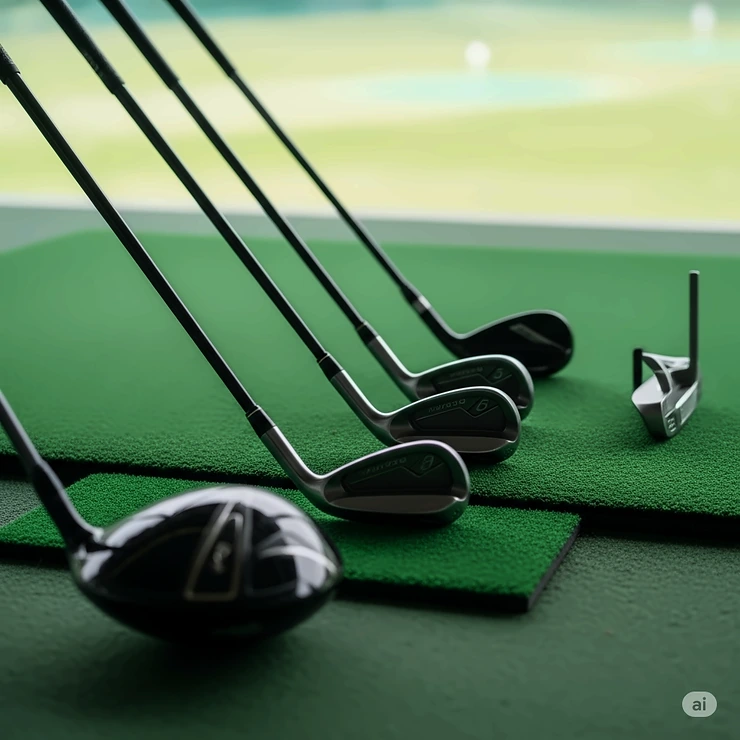
Wedges are the easiest place to go black, and the Titleist Vokey SM10 Jet Black Wedge is the benchmark. It uses the same Vokey SM10 design, with a progressive center of gravity tuned by loft, grooves cut to the edge for spin, and a localized heat treatment that Titleist says doubles groove durability. Six grind options, including the T Grind, let you match the sole to your turf.
The Jet Black finish is a raw wedge treated with a black QPQ process, as one UK retailer describes it. That’s different from a thin paint-like coating, though it will still change with use. Expect a gradual gray patina where sand and turf meet the face. A limited-edition Black Vapor version uses a titanium carbide vapor coating and sold for noticeably more per wedge, which one reviewer felt was only worth it if you love the blacked-out look.
Buyer sentiment is overwhelmingly positive. Owners frequently describe an easy transition from the previous SM9 and strong spin on short shots. One MyGolfSpy forum commenter warns that Vokey black finishes will wear, so treat patina as part of the deal.
Pros:
- ✅ Class-leading spin and grind options
- ✅ Heat-treated grooves last longer
- ✅ Raw black finish feels old-school cool
Cons:
- ❌ Black finish develops wear marks
- ❌ Black Vapor edition costs extra per wedge
Price range: roughly $160-$190 per wedge. Verdict: the first black purchase most golfers should make.
7. Titleist T-Series Black Irons — premium titanium carbide vapor finish
The Titleist T-Series Black Irons are the “do it properly” option. They’re a limited-edition release that wraps the T-Series lineup in a high-polish black titanium carbide vapor finish. Titleist says an improved heat-treated binding process makes it last longer. The stock shafts include True Temper AMT Black, AMT Tour White, and Project X LZ in an Onyx powder-coat matte black, topped with all-black Golf Pride Tour Velvet 360 grips.
The reasoning for choosing this finish is durability. MyGolfSpy’s coverage of Titleist’s black finishes argues that titanium carbide vapor should outlast common PVD coatings. That is one reviewer’s opinion, not a lab certification, but it fits the manufacturer’s own claims. Owner comments on prior black Titleist finishes mention the wear shows up as a gray tone, which many golfers find attractive.
Because this is a limited run, availability is the main frustration. T-Series irons are better-player and players-distance designs, so they fit lower handicaps who value feel and control over raw forgiveness.
Pros:
- ✅ Upgraded, longer-lasting black finish
- ✅ Matching black shafts and grips
- ✅ Titleist’s proven T-Series performance
Cons:
- ❌ Limited availability
- ❌ Premium pricing for a full set
Price range: premium-iron territory, so expect well north of $1,000 for a set. Check current price. Verdict: the pick for players who want black golf clubs that stay black longer.
Top 7 Comparison: Specs, Sentiment, and Value
| Product | Standout Spec | Reviewer Sentiment | Price Range | Best For |
|---|---|---|---|---|
| Stix P02 Perform 12 Club Set | 12 clubs plus bag | No independent reviews found | Budget | Stix P02 Perform 12 Club Set: starter upgrades |
| Wilson Dynapwr Irons | Reduced offset, black-and-red | Easy launch, solid feel | Mid-range | Wilson Dynapwr Irons: value hunters |
| Cobra DS-Adapt Max-K Driver | About 10K MOI | Very forgiving, fairway-finding | $300-$550 | Cobra DS-Adapt Max-K Driver: slicers and high MOI seekers |
| Callaway Elyte Driver | Forgiveness score 9.10 | Positive, minority QC complaints | About $600 | Callaway Elyte Driver: all-round play |
| PXG 0311 Black Ops Driver | 2.5-20 g sole weights | Good mishits, great sound | $400-$600 | PXG 0311 Black Ops Driver: tinkerers |
| Titleist Vokey SM10 Jet Black Wedge | Heat-treated grooves | Strong spin praise | $160-$190 | Titleist Vokey SM10 Jet Black Wedge: wedge scorers |
| Titleist T-Series Black Irons | Titanium carbide vapor | Finish durability praised | Premium | Titleist T-Series Black Irons: better players |
Looking at the table, the Cobra DS-Adapt Max-K Driver delivers the most forgiveness for the money, but if you want proven brand polish, the Callaway Elyte Driver justifies its higher sticker. Budget buyers should note that the Stix P02 Perform 12 Club Set and Wilson Dynapwr Irons trade brand prestige and finish durability for lower cost. The Titleist T-Series Black Irons are the only pick here whose main selling point is the finish itself.

How to Keep Black Golf Clubs Looking Sharp
This section is transformation content, meaning the stuff no product listing tells you. Black finishes fail in predictable ways, and most damage happens in the first 30 days.
First-use tips. Peel plastic wrap off irons and wedges gently, since sharp grooves can chip a thin coating. Skip the headcover-free toss into the trunk; steel on steel will leave bright scratches on black heads faster than you’d expect.
Cleaning routine. After every round, wipe heads with a damp microfiber towel. Use lukewarm water and a drop of mild dish soap, with a soft nylon brush for grooves. Avoid steel brushes and harsh abrasives, because they strip coatings. Dry thoroughly. Moisture left on a raw black finish, like a Vokey Jet Black wedge, is what invites rust spots.
Storage and travel. Use individual iron covers or a divided bag so heads don’t clack against one another. Keep clubs out of hot trunks, since heat cycles stress thin coatings.
Common first-month mistakes. The biggest one is cleaning with the wrong tool, like a wire groove brush used aggressively on the face edge. Another is ignoring wear at the leading edge, where the finish naturally thins. Accept that wear is normal and aim to slow it, not stop it.
Grip care. Black grips hide dirt, but they still go slick. Wash them with warm soapy water every few rounds to restore tack.
Real-World Scenarios: Which Black Golf Clubs Fit Which Golfer
The three profiles below are illustrative buyer scenarios, not testimonials.
Scenario 1: The weekend upgrader. You play twice a month, carry an old hand-me-down bag, and shoot in the 90s. A dark, glare-free setup sounds fun, but you don’t want to spend a fortune. The Stix P02 Perform 12 Club Set gives you everything in one purchase. If you already have a decent bag, the Wilson Dynapwr Irons are a smarter place to put money because irons drive scoring.
Scenario 2: The slicer who loses fairways. You play weekly and your driver is the problem. Wide misses add penalty strokes. The Cobra DS-Adapt Max-K Driver is built for this, with high MOI and an adjustable hosel that lets a fitter tweak loft and lie. Budget around the lower end of its price range by watching for promotions.
Scenario 3: The low-handicap tinkerer. You hit 40 range balls before a round and know your numbers. A PXG 0311 Black Ops Driver lets you play with sole weights for spin, and a Titleist Vokey SM10 Jet Black Wedge in your preferred grind rounds out a stealth short game. If you want the entire set in matching black, Titleist T-Series Black Irons make it cohesive, with the best chance of staying black.
What Are Black Golf Clubs?
Black golf clubs are drivers, irons, wedges, or full sets whose heads, shafts, or both carry a dark finish, such as matte black, PVD, DLC, or QPQ. The color is mostly cosmetic. It can reduce glare and make a head look smaller, but it does not change forgiveness, loft, or distance by itself.
Finishes matter more than the word “black.” Here’s a quick field guide:
- PVD (physical vapor deposition): a thin coating applied in a vacuum chamber. Popular, attractive, and prone to wearing through over time.
- DLC (diamond-like carbon): applied similarly but widely considered more durable, and typically more expensive.
- Titanium carbide vapor: used on Titleist’s black irons and Vokey Black Vapor wedges, and described by reviewers as longer-lasting than PVD.
- QPQ / black oxide-style treatments: chemical processes common on raw wedges, which patina rather than peel.
- Carbon-fiber and powder-coat: found on drivers and shafts, where the “black” is built into the material.
For context on durability, a MyGolfSpy wear-test summary reported that black oxide or nickel finishes start showing wear after roughly 100 to 300 cycles. It put PVD at around 700 cycles and Diamond Black Metal at upwards of 4,800. Treat those as one outlet’s reported test figures, not universal guarantees, but the ranking matches common sense: thicker, deeper finishes last longer.
How to Choose Black Golf Clubs
Use these six steps in order. The reasoning matters as much as the checklist.
- Decide which club to blacken first. Wedges and drivers are the lowest-risk places to start. Wedges wear in a way that looks natural, and a driver’s crown is the most visible part at address.
- Match forgiveness to your handicap. Mid-to-high handicappers should lean toward high-MOI heads like the Cobra DS-Adapt Max-K Driver or cavity-back irons like the Wilson Dynapwr Irons. Better players can look at blade-style or players-distance designs.
- Read the finish type, not just the color. Ask whether it’s PVD, DLC, titanium carbide vapor, or QPQ. Durability varies enormously.
- Check shafts and grips. A “black set” with chrome shafts is a half-measure. Matching black shafts and grips, like those on the Titleist T-Series Black Irons, finishes the look and the feel.
- Get fit. Black or not, the right shaft flex and loft change results more than any finish does. A fitting session often costs less than the performance you’d lose guessing.
- Confirm conformity and returns. Buy from retailers with solid return windows, especially if reviewers mention quality-control variance.
Black Golf Clubs vs. Traditional Chrome and Satin Finishes
| Factor | Black Finishes | Chrome / Satin | Best For |
|---|---|---|---|
| Glare at address | Low | Higher in bright sun | Black for sun-heavy courses |
| Visual head size | Looks smaller | Looks larger | Black for confidence seekers |
| Durability of finish | Varies; often wears | Very durable | Chrome/satin for longevity |
| Resale appeal | Mixed when worn | Steady | Chrome/satin for resellers |
| Style | Bold, modern | Classic | Personal preference |
The table shows a clear trade-off: black wins on looks and glare, while chrome and satin win on staying power. If you play in bright sun or simply want the aesthetic, black is worth the compromise. If you resell every couple of years, a worn black finish can hurt value, which one MyGolfSpy commenter noted when explaining why he used to sell irons early. Players who rotate gear often should be selective, putting black on wedges or drivers where wear is expected anyway.
Features That Actually Matter (And Those That Don’t)
Marketing loves to blur the line between features and flavor. Here’s the filter.
Matters: MOI and forgiveness; loft and lie settings; shaft fit; finish type; grind choice on wedges; and warranty or return policy. A 10K MOI driver measurably reduces how much a miss twists, and that is worth money.
Matters a little: adjustable weights. They are genuinely useful if you will use them and mostly dead weight if you won’t. The PXG 0311 Black Ops Driver has the most flexibility, but only golfers who experiment will get value from it.
Doesn’t matter much: how dramatic the color name sounds. “Stealth,” “Onyx,” “Jet,” and “Vapor” are all just labels. Ask what is actually on the club. Likewise, don’t pay a large premium for a black finish alone unless you truly love the look. One reviewer of limited-edition Vokey Black Vapor wedges said as much, noting the finish was the only reason to choose them.
Doesn’t matter at all: whether a black head improves your distance. It doesn’t.
Black Golf Clubs for Beginners, Seniors, and Better Players
Different golfers should read black golf clubs differently.
Beginners. Prioritize forgiveness and simplicity. The Stix P02 Perform 12 Club Set removes decision overload, and the Wilson Dynapwr Irons add a user-friendly launch profile. Avoid blade-style black irons, which punish off-center strikes.
Seniors and moderate swing speeds. Lighter shafts and high launch help. The Cobra DS-Adapt Max-K Driver is described by reviewers as especially friendly at average swing speeds, and its adjustable hosel lets a fitter raise launch. Pair it with graphite irons if wrist strength is a concern.
Better players. You care about feel, trajectory control, and consistent spin. The Titleist Vokey SM10 Jet Black Wedge and Titleist T-Series Black Irons are the natural fit. If you hit it hard and want low spin, the Tour-1 variant of the PXG line sits further along that spectrum than the standard PXG 0311 Black Ops Driver.
Women and juniors. Black lines exist for both groups in some brands, including women’s and junior sets from Stix, with adjusted lengths and lighter swing weights. Always confirm length and flex rather than assuming a standard set will fit.
Long-Term Cost and Maintenance of Black Golf Clubs
Total cost of ownership is where black golf clubs can quietly cost more than they look. A cheaper set with a thin finish may look worn within a season, while a premium finish costs more upfront and holds its appearance longer. The question is whether appearance retention is worth money to you.
Think in cost-per-round. If you play 40 rounds a year, a finish that looks sharp for two seasons spreads its premium across 80 rounds. A finish that fades in one season spreads across 40. Resale matters too: a heavily worn black iron set can resell for less than a comparable chrome set, according to owner comments about wear and value.
Maintenance cost is low but consistent. Budget for a quality microfiber towel, a soft brush, iron covers, and replacement grips every year or two. If you use raw-finish black wedges, factor in occasional rust-prevention care. Regrooving or replacing wedges is a normal expense regardless of color.
Finally, remember the hidden cost of a poor fit. Spending on a black finish while skipping a fitting wastes the bigger value lever. Put fit first and finish second.
Rules and Conformity: Are Black Golf Clubs Legal?
Color itself doesn’t affect legality. What does matter is whether the club conforms to the Rules of Golf. The USGA and R&A cap driver head volume at 460cc plus a 10cc tolerance, and they publish an equipment database listing conforming driver heads. You can check any model in the USGA conforming equipment lists before entering an event.
Practically, the drivers on this list, including the Cobra DS-Adapt Max-K Driver, Callaway Elyte Driver, and PXG 0311 Black Ops Driver, are mainstream models from major brands. Still, it’s the player’s responsibility to confirm conformity under local rules and competition terms. Be cautious with off-brand “black” drivers from unknown sellers, especially oversized heads marketed beyond 460cc, since those are typically non-conforming. If you only play casual rounds, that matters less, but it would matter if you ever enter a club championship or post tournament scores.
Common Mistakes When Buying Black Golf Clubs
Most regrets come from the same handful of mistakes.
Buying color over fit. A jet-black set that doesn’t match your swing speed is just an expensive coat rack. Fit comes first.
Ignoring finish durability. Not all black is equal. Ask what’s on the club, and weigh it against how long you plan to keep it.
Overpaying for limited editions. Limited black releases can carry a premium. As noted in the Vokey Black Vapor example, that’s only worth it if you genuinely love the look.
Treating wear as damage. Black finishes patina. Many golfers eventually like the lived-in gray, but if that bothers you, choose a more durable finish or stick to carbon-fiber drivers.
Skipping the return policy. With quality-control concerns reported by a minority of buyers on some models, buy from a retailer that makes returns painless.
Forgetting the rest of the bag. A single black club can look out of place. Plan your color story across driver, irons, wedges, and grips if cohesion matters to you.
FAQ
❓ Do black golf clubs wear off quickly?
❓ Are black golf clubs good for beginners?
❓ Is the Cobra DS-Adapt Max-K Driver worth buying in black?
❓ Do black golf club sets perform differently than chrome sets?
❓ How do I clean black golf irons without ruining the finish?
Conclusion
Black golf clubs are a style choice backed by a few real advantages: less glare, a more confident look at address, and a cohesive bag. They’re not a performance shortcut, and the finish is where smart shopping happens. Look past the color word and ask what’s actually on the head, how long it will last, and whether the club fits your swing.
If you want a quick roadmap, start with value and forgiveness. The Cobra DS-Adapt Max-K Driver and Wilson Dynapwr Irons deliver real help for mid-to-high handicaps at friendlier prices. For a safe all-around driver, the Callaway Elyte Driver is hard to argue with. Tinkerers will enjoy the PXG 0311 Black Ops Driver, while the Titleist Vokey SM10 Jet Black Wedge is the easiest, lowest-risk way to try black in your bag. Players who want the longest-lasting black finish should consider the Titleist T-Series Black Irons, and anyone wanting a complete starter bag can look at the Stix P02 Perform 12 Club Set.
Whichever route you take, get fit, check conformity if you compete, and treat patina as part of the story your clubs tell.
✨ Don’t Miss These Exclusive Deals!
🔍 Take your game to the next level with these carefully selected black golf clubs. Click on any highlighted item to check current pricing and availability. These clubs will help you build a blacked-out bag that looks great and plays even better!
Recommended for You
- Ladies Petite Golf Clubs: 7 Best Proven Picks for 2026
- Women’s Left Handed Golf Clubs: 7 Best Sets Ranked for 2026
- Left Junior Golf Clubs: 7 Best Sets Ranked for 2026
Disclaimer: This article contains affiliate links. As an Amazon Associate, I earn from qualifying purchases. If you purchase products through these links, we may earn a small commission at no additional cost to you.
✨ Found this helpful? Share it with your friends! 💬🤗
