In This Article
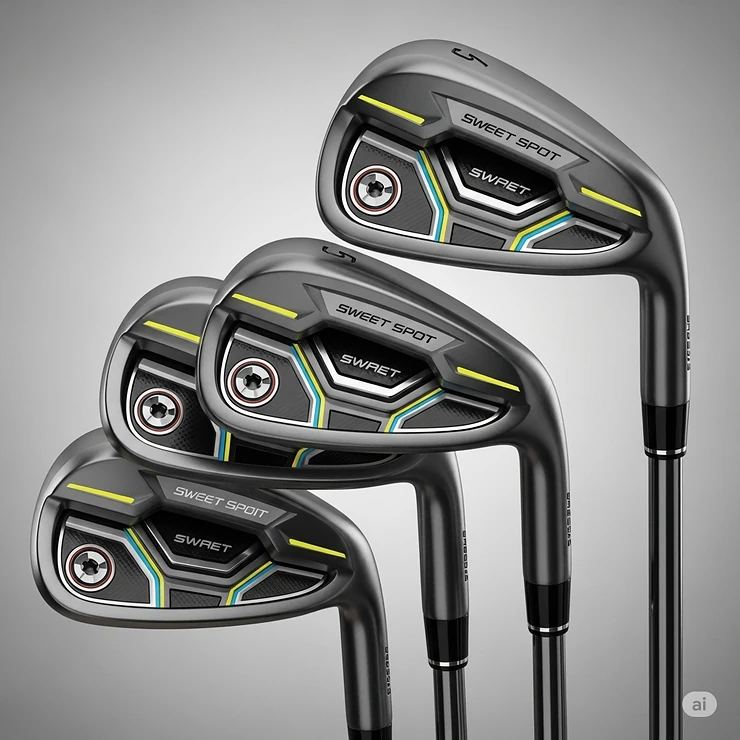
The best golf irons for beginners are game improvement or super game improvement sets built to forgive mishits: cavity-back heads with perimeter weighting, wide soles, and a low center of gravity that help the ball launch high and fly straighter, even when contact is off-center.
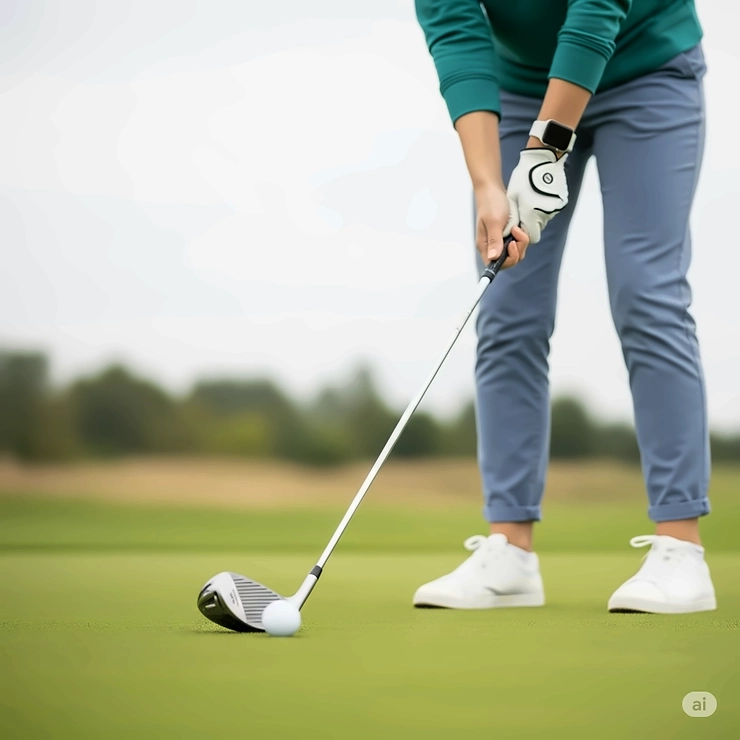
Think of them as training wheels that happen to look like they belong in a tour bag.
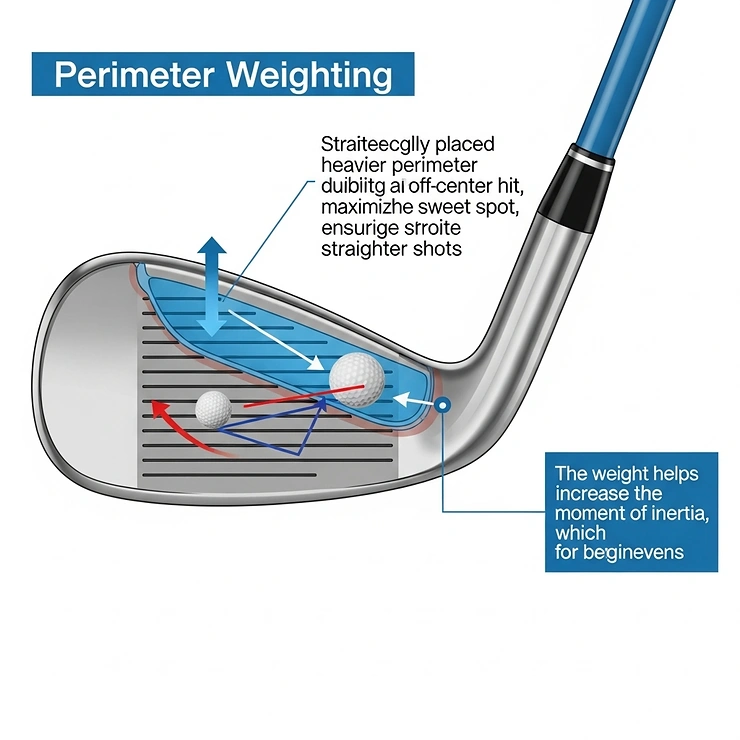
Here’s the problem: irons are where beginners bleed strokes. Drivers get the glory and putters get the blame, but irons decide whether you’re staring at a green or reloading from the rough. Blade-style clubs punish every off-center strike. A cavity-back design moves weight to the edges, makes the head resist twisting, and widens the effective sweet spot. That is exactly what a swing still under construction needs.
This guide ranks seven real sets for 2026 across budget, mid-range, and premium tiers. Every pick is grounded in published specs and aggregated reviewer feedback from outlets like GolfMagic, Golf Digest, Golf Monthly, and National Club Golfer, then translated into what it means on the course. Prices are ranges only, so check current pricing before you buy.
If you’re hunting the best golf irons for beginners without torching a month’s rent, start with the table below.
Best Golf Irons for Beginners at a Glance: 2026 Quick Comparison
| Product | Standout Trait | Approx. Price Range (Full Set) | Best For |
|---|---|---|---|
| TaylorMade Qi Max | Forgiveness in a compact, modern shape | $1,000-$1,200 | Beginners who dislike bulky irons |
| Callaway Elyte X | Max forgiveness, AI-tuned face | $950-$1,150 | Slow-to-moderate swingers who need maximum help |
| Cobra DS-Adapt Max | Weaker lofts plus draw bias | $1,000-$1,100 | Slicers who struggle to launch long irons |
| Ping G440 | Thin face, longer 4-6 irons | $1,200-$1,500 | Beginners who want a premium set to grow into |
| Cleveland Launcher XL Halo | Hybrid-style super game improvement | $800-$900 | Golfers who can’t get the ball airborne |
| Wilson Staff Launch Pad 2 | Ultra-wide progressive sole | Mid-$300s (pre-owned) to high-$800s (new) | Chunkers on a moderate budget |
| Tour Edge Hot Launch C524 | Cavity-back value | Roughly $480-$560 | The tightest budgets |
Looking at the table, the real divide is between sets that pack help into a normal-looking head (TaylorMade Qi Max, Callaway Elyte X, Ping G440) and sets that go all-in on oversized forgiveness (Cleveland Launcher XL Halo, Wilson Staff Launch Pad 2). The Tour Edge Hot Launch C524 is the outlier, delivering the cavity-back basics at roughly half the cost of the premium tier. Pick based on how badly you struggle to launch the ball, not on which badge looks coolest.
💬 Just one click — help others make better buying decisions too!😊
The 7 Best Golf Irons for Beginners in 2026: Expert Analysis
Every entry below follows the same logic: what the spec does in practice, who it suits, what reviewers consistently report, and whether the price range is justified. Where reviewer data is thin, I say so rather than pretend otherwise.
1. TaylorMade Qi Max — best for beginners who hate bulky looks
Most super-forgiving irons look like they were designed by a committee of frying pans. The TaylorMade Qi Max is the exception: National Club Golfer’s reviewers argue it proves game-improvement no longer has to mean oversized and clunky.
The set pairs a multi-material cap-back with a Speed Pocket and a stiffened toe section that reviewers say helps curb the right-side leak common in longer irons. In plain English, low-face mishits still get help, and the toe tweak targets slicers. According to Golf Digest’s launch breakdown, the center of gravity sits lower in the long irons for easier launch and higher in the short irons for control. The Qi Max HL variant runs lofts up to 3 degrees weaker with lighter weight, which suits slower swings.
Based on the spec comparison, this is a smart buy if you want a set you won’t outgrow in a season. Golfalot’s testers call it best suited to mid handicappers and above, yet still recommend it to high handicappers. One caution: strong lofts mean part of the distance is loft, not magic.
Pros:
- ✅ Forgiving without looking oversized
- ✅ Toe-stiffening design helps fight the slice
- ✅ HL variant available for slower swing speeds
Cons:
- ❌ Premium price compared with budget-friendly sets
- ❌ Strong lofts likely demand an extra wedge for gapping
Expect the $1,000-$1,200 range for a full set. Worth it if appearance and long-term playability matter to you.
2. Callaway Elyte X — maximum forgiveness, refined looks
The Callaway Elyte X earns its keep by being the most forgiving member of its family while looking less like a garden tool than rivals. GolfMagic’s reviewers note that where some 2025-era competitors look clunky at address, this one reads as closer to a players’ distance iron.
The specs deliver. A larger cavity-back head, extra offset, a wider sole, and a thicker topline all push help to the edges. Callaway’s Ai10x face is built to keep ball speed up on off-center hits, and urethane microspheres in the head aim to soften sound and feel. On paper that means fewer thin shots dying short and fewer fat ones digging in. Golf.com’s ClubTest awarded the Elyte X its Game Changer status in the super game improvement category for 2025.
What most buyers overlook is the loft structure. GolfMagic describes these irons as strongly lofted and powerful, which flatters distance numbers but can open big gaps down to your wedges. Reviewers consistently peg it as ideal for beginners and high handicappers.
Pros:
- ✅ Ai10x face protects ball speed on mishits
- ✅ Cleaner look than most super game improvement sets
- ✅ Recognized by ClubTest in its category
Cons:
- ❌ Strong lofts can create wedge-gapping headaches
- ❌ Priced above budget and mid-range alternatives
Around $950-$1,150 for a six- or seven-club set. Good value if you want brand reliability and maximum help.
3. Cobra DS-Adapt Max — weaker lofts and slice-fighting draw bias
If your biggest enemy is a slice and your second-biggest is a 5-iron that won’t leave the ground, the Cobra DS-Adapt Max was built for you.
Compared with the standard DS-Adapt, the Max carries 2-degree weaker lofts, a longer blade, a thicker topline, more offset, and a wider sole. Cobra’s own testing, as relayed by Golfalot, suggests roughly 550 rpm more spin, a 2.4-yard higher flight, and about 8 yards more draw bias. Treat those as manufacturer claims, but the direction is sensible: more spin and height equals softer landings. GolfMagic’s reviewer reported holding greens even with longer irons. The 360 Speedshell face insert and a foam-filled cavity target both ball speed and feel.
Here’s what the spec sheet won’t tell you: Golf Digest’s panel ranked it highly for high handicappers, yet one tester flagged a harsher sound on mishits. Forgiveness and acoustics don’t always travel together.
Pros:
- ✅ Weaker lofts promote higher, softer landings
- ✅ Draw bias helps slicers straighten shots
- ✅ Women’s lightweight graphite model available
Cons:
- ❌ Large footprint may feel intimidating at address
- ❌ Mishit sound described as harsh by one tester
The $1,000-$1,100 range covers most configurations. Strong value for slicers, less compelling if your miss is a hook.
4. Ping G440 — premium pick that grows with you
Ping’s G-series has long been the safe answer for golfers who want help without a “beginner” stigma. The Ping G440 continues that tradition and, according to Today’s Golfer, is the most complete G-series iron yet.
The face is 9% thinner than the previous generation, which frees up weight to sit low and back for easier launch. A multi-piece PurFlex badge supports the face while softening feel. The 4-6 irons run slightly longer for more consistent gapping, and a four-wedge system simplifies short-game decisions. GolfMagic calls it ideal for high-handicap and beginner golfers wanting maximum forgiveness. A High Launch version with ultralight shafts and grips caters to slower swing speeds.
Analytically, the G440 is the “buy once” option. The premium is real, but the set remains playable as handicap falls. Buyers watching their wallets should know the older G430 reportedly offers similar performance for noticeably less per club.
Pros:
- ✅ Thinner face boosts speed across more of the face
- ✅ Longer 4-6 irons improve distance gapping
- ✅ HL option suits slower swings
Cons:
- ❌ Most expensive set on this list
- ❌ Less oversized help than true super game improvement irons
Expect roughly $1,200-$1,500 for a set. Worth it only if you’re committed to the game.
5. Cleveland Launcher XL Halo — hybrid-style help for airborne struggles
Some beginners don’t need “a little help.” They need a flotation device. The Cleveland Launcher XL Halo is a hybrid-style super game improvement iron that GolfWRX reports raised MOI 17% over its predecessors.
The head is deliberately huge. A stepped crown lowers the center of gravity for easier launch, AI-designed variable face thickness aims to keep ball speed up, and weight pads behind the face fight twisting. Grooves differ by loft: wider, flatter grooves in the 4-7 irons and tighter, deeper ones in the 8-iron through sand wedge for spin. A counterweight at the grip end also makes the head feel lighter. Plugged In Golf’s reviewer expected little from a big, hollow iron’s feel yet came away surprised and noted the clubs want to go straight.
If your ball flight is consistently low or you struggle with anything longer than a 7-iron, this is the set that addresses the root issue. Just accept the looks.
Pros:
- ✅ Very high MOI for forgiveness on off-center hits
- ✅ Progressive grooves match each loft’s job
- ✅ Hybrid-like long irons launch easily
Cons:
- ❌ Very large heads aren’t for everyone’s eye
- ❌ Limited shot-shaping ability as you improve
The $800-$900 range covers a seven-piece set. A strong mid-tier value for severe launch problems.
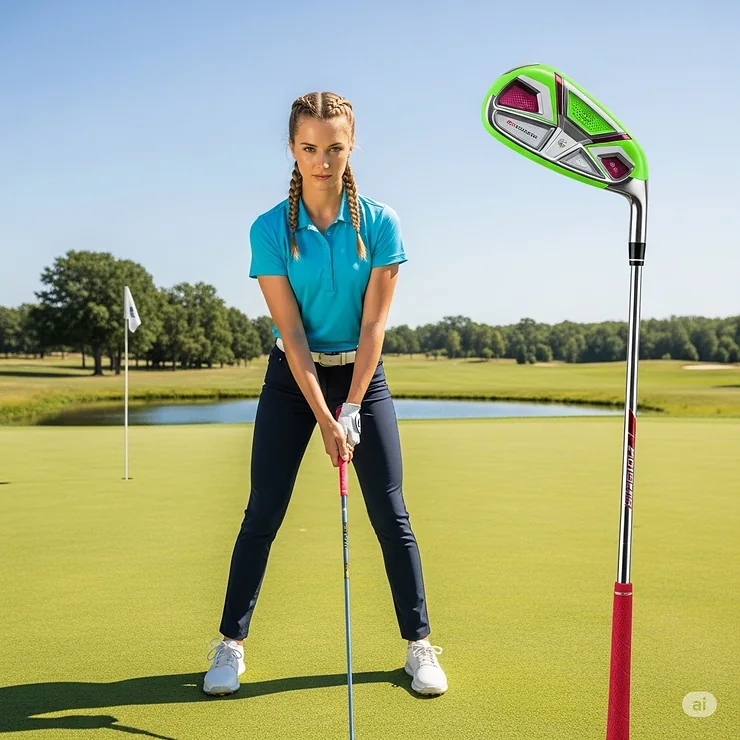
6. Wilson Staff Launch Pad 2 — widest soles for fighting fat shots
Wilson reportedly researched how 10-plus handicappers deliver the club, then shaped the Wilson Staff Launch Pad 2 sole around that steeper attack angle. The wide, progressive sole is designed to stop digging, keeping turf off the face.
Published specs show a 24-degree 5-iron, 30-degree 7-iron, and 44-degree pitching wedge, with lower, lighter heads promoting high launch. National Club Golfer’s reviewer called the head massive yet forgiving and noted ball flights weren’t curving much, but also that these aren’t the longest irons around. That’s an honest trade: you buy height and consistency, not raw yardage.
Aggregated retailer feedback skews positive, with new golfers reporting high, straight flight. One buyer raised authenticity concerns about a marketplace purchase, so buy from authorized dealers. Also check whether Wilson has refreshed the line since this generation.
Pros:
- ✅ Wide sole fights chunking and digging
- ✅ Light heads promote effortless launch
- ✅ Pre-owned sets widely available for savings
Cons:
- ❌ Not the longest option on this list
- ❌ Midsize stock grips may not suit smaller hands
Prices span a wide range: mid-$300s for pre-owned up to the high-$800s for new graphite sets. Excellent value if you buy smart.
7. Tour Edge Hot Launch C524 — cavity-back value for tight budgets
Not everyone has four figures for a first set. The Tour Edge Hot Launch C524 exists for that golfer, and Golf Monthly’s reviewer praised its powerful flight, forgiveness, and turf interaction while noting the low price.
The 431 stainless steel body, wide sole, deep undercut, and toe weighting add up to a traditional cavity-back with real forgiveness. VIBRCOR damping targets feel, and power lofts push distance without sacrificing apex height. Steel True Temper Elevate MPH95 shafts come in regular or stiff, with Aldila Ascent PL graphite as an option. Per Golf Monthly, pricing sits under $100 per iron.
Here’s what to weigh: strong lofts leave you needing an extra wedge, and Tour Edge refreshes the Hot Launch line regularly, so a newer generation may be on shelves. Confirm which one you’re buying.
Pros:
- ✅ Outstanding value for a cavity-back set
- ✅ Soft feel from 431 stainless steel
- ✅ Graphite or steel shaft options
Cons:
- ❌ Strong lofts require careful wedge gapping
- ❌ Less forgiving than super game improvement oversized heads
Roughly $480-$560 for a six- or seven-club set. The budget pick to beat.
Side-by-Side Spec Comparison
| Product | Head Design | Notable Technology | Review Consensus |
|---|---|---|---|
| TaylorMade Qi Max | Cap-back game improvement | Speed Pocket, toe-stiffened face | Forgiving with modern looks |
| Callaway Elyte X | Oversized cavity-back | Ai10x face, urethane microspheres | Max help, refined shape |
| Cobra DS-Adapt Max | Oversized, wide sole | 360 Speedshell, foam-filled cavity | High launch, draw-biased |
| Ping G440 | Compact game improvement | Thin face, PurFlex badge | Complete, premium package |
| Cleveland Launcher XL Halo | Hybrid-style, hollow | Variable face, stepped crown | Huge forgiveness, large look |
| Wilson Staff Launch Pad 2 | Super game improvement, cast | Progressive wide sole | Easy launch, not longest |
| Tour Edge Hot Launch C524 | Traditional cavity-back | VIBRCOR, power lofts | Strong value, soft feel |
The pattern is clear: forgiveness technology is now widely available, so the real differentiators are looks, loft strength, and price. If you’re torn between two sets, favor the one with the lofts and head size you’ll actually trust at address. Confidence matters more than a spec-sheet edge you’ll never measure.
✨ Ready to Upgrade Your Iron Game?
🔍 Take your first set seriously with these carefully selected options. Click any highlighted product to check current pricing and availability. The right irons will help you build confident, repeatable swings you’ll enjoy for years!
Your First 30 Days With New Irons: A Setup and Practice Guide
Buying the set is step one. Making it work is where most beginners stall.
Week one: check the fit. Stock specs suit average builds, but lie, length, and grip size matter. Wilson’s midsize grips, for example, may feel bulky if you have smaller hands. A quick fitting session beats guessing.
Week two: map your distances. Hit ten balls with each of your 6-iron, 7-iron, 8-iron, 9-iron, and pitching wedge, then note your typical carry. Modern game improvement irons are de-lofted, with pitching wedges running around 43-44 degrees in several sets here, so a gap wedge is often needed.
Week three: master the middle. Spend range time on 7- through 9-irons before chasing long irons. Wikipedia notes short irons are traditionally the easiest to hit, so build confidence there first.
Week four: maintain. Clean grooves after every round, and watch grips. They wear, dry out, and harden over time. Replacing them is one of the cheapest performance upgrades available.
Common first-month mistakes: swinging harder to “use” the distance, practicing with the 5-iron before the 8-iron, and ignoring wedge gaps. Slow down, build contact quality, and let the clubhead do its job.
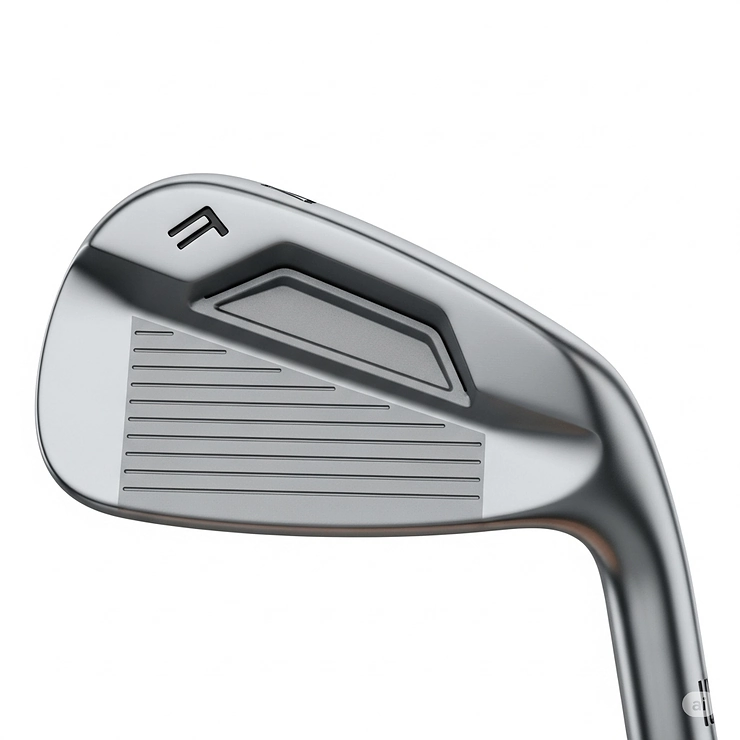
Real-World Scenarios: Which Set Fits Which Beginner
Specs only matter when matched to a real golfer. Here are three illustrative profiles.
Scenario 1: the college student on a budget. Picture a student playing nine holes twice a week at a municipal course with roughly $500 to spend. The Tour Edge Hot Launch C524 fits the budget almost exactly, while a pre-owned Wilson Staff Launch Pad 2 is the alternative if wide-sole help matters more than a brand-new set.
Scenario 2: the career professional learning for client outings. Imagine a mid-forties golfer who chunks irons and fears the long ones. The Cleveland Launcher XL Halo or Wilson Staff Launch Pad 2 addresses launch directly, and a hybrid-style long iron removes the scariest clubs from the equation.
Scenario 3: the athletic newcomer with a slice. Consider a late-thirties former baseball player with real speed and a persistent left-to-right miss, comfortable spending around $1,200. The Cobra DS-Adapt Max (draw bias), TaylorMade Qi Max (toe stiffening), or Ping G440 (long-term playability) all make sense, with the choice hinging on how much oversized help they want.
The takeaway: match the club to your miss and your budget, not to a pro’s bag.
Common Beginner Problems and the Irons That Solve Them
Problem: fat shots. Digging the club into the turf is the classic beginner flaw. Solution: prioritize wide soles, like the Wilson Staff Launch Pad 2 and Cleveland Launcher XL Halo.
Problem: the slice. A left-to-right curve eats distance and accuracy. Solution: draw-biased designs such as the Cobra DS-Adapt Max reduce the curve, though a lesson addresses the cause.
Problem: long irons that won’t launch. A 4-iron has small face area and low loft, which is why many beginners avoid them. Solution: skip them, since Wikipedia notes many beginner sets now include hybrids to replace traditional long irons.
Problem: confusing distance gaps. Strong lofts can leave a 30-yard hole between your pitching wedge and sand wedge. Solution: add a gap wedge and verify with a launch monitor or range session.
How to Choose the Best Golf Irons for Beginners
Choosing the best golf irons for beginners comes down to a handful of decisions. Golf.com’s ClubTest super game improvement category is explicitly aimed at beginners, seniors, and slower swingers, which is a handy sanity check.
- Identify your category. Super game improvement for maximum help, game improvement for a balance of help and looks.
- Match shafts to swing speed. Slower swings often benefit from lighter steel or graphite, while faster swings suit standard steel.
- Prioritize forgiveness and MOI. Wider soles, perimeter weighting, and hollow or cap-back heads all add stability.
- Check lofts and gapping. Stronger lofts add distance but may require extra wedges.
- Decide your set makeup. A 6-PW or 5-PW set plus hybrids is often smarter than chasing a 4-iron.
- Set a realistic budget. Budget, mid-range, and premium tiers all work, but buy for your commitment level.
- Try before you commit. Even a basic fitting beats buying blind.
Features That Actually Matter (And Those That Don’t)
What matters: sole width, center-of-gravity placement, head weight, and shaft weight. These determine whether the ball gets airborne and whether you’re penalized for imperfect contact. Set composition matters too, since a 5-PW lineup with hybrids often serves better than a 4-PW set you can’t launch.
What doesn’t (yet): branded face technology names. Whether it’s an AI-designed face, a Speedshell, or a Speed Pocket, the practical benefit for a beginner is simply more consistent ball speed across the face, and every set here delivers some version of that. “Forged feel” is another marketing line that matters little until you’re hitting centered shots regularly. And maximum-distance claims deserve skepticism: strong lofts inflate yardage on paper without changing your actual swing speed.
Spend your attention on the fundamentals above and let the rest be a tiebreaker.
Common Mistakes When Buying Beginner Irons
Buying blades for the looks. Muscle-back irons have smaller sweet spots and demand a consistent swing, which is the opposite of what a newcomer has.
Ignoring shaft weight. A set built for a faster swing can feel like swinging a crowbar if yours is slower. Lightweight options exist in several sets here, including HL variants.
Fixating on distance. Longer is only useful if it’s consistent. National Club Golfer’s coverage of the Wilson Staff Launch Pad 2 noted it isn’t the longest set but delivers consistency, which is what scores come from.
Skipping wedge planning. Strong-lofted sets leave gaps that cost strokes around the green.
Buying from unverified sellers. Authentic stock from authorized retailers avoids the quality-control worries some marketplace buyers have reported.
Overbuying. A premium set you can’t yet use properly is just an expensive lesson. Buy for the golfer you are now, with a little room to grow.
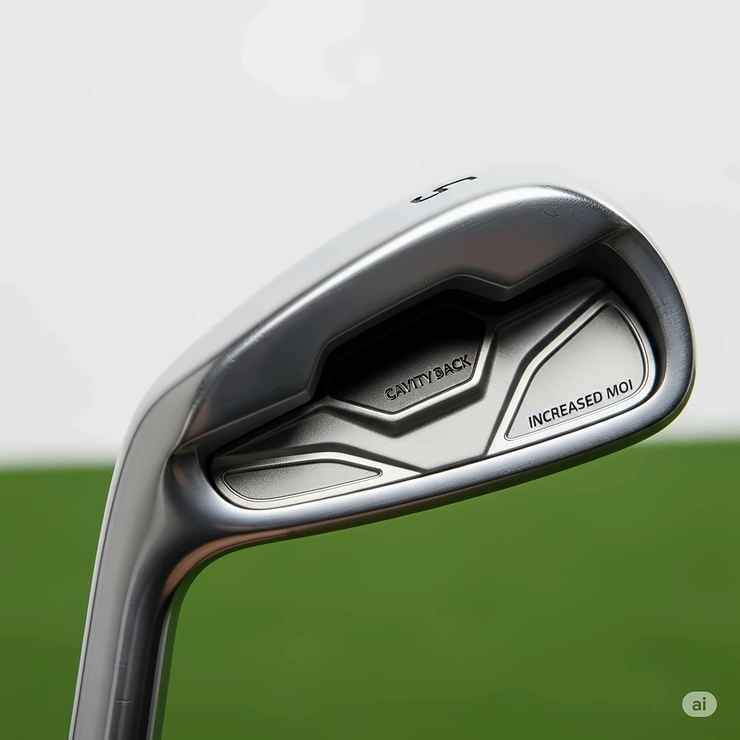
Game Improvement Irons vs Players’ Irons: What Beginners Should Know
Game improvement irons move weight to the perimeter and sole, raising MOI and lowering the center of gravity. Players’ irons and blades keep weight closer to the center for control and workability. Wikipedia notes the same forgiving traits that help novices can frustrate skilled golfers trying to shape shots.
| Feature | Game Improvement Irons | Blades / Players’ Irons | Better for Beginners |
|---|---|---|---|
| Sweet spot | Large, forgiving | Small, demanding | Game improvement |
| Launch | Higher | Lower | Game improvement |
| Shot shaping | Limited | Excellent | Players’ irons (later) |
| Feel on pure strikes | Good | Excellent | Tie |
| Price | Moderate to premium | Premium | Game improvement |
For a newcomer, the first two rows decide almost everything. The only real argument for players’ irons is long-term shot-making, which is a problem you’ll be happy to have in three years. Buy for the swing you have today.
What to Expect: Real-World Performance
Expect higher ball flights and straighter misses, not instant pro-level control. The Cobra DS-Adapt Max, according to GolfMagic, produced landing angles steep enough to hold greens even from longer irons, and reviewers describe the Callaway Elyte X as very forgiving and powerful.
But realistic expectations matter. Distances in these sets partly come from strong lofts, so your 7-iron will go farther than your friend’s older set without you actually swinging faster. That’s useful, yet it can mislead you when judging club selection.
You’ll also notice feel differences. Hollow or foam-filled heads produce a distinct sound, and one reviewer of the Cobra DS-Adapt Max noted a harsher note on mishits. Over time you’ll learn to read feedback from each strike.
Finally, forgiveness is not a substitute for fundamentals. These irons soften the cost of mistakes; they don’t erase them. Pair new clubs with a lesson or two and your scores will follow.
Best Beginner Irons for Seniors, Women, and Slower Swing Speeds
Slower swing speeds need lighter heads, lighter shafts, and often weaker lofts to keep the ball in the air. Several sets here offer targeted options:
- The Qi Max HL from the TaylorMade Qi Max family runs weaker lofts and a lightweight build.
- The Ping G440 has a High Launch version with ultralight shafts and grips designed for slower swing speeds.
- The Cobra DS-Adapt Max includes a lightweight women’s model with graphite shafts in a 6-PW plus sand wedge configuration.
Graphite shafts are especially common for shorter hitters, women, and seniors because they can add clubhead speed. As Wikipedia notes, steel offers lower torque for accuracy while graphite helps players who need extra speed.
If you fit this profile, prioritize shaft weight and flex over everything else. A great head on the wrong shaft is a missed opportunity.
Long-Term Cost and Maintenance: What Your Irons Really Cost
A set priced around $1,000 used for 40 rounds a year over five years works out to roughly $5 per round. A budget set near $500 under the same use lands closer to $2.50 per round. These are illustrative figures, but they show that premium pricing isn’t automatically wasteful if you play often and keep the clubs.
| Tier | Examples | Typical Range | Value Logic |
|---|---|---|---|
| Budget | Tour Edge Hot Launch C524 | Roughly $480-$560 | Lowest entry cost, solid forgiveness |
| Mid-range | Cleveland Launcher XL Halo, Wilson Staff Launch Pad 2 | $350-$900 depending on condition | Maximum launch help per dollar |
| Premium | TaylorMade Qi Max, Callaway Elyte X, Cobra DS-Adapt Max, Ping G440 | $950-$1,500 | Better looks, longer useful life |
Looking across the tiers, mid-range sets give the most beginner-specific help per dollar, while premium sets pay off if you expect to keep playing. Pre-owned Wilson Staff Launch Pad 2 sets listed by major resellers run roughly half the new graphite retail listing, making used the smartest path for tight budgets.
Maintenance is cheap: clean grooves, replace worn grips, and check lofts and lies if you ever have a club bent in a fall.
Frequently Asked Questions
❓ Are game improvement irons good for beginners?
❓ How many irons does a beginner golfer need?
❓ Should beginners buy used golf irons?
❓ Are graphite or steel shafts better for beginner irons?
❓ How much should a beginner spend on a set of irons?
Conclusion: Finding the Best Golf Irons for Beginners
There’s no single winner, but there is a right answer for your swing, your miss, and your wallet. The Tour Edge Hot Launch C524 is the budget-friendly pick, the Wilson Staff Launch Pad 2 and Cleveland Launcher XL Halo are the launch-first problem solvers, and the Cobra DS-Adapt Max is the slicer’s ally. The TaylorMade Qi Max, Callaway Elyte X, and Ping G440 are the premium trio, each balancing forgiveness with a set you won’t be embarrassed to carry for years.
Whatever you choose, don’t skip the basics: confirm shaft fit, plan your wedge gaps, and master your short and mid irons first. Once you’ve posted 54 holes, you can establish your own USGA Handicap Index and watch your progress in real numbers, which is a surprisingly motivating way to see forgiving irons do their job.
Prices and generations change quickly, so check current availability before you commit.
✨ Your best round starts with the right clubs!
🔍 Compare these top picks, check current prices, and choose the set that matches your swing. The right irons make every practice session count, and every green a little closer!
Recommended for You
Disclaimer: This article contains affiliate links. As an Amazon Associate, I earn from qualifying purchases. If you purchase products through these links, we may earn a small commission at no additional cost to you.
✨ Found this helpful? Share it with your friends! 💬🤗
